CELL
 Cells are the basic unit of all
living things.
 Cell Theory:
• All organisms are made up of
one or more cells.
• The cell is the basic unit of all
organisms
all cells come from cells.
• All cells arise from pre- existing
cells.
(BASIC INTRODUCTION)
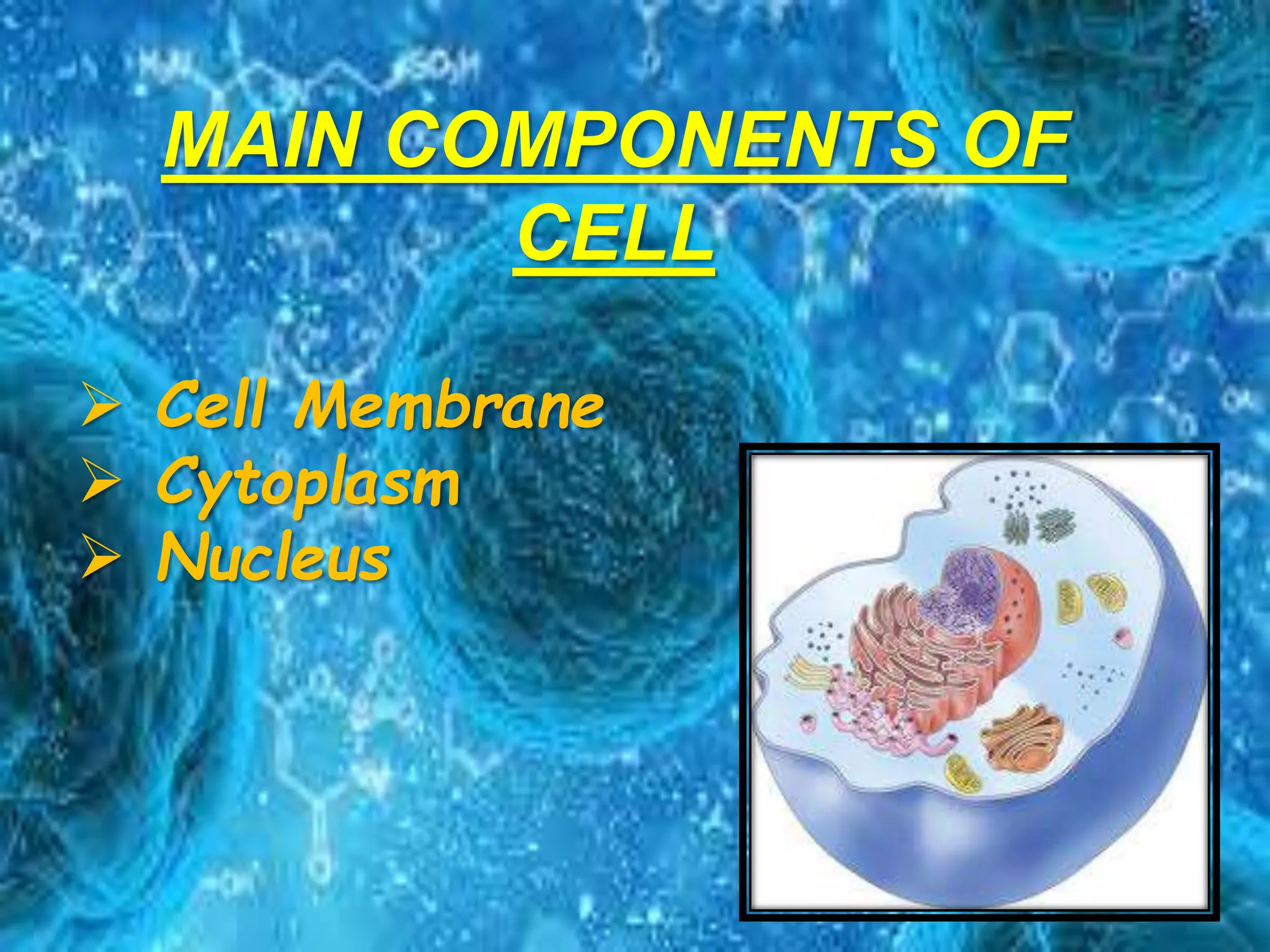
MAIN COMPONENTS OF
CELL
 Cell Membrane
 Cytoplasm
 Nucleus
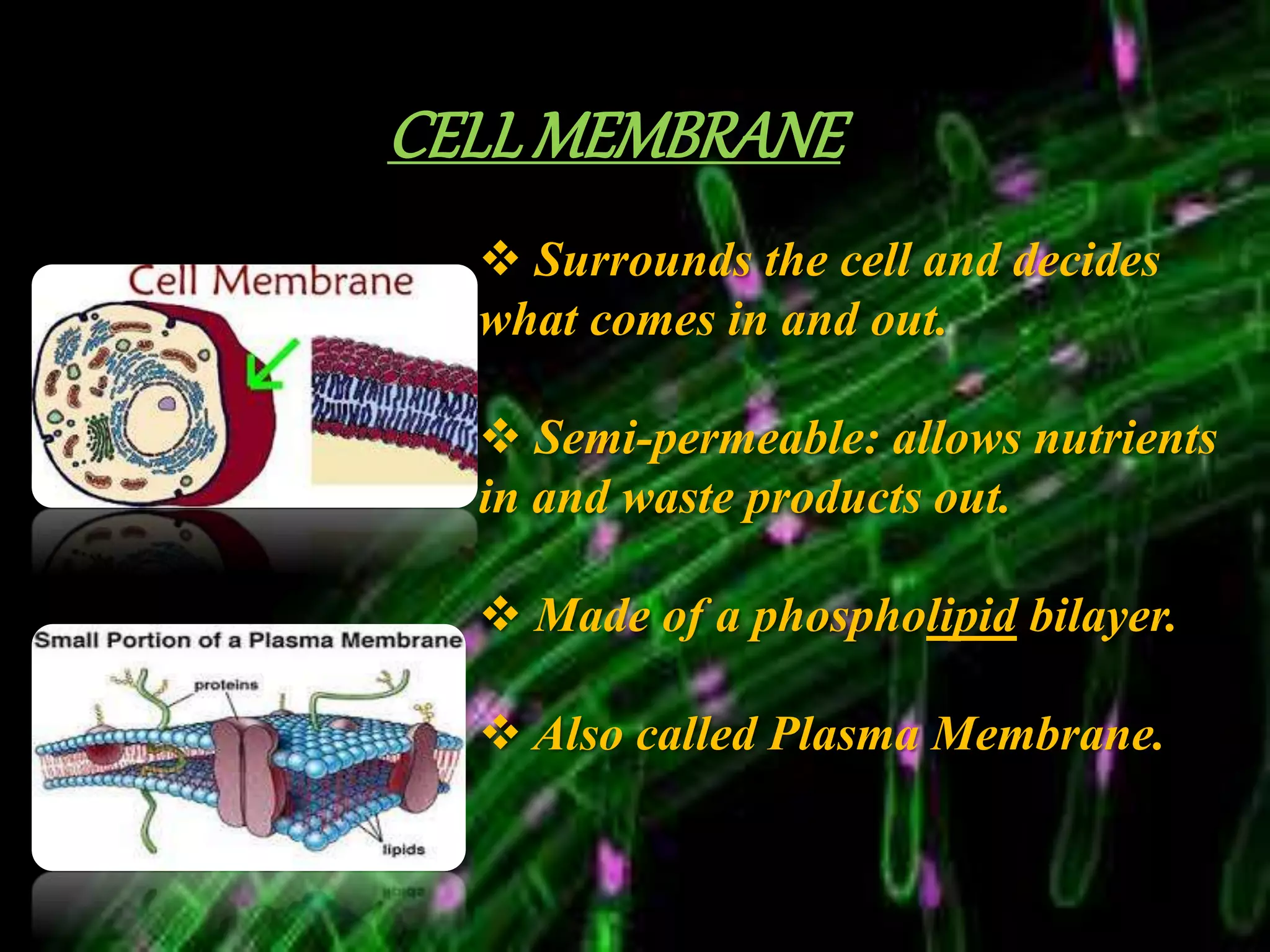
CELLMEMBRANE
 Surrounds the cell and decides
what comes in and out.
 Semi-permeable: allows nutrients
in and waste products out.
 Made of a phospholipid bilayer.
 Also called Plasma Membrane.
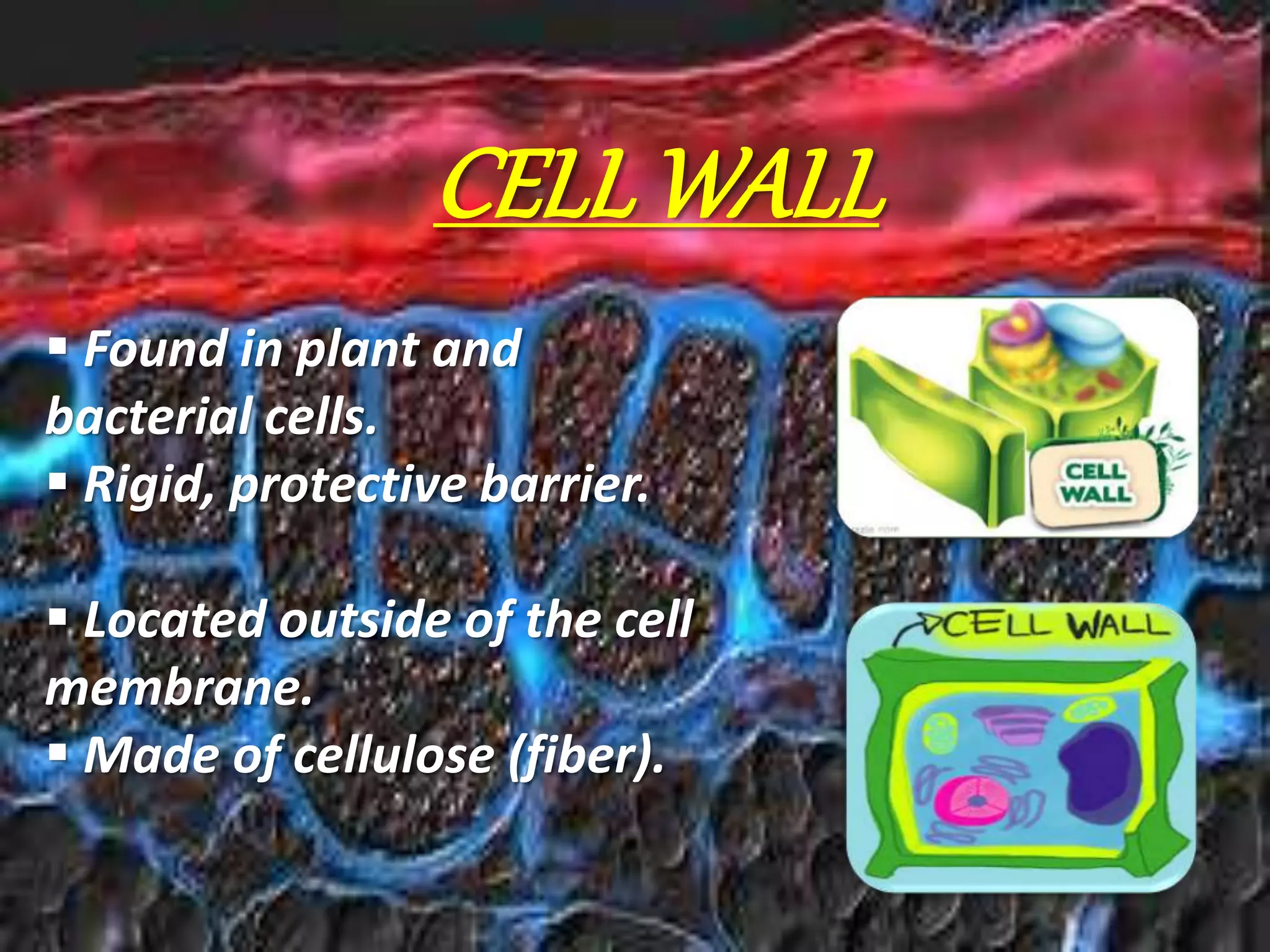
CELLWALL
 Found in plant and
bacterial cells.
 Rigid, protective barrier.
 Located outside of the cell
membrane.
 Made of cellulose (fiber).
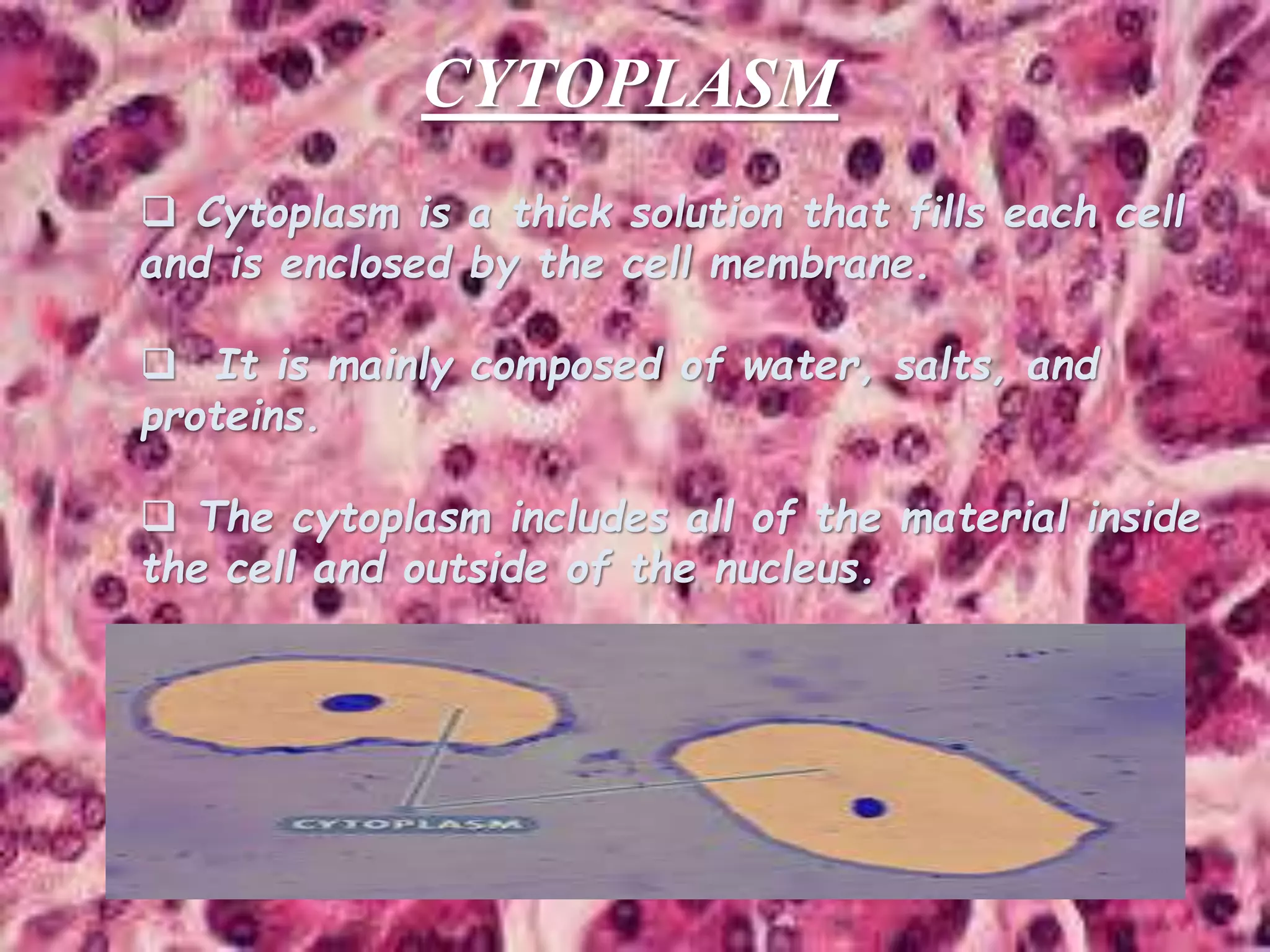
 Cytoplasm is a thick solution that fills each cell
and is enclosed by the cell membrane.
 It is mainly composed of water, salts, and
proteins.
 The cytoplasm includes all of the material inside
the cell and outside of the nucleus.
CYTOPLASM
CELL
ORGANELLES
CELLORGANELLES
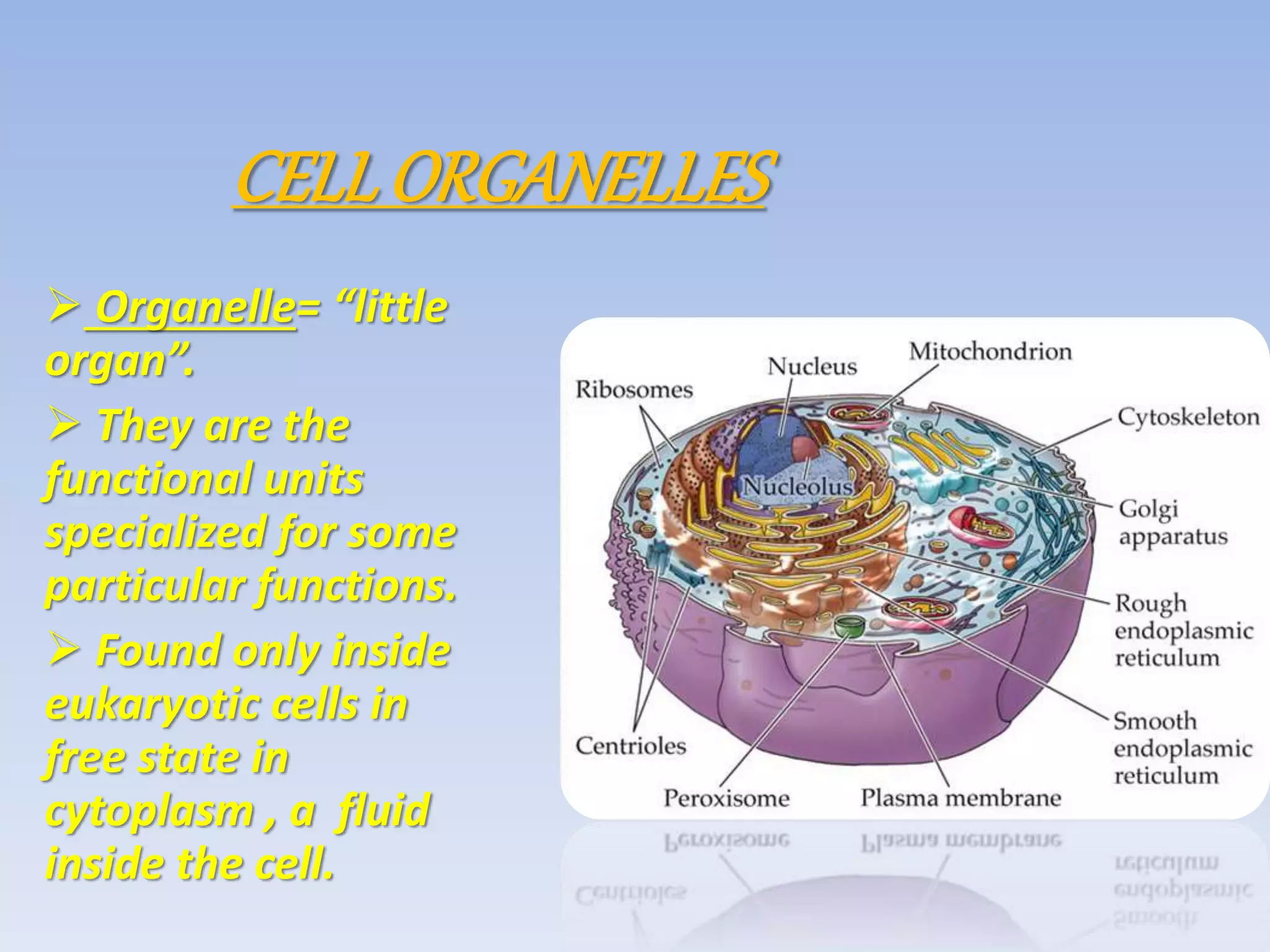
 Organelle= “little
organ”.
 They are the
functional units
specialized for some
particular functions.
 Found only inside
eukaryotic cells in
free state in
cytoplasm , a fluid
inside the cell.
LISTOF SOMEOF THECELLORGANELLES
 NUCLEUS
 ENDOPLASMIC
RETICULUM
 RIBOSOMES
 VACUOLE
 GOLGI APPARATUS
 LYSOSOMES
 MITOCHONDRIA
 PLASTIDS
 CENTRIOLE
NUCLEUS
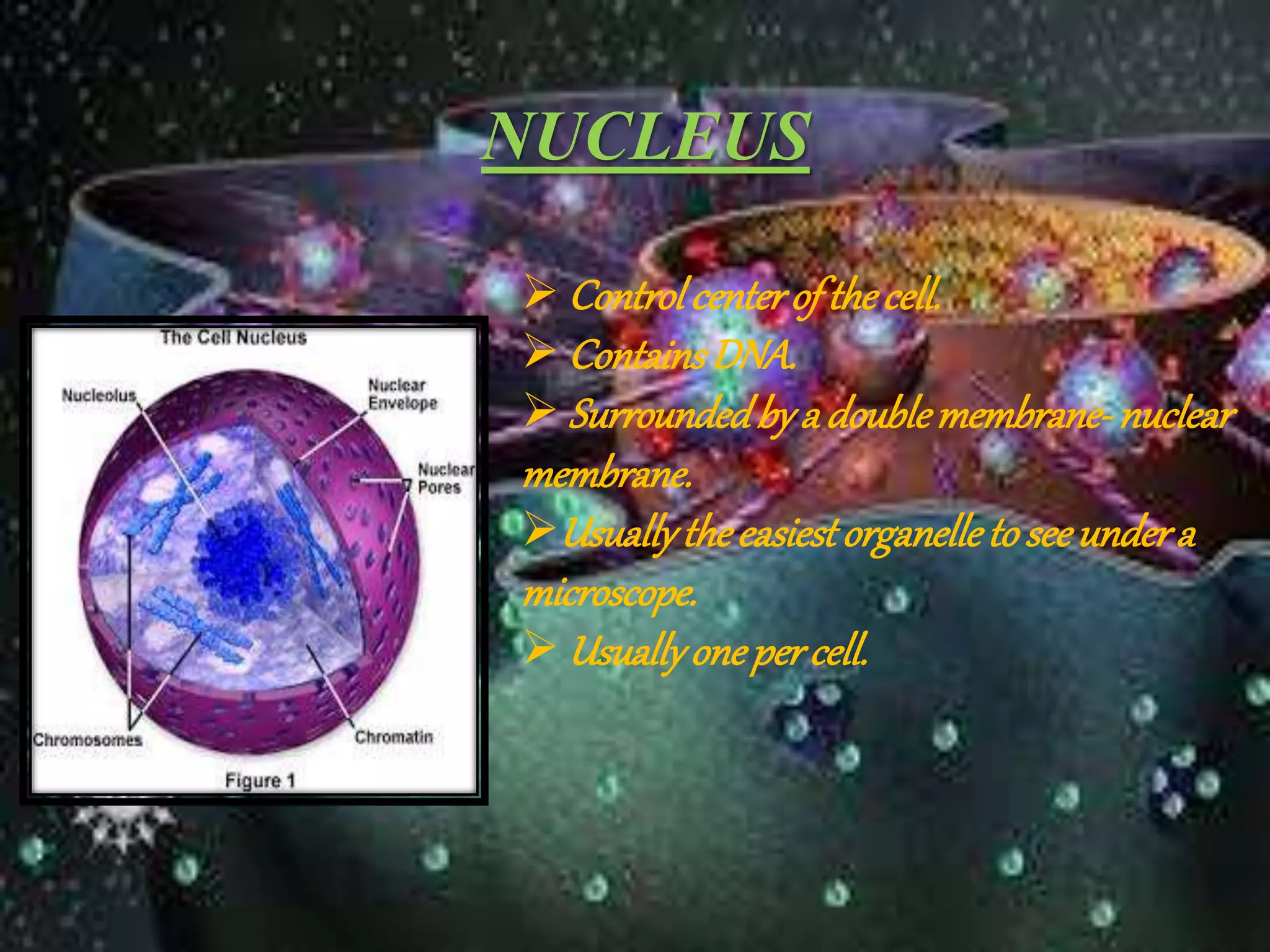
 Controlcenterof thecell.
 ContainsDNA.
 Surroundedby a doublemembrane-nuclear
membrane.
Usuallytheeasiestorganelletoseeundera
microscope.
 Usuallyonepercell.
ENDOPLASMIC RETICULUM
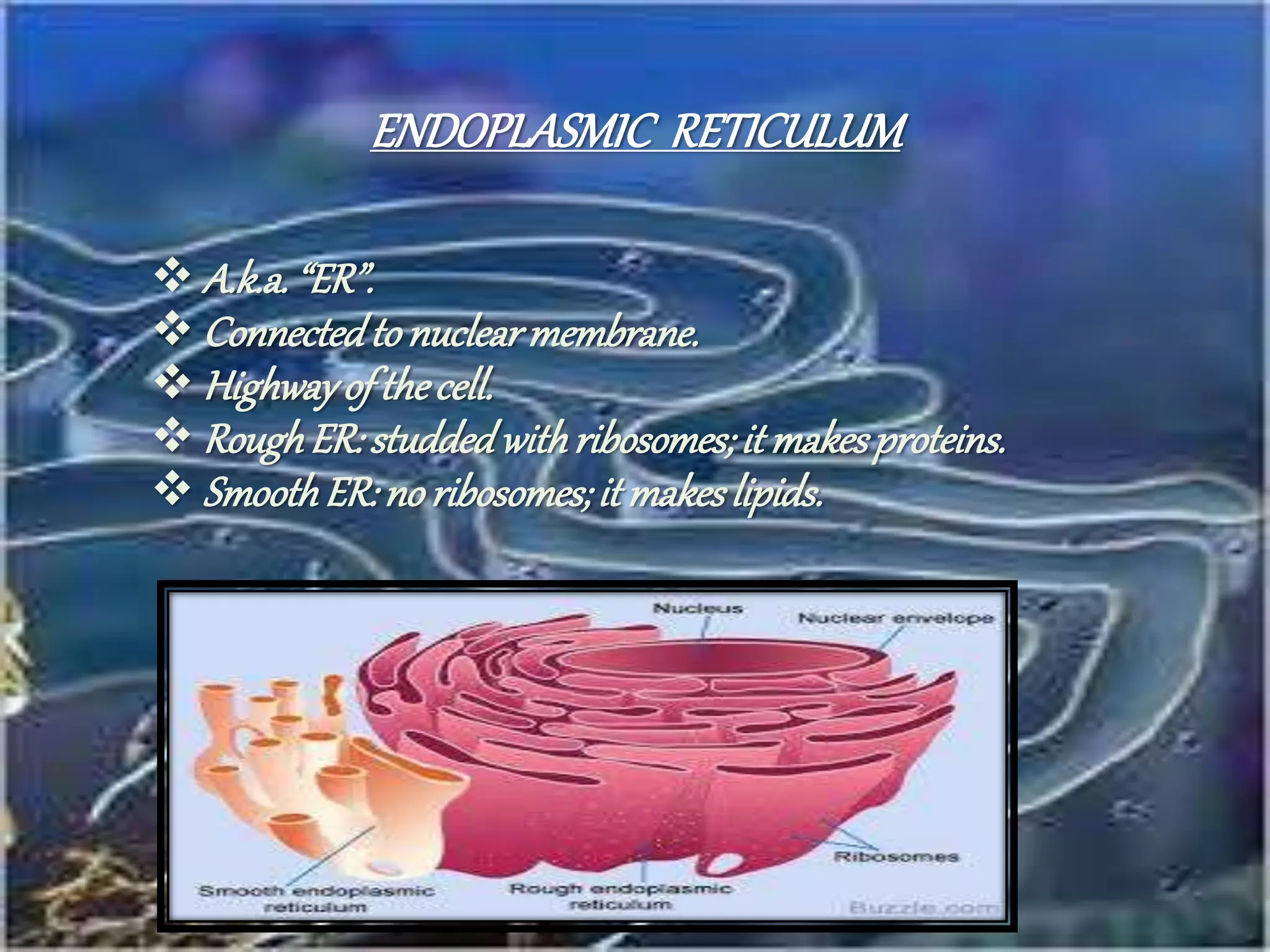
 A.k.a.“ER”.
 Connectedtonuclearmembrane.
 Highwayof thecell.
 RoughER:studdedwithribosomes;it makesproteins.
 SmoothER:no ribosomes;it makeslipids.
RIBOSOMES
 Site of protein synthesis.
 Found attached to rough ER or
floating free in cytoplasm.
 Produced in a part of the nucleus
called the nucleolus.
Note : Polypeptide is a chain of amino
acid. Also, known as proteins
 Largecentral vacuoleusually
inplantcells.
 Smallinanimalcells.
 Storagecontainerforwater,
food,enzymes,wastes,
pigments,etc.
VACUOLES
o Lookslikea stackof plates.
o Stores,modifiesandpackages
proteins.
o Moleculestransportedtoandfrom
theGolgiby meansof vesicles.
o Alsoknownas golgibodies.
GOLGIAPPARATUS
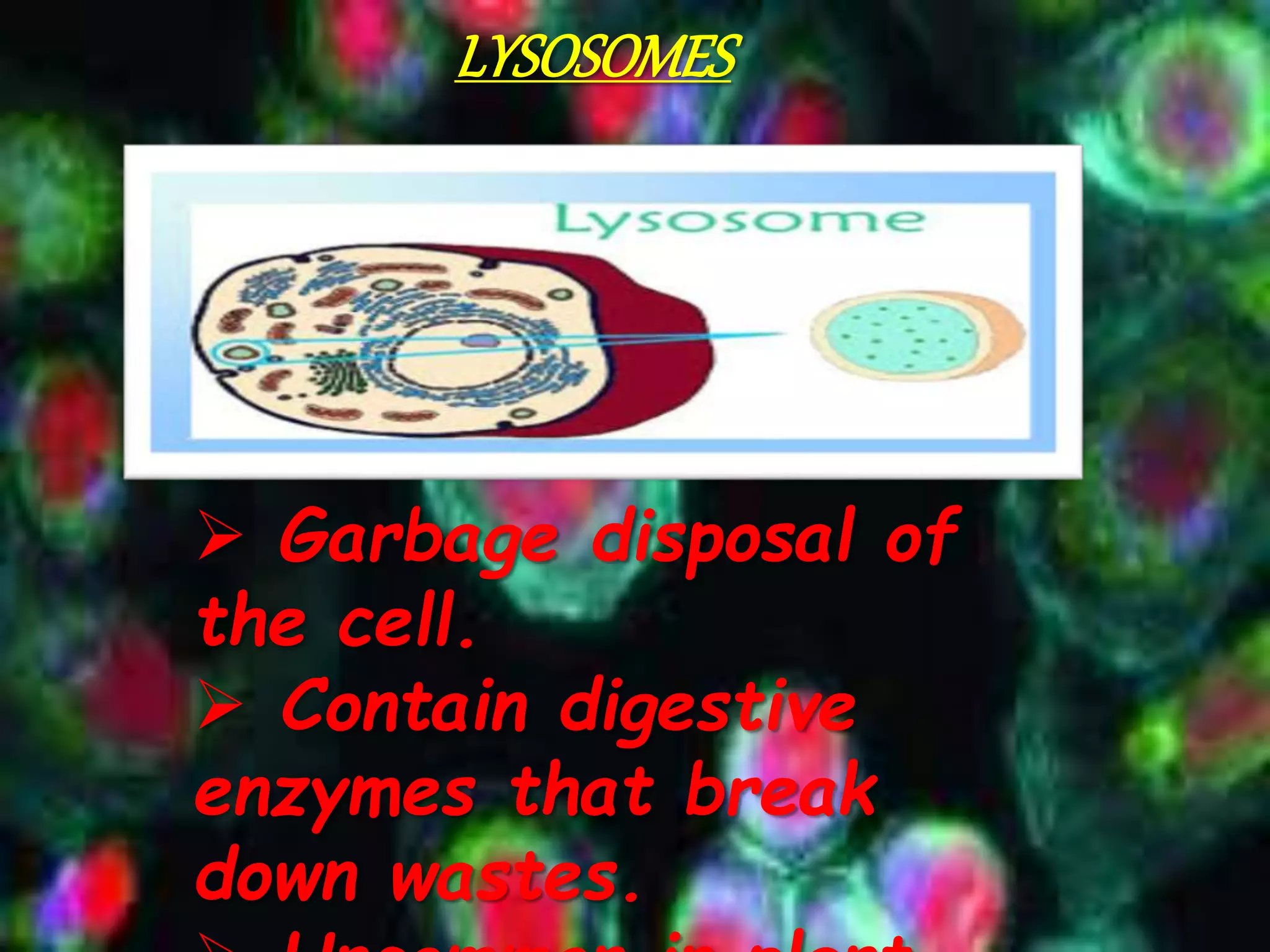
 Garbage disposal of
the cell.
 Contain digestive
enzymes that break
down wastes.
LYSOSOMES
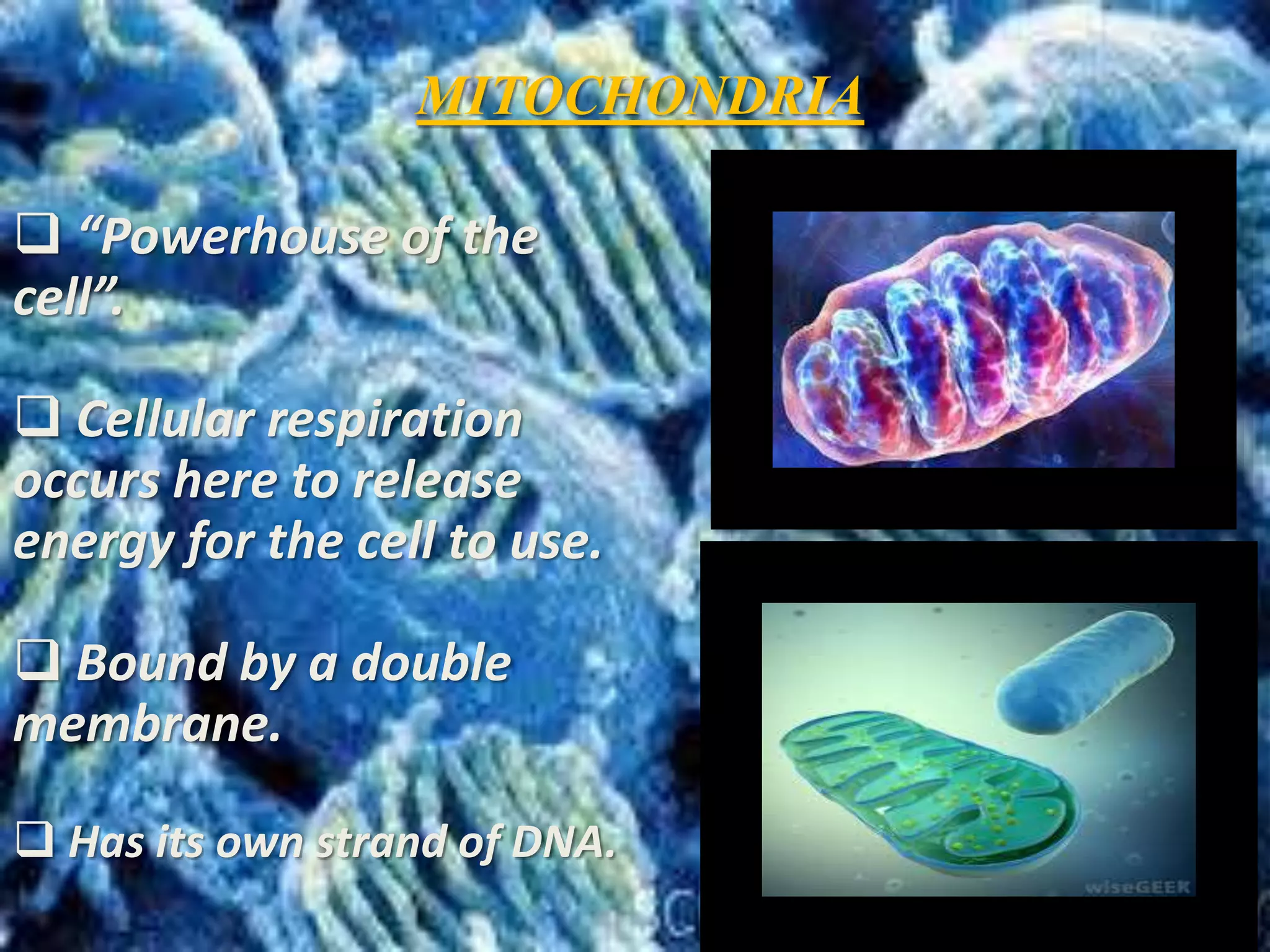
 “Powerhouse of the
cell”.
 Cellular respiration
occurs here to release
energy for the cell to use.
 Bound by a double
membrane.
 Has its own strand of DNA.
MITOCHONDRIA
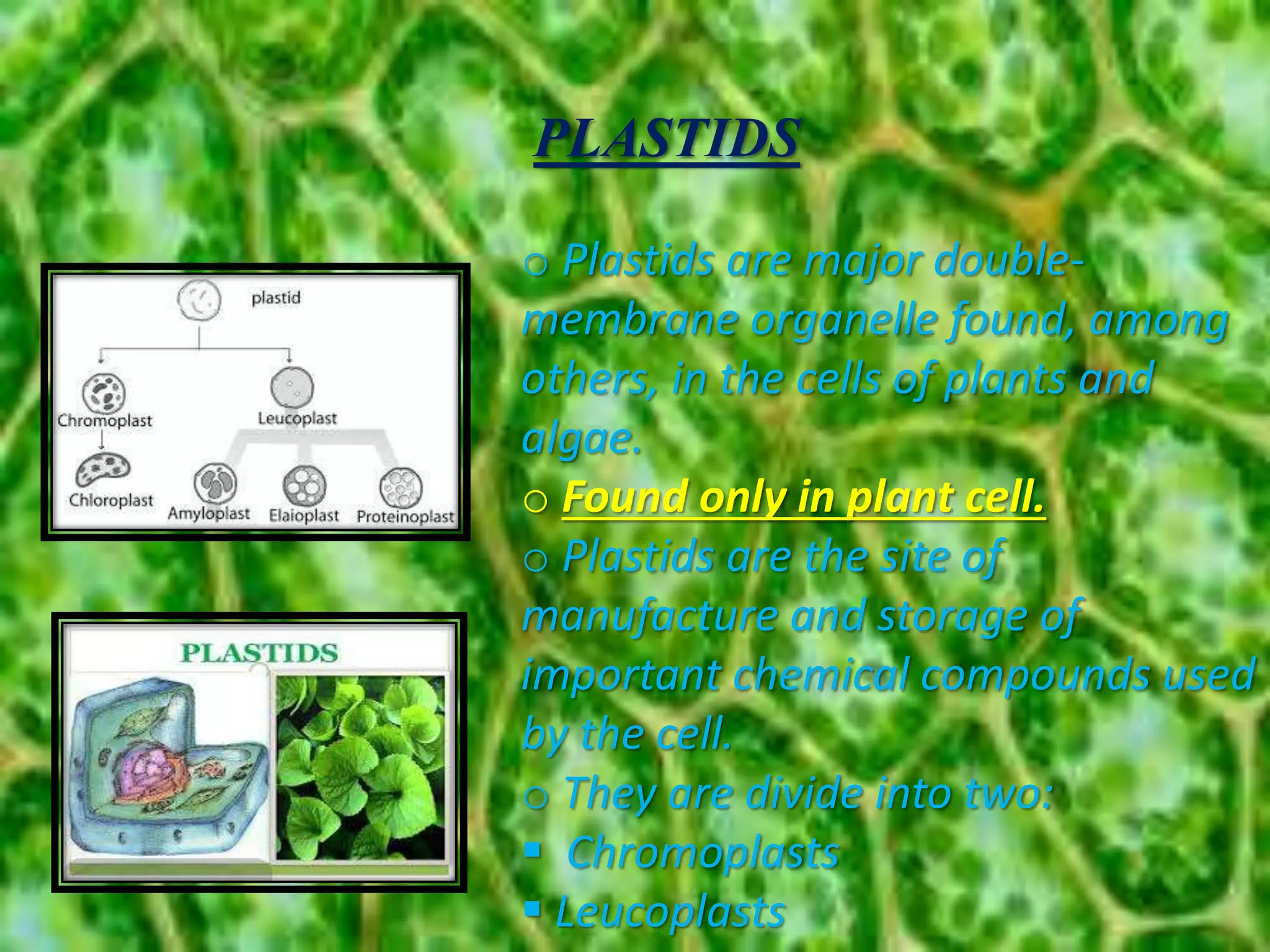
o Plastids are major double-
membrane organelle found, among
others, in the cells of plants and
algae.
o Found only in plant cell.
o Plastids are the site of
manufacture and storage of
important chemical compounds used
by the cell.
o They are divide into two:
 Chromoplasts
 Leucoplasts
PLASTIDS
LET’S REVISE
WITHACELLSONG
THECELLSONG
A presentation by
Harshpreet Kaur
Of Class XI- A

Cell Organelles with a cell song

  • 2.
    CELL  Cells arethe basic unit of all living things.  Cell Theory: • All organisms are made up of one or more cells. • The cell is the basic unit of all organisms all cells come from cells. • All cells arise from pre- existing cells. (BASIC INTRODUCTION)
  • 3.
    MAIN COMPONENTS OF CELL Cell Membrane  Cytoplasm  Nucleus
  • 4.
    CELLMEMBRANE  Surrounds thecell and decides what comes in and out.  Semi-permeable: allows nutrients in and waste products out.  Made of a phospholipid bilayer.  Also called Plasma Membrane.
  • 5.
    CELLWALL  Found inplant and bacterial cells.  Rigid, protective barrier.  Located outside of the cell membrane.  Made of cellulose (fiber).
  • 6.
     Cytoplasm isa thick solution that fills each cell and is enclosed by the cell membrane.  It is mainly composed of water, salts, and proteins.  The cytoplasm includes all of the material inside the cell and outside of the nucleus. CYTOPLASM
  • 7.
  • 8.
    CELLORGANELLES  Organelle= “little organ”. They are the functional units specialized for some particular functions.  Found only inside eukaryotic cells in free state in cytoplasm , a fluid inside the cell.
  • 9.
    LISTOF SOMEOF THECELLORGANELLES NUCLEUS  ENDOPLASMIC RETICULUM  RIBOSOMES  VACUOLE  GOLGI APPARATUS  LYSOSOMES  MITOCHONDRIA  PLASTIDS  CENTRIOLE
  • 10.
    NUCLEUS  Controlcenterof thecell. ContainsDNA.  Surroundedby a doublemembrane-nuclear membrane. Usuallytheeasiestorganelletoseeundera microscope.  Usuallyonepercell.
  • 11.
    ENDOPLASMIC RETICULUM  A.k.a.“ER”. Connectedtonuclearmembrane.  Highwayof thecell.  RoughER:studdedwithribosomes;it makesproteins.  SmoothER:no ribosomes;it makeslipids.
  • 12.
    RIBOSOMES  Site ofprotein synthesis.  Found attached to rough ER or floating free in cytoplasm.  Produced in a part of the nucleus called the nucleolus. Note : Polypeptide is a chain of amino acid. Also, known as proteins
  • 13.
     Largecentral vacuoleusually inplantcells. Smallinanimalcells.  Storagecontainerforwater, food,enzymes,wastes, pigments,etc. VACUOLES
  • 14.
    o Lookslikea stackofplates. o Stores,modifiesandpackages proteins. o Moleculestransportedtoandfrom theGolgiby meansof vesicles. o Alsoknownas golgibodies. GOLGIAPPARATUS
  • 15.
     Garbage disposalof the cell.  Contain digestive enzymes that break down wastes. LYSOSOMES
  • 16.
     “Powerhouse ofthe cell”.  Cellular respiration occurs here to release energy for the cell to use.  Bound by a double membrane.  Has its own strand of DNA. MITOCHONDRIA
  • 17.
    o Plastids aremajor double- membrane organelle found, among others, in the cells of plants and algae. o Found only in plant cell. o Plastids are the site of manufacture and storage of important chemical compounds used by the cell. o They are divide into two:  Chromoplasts  Leucoplasts PLASTIDS
  • 18.
  • 19.
  • 20.
    A presentation by HarshpreetKaur Of Class XI- A