• A naturally occurring substance of inorganic
  origin.
• Their molecular structures are regular and
  their chemical composition varies only within
  specific limits.
• A natural solid substance found in the earth’s
  crust.
• Substances that make up the rocks of Earth.
• They are HOMOGENOUS – every part of it
  is the same as every other part.
PRINCIPAL GROUPS
  •   Native Elements
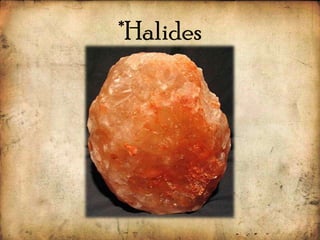
  •   Halides
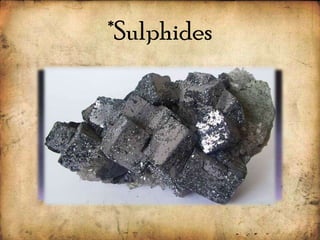
  •   Sulphides
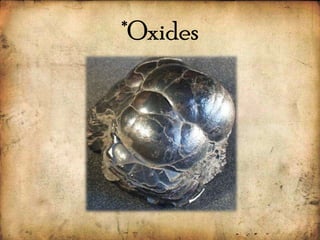
  •   Oxides
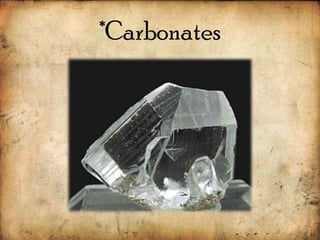
  •   Carbonates
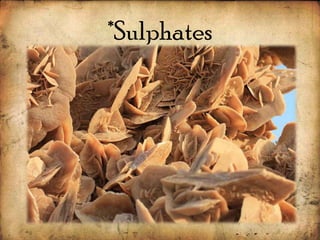
  •   Sulphates
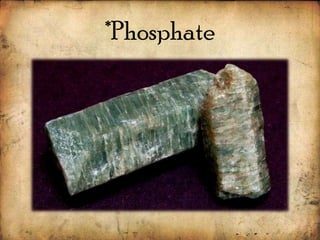
  •   Phosphates
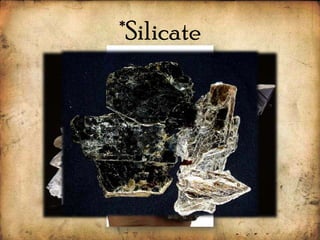
  •   Silicates
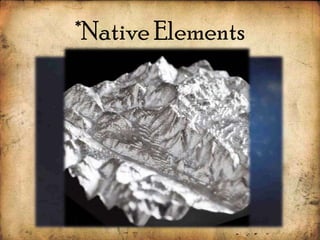
*Native Elements
*Halides
*Sulphides
*Oxides
*Carbonates
*Sulphates
*Phosphate
*Silicate
USES
• Sources of essential metals.
  – Ores: a natural occurring metallic compound
    from which the metal can be extended.
• Used as catalysts or fluxes in chemical
  reactions.
• Some are of aesthetic value as collectors’
  items or jewelry stones.
PROPERTIES TO IDENTIFY A MINERAL

        • Crystal Shape
        • Luster
           –Metallic
           –Non-metallic
        • Color
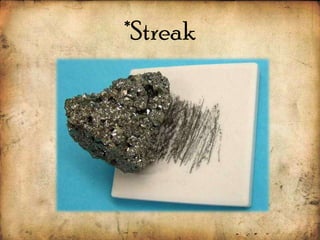
        • Streak
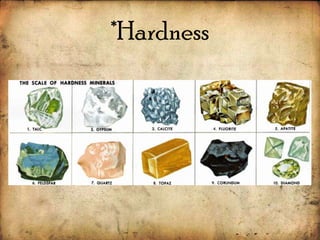
        • Hardness
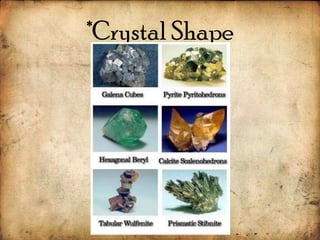
*Crystal Shape
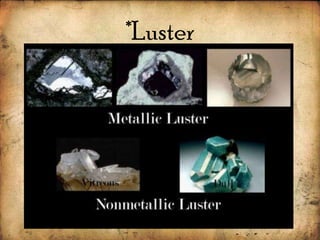
*Luster
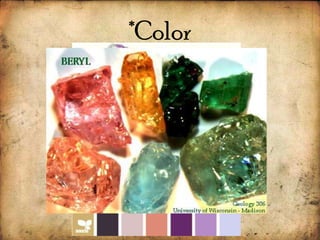
*Color
*Streak
*Hardness
MINERALS THAT ARE PART OF A
         BALANCED DIET
• Iron – essential constituent of hemoglobin
• Calcium – for strong bones and teeth, and for
  muscle contraction
• Sodium – (salt) for the nerve cells and to produce
  hydrochloric acid for digestion
• Iodine – used to create thyroxine, hormone partly
  responsible for controlling metabolic rate in body
Minerals composed of
 organic matter (crude
 oil, coal) are not true
 minerals but are called
 minerals.
Minerals envi sci   buenavista

Minerals envi sci buenavista

  • 2.
    • A naturallyoccurring substance of inorganic origin. • Their molecular structures are regular and their chemical composition varies only within specific limits. • A natural solid substance found in the earth’s crust. • Substances that make up the rocks of Earth. • They are HOMOGENOUS – every part of it is the same as every other part.
  • 3.
    PRINCIPAL GROUPS • Native Elements • Halides • Sulphides • Oxides • Carbonates • Sulphates • Phosphates • Silicates
  • 4.
  • 5.
  • 6.
  • 7.
  • 8.
  • 9.
  • 10.
  • 11.
  • 12.
    USES • Sources ofessential metals. – Ores: a natural occurring metallic compound from which the metal can be extended. • Used as catalysts or fluxes in chemical reactions. • Some are of aesthetic value as collectors’ items or jewelry stones.
  • 13.
    PROPERTIES TO IDENTIFYA MINERAL • Crystal Shape • Luster –Metallic –Non-metallic • Color • Streak • Hardness
  • 14.
  • 15.
  • 16.
  • 17.
  • 18.
  • 19.
    MINERALS THAT AREPART OF A BALANCED DIET • Iron – essential constituent of hemoglobin • Calcium – for strong bones and teeth, and for muscle contraction • Sodium – (salt) for the nerve cells and to produce hydrochloric acid for digestion • Iodine – used to create thyroxine, hormone partly responsible for controlling metabolic rate in body
  • 20.
    Minerals composed of organic matter (crude oil, coal) are not true minerals but are called minerals.