Cataracts
Cataracts
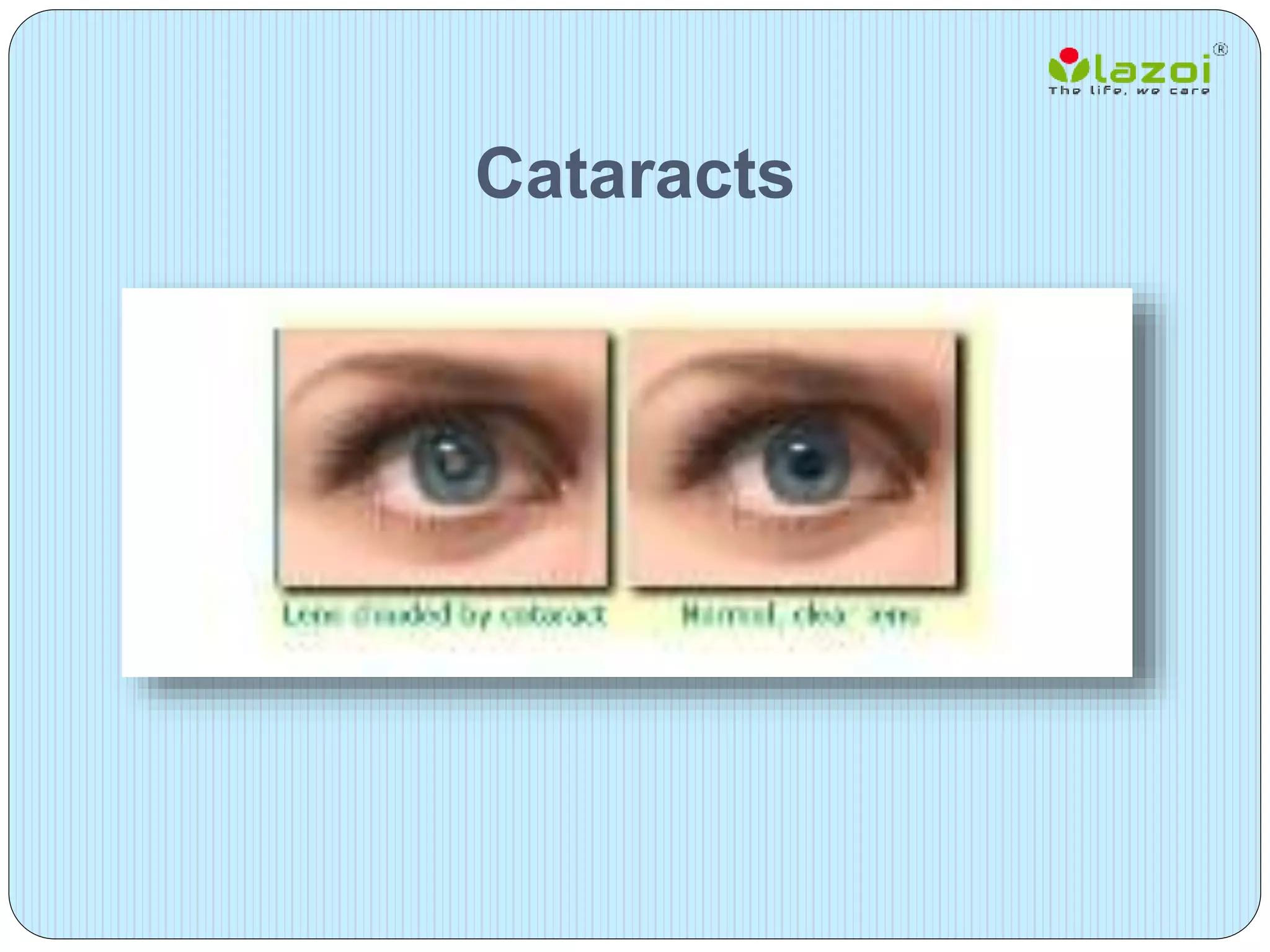
A cataract is a clouding of the lens in the eye
that affects vision. For people who have
cataracts, seeing through cloudy lenses is a
bit like looking through a frosty or fogged-up
window. Clouded vision caused by cataracts
can make it more difficult to read, drive a car,
especially at night. Most cataracts develop
slowly and don’t disturb your eyesight early
on. It is commonly seen in older people
because cataracts will eventually interfere
with the vision overtime.
Causes of cataracts- the cloud
lenses
Mostly, cataracts develop when aging or
injury changes the tissue that makes up your
eye’s lens. Some cataracts are because of
inherited genetic disorders that may lead to
other health conditions and increase your risk
of cataracts. Cataracts may also be result of
various eye conditions, medical conditions
like diabetes, trauma or previous eye surgery.
Long term use of steroid medications may
also contribute to cataracts.
Diagnoses of cataracts- the cloud
lenses
Cataract is diagnosed through
a comprehensive eye examination that
includes:
 Visual acuity test: This eye chart test
measures how well you see at various
distances.
 Dilated eye exam: Drops are placed in your
eyes to widen the pupils. Your
ophthalmologist uses a magnifying lens to
examine your retina and optic nerve for signs
of damage and other eye problems.
 Tonometry: Numbing drops may be applied to
your eye to check the pressure inside the eye.
Symptoms
Signs and symptoms of cataracts include the
following:
 Clouded, blurred or dim vision
 Increasing difficulty with vision at night
 Sensitivity to light and glare
 Regular changes in eyeglass or contact lens
prescription
 Fading or yellowing of colours
 Double vision in a single eye
Initially, the cloudiness in your vision caused by a
cataract may affect only a small part of the eye’s
lens and you may not be aware of any vision loss.
As the cataract develops more, it covers major
portion of your lens and distorts the light passing
through the lens.
Treatments
The symptoms of early cataract may be rectified with new
eyeglasses, brighter lighting, anti-glare sunglasses, or
magnifying lenses. If these measures fail to respond,
surgery is the only option. It involves removing the cloudy
lens and replacing it with an artificial lens.
An eye specialist suggests surgery to treat cataract only
when vision loss interferes with your everyday activities,
such as driving, reading, or watching TV. You do not have to
rush into surgery because delaying cataract surgery will not
cause long-term damage to your eye or make the surgery
more difficult. You and your eye specialist can make this
decision together.
Sometimes a cataract should be removed if it prevents
examination or treatment of another eye problem, such as
age-related macular degeneration or diabetic retinopathy. If
your eye doctor finds a cataract, you may not need cataract
surgery for several years.
Treatments
By having your vision tested regularly, you and your eye
doctor can discuss if and when you might need treatment.
Ophthalmologists think several strategies may be helpful to
prevent cataracts or slow the progression of cataracts
including:
 Regular eye examinations
 Quit smoking
 Reduce alcohol use
 Wear sunglasses
 Maintain a healthy weight
 Choose a healthy diet that includes plenty of fruits and
vegetables
Continue:
Logon to
www.lazoi.com
Like us on Facebook
https://www.facebook.com/LazoiTheLife
Follow us on Twitter
https://www.twitter.com/lazoithelife
Follow us on Pinterest
https://www.in.pinterest.com/lazoithelife

Cataracts

  • 1.
  • 2.
    Cataracts A cataract isa clouding of the lens in the eye that affects vision. For people who have cataracts, seeing through cloudy lenses is a bit like looking through a frosty or fogged-up window. Clouded vision caused by cataracts can make it more difficult to read, drive a car, especially at night. Most cataracts develop slowly and don’t disturb your eyesight early on. It is commonly seen in older people because cataracts will eventually interfere with the vision overtime.
  • 3.
    Causes of cataracts-the cloud lenses Mostly, cataracts develop when aging or injury changes the tissue that makes up your eye’s lens. Some cataracts are because of inherited genetic disorders that may lead to other health conditions and increase your risk of cataracts. Cataracts may also be result of various eye conditions, medical conditions like diabetes, trauma or previous eye surgery. Long term use of steroid medications may also contribute to cataracts.
  • 4.
    Diagnoses of cataracts-the cloud lenses Cataract is diagnosed through a comprehensive eye examination that includes:  Visual acuity test: This eye chart test measures how well you see at various distances.  Dilated eye exam: Drops are placed in your eyes to widen the pupils. Your ophthalmologist uses a magnifying lens to examine your retina and optic nerve for signs of damage and other eye problems.  Tonometry: Numbing drops may be applied to your eye to check the pressure inside the eye.
  • 5.
    Symptoms Signs and symptomsof cataracts include the following:  Clouded, blurred or dim vision  Increasing difficulty with vision at night  Sensitivity to light and glare  Regular changes in eyeglass or contact lens prescription  Fading or yellowing of colours  Double vision in a single eye Initially, the cloudiness in your vision caused by a cataract may affect only a small part of the eye’s lens and you may not be aware of any vision loss. As the cataract develops more, it covers major portion of your lens and distorts the light passing through the lens.
  • 6.
    Treatments The symptoms ofearly cataract may be rectified with new eyeglasses, brighter lighting, anti-glare sunglasses, or magnifying lenses. If these measures fail to respond, surgery is the only option. It involves removing the cloudy lens and replacing it with an artificial lens. An eye specialist suggests surgery to treat cataract only when vision loss interferes with your everyday activities, such as driving, reading, or watching TV. You do not have to rush into surgery because delaying cataract surgery will not cause long-term damage to your eye or make the surgery more difficult. You and your eye specialist can make this decision together. Sometimes a cataract should be removed if it prevents examination or treatment of another eye problem, such as age-related macular degeneration or diabetic retinopathy. If your eye doctor finds a cataract, you may not need cataract surgery for several years.
  • 7.
    Treatments By having yourvision tested regularly, you and your eye doctor can discuss if and when you might need treatment. Ophthalmologists think several strategies may be helpful to prevent cataracts or slow the progression of cataracts including:  Regular eye examinations  Quit smoking  Reduce alcohol use  Wear sunglasses  Maintain a healthy weight  Choose a healthy diet that includes plenty of fruits and vegetables Continue:
  • 8.
    Logon to www.lazoi.com Like uson Facebook https://www.facebook.com/LazoiTheLife Follow us on Twitter https://www.twitter.com/lazoithelife Follow us on Pinterest https://www.in.pinterest.com/lazoithelife