By : Mohammad khalil Abu Abd Allah
Basem El Najry
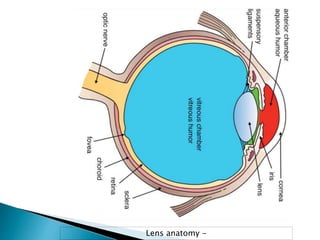
 structure of the lens : The lens is biconvex ,
transparent , avascular structure with no nerve
supply.
 part of the anterior segment of the eye a long
with the cornea , behind the iris in front of the
vitreous humour
 suspended in place by the suspensory ligament (
zonules )
 The lens measures 9mm in diameter and 4 mm
thick ,
 The lens measures 9mm in diameter and 4 mm
thick ,
Lens anatomy -
Lens anatomy -
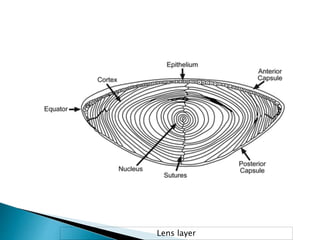
 lens capsule
 subcapsular epithelium
 the cortex
lens composition and function :
lens composed of 65% water and 35% protein and it
also contain a trace of minerals Na , K , Ca.
the function of the lens is to focus lights rays on the
retina by accommodation
Lens layer
 it is an opacity or cloudiness of the normally clear ,
crystalline lens
Changing in lens color
 lens remain transparent until the age of 40 years
 Lens fibers produced inside the lens through out
the life pushing toward the center ( nuclei )
 By aging the ability to arrange denatured protein
fibers this lead change in transparency of the lens
 the lens become more dense and the color changed
from clear to yellow or brown that's by the age of
70 years the lens become sufficiently cloudy to
obstruct
 also the enzymatic and antioxidant protection of
lens ( which protect the lens from the ultra violet
rays) decreased with age
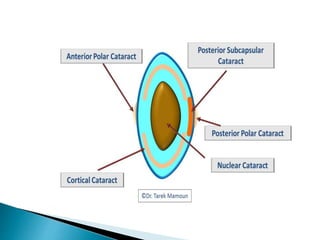
 according to locations : anterior pole cataract , posterior pole
cataract, nuclear cataract, cortical and lamellar cataract
 according to the degree : immature , mature and hyper
mature.
Types of cataract
age related
Traumatic
Toxic
congenital
secondary to existing eye disease
associated with systemic disease
 poor central vision
 frequent changes in eyeglass prescription
 changes in color vision
 increased glare from lights, especially oncoming
headlights when driving at night
 "second sight" improvement in near vision (no longer
needing reading glasses), but a decrease in distance
vision
 poor vision in sunlight
 presence of a milky whiteness in the pupil as the
cataract progresses.
 Cataracts are easily diagnosed from the reporting of
symptoms, a visual acuity exam, refraction test , and by
examination of the eye itself by slit lamp.
 If a cataract is not bothersome, Cataracts usually do not harm
eye, The following may help people who have an early cataract:
 Better eyeglasses
 Better lighting
 Magnifying lenses
 Sunglasses
 The only treatment for a cataract is surgery to remove it and
applied intra ocular lens . Surgery is done if you cannot perform
normal activities, such as driving, reading, or looking at
computer or video screens, even with glasses. Surgery is usually
'outpatient' and performed using local anesthesia. Approximately
90% of patients can achieve a corrected vision of 6/12 or better
after surgery.
 Phacoemulsification is the most widely used cataract
surgery today. This procedure uses ultrasonic energy (U/S)
to emulsify the cataract lens.
 Extracapsular cataract extraction (ECCE), consists of
removing the lens manually, but leaving the majority of the
capsule intact. The lens is expressed through a 10–12 mm
incision which is closed with sutures at the end of surgery.
 Intracapsular cataract extraction (ICCE) is rarely
performed. The lens and surrounding capsule are removed
in one piece through a large incision while pressure is
applied to the vitreous membrane
 The best prevention involves controlling diseases that increase
the risk of a cataract, and avoiding exposure to factors known
to promote cataract formation.
 Diabetes
 Eye inflammation
 Eye injury
 Family history of cataracts
 Long-term use of corticosteroids (taken by mouth) or certain
other medications
 Radiation exposure
 Smoking
 Surgery for another eye problem
 Too much exposure to ultraviolet light (sunlight)
 wearing ultraviolet-protecting sunglasses may slow the
development of cataract , avoiding fatty diet and there
is studies that regular intake of antioxidants (such as
vitamins A, C and E) would protect against the risk of
cataracts.
 pre op :
 B scan , stop anticoagulant medication
 explain the condition and how the surgery will done (
using of anesthesia ,and using of the artificial lens)
 how long the patient will be at the hospital
 consent form
 applying of dilating drops before the surgery
 post op :
 examine the eye for any bleeding and the cornea should
be free
 teach patient how to clean his eye no rubbing or over
bending or lifting weight more than 10 kg and avoid
straining for about 1 month
 using cartella shield at night for 2 weeks
 how to use eye drops ( antibiotic and steroid )
 written instruction leaflet including contact number
 Speculum
 MVR + calibri
 Anesthesia
 Viscoelastics
 Keratome + calibri
 Viscoelastics
 Capsulorhexis
 Hydrodesection
 phaco probe + chopper
 Irrigation aspiration
 Viscoelastics

 Lens injector + dialer
 irrigation aspiration
 Hydration

Cataract

  • 1.
    By : Mohammadkhalil Abu Abd Allah Basem El Najry
  • 2.
     structure ofthe lens : The lens is biconvex , transparent , avascular structure with no nerve supply.  part of the anterior segment of the eye a long with the cornea , behind the iris in front of the vitreous humour  suspended in place by the suspensory ligament ( zonules )  The lens measures 9mm in diameter and 4 mm thick ,  The lens measures 9mm in diameter and 4 mm thick ,
  • 3.
  • 4.
  • 5.
     lens capsule subcapsular epithelium  the cortex lens composition and function : lens composed of 65% water and 35% protein and it also contain a trace of minerals Na , K , Ca. the function of the lens is to focus lights rays on the retina by accommodation
  • 6.
  • 7.
     it isan opacity or cloudiness of the normally clear , crystalline lens Changing in lens color
  • 8.
     lens remaintransparent until the age of 40 years  Lens fibers produced inside the lens through out the life pushing toward the center ( nuclei )  By aging the ability to arrange denatured protein fibers this lead change in transparency of the lens  the lens become more dense and the color changed from clear to yellow or brown that's by the age of 70 years the lens become sufficiently cloudy to obstruct  also the enzymatic and antioxidant protection of lens ( which protect the lens from the ultra violet rays) decreased with age
  • 9.
     according tolocations : anterior pole cataract , posterior pole cataract, nuclear cataract, cortical and lamellar cataract  according to the degree : immature , mature and hyper mature. Types of cataract age related Traumatic Toxic congenital secondary to existing eye disease associated with systemic disease
  • 11.
     poor centralvision  frequent changes in eyeglass prescription  changes in color vision  increased glare from lights, especially oncoming headlights when driving at night  "second sight" improvement in near vision (no longer needing reading glasses), but a decrease in distance vision  poor vision in sunlight  presence of a milky whiteness in the pupil as the cataract progresses.
  • 13.
     Cataracts areeasily diagnosed from the reporting of symptoms, a visual acuity exam, refraction test , and by examination of the eye itself by slit lamp.
  • 14.
     If acataract is not bothersome, Cataracts usually do not harm eye, The following may help people who have an early cataract:  Better eyeglasses  Better lighting  Magnifying lenses  Sunglasses  The only treatment for a cataract is surgery to remove it and applied intra ocular lens . Surgery is done if you cannot perform normal activities, such as driving, reading, or looking at computer or video screens, even with glasses. Surgery is usually 'outpatient' and performed using local anesthesia. Approximately 90% of patients can achieve a corrected vision of 6/12 or better after surgery.
  • 15.
     Phacoemulsification isthe most widely used cataract surgery today. This procedure uses ultrasonic energy (U/S) to emulsify the cataract lens.  Extracapsular cataract extraction (ECCE), consists of removing the lens manually, but leaving the majority of the capsule intact. The lens is expressed through a 10–12 mm incision which is closed with sutures at the end of surgery.  Intracapsular cataract extraction (ICCE) is rarely performed. The lens and surrounding capsule are removed in one piece through a large incision while pressure is applied to the vitreous membrane
  • 16.
     The bestprevention involves controlling diseases that increase the risk of a cataract, and avoiding exposure to factors known to promote cataract formation.  Diabetes  Eye inflammation  Eye injury  Family history of cataracts  Long-term use of corticosteroids (taken by mouth) or certain other medications  Radiation exposure  Smoking  Surgery for another eye problem  Too much exposure to ultraviolet light (sunlight)
  • 17.
     wearing ultraviolet-protectingsunglasses may slow the development of cataract , avoiding fatty diet and there is studies that regular intake of antioxidants (such as vitamins A, C and E) would protect against the risk of cataracts.
  • 18.
     pre op:  B scan , stop anticoagulant medication  explain the condition and how the surgery will done ( using of anesthesia ,and using of the artificial lens)  how long the patient will be at the hospital  consent form  applying of dilating drops before the surgery
  • 19.
     post op:  examine the eye for any bleeding and the cornea should be free  teach patient how to clean his eye no rubbing or over bending or lifting weight more than 10 kg and avoid straining for about 1 month  using cartella shield at night for 2 weeks  how to use eye drops ( antibiotic and steroid )  written instruction leaflet including contact number
  • 20.
     Speculum  MVR+ calibri  Anesthesia  Viscoelastics  Keratome + calibri  Viscoelastics
  • 21.
  • 22.
     phaco probe+ chopper  Irrigation aspiration  Viscoelastics 
  • 23.
     Lens injector+ dialer  irrigation aspiration  Hydration