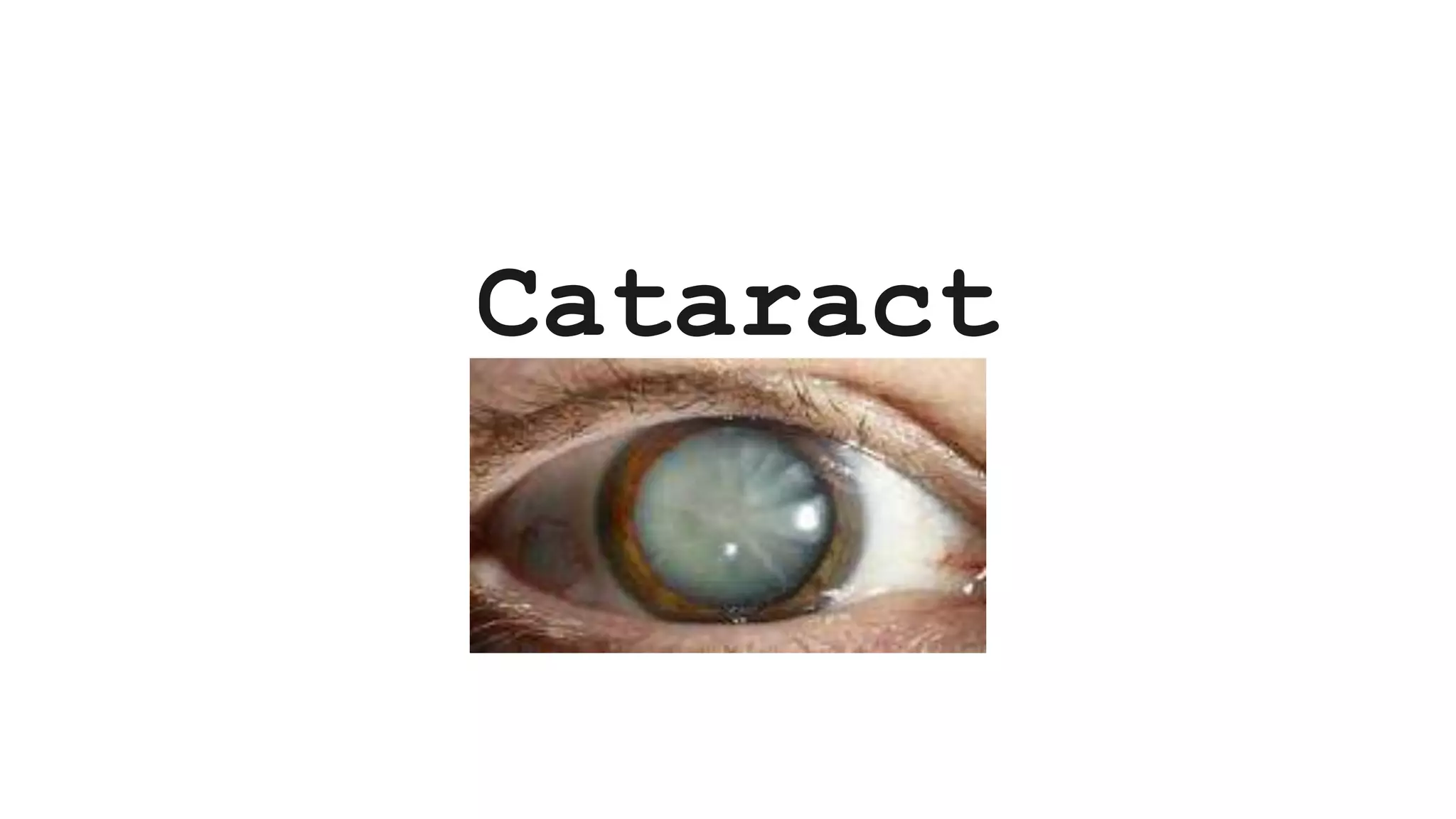
Cataract
Introduction
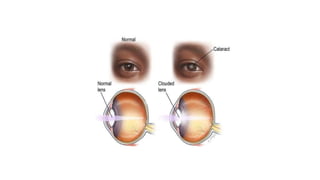
A cataract is a cloudy area in the lens of your eye (the clear part of the
eye that helps to focus light). Cataracts are very common as you get
older. In fact, more than half of the persons of age 80 or
older either have cataracts or have had surgery to get rid of cataracts.
• Over time, cataracts can make your vision blurry, hazy, or less
colorful.You may have trouble reading or doing
other everyday activities.
• Over time, cataracts can lead to vision loss.
Symptoms of cataracts
• Your vision is cloudy or blurry
• Colors look faded
• You can’t see well at night
• Lamps, sunlight, or headlights seem too bright
• You see a halo around lights
• You see double (this sometimes goes away as the cataract gets bigger)
• You have to change the prescription for your glasses or contact lenses
often
What causes cataracts?
• Most cataracts happen because of normal changes in your eyes as
you get older.
• When you’re young, the lens in your eye is clear. Around age 40, the
proteins in the lens of your eye start to break down and clump
together. This clump makes a cloudy area on your lens — known as a
cataract.
You are at risk of cataracts if you have certain problems like diabetes,
smoke, drink too much alcohol, have a family history of cataracts or
had an eye injury, besides spending lot of time in sun can also cause
Cataracts
Steps to Prevent Cataracts
• Have regular eye examinations. Eye examinations can help
detect cataracts and other eye problems at their earliest stages.
• Protect your eyes from the sun. Wear sunglasses and a hat with a brim
to block the sun.
• Protect your eyes from injury. While doing activities like using power
tools or playing certain sports, wear protective eyewear to protect
your eyes from getting accidentally injured.
• Quit smoking.
• Make eye-healthy food choices. Eat plenty of healthy foods — like fruits
and vegetables, leafy greens, nuts, and whole grains.
Types of cataracts
• Cataracts affecting the center of the lens (nuclear
cataracts)- A nuclear cataract may at first cause more
nearsightedness or even a temporary improvement in your
reading vision. But with time, the lens gradually turns more
densely yellow and further clouds your vision.
• Cataracts that affect the edges of the lens (cortical
cataracts). A cortical cataract begins as whitish, wedge-shaped
opacities or streaks on the outer edge of the lens cortex. As it
slowly progresses, the streaks extend to the center and
interfere with light passing through the center of the lens.
Types of cataracts
• Cataracts that affect the back of the lens (posterior
subcapsular cataracts). A posterior subcapsular cataract
starts as a small, opaque area that usually forms near the back
of the lens, right in the path of light. A posterior subcapsular
cataract often interferes with your reading vision, reduces your
vision in bright light, and causes glare or halos around lights at
night.
• Cataracts you're born with (congenital cataracts). Some
people are born with cataracts or develop them during
childhood. These cataracts may be genetic, or associated with
an intrauterine infection or trauma.
CATARACT SURGERY
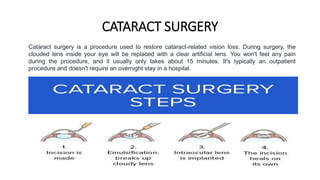
Cataract surgery is a procedure used to restore cataract-related vision loss. During surgery, the
clouded lens inside your eye will be replaced with a clear artificial lens. You won't feel any pain
during the procedure, and it usually only takes about 15 minutes. It's typically an outpatient
procedure and doesn't require an overnight stay in a hospital.
CATARACT SURGERY- PROCEDURE
A modern cataract surgery procedure will often follow these steps:
1.A small incision is made along the side of the cornea.
2.A high-frequency ultrasound device or laser is used to carefully break up the
cloudy lens into small fragments.
3.The lens fragments are gently removed from the eye using suction.
4.After all fragments have been removed, the surgeon places the IOL behind the
pupil and the colored part of the eye (iris) in the same spot your natural lens
occupied.
5.The incision heals on its own without any stitches.
6. A protective shield is placed over the eye to keep it safe during the early stages
of recovery.
If you need surgery in both eyes, your cataract surgeon will typically wait one to
three weeks between procedures, to give the first eye a chance to heal.
References
• National Eye Institute, USA
• https://www.allaboutvision.com/conditions/cataract-surgery.htm
Thanks

cataract.pptx

  • 1.
  • 2.
    Introduction A cataract isa cloudy area in the lens of your eye (the clear part of the eye that helps to focus light). Cataracts are very common as you get older. In fact, more than half of the persons of age 80 or older either have cataracts or have had surgery to get rid of cataracts. • Over time, cataracts can make your vision blurry, hazy, or less colorful.You may have trouble reading or doing other everyday activities. • Over time, cataracts can lead to vision loss.
  • 4.
    Symptoms of cataracts •Your vision is cloudy or blurry • Colors look faded • You can’t see well at night • Lamps, sunlight, or headlights seem too bright • You see a halo around lights • You see double (this sometimes goes away as the cataract gets bigger) • You have to change the prescription for your glasses or contact lenses often
  • 5.
    What causes cataracts? •Most cataracts happen because of normal changes in your eyes as you get older. • When you’re young, the lens in your eye is clear. Around age 40, the proteins in the lens of your eye start to break down and clump together. This clump makes a cloudy area on your lens — known as a cataract. You are at risk of cataracts if you have certain problems like diabetes, smoke, drink too much alcohol, have a family history of cataracts or had an eye injury, besides spending lot of time in sun can also cause Cataracts
  • 6.
    Steps to PreventCataracts • Have regular eye examinations. Eye examinations can help detect cataracts and other eye problems at their earliest stages. • Protect your eyes from the sun. Wear sunglasses and a hat with a brim to block the sun. • Protect your eyes from injury. While doing activities like using power tools or playing certain sports, wear protective eyewear to protect your eyes from getting accidentally injured. • Quit smoking. • Make eye-healthy food choices. Eat plenty of healthy foods — like fruits and vegetables, leafy greens, nuts, and whole grains.
  • 7.
    Types of cataracts •Cataracts affecting the center of the lens (nuclear cataracts)- A nuclear cataract may at first cause more nearsightedness or even a temporary improvement in your reading vision. But with time, the lens gradually turns more densely yellow and further clouds your vision. • Cataracts that affect the edges of the lens (cortical cataracts). A cortical cataract begins as whitish, wedge-shaped opacities or streaks on the outer edge of the lens cortex. As it slowly progresses, the streaks extend to the center and interfere with light passing through the center of the lens.
  • 8.
    Types of cataracts •Cataracts that affect the back of the lens (posterior subcapsular cataracts). A posterior subcapsular cataract starts as a small, opaque area that usually forms near the back of the lens, right in the path of light. A posterior subcapsular cataract often interferes with your reading vision, reduces your vision in bright light, and causes glare or halos around lights at night. • Cataracts you're born with (congenital cataracts). Some people are born with cataracts or develop them during childhood. These cataracts may be genetic, or associated with an intrauterine infection or trauma.
  • 9.
    CATARACT SURGERY Cataract surgeryis a procedure used to restore cataract-related vision loss. During surgery, the clouded lens inside your eye will be replaced with a clear artificial lens. You won't feel any pain during the procedure, and it usually only takes about 15 minutes. It's typically an outpatient procedure and doesn't require an overnight stay in a hospital.
  • 10.
    CATARACT SURGERY- PROCEDURE Amodern cataract surgery procedure will often follow these steps: 1.A small incision is made along the side of the cornea. 2.A high-frequency ultrasound device or laser is used to carefully break up the cloudy lens into small fragments. 3.The lens fragments are gently removed from the eye using suction. 4.After all fragments have been removed, the surgeon places the IOL behind the pupil and the colored part of the eye (iris) in the same spot your natural lens occupied. 5.The incision heals on its own without any stitches. 6. A protective shield is placed over the eye to keep it safe during the early stages of recovery. If you need surgery in both eyes, your cataract surgeon will typically wait one to three weeks between procedures, to give the first eye a chance to heal.
  • 11.
    References • National EyeInstitute, USA • https://www.allaboutvision.com/conditions/cataract-surgery.htm
  • 12.