HUZAIFA ISMAIL
SEC-A
ROLL #006
4TH SEMESTER
Topic of Presentation
Production
Technology
of
Castor bean
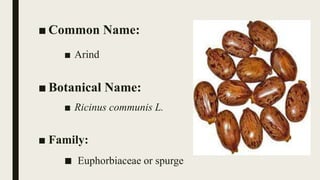
■ Common Name:
■ Arind
■ Botanical Name:
■ Ricinus communis L.
■ Family:
■ Euphorbiaceae or spurge
Botanical Description
■ Indeterminate growth habit.
■ Tap root system.
■ Self and cross pollination.
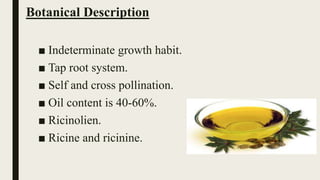
■ Oil content is 40-60%.
■ Ricinolien.
■ Ricine and ricinine.
Origin and History
■ Indigenous to Eastern Africa
■ Castor oil and seed used in INDIA and EGYPT.
Economic Importance
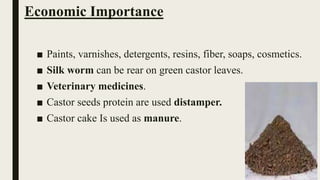
■ Paints, varnishes, detergents, resins, fiber, soaps, cosmetics.
■ Silk worm can be rear on green castor leaves.
■ Veterinary medicines.
■ Castor seeds protein are used distamper.
■ Castor cake Is used as manure.
Soil
■ Drought resistant
■ Grow in dry areas.
■ Moist soil , well drained and not alkaline.
■ It prefer 5 – 6.5 pH.
■ On high fertile land its yield may be low due to high
vegetative growth.
■ It requires 140-190 days to mature.
Locality
■ It is mainly grown in
– Sindh
– districts of Punjab like
Multan and Bahawalpur.
Seed Bed Preparation
■ Deep rooted crop.
■ Deep ploughing to break up the hard sub soil.
■ Dry land is ploughed 2 – 3 times followed by clod
crushing.
■ After good rain or heavy irrigation when soil moisture
is adequate soil is cross ploughed twice than planked.
SowingTime
■ Irrigated areas
■ July
■ Rain fed areas :
■ Sindh : July - August.
■ Punjab : mid July – mid August.
Fertilizers
■ Nitrogen …………. 25-50 kg/ha
■ Phosphorus ………….. 50-70 kg/ha
■ Potassium …………….. 40-50 kg/ha
Seed Rate
■ 12-15 Kgha
■ 10,000 – 15,000 plant population per hectare.
■ Soaking seed in water 12 – 14 hours before sowing
hasten the emergence.
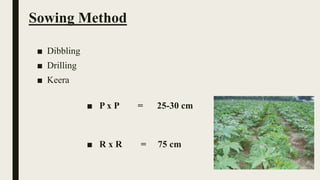
Sowing Method
■ Dibbling
■ Drilling
■ Keera
■ P x P = 25-30 cm
■ R x R = 75 cm
Interculture andWeeding
■ It germinates in 8-20 days after planting.
■ Canopy development is slow so weed control is
major problem.
■ Weeds between the rows can be control by any
secondary tillage instrument but care should be
taken that inter-culturing is shallow and young
seedling are not damaged.
Irrigation
■ In dry areas castor is totally grown on stored moisture.
■ In irrigated areas
■ 4-6 irrigations are enough till maturity.
■ 1st irrigation is given when plant produces 6-8 leaves
■ subsequent irrigations at interval of 7-21 days
depending upon soil and climate conditions.
Harvesting
■ Castor produces spikes.
■ The main spike is harvested within 90-120 days
■ Two picking are done in Sindh and Baluchistan.
■ Three-four are possible in Punjab
■ 1st in December.
■ 2nd in Feb.
■ 3rd in April-May.
■ Harvested spikes are sun dried for 6-8 days.
■ Dried spikes are threshed by gently rubbing the spike with
wooden plank.
■ Castor seed is hard it is not attacked by insect or diseases.
■ Oil content are not reduced even after 3 years.
Yield
■ In irrigated areas
■ 2500-3000 kg/ha.
■ In rain fed areas
■ 500-800 kg/ha.
Insects
■ Semi lopper
■ Jassids
■ Hairy caterpillar
Varieties
■ DS-30 (SINDH).
■ C-3 (PUNJAB).
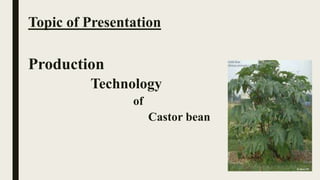
Castor bean.
Castor bean.

Castor bean.

  • 1.
  • 2.
  • 3.
    ■ Common Name: ■Arind ■ Botanical Name: ■ Ricinus communis L. ■ Family: ■ Euphorbiaceae or spurge
  • 4.
    Botanical Description ■ Indeterminategrowth habit. ■ Tap root system. ■ Self and cross pollination. ■ Oil content is 40-60%. ■ Ricinolien. ■ Ricine and ricinine.
  • 5.
    Origin and History ■Indigenous to Eastern Africa ■ Castor oil and seed used in INDIA and EGYPT.
  • 6.
    Economic Importance ■ Paints,varnishes, detergents, resins, fiber, soaps, cosmetics. ■ Silk worm can be rear on green castor leaves. ■ Veterinary medicines. ■ Castor seeds protein are used distamper. ■ Castor cake Is used as manure.
  • 7.
    Soil ■ Drought resistant ■Grow in dry areas. ■ Moist soil , well drained and not alkaline. ■ It prefer 5 – 6.5 pH. ■ On high fertile land its yield may be low due to high vegetative growth. ■ It requires 140-190 days to mature.
  • 8.
    Locality ■ It ismainly grown in – Sindh – districts of Punjab like Multan and Bahawalpur.
  • 9.
    Seed Bed Preparation ■Deep rooted crop. ■ Deep ploughing to break up the hard sub soil. ■ Dry land is ploughed 2 – 3 times followed by clod crushing. ■ After good rain or heavy irrigation when soil moisture is adequate soil is cross ploughed twice than planked.
  • 10.
    SowingTime ■ Irrigated areas ■July ■ Rain fed areas : ■ Sindh : July - August. ■ Punjab : mid July – mid August.
  • 11.
    Fertilizers ■ Nitrogen ………….25-50 kg/ha ■ Phosphorus ………….. 50-70 kg/ha ■ Potassium …………….. 40-50 kg/ha
  • 12.
    Seed Rate ■ 12-15Kgha ■ 10,000 – 15,000 plant population per hectare. ■ Soaking seed in water 12 – 14 hours before sowing hasten the emergence.
  • 13.
    Sowing Method ■ Dibbling ■Drilling ■ Keera ■ P x P = 25-30 cm ■ R x R = 75 cm
  • 14.
    Interculture andWeeding ■ Itgerminates in 8-20 days after planting. ■ Canopy development is slow so weed control is major problem. ■ Weeds between the rows can be control by any secondary tillage instrument but care should be taken that inter-culturing is shallow and young seedling are not damaged.
  • 15.
    Irrigation ■ In dryareas castor is totally grown on stored moisture. ■ In irrigated areas ■ 4-6 irrigations are enough till maturity. ■ 1st irrigation is given when plant produces 6-8 leaves ■ subsequent irrigations at interval of 7-21 days depending upon soil and climate conditions.
  • 16.
    Harvesting ■ Castor producesspikes. ■ The main spike is harvested within 90-120 days ■ Two picking are done in Sindh and Baluchistan. ■ Three-four are possible in Punjab ■ 1st in December. ■ 2nd in Feb. ■ 3rd in April-May. ■ Harvested spikes are sun dried for 6-8 days. ■ Dried spikes are threshed by gently rubbing the spike with wooden plank. ■ Castor seed is hard it is not attacked by insect or diseases. ■ Oil content are not reduced even after 3 years.
  • 17.
    Yield ■ In irrigatedareas ■ 2500-3000 kg/ha. ■ In rain fed areas ■ 500-800 kg/ha.
  • 18.
    Insects ■ Semi lopper ■Jassids ■ Hairy caterpillar
  • 19.