Presentation On
Castor Crop
By: Adil Zia
Class No (618)
Semester 6th
Department Of Agronomy
The University Of Agriculture, Amir
Muhammad Khan Campus Mardan.
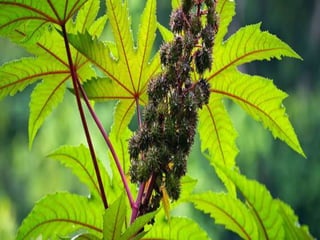
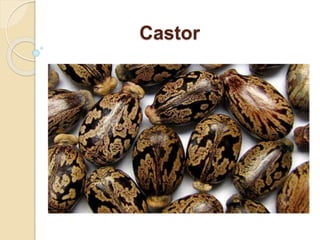
Castor
Genetic diversity
Genetic Diversity
Agenda Of Presentation
 History and origin
 Taxonomic classification
 Botanical description
 Locality and soil
 Cultural practices
 Toxicity of castor
 Uses of castor
History and origin
 Castor seed and oil have been use in India,
Egypt and other countries since ancient
time.
 Because of its widespread distribution it
has become a native plant in many region.
 However , Weiss (1971) concludes that
castor is indigenous to eastern Africa ,
most probably Ethiopia.
Taxonomic classification
 Kingdom Plantae
 Class Dicotlenonae
 order Euphorbiales
 Genus Ricinus
 Species Ricinus communis L.,
Botanical description
 Origin Ehtiopia
 Botanical name ricinus communis l.
 Family Euphorbiaceae
 Locally Arind or Arindi
 Seed oil 40-60%
 Toxic constituent racin and ricinine
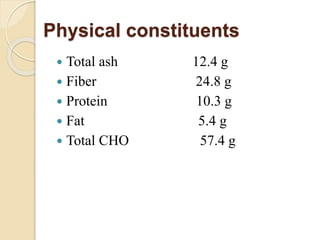
Physical constituents
 Total ash 12.4 g
 Fiber 24.8 g
 Protein 10.3 g
 Fat 5.4 g
 Total CHO 57.4 g
Locality and soil For Castor
Locality and soil
 Drought tolerant and heavy rain.
 20-26c temperature and low humidity
 Too height or low temperature are not
good
 In pak mainly grown in sindh
 In kpk not a commercial crop
 ph range 5.0-6.5 up to 8
Seedbed preparation
Cultural practices
 Seedbed preparation
 require deep ploughing because tap rooted
crop to break up hard subsoil
 Good rain or heavy rainfall ploughed twice
or thrice and planked.
 Sowing time
 Irrigated area July is most suitable period for
sowing.
 Rain fed area July and august
 Punjab mid- July to mid-august
Manuring and fertilizer
 Castor respond to fertilizer
 Arnon (1972) recommended 25-50kg N, 5o-
70 p,40-50k
 Seed rate and method of sowing
 12-15 kg seed per hectare
 Plant population 10,000-15,000 plants per
hectares be maintained
 with dibbling and kera method R-R 75 cm
and P-P 25-30cm
 Depth of seed more than 3.5 cm deep
Intercropping and rotation
 Castor is grown mixed with kharif crops
 Also grown as a border crop
 Avoid planting of forage crop after castor
 Irrigation
 In dry areas , castor is totally grown on
stored moisture
 In irrigated areas,4-6 irrigation are enough
until maturity.
Combine harvester
Harvesting and storage
 Castor produce spikes on sequential
branches at varying interval
 Main spike can be harvested within90-100
days
 The harvested spike are allowed tio dry in
the sun (6-8) days and then threshed ,
rubbing the capsule with a wooden planks.
 Not attacked by insects
 Oil content not reduced even after 3 year
of storage
yield prior to cleaning
Yield and cultivar
 Yield as high as 2500-3000 kg/ha and
500-800 kg/ha on irrigated and dry lands.
 A yield as high as 5000kg/ha under
irrigation has been reported (Arnon1972)
 In Pakistan the national average yield
remain in the range of 700-800kg/ha
 The average yield in Punjab is more than
1000kg/ha.
cultivars
 “DS-30 main cultivar in sindh
 “C-3” in punjab
 “DS-30” developed from “C-30” was
released in 1983
 This cultivar is grown both in the irrigated
and un irrigated areas
Insects pest and diseases
 The main insect pest of castor are :
 Semilooper
 Hairy caterpillar
 Capsule bore
 Controlled by dimecron (1200EC)
 Methyl parathion (50 EC)
 None of disease attacking castor are
serious.
Toxicity
 Castor seed contain 2.8-3% toxic
substances.
 2-20 seed of castor kill
 A man, 4 rabbit,5 sheeps,6 oxes,6 horses,7
pigs,11 dogs,80 ducks.
 1mg kill human
 cause abdominal pain, vomating,diarrhea
 Large dose during pregnancy cause
abortion.
Oh …. What is it…
USES OF CASTOR
 Castor oil is used for soap making.
 Castor oil is used as hair oil, growth and
dandruff.
 Lubricant activity.
 Flower are useful in glandular tumor ,
anal trouble.
 Biologically insecticidal activity e.g.,
biocide compound.
 Mosquitoes, flies.ant killed at 24 hrs.
Contin….
 Ingredient of soap, polishes and paints etc.
 As fuel for precision engine.
 As a fiber for making ropes from the stem.
 Fresh leaves used by nursing mother in
canary island.
 Leaves are useful in burn ( galactogogues)
 Anti-cancer activity
 ricin+monoclonal antibodies.

Castor

  • 2.
    Presentation On Castor Crop By:Adil Zia Class No (618) Semester 6th Department Of Agronomy The University Of Agriculture, Amir Muhammad Khan Campus Mardan.
  • 4.
  • 5.
  • 6.
  • 7.
    Agenda Of Presentation History and origin  Taxonomic classification  Botanical description  Locality and soil  Cultural practices  Toxicity of castor  Uses of castor
  • 8.
    History and origin Castor seed and oil have been use in India, Egypt and other countries since ancient time.  Because of its widespread distribution it has become a native plant in many region.  However , Weiss (1971) concludes that castor is indigenous to eastern Africa , most probably Ethiopia.
  • 9.
    Taxonomic classification  KingdomPlantae  Class Dicotlenonae  order Euphorbiales  Genus Ricinus  Species Ricinus communis L.,
  • 10.
    Botanical description  OriginEhtiopia  Botanical name ricinus communis l.  Family Euphorbiaceae  Locally Arind or Arindi  Seed oil 40-60%  Toxic constituent racin and ricinine
  • 11.
    Physical constituents  Totalash 12.4 g  Fiber 24.8 g  Protein 10.3 g  Fat 5.4 g  Total CHO 57.4 g
  • 12.
  • 13.
    Locality and soil Drought tolerant and heavy rain.  20-26c temperature and low humidity  Too height or low temperature are not good  In pak mainly grown in sindh  In kpk not a commercial crop  ph range 5.0-6.5 up to 8
  • 14.
  • 15.
    Cultural practices  Seedbedpreparation  require deep ploughing because tap rooted crop to break up hard subsoil  Good rain or heavy rainfall ploughed twice or thrice and planked.  Sowing time  Irrigated area July is most suitable period for sowing.  Rain fed area July and august  Punjab mid- July to mid-august
  • 16.
  • 17.
    Manuring and fertilizer Castor respond to fertilizer  Arnon (1972) recommended 25-50kg N, 5o- 70 p,40-50k  Seed rate and method of sowing  12-15 kg seed per hectare  Plant population 10,000-15,000 plants per hectares be maintained  with dibbling and kera method R-R 75 cm and P-P 25-30cm  Depth of seed more than 3.5 cm deep
  • 18.
    Intercropping and rotation Castor is grown mixed with kharif crops  Also grown as a border crop  Avoid planting of forage crop after castor  Irrigation  In dry areas , castor is totally grown on stored moisture  In irrigated areas,4-6 irrigation are enough until maturity.
  • 19.
  • 20.
    Harvesting and storage Castor produce spikes on sequential branches at varying interval  Main spike can be harvested within90-100 days  The harvested spike are allowed tio dry in the sun (6-8) days and then threshed , rubbing the capsule with a wooden planks.  Not attacked by insects  Oil content not reduced even after 3 year of storage
  • 21.
  • 22.
    Yield and cultivar Yield as high as 2500-3000 kg/ha and 500-800 kg/ha on irrigated and dry lands.  A yield as high as 5000kg/ha under irrigation has been reported (Arnon1972)  In Pakistan the national average yield remain in the range of 700-800kg/ha  The average yield in Punjab is more than 1000kg/ha.
  • 23.
    cultivars  “DS-30 maincultivar in sindh  “C-3” in punjab  “DS-30” developed from “C-30” was released in 1983  This cultivar is grown both in the irrigated and un irrigated areas
  • 24.
    Insects pest anddiseases  The main insect pest of castor are :  Semilooper  Hairy caterpillar  Capsule bore  Controlled by dimecron (1200EC)  Methyl parathion (50 EC)  None of disease attacking castor are serious.
  • 25.
    Toxicity  Castor seedcontain 2.8-3% toxic substances.  2-20 seed of castor kill  A man, 4 rabbit,5 sheeps,6 oxes,6 horses,7 pigs,11 dogs,80 ducks.  1mg kill human  cause abdominal pain, vomating,diarrhea  Large dose during pregnancy cause abortion.
  • 26.
    Oh …. Whatis it…
  • 27.
    USES OF CASTOR Castor oil is used for soap making.  Castor oil is used as hair oil, growth and dandruff.  Lubricant activity.  Flower are useful in glandular tumor , anal trouble.  Biologically insecticidal activity e.g., biocide compound.  Mosquitoes, flies.ant killed at 24 hrs.
  • 28.
    Contin….  Ingredient ofsoap, polishes and paints etc.  As fuel for precision engine.  As a fiber for making ropes from the stem.  Fresh leaves used by nursing mother in canary island.  Leaves are useful in burn ( galactogogues)  Anti-cancer activity  ricin+monoclonal antibodies.