Meiosis
 Presented to: Mam Zaib Un Nisa Asif
 presented by : Khola Bint Mudassir : 32
Rehmat Baloch : 33
Department of life sciences
THE ISLAMIC UNIVERSITRY Of
BAHAWALPUR
meiosis
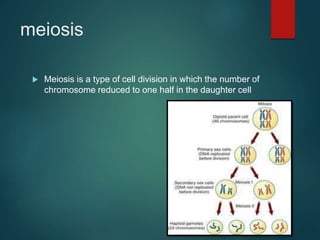
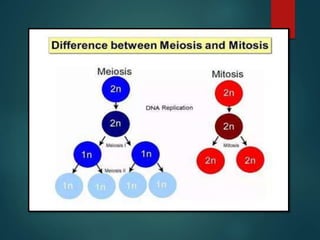
 Meiosis is a type of cell division in which the number of
chromosome reduced to one half in the daughter cell
Gametes
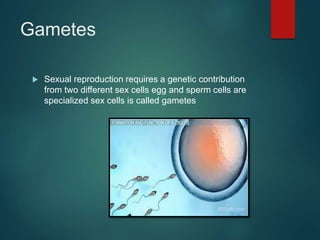
 Sexual reproduction requires a genetic contribution
from two different sex cells egg and sperm cells are
specialized sex cells is called gametes
syngamy
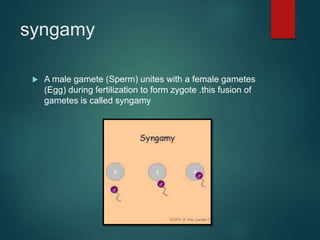
 A male gamete (Sperm) unites with a female gametes
(Egg) during fertilization to form zygote .this fusion of
gametes is called syngamy
Occurances of meiosis
 Meiosis occurs in specialized cell of the ovaries and
testes. It reduces the number of chromosome to the
haploid(1N) number. The nuclei of two gametes
combine during fertilization and restore the diploid
number.
 Meiosis begins after the G2 phase in the cell cycle
after DNA replication . Two nuclear division take place
during meiosis .these are called meiosis l and meiosis
ll
The first meiotic division
prophase l
1.Leptotene
2. Zygotene
3.Pachytene
4.Diplotene
5.Diakinesis
Leptotene
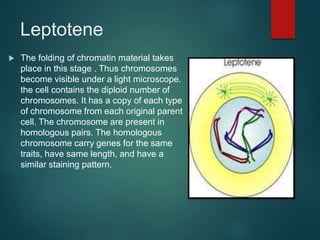
 The folding of chromatin material takes
place in this stage . Thus chromosomes
become visible under a light microscope.
the cell contains the diploid number of
chromosomes. It has a copy of each type
of chromosome from each original parent
cell. The chromosome are present in
homologous pairs. The homologous
chromosome carry genes for the same
traits, have same length, and have a
similar staining pattern.
zygotene
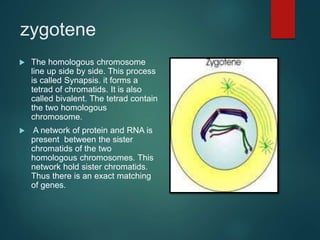
 The homologous chromosome
line up side by side. This process
is called Synapsis. it forms a
tetrad of chromatids. It is also
called bivalent. The tetrad contain
the two homologous
chromosome.
 A network of protein and RNA is
present between the sister
chromatids of the two
homologous chromosomes. This
network hold sister chromatids.
Thus there is an exact matching
of genes.
pachytene
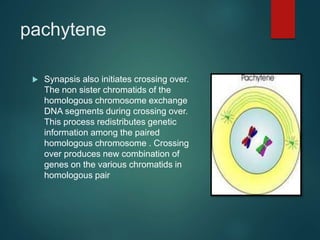
 Synapsis also initiates crossing over.
The non sister chromatids of the
homologous chromosome exchange
DNA segments during crossing over.
This process redistributes genetic
information among the paired
homologous chromosome . Crossing
over produces new combination of
genes on the various chromatids in
homologous pair
Diplotene
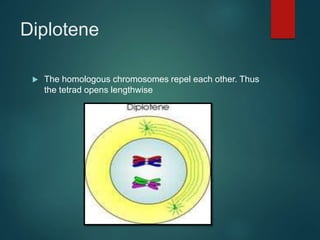
 The homologous chromosomes repel each other. Thus
the tetrad opens lengthwise
Diakinesis
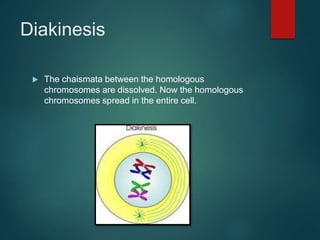
 The chaismata between the homologous
chromosomes are dissolved. Now the homologous
chromosomes spread in the entire cell.
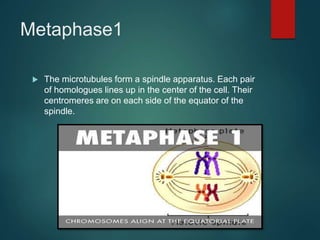
Metaphase1
 The microtubules form a spindle apparatus. Each pair
of homologues lines up in the center of the cell. Their
centromeres are on each side of the equator of the
spindle.
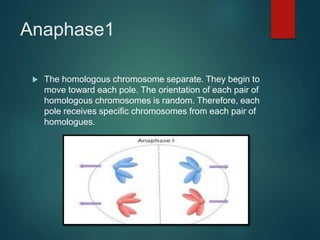
Anaphase1
 The homologous chromosome separate. They begin to
move toward each pole. The orientation of each pair of
homologous chromosomes is random. Therefore, each
pole receives specific chromosomes from each pair of
homologues.
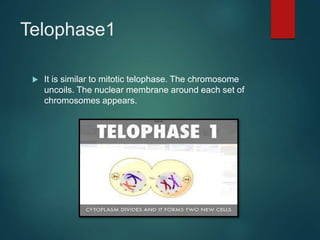
Telophase1
 It is similar to mitotic telophase. The chromosome
uncoils. The nuclear membrane around each set of
chromosomes appears.
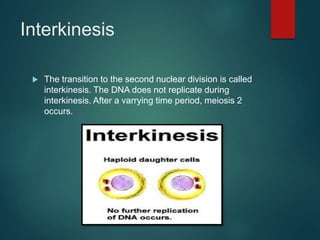
Interkinesis
 The transition to the second nuclear division is called
interkinesis. The DNA does not replicate during
interkinesis. After a varrying time period, meiosis 2
occurs.
The second meiotic division
 The second meiotic division resembles an ordinary
mitotic division. The number of chromosomes has
been reduced by half. The phases are prophase2,
metaphase2, anaphase2, and telophase2. the final
products of these divisions of meiosis are four haploid
cells. These cells finally form gametes(sex cell).
Spermatogenesis &
oogenesis
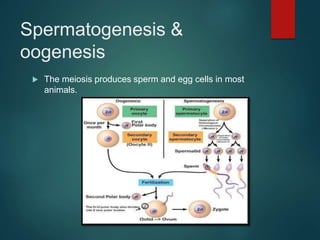
 The meiosis produces sperm and egg cells in most
animals.
spermatogenesis
 The formation of sperm in the testes is called
spermatogenesis. It follows the sequence of meiosis
and produces mature sperm cells. All four products of
meiosis acquire a flagellum for locomotion. They also
get a cap like structure. This cap helps in the
penetration of the egg,
Oogenesis
 The formation of ova or egg in the ovaries is called
oogenesis. It produces a mature ovum or egg. Only
one of the four meiotic products develops into the
functional gamete. So it differs from spermatogenesis.
The other three products of meiosis are called polar
bodies. These polar bodies disintegrate. In some
animals the mature egg is the product of the 1st meiotic
division. It completes miosis only if it is fertilized.
meoisis  1 or 2
meoisis  1 or 2

meoisis 1 or 2

  • 2.
    Meiosis  Presented to:Mam Zaib Un Nisa Asif  presented by : Khola Bint Mudassir : 32 Rehmat Baloch : 33 Department of life sciences THE ISLAMIC UNIVERSITRY Of BAHAWALPUR
  • 3.
    meiosis  Meiosis isa type of cell division in which the number of chromosome reduced to one half in the daughter cell
  • 4.
    Gametes  Sexual reproductionrequires a genetic contribution from two different sex cells egg and sperm cells are specialized sex cells is called gametes
  • 5.
    syngamy  A malegamete (Sperm) unites with a female gametes (Egg) during fertilization to form zygote .this fusion of gametes is called syngamy
  • 6.
    Occurances of meiosis Meiosis occurs in specialized cell of the ovaries and testes. It reduces the number of chromosome to the haploid(1N) number. The nuclei of two gametes combine during fertilization and restore the diploid number.  Meiosis begins after the G2 phase in the cell cycle after DNA replication . Two nuclear division take place during meiosis .these are called meiosis l and meiosis ll
  • 7.
    The first meioticdivision prophase l 1.Leptotene 2. Zygotene 3.Pachytene 4.Diplotene 5.Diakinesis
  • 8.
    Leptotene  The foldingof chromatin material takes place in this stage . Thus chromosomes become visible under a light microscope. the cell contains the diploid number of chromosomes. It has a copy of each type of chromosome from each original parent cell. The chromosome are present in homologous pairs. The homologous chromosome carry genes for the same traits, have same length, and have a similar staining pattern.
  • 9.
    zygotene  The homologouschromosome line up side by side. This process is called Synapsis. it forms a tetrad of chromatids. It is also called bivalent. The tetrad contain the two homologous chromosome.  A network of protein and RNA is present between the sister chromatids of the two homologous chromosomes. This network hold sister chromatids. Thus there is an exact matching of genes.
  • 10.
    pachytene  Synapsis alsoinitiates crossing over. The non sister chromatids of the homologous chromosome exchange DNA segments during crossing over. This process redistributes genetic information among the paired homologous chromosome . Crossing over produces new combination of genes on the various chromatids in homologous pair
  • 11.
    Diplotene  The homologouschromosomes repel each other. Thus the tetrad opens lengthwise
  • 12.
    Diakinesis  The chaismatabetween the homologous chromosomes are dissolved. Now the homologous chromosomes spread in the entire cell.
  • 13.
    Metaphase1  The microtubulesform a spindle apparatus. Each pair of homologues lines up in the center of the cell. Their centromeres are on each side of the equator of the spindle.
  • 14.
    Anaphase1  The homologouschromosome separate. They begin to move toward each pole. The orientation of each pair of homologous chromosomes is random. Therefore, each pole receives specific chromosomes from each pair of homologues.
  • 15.
    Telophase1  It issimilar to mitotic telophase. The chromosome uncoils. The nuclear membrane around each set of chromosomes appears.
  • 16.
    Interkinesis  The transitionto the second nuclear division is called interkinesis. The DNA does not replicate during interkinesis. After a varrying time period, meiosis 2 occurs.
  • 17.
    The second meioticdivision  The second meiotic division resembles an ordinary mitotic division. The number of chromosomes has been reduced by half. The phases are prophase2, metaphase2, anaphase2, and telophase2. the final products of these divisions of meiosis are four haploid cells. These cells finally form gametes(sex cell).
  • 18.
    Spermatogenesis & oogenesis  Themeiosis produces sperm and egg cells in most animals.
  • 19.
    spermatogenesis  The formationof sperm in the testes is called spermatogenesis. It follows the sequence of meiosis and produces mature sperm cells. All four products of meiosis acquire a flagellum for locomotion. They also get a cap like structure. This cap helps in the penetration of the egg,
  • 20.
    Oogenesis  The formationof ova or egg in the ovaries is called oogenesis. It produces a mature ovum or egg. Only one of the four meiotic products develops into the functional gamete. So it differs from spermatogenesis. The other three products of meiosis are called polar bodies. These polar bodies disintegrate. In some animals the mature egg is the product of the 1st meiotic division. It completes miosis only if it is fertilized.