Well come
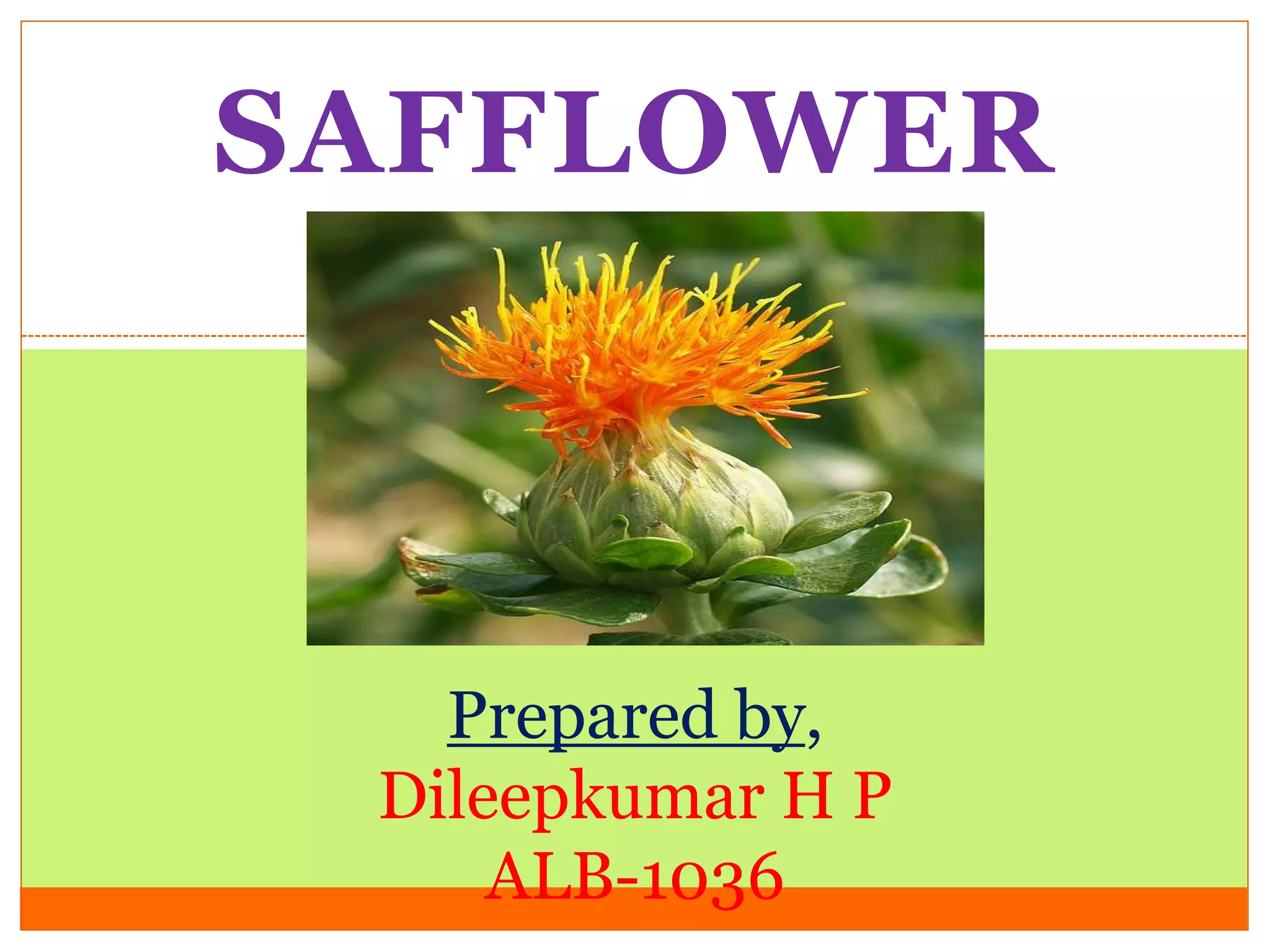
SAFFLOWER
Prepared by,
Dileepkumar H P
ALB-1036
Safflower / kusume
 BN:- Carthamus tinctorius
 Family:- Compositae
 Origin:- Mediterranean and Persian gulf
 Chromosome no:- 2n=24
 Cultivated spp. May have originated from two related
spp.
1. Carthamus oxycanthus (wild safflower)
2. Carthamus lanatus (saffron thistle)
 Genus carthamus contain about 25 valid spp.
Plant and Petal Flower and Seed
Production:-
 Important Rabi oil seed crop in India
 India occupies first position in area and production
in the world with 60% of area and 66% production
 Maharashtra and Karnataka are the major growing
states with 94% area and 80% of production
 Productivity is highest in Mexico with 1200kg ha-1
and India with 630kg ha-1
Introduction:-
It is one of the humanities oldest crop but world wide
comparatively a minor crop limited in distribution
because of environmental factor and spiny nature of
the crop
Earlier Safflower was grown for its petals used for
coloring beverages, flavoring food and dye cotton and
silk earlier to the availability of low price aniline dyes
Floret contain two coloring material
1.Carthamidin(20%):- a water soluble yellow pigment
2.Carthamin(2%):- a orange red dye insoluble in
water but readily soluble in alkaline solution
Important facts about safflower:-
 More or less Day neutral crop but thermo-sensitive so grown as a
rabi crop
 It has got phenotypic plasticity of plant population i.e. variation in
plant density changes structure and branching maintaining same
yield levels
 Tolerant to salinity but sensitive to water logging conditions
 Self pollinated crop with out crossing of 5% to 40% due to the action
of honey bees.
 100 seed weight varies from 2.5 to 8 g
 Both oil and protein content decreases with increased
altitude(Optimum range is 300-1000 above MSL)
Uses of safflower:-
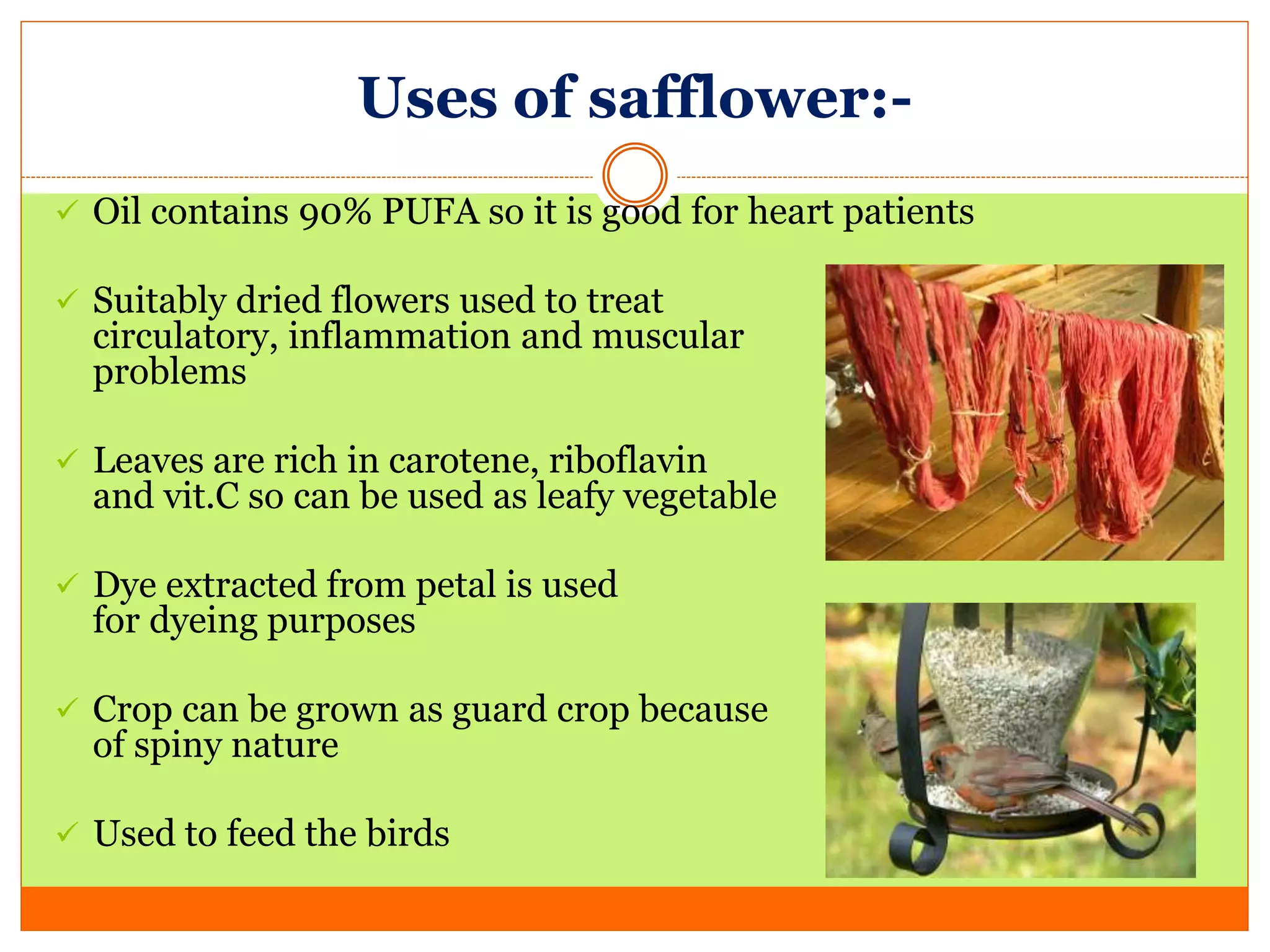
 Oil contains 90% PUFA so it is good for heart patients
 Suitably dried flowers used to treat
circulatory, inflammation and muscular
problems
 Leaves are rich in carotene, riboflavin
and vit.C so can be used as leafy vegetable
 Dye extracted from petal is used
for dyeing purposes
 Crop can be grown as guard crop because
of spiny nature
 Used to feed the birds
Nutritional aspects:-
Oil content:- 28 - 32 %
Protein :- 14 - 19 %
Crude fiber:- 32 - 34 %
Ash :- 5 -7 %
Oil contains…..
Fatty acid Percentage(%)
Linoleic acid 70-80
Oleic acid 6-8
Palmitic acid 5-8
Stearic acid 2-3
Properties of oil:-
particular Values
Color Golden yellow
Specific gravity 0.9
Refractive index 1.4
Iodine value 130-150
Saponification value 186-194
Free fatty acids 0.15-1%
Floral morphology:-
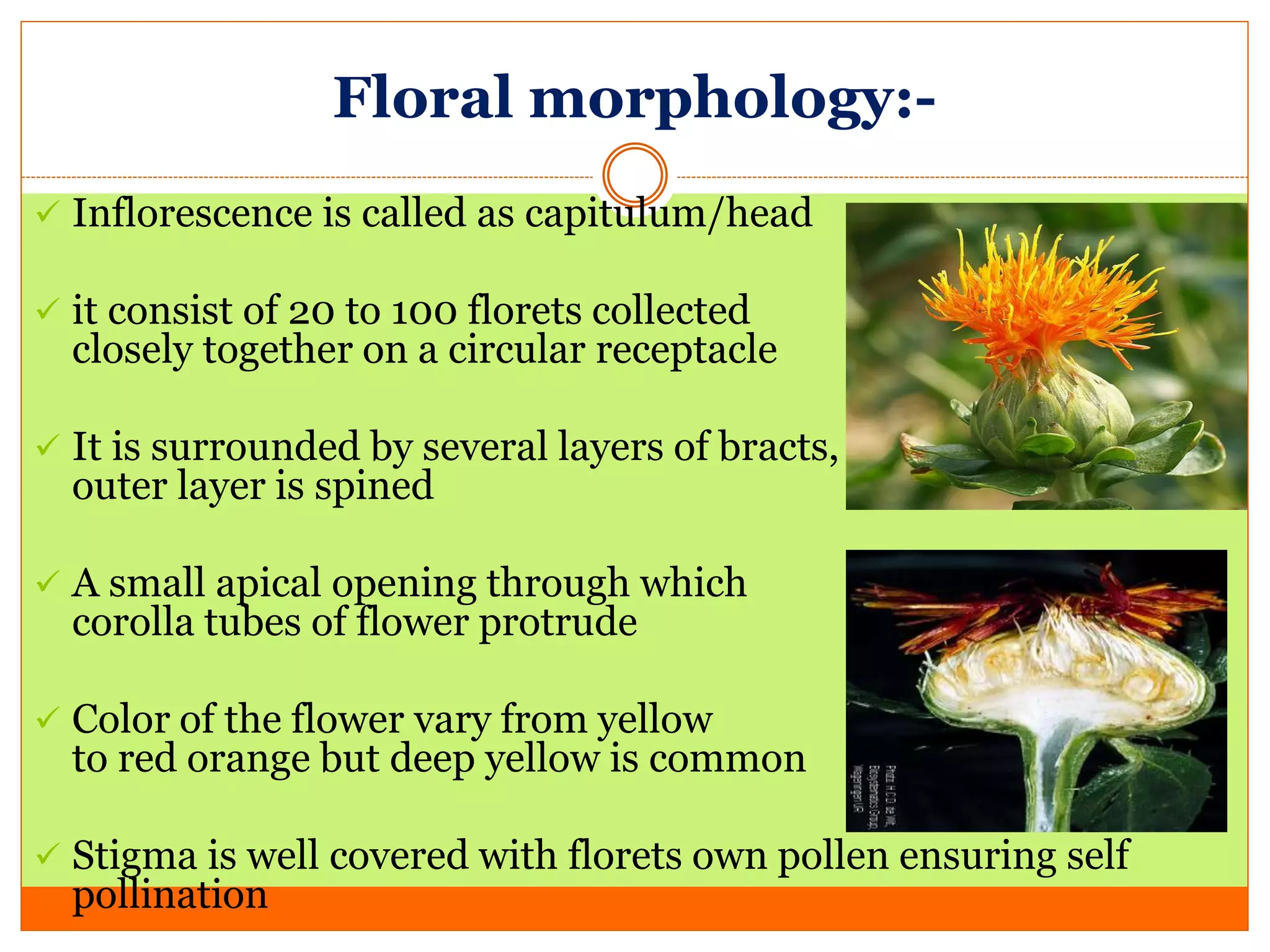
 Inflorescence is called as capitulum/head
 it consist of 20 to 100 florets collected
closely together on a circular receptacle
 It is surrounded by several layers of bracts,
outer layer is spined
 A small apical opening through which
corolla tubes of flower protrude
 Color of the flower vary from yellow
to red orange but deep yellow is common
 Stigma is well covered with florets own pollen ensuring self
pollination
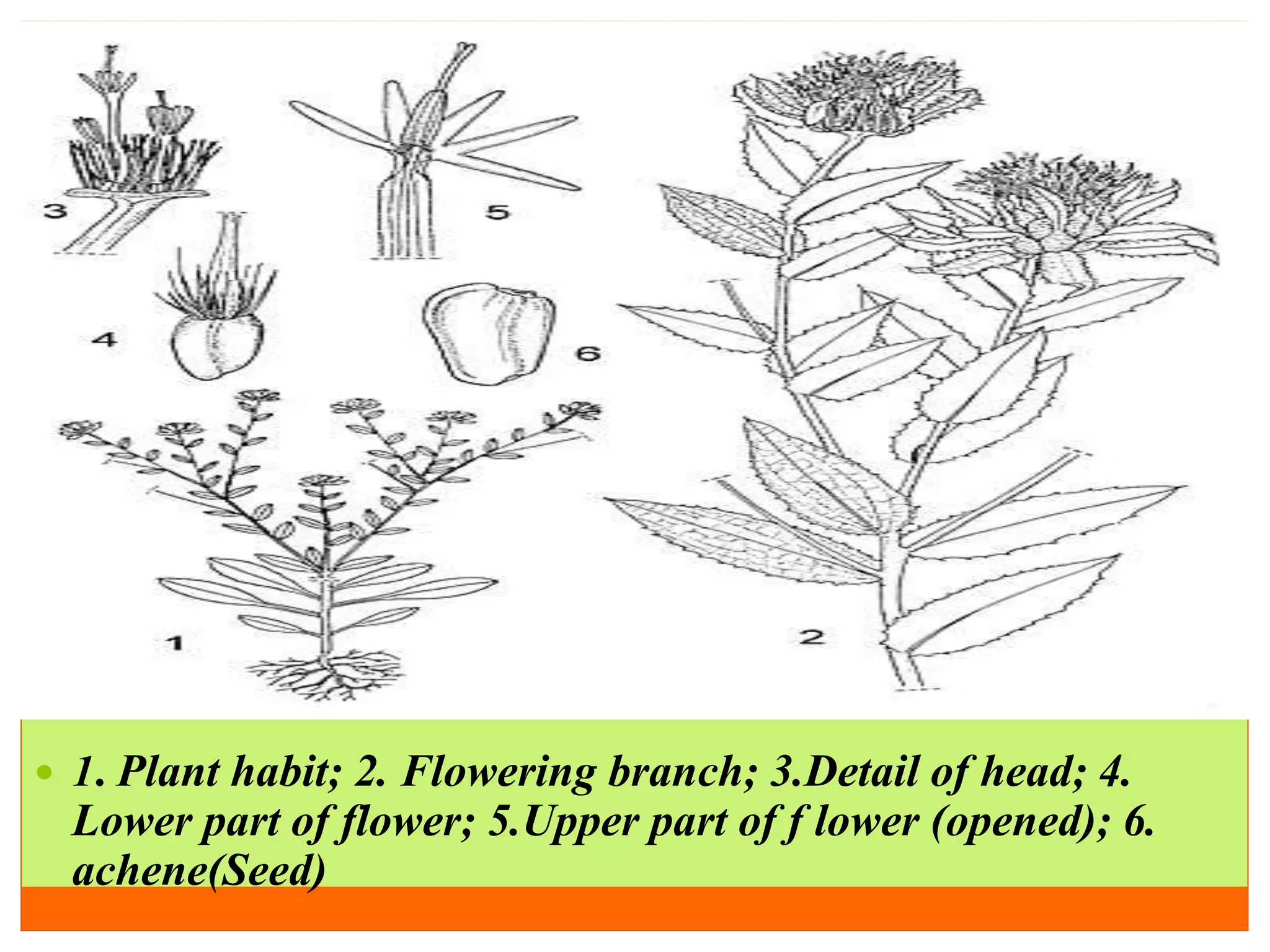
 1. Plant habit; 2. Flowering branch; 3.Detail of head; 4.
Lower part of flower; 5.Upper part of f lower (opened); 6.
achene(Seed)
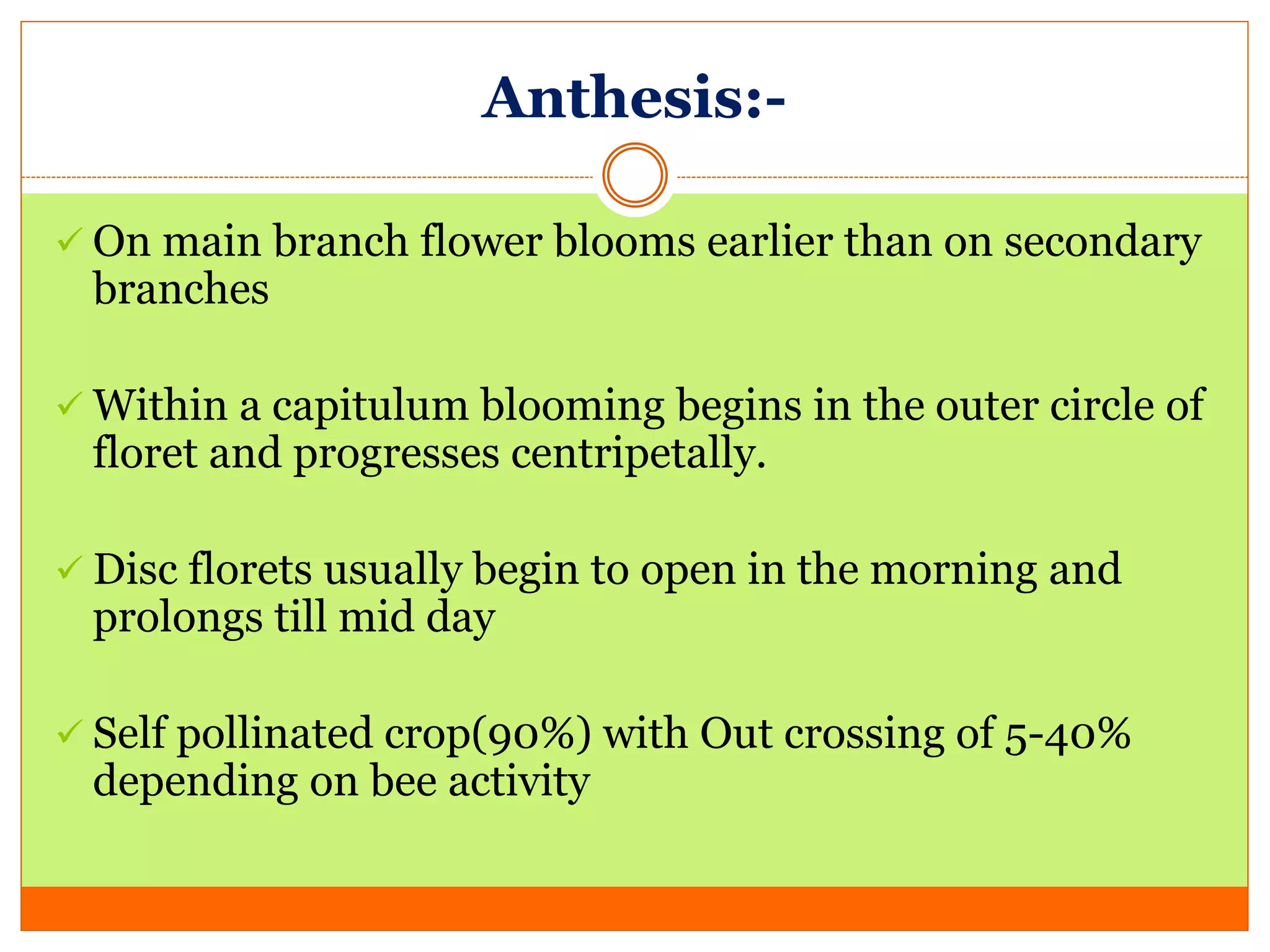
Anthesis:-
 On main branch flower blooms earlier than on secondary
branches
 Within a capitulum blooming begins in the outer circle of
floret and progresses centripetally.
 Disc florets usually begin to open in the morning and
prolongs till mid day
 Self pollinated crop(90%) with Out crossing of 5-40%
depending on bee activity
Breeding objectives:-
 Breeding for spinelessness
 Breeding for developing thermo insensitive varieties
 Breeding for resistance against pest and diseases
 Breeding for higher yields
 Breeding higher oil contents
Selfing and crossing techniques:-
Selfing :-
 safflower is a self pollinated crop(90-100%) with an
out crossing of 5-40% depending on bee activity
 Selfing can be achieved through covering the
capitulum with paper cover before opening of the
flowers .
Crossing:-
 Flower should be emasculated before anthesis i.e.
stamens are removed without damaging stigma.
 In the next morning freshly collected pollens are
dusted and head is coved with paper cover.
Varieties and hybrids:-
Varieties:-
S 144, A1, A2, A300, NARI 6, NARI 38, Parbhni
kusum, Phule kusum, Bhima, sharda, PBNS 40, SSF
658
Hybrids:-
DSH 129 :-First hybrid released by directorate of oil
seed research, hyderabad
MKH 11, NARI 11, NARI-NH-1, NARI-NH-15, MRSA-
521
Pest and diseases:-
Important pests:-
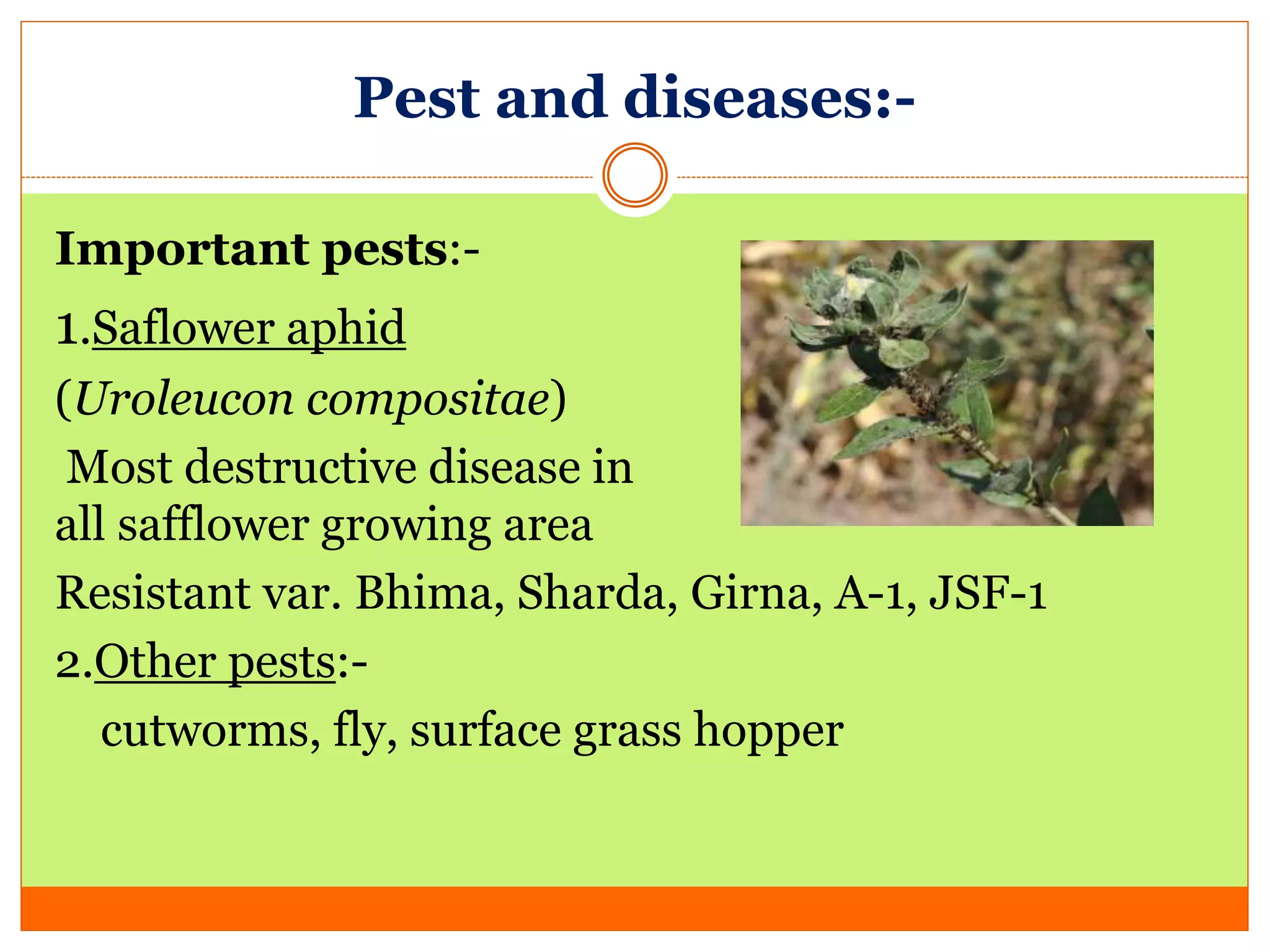
1.Saflower aphid
(Uroleucon compositae)
Most destructive disease in
all safflower growing area
Resistant var. Bhima, Sharda, Girna, A-1, JSF-1
2.Other pests:-
cutworms, fly, surface grass hopper
Important diseases:-
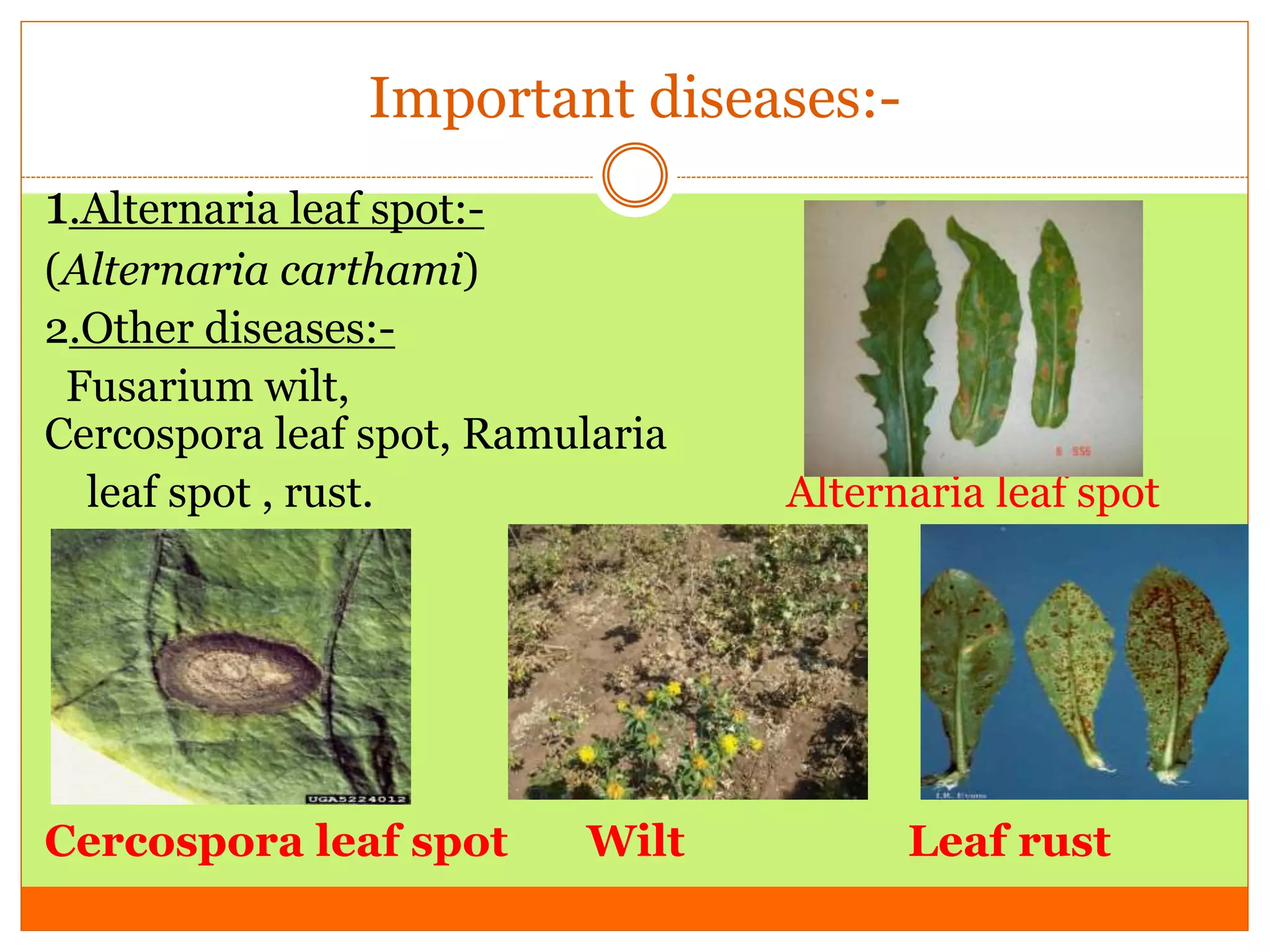
1.Alternaria leaf spot:-
(Alternaria carthami)
2.Other diseases:-
Fusarium wilt,
Cercospora leaf spot, Ramularia
leaf spot , rust. Alternaria leaf spot
Cercospora leaf spot Wilt Leaf rust
Institutes working on safflower:-
 Agricultural research station. Annigeri, Dharwad.
 Directorate of oil seed research, Hyderabad
 Mahathma phule krishi vidyapeeth, maharashtra
References:-
 Field crop production(commercial crops) vol-2
-Dr. Rajendra prasad, ICAR publication.
 WWW.Google.com
Thank you…..!

Safflower

  • 1.
  • 2.
  • 3.
    Safflower / kusume BN:- Carthamus tinctorius  Family:- Compositae  Origin:- Mediterranean and Persian gulf  Chromosome no:- 2n=24  Cultivated spp. May have originated from two related spp. 1. Carthamus oxycanthus (wild safflower) 2. Carthamus lanatus (saffron thistle)  Genus carthamus contain about 25 valid spp.
  • 4.
    Plant and PetalFlower and Seed
  • 5.
    Production:-  Important Rabioil seed crop in India  India occupies first position in area and production in the world with 60% of area and 66% production  Maharashtra and Karnataka are the major growing states with 94% area and 80% of production  Productivity is highest in Mexico with 1200kg ha-1 and India with 630kg ha-1
  • 6.
    Introduction:- It is oneof the humanities oldest crop but world wide comparatively a minor crop limited in distribution because of environmental factor and spiny nature of the crop Earlier Safflower was grown for its petals used for coloring beverages, flavoring food and dye cotton and silk earlier to the availability of low price aniline dyes Floret contain two coloring material 1.Carthamidin(20%):- a water soluble yellow pigment 2.Carthamin(2%):- a orange red dye insoluble in water but readily soluble in alkaline solution
  • 7.
    Important facts aboutsafflower:-  More or less Day neutral crop but thermo-sensitive so grown as a rabi crop  It has got phenotypic plasticity of plant population i.e. variation in plant density changes structure and branching maintaining same yield levels  Tolerant to salinity but sensitive to water logging conditions  Self pollinated crop with out crossing of 5% to 40% due to the action of honey bees.  100 seed weight varies from 2.5 to 8 g  Both oil and protein content decreases with increased altitude(Optimum range is 300-1000 above MSL)
  • 8.
    Uses of safflower:- Oil contains 90% PUFA so it is good for heart patients  Suitably dried flowers used to treat circulatory, inflammation and muscular problems  Leaves are rich in carotene, riboflavin and vit.C so can be used as leafy vegetable  Dye extracted from petal is used for dyeing purposes  Crop can be grown as guard crop because of spiny nature  Used to feed the birds
  • 9.
    Nutritional aspects:- Oil content:-28 - 32 % Protein :- 14 - 19 % Crude fiber:- 32 - 34 % Ash :- 5 -7 % Oil contains….. Fatty acid Percentage(%) Linoleic acid 70-80 Oleic acid 6-8 Palmitic acid 5-8 Stearic acid 2-3
  • 10.
    Properties of oil:- particularValues Color Golden yellow Specific gravity 0.9 Refractive index 1.4 Iodine value 130-150 Saponification value 186-194 Free fatty acids 0.15-1%
  • 11.
    Floral morphology:-  Inflorescenceis called as capitulum/head  it consist of 20 to 100 florets collected closely together on a circular receptacle  It is surrounded by several layers of bracts, outer layer is spined  A small apical opening through which corolla tubes of flower protrude  Color of the flower vary from yellow to red orange but deep yellow is common  Stigma is well covered with florets own pollen ensuring self pollination
  • 12.
     1. Planthabit; 2. Flowering branch; 3.Detail of head; 4. Lower part of flower; 5.Upper part of f lower (opened); 6. achene(Seed)
  • 13.
    Anthesis:-  On mainbranch flower blooms earlier than on secondary branches  Within a capitulum blooming begins in the outer circle of floret and progresses centripetally.  Disc florets usually begin to open in the morning and prolongs till mid day  Self pollinated crop(90%) with Out crossing of 5-40% depending on bee activity
  • 14.
    Breeding objectives:-  Breedingfor spinelessness  Breeding for developing thermo insensitive varieties  Breeding for resistance against pest and diseases  Breeding for higher yields  Breeding higher oil contents
  • 15.
    Selfing and crossingtechniques:- Selfing :-  safflower is a self pollinated crop(90-100%) with an out crossing of 5-40% depending on bee activity  Selfing can be achieved through covering the capitulum with paper cover before opening of the flowers . Crossing:-  Flower should be emasculated before anthesis i.e. stamens are removed without damaging stigma.  In the next morning freshly collected pollens are dusted and head is coved with paper cover.
  • 16.
    Varieties and hybrids:- Varieties:- S144, A1, A2, A300, NARI 6, NARI 38, Parbhni kusum, Phule kusum, Bhima, sharda, PBNS 40, SSF 658 Hybrids:- DSH 129 :-First hybrid released by directorate of oil seed research, hyderabad MKH 11, NARI 11, NARI-NH-1, NARI-NH-15, MRSA- 521
  • 17.
    Pest and diseases:- Importantpests:- 1.Saflower aphid (Uroleucon compositae) Most destructive disease in all safflower growing area Resistant var. Bhima, Sharda, Girna, A-1, JSF-1 2.Other pests:- cutworms, fly, surface grass hopper
  • 18.
    Important diseases:- 1.Alternaria leafspot:- (Alternaria carthami) 2.Other diseases:- Fusarium wilt, Cercospora leaf spot, Ramularia leaf spot , rust. Alternaria leaf spot Cercospora leaf spot Wilt Leaf rust
  • 19.
    Institutes working onsafflower:-  Agricultural research station. Annigeri, Dharwad.  Directorate of oil seed research, Hyderabad  Mahathma phule krishi vidyapeeth, maharashtra References:-  Field crop production(commercial crops) vol-2 -Dr. Rajendra prasad, ICAR publication.  WWW.Google.com
  • 20.

Editor's Notes