T R E Y V I L H A U E R
TYPE 2 DIABETES CASE
STUDY
THE EFFECT OF TYPE 2 DIABETES ON
YOU?
A. I have type two diabetes
B. Someone in my family has type two diabetes
C. Someone I know has type two diabetes
D. There is no one I know that has type two diabetes
CASE STUDY
• Type 2 diabetes is the most common of the two diabetes
• It is a chronic progressive disease that effects the way
the body processes blood sugar
• Type 2 is when your body can’t produce insulin properly
or is insulin resistant
• The body converts food into glucose that your cells can
use for energy. This can’t be done if your body doesn't’t
produce insulin properly
• Can be linking to be genetic or do to lifestyle habits.
INSULIN RESISTANCE
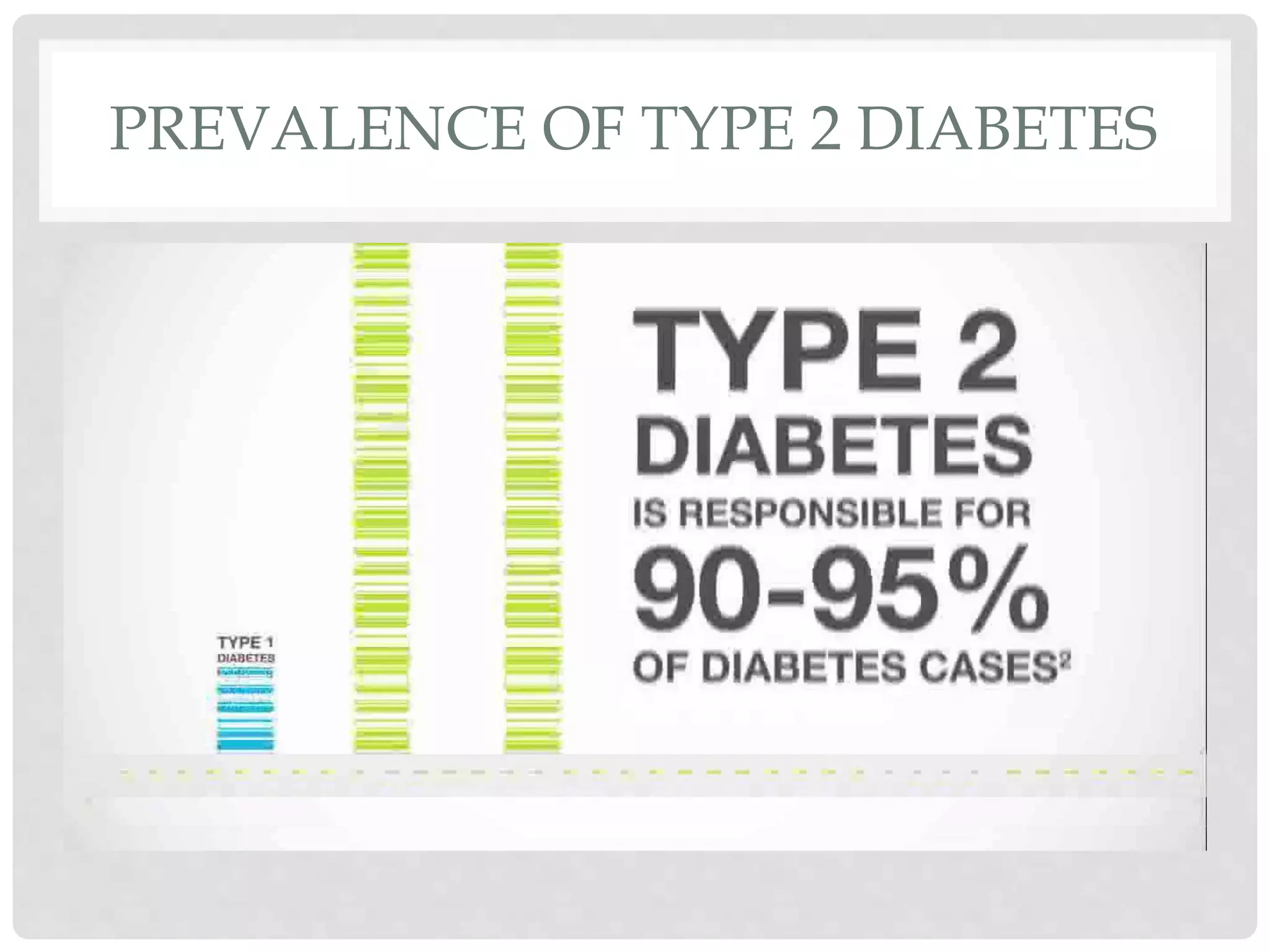
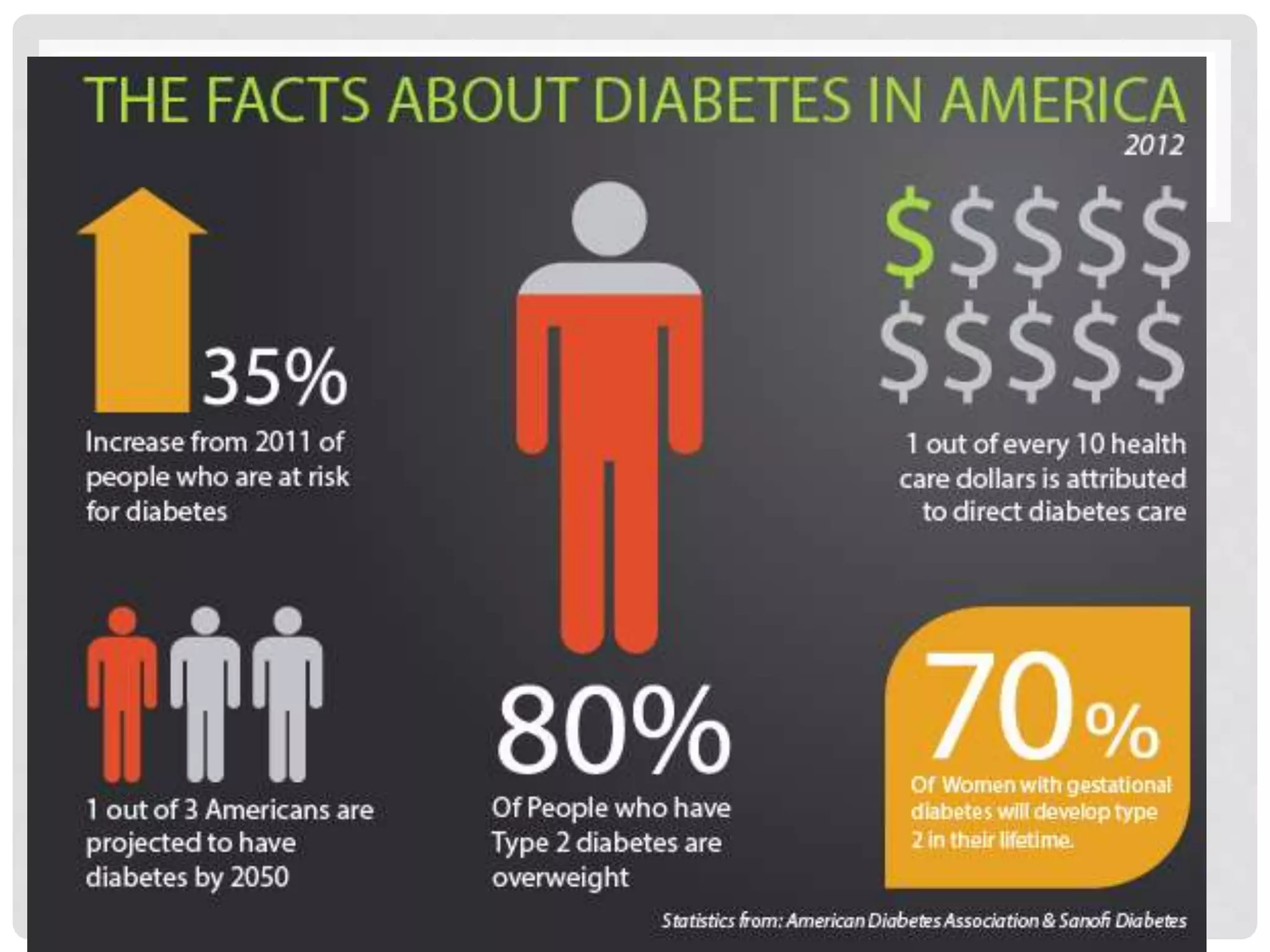
PREVALENCE OF TYPE 2 DIABETES
SYMPTOMS
• Symptoms/warning signs of type two diabetes can be so
mild that you don’t notice them till you get long term
damage
• One of the most common is hunger and fatigue
• Having to urineate more frequently and excessive thirst.
• Dry mouth and itchy skin
• Blurred vision
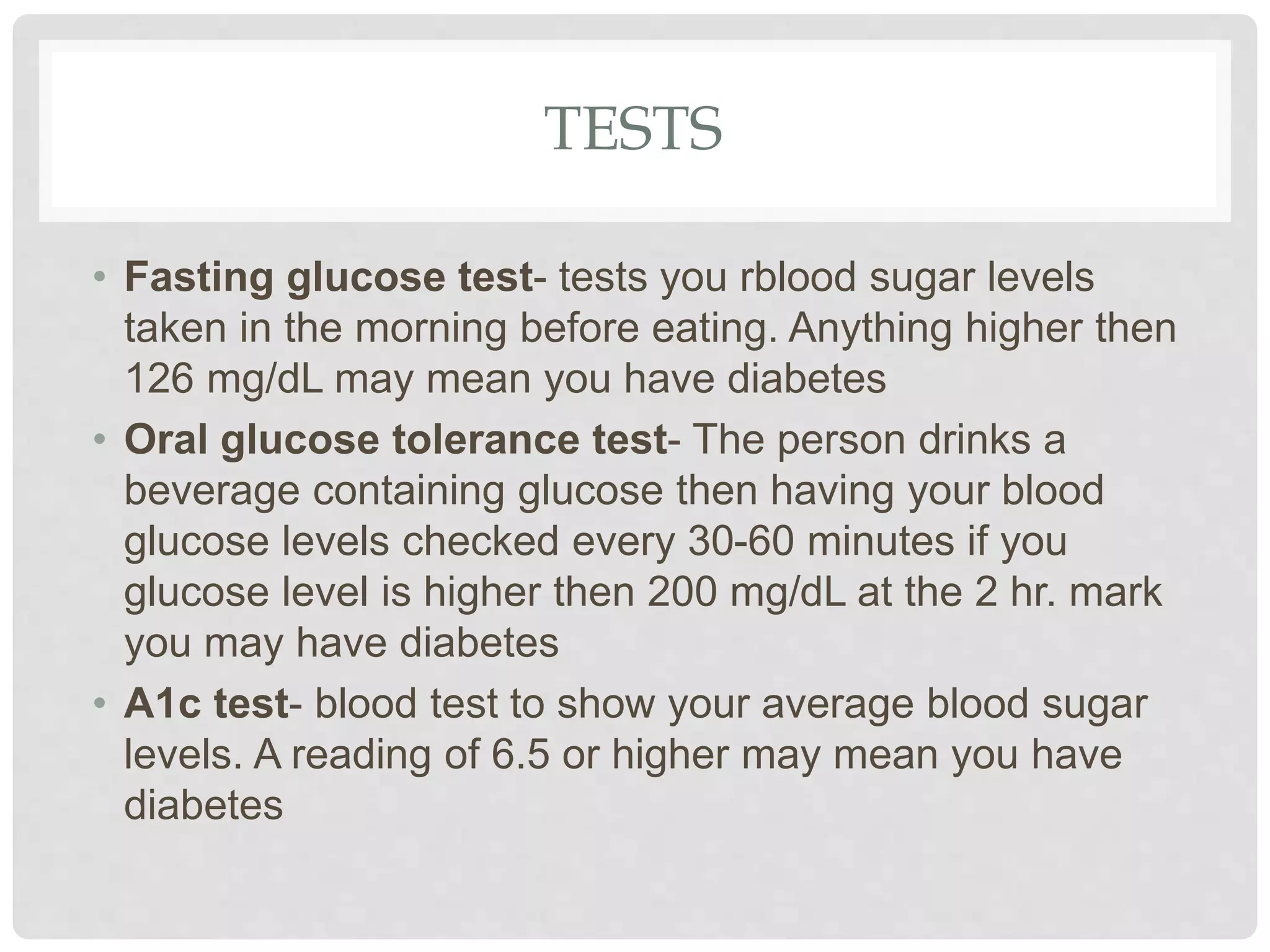
TESTS
• Fasting glucose test- tests you rblood sugar levels
taken in the morning before eating. Anything higher then
126 mg/dL may mean you have diabetes
• Oral glucose tolerance test- The person drinks a
beverage containing glucose then having your blood
glucose levels checked every 30-60 minutes if you
glucose level is higher then 200 mg/dL at the 2 hr. mark
you may have diabetes
• A1c test- blood test to show your average blood sugar
levels. A reading of 6.5 or higher may mean you have
diabetes
TREATMENT/CARE
• Lifestyle changes
• Oral Medication
• Insulin
• Each diabetes treatment plan is different on the
individual
AFTER READING DO YOU THINK TYPE 2
DIABETES WILL EFFECT YOU?
A. Yes
B. No
C. Maybe

Case Study - Type 2 Diabetes

  • 1.
    T R EY V I L H A U E R TYPE 2 DIABETES CASE STUDY
  • 2.
    THE EFFECT OFTYPE 2 DIABETES ON YOU? A. I have type two diabetes B. Someone in my family has type two diabetes C. Someone I know has type two diabetes D. There is no one I know that has type two diabetes
  • 3.
    CASE STUDY • Type2 diabetes is the most common of the two diabetes • It is a chronic progressive disease that effects the way the body processes blood sugar • Type 2 is when your body can’t produce insulin properly or is insulin resistant • The body converts food into glucose that your cells can use for energy. This can’t be done if your body doesn't’t produce insulin properly • Can be linking to be genetic or do to lifestyle habits.
  • 4.
  • 5.
  • 7.
    SYMPTOMS • Symptoms/warning signsof type two diabetes can be so mild that you don’t notice them till you get long term damage • One of the most common is hunger and fatigue • Having to urineate more frequently and excessive thirst. • Dry mouth and itchy skin • Blurred vision
  • 8.
    TESTS • Fasting glucosetest- tests you rblood sugar levels taken in the morning before eating. Anything higher then 126 mg/dL may mean you have diabetes • Oral glucose tolerance test- The person drinks a beverage containing glucose then having your blood glucose levels checked every 30-60 minutes if you glucose level is higher then 200 mg/dL at the 2 hr. mark you may have diabetes • A1c test- blood test to show your average blood sugar levels. A reading of 6.5 or higher may mean you have diabetes
  • 9.
    TREATMENT/CARE • Lifestyle changes •Oral Medication • Insulin • Each diabetes treatment plan is different on the individual
  • 10.
    AFTER READING DOYOU THINK TYPE 2 DIABETES WILL EFFECT YOU? A. Yes B. No C. Maybe