Job Analysis:
traditionally – The process of obtaining
information about job
 A job analysis is the process used to collect
information about the duties, responsibilities,
necessary skills, outcomes, and work environment
of a particular job.
 Process of defining a job in terms of its component
tasks or duties and the knowledge or skills required
to perform them.
 According to Edwin B.Flippo “Job analysis is the
process of studying and collecting information
relating to the operations and responsibilities of a
specific job”
JOB TASKS
JOB DUTIES
JOB RESPONSIBILITIES
JOB ANALYSIS
USES OF JOB ANALYSIS
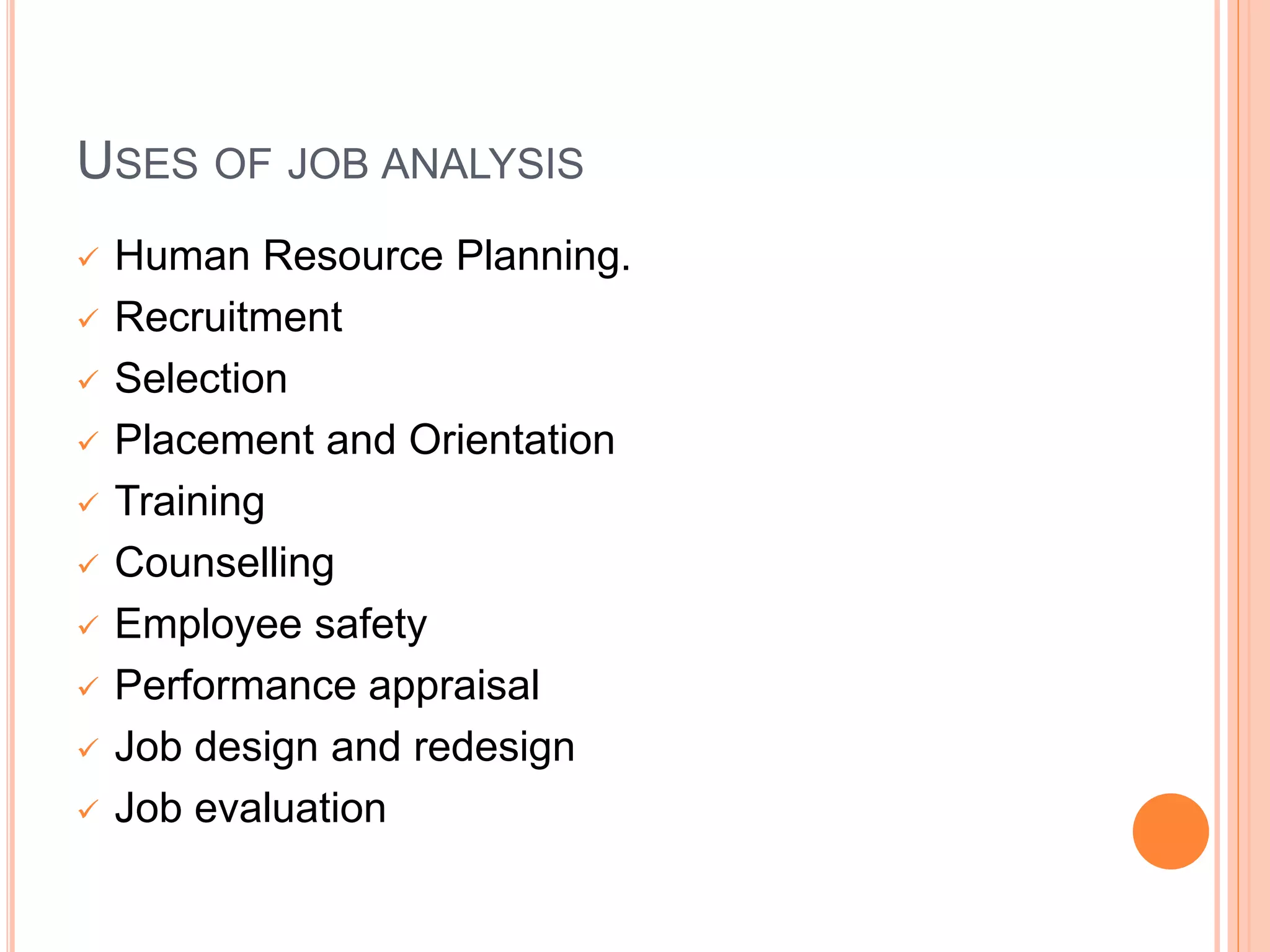
 Human Resource Planning.
 Recruitment
 Selection
 Placement and Orientation
 Training
 Counselling
 Employee safety
 Performance appraisal
 Job design and redesign
 Job evaluation
WHEN DID YOU CARRY OUT JOB ANALYSIS?
Job analysis is carried out on three occasions(Jonathan
Sidener)
 it is undertaken when the organisation is
established and a job analysis programme is taken up
for the first time
 it is performed when new jobs are created
 it is done when jobs undergo radial transformation
due to changes in new technologies, methods
,procedures and systems.
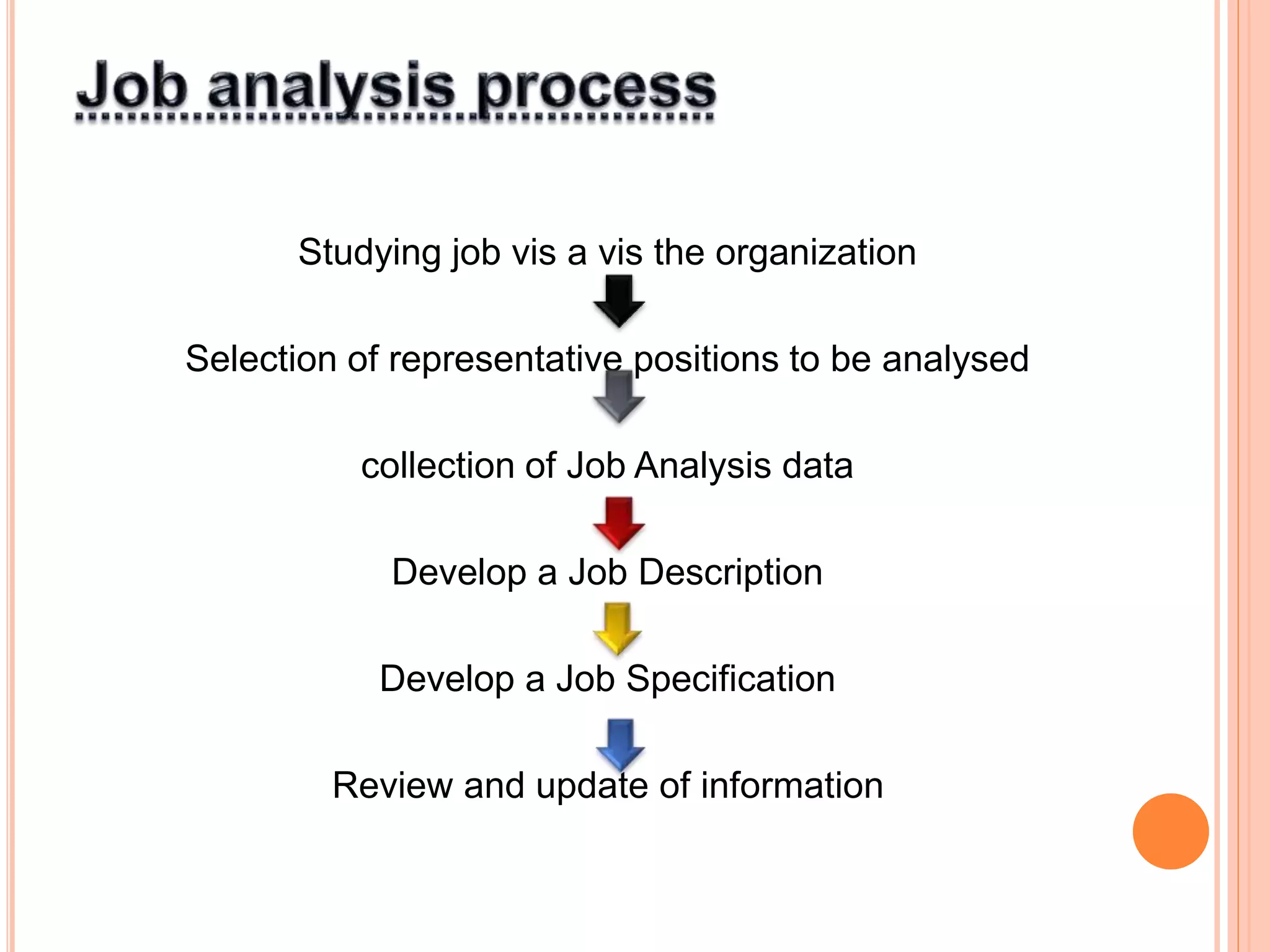
Studying job vis a vis the organization
Selection of representative positions to be analysed
collection of Job Analysis data
Develop a Job Description
Develop a Job Specification
Review and update of information
Step 1: Studying job vis a vis the
organization(organisational analysis)
first of all , an overall picture of various jobs in the organisation
has to be obtained. This is required to find the linkages between jobs
and organisational objectives ,interrelationship between jobs and
contribution to various jobs to the efficiency and effectiveness of the
organisation . The required background information for this purpose is
obtained through organisation charts and workflow charts.
Step 2:Selection of representative positions to be
analyzed
It is not possible to analyze all the jobs. A representative sample
of jobs to be analyzed is decided keeping the cost and time constraints
in mind.
Step 3: collection of Job Analysis data
manager should consider using a number of different methods of data
collection because it is unlikely that any one method will provide all the
necessary information needed.
Three of the most popular form of data collection is:
 Observation of tasks and behavior with the job incumbent i.e. both
physical and mental activities.
 Interviews.
 Questionnaires and checklists.
Step 4 Develop or prepation of Job
Description(Task requirements)
Statement that explains duties working conditions, etc. of a
job.
Job description is a written record of the duties,
responsibilities and requirements of a particular job. It is
concerned with the job itself and not with the work.
Contents in Job Description:
Job title
Job Summary
Job duties and activities
Relation to other jobs
 Supervision
 Working conditions
Social environment
Step 5 : Develop or preparation of Job Specification
This step involves conversion of the job description
statement into a job specification .Job specification is a written
statement of personal attributes in terms of traits, skills, training
,experience needed to carry out the job.
E.g., knowledge, skills, abilities (KSAs) and other
characteristics required to perform job
Step 6 :Review and update of information
If no major changes have occurred in the organization, then a
complete review of all jobs should be performed every three years.
JOB ANALYSIS - PROCESS

JOB ANALYSIS - PROCESS

  • 2.
    Job Analysis: traditionally –The process of obtaining information about job  A job analysis is the process used to collect information about the duties, responsibilities, necessary skills, outcomes, and work environment of a particular job.  Process of defining a job in terms of its component tasks or duties and the knowledge or skills required to perform them.  According to Edwin B.Flippo “Job analysis is the process of studying and collecting information relating to the operations and responsibilities of a specific job”
  • 3.
    JOB TASKS JOB DUTIES JOBRESPONSIBILITIES JOB ANALYSIS
  • 4.
    USES OF JOBANALYSIS  Human Resource Planning.  Recruitment  Selection  Placement and Orientation  Training  Counselling  Employee safety  Performance appraisal  Job design and redesign  Job evaluation
  • 5.
    WHEN DID YOUCARRY OUT JOB ANALYSIS? Job analysis is carried out on three occasions(Jonathan Sidener)  it is undertaken when the organisation is established and a job analysis programme is taken up for the first time  it is performed when new jobs are created  it is done when jobs undergo radial transformation due to changes in new technologies, methods ,procedures and systems.
  • 6.
    Studying job visa vis the organization Selection of representative positions to be analysed collection of Job Analysis data Develop a Job Description Develop a Job Specification Review and update of information
  • 7.
    Step 1: Studyingjob vis a vis the organization(organisational analysis) first of all , an overall picture of various jobs in the organisation has to be obtained. This is required to find the linkages between jobs and organisational objectives ,interrelationship between jobs and contribution to various jobs to the efficiency and effectiveness of the organisation . The required background information for this purpose is obtained through organisation charts and workflow charts. Step 2:Selection of representative positions to be analyzed It is not possible to analyze all the jobs. A representative sample of jobs to be analyzed is decided keeping the cost and time constraints in mind.
  • 8.
    Step 3: collectionof Job Analysis data manager should consider using a number of different methods of data collection because it is unlikely that any one method will provide all the necessary information needed. Three of the most popular form of data collection is:  Observation of tasks and behavior with the job incumbent i.e. both physical and mental activities.  Interviews.  Questionnaires and checklists. Step 4 Develop or prepation of Job Description(Task requirements) Statement that explains duties working conditions, etc. of a job. Job description is a written record of the duties, responsibilities and requirements of a particular job. It is concerned with the job itself and not with the work.
  • 9.
    Contents in JobDescription: Job title Job Summary Job duties and activities Relation to other jobs  Supervision  Working conditions Social environment
  • 10.
    Step 5 :Develop or preparation of Job Specification This step involves conversion of the job description statement into a job specification .Job specification is a written statement of personal attributes in terms of traits, skills, training ,experience needed to carry out the job. E.g., knowledge, skills, abilities (KSAs) and other characteristics required to perform job Step 6 :Review and update of information If no major changes have occurred in the organization, then a complete review of all jobs should be performed every three years.