-CARDIOMYOPATHIES-
CLASSIFICATION,ETIOLOGY,TREATMENT
                BY
        PIJUSH KANTI MANDAL
      PGT; GENERAL MEDICINE
BURDWAN MEDICAL COLLEGE; BURDWAN
Cardiomyopathies
 The cardiomyopathies are a group of diseases that
 primarily effect the heart muscles and are not the
 result of congenital, acquired vulvular, hypertensive,
 coronary arterial, or pericardial abnormalities.

 The term cardiomyopathy should be restricted to the
 conditions which primarily effect the myocardium.
CARDIOMYOPATHY

CLASSIFICATION
 Two fundamental forms of cardiomyopathy are
  recognised—
 1)primary:- consisting of heart muscle disease
  predominantly involving the myocardium and/or of
  unknown cause.
 2)secondary:-myocardial disease of unknown cause or
  associated with systemic disease(eg; chronic alcohol
  use,amyloidosis)
CARDIOMYOPATHY
ETIOLOGIC CLASSFICATION
Primary myocardial involvement:-
          1.Idiopathic(D,R,H)
          2.Familial(D,R,H)
          3.Eosinophilic endomyocardial fibrosis(R)
          4. Endomyocardial fibrosis(R)
CARDIOMYOPATHY


CLASSIFICATION(contd..)


Secondary myocardial involvement:-
           Infective(D): viral myocarditis,bacterial myocarditis, fungal
            myocarditis,protozoal, metazoal, rickettsial, spirochetal
            myocarditis.
           Metabolic(D):
           Familial storage disease(D,R): glycogen storage disease,
            mucopolysachcharidosis, hemochromatosis,fabry’s disease
           Deficiency(D): elecrolytes,nutrional
           Connective tisssue disease: systemic lupus
            erythematosus,polyarteritis nodosa,rheumatoid
            arthritis,progressive systemic sclerosis, dermatomyositis
           Infiltrations & granulomas(R,D): amyloidosis,
            sarcoidosis,malignancy
CARDIOMYOPATHY

CLASSFICATION (CONTD..)
           Neuromuscular: muscular dystrophy, myotonic
            dystrophy,friedrich’s ataxia(H,D)
           Sensitivity & toxic reaction(D): alcohol,drugs,radiation
           Peripartum heart disease
Clinical classification of cardiomyopathy

  1.Dilated cardiomyopathy:
        Left and/or right ventricular enlargement
            Impaired systolic function
            Congestive cardiac failure
            Arrhythmias, emboli
  2.Restrictve cardiomyopathy:
                Endomyocardial scarring or myocardial infiltration
                resulting in restriction to left and/or right ventricular filling
  3.Hypertrophic cardiomyopathy:
                Dysproprtionate left ventricular hypertrophy,typically
                involving the septum more than the free wall with or
                without an intraventricular systolic pressure
                gradiant,ususally of a non dilated ventricular cavity.
Dilated cardiomyopathy
DCM
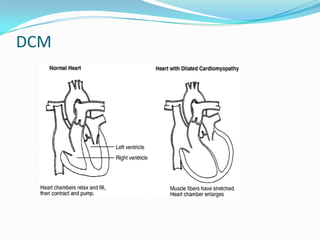
 About one in three cases of heart failure is due to DCM
 Left and/or right ventricular systolic pump function is
  impaired leading to progressive dilatation
 Most of the cases are of unknown etiology and is termed as
  idiopathic DCM
 Secondary Causes include ischaemia,alcoholic
  peripartum,post infectious, viral
 Most common of all cardiomyopathies.
DCM
DCM--incidence
 Prevalence is 36 per 100,000 population
 Third most common cause of heart failure
 Most frequent cause of heart transplantation
 DCM accounts for approximately 10,000 deaths and
  46,000 hospitalizations per year in the US
 Spontaneous recovery occur in one-quarter of patients
Genetic consideration
 One-fifth to one third of patients have familial forms
  of DCM
 Mutation in >20 genes,transmitted in AD fashion.
  Most commonly genes encoding Sarcomeric
  proteins,such as alpha cardiac actin, beta and alpha
  myosin, heavy chain alpha myosine,troponin T, I &C.
DCM
CLINICAL MENIFESTATION:
 Highest incidence in middle age
    Blacks 2x more frequent than whites
    Men 3x more frequent than women
 Symptoms may be gradual in onset
 Acute presentation
    Misdiagnosed as viral URI in young adults
    Uncommon to find specific myocardial disease on
     endomyocardial biopsy
DCM
CLIN. MENF----
 Symptoms/Signs of heart failure
    Pulmonary congestion (left heart failure)
       dyspnea (rest, exertional, nocturnal), orthopnea
      Systemic congestion (right heart failure)
       edema, nausea, abdominal pain, nocturia
      Low cardiac output
      Hypotension, tachycardia, tachypnea
      Narrow pulse pressure
      Elevated JVP
      Fatigue and weakness
 Arrhythmia
    Atrial fibrillation, conduction delays, complex PVC’s, sudden death
DCM
DIAGNOSTICS…
 CXR (enlarged heart, CHF)
 Electrocardiogram (tachycardia, A-V block, LBBB, NSSTT
  changes, PVC’s)
 24-hour Holter monitor
    if lightheadedness, palpitation, syncope
 Echocardiogram,CTI,CMRI(left ventricular dilation,with normal
  or minimally thickened or,thinned walls, global hypokinesis, low
  EF)
 Elevated BNP
 Cardiac catheterization (R/O CAD) Myocardial biopsy, rare
    if age >40, ischemic history, high risk profile, abnormal ECG

   Myocardial biopsy(rare)
DCM
TREATMENT:
 Majority particularly>50 yrs die within 4years of onset
 Spontaneous improvent or stabilization in one-quarter
 Death due to progressive HF,V-tach
 SCD is a constant threat
 Systemic embolization is a concern
 Alcohol should be avoided. As should the CCBs,NSAIDs
 Avoid antiarrhythmics
 Salt restriction
 Fluid restriction
 Initiate standard treatment of HF
 medical therapy
   ACE inhibitors
   diuretics
   Digoxin
   Hydralazine/nitrate combination
   Anticoagulation prophylaxis(EF <30%, hx of embolic events)
DCM
TREATMENT CONTD..
• Implantable cardiac defibrilator
 Cardiac transplantation
    This disorder is the most common indication for cardiac
     transplantation
    Survival after transplant is
        80% one year
        70% 5 years


 Left Ventricular Reduction Procedures
    LV-reshaping
Some other forms of DCM
 ALCOHOLIC CARDIOMYOPATHY:
      Individuals who consumes >90g/day of alcohol for many years
      Clinical picture resembling idiopathic or familial DCM
        Partially genetically predetermined (ALDH2)
        Abstention may halt the progression or even reverse

 PERIPARTUM CARDIOMYOPATHY :
      Cardiac dilatation with CHF develope during last trimester or within
       6 months of delivery.
      Typically present in multiparous of age >30 yrs
      Unknown cause
      Inflammatory myocarditis, immune activation,gestational have been
       incriminated
      Symptoms,signs and management are that of IDCM
      Further pregnancy should be discouraged
 NEUROMUSCULAR DISEASES:
    In duchenne’s progressive muscular dystrophy, there is
     mutation in gene encoding cardiac structural
     protein(dystrophin) lead to myocyte death.
   • ECG: tall ‘R’ wave in right precordial leads with
     R/S>1.0,associated with deep Q in limb and lateral precordial
     leads
   • Rapidly progressive HF with extended periods of apparent
   circulatory stability.
    In myotonic dystrophy there is disorders of impulse
     generation and AV conduction.
   • Evidence of overt heart disease is uncommon
   • Insertion of ICD or pacemaker is effective.
DCM

 Drugs :
       Adriamycin: systolic dysfunction and ventricular arrhythmia occur
        in a dose dependant manner with a dose of >450mg/dl
       Concomitant cyclphosphamide, irradiation,underlyig HF are the risk
        factors for cardiotoxicity.
       Toxicity may occur acutely but more commonly developes a median
        of 3 months after last dose
       Modification of dose along with the use of ironchelator dexrazoxone
        have reduced the risk of cardiotoxicity.
       ACE inhibitors may cause recovery of cardiac function
       Other drugs include
       Trustuzumab
       High dose cyclophosphamide
       Imatinib mesylate
       TCA,Lithium , cocaine abuse
DCM
 ARRHYTHMOGENIC RIGHT VENTRICULAR CARDIOMYOPATHY/DYSPLASIA
   Familial cardiomyopathy, autosomal dominant
   Progressive fibrofatty tissue replacement of right ventricle and to a lesser
      degreee of left ventricular myocardium
     Mutation in genes encoding desmosomes,causes detachment in myocytes and
      consequent apoptosis and replacement with fibrofatty tissue.
     PKP2 gene mutation
     Ryanodine recepter gene(RyR2) mutation
     Patients present with right heart failure
     ECG:-QRS prolongation in right precordial leads with LBBB type of VT
     CTI,CMRI will show right ventricular dilatation and fibrofatty deposition and
      aneurysm
 Restriction from competetive sports, antiarrythmic therapy, with beta
  blockers &amiodarone
 Implantation OF ICD
 Cardiac transplantation
DCM
 TAKO-TSUBO CARDIOMYOPATHY:
       Also known as apical ballooning syndrome
       Patients presents with abrupt onset severe chest pain by a very stressfull
        emotion &physical events
       women>50 yrs
       ECG:ST ,withT In precordial leads, EF, troponin
       ECHO: akinesia of distal portion of left ventricle
       CAG: Normal
       CTI: ‘Ballooning’ of left ventricle specifically apex in end systole
       Reversible within 3-7 days
       Beta blockers is of doubtful significance in Rx
 LEFT VENTRICULAR NON COMPACTION(LVNC):
       Arrest of normal embryogenesis with persistance of deep recesses
        &sinusoides in the myocardiumthat characterise the embryonic heart.
            ECHO- Multiple deep trabeculations into the myocardium which
            communicate with the ventricular cavity causing left ventricular
            contractile dysfunction
           Rx- standard therapy for CHF along with chronic anticoagulation.
Hypertrophic cardiomyopathy
HCM

 HCM is characterised by LV hypertrophy,typically of a
  non-dilated chember, without any obvious cause like
  HTN,AoS.
 Two features of HCM have attracted most significance
       Asymetric hypertrophy of the left ventricle with the preferential
        hypertrophy of the IVS
       A dynamic left ventricular outflow tract pressure gradiant,related
        to narrowing of the sub aortic area.
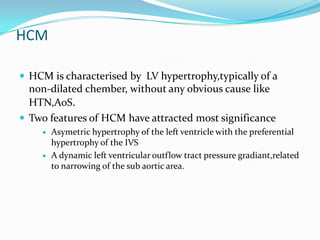
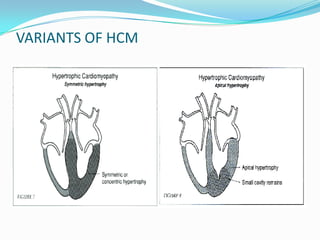
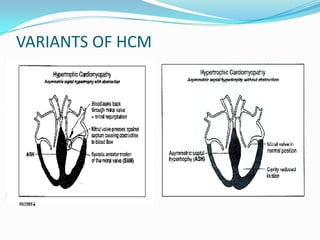
VARIANTS OF HCM
VARIANTS OF HCM
HCM
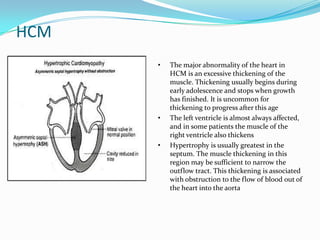
      •   The major abnormality of the heart in
          HCM is an excessive thickening of the
          muscle. Thickening usually begins during
          early adolescence and stops when growth
          has finished. It is uncommon for
          thickening to progress after this age
      •   The left ventricle is almost always affected,
          and in some patients the muscle of the
          right ventricle also thickens
      •   Hypertrophy is usually greatest in the
          septum. The muscle thickening in this
          region may be sufficient to narrow the
          outflow tract. This thickening is associated
          with obstruction to the flow of blood out of
          the heart into the aorta
HCM
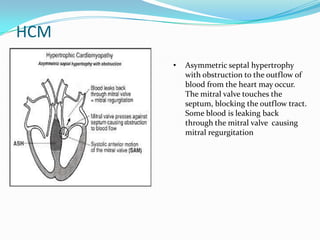
      •   Asymmetric septal hypertrophy
          with obstruction to the outflow of
          blood from the heart may occur.
          The mitral valve touches the
          septum, blocking the outflow tract.
          Some blood is leaking back
          through the mitral valve causing
          mitral regurgitation
HCM

 Dynamic LV outflow tract obstruction
    Outflow tract gradient (>30 mm Hg), considered severe if >50 mm
     Hg (occurs in 25-30% of cases leading to name hypertrophic
     obstructive cardiomyopathy)
 Diastolic dysfunction
    Impaired diastolic filling, filling pressure
 Mitral regurgitation
 Arrhythmias:SVT,AF,VT
HCM

 Approximately 30% of patients with HCM have a dynamic
  systolic pressure gradient in the left ventricular outflow tract
  caused by contact between the mitral valve leaflet(s) and the
  interventricular septum under resting conditions
 Outflow tract gradient in excess of 30 mmHg is an important
  cause of symptoms
 Gradient is simply a consequence of high velocity flow through
  the aortic valve, and hence does not represent a real obstruction
  to cardiac output .
HCM

 Gradient greater than 50 mmHg, the percentage of systolic
  volume ejected before the beginning of SAM is greatly reduced -
  responsible for patients' symptoms.When severe, outflow tract
  gradient can cause dyspnea, chest pain, syncope, and
  predisposes to the development of atrial arrhythmias -
  independent predictor of disease progression and adverse
  outcome, including sudden death
HCM

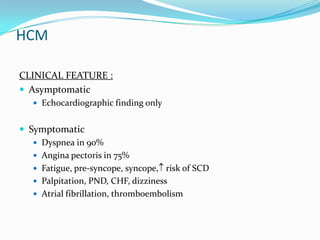
CLINICAL FEATURE :
 Asymptomatic
    Echocardiographic finding only


 Symptomatic
    Dyspnea in 90%
    Angina pectoris in 75%
    Fatigue, pre-syncope, syncope, risk of SCD
    Palpitation, PND, CHF, dizziness
    Atrial fibrillation, thromboembolism
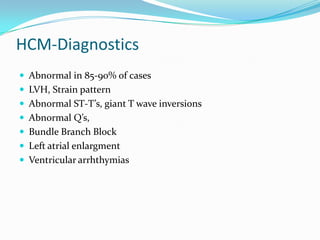
HCM-Diagnostics
 Abnormal in 85-90% of cases
 LVH, Strain pattern
 Abnormal ST-T’s, giant T wave inversions
 Abnormal Q’s,
 Bundle Branch Block
 Left atrial enlargment
 Ventricular arrhthymias
HCM-Diagnostics

 LVH usually develops between 5-15 years of age in HCM
 A normal ECHO in a young child does not R/O the diagnosis
 Serial ECHOs are recommended up to the age of 20 yr where
  there is a family history of HCM
 An unusual form od cardiomyopathy, characterised by apical
  hypertrophy, is associated withgiant negative T waves and a
  spade shaped LV cavity; usually of a benign course.
HCM-Clinical course

 Clinical presentation from infancy to old age
 Variable clinical course 25 % of cohort achieve normal longevity
 Annual mortality 3% in referral centers probably closer to 1% for all
  patients
 Course may be punctuated by adverse clinical events: sudden cardiac
  death, embolic stroke, and consequences of heart failure
 Sustained V-Tach and V-Fib: most likely mechanism of syncope/
  sudden death
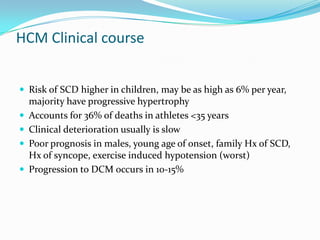
HCM Clinical course


 Risk of SCD higher in children, may be as high as 6% per year,
    majority have progressive hypertrophy
   Accounts for 36% of deaths in athletes <35 years
   Clinical deterioration usually is slow
   Poor prognosis in males, young age of onset, family Hx of SCD,
    Hx of syncope, exercise induced hypotension (worst)
   Progression to DCM occurs in 10-15%
HCM--Risk factors for SCD

   Young age (<35 years)
   “Malignant” family history of sudden death
   Aborted sudden cardiac death
   Sustained VT or SVT
   Non-sustained VT on holter monitoring
   Atrial fibrillation
   Dilated left ventricle
   NYHA classes III or IV
   Syncope
   Severe hypertrophy(>3.0 cm)
   Abnormal BP response to exercise
   Coronary artery disease
   Strenous exercise or work
HCM-
RECOMMENDATION FOR ATHELETS

 Low-risk older patients (>30 years) may participate in athletic
  activity if all of the following are absent:
      Ventricular tachycardia on Holter monitoring
      Family history of sudden death due to HCM
      History of syncope
      Severe hemodynamic abnormalities, gradient 50 mmHg
      Exercise induced hypotension
      Moderate or severe mitral regurgitation
      Enlarged left atrium ( 5.0 cm)
      Paroxysmal atrial fibrillation
      Abnormal myocardial perfusion
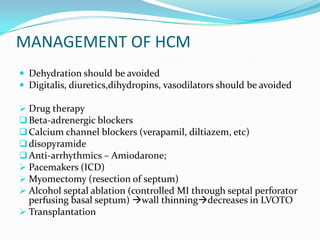
MANAGEMENT OF HCM
 Dehydration should be avoided
 Digitalis, diuretics,dihydropins, vasodilators should be avoided

 Drug therapy
 Beta-adrenergic blockers
 Calcium channel blockers (verapamil, diltiazem, etc)
 disopyramide
 Anti-arrhythmics – Amiodarone;
 Pacemakers (ICD)
 Myomectomy (resection of septum)
 Alcohol septal ablation (controlled MI through septal perforator
  perfusing basal septum) wall thinningdecreases in LVOTO
 Transplantation
Hypertensive HCM of elderly


• Characteristics
   – Modest concentric LV hypertrophy (<22 mm)
   – Small LV cavity size
   – Associated hypertension
   – Ventricular morphology greatly distorted with reduced outflow
     tract
   – Sigmoid septum and “grandma SAM” echocardiographic finding
     only
Inherited metabolic cardiomyopathies with LVH
 Cardiac Danon Disease:
             Mutation in x-linked LAMP2.
            Enlarged ventricular myocytes with PAS positive inclusions.
            Presents in chilhhood with serious arrhythmias
            ECG:LVH ventricular preexcitation

• Friedrich’s Ataxia:
            Degenerative disease caused by inadequate levels of
             frataxin,a protein involved in mitochondrial iron
             metabolism.
            Echo,CTI,CMRI shows symetric LVH with asymetric IVS
             hypertrophy
            Lacks cellualar disarray as of HCM
 Glycogen storage disease:
       Mutation in PRKAG2 adenosin monophosphate-activated protein
        kinase.ventricular hypertrophy resembling HCM and enlarged myocytes
        with vacoules in the myocytes that stain for glycogen


• Fabry Disease:
       X-linked autosomal recessive lysosomal disorder caused by
        deficiency of lysosomal alpha galactosidase A, leading to
        accumulation of glycosphingolipids in the heart leading to
        ventricular hypertrophy.
       Because of severe impairment in ventricular filling, it is sometimes
        classified as a restrictive cardiomyopathy
       Treatment consists of enzyme replacement therapy with agalsidase
        Beta
Restrictve cardiomyopathy
RCM

• Hallmark: abnormal diastolic function
• Rigid ventricular wall with impaired ventricular filling
• Bear some functional resemblance to constrictive pericarditis
• Importance lies in its differentiation from operable constrictive
  pericarditis
• Much less common then DCM or HCM outside the tropics, but
  frequent cause of death in Africa, India, South and Central America and
  Asia primarily because of the high incidence of endomyocardial fibrosis
  in those regions
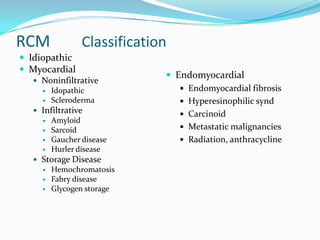
RCM              Classification
 Idiopathic
 Myocardial
                               Endomyocardial
    Noninfiltrative
        Idopathic                Endomyocardial fibrosis
        Scleroderma              Hyperesinophilic synd
    Infiltrative                 Carcinoid
        Amyloid
        Sarcoid                  Metastatic malignancies
        Gaucher disease          Radiation, anthracycline
        Hurler disease
    Storage Disease
        Hemochromatosis
        Fabry disease
        Glycogen storage
RCM
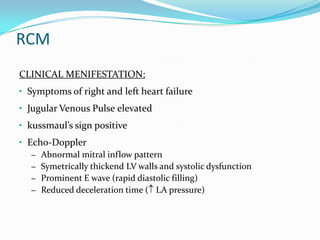
CLINICAL MENIFESTATION:
• Symptoms of right and left heart failure
• Jugular Venous Pulse elevated
• kussmaul’s sign positive
• Echo-Doppler
   – Abnormal mitral inflow pattern
   – Symetrically thickend LV walls and systolic dysfunction
   – Prominent E wave (rapid diastolic filling)
   – Reduced deceleration time ( LA pressure)
RCM
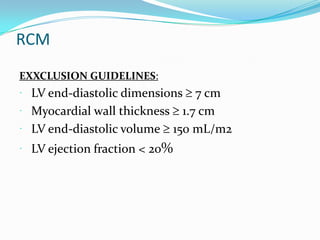
EXXCLUSION GUIDELINES:
 LV end-diastolic dimensions  7 cm
 Myocardial wall thickness 1.7 cm
 LV end-diastolic volume 150 mL/m2
 LV ejection fraction < 20%
Restriction vs. Constriction
History provide can important clues
 Constrictive pericarditis
   history of TB, trauma, pericarditis, collagen
    vascular disorders
 Restrictive cardiomyopathy
   amyloidosis, hemochromatosis
 Mixed
   mediastinal radiation, cardiac surgery
RCM
TREATMENT:
• No satisfactory medical therapy
• Drug therapy must be used with caution
   – Diuretics for extremely high filling pressures
   – Chronic anticoagulation is often recommended
   – Vasodilators may decrease filling pressure
   – (?) Calcium channel blockers to improve diastolic compliance
   – Digitalis and other inotropic agents are not indicated
 Eosinophilic endomyocardial disease:
           Also called loeffler’s endocarditis
           Cardiac damage is apparent result of toxic effect of
            eosinophilic proteins
           Endocardium of both ventricles enlarged
           Imaging reveals ventricular thickening of the postero basal
            LV wall.
           Management is with diuretics,venodilators, anticoagulants
           Glucocorticoids, hydroxurea improves survival
           Surgical resection of fibrotic tissue
 Cardiac amyloidosis:
           Deposition of amyloid in the myocardium
           Uncommon in secondary form
           Diastolic dysfunction, systolic dysfunction, arrhythmias,
            orthostatic hypotension
           2D ECHO: thickened myocardial wall with a
            diffuse,hyperrefractile “speckled”appearance
           Alkylating agent such as melphalan alng with glucocorticods
            appears to improove survival
           Heart transplantation along with bone marrow or liver
            kidney transplantation may help in selected patients
Other restricive cardiomyopathies

 Iron-overload cardiomyopathy:
               Should be suspected inbackground of diabetes cirrhosis and skin
                pigmentation
               Diagnosis confirmed by endomyocardial biopsy
               Phlebotomy
               Continuos subcutaneous use of iron chelators

 Carcinoid syndrome
           The carcinoid syndrome results in endocardial fibrosis ususally of right side.
           Stenosis/regurgitation of pulmonary, tricuspid valve.
           Similar lesions has been found in fenfluramine phenteramine use
• Sarcoidosis:
           Associated witA-V block
           RV overload with pulmonary hypertension
           High degree AV block with other systemic menifestation
           Treated with empirical glucocortocoids
!!!THANK YOU!!!

Cardiomyopathiesclassification,oetiology and treatment

  • 1.
    -CARDIOMYOPATHIES- CLASSIFICATION,ETIOLOGY,TREATMENT BY PIJUSH KANTI MANDAL PGT; GENERAL MEDICINE BURDWAN MEDICAL COLLEGE; BURDWAN
  • 2.
    Cardiomyopathies  The cardiomyopathiesare a group of diseases that primarily effect the heart muscles and are not the result of congenital, acquired vulvular, hypertensive, coronary arterial, or pericardial abnormalities.  The term cardiomyopathy should be restricted to the conditions which primarily effect the myocardium.
  • 3.
    CARDIOMYOPATHY CLASSIFICATION  Two fundamentalforms of cardiomyopathy are recognised—  1)primary:- consisting of heart muscle disease predominantly involving the myocardium and/or of unknown cause.  2)secondary:-myocardial disease of unknown cause or associated with systemic disease(eg; chronic alcohol use,amyloidosis)
  • 4.
    CARDIOMYOPATHY ETIOLOGIC CLASSFICATION Primary myocardialinvolvement:- 1.Idiopathic(D,R,H) 2.Familial(D,R,H) 3.Eosinophilic endomyocardial fibrosis(R) 4. Endomyocardial fibrosis(R)
  • 5.
    CARDIOMYOPATHY CLASSIFICATION(contd..) Secondary myocardial involvement:-  Infective(D): viral myocarditis,bacterial myocarditis, fungal myocarditis,protozoal, metazoal, rickettsial, spirochetal myocarditis.  Metabolic(D):  Familial storage disease(D,R): glycogen storage disease, mucopolysachcharidosis, hemochromatosis,fabry’s disease  Deficiency(D): elecrolytes,nutrional  Connective tisssue disease: systemic lupus erythematosus,polyarteritis nodosa,rheumatoid arthritis,progressive systemic sclerosis, dermatomyositis  Infiltrations & granulomas(R,D): amyloidosis, sarcoidosis,malignancy
  • 6.
    CARDIOMYOPATHY CLASSFICATION (CONTD..)  Neuromuscular: muscular dystrophy, myotonic dystrophy,friedrich’s ataxia(H,D)  Sensitivity & toxic reaction(D): alcohol,drugs,radiation  Peripartum heart disease
  • 7.
    Clinical classification ofcardiomyopathy 1.Dilated cardiomyopathy: Left and/or right ventricular enlargement Impaired systolic function Congestive cardiac failure Arrhythmias, emboli 2.Restrictve cardiomyopathy: Endomyocardial scarring or myocardial infiltration resulting in restriction to left and/or right ventricular filling 3.Hypertrophic cardiomyopathy: Dysproprtionate left ventricular hypertrophy,typically involving the septum more than the free wall with or without an intraventricular systolic pressure gradiant,ususally of a non dilated ventricular cavity.
  • 8.
  • 9.
    DCM  About onein three cases of heart failure is due to DCM  Left and/or right ventricular systolic pump function is impaired leading to progressive dilatation  Most of the cases are of unknown etiology and is termed as idiopathic DCM  Secondary Causes include ischaemia,alcoholic peripartum,post infectious, viral  Most common of all cardiomyopathies.
  • 10.
  • 11.
    DCM--incidence  Prevalence is36 per 100,000 population  Third most common cause of heart failure  Most frequent cause of heart transplantation  DCM accounts for approximately 10,000 deaths and 46,000 hospitalizations per year in the US  Spontaneous recovery occur in one-quarter of patients
  • 12.
    Genetic consideration  One-fifthto one third of patients have familial forms of DCM  Mutation in >20 genes,transmitted in AD fashion. Most commonly genes encoding Sarcomeric proteins,such as alpha cardiac actin, beta and alpha myosin, heavy chain alpha myosine,troponin T, I &C.
  • 13.
    DCM CLINICAL MENIFESTATION:  Highestincidence in middle age  Blacks 2x more frequent than whites  Men 3x more frequent than women  Symptoms may be gradual in onset  Acute presentation  Misdiagnosed as viral URI in young adults  Uncommon to find specific myocardial disease on endomyocardial biopsy
  • 14.
    DCM CLIN. MENF----  Symptoms/Signsof heart failure  Pulmonary congestion (left heart failure) dyspnea (rest, exertional, nocturnal), orthopnea  Systemic congestion (right heart failure) edema, nausea, abdominal pain, nocturia  Low cardiac output  Hypotension, tachycardia, tachypnea  Narrow pulse pressure  Elevated JVP  Fatigue and weakness  Arrhythmia  Atrial fibrillation, conduction delays, complex PVC’s, sudden death
  • 15.
    DCM DIAGNOSTICS…  CXR (enlargedheart, CHF)  Electrocardiogram (tachycardia, A-V block, LBBB, NSSTT changes, PVC’s)  24-hour Holter monitor  if lightheadedness, palpitation, syncope  Echocardiogram,CTI,CMRI(left ventricular dilation,with normal or minimally thickened or,thinned walls, global hypokinesis, low EF)  Elevated BNP  Cardiac catheterization (R/O CAD) Myocardial biopsy, rare  if age >40, ischemic history, high risk profile, abnormal ECG Myocardial biopsy(rare)
  • 16.
    DCM TREATMENT:  Majority particularly>50yrs die within 4years of onset  Spontaneous improvent or stabilization in one-quarter  Death due to progressive HF,V-tach  SCD is a constant threat  Systemic embolization is a concern  Alcohol should be avoided. As should the CCBs,NSAIDs  Avoid antiarrhythmics  Salt restriction  Fluid restriction
  • 17.
     Initiate standardtreatment of HF  medical therapy  ACE inhibitors  diuretics  Digoxin  Hydralazine/nitrate combination  Anticoagulation prophylaxis(EF <30%, hx of embolic events)
  • 18.
    DCM TREATMENT CONTD.. • Implantablecardiac defibrilator  Cardiac transplantation  This disorder is the most common indication for cardiac transplantation  Survival after transplant is  80% one year  70% 5 years  Left Ventricular Reduction Procedures  LV-reshaping
  • 19.
    Some other formsof DCM  ALCOHOLIC CARDIOMYOPATHY:  Individuals who consumes >90g/day of alcohol for many years  Clinical picture resembling idiopathic or familial DCM  Partially genetically predetermined (ALDH2)  Abstention may halt the progression or even reverse  PERIPARTUM CARDIOMYOPATHY :  Cardiac dilatation with CHF develope during last trimester or within 6 months of delivery.  Typically present in multiparous of age >30 yrs  Unknown cause  Inflammatory myocarditis, immune activation,gestational have been incriminated  Symptoms,signs and management are that of IDCM  Further pregnancy should be discouraged
  • 20.
     NEUROMUSCULAR DISEASES:  In duchenne’s progressive muscular dystrophy, there is mutation in gene encoding cardiac structural protein(dystrophin) lead to myocyte death. • ECG: tall ‘R’ wave in right precordial leads with R/S>1.0,associated with deep Q in limb and lateral precordial leads • Rapidly progressive HF with extended periods of apparent circulatory stability.  In myotonic dystrophy there is disorders of impulse generation and AV conduction. • Evidence of overt heart disease is uncommon • Insertion of ICD or pacemaker is effective.
  • 21.
    DCM  Drugs :  Adriamycin: systolic dysfunction and ventricular arrhythmia occur in a dose dependant manner with a dose of >450mg/dl  Concomitant cyclphosphamide, irradiation,underlyig HF are the risk factors for cardiotoxicity.  Toxicity may occur acutely but more commonly developes a median of 3 months after last dose  Modification of dose along with the use of ironchelator dexrazoxone have reduced the risk of cardiotoxicity.  ACE inhibitors may cause recovery of cardiac function  Other drugs include  Trustuzumab  High dose cyclophosphamide  Imatinib mesylate  TCA,Lithium , cocaine abuse
  • 22.
    DCM  ARRHYTHMOGENIC RIGHTVENTRICULAR CARDIOMYOPATHY/DYSPLASIA  Familial cardiomyopathy, autosomal dominant  Progressive fibrofatty tissue replacement of right ventricle and to a lesser degreee of left ventricular myocardium  Mutation in genes encoding desmosomes,causes detachment in myocytes and consequent apoptosis and replacement with fibrofatty tissue.  PKP2 gene mutation  Ryanodine recepter gene(RyR2) mutation  Patients present with right heart failure  ECG:-QRS prolongation in right precordial leads with LBBB type of VT  CTI,CMRI will show right ventricular dilatation and fibrofatty deposition and aneurysm  Restriction from competetive sports, antiarrythmic therapy, with beta blockers &amiodarone  Implantation OF ICD  Cardiac transplantation
  • 23.
    DCM  TAKO-TSUBO CARDIOMYOPATHY:  Also known as apical ballooning syndrome  Patients presents with abrupt onset severe chest pain by a very stressfull emotion &physical events  women>50 yrs  ECG:ST ,withT In precordial leads, EF, troponin  ECHO: akinesia of distal portion of left ventricle  CAG: Normal  CTI: ‘Ballooning’ of left ventricle specifically apex in end systole  Reversible within 3-7 days  Beta blockers is of doubtful significance in Rx  LEFT VENTRICULAR NON COMPACTION(LVNC):  Arrest of normal embryogenesis with persistance of deep recesses &sinusoides in the myocardiumthat characterise the embryonic heart.  ECHO- Multiple deep trabeculations into the myocardium which communicate with the ventricular cavity causing left ventricular contractile dysfunction  Rx- standard therapy for CHF along with chronic anticoagulation.
  • 24.
  • 25.
    HCM  HCM ischaracterised by LV hypertrophy,typically of a non-dilated chember, without any obvious cause like HTN,AoS.  Two features of HCM have attracted most significance  Asymetric hypertrophy of the left ventricle with the preferential hypertrophy of the IVS  A dynamic left ventricular outflow tract pressure gradiant,related to narrowing of the sub aortic area.
  • 26.
  • 27.
  • 28.
    HCM • The major abnormality of the heart in HCM is an excessive thickening of the muscle. Thickening usually begins during early adolescence and stops when growth has finished. It is uncommon for thickening to progress after this age • The left ventricle is almost always affected, and in some patients the muscle of the right ventricle also thickens • Hypertrophy is usually greatest in the septum. The muscle thickening in this region may be sufficient to narrow the outflow tract. This thickening is associated with obstruction to the flow of blood out of the heart into the aorta
  • 29.
    HCM • Asymmetric septal hypertrophy with obstruction to the outflow of blood from the heart may occur. The mitral valve touches the septum, blocking the outflow tract. Some blood is leaking back through the mitral valve causing mitral regurgitation
  • 30.
    HCM  Dynamic LVoutflow tract obstruction  Outflow tract gradient (>30 mm Hg), considered severe if >50 mm Hg (occurs in 25-30% of cases leading to name hypertrophic obstructive cardiomyopathy)  Diastolic dysfunction  Impaired diastolic filling, filling pressure  Mitral regurgitation  Arrhythmias:SVT,AF,VT
  • 31.
    HCM  Approximately 30%of patients with HCM have a dynamic systolic pressure gradient in the left ventricular outflow tract caused by contact between the mitral valve leaflet(s) and the interventricular septum under resting conditions  Outflow tract gradient in excess of 30 mmHg is an important cause of symptoms  Gradient is simply a consequence of high velocity flow through the aortic valve, and hence does not represent a real obstruction to cardiac output .
  • 32.
    HCM  Gradient greaterthan 50 mmHg, the percentage of systolic volume ejected before the beginning of SAM is greatly reduced - responsible for patients' symptoms.When severe, outflow tract gradient can cause dyspnea, chest pain, syncope, and predisposes to the development of atrial arrhythmias - independent predictor of disease progression and adverse outcome, including sudden death
  • 33.
    HCM CLINICAL FEATURE : Asymptomatic  Echocardiographic finding only  Symptomatic  Dyspnea in 90%  Angina pectoris in 75%  Fatigue, pre-syncope, syncope, risk of SCD  Palpitation, PND, CHF, dizziness  Atrial fibrillation, thromboembolism
  • 34.
    HCM-Diagnostics  Abnormal in85-90% of cases  LVH, Strain pattern  Abnormal ST-T’s, giant T wave inversions  Abnormal Q’s,  Bundle Branch Block  Left atrial enlargment  Ventricular arrhthymias
  • 35.
    HCM-Diagnostics  LVH usuallydevelops between 5-15 years of age in HCM  A normal ECHO in a young child does not R/O the diagnosis  Serial ECHOs are recommended up to the age of 20 yr where there is a family history of HCM  An unusual form od cardiomyopathy, characterised by apical hypertrophy, is associated withgiant negative T waves and a spade shaped LV cavity; usually of a benign course.
  • 36.
    HCM-Clinical course  Clinicalpresentation from infancy to old age  Variable clinical course 25 % of cohort achieve normal longevity  Annual mortality 3% in referral centers probably closer to 1% for all patients  Course may be punctuated by adverse clinical events: sudden cardiac death, embolic stroke, and consequences of heart failure  Sustained V-Tach and V-Fib: most likely mechanism of syncope/ sudden death
  • 37.
    HCM Clinical course Risk of SCD higher in children, may be as high as 6% per year, majority have progressive hypertrophy  Accounts for 36% of deaths in athletes <35 years  Clinical deterioration usually is slow  Poor prognosis in males, young age of onset, family Hx of SCD, Hx of syncope, exercise induced hypotension (worst)  Progression to DCM occurs in 10-15%
  • 38.
    HCM--Risk factors forSCD  Young age (<35 years)  “Malignant” family history of sudden death  Aborted sudden cardiac death  Sustained VT or SVT  Non-sustained VT on holter monitoring  Atrial fibrillation  Dilated left ventricle  NYHA classes III or IV  Syncope  Severe hypertrophy(>3.0 cm)  Abnormal BP response to exercise  Coronary artery disease  Strenous exercise or work
  • 39.
    HCM- RECOMMENDATION FOR ATHELETS Low-risk older patients (>30 years) may participate in athletic activity if all of the following are absent:  Ventricular tachycardia on Holter monitoring  Family history of sudden death due to HCM  History of syncope  Severe hemodynamic abnormalities, gradient 50 mmHg  Exercise induced hypotension  Moderate or severe mitral regurgitation  Enlarged left atrium ( 5.0 cm)  Paroxysmal atrial fibrillation  Abnormal myocardial perfusion
  • 40.
    MANAGEMENT OF HCM Dehydration should be avoided  Digitalis, diuretics,dihydropins, vasodilators should be avoided  Drug therapy  Beta-adrenergic blockers  Calcium channel blockers (verapamil, diltiazem, etc)  disopyramide  Anti-arrhythmics – Amiodarone;  Pacemakers (ICD)  Myomectomy (resection of septum)  Alcohol septal ablation (controlled MI through septal perforator perfusing basal septum) wall thinningdecreases in LVOTO  Transplantation
  • 41.
    Hypertensive HCM ofelderly • Characteristics – Modest concentric LV hypertrophy (<22 mm) – Small LV cavity size – Associated hypertension – Ventricular morphology greatly distorted with reduced outflow tract – Sigmoid septum and “grandma SAM” echocardiographic finding only
  • 42.
    Inherited metabolic cardiomyopathieswith LVH  Cardiac Danon Disease:  Mutation in x-linked LAMP2.  Enlarged ventricular myocytes with PAS positive inclusions.  Presents in chilhhood with serious arrhythmias  ECG:LVH ventricular preexcitation • Friedrich’s Ataxia:  Degenerative disease caused by inadequate levels of frataxin,a protein involved in mitochondrial iron metabolism.  Echo,CTI,CMRI shows symetric LVH with asymetric IVS hypertrophy  Lacks cellualar disarray as of HCM
  • 43.
     Glycogen storagedisease:  Mutation in PRKAG2 adenosin monophosphate-activated protein kinase.ventricular hypertrophy resembling HCM and enlarged myocytes with vacoules in the myocytes that stain for glycogen • Fabry Disease:  X-linked autosomal recessive lysosomal disorder caused by deficiency of lysosomal alpha galactosidase A, leading to accumulation of glycosphingolipids in the heart leading to ventricular hypertrophy.  Because of severe impairment in ventricular filling, it is sometimes classified as a restrictive cardiomyopathy  Treatment consists of enzyme replacement therapy with agalsidase Beta
  • 44.
  • 45.
    RCM • Hallmark: abnormaldiastolic function • Rigid ventricular wall with impaired ventricular filling • Bear some functional resemblance to constrictive pericarditis • Importance lies in its differentiation from operable constrictive pericarditis • Much less common then DCM or HCM outside the tropics, but frequent cause of death in Africa, India, South and Central America and Asia primarily because of the high incidence of endomyocardial fibrosis in those regions
  • 46.
    RCM Classification  Idiopathic  Myocardial  Endomyocardial  Noninfiltrative  Idopathic  Endomyocardial fibrosis  Scleroderma  Hyperesinophilic synd  Infiltrative  Carcinoid  Amyloid  Sarcoid  Metastatic malignancies  Gaucher disease  Radiation, anthracycline  Hurler disease  Storage Disease  Hemochromatosis  Fabry disease  Glycogen storage
  • 47.
    RCM CLINICAL MENIFESTATION: • Symptomsof right and left heart failure • Jugular Venous Pulse elevated • kussmaul’s sign positive • Echo-Doppler – Abnormal mitral inflow pattern – Symetrically thickend LV walls and systolic dysfunction – Prominent E wave (rapid diastolic filling) – Reduced deceleration time ( LA pressure)
  • 48.
    RCM EXXCLUSION GUIDELINES:  LVend-diastolic dimensions 7 cm  Myocardial wall thickness 1.7 cm  LV end-diastolic volume 150 mL/m2  LV ejection fraction < 20%
  • 49.
    Restriction vs. Constriction Historyprovide can important clues  Constrictive pericarditis  history of TB, trauma, pericarditis, collagen vascular disorders  Restrictive cardiomyopathy  amyloidosis, hemochromatosis  Mixed  mediastinal radiation, cardiac surgery
  • 50.
    RCM TREATMENT: • No satisfactorymedical therapy • Drug therapy must be used with caution – Diuretics for extremely high filling pressures – Chronic anticoagulation is often recommended – Vasodilators may decrease filling pressure – (?) Calcium channel blockers to improve diastolic compliance – Digitalis and other inotropic agents are not indicated
  • 51.
     Eosinophilic endomyocardialdisease:  Also called loeffler’s endocarditis  Cardiac damage is apparent result of toxic effect of eosinophilic proteins  Endocardium of both ventricles enlarged  Imaging reveals ventricular thickening of the postero basal LV wall.  Management is with diuretics,venodilators, anticoagulants  Glucocorticoids, hydroxurea improves survival  Surgical resection of fibrotic tissue
  • 52.
     Cardiac amyloidosis:  Deposition of amyloid in the myocardium  Uncommon in secondary form  Diastolic dysfunction, systolic dysfunction, arrhythmias, orthostatic hypotension  2D ECHO: thickened myocardial wall with a diffuse,hyperrefractile “speckled”appearance  Alkylating agent such as melphalan alng with glucocorticods appears to improove survival  Heart transplantation along with bone marrow or liver kidney transplantation may help in selected patients
  • 53.
    Other restricive cardiomyopathies Iron-overload cardiomyopathy:  Should be suspected inbackground of diabetes cirrhosis and skin pigmentation  Diagnosis confirmed by endomyocardial biopsy  Phlebotomy  Continuos subcutaneous use of iron chelators  Carcinoid syndrome  The carcinoid syndrome results in endocardial fibrosis ususally of right side.  Stenosis/regurgitation of pulmonary, tricuspid valve.  Similar lesions has been found in fenfluramine phenteramine use • Sarcoidosis:  Associated witA-V block  RV overload with pulmonary hypertension  High degree AV block with other systemic menifestation  Treated with empirical glucocortocoids
  • 54.