Lecture Notes on Cardiovascular System
Prepared By: Mark Fredderick R Abejo R.N, MAN


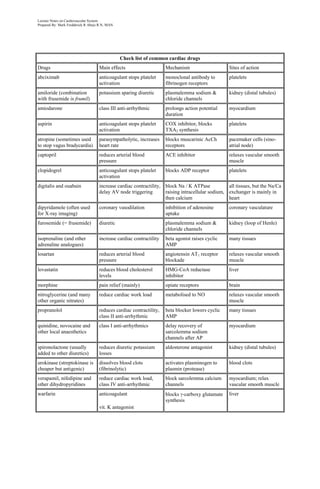
                                                Check list of common cardiac drugs
Drugs                               Main effects                     Mechanism                    Sites of action
abciximab                           anticoagulant stops platelet     monoclonal antibody to       platelets
                                    activation                       fibrinogen receptors
amiloride (combination              potassium sparing diuretic       plasmalemma sodium &         kidney (distal tubules)
with frusemide is frumil)                                            chloride channels
amiodarone                          class III anti-arrhythmic        prolongs action potential    myocardium
                                                                     duration
aspirin                             anticoagulant stops platelet     COX inhibitor, blocks        platelets
                                    activation                       TXA2 synthesis
atropine (sometimes used            parasympatholytic, increases     blocks muscarinic AcCh       pacemaker cells (sino-
to stop vagus bradycardia)          heart rate                       receptors                    atrial node)
captopril                           reduces arterial blood           ACE inhibitor                relaxes vascular smooth
                                    pressure                                                      muscle
clopidogrel                         anticoagulant stops platelet     blocks ADP receptor          platelets
                                    activation
digitalis and ouabain               increase cardiac contractility, block Na / K ATPase           all tissues, but the Na/Ca
                                    delay AV node triggering        raising intracellular sodium, exchanger is mainly in
                                                                    then calcium                  heart
dipyridamole (often used            coronary vasodilation            inhibition of adenosine      coronary vasculature
for X-ray imaging)                                                   uptake
furosemide (= frusemide)            diuretic                         plasmalemma sodium &         kidney (loop of Henle)
                                                                     chloride channels
isoprenaline (and other             increase cardiac contractility   beta agonist raises cyclic   many tissues
adrenaline analogues)                                                AMP
losartan                            reduces arterial blood           angiotensin AT1 receptor     relaxes vascular smooth
                                    pressure                         blockade                     muscle
lovastatin                          reduces blood cholesterol        HMG-CoA reductase            liver
                                    levels                           inhibitor
morphine                            pain relief (mainly)             opiate receptors             brain
nitroglycerine (and many            reduce cardiac work load         metabolised to NO            relaxes vascular smooth
other organic nitrates)                                                                           muscle
propranolol                         reduces cardiac contractility,   beta blocker lowers cyclic   many tissues
                                    class II anti-arrhythmic         AMP
quinidine, novocaine and            class I anti-arrhythmics         delay recovery of            myocardium
other local anaesthetics                                             sarcolemma sodium
                                                                     channels after AP
spironolactone (usually             reduces diuretic potassium       aldosterone antagonist       kidney (distal tubules)
added to other diuretics)           losses
urokinase (streptokinase is         dissolves blood clots            activates plasminogen to     blood clots
cheaper but antigenic)              (fibrinolytic)                   plasmin (protease)
verapamil, nifedipine and           reduce cardiac work load,        block sarcolemma calcium     myocardium; relax
other dihydropyridines              class IV anti-arrhythmic         channels                     vascular smooth muscle
warfarin                            anticoagulant                    blocks -carboxy glutamate    liver
                                                                     synthesis
                                    vit. K antagonist
Lecture Notes on Cardiovascular System
Prepared By: Mark Fredderick R Abejo R.N, MAN


Vasoactive peptides (all of these use seven transmembrane helix receptors)

 peptide name         produced by                 actions
adrenomedullin everywhere                         vasodilation
angiotensin           renin, ACE (proteases) vasoconstriction
atrial natriuretic right atrium stretch           increased water and sodium losses by kidney
B-natriuretic         ventricular muscle          as above
C-natriuretic         vascular endothelium        as above
bradykinin            kallikrein (protease)       vasodilation, increased vascular permeability
endothelin            vascular endothelium        vasoconstriction, bronchoconstriction
vasopressin           posterior pituitary         increases renal water retention
VIP                   parasympathetic nerves vasodilation (salivary glands)


other vasoactive substances


           name                      produced by                           actions
adenosine                       all working tissues     vasodilation
adrenaline                      adrenal medulla         vasodilation ( ) predominates
aldosterone                     adrenal cortex          sodium retention by kidney
histamine                       mast cells              both constriction & dilation (receptors)
leukotriene LTC4                leukocytes              vasoconstriction, bronchoconstriction
noradrenaline                   sympathetic nerves      vasoconstriction ( ) predominates
nitric oxide                    vascular endothelium vasodilator via cGMP
prostacyclin PGI2               vascular endothelium vasodilation, prevents clotting
prostaglandin PGE1 / E2 macrophages                     both constriction and dilation (receptors)
thromboxane TXA2                platelets               vasoconstriction, promotes clotting


drug name          type                                          actions
levosimendan calcium sensitizer                                  enhances troponin Ca++ binding & opens vascular ATP-
                                                                 sensitive K+ channels
                   cytokine inhibitor                            anti-inflammatory
bosentan           endothelin receptor antagonist
ghrelin            growth hormone releaser
nesiritide         natriuretic peptide                           increases salt and water excretion
thiorphan          neutral endopeptidase inhibitor               blocks degradation of bradykinin & ANP
eplerenone         selective aldosterone receptor                blocks aldosterone actions in kidney and in cardiac muscle
                   antagonist (SARA)                             (anti-fibrosis)
omapatrilat        vasopeptidase inhibitor                       blocks both angiotesin II formation, and the degradation of
                                                                 bradykinin and ANP
                   vasopressin antagonist                        blocks V2 receptors in collecting ducts

Cardiac Drug

  • 1.
    Lecture Notes onCardiovascular System Prepared By: Mark Fredderick R Abejo R.N, MAN Check list of common cardiac drugs Drugs Main effects Mechanism Sites of action abciximab anticoagulant stops platelet monoclonal antibody to platelets activation fibrinogen receptors amiloride (combination potassium sparing diuretic plasmalemma sodium & kidney (distal tubules) with frusemide is frumil) chloride channels amiodarone class III anti-arrhythmic prolongs action potential myocardium duration aspirin anticoagulant stops platelet COX inhibitor, blocks platelets activation TXA2 synthesis atropine (sometimes used parasympatholytic, increases blocks muscarinic AcCh pacemaker cells (sino- to stop vagus bradycardia) heart rate receptors atrial node) captopril reduces arterial blood ACE inhibitor relaxes vascular smooth pressure muscle clopidogrel anticoagulant stops platelet blocks ADP receptor platelets activation digitalis and ouabain increase cardiac contractility, block Na / K ATPase all tissues, but the Na/Ca delay AV node triggering raising intracellular sodium, exchanger is mainly in then calcium heart dipyridamole (often used coronary vasodilation inhibition of adenosine coronary vasculature for X-ray imaging) uptake furosemide (= frusemide) diuretic plasmalemma sodium & kidney (loop of Henle) chloride channels isoprenaline (and other increase cardiac contractility beta agonist raises cyclic many tissues adrenaline analogues) AMP losartan reduces arterial blood angiotensin AT1 receptor relaxes vascular smooth pressure blockade muscle lovastatin reduces blood cholesterol HMG-CoA reductase liver levels inhibitor morphine pain relief (mainly) opiate receptors brain nitroglycerine (and many reduce cardiac work load metabolised to NO relaxes vascular smooth other organic nitrates) muscle propranolol reduces cardiac contractility, beta blocker lowers cyclic many tissues class II anti-arrhythmic AMP quinidine, novocaine and class I anti-arrhythmics delay recovery of myocardium other local anaesthetics sarcolemma sodium channels after AP spironolactone (usually reduces diuretic potassium aldosterone antagonist kidney (distal tubules) added to other diuretics) losses urokinase (streptokinase is dissolves blood clots activates plasminogen to blood clots cheaper but antigenic) (fibrinolytic) plasmin (protease) verapamil, nifedipine and reduce cardiac work load, block sarcolemma calcium myocardium; relax other dihydropyridines class IV anti-arrhythmic channels vascular smooth muscle warfarin anticoagulant blocks -carboxy glutamate liver synthesis vit. K antagonist
  • 2.
    Lecture Notes onCardiovascular System Prepared By: Mark Fredderick R Abejo R.N, MAN Vasoactive peptides (all of these use seven transmembrane helix receptors) peptide name produced by actions adrenomedullin everywhere vasodilation angiotensin renin, ACE (proteases) vasoconstriction atrial natriuretic right atrium stretch increased water and sodium losses by kidney B-natriuretic ventricular muscle as above C-natriuretic vascular endothelium as above bradykinin kallikrein (protease) vasodilation, increased vascular permeability endothelin vascular endothelium vasoconstriction, bronchoconstriction vasopressin posterior pituitary increases renal water retention VIP parasympathetic nerves vasodilation (salivary glands) other vasoactive substances name produced by actions adenosine all working tissues vasodilation adrenaline adrenal medulla vasodilation ( ) predominates aldosterone adrenal cortex sodium retention by kidney histamine mast cells both constriction & dilation (receptors) leukotriene LTC4 leukocytes vasoconstriction, bronchoconstriction noradrenaline sympathetic nerves vasoconstriction ( ) predominates nitric oxide vascular endothelium vasodilator via cGMP prostacyclin PGI2 vascular endothelium vasodilation, prevents clotting prostaglandin PGE1 / E2 macrophages both constriction and dilation (receptors) thromboxane TXA2 platelets vasoconstriction, promotes clotting drug name type actions levosimendan calcium sensitizer enhances troponin Ca++ binding & opens vascular ATP- sensitive K+ channels cytokine inhibitor anti-inflammatory bosentan endothelin receptor antagonist ghrelin growth hormone releaser nesiritide natriuretic peptide increases salt and water excretion thiorphan neutral endopeptidase inhibitor blocks degradation of bradykinin & ANP eplerenone selective aldosterone receptor blocks aldosterone actions in kidney and in cardiac muscle antagonist (SARA) (anti-fibrosis) omapatrilat vasopeptidase inhibitor blocks both angiotesin II formation, and the degradation of bradykinin and ANP vasopressin antagonist blocks V2 receptors in collecting ducts