Amy Lalringhluani
1st yr Msc N (Paediatric Nursing)
SRIHER, Chennai
Introduction
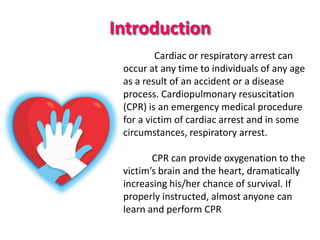
Cardiac or respiratory arrest can
occur at any time to individuals of any age
as a result of an accident or a disease
process. Cardiopulmonary resuscitation
(CPR) is an emergency medical procedure
for a victim of cardiac arrest and in some
circumstances, respiratory arrest.
CPR can provide oxygenation to the
victim’s brain and the heart, dramatically
increasing his/her chance of survival. If
properly instructed, almost anyone can
learn and perform CPR
Abbreviations & Terminologies
1. CPR : Cardiopulmonary
resuscitation
2. AHA: American Heart
Association
3. BLS: Basic life Support
4. AED: Automated
external defibrillator
5. ACLS: Advanced
Cardiac Life Support
6. IHCA: In-hospital
cardiac arrest
7. OHCA: Out of
hospital cardiac
arrest
Abbreviations & Terminologies
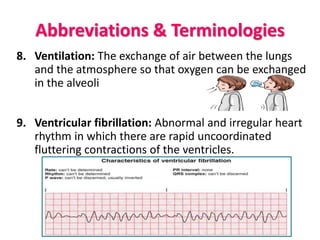
8. Ventilation: The exchange of air between the lungs
and the atmosphere so that oxygen can be exchanged
in the alveoli
9. Ventricular fibrillation: Abnormal and irregular heart
rhythm in which there are rapid uncoordinated
fluttering contractions of the ventricles.
Abbreviations & Terminologies
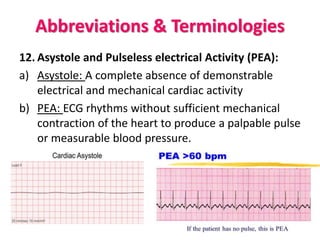
12. Asystole and Pulseless electrical Activity (PEA):
a) Asystole: A complete absence of demonstrable
electrical and mechanical cardiac activity
b) PEA: ECG rhythms without sufficient mechanical
contraction of the heart to produce a palpable pulse
or measurable blood pressure.
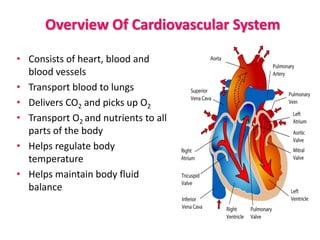
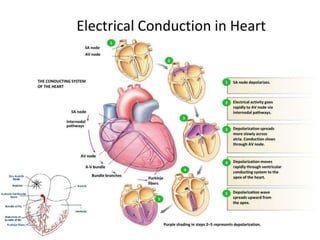
Overview Of Cardiovascular System
• Consists of heart, blood and
blood vessels
• Transport blood to lungs
• Delivers CO2 and picks up O2
• Transport O2 and nutrients to all
parts of the body
• Helps regulate body
temperature
• Helps maintain body fluid
balance
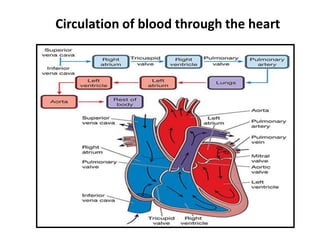
Circulation of blood through the heart
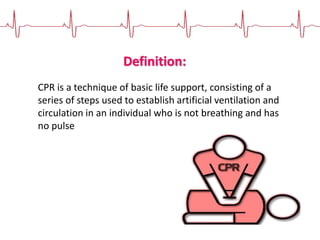
Definition:
CPR is a technique of basic life support, consisting of a
series of steps used to establish artificial ventilation and
circulation in an individual who is not breathing and has
no pulse
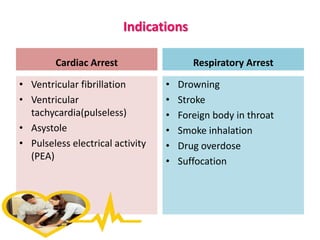
Cardiac Arrest
• Ventricular fibrillation
• Ventricular
tachycardia(pulseless)
• Asystole
• Pulseless electrical activity
(PEA)
Respiratory Arrest
• Drowning
• Stroke
• Foreign body in throat
• Smoke inhalation
• Drug overdose
• Suffocation
Indications
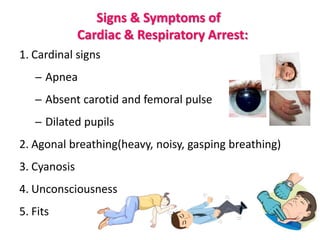
Signs & Symptoms of
Cardiac & Respiratory Arrest:
1. Cardinal signs
─ Apnea
─ Absent carotid and femoral pulse
─ Dilated pupils
2. Agonal breathing(heavy, noisy, gasping breathing)
3. Cyanosis
4. Unconsciousness
5. Fits
Purpose
●To maintain blood circulation
●To maintain open and clear airway
●To maintain artificial breathing
●To provide basic life support till medical
and advanced life support arrives
CPR Time - line
● CPR initiated within 4 mins -- > 40% survival chance
● 0 to 4 mins: Brain damage unlikely
● 4 to 6 minutes: Brain damage possible
● 6 to 10 mins: Brain damage probable
● Over 10 minutes: Probable brain death
● Timely CPR provides
 10 to 20% normal blood flow to heart
 20 to 30% normal blood flow to brain
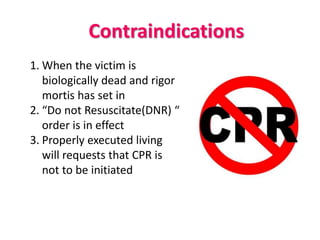
Contraindications
1. When the victim is
biologically dead and rigor
mortis has set in
2. “Do not Resuscitate(DNR) “
order is in effect
3. Properly executed living
will requests that CPR is
not to be initiated
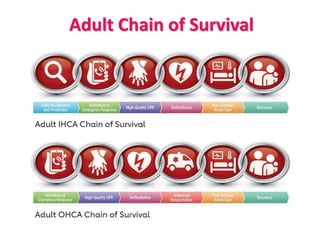
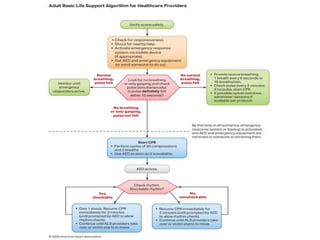
Adult Chain of Survival
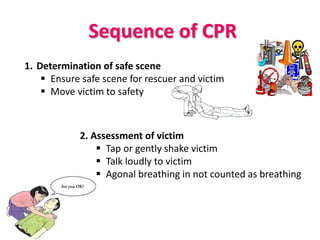
1. Determination of safe scene
 Ensure safe scene for rescuer and victim
 Move victim to safety
2. Assessment of victim
 Tap or gently shake victim
 Talk loudly to victim
 Agonal breathing in not counted as breathing
Sequence of CPR
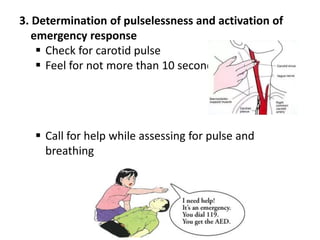
3. Determination of pulselessness and activation of
emergency response
 Check for carotid pulse
 Feel for not more than 10 seconds
 Call for help while assessing for pulse and
breathing
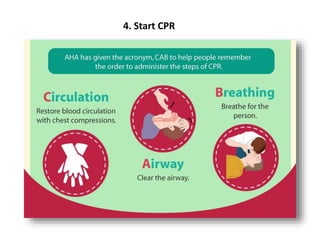
4. Start CPR
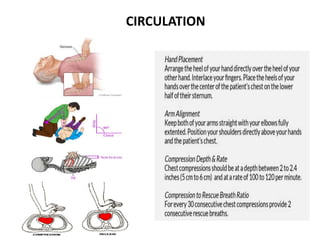
CIRCULATION
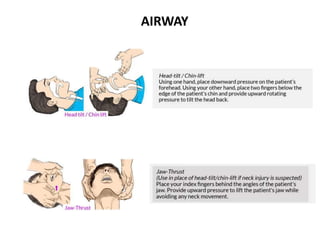
AIRWAY
Airway Maneuver Video
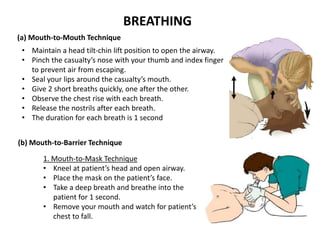
BREATHING
1. Mouth-to-Mask Technique
• Kneel at patient’s head and open airway.
• Place the mask on the patient’s face.
• Take a deep breath and breathe into the
patient for 1 second.
• Remove your mouth and watch for patient’s
chest to fall.
(a) Mouth-to-Mouth Technique
• Maintain a head tilt-chin lift position to open the airway.
• Pinch the casualty’s nose with your thumb and index finger
to prevent air from escaping.
• Seal your lips around the casualty’s mouth.
• Give 2 short breaths quickly, one after the other.
• Observe the chest rise with each breath.
• Release the nostrils after each breath.
• The duration for each breath is 1 second
(b) Mouth-to-Barrier Technique
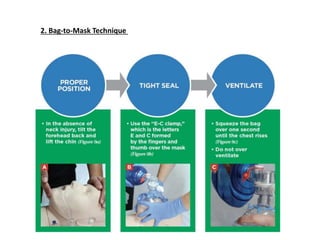
2. Bag-to-Mask Technique
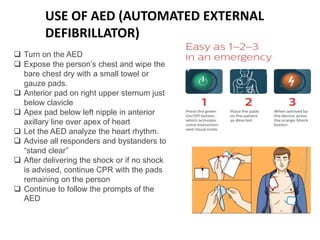
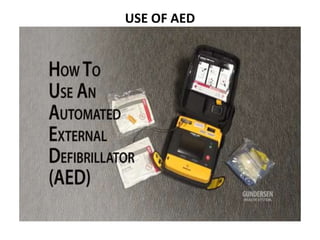
USE OF AED (AUTOMATED EXTERNAL
DEFIBRILLATOR)
 Turn on the AED
 Expose the person’s chest and wipe the
bare chest dry with a small towel or
gauze pads.
 Anterior pad on right upper sternum just
below clavicle
 Apex pad below left nipple in anterior
axillary line over apex of heart
 Let the AED analyze the heart rhythm.
 Advise all responders and bystanders to
“stand clear”
 After delivering the shock or if no shock
is advised, continue CPR with the pads
remaining on the person
 Continue to follow the prompts of the
AED
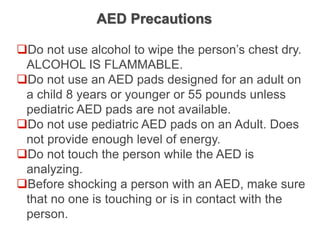
AED Precautions
Do not use alcohol to wipe the person’s chest dry.
ALCOHOL IS FLAMMABLE.
Do not use an AED pads designed for an adult on
a child 8 years or younger or 55 pounds unless
pediatric AED pads are not available.
Do not use pediatric AED pads on an Adult. Does
not provide enough level of energy.
Do not touch the person while the AED is
analyzing.
Before shocking a person with an AED, make sure
that no one is touching or is in contact with the
person.
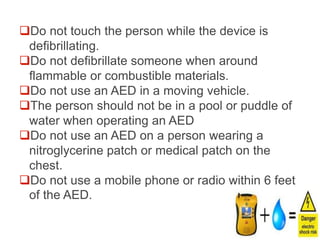
Do not touch the person while the device is
defibrillating.
Do not defibrillate someone when around
flammable or combustible materials.
Do not use an AED in a moving vehicle.
The person should not be in a pool or puddle of
water when operating an AED
Do not use an AED on a person wearing a
nitroglycerine patch or medical patch on the
chest.
Do not use a mobile phone or radio within 6 feet
of the AED.
USE OF AED
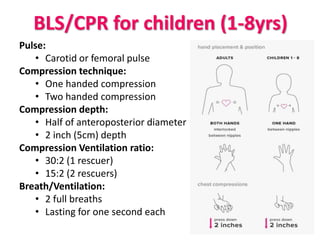
BLS/CPR for children (1-8yrs)
Pulse:
• Carotid or femoral pulse
Compression technique:
• One handed compression
• Two handed compression
Compression depth:
• Half of anteroposterior diameter
• 2 inch (5cm) depth
Compression Ventilation ratio:
• 30:2 (1 rescuer)
• 15:2 (2 rescuers)
Breath/Ventilation:
• 2 full breaths
• Lasting for one second each
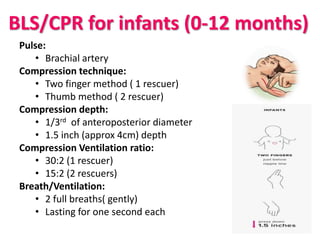
BLS/CPR for infants (0-12 months)
Pulse:
• Brachial artery
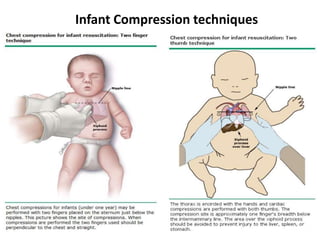
Compression technique:
• Two finger method ( 1 rescuer)
• Thumb method ( 2 rescuer)
Compression depth:
• 1/3rd of anteroposterior diameter
• 1.5 inch (approx 4cm) depth
Compression Ventilation ratio:
• 30:2 (1 rescuer)
• 15:2 (2 rescuers)
Breath/Ventilation:
• 2 full breaths( gently)
• Lasting for one second each
Infant Compression techniques
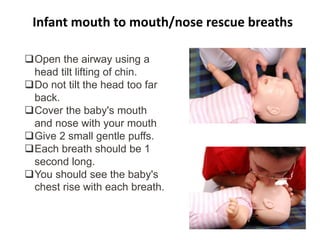
Infant mouth to mouth/nose rescue breaths
Open the airway using a
head tilt lifting of chin.
Do not tilt the head too far
back.
Cover the baby's mouth
and nose with your mouth
Give 2 small gentle puffs.
Each breath should be 1
second long.
You should see the baby's
chest rise with each breath.
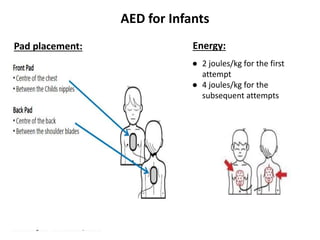
AED for Infants
Pad placement: Energy:
● 2 joules/kg for the first
attempt
● 4 joules/kg for the
subsequent attempts
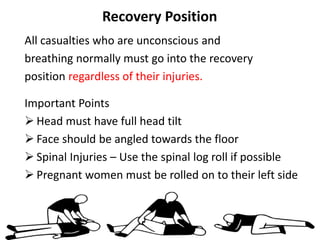
Recovery Position
All casualties who are unconscious and
breathing normally must go into the recovery
position regardless of their injuries.
Important Points
 Head must have full head tilt
 Face should be angled towards the floor
 Spinal Injuries – Use the spinal log roll if possible
 Pregnant women must be rolled on to their left side
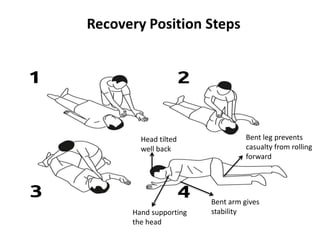
Hand supporting
the head
Bent arm gives
stability
Bent leg prevents
casualty from rolling
forward
Head tilted
well back
BLS VIDEO
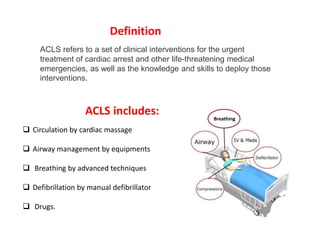
ACLS includes:
 Circulation by cardiac massage
 Airway management by equipments
 Breathing by advanced techniques
 Defibrillation by manual defibrillator
 Drugs.
Breathing
ACLS refers to a set of clinical interventions for the urgent
treatment of cardiac arrest and other life-threatening medical
emergencies, as well as the knowledge and skills to deploy those
interventions.
Definition
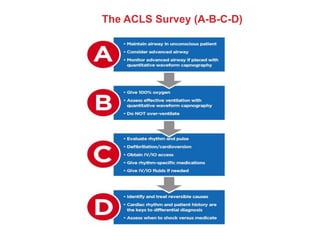
The ACLS Survey (A-B-C-D)
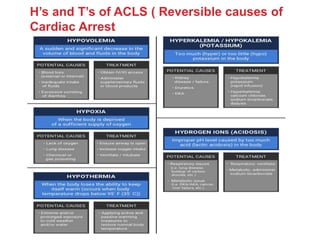
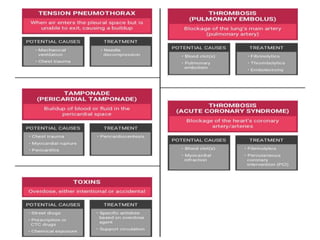
H’s and T’s of ACLS ( Reversible causes of
Cardiac Arrest
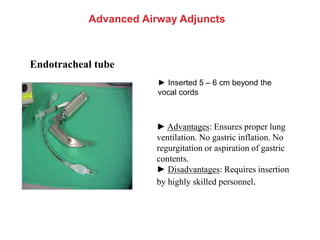
Advanced Airway Adjuncts
Endotracheal tube
► Advantages: Ensures proper lung
ventilation. No gastric inflation. No
regurgitation or aspiration of gastric
contents.
► Disadvantages: Requires insertion
by highly skilled personnel.
► Inserted 5 – 6 cm beyond the
vocal cords
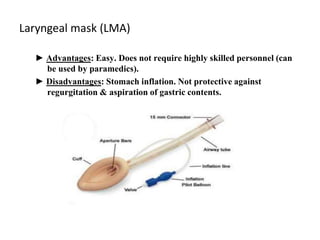
Laryngeal mask (LMA)
► Advantages: Easy. Does not require highly skilled personnel (can
be used by paramedics).
► Disadvantages: Stomach inflation. Not protective against
regurgitation & aspiration of gastric contents.
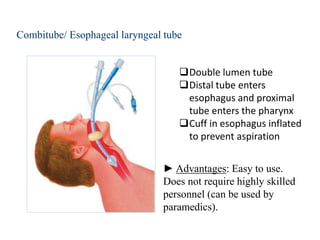
Combitube/ Esophageal laryngeal tube
Double lumen tube
Distal tube enters
esophagus and proximal
tube enters the pharynx
Cuff in esophagus inflated
to prevent aspiration
► Advantages: Easy to use.
Does not require highly skilled
personnel (can be used by
paramedics).
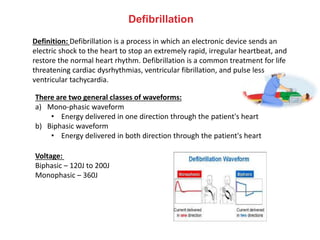
Defibrillation
Definition: Defibrillation is a process in which an electronic device sends an
electric shock to the heart to stop an extremely rapid, irregular heartbeat, and
restore the normal heart rhythm. Defibrillation is a common treatment for life
threatening cardiac dysrhythmias, ventricular fibrillation, and pulse less
ventricular tachycardia.
There are two general classes of waveforms:
a) Mono-phasic waveform
• Energy delivered in one direction through the patient's heart
b) Biphasic waveform
• Energy delivered in both direction through the patient's heart
Voltage:
Biphasic – 120J to 200J
Monophasic – 360J
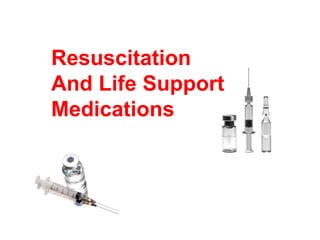
Resuscitation
And Life Support
Medications
► Lidocaine:
- MOA: Na channel blocker
- Dose: 100 mg IV (1-1.5 mg/kg).
- Given: If Amiodarone is unavailable
► Magnesium:
- Dose: 2 g IV.
- Given:
1- VF / VT with hypomagnesemia.
2- Torsade de pointes(ventricular tachycardia in patients with a long
QT interval)
3- Digoxin toxicity.
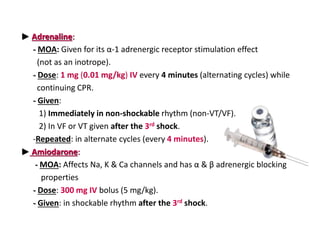
► Adrenaline:
- MOA: Given for its α-1 adrenergic receptor stimulation effect
(not as an inotrope).
- Dose: 1 mg (0.01 mg/kg) IV every 4 minutes (alternating cycles) while
continuing CPR.
- Given:
1) Immediately in non-shockable rhythm (non-VT/VF).
2) In VF or VT given after the 3rd shock.
-Repeated: in alternate cycles (every 4 minutes).
► Amiodarone:
- MOA: Affects Na, K & Ca channels and has α & β adrenergic blocking
properties
- Dose: 300 mg IV bolus (5 mg/kg).
- Given: in shockable rhythm after the 3rd shock.
► Calcium:
Dose: 10 ml of 10% Calcium chloride IV.
Indications: PEA caused by: hyperkalemia, hypocalcemia,
hypermagnesemia, and overdose of calcium channel blockers.
Do NOT give calcium solutions and NaHCO3 simultaneously by the
same route as they may precipitate.
► IV Fluids:
• Infuse fluids rapidly if hypovolemia is suspected.
• Use normal saline (0.9% NaCl) or Ringer’s solution.
• Avoid dextrose which is redistributed away from the
intravascular space rapidly and causes hyperglycemia which
may worsen neurological outcome after cardiac arrest.
• Dextrose is indicated only if there is documented
hypoglycemia.
► Thrombolytics:
– Fibrinolytic therapy is considered when cardiac arrest is caused by
proven or suspected acute pulmonary embolism.
– If a fibrinolytic drug is used in these circumstances consider
performing CPR for at least 60-90 minutes before termination of
resuscitation attempts.
Eg: Alteplase, tenecteplase (old generation: streptokinase).
► Atropine:
• Its routine use in PEA and asystole is not beneficial and has become
obsolete.
Indicated in: sinus bradycardia or AV block causing hemodynamic instability.
Dose: 0.5 mg IV. Repeated up to a maximum of 3 mg (full atropinization).
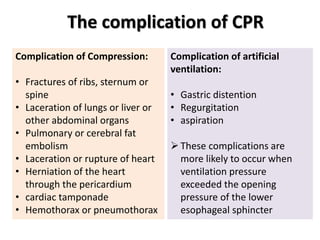
Complication of Compression:
• Fractures of ribs, sternum or
spine
• Laceration of lungs or liver or
other abdominal organs
• Pulmonary or cerebral fat
embolism
• Laceration or rupture of heart
• Herniation of the heart
through the pericardium
• cardiac tamponade
• Hemothorax or pneumothorax
The complication of CPR
Complication of artificial
ventilation:
• Gastric distention
• Regurgitation
• aspiration
These complications are
more likely to occur when
ventilation pressure
exceeded the opening
pressure of the lower
esophageal sphincter
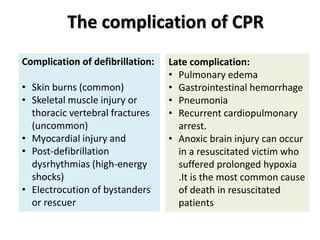
The complication of CPR
Complication of defibrillation:
• Skin burns (common)
• Skeletal muscle injury or
thoracic vertebral fractures
(uncommon)
• Myocardial injury and
• Post-defibrillation
dysrhythmias (high-energy
shocks)
• Electrocution of bystanders
or rescuer
Late complication:
• Pulmonary edema
• Gastrointestinal hemorrhage
• Pneumonia
• Recurrent cardiopulmonary
arrest.
• Anoxic brain injury can occur
in a resuscitated victim who
suffered prolonged hypoxia
.It is the most common cause
of death in resuscitated
patients
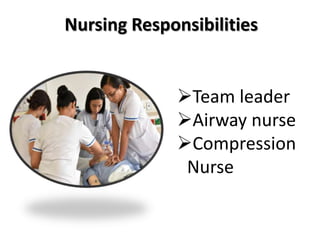
Nursing Responsibilities
Team leader
Airway nurse
Compression
Nurse
Cardiopulmonary
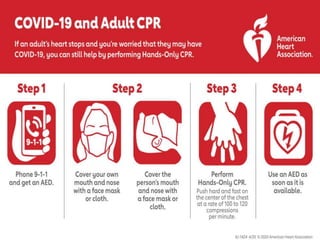
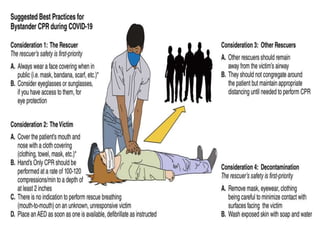
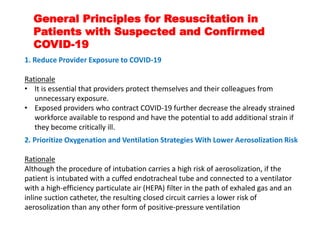
General Principles for Resuscitation in
Patients with Suspected and Confirmed
COVID-19
1. Reduce Provider Exposure to COVID-19
Rationale
• It is essential that providers protect themselves and their colleagues from
unnecessary exposure.
• Exposed providers who contract COVID-19 further decrease the already strained
workforce available to respond and have the potential to add additional strain if
they become critically ill.
2. Prioritize Oxygenation and Ventilation Strategies With Lower Aerosolization Risk
Rationale
Although the procedure of intubation carries a high risk of aerosolization, if the
patient is intubated with a cuffed endotracheal tube and connected to a ventilator
with a high-efficiency particulate air (HEPA) filter in the path of exhaled gas and an
inline suction catheter, the resulting closed circuit carries a lower risk of
aerosolization than any other form of positive-pressure ventilation
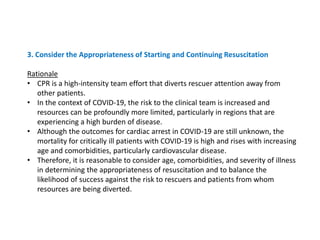
3. Consider the Appropriateness of Starting and Continuing Resuscitation
Rationale
• CPR is a high-intensity team effort that diverts rescuer attention away from
other patients.
• In the context of COVID-19, the risk to the clinical team is increased and
resources can be profoundly more limited, particularly in regions that are
experiencing a high burden of disease.
• Although the outcomes for cardiac arrest in COVID-19 are still unknown, the
mortality for critically ill patients with COVID-19 is high and rises with increasing
age and comorbidities, particularly cardiovascular disease.
• Therefore, it is reasonable to consider age, comorbidities, and severity of illness
in determining the appropriateness of resuscitation and to balance the
likelihood of success against the risk to rescuers and patients from whom
resources are being diverted.
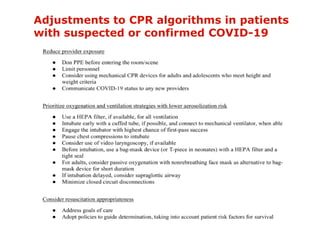
Adjustments to CPR algorithms in patients
with suspected or confirmed COVID-19
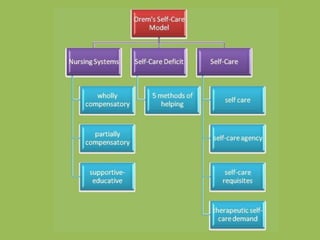
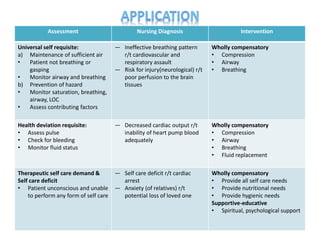
NURSING THEORY APPLICATI
Assessment Nursing Diagnosis Intervention
Universal self requisite:
a) Maintenance of sufficient air
• Patient not breathing or
gasping
• Monitor airway and breathing
b) Prevention of hazard
• Monitor saturation, breathing,
airway, LOC
• Assess contributing factors
― Ineffective breathing pattern
r/t cardiovascular and
respiratory assault
― Risk for injury(neurological) r/t
poor perfusion to the brain
tissues
Wholly compensatory
• Compression
• Airway
• Breathing
Health deviation requisite:
• Assess pulse
• Check for bleeding
• Monitor fluid status
― Decreased cardiac output r/t
inability of heart pump blood
adequately
Wholly compensatory
• Compression
• Airway
• Breathing
• Fluid replacement
Therapeutic self care demand &
Self care deficit
• Patient unconscious and unable
to perform any form of self care
― Self care deficit r/t cardiac
arrest
― Anxiety (of relatives) r/t
potential loss of loved one
Wholly compensatory
• Provide all self care needs
• Provide nutritional needs
• Provide hygienic needs
Supportive-educative
• Spiritual, psychological support
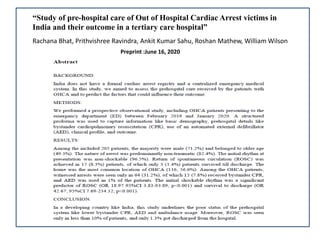
“Study of pre-hospital care of Out of Hospital Cardiac Arrest victims in
India and their outcome in a tertiary care hospital”
Rachana Bhat, Prithvishree Ravindra, Ankit Kumar Sahu, Roshan Mathew, William Wilson
Preprint :June 16, 2020
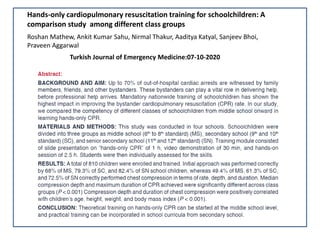
Hands-only cardiopulmonary resuscitation training for schoolchildren: A
comparison study among different class groups
Roshan Mathew, Ankit Kumar Sahu, Nirmal Thakur, Aaditya Katyal, Sanjeev Bhoi,
Praveen Aggarwal
Turkish Journal of Emergency Medicine:07-10-2020
• https://www.slideshare.net/LanglenChanu/cardiopulmonary-resuscitation-
67246062
• https://www.ahajournals.org/journal/circ
• https://nhcps.com/course/acls-advanced-cardiac-life-support-certification-course/
• https://cpr.heart.org/en
• https://www.researchgate.net/publication/343224677_%27Hands-
only%27_CPR_training_for_school_children_A_comparison_study_among_differe
nt_class_groups%27
• https://www.researchgate.net/publication/342219155_Study_of_pre-
hospital_care_of_Out_of_Hospital_Cardiac_Arrest_victims_and_their_outcome_i
n_a_tertiary_care_hospital_in_India_Pre-
hospital_Cardiac_Arrest_REsuscitation_Pre-CARE_study
• Karl Disque, ”BLS provider handbook”,2016, Sartori continum Publishing
• Karl Disque, ”ACLS provider handbook”,2016, Sartori continum Publishing
• Jacob Annamma, “Clinical Nursing Procedures: The art of Nursing Practice”, 4th
edition, Jaypee Publications
• Janice L. Hinkle, “Brunner and Suddarth’s Textbook of Medical Surgical Nursing”,
14th edition , Lippincott Williams Wilkins
• ACLS Review made incredibly Easy, 2nd edition, Lippincott Williams Wilkins
CPR SEMINAR PPT.pptx

CPR SEMINAR PPT.pptx

  • 2.
    Amy Lalringhluani 1st yrMsc N (Paediatric Nursing) SRIHER, Chennai
  • 3.
    Introduction Cardiac or respiratoryarrest can occur at any time to individuals of any age as a result of an accident or a disease process. Cardiopulmonary resuscitation (CPR) is an emergency medical procedure for a victim of cardiac arrest and in some circumstances, respiratory arrest. CPR can provide oxygenation to the victim’s brain and the heart, dramatically increasing his/her chance of survival. If properly instructed, almost anyone can learn and perform CPR
  • 4.
    Abbreviations & Terminologies 1.CPR : Cardiopulmonary resuscitation 2. AHA: American Heart Association 3. BLS: Basic life Support 4. AED: Automated external defibrillator 5. ACLS: Advanced Cardiac Life Support 6. IHCA: In-hospital cardiac arrest 7. OHCA: Out of hospital cardiac arrest
  • 5.
    Abbreviations & Terminologies 8.Ventilation: The exchange of air between the lungs and the atmosphere so that oxygen can be exchanged in the alveoli 9. Ventricular fibrillation: Abnormal and irregular heart rhythm in which there are rapid uncoordinated fluttering contractions of the ventricles.
  • 6.
    Abbreviations & Terminologies 12.Asystole and Pulseless electrical Activity (PEA): a) Asystole: A complete absence of demonstrable electrical and mechanical cardiac activity b) PEA: ECG rhythms without sufficient mechanical contraction of the heart to produce a palpable pulse or measurable blood pressure.
  • 8.
    Overview Of CardiovascularSystem • Consists of heart, blood and blood vessels • Transport blood to lungs • Delivers CO2 and picks up O2 • Transport O2 and nutrients to all parts of the body • Helps regulate body temperature • Helps maintain body fluid balance
  • 10.
    Circulation of bloodthrough the heart
  • 12.
    Definition: CPR is atechnique of basic life support, consisting of a series of steps used to establish artificial ventilation and circulation in an individual who is not breathing and has no pulse
  • 13.
    Cardiac Arrest • Ventricularfibrillation • Ventricular tachycardia(pulseless) • Asystole • Pulseless electrical activity (PEA) Respiratory Arrest • Drowning • Stroke • Foreign body in throat • Smoke inhalation • Drug overdose • Suffocation Indications
  • 14.
    Signs & Symptomsof Cardiac & Respiratory Arrest: 1. Cardinal signs ─ Apnea ─ Absent carotid and femoral pulse ─ Dilated pupils 2. Agonal breathing(heavy, noisy, gasping breathing) 3. Cyanosis 4. Unconsciousness 5. Fits
  • 15.
    Purpose ●To maintain bloodcirculation ●To maintain open and clear airway ●To maintain artificial breathing ●To provide basic life support till medical and advanced life support arrives
  • 16.
    CPR Time -line ● CPR initiated within 4 mins -- > 40% survival chance ● 0 to 4 mins: Brain damage unlikely ● 4 to 6 minutes: Brain damage possible ● 6 to 10 mins: Brain damage probable ● Over 10 minutes: Probable brain death ● Timely CPR provides  10 to 20% normal blood flow to heart  20 to 30% normal blood flow to brain
  • 17.
    Contraindications 1. When thevictim is biologically dead and rigor mortis has set in 2. “Do not Resuscitate(DNR) “ order is in effect 3. Properly executed living will requests that CPR is not to be initiated
  • 18.
  • 19.
    1. Determination ofsafe scene  Ensure safe scene for rescuer and victim  Move victim to safety 2. Assessment of victim  Tap or gently shake victim  Talk loudly to victim  Agonal breathing in not counted as breathing Sequence of CPR
  • 20.
    3. Determination ofpulselessness and activation of emergency response  Check for carotid pulse  Feel for not more than 10 seconds  Call for help while assessing for pulse and breathing
  • 21.
  • 22.
  • 23.
  • 24.
  • 25.
    BREATHING 1. Mouth-to-Mask Technique •Kneel at patient’s head and open airway. • Place the mask on the patient’s face. • Take a deep breath and breathe into the patient for 1 second. • Remove your mouth and watch for patient’s chest to fall. (a) Mouth-to-Mouth Technique • Maintain a head tilt-chin lift position to open the airway. • Pinch the casualty’s nose with your thumb and index finger to prevent air from escaping. • Seal your lips around the casualty’s mouth. • Give 2 short breaths quickly, one after the other. • Observe the chest rise with each breath. • Release the nostrils after each breath. • The duration for each breath is 1 second (b) Mouth-to-Barrier Technique
  • 26.
  • 27.
    USE OF AED(AUTOMATED EXTERNAL DEFIBRILLATOR)  Turn on the AED  Expose the person’s chest and wipe the bare chest dry with a small towel or gauze pads.  Anterior pad on right upper sternum just below clavicle  Apex pad below left nipple in anterior axillary line over apex of heart  Let the AED analyze the heart rhythm.  Advise all responders and bystanders to “stand clear”  After delivering the shock or if no shock is advised, continue CPR with the pads remaining on the person  Continue to follow the prompts of the AED
  • 28.
    AED Precautions Do notuse alcohol to wipe the person’s chest dry. ALCOHOL IS FLAMMABLE. Do not use an AED pads designed for an adult on a child 8 years or younger or 55 pounds unless pediatric AED pads are not available. Do not use pediatric AED pads on an Adult. Does not provide enough level of energy. Do not touch the person while the AED is analyzing. Before shocking a person with an AED, make sure that no one is touching or is in contact with the person.
  • 29.
    Do not touchthe person while the device is defibrillating. Do not defibrillate someone when around flammable or combustible materials. Do not use an AED in a moving vehicle. The person should not be in a pool or puddle of water when operating an AED Do not use an AED on a person wearing a nitroglycerine patch or medical patch on the chest. Do not use a mobile phone or radio within 6 feet of the AED.
  • 30.
  • 32.
    BLS/CPR for children(1-8yrs) Pulse: • Carotid or femoral pulse Compression technique: • One handed compression • Two handed compression Compression depth: • Half of anteroposterior diameter • 2 inch (5cm) depth Compression Ventilation ratio: • 30:2 (1 rescuer) • 15:2 (2 rescuers) Breath/Ventilation: • 2 full breaths • Lasting for one second each
  • 33.
    BLS/CPR for infants(0-12 months) Pulse: • Brachial artery Compression technique: • Two finger method ( 1 rescuer) • Thumb method ( 2 rescuer) Compression depth: • 1/3rd of anteroposterior diameter • 1.5 inch (approx 4cm) depth Compression Ventilation ratio: • 30:2 (1 rescuer) • 15:2 (2 rescuers) Breath/Ventilation: • 2 full breaths( gently) • Lasting for one second each
  • 34.
  • 35.
    Infant mouth tomouth/nose rescue breaths Open the airway using a head tilt lifting of chin. Do not tilt the head too far back. Cover the baby's mouth and nose with your mouth Give 2 small gentle puffs. Each breath should be 1 second long. You should see the baby's chest rise with each breath.
  • 36.
    AED for Infants Padplacement: Energy: ● 2 joules/kg for the first attempt ● 4 joules/kg for the subsequent attempts
  • 38.
    Recovery Position All casualtieswho are unconscious and breathing normally must go into the recovery position regardless of their injuries. Important Points  Head must have full head tilt  Face should be angled towards the floor  Spinal Injuries – Use the spinal log roll if possible  Pregnant women must be rolled on to their left side
  • 39.
    Hand supporting the head Bentarm gives stability Bent leg prevents casualty from rolling forward Head tilted well back
  • 41.
  • 43.
    ACLS includes:  Circulationby cardiac massage  Airway management by equipments  Breathing by advanced techniques  Defibrillation by manual defibrillator  Drugs. Breathing ACLS refers to a set of clinical interventions for the urgent treatment of cardiac arrest and other life-threatening medical emergencies, as well as the knowledge and skills to deploy those interventions. Definition
  • 44.
    The ACLS Survey(A-B-C-D)
  • 45.
    H’s and T’sof ACLS ( Reversible causes of Cardiac Arrest
  • 47.
    Advanced Airway Adjuncts Endotrachealtube ► Advantages: Ensures proper lung ventilation. No gastric inflation. No regurgitation or aspiration of gastric contents. ► Disadvantages: Requires insertion by highly skilled personnel. ► Inserted 5 – 6 cm beyond the vocal cords
  • 48.
    Laryngeal mask (LMA) ►Advantages: Easy. Does not require highly skilled personnel (can be used by paramedics). ► Disadvantages: Stomach inflation. Not protective against regurgitation & aspiration of gastric contents.
  • 49.
    Combitube/ Esophageal laryngealtube Double lumen tube Distal tube enters esophagus and proximal tube enters the pharynx Cuff in esophagus inflated to prevent aspiration ► Advantages: Easy to use. Does not require highly skilled personnel (can be used by paramedics).
  • 50.
    Defibrillation Definition: Defibrillation isa process in which an electronic device sends an electric shock to the heart to stop an extremely rapid, irregular heartbeat, and restore the normal heart rhythm. Defibrillation is a common treatment for life threatening cardiac dysrhythmias, ventricular fibrillation, and pulse less ventricular tachycardia. There are two general classes of waveforms: a) Mono-phasic waveform • Energy delivered in one direction through the patient's heart b) Biphasic waveform • Energy delivered in both direction through the patient's heart Voltage: Biphasic – 120J to 200J Monophasic – 360J
  • 51.
  • 52.
    ► Lidocaine: - MOA:Na channel blocker - Dose: 100 mg IV (1-1.5 mg/kg). - Given: If Amiodarone is unavailable ► Magnesium: - Dose: 2 g IV. - Given: 1- VF / VT with hypomagnesemia. 2- Torsade de pointes(ventricular tachycardia in patients with a long QT interval) 3- Digoxin toxicity.
  • 53.
    ► Adrenaline: - MOA:Given for its α-1 adrenergic receptor stimulation effect (not as an inotrope). - Dose: 1 mg (0.01 mg/kg) IV every 4 minutes (alternating cycles) while continuing CPR. - Given: 1) Immediately in non-shockable rhythm (non-VT/VF). 2) In VF or VT given after the 3rd shock. -Repeated: in alternate cycles (every 4 minutes). ► Amiodarone: - MOA: Affects Na, K & Ca channels and has α & β adrenergic blocking properties - Dose: 300 mg IV bolus (5 mg/kg). - Given: in shockable rhythm after the 3rd shock.
  • 54.
    ► Calcium: Dose: 10ml of 10% Calcium chloride IV. Indications: PEA caused by: hyperkalemia, hypocalcemia, hypermagnesemia, and overdose of calcium channel blockers. Do NOT give calcium solutions and NaHCO3 simultaneously by the same route as they may precipitate. ► IV Fluids: • Infuse fluids rapidly if hypovolemia is suspected. • Use normal saline (0.9% NaCl) or Ringer’s solution. • Avoid dextrose which is redistributed away from the intravascular space rapidly and causes hyperglycemia which may worsen neurological outcome after cardiac arrest. • Dextrose is indicated only if there is documented hypoglycemia.
  • 55.
    ► Thrombolytics: – Fibrinolytictherapy is considered when cardiac arrest is caused by proven or suspected acute pulmonary embolism. – If a fibrinolytic drug is used in these circumstances consider performing CPR for at least 60-90 minutes before termination of resuscitation attempts. Eg: Alteplase, tenecteplase (old generation: streptokinase). ► Atropine: • Its routine use in PEA and asystole is not beneficial and has become obsolete. Indicated in: sinus bradycardia or AV block causing hemodynamic instability. Dose: 0.5 mg IV. Repeated up to a maximum of 3 mg (full atropinization).
  • 58.
    Complication of Compression: •Fractures of ribs, sternum or spine • Laceration of lungs or liver or other abdominal organs • Pulmonary or cerebral fat embolism • Laceration or rupture of heart • Herniation of the heart through the pericardium • cardiac tamponade • Hemothorax or pneumothorax The complication of CPR Complication of artificial ventilation: • Gastric distention • Regurgitation • aspiration These complications are more likely to occur when ventilation pressure exceeded the opening pressure of the lower esophageal sphincter
  • 59.
    The complication ofCPR Complication of defibrillation: • Skin burns (common) • Skeletal muscle injury or thoracic vertebral fractures (uncommon) • Myocardial injury and • Post-defibrillation dysrhythmias (high-energy shocks) • Electrocution of bystanders or rescuer Late complication: • Pulmonary edema • Gastrointestinal hemorrhage • Pneumonia • Recurrent cardiopulmonary arrest. • Anoxic brain injury can occur in a resuscitated victim who suffered prolonged hypoxia .It is the most common cause of death in resuscitated patients
  • 60.
  • 61.
  • 64.
    General Principles forResuscitation in Patients with Suspected and Confirmed COVID-19 1. Reduce Provider Exposure to COVID-19 Rationale • It is essential that providers protect themselves and their colleagues from unnecessary exposure. • Exposed providers who contract COVID-19 further decrease the already strained workforce available to respond and have the potential to add additional strain if they become critically ill. 2. Prioritize Oxygenation and Ventilation Strategies With Lower Aerosolization Risk Rationale Although the procedure of intubation carries a high risk of aerosolization, if the patient is intubated with a cuffed endotracheal tube and connected to a ventilator with a high-efficiency particulate air (HEPA) filter in the path of exhaled gas and an inline suction catheter, the resulting closed circuit carries a lower risk of aerosolization than any other form of positive-pressure ventilation
  • 65.
    3. Consider theAppropriateness of Starting and Continuing Resuscitation Rationale • CPR is a high-intensity team effort that diverts rescuer attention away from other patients. • In the context of COVID-19, the risk to the clinical team is increased and resources can be profoundly more limited, particularly in regions that are experiencing a high burden of disease. • Although the outcomes for cardiac arrest in COVID-19 are still unknown, the mortality for critically ill patients with COVID-19 is high and rises with increasing age and comorbidities, particularly cardiovascular disease. • Therefore, it is reasonable to consider age, comorbidities, and severity of illness in determining the appropriateness of resuscitation and to balance the likelihood of success against the risk to rescuers and patients from whom resources are being diverted.
  • 66.
    Adjustments to CPRalgorithms in patients with suspected or confirmed COVID-19
  • 67.
  • 70.
    Assessment Nursing DiagnosisIntervention Universal self requisite: a) Maintenance of sufficient air • Patient not breathing or gasping • Monitor airway and breathing b) Prevention of hazard • Monitor saturation, breathing, airway, LOC • Assess contributing factors ― Ineffective breathing pattern r/t cardiovascular and respiratory assault ― Risk for injury(neurological) r/t poor perfusion to the brain tissues Wholly compensatory • Compression • Airway • Breathing Health deviation requisite: • Assess pulse • Check for bleeding • Monitor fluid status ― Decreased cardiac output r/t inability of heart pump blood adequately Wholly compensatory • Compression • Airway • Breathing • Fluid replacement Therapeutic self care demand & Self care deficit • Patient unconscious and unable to perform any form of self care ― Self care deficit r/t cardiac arrest ― Anxiety (of relatives) r/t potential loss of loved one Wholly compensatory • Provide all self care needs • Provide nutritional needs • Provide hygienic needs Supportive-educative • Spiritual, psychological support
  • 72.
    “Study of pre-hospitalcare of Out of Hospital Cardiac Arrest victims in India and their outcome in a tertiary care hospital” Rachana Bhat, Prithvishree Ravindra, Ankit Kumar Sahu, Roshan Mathew, William Wilson Preprint :June 16, 2020
  • 73.
    Hands-only cardiopulmonary resuscitationtraining for schoolchildren: A comparison study among different class groups Roshan Mathew, Ankit Kumar Sahu, Nirmal Thakur, Aaditya Katyal, Sanjeev Bhoi, Praveen Aggarwal Turkish Journal of Emergency Medicine:07-10-2020
  • 74.
    • https://www.slideshare.net/LanglenChanu/cardiopulmonary-resuscitation- 67246062 • https://www.ahajournals.org/journal/circ •https://nhcps.com/course/acls-advanced-cardiac-life-support-certification-course/ • https://cpr.heart.org/en • https://www.researchgate.net/publication/343224677_%27Hands- only%27_CPR_training_for_school_children_A_comparison_study_among_differe nt_class_groups%27 • https://www.researchgate.net/publication/342219155_Study_of_pre- hospital_care_of_Out_of_Hospital_Cardiac_Arrest_victims_and_their_outcome_i n_a_tertiary_care_hospital_in_India_Pre- hospital_Cardiac_Arrest_REsuscitation_Pre-CARE_study • Karl Disque, ”BLS provider handbook”,2016, Sartori continum Publishing • Karl Disque, ”ACLS provider handbook”,2016, Sartori continum Publishing • Jacob Annamma, “Clinical Nursing Procedures: The art of Nursing Practice”, 4th edition, Jaypee Publications • Janice L. Hinkle, “Brunner and Suddarth’s Textbook of Medical Surgical Nursing”, 14th edition , Lippincott Williams Wilkins • ACLS Review made incredibly Easy, 2nd edition, Lippincott Williams Wilkins