CARCINOMA THYROID
DR GAURAV TYAGI
DR SHEHTAJ KHAN
SURGERY UNIT I
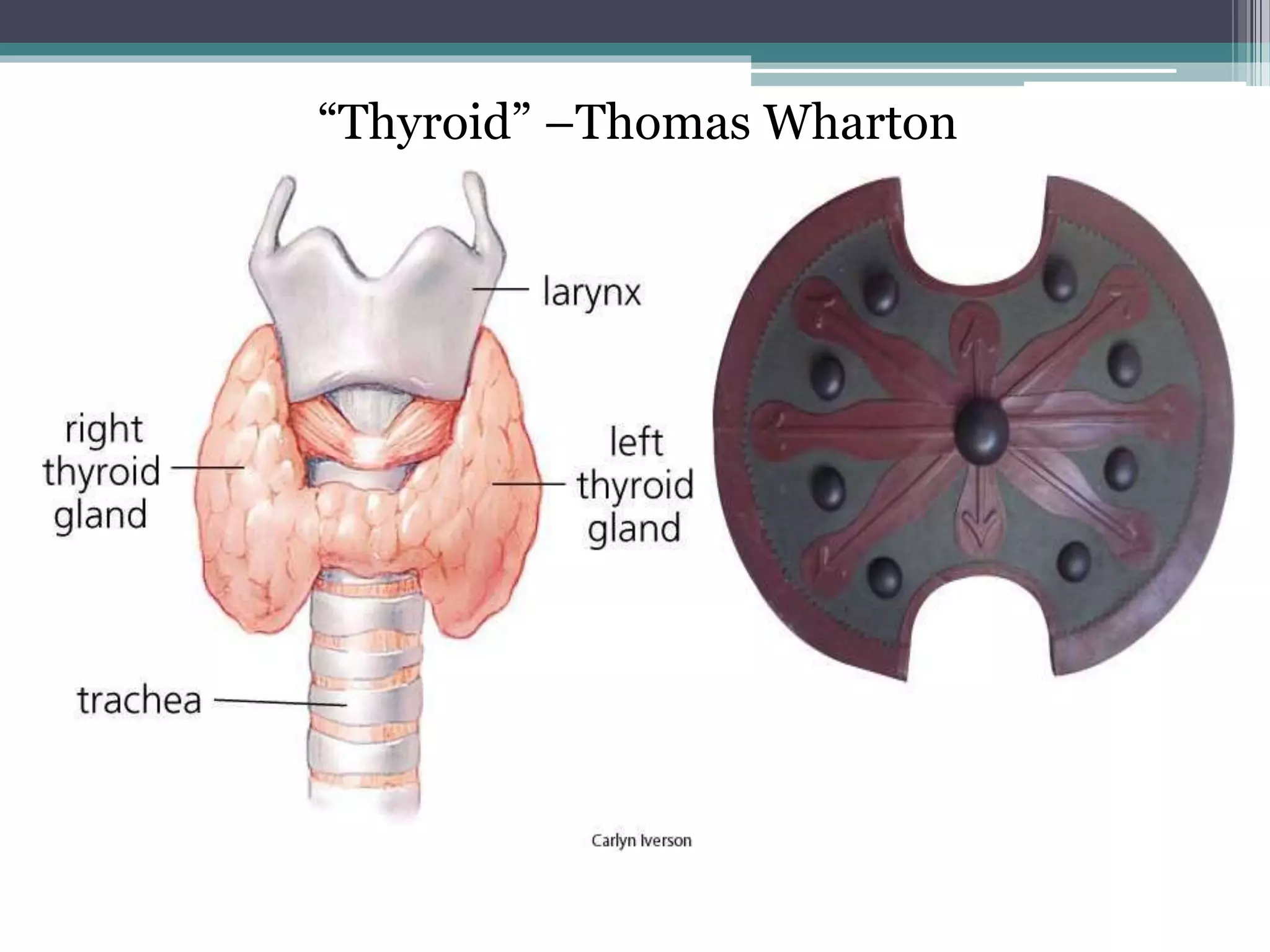
“Thyroid” –Thomas Wharton
Theodor Bilroth Emil Theodor Kocher
Nobel Prize 1909
EPIDEMIOLOGY AND STATISTICS
• Commonest malignant Endocrine tumour.
• Comprise 1% of all malignancies.
• Sex Ratio is 3:1 (Female:Male)
• Can occur at any age group
▫ Peak incidence after age of 30.
▫ Aggressiveness increases with old age.
• Incidence of Carcinoma of thyroid has risen
189% during 1973-2003 in the world.
• In a survey conducted by The National Cancer
Registry Programme in Bangalore & ICMR,
Delhi, “a belt of thyroid cancer” in women of
coastal districts of Kerala, Karnataka, and Goa.
India has some of the highest cancer rates in the world
Ganapati Mudur
BMJ. 2005 January 29;
ETIOLOGY & RISK FACTORS:
• Female gender
• Radiation exposure
• Family h/o
• Iodine deficiency states
• Thyroiditis (Hashimoto’s diseaseLymphoma)
• Genetics/Mutations:
-RET-proto-oncogene
-MEN2A/2B
-Gardener’s synd, FAP
PRESENTATION
• The most common presentation is a painless
neck mass/solitary thyroid nodule.
• Symptoms consistent with malignancy.
 Cervical lymphadenopathy.
 Rapid enlargement.
 Dysphagia
 Stridor.
 Hemoptysis.
 Hoarseness.
 Pain
 Bone pain, fractures.
CLINICAL EVALUATION
Physical Examination
• Size
• Consistency - hard vs. soft
• Mobility
• Well circumscribed vs. ill defined borders
• Multinodular vs. solitary nodule
▫ multi nodular - 3% chance of malignancy
▫ solitary nodule - 5%-12%.
• Systematic palpation of the neck
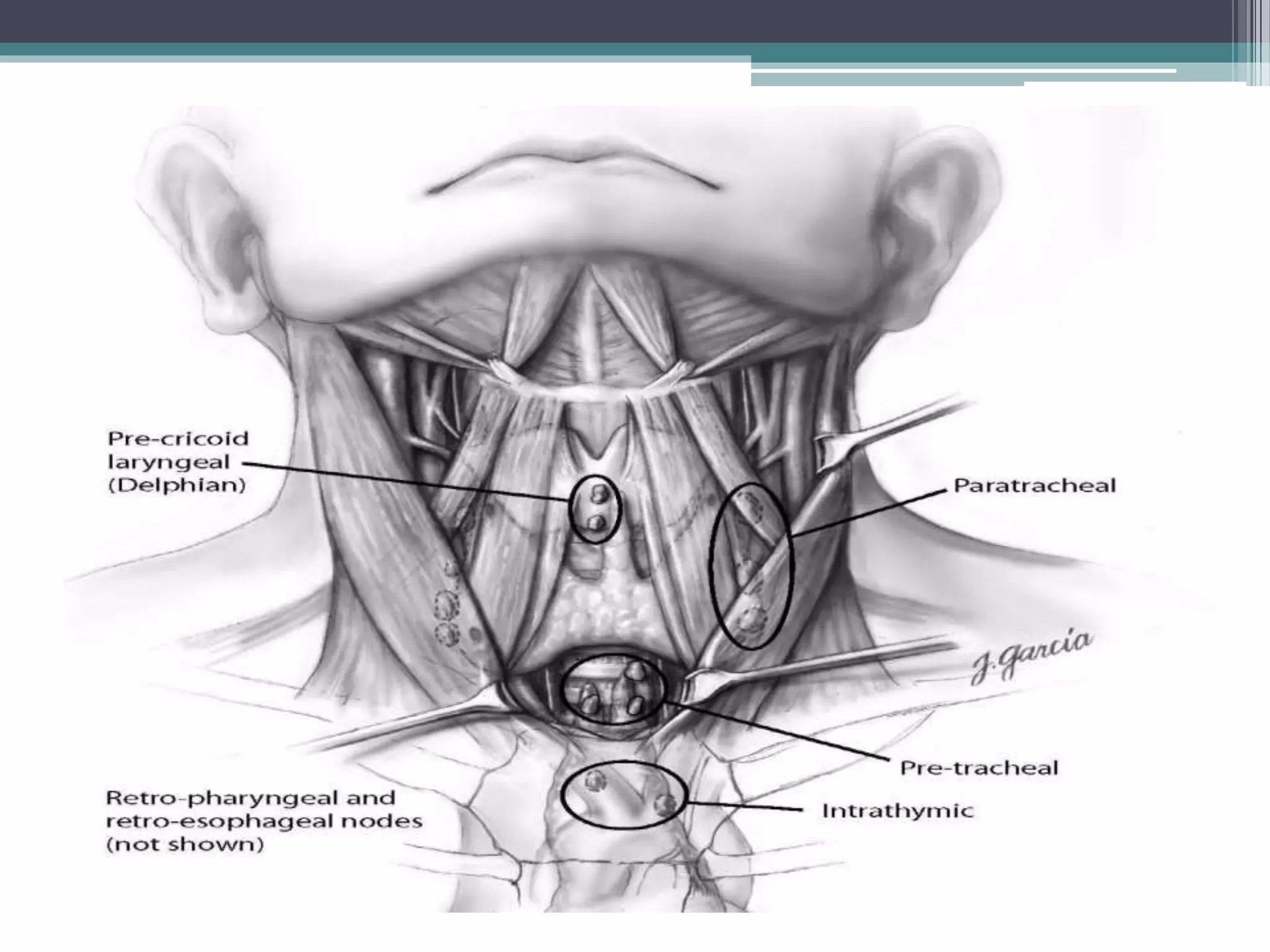
 Metastatic adenopathy commonly found:
 Central compartment (level VI)
 Lateral group (regions III and IV)
• Indirect or fiberoptic laryngoscopy.
 vocal cord mobility
 evaluate airway
 preoperative documentation of any unrelated
abnormalities
LABORATORY INVESTIGATIONS
Thyroid function tests: T3, T4, TSH
Serum Calcitonin:
basal/pentagastrin stimulated calcitonin levels
(>300 pg/ml)
Thyroglobulin(Tg)
At 6-months interval then annually when disease-free
< 2ng/mL in total or near-total thyroidectomy
> 2ng/mL = Recurrence/Persistent thyroid tissue
Carcinoembryonic antigen (CEA)
the reference value is less than 3 ng/dL.
ULTRASONOGRAPHY
• 7.5-16 MHz probe
• B-mode USG can be used
intraoperatively
• Increasingly used to assist
FNA
• Limited ability to predict the diagnosis of solid
nodules accurately
Findings suggestive of malignancy:
• Microcalcifications
• Hypervascularity
• Infiltrative margins
• Hypoechogenicity
• Height>>width on transverse view
Nodules <1 cm with benign characterstics are not
further evaluated except :
• Lymphadenopathy
• h/o radiation exposure
• Family h/o
• Prior h/o Ca thyroid
• PET positive lesions
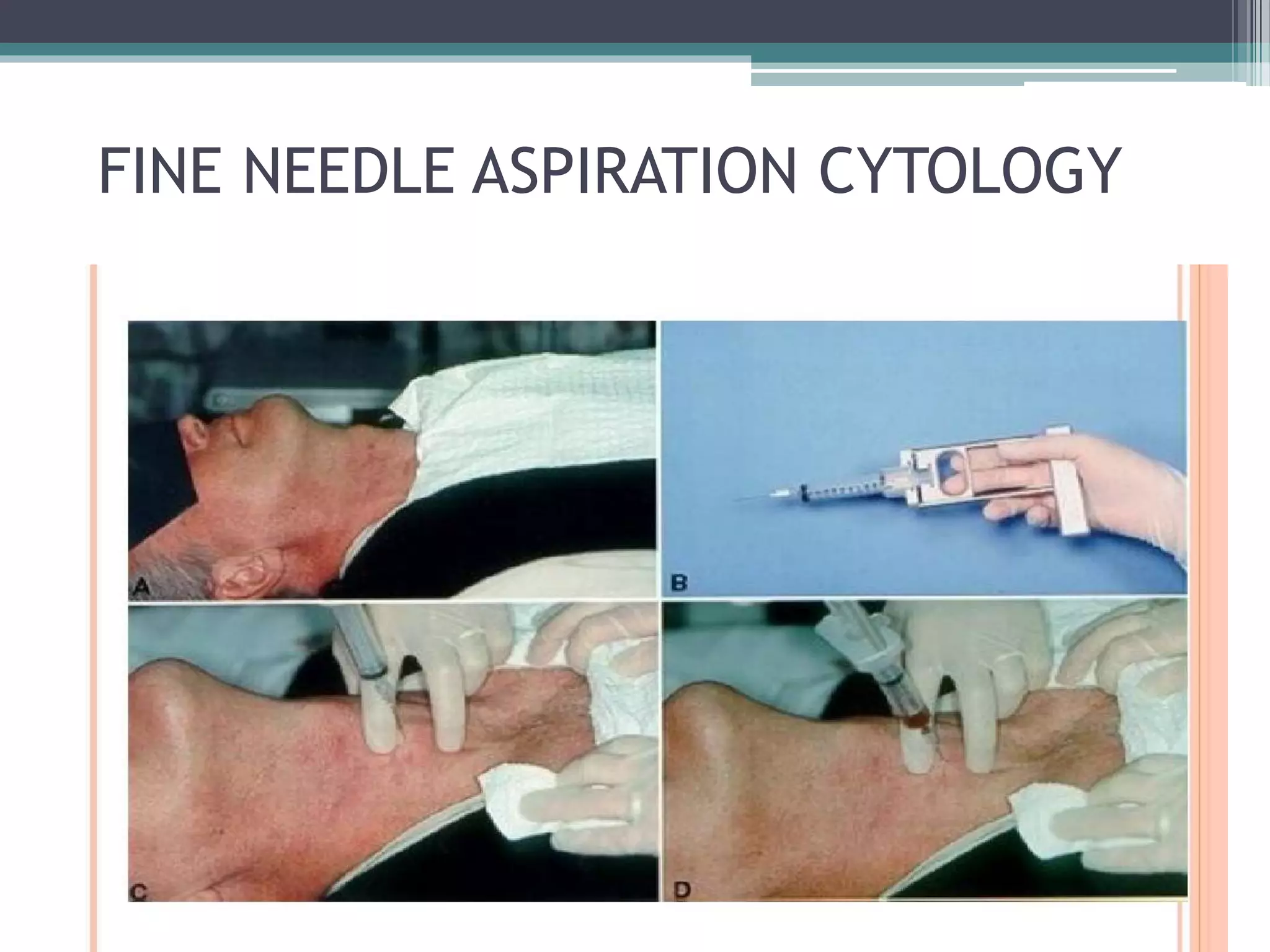
FINE NEEDLE ASPIRATION CYTOLOGY
• Popularized in the 1960s by Einhorn and
Franzen in Stockholm, Sweden.
• Replaced intra-op frozen section
• 23 to 27G needle
• Imaging guidance is recommended—
Especially--non palpable deep located
-posteriorly located
-cystic masses
TATA MEMORIAL HOSPITAL GUIDELINES FOR
FNAC RESULTS
RADIOISOTOPE SCANNING
Functionality of the lesion
Staging of the carcinoma
15-20% cold nodules
MALIGNANCY
5-9% warm/hot nodules
-Malignancy neither confirmed nor excluded
Technetium-99m pertechnate(Tc99m):
-Trapped by follicular cells but not
organified.
-Short t1/2 , low radiation
exposure.
-Also taken up salivary glands &
highly vascular structures.
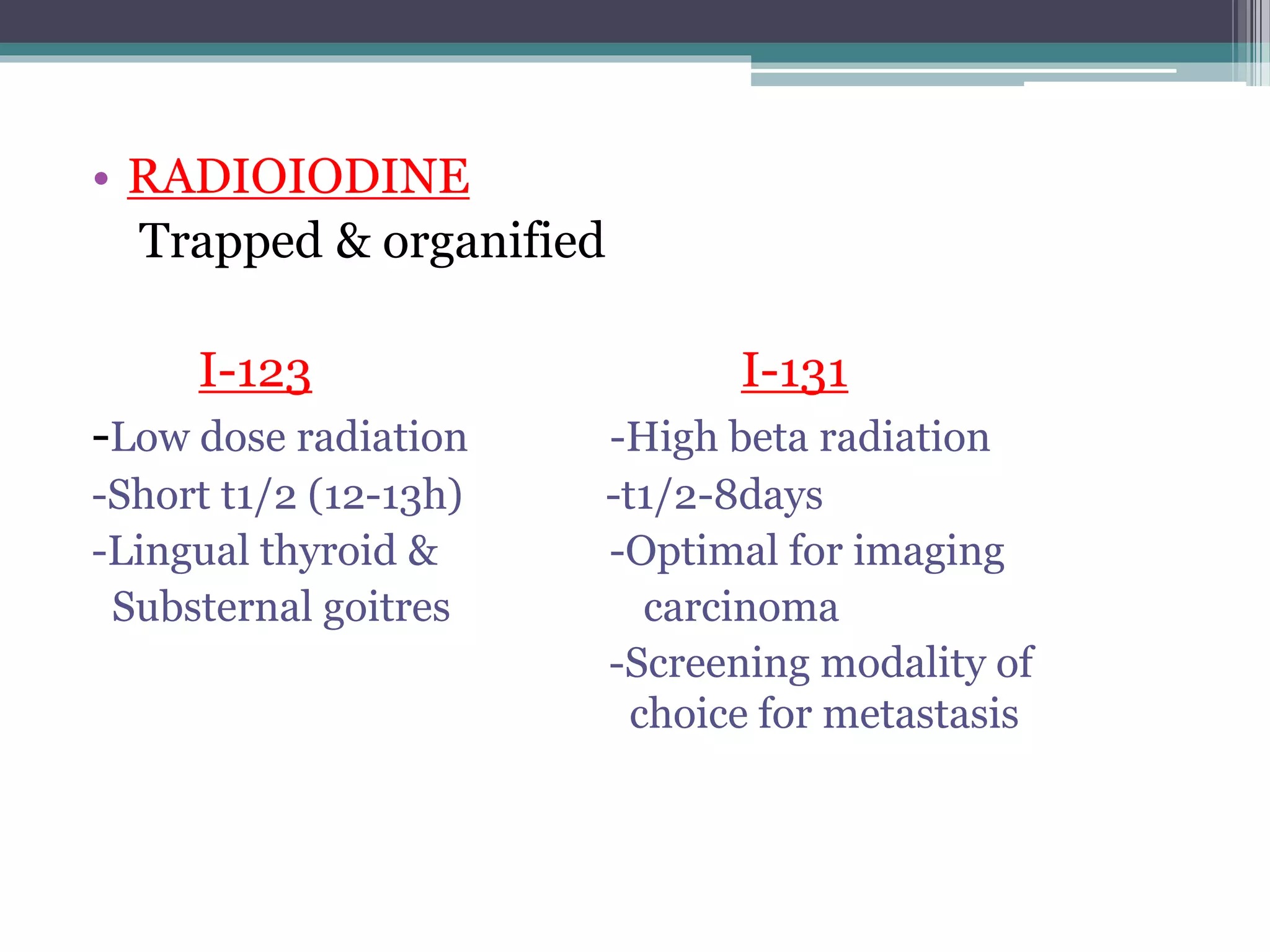
• RADIOIODINE
Trapped & organified
I-123 I-131
-Low dose radiation -High beta radiation
-Short t1/2 (12-13h) -t1/2-8days
-Lingual thyroid & -Optimal for imaging
Substernal goitres carcinoma
-Screening modality of
choice for metastasis
PET- 18F-fluorodeoyglucose
• Provides 3D reconstruction images.
• Detecting primary, metastatic & recurrent cancer.
• 1-2% thyroid incidentalomas, usually benign.
• Limited availabilty & cost.
Gallium-67
Used in evaluation of lymphoma.
CT SCAN/MRI
-Both equally sensitive & specific
-No added advantage to the workup of
uncomplicated cases
-Large doses of Iodine in iv contrast interfere with
use of radioiodine for imaging/therapy
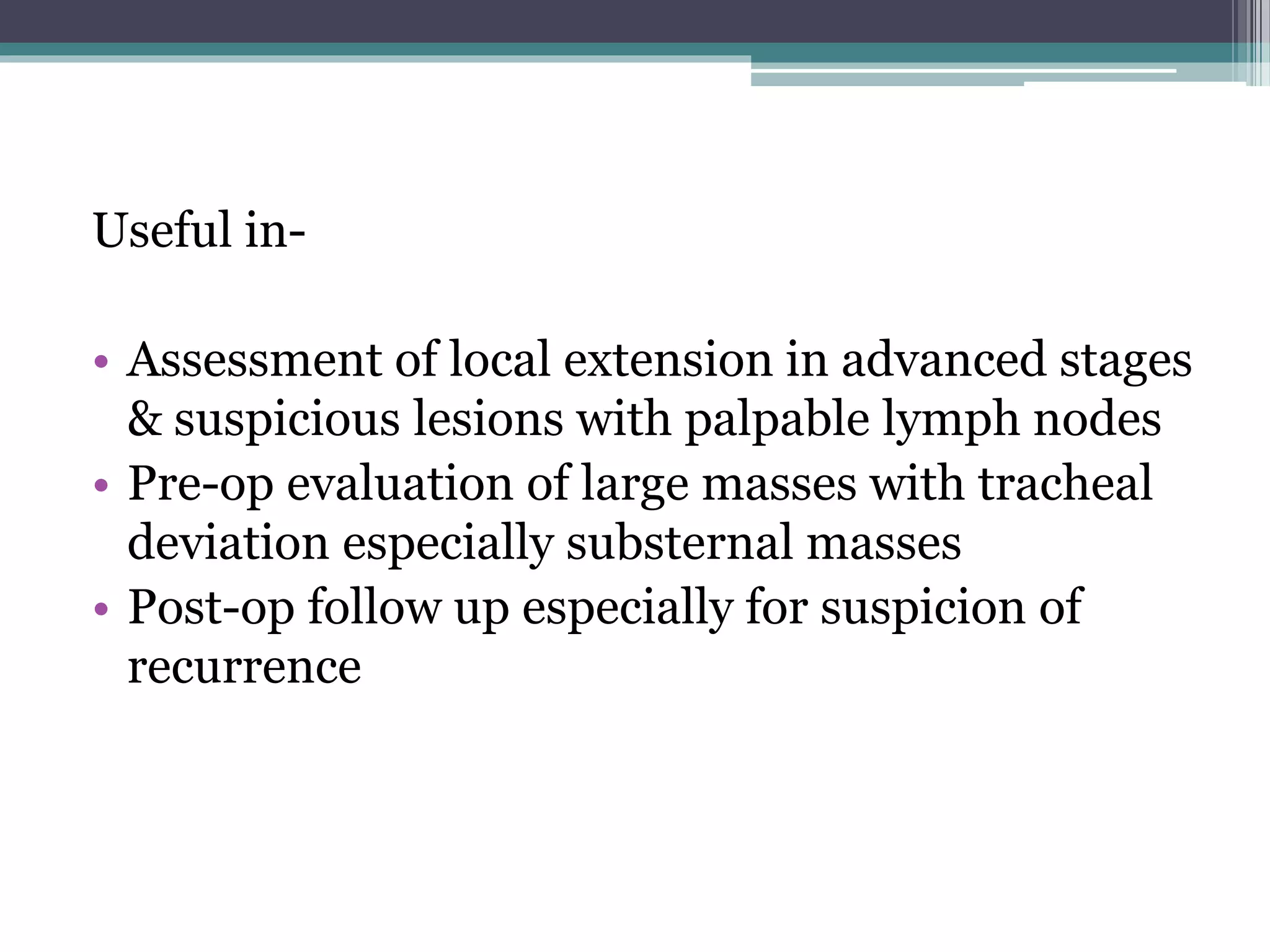
Useful in-
• Assessment of local extension in advanced stages
& suspicious lesions with palpable lymph nodes
• Pre-op evaluation of large masses with tracheal
deviation especially substernal masses
• Post-op follow up especially for suspicion of
recurrence
CLASSIFICATION
PRIMARY:
• Follicular epithelium –
Well differentiated Undifferentiated
Papillary Anaplastic
Follicular
Hurthle cell
• Parafollicular cells (C-cells)
Medullary
• Lymphoid cells
Lymphoma
SECONDARY/METASTATIC:
-Kidney
-Breast -Colon
-Direct extension -Melanoma
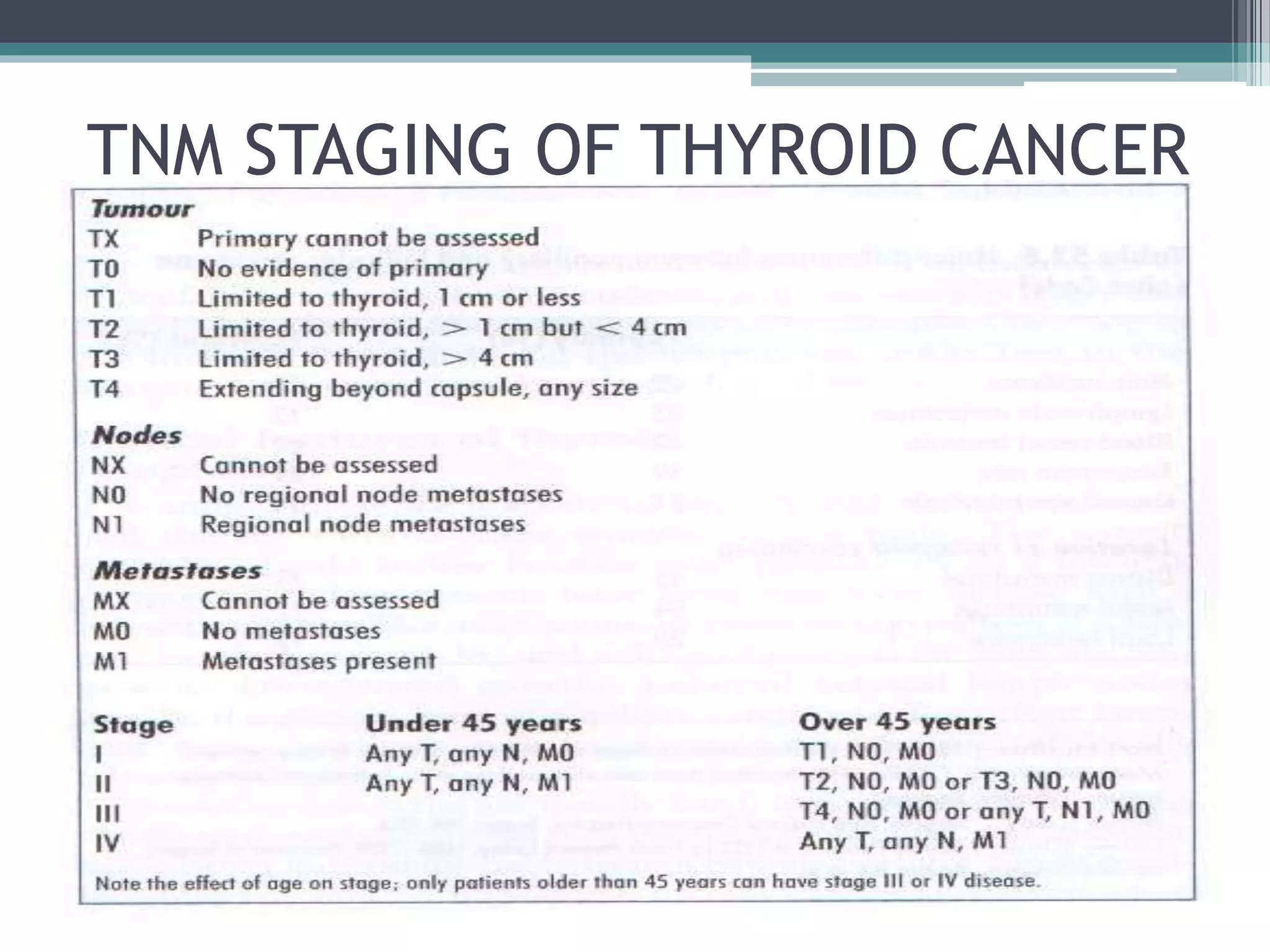
TNM STAGING OF THYROID CANCER
PROGNOSTIC INDICATORS
• AGES: AMES:
-Age -Age
-Hisological Grade -Metastasis
-Extrathyroidal invasion -Extent
-Size -Size
• MACIS(post-operative):
 Distant Metastasis
 Age
 Completeness of original surgical resection
 Extrathyroidal Invasion
 Size of original lesion
PAPILLARY CARCINOMA THYROID
• Most common thyroid malignancy, 70-80%
• 30-50 years peak incidence
• F/M ratio is 2.5:1
• Excellent prognosis(>95% after 10 years)
• Risk factors--Radiation exposure
Family h/o, Familial syndromes
(Werner Syndrome, Carney
complex, Familial polyposis)
CLINICAL FEATURES
• Mostly presents as a “solitary thyroid nodule”
• Sometimes detected incidentally---
”incidentaloma” 0r “microcarcinoma”(<1 cm)
• Spreads through lymphatic, lateral palpable
lymph node can be a presenting feature “lateral
aberrant thyroid”
• Spread to lungs, bones & brain is very rare.
• Mostly solid on USG but sometimes may have a
cystic component.
PATHOLOGIACAL CLASSIFICATION
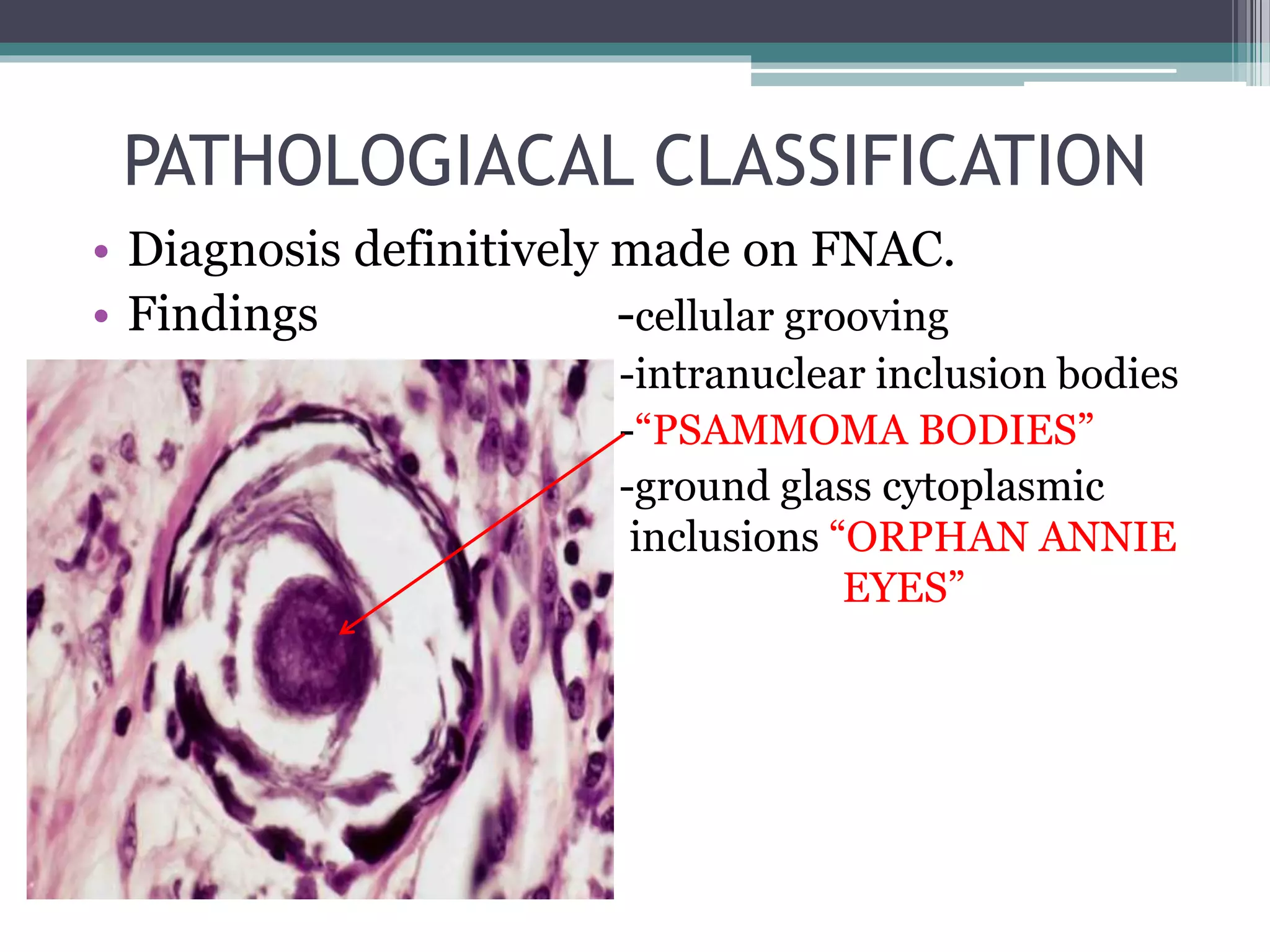
• Diagnosis definitively made on FNAC.
• Findings -cellular grooving
-intranuclear inclusion bodies
-“PSAMMOMA BODIES”
-ground glass cytoplasmic
inclusions “ORPHAN ANNIE
EYES”
CLASSIFICATION:
• Papillary carcinoma well differentiated
• Follicular variant---10%
• Insular
• Columnar <1%, elder age group,
• Tall cell variant poor prognosis
TREATMENT
• SURGERY
• RADIO IODINE THERAPY
• POST OP THYROXINE REPLACEMENT
THERAPY
SURGICAL RESECTION
-Hemithyroidectomy/Lobectomy with/without
Isthmusectomy
-Near Total Thyroidectomy ? Lymph Node
-Total Thyroidectomy Dissection
TOTAL V/S NEAR TOTAL
THYROIDECTOMY
Recent American Thyroid Association Guide lines
recommends more aggressive (total
thyroidectomy) for well differentiated thyroid
carcinonoma.
Advantages—
• Higher survival, lower recurrence
• Reduces risk of pulmonary mets
• Improved sensitivity for Tg levels
• RAIodine can be used better
• Reduces risk of development of Anaplastic ca
NEAR TOTAL THYROIDECTOMY:
Leaves a much smaller(<1g) immediately adjacent
to the Ligament of Berry.
• Less chances of postop hypoparathyroidism.
• Low risk of RLN injury.
• Less chances of SLN injury.
• Technically easy to perform.
LYMPH NODE DISSECTION
American Thyroid Association Revised
Guidelines
• Therapeutic level VI dissection:
clinically involved central neck nodes
• Prophylactic level VI dissection
advanced primary (T3 or T4).
• Near-total or total thyroidectomy appropriate
for (T1 or T2), non-invasive node-negative PTC.
Randomized Prospective Multicenter Trial of
Prophylactic Central Node Dissection for Papillary
Thyroid Carcinoma
FOR AGAINST
• Lower recurrence and
mortality rates
• Decreases postop Tg levels
• Improves accuracy of staging
• Performed as safely as total
thyroidectomy, experienced
hands
• Central nodal metastasis can’t
be reliably identified
preoperatively or at surgery
• Higher rates of
hypoparathyroidism.
• Higher rates of recurrent nerve
injury
• Absence of level I data that it
would lead to lower recurrence
and mortality rates
• Majority of thyroidectomies in
India are performed by low-
volume surgeons.
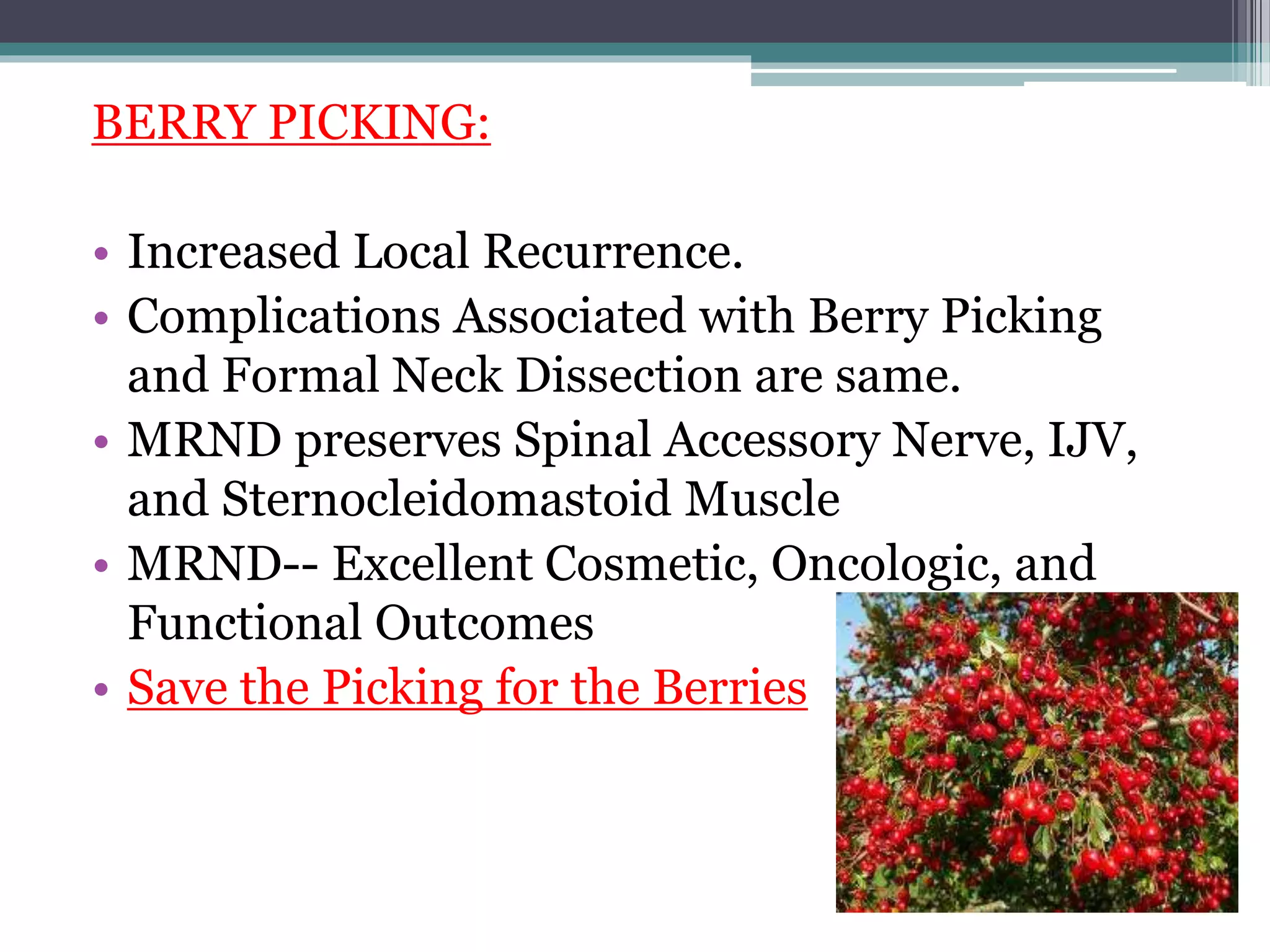
BERRY PICKING:
• Increased Local Recurrence.
• Complications Associated with Berry Picking
and Formal Neck Dissection are same.
• MRND preserves Spinal Accessory Nerve, IJV,
and Sternocleidomastoid Muscle
• MRND-- Excellent Cosmetic, Oncologic, and
Functional Outcomes
• Save the Picking for the Berries
• UNDIAGNOSED/SUSPICIOUS NODULE—
Thyroid lobectomy is an appropriate initial
resection and serves as diagnostic biopsy except:
->4cm tumor.
-marked atypia on FNAC/ suspicious of Ca.
-Family h/o.
-H/o radiation exposure.
-Men >50 years of age.
These patients should undergo TOTAL/NEAR
TOTAL THYROIDECTOMY.
• MICROCARCINOMA-
A unilateral lobectomy with/without
isthmusectomy except :
-Clinically positive lymph nodes
-Multicentricity
-H/o head & neck radiation
In these cases total/near total thyroidectomy with
or without lymph node dissection followed by
radio iodine ablation.
• COMPLETION THYROIDECTOMY-
->1cm lesion
-multifocal tumor
-positive lymph nodes
-high risk groups
ADVANTAGES:
Complete clearance
Facilitates radioiodine therapy
Enables surveillance with serum Tg levels.
RADIOIODINE THERAPY
• The Indications:
1.To destroy residual thyroid tissue post-op.
2.Treat metastases to the lymph nodes, lungs or
bones.
3.Treat recurrence after initial treatment by
surgery or previous radioactive iodine or both.
Recent American Thyroid Association Guidelines
recommended radioiodine ablation for:
• Pt. with stage III or IV disease.
• All Pt. with stage II disease <45 years.
• Selected Pt. with stage I disease those with:
- large tumor ( >1.5 cm )
- multifocality
- residual disease
- nodal metastasis
Radio Iodine (I-131) is given a in single dose on
OPD basis- 6 weeks after surgery
• Low dose ablation (30 mCi)
-young, low risk patients
• High dose ablation (100-200mCi)
-older, high risk patients
-incomplete resection
THYROXINE THERAPY
• Long term thyroxine(T4) replacement.
(2.5-3.5 mcg/kg of L-T4 every day)
• TSH suppression.
• High risk pt. TSH level below 0.1 mU/L
• Low risk pt. TSH level 0.1- 0.5 mU/L
SURVEILLANCE
FOLLICULAR CARCINOMA
• Account for 10% of all thyroid cancers.
• More common in I-deficient areas.
• F/M ratio is 3:1
• 40-60 years.
• Age at diagnosis- most important prognostic
factor.
• 10 year survival---95% in <40 years
80% in 40-60 years
PRESENTATION
• Solitary thyroid nodule, rapid increase in size of
long-standing goiter.
• Blood borne metastasis, most commonly lytic
lesions in bones>>lungs.
• Cervical LN metastasis is uncommon(5%).
• Hyperfunctioning <2% (thyrotoxicosis).
DIAGNOSIS:
• FNAC has limited value.
• Unifocal lesion.
• Histopathology provides
definitive diagnosis—
• Follicular cells occupying
abnormal positions
including capsular,
vascular & lymphatic
invasion.
• Frozen section- limited value.
TREATMENT
FNAC suggestive of follicular neoplasm:
• Size <2cm----Hemithyroidectomy with
Isthmusectomy.
• Size >2cm----Total Thyroidectomy
Histopathology shows carcinoma in lobectomy
specimen should all be managed by a
Completion Thyroidectomy.
Post-operative management-
-Radio Iodine Ablation.
-Thyroxine Replacement Therapy.
-Long term follow-up with serum Tg levels.
HURTHLE CELL CARCINOMA
• Subtype of Follicular Carcinoma.
• Multifocal & usually bilateral.
• 60-75 years.
• Abundance of oxyphilic cells/ oncocytes.
(HURTHLE CELLS)
• FNAC results are better suggestive than in FTC
• Worse prognosis-
-increased incidence of lymphatic spread.
-higher rate of recurrence.
-poor uptake of iodine.
• TOTAL THYROIDECTOMY WITH LN
DISSECTION is the treatment of choice.
MEDULLARY CARCINOMA
• 5% of all thyroid malignancies.
• Parafollicular C-cells.
• 25% Inherited (Germline mutation RET
oncogene).
• F/M ratio 1.5:1
• 50 and 60 yrs age group in sporadic cases.
• Neck mass + palpable cervical LN(15-20%).
MTC secretes a range of compounds:
 Calcitonin, CEA, CGRP, PGA2 and F2α, Serotonin.
 May develop flushing and diarrhoea, Cushing’s
syndrome (ectopic ACTH).
Diagnosis:
 Family history.
 ↑Sr Calcitonin(Basal & Pentagastrin stimulated),
↑CEA
 FNAC.
MANAGEMENT:
Screen patient for:
 RET mutation.
 Pheochromocytoma (24-hour urinary level of
VMA, catecholamine, metanephrine).
 Hyperparathyroidism (Serum calcium).
• Surgery provides the only cure:
SPORADIC MTC
Total Thyroidectomy + :
 Bilateral Central Node Dissection as routine (No LN
involvement)
 Bilateral Modified-Radical Neck Dissection
(palpable LN)
 Ipsilateral Prophylactic Nodal Dissection in tumor
size >1.5cm.
External Beam Radiation for unresectable residual
or recurrent tumor.
No effective Chemotherapy.
FAMILIAL MTC (RET mutation +ve)
• Prophylactic Thyroidectomy:
▫ Before age of 6 yrs for MEN2A
▫ Before age of 1 yr for MEN2B
Pheochromocytoma when associated should be
operated first
POSTOPERATIVE MANAGEMENT
Disease surveillance:
Serial Calcitonin and CEA
▫ 2 weeks postop
▫ 3 monthly for one year
▫ Biannually
If Calcitonin rises
▫ Metastatic work-up
▫ Surgical excision
▫ If metastases - external beam radiation
ANAPLASTIC CARCINOMA
• Most aggressive: Mortality ~100%.
• 1% of all thyroid tumors.
• Older patients with dysphagia, hoarseness,
rapidly enlarging painful neck mass.
• Superior vena cava syndrome may be present.
• h/o prior/coexistent well differentiated cancer.
• 50% have h/o goitre.
• p53 mutations in 15%.
Pathology-
• FNAC accurate in ~90% cases
• Giant cells, sheets of squamous cells or islands of
more recognisible differentiated carcinoma like
PTC can be seen.
• Three subtypes
-small cell
-giant cell
-squamous cell
MANAGEMENT:
• Distant spread esp to lungs present at the time
presentation in 90% cases.
• If Resectable (CT/MRI)– Total Thyroidectomy
with LN Dissection EBRT or Chemotherapy.
• Unresectable Tumors- Counseling, end of life
planning & palliative surgery.
• EBRT limited
• Chemotherapy(DOXORUBICIN) role
LYMPHOMA OF THE THYROID GLAND
• Relatively rare, <1% of all lymphoma.
• Mostly Non Hodgkin Lymphoma.
• F/M ratio 3:1 to 8:1.
• Median age is 7th decade.
• Locally invasive.
• Hypothyroidism in cases of Autoimmune
thyroiditis or Hashimoto’s thyroiditis.
• MANAGEMENT:
FNAC is highly suggestive but definitive
diagnosis requires tissue diagnosis.
Primary treatment should be EBRT combined
with Chemotherapy regimen based on histo-
pathological subtype of lymphoma.
MALT lymphoma – Surgical Excision
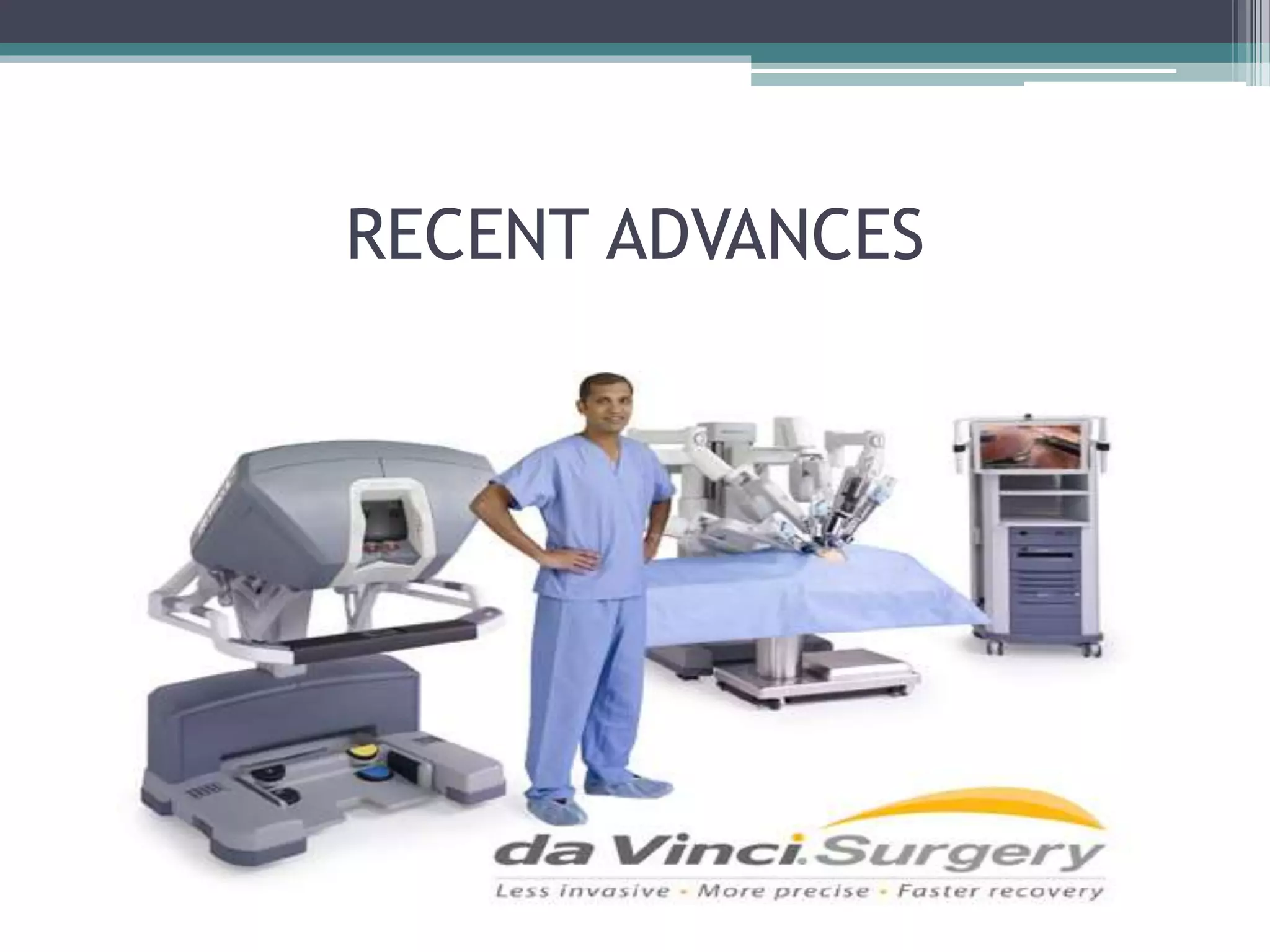
RECENT ADVANCES
THYROID SURGERY
MIVATS- Minimally Invasive Video Assisted
Thyroid Surgery
Miccoli, et al
Trans Axillary Gasless Robotic Thyroidectomy
Kang et al
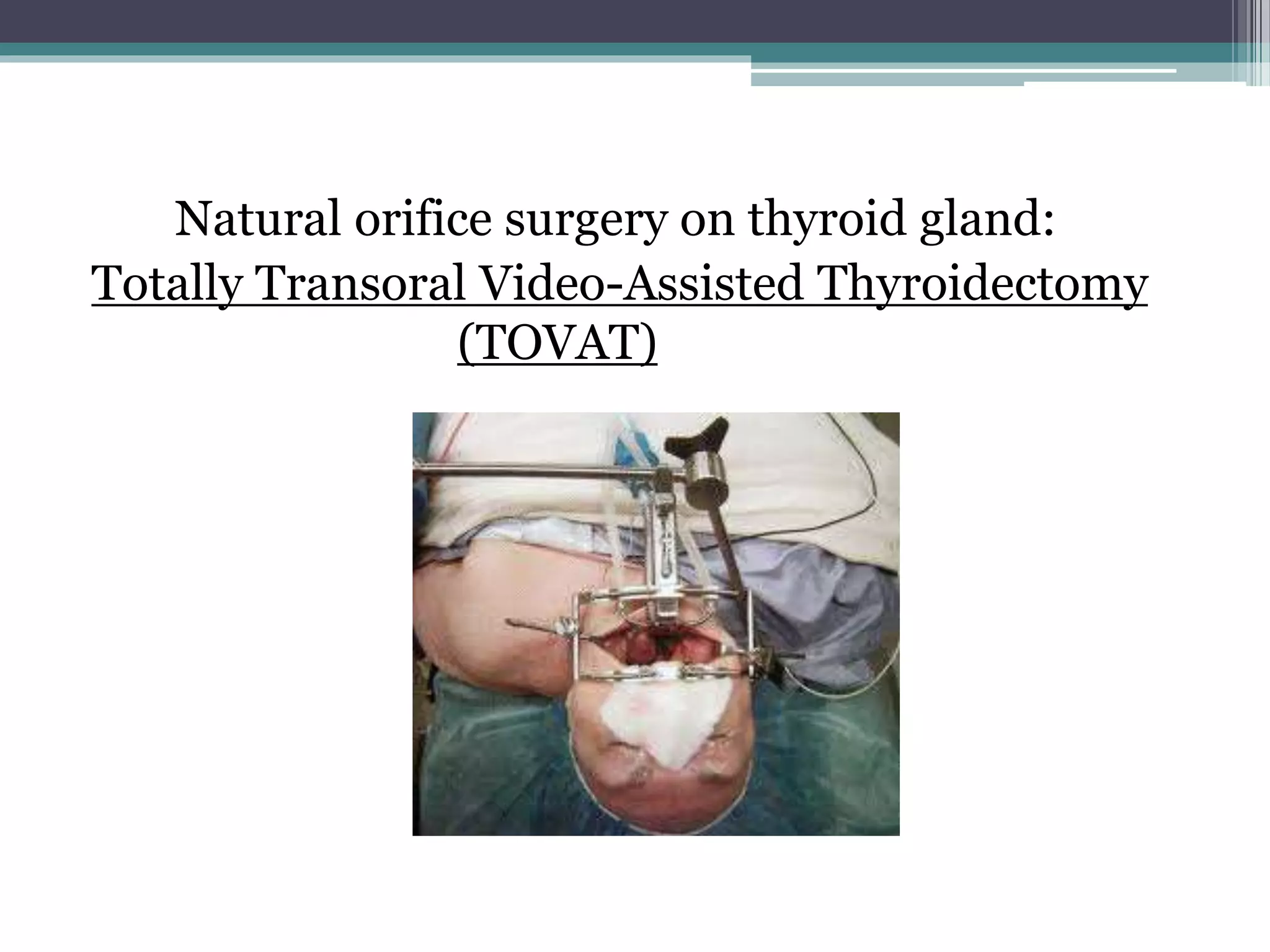
Natural orifice surgery on thyroid gland:
Totally Transoral Video-Assisted Thyroidectomy
(TOVAT)
CHEMOTHERAPEUTIC AGENTS
Vandetanib Tyrosinie kinase inhibitors
Carbzantinib Advanced MTC
Carboplatin + Paclitaxel - Anaplastic Ca
Sunitnib & Selumetinib - Tumor non responsive
to Radio Iodine
Retinoic Acid - Increases tissue
(Redifferentiation therapy) response to Radio Iodine
Carcinoma Thyroid

Carcinoma Thyroid

  • 1.
    CARCINOMA THYROID DR GAURAVTYAGI DR SHEHTAJ KHAN SURGERY UNIT I
  • 2.
  • 3.
    Theodor Bilroth EmilTheodor Kocher Nobel Prize 1909
  • 4.
    EPIDEMIOLOGY AND STATISTICS •Commonest malignant Endocrine tumour. • Comprise 1% of all malignancies. • Sex Ratio is 3:1 (Female:Male) • Can occur at any age group ▫ Peak incidence after age of 30. ▫ Aggressiveness increases with old age.
  • 5.
    • Incidence ofCarcinoma of thyroid has risen 189% during 1973-2003 in the world. • In a survey conducted by The National Cancer Registry Programme in Bangalore & ICMR, Delhi, “a belt of thyroid cancer” in women of coastal districts of Kerala, Karnataka, and Goa. India has some of the highest cancer rates in the world Ganapati Mudur BMJ. 2005 January 29;
  • 6.
    ETIOLOGY & RISKFACTORS: • Female gender • Radiation exposure • Family h/o • Iodine deficiency states • Thyroiditis (Hashimoto’s diseaseLymphoma) • Genetics/Mutations: -RET-proto-oncogene -MEN2A/2B -Gardener’s synd, FAP
  • 8.
    PRESENTATION • The mostcommon presentation is a painless neck mass/solitary thyroid nodule. • Symptoms consistent with malignancy.  Cervical lymphadenopathy.  Rapid enlargement.  Dysphagia  Stridor.  Hemoptysis.  Hoarseness.  Pain  Bone pain, fractures.
  • 9.
    CLINICAL EVALUATION Physical Examination •Size • Consistency - hard vs. soft • Mobility • Well circumscribed vs. ill defined borders • Multinodular vs. solitary nodule ▫ multi nodular - 3% chance of malignancy ▫ solitary nodule - 5%-12%.
  • 10.
    • Systematic palpationof the neck  Metastatic adenopathy commonly found:  Central compartment (level VI)  Lateral group (regions III and IV) • Indirect or fiberoptic laryngoscopy.  vocal cord mobility  evaluate airway  preoperative documentation of any unrelated abnormalities
  • 11.
    LABORATORY INVESTIGATIONS Thyroid functiontests: T3, T4, TSH Serum Calcitonin: basal/pentagastrin stimulated calcitonin levels (>300 pg/ml) Thyroglobulin(Tg) At 6-months interval then annually when disease-free < 2ng/mL in total or near-total thyroidectomy > 2ng/mL = Recurrence/Persistent thyroid tissue Carcinoembryonic antigen (CEA) the reference value is less than 3 ng/dL.
  • 12.
    ULTRASONOGRAPHY • 7.5-16 MHzprobe • B-mode USG can be used intraoperatively • Increasingly used to assist FNA • Limited ability to predict the diagnosis of solid nodules accurately
  • 13.
    Findings suggestive ofmalignancy: • Microcalcifications • Hypervascularity • Infiltrative margins • Hypoechogenicity • Height>>width on transverse view
  • 14.
    Nodules <1 cmwith benign characterstics are not further evaluated except : • Lymphadenopathy • h/o radiation exposure • Family h/o • Prior h/o Ca thyroid • PET positive lesions
  • 15.
  • 16.
    • Popularized inthe 1960s by Einhorn and Franzen in Stockholm, Sweden. • Replaced intra-op frozen section • 23 to 27G needle • Imaging guidance is recommended— Especially--non palpable deep located -posteriorly located -cystic masses
  • 17.
    TATA MEMORIAL HOSPITALGUIDELINES FOR FNAC RESULTS
  • 18.
    RADIOISOTOPE SCANNING Functionality ofthe lesion Staging of the carcinoma 15-20% cold nodules MALIGNANCY 5-9% warm/hot nodules -Malignancy neither confirmed nor excluded
  • 19.
    Technetium-99m pertechnate(Tc99m): -Trapped byfollicular cells but not organified. -Short t1/2 , low radiation exposure. -Also taken up salivary glands & highly vascular structures.
  • 20.
    • RADIOIODINE Trapped &organified I-123 I-131 -Low dose radiation -High beta radiation -Short t1/2 (12-13h) -t1/2-8days -Lingual thyroid & -Optimal for imaging Substernal goitres carcinoma -Screening modality of choice for metastasis
  • 21.
    PET- 18F-fluorodeoyglucose • Provides3D reconstruction images. • Detecting primary, metastatic & recurrent cancer. • 1-2% thyroid incidentalomas, usually benign. • Limited availabilty & cost. Gallium-67 Used in evaluation of lymphoma.
  • 22.
    CT SCAN/MRI -Both equallysensitive & specific -No added advantage to the workup of uncomplicated cases -Large doses of Iodine in iv contrast interfere with use of radioiodine for imaging/therapy
  • 23.
    Useful in- • Assessmentof local extension in advanced stages & suspicious lesions with palpable lymph nodes • Pre-op evaluation of large masses with tracheal deviation especially substernal masses • Post-op follow up especially for suspicion of recurrence
  • 24.
    CLASSIFICATION PRIMARY: • Follicular epithelium– Well differentiated Undifferentiated Papillary Anaplastic Follicular Hurthle cell • Parafollicular cells (C-cells) Medullary • Lymphoid cells Lymphoma SECONDARY/METASTATIC: -Kidney -Breast -Colon -Direct extension -Melanoma
  • 26.
    TNM STAGING OFTHYROID CANCER
  • 27.
    PROGNOSTIC INDICATORS • AGES:AMES: -Age -Age -Hisological Grade -Metastasis -Extrathyroidal invasion -Extent -Size -Size • MACIS(post-operative):  Distant Metastasis  Age  Completeness of original surgical resection  Extrathyroidal Invasion  Size of original lesion
  • 28.
    PAPILLARY CARCINOMA THYROID •Most common thyroid malignancy, 70-80% • 30-50 years peak incidence • F/M ratio is 2.5:1 • Excellent prognosis(>95% after 10 years) • Risk factors--Radiation exposure Family h/o, Familial syndromes (Werner Syndrome, Carney complex, Familial polyposis)
  • 29.
    CLINICAL FEATURES • Mostlypresents as a “solitary thyroid nodule” • Sometimes detected incidentally--- ”incidentaloma” 0r “microcarcinoma”(<1 cm) • Spreads through lymphatic, lateral palpable lymph node can be a presenting feature “lateral aberrant thyroid” • Spread to lungs, bones & brain is very rare. • Mostly solid on USG but sometimes may have a cystic component.
  • 30.
    PATHOLOGIACAL CLASSIFICATION • Diagnosisdefinitively made on FNAC. • Findings -cellular grooving -intranuclear inclusion bodies -“PSAMMOMA BODIES” -ground glass cytoplasmic inclusions “ORPHAN ANNIE EYES”
  • 32.
    CLASSIFICATION: • Papillary carcinomawell differentiated • Follicular variant---10% • Insular • Columnar <1%, elder age group, • Tall cell variant poor prognosis
  • 33.
    TREATMENT • SURGERY • RADIOIODINE THERAPY • POST OP THYROXINE REPLACEMENT THERAPY
  • 34.
    SURGICAL RESECTION -Hemithyroidectomy/Lobectomy with/without Isthmusectomy -NearTotal Thyroidectomy ? Lymph Node -Total Thyroidectomy Dissection
  • 35.
    TOTAL V/S NEARTOTAL THYROIDECTOMY Recent American Thyroid Association Guide lines recommends more aggressive (total thyroidectomy) for well differentiated thyroid carcinonoma. Advantages— • Higher survival, lower recurrence • Reduces risk of pulmonary mets • Improved sensitivity for Tg levels • RAIodine can be used better • Reduces risk of development of Anaplastic ca
  • 36.
    NEAR TOTAL THYROIDECTOMY: Leavesa much smaller(<1g) immediately adjacent to the Ligament of Berry. • Less chances of postop hypoparathyroidism. • Low risk of RLN injury. • Less chances of SLN injury. • Technically easy to perform.
  • 37.
    LYMPH NODE DISSECTION AmericanThyroid Association Revised Guidelines • Therapeutic level VI dissection: clinically involved central neck nodes • Prophylactic level VI dissection advanced primary (T3 or T4). • Near-total or total thyroidectomy appropriate for (T1 or T2), non-invasive node-negative PTC.
  • 39.
    Randomized Prospective MulticenterTrial of Prophylactic Central Node Dissection for Papillary Thyroid Carcinoma FOR AGAINST • Lower recurrence and mortality rates • Decreases postop Tg levels • Improves accuracy of staging • Performed as safely as total thyroidectomy, experienced hands • Central nodal metastasis can’t be reliably identified preoperatively or at surgery • Higher rates of hypoparathyroidism. • Higher rates of recurrent nerve injury • Absence of level I data that it would lead to lower recurrence and mortality rates • Majority of thyroidectomies in India are performed by low- volume surgeons.
  • 40.
    BERRY PICKING: • IncreasedLocal Recurrence. • Complications Associated with Berry Picking and Formal Neck Dissection are same. • MRND preserves Spinal Accessory Nerve, IJV, and Sternocleidomastoid Muscle • MRND-- Excellent Cosmetic, Oncologic, and Functional Outcomes • Save the Picking for the Berries
  • 41.
    • UNDIAGNOSED/SUSPICIOUS NODULE— Thyroidlobectomy is an appropriate initial resection and serves as diagnostic biopsy except: ->4cm tumor. -marked atypia on FNAC/ suspicious of Ca. -Family h/o. -H/o radiation exposure. -Men >50 years of age. These patients should undergo TOTAL/NEAR TOTAL THYROIDECTOMY.
  • 42.
    • MICROCARCINOMA- A unilaterallobectomy with/without isthmusectomy except : -Clinically positive lymph nodes -Multicentricity -H/o head & neck radiation In these cases total/near total thyroidectomy with or without lymph node dissection followed by radio iodine ablation.
  • 43.
    • COMPLETION THYROIDECTOMY- ->1cmlesion -multifocal tumor -positive lymph nodes -high risk groups ADVANTAGES: Complete clearance Facilitates radioiodine therapy Enables surveillance with serum Tg levels.
  • 44.
    RADIOIODINE THERAPY • TheIndications: 1.To destroy residual thyroid tissue post-op. 2.Treat metastases to the lymph nodes, lungs or bones. 3.Treat recurrence after initial treatment by surgery or previous radioactive iodine or both.
  • 45.
    Recent American ThyroidAssociation Guidelines recommended radioiodine ablation for: • Pt. with stage III or IV disease. • All Pt. with stage II disease <45 years. • Selected Pt. with stage I disease those with: - large tumor ( >1.5 cm ) - multifocality - residual disease - nodal metastasis
  • 46.
    Radio Iodine (I-131)is given a in single dose on OPD basis- 6 weeks after surgery • Low dose ablation (30 mCi) -young, low risk patients • High dose ablation (100-200mCi) -older, high risk patients -incomplete resection
  • 47.
    THYROXINE THERAPY • Longterm thyroxine(T4) replacement. (2.5-3.5 mcg/kg of L-T4 every day) • TSH suppression. • High risk pt. TSH level below 0.1 mU/L • Low risk pt. TSH level 0.1- 0.5 mU/L
  • 48.
  • 49.
    FOLLICULAR CARCINOMA • Accountfor 10% of all thyroid cancers. • More common in I-deficient areas. • F/M ratio is 3:1 • 40-60 years. • Age at diagnosis- most important prognostic factor. • 10 year survival---95% in <40 years 80% in 40-60 years
  • 50.
    PRESENTATION • Solitary thyroidnodule, rapid increase in size of long-standing goiter. • Blood borne metastasis, most commonly lytic lesions in bones>>lungs. • Cervical LN metastasis is uncommon(5%). • Hyperfunctioning <2% (thyrotoxicosis).
  • 51.
    DIAGNOSIS: • FNAC haslimited value. • Unifocal lesion. • Histopathology provides definitive diagnosis— • Follicular cells occupying abnormal positions including capsular, vascular & lymphatic invasion. • Frozen section- limited value.
  • 52.
    TREATMENT FNAC suggestive offollicular neoplasm: • Size <2cm----Hemithyroidectomy with Isthmusectomy. • Size >2cm----Total Thyroidectomy Histopathology shows carcinoma in lobectomy specimen should all be managed by a Completion Thyroidectomy.
  • 53.
    Post-operative management- -Radio IodineAblation. -Thyroxine Replacement Therapy. -Long term follow-up with serum Tg levels.
  • 54.
    HURTHLE CELL CARCINOMA •Subtype of Follicular Carcinoma. • Multifocal & usually bilateral. • 60-75 years. • Abundance of oxyphilic cells/ oncocytes. (HURTHLE CELLS) • FNAC results are better suggestive than in FTC
  • 55.
    • Worse prognosis- -increasedincidence of lymphatic spread. -higher rate of recurrence. -poor uptake of iodine. • TOTAL THYROIDECTOMY WITH LN DISSECTION is the treatment of choice.
  • 56.
    MEDULLARY CARCINOMA • 5%of all thyroid malignancies. • Parafollicular C-cells. • 25% Inherited (Germline mutation RET oncogene). • F/M ratio 1.5:1 • 50 and 60 yrs age group in sporadic cases. • Neck mass + palpable cervical LN(15-20%).
  • 58.
    MTC secretes arange of compounds:  Calcitonin, CEA, CGRP, PGA2 and F2α, Serotonin.  May develop flushing and diarrhoea, Cushing’s syndrome (ectopic ACTH). Diagnosis:  Family history.  ↑Sr Calcitonin(Basal & Pentagastrin stimulated), ↑CEA  FNAC.
  • 59.
    MANAGEMENT: Screen patient for: RET mutation.  Pheochromocytoma (24-hour urinary level of VMA, catecholamine, metanephrine).  Hyperparathyroidism (Serum calcium).
  • 60.
    • Surgery providesthe only cure: SPORADIC MTC Total Thyroidectomy + :  Bilateral Central Node Dissection as routine (No LN involvement)  Bilateral Modified-Radical Neck Dissection (palpable LN)  Ipsilateral Prophylactic Nodal Dissection in tumor size >1.5cm. External Beam Radiation for unresectable residual or recurrent tumor. No effective Chemotherapy.
  • 61.
    FAMILIAL MTC (RETmutation +ve) • Prophylactic Thyroidectomy: ▫ Before age of 6 yrs for MEN2A ▫ Before age of 1 yr for MEN2B Pheochromocytoma when associated should be operated first
  • 62.
    POSTOPERATIVE MANAGEMENT Disease surveillance: SerialCalcitonin and CEA ▫ 2 weeks postop ▫ 3 monthly for one year ▫ Biannually If Calcitonin rises ▫ Metastatic work-up ▫ Surgical excision ▫ If metastases - external beam radiation
  • 63.
    ANAPLASTIC CARCINOMA • Mostaggressive: Mortality ~100%. • 1% of all thyroid tumors. • Older patients with dysphagia, hoarseness, rapidly enlarging painful neck mass. • Superior vena cava syndrome may be present. • h/o prior/coexistent well differentiated cancer. • 50% have h/o goitre. • p53 mutations in 15%.
  • 64.
    Pathology- • FNAC accuratein ~90% cases • Giant cells, sheets of squamous cells or islands of more recognisible differentiated carcinoma like PTC can be seen. • Three subtypes -small cell -giant cell -squamous cell
  • 65.
    MANAGEMENT: • Distant spreadesp to lungs present at the time presentation in 90% cases. • If Resectable (CT/MRI)– Total Thyroidectomy with LN Dissection EBRT or Chemotherapy. • Unresectable Tumors- Counseling, end of life planning & palliative surgery. • EBRT limited • Chemotherapy(DOXORUBICIN) role
  • 66.
    LYMPHOMA OF THETHYROID GLAND • Relatively rare, <1% of all lymphoma. • Mostly Non Hodgkin Lymphoma. • F/M ratio 3:1 to 8:1. • Median age is 7th decade. • Locally invasive. • Hypothyroidism in cases of Autoimmune thyroiditis or Hashimoto’s thyroiditis.
  • 67.
    • MANAGEMENT: FNAC ishighly suggestive but definitive diagnosis requires tissue diagnosis. Primary treatment should be EBRT combined with Chemotherapy regimen based on histo- pathological subtype of lymphoma. MALT lymphoma – Surgical Excision
  • 68.
  • 69.
    THYROID SURGERY MIVATS- MinimallyInvasive Video Assisted Thyroid Surgery Miccoli, et al
  • 70.
    Trans Axillary GaslessRobotic Thyroidectomy Kang et al
  • 71.
    Natural orifice surgeryon thyroid gland: Totally Transoral Video-Assisted Thyroidectomy (TOVAT)
  • 72.
    CHEMOTHERAPEUTIC AGENTS Vandetanib Tyrosiniekinase inhibitors Carbzantinib Advanced MTC Carboplatin + Paclitaxel - Anaplastic Ca Sunitnib & Selumetinib - Tumor non responsive to Radio Iodine Retinoic Acid - Increases tissue (Redifferentiation therapy) response to Radio Iodine