Carcinogenesis
Carcinogenesis- Pathogenesis of cancer.
a normal cell is transformed into a malignant cell and
repeatedly divides to become a cancer. A
chemical which can initiate this process is called a
chemical carcinogen. Some chemicals which are
non-carcinogenic or only weakly carcinogenic can
greatly enhance the effectiveness of carcinogenic
chemicals. Such "helpers" are called
cocarcinogens. They may act by altering uptake or
metabolism of carcinogens by cells.
Carcinogenesis may take as long as 15-25 years in
humans and in several animal models has been
shown to involve two stages, initiation and
promotion.
-In general, carcinogens are mutagens indicating that
they have the potential to interact with DNA.
Carcinogenesis
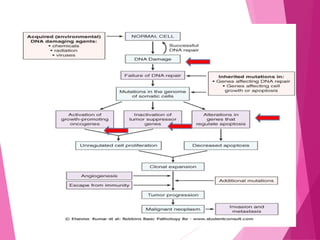
 Genetic mutations are largely responsible for the generation of
malignant cells.
 Two major categories of mutated genes are –
1) oncogenes
2) tumor suppressor genes.
I. Oncogenes are abnormal forms of normal genes called proto-
oncogenes that regulate cell growth. Mutation of these genes may result
in direct and continuous stimulation of the molecular biologic pathways
that control cellular growth and division.
II. Tumor suppressor genes ,p53, are inherent genes that play a role in cell division
and DNA repair and are critical for detecting inappropriate growth signals in
cells. If these genes, as a result of inherited or acquired mutations, become unable
to function, genetic mutations in other genes can proceed unchecked, leading to
neoplastic transformation.
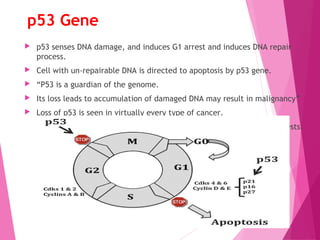
p53 Gene
 p53 senses DNA damage, and induces G1 arrest and induces DNA repair
process.
 Cell with un-repairable DNA is directed to apoptosis by p53 gene.
 “P53 is a guardian of the genome.
 Its loss leads to accumulation of damaged DNA may result in malignancy”
 Loss of p53 is seen in virtually every type of cancer.
 Over half of human malignant cells show loss of p53 gene by special tests.
Factors affecting carcinogenesis
 These factors can be divided into three main groups:
 Environmental Toxins
 chemical
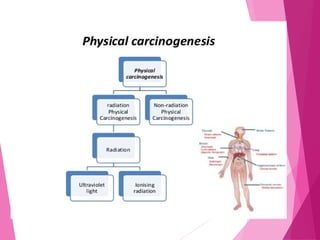
 physical (e.g. radiation)
 Dietary
natural products found in spices, etc.
additives (rarely)
 Lifestyle
hormonally-mediated
other
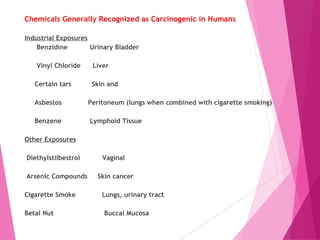
Chemicals Generally Recognized as Carcinogenic in Humans
Industrial Exposures
Benzidine Urinary Bladder
Vinyl Chloride Liver
Certain tars Skin and
Asbestos Peritoneum (lungs when combined with cigarette smoking)
Benzene Lymphoid Tissue
Other Exposures
Diethylstilbestrol VaginaI
Arsenic Compounds Skin cancer
Cigarette Smoke Lungs, urinary tract
Betal Nut Buccal Mucosa
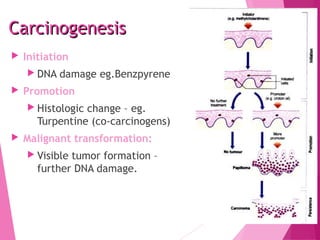
CarcinogenesisCarcinogenesis
 Initiation
 DNA damage eg.Benzpyrene
 Promotion
 Histologic change – eg.
Turpentine (co-carcinogens)
 Malignant transformation:
 Visible tumor formation –
further DNA damage.
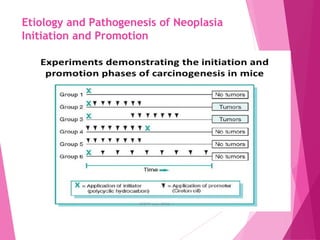
Etiology and Pathogenesis of Neoplasia
Initiation and Promotion
Molecular Basis of Carcinogenesis:-
Genes control cell division by cytokines.
Four important classes of regulatory genes (for cell division):
1. Promotors – Proto-oncogenes
2. Inhibitors – Tumor or Cancer-suppressor genes – p53
3. Genes regulating Apoptosis.
4. DNA repair genes.
Chemical Carcinogenesis:-
1. Biotransformation
2. Initiation:
Covalent binding
to DNA
3. Fixation: Mutation
stabilized by
mitosis
4. Gene expression,
transformation
5. Neoplastic growth,
proliferation
6. Progression, local
effects
7. Metastasis
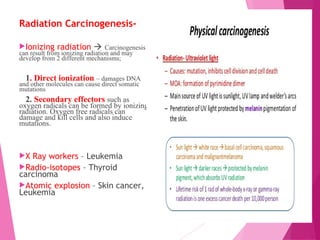
Radiation Carcinogenesis-
Ionizing radiation  Carcinogenesis
can result from ionizing radiation and may
develop from 2 different mechanisms;
1. Direct ionization – damages DNA
and other molecules can cause direct somatic
mutations
2. Secondary effectors such as
oxygen radicals can be formed by ionizing
radiation. Oxygen free radicals can
damage and kill cells and also induce
mutations.
X Ray workers – Leukemia
Radio-isotopes – Thyroid
carcinoma
Atomic explosion – Skin cancer,
Leukemia
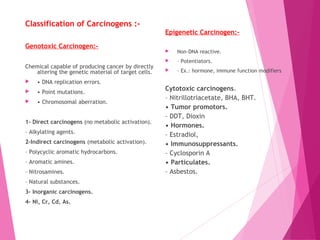
Classification of Carcinogens :-
Genotoxic Carcinogen:-
Chemical capable of producing cancer by directly
altering the genetic material of target cells.
 • DNA replication errors.
 • Point mutations.
 • Chromosomal aberration.
1- Direct carcinogens (no metabolic activation).
– Alkylating agents.
2-Indirect carcinogens (metabolic activation).
– Polycyclic aromatic hydrocarbons.
– Aromatic amines.
– Nitrosamines.
– Natural substances.
3– Inorganic carcinogens.
4- Ni, Cr, Cd, As.
Epigenetic Carcinogen:-
 Non-DNA reactive.
 – Potentiators.
 – Ex.: hormone, immune function modifiers
Cytotoxic carcinogens.
– Nitrillotriacetate, BHA, BHT.
• Tumor promotors.
– DDT, Dioxin
• Hormones.
– Estradiol,
• Immunosuppressants.
– Cyclosporin A
• Particulates.
– Asbestos.
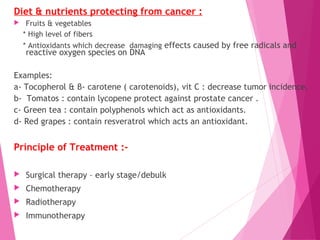
Diet & nutrients protecting from cancer :
 Fruits & vegetables
* High level of fibers
* Antioxidants which decrease damaging effects caused by free radicals and
reactive oxygen species on DNA
Examples:
a- Tocopherol & β- carotene ( carotenoids), vit C : decrease tumor incidence.
b- Tomatos : contain lycopene protect against prostate cancer .
c- Green tea : contain polyphenols which act as antioxidants.
d- Red grapes : contain resveratrol which acts an antioxidant.
Principle of Treatment :-
 Surgical therapy – early stage/debulk
 Chemotherapy
 Radiotherapy
 Immunotherapy

Carcinogenesis

  • 1.
  • 2.
    Carcinogenesis- Pathogenesis ofcancer. a normal cell is transformed into a malignant cell and repeatedly divides to become a cancer. A chemical which can initiate this process is called a chemical carcinogen. Some chemicals which are non-carcinogenic or only weakly carcinogenic can greatly enhance the effectiveness of carcinogenic chemicals. Such "helpers" are called cocarcinogens. They may act by altering uptake or metabolism of carcinogens by cells. Carcinogenesis may take as long as 15-25 years in humans and in several animal models has been shown to involve two stages, initiation and promotion. -In general, carcinogens are mutagens indicating that they have the potential to interact with DNA.
  • 3.
    Carcinogenesis  Genetic mutationsare largely responsible for the generation of malignant cells.  Two major categories of mutated genes are – 1) oncogenes 2) tumor suppressor genes. I. Oncogenes are abnormal forms of normal genes called proto- oncogenes that regulate cell growth. Mutation of these genes may result in direct and continuous stimulation of the molecular biologic pathways that control cellular growth and division. II. Tumor suppressor genes ,p53, are inherent genes that play a role in cell division and DNA repair and are critical for detecting inappropriate growth signals in cells. If these genes, as a result of inherited or acquired mutations, become unable to function, genetic mutations in other genes can proceed unchecked, leading to neoplastic transformation.
  • 4.
    p53 Gene  p53senses DNA damage, and induces G1 arrest and induces DNA repair process.  Cell with un-repairable DNA is directed to apoptosis by p53 gene.  “P53 is a guardian of the genome.  Its loss leads to accumulation of damaged DNA may result in malignancy”  Loss of p53 is seen in virtually every type of cancer.  Over half of human malignant cells show loss of p53 gene by special tests.
  • 5.
    Factors affecting carcinogenesis These factors can be divided into three main groups:  Environmental Toxins  chemical  physical (e.g. radiation)  Dietary natural products found in spices, etc. additives (rarely)  Lifestyle hormonally-mediated other
  • 6.
    Chemicals Generally Recognizedas Carcinogenic in Humans Industrial Exposures Benzidine Urinary Bladder Vinyl Chloride Liver Certain tars Skin and Asbestos Peritoneum (lungs when combined with cigarette smoking) Benzene Lymphoid Tissue Other Exposures Diethylstilbestrol VaginaI Arsenic Compounds Skin cancer Cigarette Smoke Lungs, urinary tract Betal Nut Buccal Mucosa
  • 7.
    CarcinogenesisCarcinogenesis  Initiation  DNAdamage eg.Benzpyrene  Promotion  Histologic change – eg. Turpentine (co-carcinogens)  Malignant transformation:  Visible tumor formation – further DNA damage.
  • 8.
    Etiology and Pathogenesisof Neoplasia Initiation and Promotion
  • 10.
    Molecular Basis ofCarcinogenesis:- Genes control cell division by cytokines. Four important classes of regulatory genes (for cell division): 1. Promotors – Proto-oncogenes 2. Inhibitors – Tumor or Cancer-suppressor genes – p53 3. Genes regulating Apoptosis. 4. DNA repair genes.
  • 12.
    Chemical Carcinogenesis:- 1. Biotransformation 2.Initiation: Covalent binding to DNA 3. Fixation: Mutation stabilized by mitosis 4. Gene expression, transformation 5. Neoplastic growth, proliferation 6. Progression, local effects 7. Metastasis
  • 14.
    Radiation Carcinogenesis- Ionizing radiation Carcinogenesis can result from ionizing radiation and may develop from 2 different mechanisms; 1. Direct ionization – damages DNA and other molecules can cause direct somatic mutations 2. Secondary effectors such as oxygen radicals can be formed by ionizing radiation. Oxygen free radicals can damage and kill cells and also induce mutations. X Ray workers – Leukemia Radio-isotopes – Thyroid carcinoma Atomic explosion – Skin cancer, Leukemia
  • 16.
    Classification of Carcinogens:- Genotoxic Carcinogen:- Chemical capable of producing cancer by directly altering the genetic material of target cells.  • DNA replication errors.  • Point mutations.  • Chromosomal aberration. 1- Direct carcinogens (no metabolic activation). – Alkylating agents. 2-Indirect carcinogens (metabolic activation). – Polycyclic aromatic hydrocarbons. – Aromatic amines. – Nitrosamines. – Natural substances. 3– Inorganic carcinogens. 4- Ni, Cr, Cd, As. Epigenetic Carcinogen:-  Non-DNA reactive.  – Potentiators.  – Ex.: hormone, immune function modifiers Cytotoxic carcinogens. – Nitrillotriacetate, BHA, BHT. • Tumor promotors. – DDT, Dioxin • Hormones. – Estradiol, • Immunosuppressants. – Cyclosporin A • Particulates. – Asbestos.
  • 17.
    Diet & nutrientsprotecting from cancer :  Fruits & vegetables * High level of fibers * Antioxidants which decrease damaging effects caused by free radicals and reactive oxygen species on DNA Examples: a- Tocopherol & β- carotene ( carotenoids), vit C : decrease tumor incidence. b- Tomatos : contain lycopene protect against prostate cancer . c- Green tea : contain polyphenols which act as antioxidants. d- Red grapes : contain resveratrol which acts an antioxidant. Principle of Treatment :-  Surgical therapy – early stage/debulk  Chemotherapy  Radiotherapy  Immunotherapy