Downloaded 72 times





![PRODUCING ETHANOIC ACID
• Oxidation by acidified potassium manganate (VII)
• ethanol + oxygen from oxidising agent + heat ethanoic acid + water
• CH3CH2OH(aq) + 2[O] + heat CH3COOH(aq) + H2O(l)
2+ + H2O](https://image.slidesharecdn.com/purecarboxylicacid-160905055441/75/Carboxylic-acids-O-Levels-Chemistry-10-2048.jpg)




Carboxylic acids are a series of organic acids defined by the carboxyl functional group, with a general formula and varying properties such as boiling points and solubility. They exhibit weak acid behavior and undergo reactions with metals, carbonates, bases, and alcohols to form salts, water, and gases. Esters, formed through the reaction of carboxylic acids and alcohols during esterification, are colorless and used in perfumes and food flavorings.
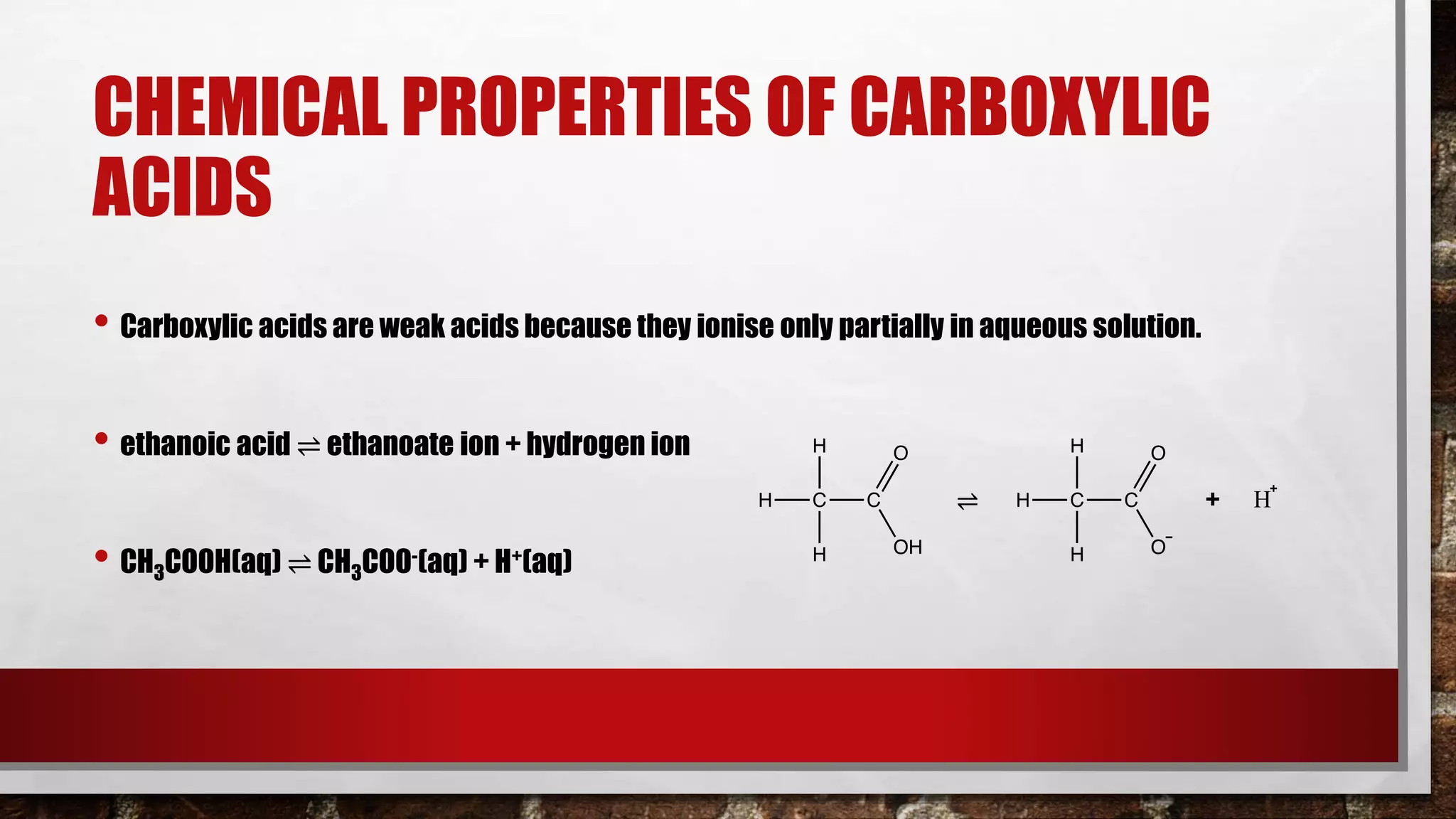
Introduction to carboxylic acids, their formula, and examples with molecular and structural formulas.
Discusses boiling points and solubility of carboxylic acids, highlighting trends in boiling point with molecular size.
Explores the weak acidic nature of carboxylic acids and their partial ionization in solutions.
Details reactions of carboxylic acids with metals to form salts and hydrogen gas.
Describes reactions with carbonates resulting in salt, carbon dioxide, and water.
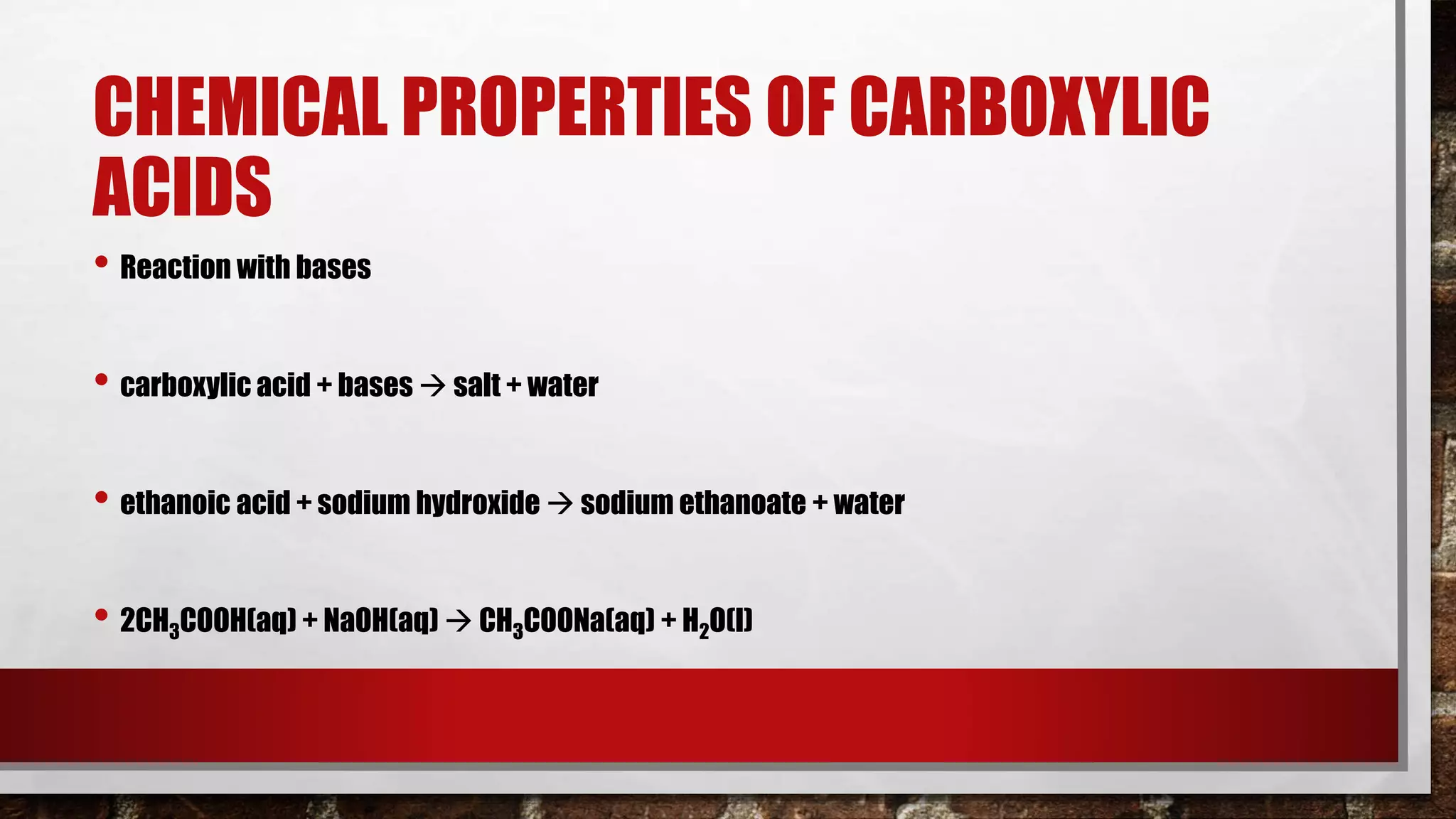
Explains reactions of carboxylic acids with bases producing salts and water.
Introduces the reaction mechanism involving alcohols.
Describes methods for producing ethanoic acid from ethanol through oxidation.
Defines esters, noting their properties and method of formation via esterification.
Details the process of esterification, the chemical reaction, and the resulting ester.
Explains the naming convention for esters based on the carboxylic acid and alcohol used.
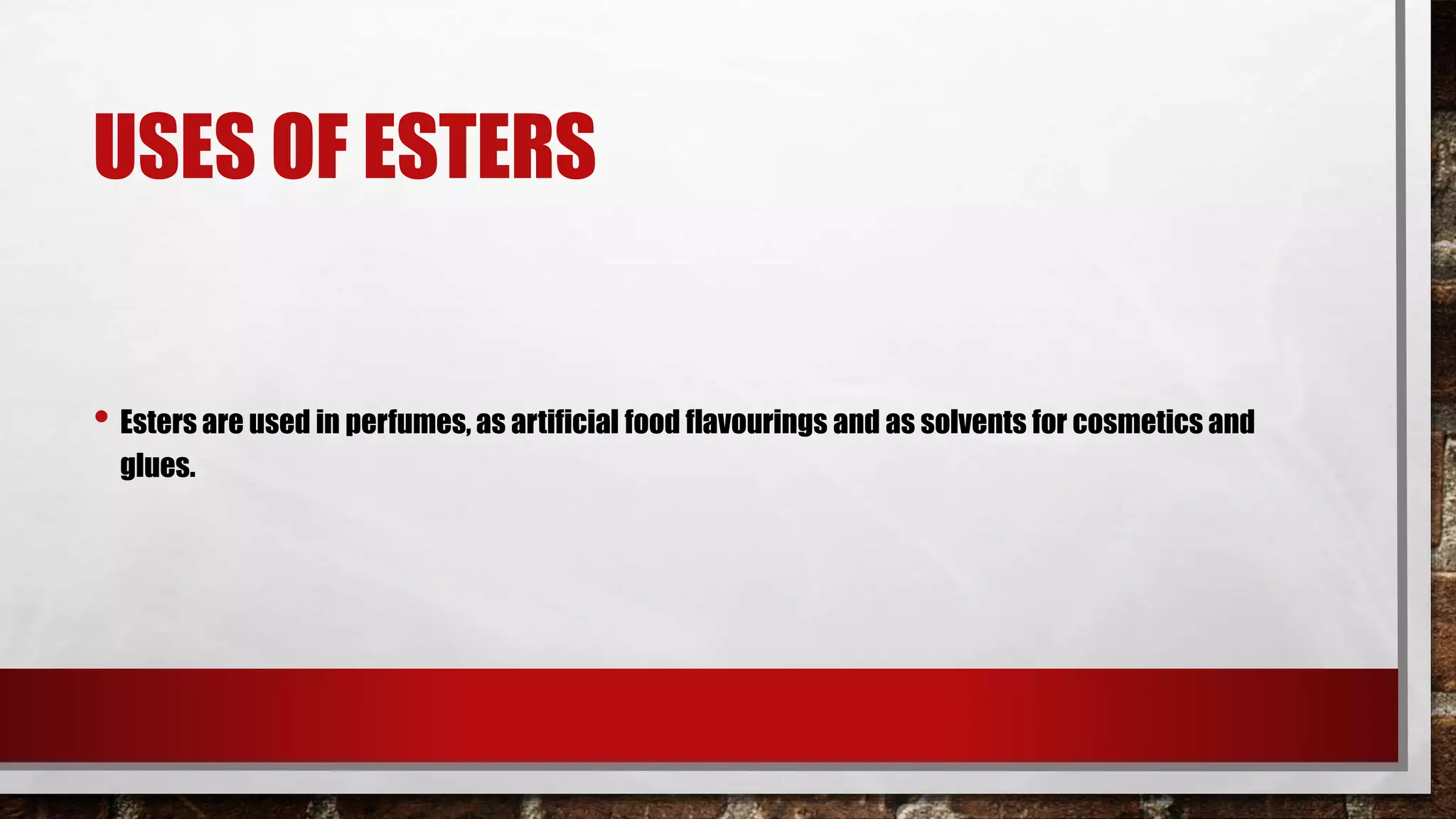
Highlights practical applications of esters in various industries such as food and cosmetics.
Statement regarding the usage rights for the presentation content.


