R.HARISHMA
MSC MICROBIOLOGY
ANJAC
CANCER – TYPES , SPREAD , PROPERTIES
INTRODUCTION
• Cancer is the uncontrolled growth of abnormal
cells anywhere in a body – cancer cell.
• It is also called malignancy.
• Causative agents – chemical , toxic compound
exposures ,ionizing radiation , some pathogens.
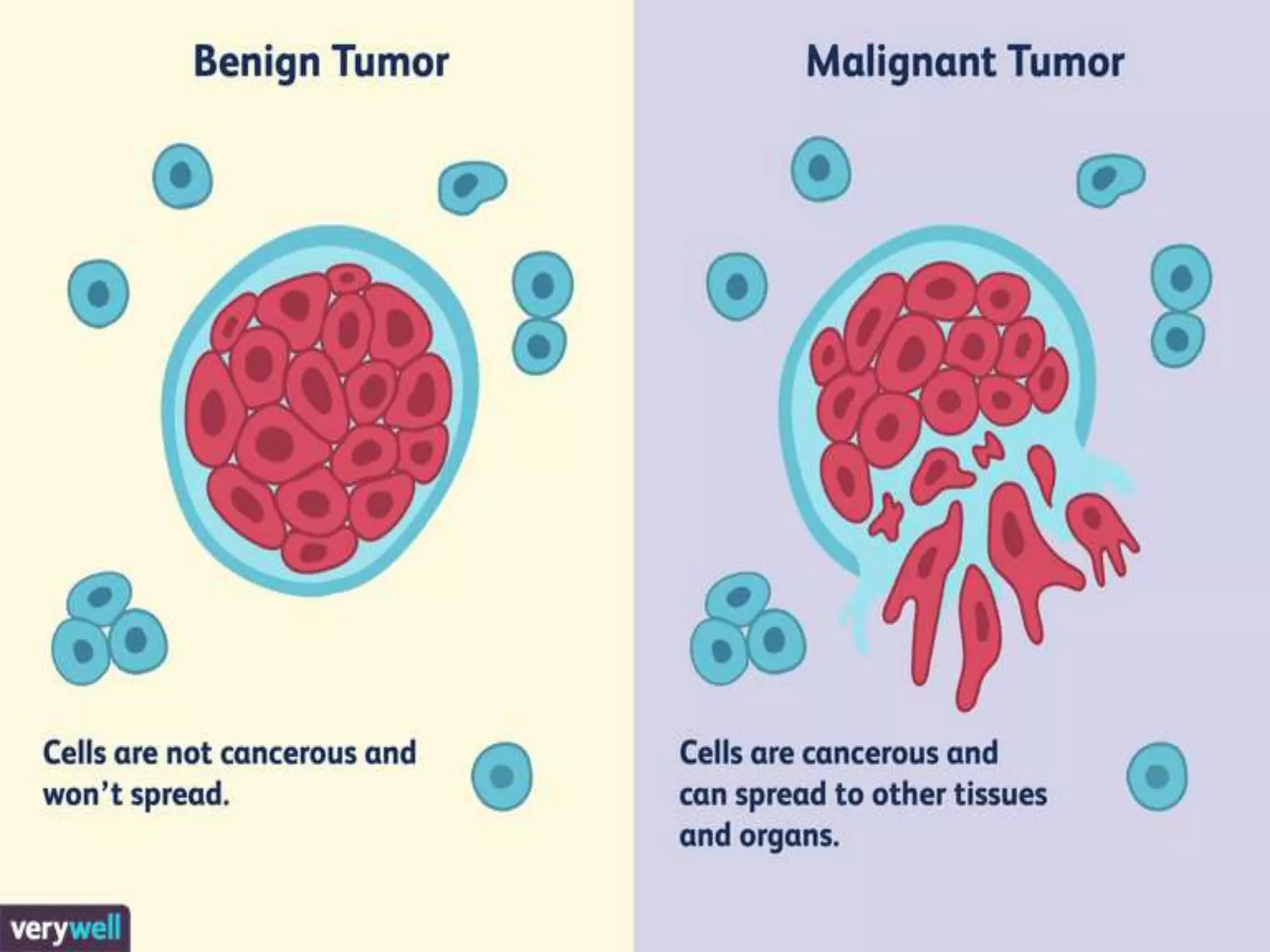
• Most cancer form tumors ,but not all tumors are
cancerous.
CANCER SYMPTOMS:
• Depends on the types
• General symptoms are,
Fatigue
Weight loss
Pain
Skin changes
Unusual bleeding
Persistent cough
Fever
TREATMENT:
• Chemotherapy,
• Radiation
• Surgery
General term:
Benign – non cancerous tumor
Malignant – cancerous tumor
SS
TYPES:
• National cancer Institute gives the common types:
Bladder Lung
Breast Melanoma
Endometrial Kidney cancer
Leukemia Lymphoma
Pancreatic Prostate
Thyroid Colon & rectal
THE MOST COMMON CANCERS IN MEN , WOMEN
AND CHILDREN:
• Men - prostate , lung , colorectal
• Women - Breast , lung , colorectal
• Children - Leukemia , brain tumors , lymphoma
CARCINOMA:
• Begins in skin ( or ) in tissues.
• That line the internal organs – skin , lung , colon ,
pancreatic , etc…
• Subtypes ,
Adenocarcinoma
Basal cell carcinoma
Squamous cell carcinoma
Transitional cell carcinoma
SARCOMA:
• Begins in bone (or) cartilage (or) other
connective tissue.
Two types:
Bone sarcomas
Soft tissue sarcomas
LEUKEMIA:
• Begins in blood forming tissue.
• Causes large numbers of abnormal blood cells and
enters the blood.
• Ages – 0-5,14-18,19-40,60+
• Sub type:
Lymphoblastic leukemia
T – cell leukemia
LYMPHOMA & MYELOMA:
• Starts from white blood cells.
• Affects lymph nodes of specific sites,
Stomach
Brain
Intestine
• Two types:
B cell lymphocytes
T cell lymphocytes
MYELOMA:
• Begins in plasma cells.
• Type of blood cancer.
• Plasma cells are capable of producing various
antibody.
• It can damage the bones , kidney , red blood cell
count.
CENTRAL NERVOUS SYSTEM CANCERS:
• Starts with brain tissue and spinal card.
• The brain controls the body by sending electrical
messages along nerve fibers.
• Brain and spinal card forms the central nervous
system.
SPREAD OF CANCER:
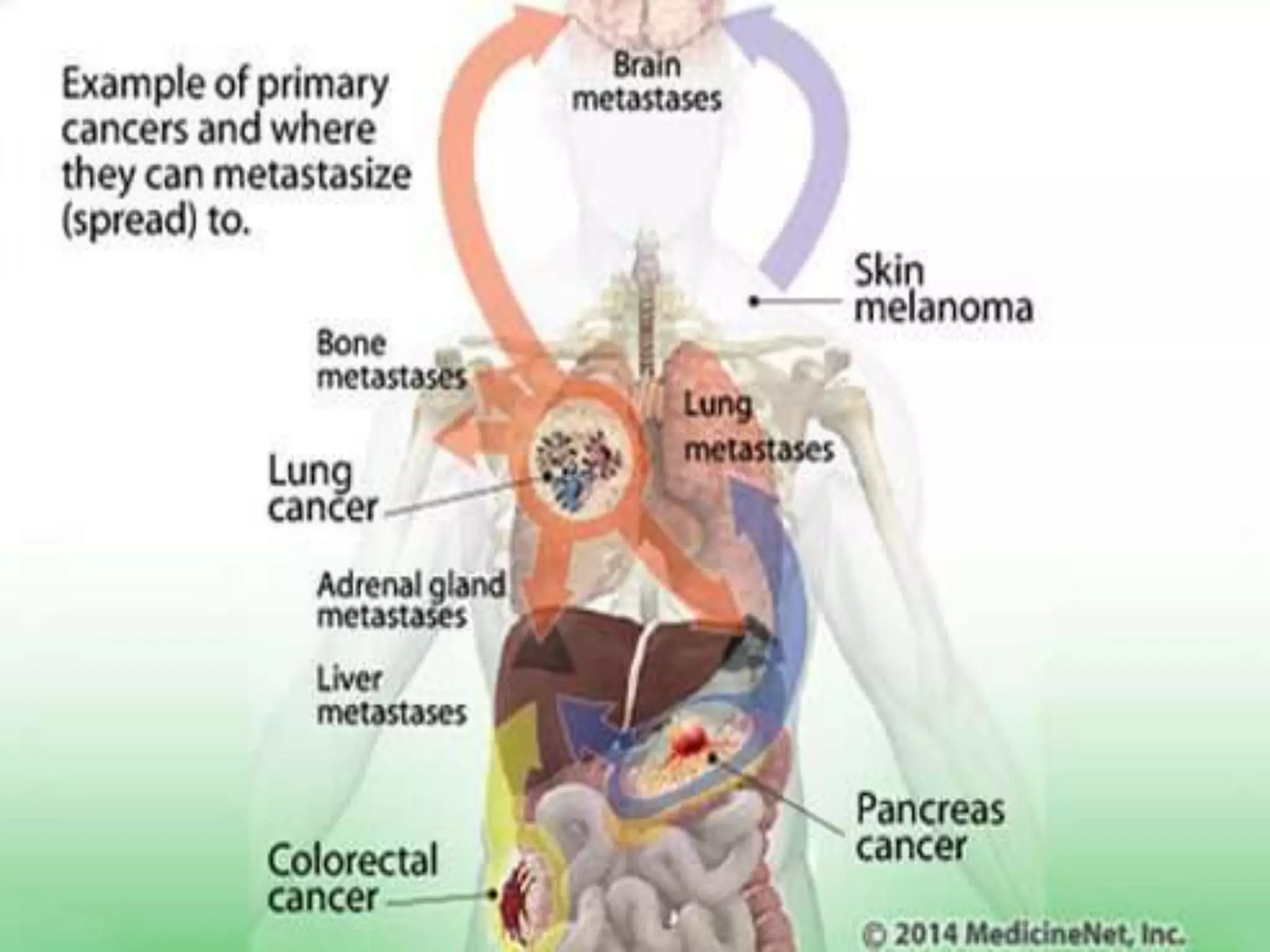
• Primary and secondary cancer:
The place where a cancer starts in
the body is called primary cancer.
These are spread to other parts of
the body.
These can form other tumours are
known as secondary cancers.
SPREAD TO OTHER AREAS OF BODY:
• It can spread to other parts of the body through
the blood stream (or) lymphatic system.
• In order to spread some cells from the primary
cancer must break away and travel to another
part of the body and start growing there.
• Some are go into blood vessels – capillaries.
SPREAD THROUGH THE BLOOD CIRCULATION:
• When cancer cell go into the small blood vessels
and get into the blood stream . They are called
circulation tumour cells.
• These can stuck somewhere in a very small
blood vessel such as capillary.
• Move through the wall of capillary and into the
tissue of the organ.
• They can multiply to form a new tumors.
SPREAD THROUGH THE LYMPHATIC SYSTEM:
• The lymphatic system is a network of tubes and
glands in the body that filters body fluid and
fights infection.
• Cancer cells go into lymph vessels and travel
into nearby lymph glands and grow to form
tumours in lymph nodes.
PROPERTIES OF CANCER CELLS:
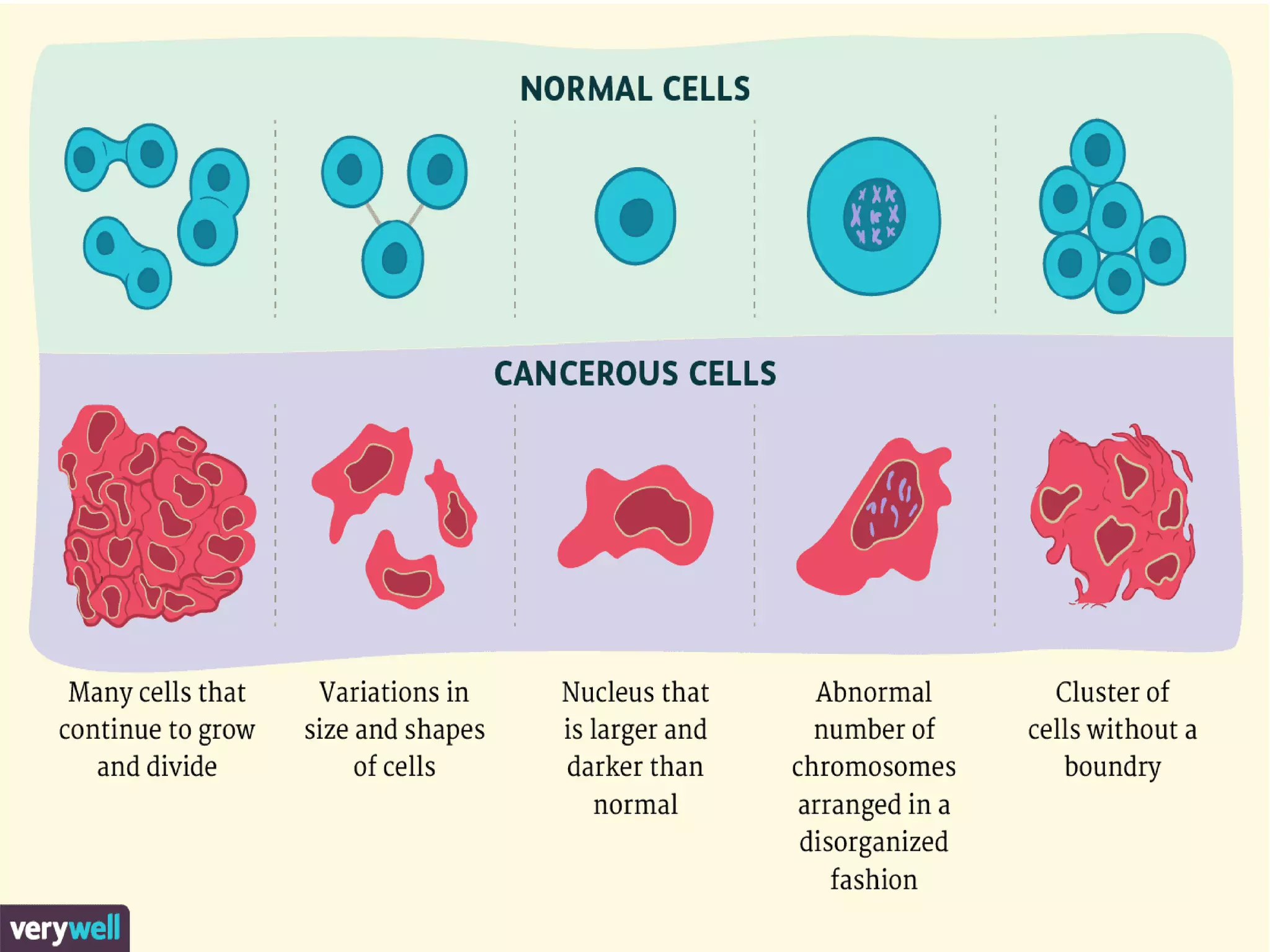
• It shows uncontrolled mitotic divisions.
• Due to uncontrolled growth – tumor is formed.
• They are less adhesive than normal cells.
• They exhibits number of alterations.
• Lack differentiation.
• They loss ability to communicate with other
cells.
• They lose sensitivity.
• They lose adhesion molecules.
• It is an genetic disease,
Inherited cancer
Sporadic cancer
• It can involves changes in gene expression.
• Lack of contact inhibition.
• Loss of limitations on the number of cell division.
• Ability to grow in culture.
• Angiogenesis.
Cancer - Types ,spread and properties

Cancer - Types ,spread and properties

  • 1.
  • 2.
    INTRODUCTION • Cancer isthe uncontrolled growth of abnormal cells anywhere in a body – cancer cell. • It is also called malignancy. • Causative agents – chemical , toxic compound exposures ,ionizing radiation , some pathogens. • Most cancer form tumors ,but not all tumors are cancerous.
  • 3.
    CANCER SYMPTOMS: • Dependson the types • General symptoms are, Fatigue Weight loss Pain Skin changes Unusual bleeding Persistent cough Fever
  • 4.
    TREATMENT: • Chemotherapy, • Radiation •Surgery General term: Benign – non cancerous tumor Malignant – cancerous tumor
  • 5.
  • 6.
    TYPES: • National cancerInstitute gives the common types: Bladder Lung Breast Melanoma Endometrial Kidney cancer Leukemia Lymphoma Pancreatic Prostate Thyroid Colon & rectal
  • 8.
    THE MOST COMMONCANCERS IN MEN , WOMEN AND CHILDREN: • Men - prostate , lung , colorectal • Women - Breast , lung , colorectal • Children - Leukemia , brain tumors , lymphoma
  • 9.
    CARCINOMA: • Begins inskin ( or ) in tissues. • That line the internal organs – skin , lung , colon , pancreatic , etc… • Subtypes , Adenocarcinoma Basal cell carcinoma Squamous cell carcinoma Transitional cell carcinoma
  • 10.
    SARCOMA: • Begins inbone (or) cartilage (or) other connective tissue. Two types: Bone sarcomas Soft tissue sarcomas
  • 11.
    LEUKEMIA: • Begins inblood forming tissue. • Causes large numbers of abnormal blood cells and enters the blood. • Ages – 0-5,14-18,19-40,60+ • Sub type: Lymphoblastic leukemia T – cell leukemia
  • 12.
    LYMPHOMA & MYELOMA: •Starts from white blood cells. • Affects lymph nodes of specific sites, Stomach Brain Intestine • Two types: B cell lymphocytes T cell lymphocytes
  • 13.
    MYELOMA: • Begins inplasma cells. • Type of blood cancer. • Plasma cells are capable of producing various antibody. • It can damage the bones , kidney , red blood cell count.
  • 14.
    CENTRAL NERVOUS SYSTEMCANCERS: • Starts with brain tissue and spinal card. • The brain controls the body by sending electrical messages along nerve fibers. • Brain and spinal card forms the central nervous system.
  • 18.
    SPREAD OF CANCER: •Primary and secondary cancer: The place where a cancer starts in the body is called primary cancer. These are spread to other parts of the body. These can form other tumours are known as secondary cancers.
  • 20.
    SPREAD TO OTHERAREAS OF BODY: • It can spread to other parts of the body through the blood stream (or) lymphatic system. • In order to spread some cells from the primary cancer must break away and travel to another part of the body and start growing there. • Some are go into blood vessels – capillaries.
  • 21.
    SPREAD THROUGH THEBLOOD CIRCULATION: • When cancer cell go into the small blood vessels and get into the blood stream . They are called circulation tumour cells. • These can stuck somewhere in a very small blood vessel such as capillary. • Move through the wall of capillary and into the tissue of the organ.
  • 22.
    • They canmultiply to form a new tumors.
  • 23.
    SPREAD THROUGH THELYMPHATIC SYSTEM: • The lymphatic system is a network of tubes and glands in the body that filters body fluid and fights infection. • Cancer cells go into lymph vessels and travel into nearby lymph glands and grow to form tumours in lymph nodes.
  • 24.
    PROPERTIES OF CANCERCELLS: • It shows uncontrolled mitotic divisions. • Due to uncontrolled growth – tumor is formed. • They are less adhesive than normal cells. • They exhibits number of alterations. • Lack differentiation. • They loss ability to communicate with other cells.
  • 25.
    • They losesensitivity. • They lose adhesion molecules. • It is an genetic disease, Inherited cancer Sporadic cancer
  • 26.
    • It caninvolves changes in gene expression. • Lack of contact inhibition. • Loss of limitations on the number of cell division. • Ability to grow in culture. • Angiogenesis.