CANCER
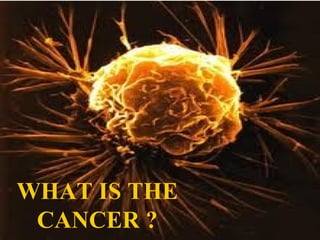
WHAT IS THE CANCER ?
Canser  is disease characterized by cells that grow and divide without respect to normol control invade and destroy adjacent tissues can spread other part of the body
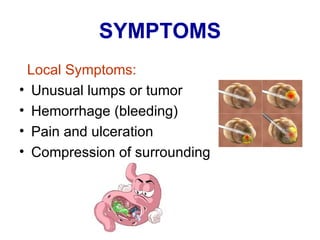
SYMPTOMS Local Symptoms: Unusual lumps or tumor Hemorrhage (bleeding) Pain and ulceration Compression of surrounding
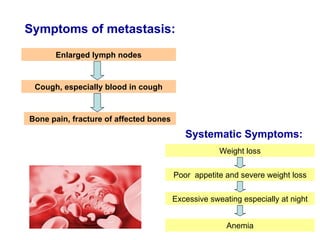
Symptoms of metastasis: Enlarged lymph nodes Cough, especially blood in cough Bone pain, fracture of affected bones Systematic Symptoms: Weight loss Poor  appetite and severe weight loss Excessive sweating especially at night Anemia
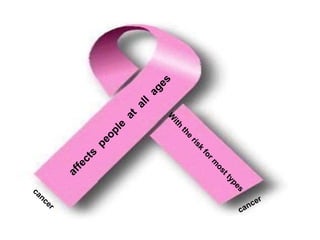
affects  people  at  all  ages With the risk for most types cancer cancer
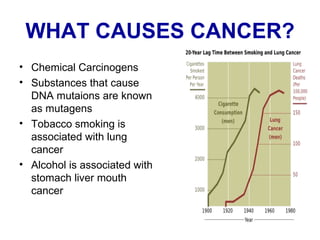
WHAT CAUSES CANCER? Chemical Carcinogens Substances that cause DNA mutaions are known as mutagens Tobacco smoking is associated with lung cancer Alcohol is associated with stomach liver mouth cancer
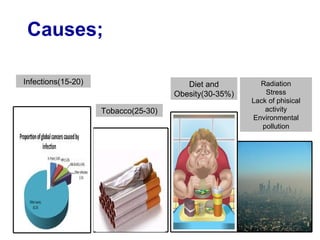
Causes; Tobacco(25-30) Diet and Obesity(30-35%) Infections(15-20) Radiation Stress Lack of phisical activity Environmental   pollution
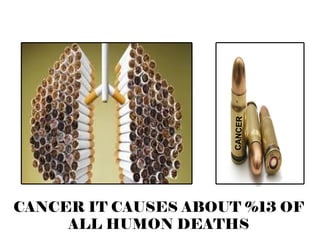
CANCER IT CAUSES ABOUT %13 OF ALL HUMON DEATHS CANCER
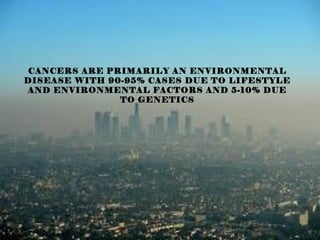
CANCERS ARE PRIMARILY AN ENVIRONMENTAL DISEASE WITH 90-95% CASES DUE TO LIFESTYLE AND ENVIRONMENTAL FACTORS AND 5-10% DUE TO GENETICS
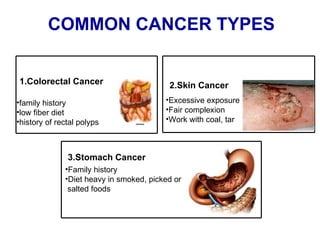
COMMON CANCER TYPES 1.Colorectal Cancer family history  low fiber diet history of rectal polyps 2.Skin Cancer Excessive exposure Fair complexion Work with coal, tar 3.Stomach Cancer Family history Diet heavy in smoked, picked or salted foods
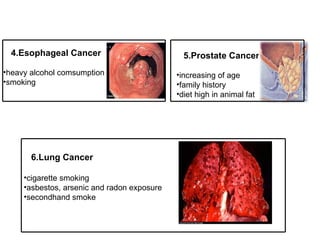
4.Esophageal Cancer heavy alcohol comsumption smoking 5.Prostate Cancer increasing of age family history diet high in animal fat 6.Lung Cancer cigarette smoking asbestos, arsenic and radon exposure secondhand smoke
PREVENTION AND DEFECTION MEASURES 1.Promotion Cancer Awareness C hange in bowel of cancer A ny sore that does not heals U nusual bleeding or discgarge  T hickening or lump in breast   I ndigestion O bvious change in wart mole N agging cough or hoarseness
2.Promoting risk factors awareness 3.Promoting healty behaviors 4.Limitig alcohol consumption 5.Hepa B virusinfant vaccination 6.Changing risk behaviors 7.Teaching skills for early detection programs
Surgery Chemotherapy Radiation Therapy Clinical Trials Biologic andTargeted Therapy
THANKS… Nermin ŞİMŞEK 19472842940

Cancer

  • 1.
  • 2.
    WHAT IS THECANCER ?
  • 3.
    Canser isdisease characterized by cells that grow and divide without respect to normol control invade and destroy adjacent tissues can spread other part of the body
  • 4.
    SYMPTOMS Local Symptoms:Unusual lumps or tumor Hemorrhage (bleeding) Pain and ulceration Compression of surrounding
  • 5.
    Symptoms of metastasis:Enlarged lymph nodes Cough, especially blood in cough Bone pain, fracture of affected bones Systematic Symptoms: Weight loss Poor appetite and severe weight loss Excessive sweating especially at night Anemia
  • 6.
    affects people at all ages With the risk for most types cancer cancer
  • 7.
    WHAT CAUSES CANCER?Chemical Carcinogens Substances that cause DNA mutaions are known as mutagens Tobacco smoking is associated with lung cancer Alcohol is associated with stomach liver mouth cancer
  • 8.
    Causes; Tobacco(25-30) Dietand Obesity(30-35%) Infections(15-20) Radiation Stress Lack of phisical activity Environmental pollution
  • 9.
    CANCER IT CAUSESABOUT %13 OF ALL HUMON DEATHS CANCER
  • 10.
    CANCERS ARE PRIMARILYAN ENVIRONMENTAL DISEASE WITH 90-95% CASES DUE TO LIFESTYLE AND ENVIRONMENTAL FACTORS AND 5-10% DUE TO GENETICS
  • 11.
    COMMON CANCER TYPES1.Colorectal Cancer family history low fiber diet history of rectal polyps 2.Skin Cancer Excessive exposure Fair complexion Work with coal, tar 3.Stomach Cancer Family history Diet heavy in smoked, picked or salted foods
  • 12.
    4.Esophageal Cancer heavyalcohol comsumption smoking 5.Prostate Cancer increasing of age family history diet high in animal fat 6.Lung Cancer cigarette smoking asbestos, arsenic and radon exposure secondhand smoke
  • 13.
    PREVENTION AND DEFECTIONMEASURES 1.Promotion Cancer Awareness C hange in bowel of cancer A ny sore that does not heals U nusual bleeding or discgarge T hickening or lump in breast I ndigestion O bvious change in wart mole N agging cough or hoarseness
  • 14.
    2.Promoting risk factorsawareness 3.Promoting healty behaviors 4.Limitig alcohol consumption 5.Hepa B virusinfant vaccination 6.Changing risk behaviors 7.Teaching skills for early detection programs
  • 15.
    Surgery Chemotherapy RadiationTherapy Clinical Trials Biologic andTargeted Therapy
  • 16.