Presented by Karthi.M
M.Sc Project Student
Cancer Biology Lab
Dept. Of Biiochemistry
Introduction
› general name for a group of more than 100 diseases
› abnormal cells grow out of control
› Untreated cancers can cause serious illness and death.
What Is Cancer?
› trillions of living cells
› Normal body cells grow, divide to make new cells, and die
in an orderly way
› During the early years of a person’s life, normal cells divide
faster to allow the person to grow.
› After the person becomes an adult, most cells divide only
to replace worn-out or dying cells or to repair injuries.
How normal cells act
› start to grow out of control
› Cancer cell growth is different from normal cell growth
› Instead of dying, cancer cells continue to grow and form
new, abnormal cells.
› Cancer cells can also invade (grow into) other tissues,
something that normal cells can’t do.
› Growing out of control and invading other tissue
How cancer starts
› changes to their DNA (deoxyribonucleic acid)
› DNA is in every cell and it directs all its actions
› In a normal cell, when DNA is damaged the cell either
repairs the damage or dies.
› In cancer cells, the damaged DNA is not repaired, but the
cell doesn’t die like it should.
› Instead, the cell goes on making new cells that the body
doesn’t need. These new cells all have the same damaged
DNA as the first cell does.
› People can inherit abnormal or faulty DNA
› This happen while a normal cell is reproducing or by something in
the environment.
› DNA damage may caused by smthng obvious like cigarette smoking
or sun exposure.
› But it’s rare to know exactly what cause any one person’s cancer.
› Most cases, the cancer cells form a tumour, over time, the tumours
can invade nearby n.tissue, crowd it out or push it aside.
› Like leukemia  rarely form tumours.
› Instead these c.cells involve the blood and blood-forming organs and
circulate through other tissues where they grow.
› C.cells often travel to other parts of the body where they
can grow and form new tumours that crowd out normal
tissue.
› It happens when c.cells get into the body’s b.stream or
lymph vessels .
› The process of cancer spreading is called metastasis.
› No matter where a cancer may spread, always named
based on the place where it started. For instance, colon
cancer that spread to the liver  metastatic colon cancer
 not liver cancer
How cancer spreads
› Different types of cancer can behave very differently
› For instance, lung cancer and skin cancer are very
different diseases.
› They grow at different rates and respond to different
treatments.
How cancers differ
› A tumour is an abnormal lump or collection of cells
› but not all tumours are cancer
› tumours that aren’t cancer are called benign.
› Benign tumors can cause problems -grow very large and
press on healthy organs and tissues
› can’t grow into (invade) other tissues.
› can’t spread to other parts of the body (metastasize).
› These tumors are seldom life threatening
Tumours that are not cancer
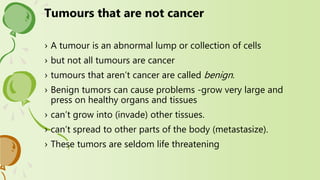
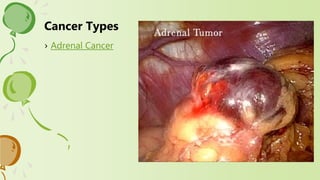
› Adrenal Cancer
Cancer Types
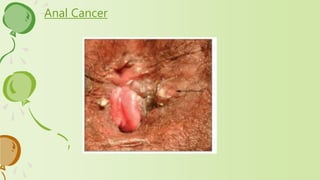
Anal Cancer
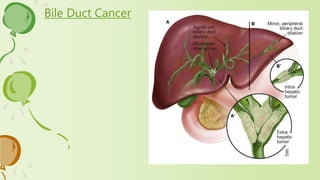
Bile Duct Cancer
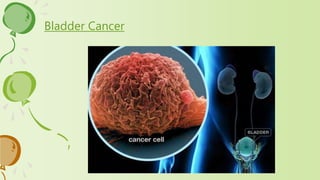
Bladder Cancer
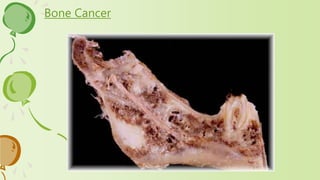
Bone Cancer
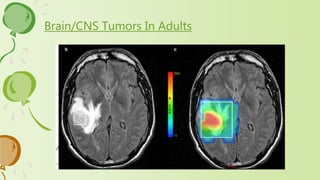
Brain/CNS Tumors In Adults
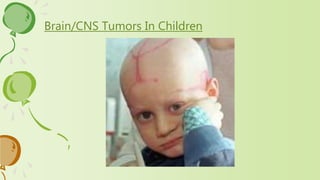
Brain/CNS Tumors In Children
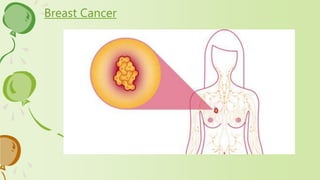
Breast Cancer
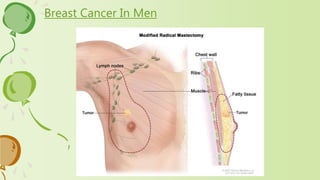
Breast Cancer In Men
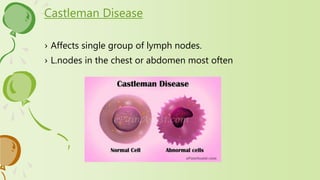
› Affects single group of lymph nodes.
› L.nodes in the chest or abdomen most often
Castleman Disease
› Cancer in Adolescents
› Cancer in Children
› Cancer in Young Adults
› Cancer of Unknown Primary
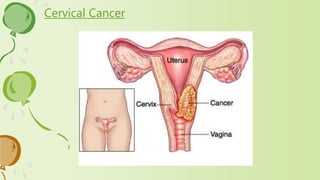
Cervical Cancer
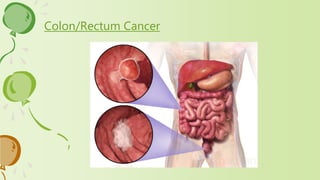
Colon/Rectum Cancer
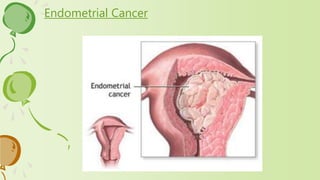
Endometrial Cancer
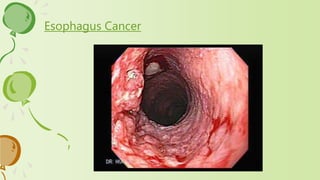
Esophagus Cancer
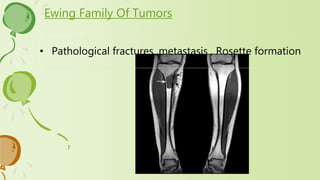
Ewing Family Of Tumors
• Pathological fractures ,metastasis , Rosette formation
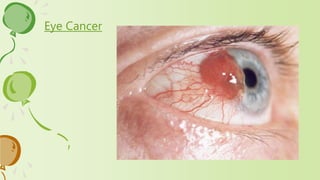
Eye Cancer
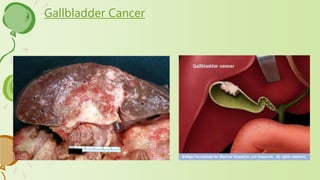
Gallbladder Cancer
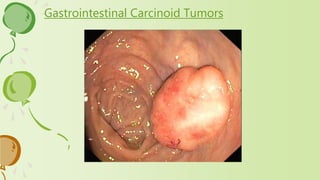
Gastrointestinal Carcinoid Tumors
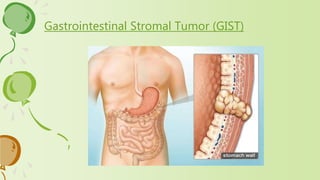
Gastrointestinal Stromal Tumor (GIST)
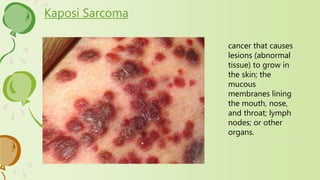
Kaposi Sarcoma
cancer that causes
lesions (abnormal
tissue) to grow in
the skin; the
mucous
membranes lining
the mouth, nose,
and throat; lymph
nodes; or other
organs.
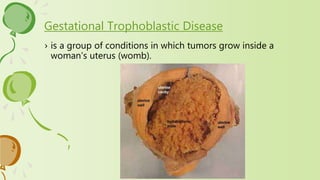
› is a group of conditions in which tumors grow inside a
woman's uterus (womb).
Gestational Trophoblastic Disease
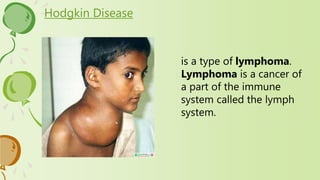
Hodgkin Disease
is a type of lymphoma.
Lymphoma is a cancer of
a part of the immune
system called the lymph
system.
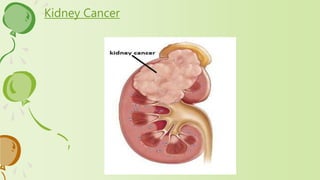
Kidney Cancer
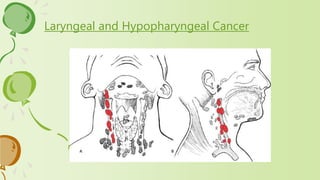
Laryngeal and Hypopharyngeal Cancer
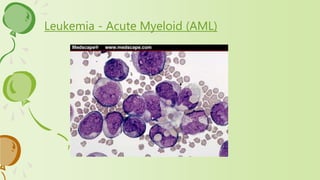
Leukemia - Acute Myeloid (AML)
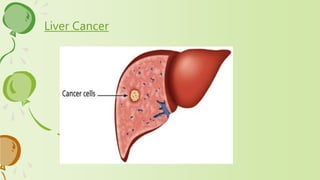
Liver Cancer
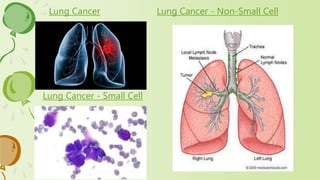
Lung Cancer Lung Cancer - Non-Small Cell
Lung Cancer - Small Cell
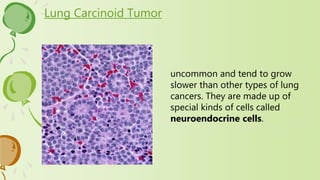
Lung Carcinoid Tumor
uncommon and tend to grow
slower than other types of lung
cancers. They are made up of
special kinds of cells called
neuroendocrine cells.
› Leukemia - Acute Lymphocytic (ALL) in Adults
› Leukemia - Chronic Lymphocytic (CLL)
› Leukemia - Chronic Myeloid (CML)
› Leukemia - Chronic Myelomonocytic (CMML)
› Leukemia in Children
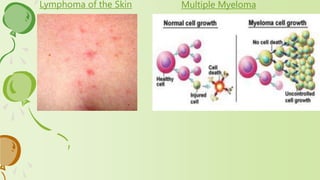
Lymphoma of the Skin Multiple Myeloma
› Lymphoma
› Malignant Mesothelioma
› Myelodysplastic Syndrome
› Nasal Cavity and Paranasal Sinus Cancer
› Nasopharyngeal Cancer
› Neuroblastoma
› Non-Hodgkin Lymphoma
› Non-Hodgkin Lymphoma In Children
› Oral Cavity and Oropharyngeal Cancer
› Osteosarcoma
› Ovarian Cancer
› Pancreatic Cancer
› Penile Cancer
› Pituitary Tumors
› Prostate Cancer
› Retinoblastoma
› Rhabdomyosarcoma
› Salivary Gland Cancer
› Sarcoma - Adult Soft Tissue Cancer
› Skin Cancer
› Skin Cancer - Basal and Squamous Cell
› Skin Cancer - Melanoma
› Skin Cancer - Merkel Cell
› Small Intestine Cancer
› Stomach Cancer
› Testicular Cancer
› Thymus Cancer
› Thyroid Cancer
› Uterine Sarcoma
› Vaginal Cancer
› Vulvar Cancer
› Waldenstrom Macroglobulinemia
› Wilms Tumor
› www.cancer.org.
› American Cancer society
Reference
Cancer

Cancer

  • 1.
    Presented by Karthi.M M.ScProject Student Cancer Biology Lab Dept. Of Biiochemistry Introduction
  • 2.
    › general namefor a group of more than 100 diseases › abnormal cells grow out of control › Untreated cancers can cause serious illness and death. What Is Cancer?
  • 3.
    › trillions ofliving cells › Normal body cells grow, divide to make new cells, and die in an orderly way › During the early years of a person’s life, normal cells divide faster to allow the person to grow. › After the person becomes an adult, most cells divide only to replace worn-out or dying cells or to repair injuries. How normal cells act
  • 4.
    › start togrow out of control › Cancer cell growth is different from normal cell growth › Instead of dying, cancer cells continue to grow and form new, abnormal cells. › Cancer cells can also invade (grow into) other tissues, something that normal cells can’t do. › Growing out of control and invading other tissue How cancer starts
  • 5.
    › changes totheir DNA (deoxyribonucleic acid) › DNA is in every cell and it directs all its actions › In a normal cell, when DNA is damaged the cell either repairs the damage or dies. › In cancer cells, the damaged DNA is not repaired, but the cell doesn’t die like it should. › Instead, the cell goes on making new cells that the body doesn’t need. These new cells all have the same damaged DNA as the first cell does.
  • 6.
    › People caninherit abnormal or faulty DNA › This happen while a normal cell is reproducing or by something in the environment. › DNA damage may caused by smthng obvious like cigarette smoking or sun exposure. › But it’s rare to know exactly what cause any one person’s cancer. › Most cases, the cancer cells form a tumour, over time, the tumours can invade nearby n.tissue, crowd it out or push it aside. › Like leukemia  rarely form tumours. › Instead these c.cells involve the blood and blood-forming organs and circulate through other tissues where they grow.
  • 7.
    › C.cells oftentravel to other parts of the body where they can grow and form new tumours that crowd out normal tissue. › It happens when c.cells get into the body’s b.stream or lymph vessels . › The process of cancer spreading is called metastasis. › No matter where a cancer may spread, always named based on the place where it started. For instance, colon cancer that spread to the liver  metastatic colon cancer  not liver cancer How cancer spreads
  • 8.
    › Different typesof cancer can behave very differently › For instance, lung cancer and skin cancer are very different diseases. › They grow at different rates and respond to different treatments. How cancers differ
  • 9.
    › A tumouris an abnormal lump or collection of cells › but not all tumours are cancer › tumours that aren’t cancer are called benign. › Benign tumors can cause problems -grow very large and press on healthy organs and tissues › can’t grow into (invade) other tissues. › can’t spread to other parts of the body (metastasize). › These tumors are seldom life threatening Tumours that are not cancer
  • 10.
  • 11.
  • 12.
  • 13.
  • 14.
  • 15.
  • 16.
  • 17.
  • 18.
  • 19.
    › Affects singlegroup of lymph nodes. › L.nodes in the chest or abdomen most often Castleman Disease
  • 20.
    › Cancer inAdolescents › Cancer in Children › Cancer in Young Adults › Cancer of Unknown Primary
  • 21.
  • 22.
  • 23.
  • 24.
  • 25.
    Ewing Family OfTumors • Pathological fractures ,metastasis , Rosette formation
  • 26.
  • 27.
  • 28.
  • 29.
  • 30.
    Kaposi Sarcoma cancer thatcauses lesions (abnormal tissue) to grow in the skin; the mucous membranes lining the mouth, nose, and throat; lymph nodes; or other organs.
  • 31.
    › is agroup of conditions in which tumors grow inside a woman's uterus (womb). Gestational Trophoblastic Disease
  • 32.
    Hodgkin Disease is atype of lymphoma. Lymphoma is a cancer of a part of the immune system called the lymph system.
  • 33.
  • 34.
  • 35.
    Leukemia - AcuteMyeloid (AML)
  • 36.
  • 37.
    Lung Cancer LungCancer - Non-Small Cell Lung Cancer - Small Cell
  • 38.
    Lung Carcinoid Tumor uncommonand tend to grow slower than other types of lung cancers. They are made up of special kinds of cells called neuroendocrine cells.
  • 39.
    › Leukemia -Acute Lymphocytic (ALL) in Adults › Leukemia - Chronic Lymphocytic (CLL) › Leukemia - Chronic Myeloid (CML) › Leukemia - Chronic Myelomonocytic (CMML) › Leukemia in Children
  • 40.
    Lymphoma of theSkin Multiple Myeloma
  • 41.
    › Lymphoma › MalignantMesothelioma › Myelodysplastic Syndrome › Nasal Cavity and Paranasal Sinus Cancer › Nasopharyngeal Cancer › Neuroblastoma › Non-Hodgkin Lymphoma › Non-Hodgkin Lymphoma In Children › Oral Cavity and Oropharyngeal Cancer
  • 42.
    › Osteosarcoma › OvarianCancer › Pancreatic Cancer › Penile Cancer › Pituitary Tumors › Prostate Cancer › Retinoblastoma › Rhabdomyosarcoma › Salivary Gland Cancer › Sarcoma - Adult Soft Tissue Cancer › Skin Cancer
  • 43.
    › Skin Cancer- Basal and Squamous Cell › Skin Cancer - Melanoma › Skin Cancer - Merkel Cell › Small Intestine Cancer › Stomach Cancer › Testicular Cancer › Thymus Cancer › Thyroid Cancer › Uterine Sarcoma › Vaginal Cancer › Vulvar Cancer
  • 44.
  • 45.
    › www.cancer.org. › AmericanCancer society Reference