AndrewGoldman Cinematography:CameraShotTypes
High Angle shot: Shot
looking down at a subject.
Can be used to make them
seem vulnerable and not in
control of the situation.
Out of depth
Low angle shot: Shot
looking up at a subject.
Makes the subjectseem
important, powerfuland
draws their attention to
the subject
Two shot: Featuring two
subjects in a single shot.
Can be used to suggestthe
relationship between the
subjects featured
Point of View shot: A shot
following the eye line focus
perspectiveof a person.
What they see is whatyou
see
AndrewGoldman Cinematography:CameraShotTypes
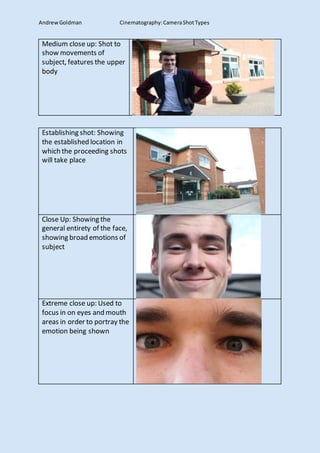
Medium close up: Shot to
show movements of
subject, features the upper
body
Establishing shot: Showing
the established location in
which the proceeding shots
will take place
Close Up: Showing the
general entirety of the face,
showing broad emotions of
subject
Extreme close up: Used to
focus in on eyes and mouth
areas in order to portray the
emotion being shown
AndrewGoldman Cinematography:CameraShotTypes
Long shot: Showing virtually
the wholebody of subject(s)
featured
Over the shoulder shot:
Showing a subjects shoulder
overlooking someonein the
background. Often used
during conversation to make
audience feel like they’re
listening in. The focus is
always on the subjectin the
background

Camera shot types

  • 1.
    AndrewGoldman Cinematography:CameraShotTypes High Angleshot: Shot looking down at a subject. Can be used to make them seem vulnerable and not in control of the situation. Out of depth Low angle shot: Shot looking up at a subject. Makes the subjectseem important, powerfuland draws their attention to the subject Two shot: Featuring two subjects in a single shot. Can be used to suggestthe relationship between the subjects featured Point of View shot: A shot following the eye line focus perspectiveof a person. What they see is whatyou see
  • 2.
    AndrewGoldman Cinematography:CameraShotTypes Medium closeup: Shot to show movements of subject, features the upper body Establishing shot: Showing the established location in which the proceeding shots will take place Close Up: Showing the general entirety of the face, showing broad emotions of subject Extreme close up: Used to focus in on eyes and mouth areas in order to portray the emotion being shown
  • 3.
    AndrewGoldman Cinematography:CameraShotTypes Long shot:Showing virtually the wholebody of subject(s) featured Over the shoulder shot: Showing a subjects shoulder overlooking someonein the background. Often used during conversation to make audience feel like they’re listening in. The focus is always on the subjectin the background