Ellie Pike 
Film shots 
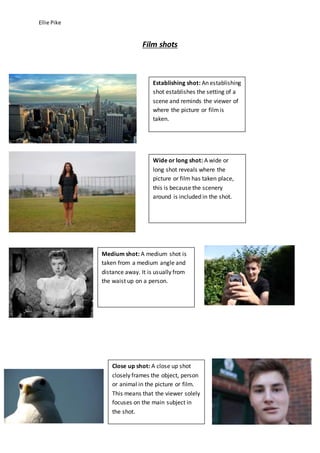
Establishing shot: An establishing 
shot establishes the setting of a 
scene and reminds the viewer of 
where the picture or film is 
taken. 
Wide or long shot: A wide or 
long shot reveals where the 
picture or film has taken place, 
this is because the scenery 
around is included in the shot. 
Medium shot: A medium shot is 
taken from a medium angle and 
distance away. It is usually from 
the waist up on a person. 
Close up shot: A close up shot 
closely frames the object, person 
or animal in the picture or film. 
This means that the viewer solely 
focuses on the main subject in 
the shot.
Ellie Pike 
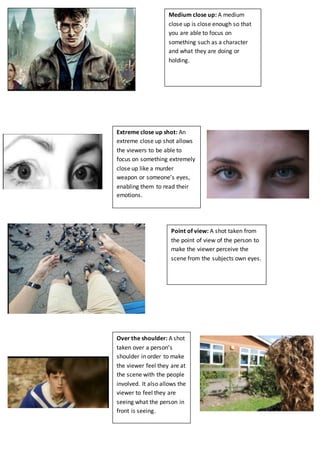
Medium close up: A medium 
close up is close enough so that 
you are able to focus on 
something such as a character 
and what they are doing or 
holding. 
Extreme close up shot: An 
extreme close up shot allows 
the viewers to be able to 
focus on something extremely 
close up like a murder 
weapon or someone’s eyes, 
enabling them to read their 
emotions. 
Point of view: A shot taken from 
the point of view of the person to 
make the viewer perceive the 
scene from the subjects own eyes. 
Over the shoulder: A shot 
taken over a person’s 
shoulder in order to make 
the viewer feel they are at 
the scene with the people 
involved. It also allows the 
viewer to feel they are 
seeing what the person in 
front is seeing.
Ellie Pike 
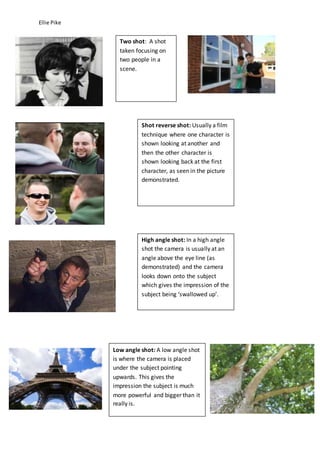
Two shot: A shot 
taken focusing on 
two people in a 
scene. 
Shot reverse shot: Usually a film 
technique where one character is 
shown looking at another and 
then the other character is 
shown looking back at the first 
character, as seen in the picture 
demonstrated. 
High angle shot: In a high angle 
shot the camera is usually at an 
angle above the eye line (as 
demonstrated) and the camera 
looks down onto the subject 
which gives the impression of the 
subject being ‘swallowed up’. 
Low angle shot: A low angle shot 
is where the camera is placed 
under the subject pointing 
upwards. This gives the 
impression the subject is much 
more powerful and bigger than it 
really is.
Ellie Pike

Film shots

  • 1.
    Ellie Pike Filmshots Establishing shot: An establishing shot establishes the setting of a scene and reminds the viewer of where the picture or film is taken. Wide or long shot: A wide or long shot reveals where the picture or film has taken place, this is because the scenery around is included in the shot. Medium shot: A medium shot is taken from a medium angle and distance away. It is usually from the waist up on a person. Close up shot: A close up shot closely frames the object, person or animal in the picture or film. This means that the viewer solely focuses on the main subject in the shot.
  • 2.
    Ellie Pike Mediumclose up: A medium close up is close enough so that you are able to focus on something such as a character and what they are doing or holding. Extreme close up shot: An extreme close up shot allows the viewers to be able to focus on something extremely close up like a murder weapon or someone’s eyes, enabling them to read their emotions. Point of view: A shot taken from the point of view of the person to make the viewer perceive the scene from the subjects own eyes. Over the shoulder: A shot taken over a person’s shoulder in order to make the viewer feel they are at the scene with the people involved. It also allows the viewer to feel they are seeing what the person in front is seeing.
  • 3.
    Ellie Pike Twoshot: A shot taken focusing on two people in a scene. Shot reverse shot: Usually a film technique where one character is shown looking at another and then the other character is shown looking back at the first character, as seen in the picture demonstrated. High angle shot: In a high angle shot the camera is usually at an angle above the eye line (as demonstrated) and the camera looks down onto the subject which gives the impression of the subject being ‘swallowed up’. Low angle shot: A low angle shot is where the camera is placed under the subject pointing upwards. This gives the impression the subject is much more powerful and bigger than it really is.
  • 4.