Shot Research: Shot Types
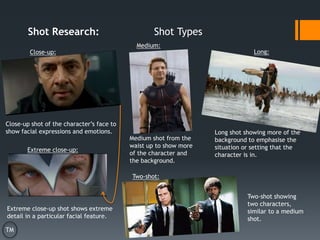
Close-up shot of the character’s face to
show facial expressions and emotions.
Close-up:
TM
Medium:
Long:
Extreme close-up:
Extreme close-up shot shows extreme
detail in a particular facial feature.
Medium shot from the
waist up to show more
of the character and
the background.
Long shot showing more of the
background to emphasise the
situation or setting that the
character is in.
Two-shot:
Two-shot showing
two characters,
similar to a medium
shot.
Shot Research: Shot Types
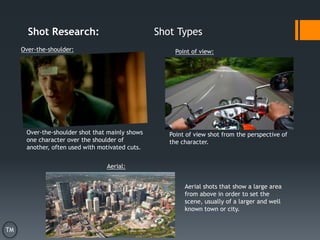
Over-the-shoulder shot that mainly shows
one character over the shoulder of
another, often used with motivated cuts.
Over-the-shoulder:
TM
Point of view:
Point of view shot from the perspective of
the character.
Aerial:
Aerial shots that show a large area
from above in order to set the
scene, usually of a larger and well
known town or city.
Shot Research: Shot Angles
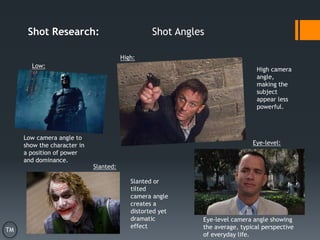
High camera
angle,
making the
subject
appear less
powerful.
High:
TM
Low:
Low camera angle to
show the character in
a position of power
and dominance.
Eye-level:
Eye-level camera angle showing
the average, typical perspective
of everyday life.
Slanted:
Slanted or
tilted
camera angle
creates a
distorted yet
dramatic
effect
Shot Research: Shot Movement
TM
Zoom:
Track:
Tilt:
Pan:
A zoom is the magnification of a
camera shot, either making things
seem closer or further away, by
adjusting the focus of the camera
lens.
A tracking shot is a camera movement
that follows the transition of the subject
person or object. This can be done using
tracks, in contrast to a pan, which is
taken from a fixed tripod.
A pan is the horizontal movement of
a camera, usually on a tripod, which
tracks the subject person or object.
This shot is taken from one fixed
position, unlike a tracking shot.
A tilt shot is the camera rotating
diagonally. This shot can be done
handheld or with a tripod.

Shot research

  • 1.
    Shot Research: ShotTypes Close-up shot of the character’s face to show facial expressions and emotions. Close-up: TM Medium: Long: Extreme close-up: Extreme close-up shot shows extreme detail in a particular facial feature. Medium shot from the waist up to show more of the character and the background. Long shot showing more of the background to emphasise the situation or setting that the character is in. Two-shot: Two-shot showing two characters, similar to a medium shot.
  • 2.
    Shot Research: ShotTypes Over-the-shoulder shot that mainly shows one character over the shoulder of another, often used with motivated cuts. Over-the-shoulder: TM Point of view: Point of view shot from the perspective of the character. Aerial: Aerial shots that show a large area from above in order to set the scene, usually of a larger and well known town or city.
  • 3.
    Shot Research: ShotAngles High camera angle, making the subject appear less powerful. High: TM Low: Low camera angle to show the character in a position of power and dominance. Eye-level: Eye-level camera angle showing the average, typical perspective of everyday life. Slanted: Slanted or tilted camera angle creates a distorted yet dramatic effect
  • 4.
    Shot Research: ShotMovement TM Zoom: Track: Tilt: Pan: A zoom is the magnification of a camera shot, either making things seem closer or further away, by adjusting the focus of the camera lens. A tracking shot is a camera movement that follows the transition of the subject person or object. This can be done using tracks, in contrast to a pan, which is taken from a fixed tripod. A pan is the horizontal movement of a camera, usually on a tripod, which tracks the subject person or object. This shot is taken from one fixed position, unlike a tracking shot. A tilt shot is the camera rotating diagonally. This shot can be done handheld or with a tripod.