Downloaded 12 times
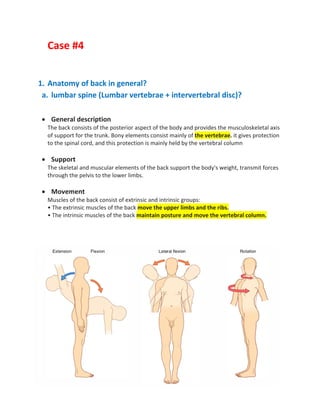
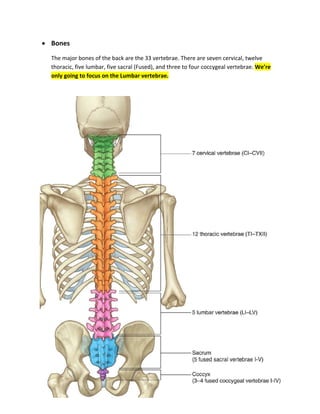
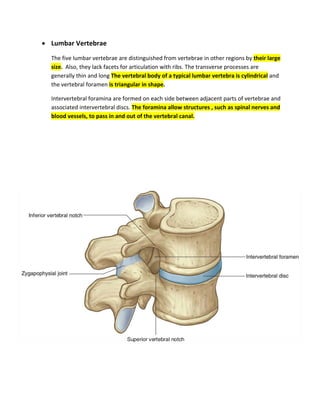
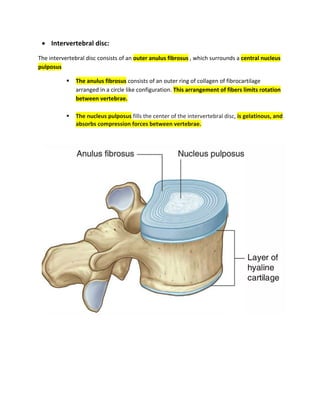
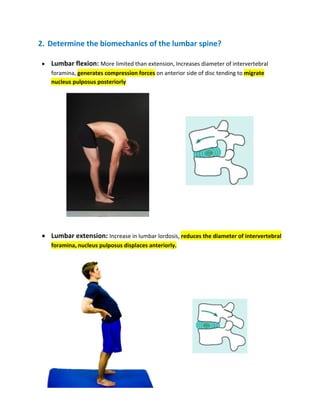
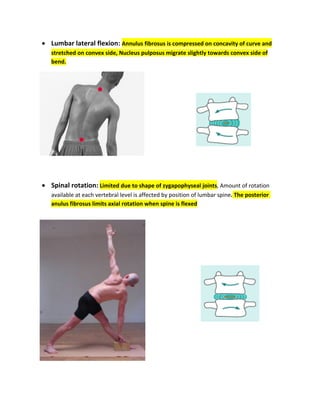
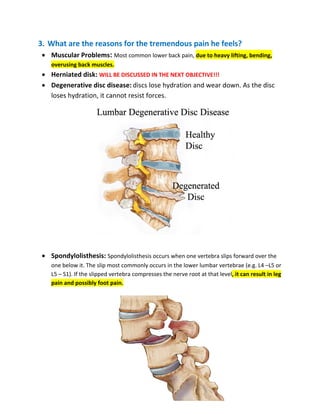
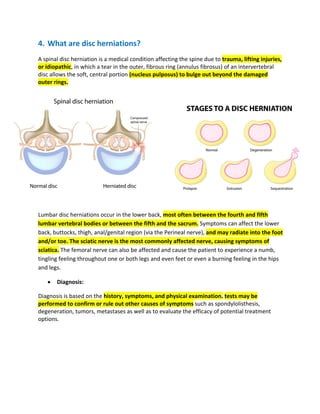
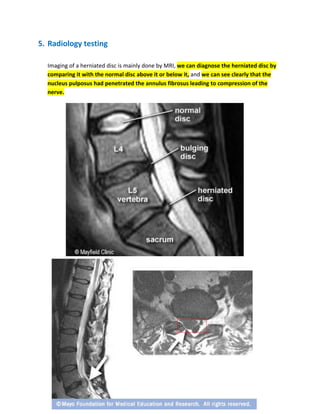
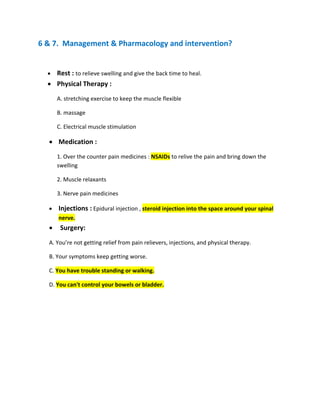
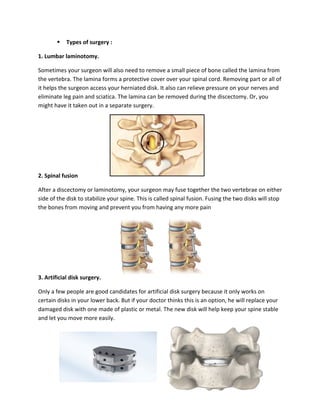

The lumbar spine consists of five lumbar vertebrae separated by intervertebral discs. A disc herniation occurs when the nucleus pulposus of an intervertebral disc bulges out through a tear in the annulus fibrosus. Common causes of lower back pain include muscular problems, herniated discs, degenerative disc disease, and spondylolisthesis. A herniated disc is typically diagnosed through MRI imaging and can be managed initially through rest, physical therapy, and pain medications. Epidural injections or surgery may be required if conservative treatments do not provide relief from nerve compression and pain. Surgical options include discectomy, laminotomy, spinal fusion, and artificial disc replacement.


![[3] The Back and ANS.pptx](https://cdn.slidesharecdn.com/ss_thumbnails/3thebackandans-230325182407-aaf75a6c-thumbnail.jpg?width=640&height=640&fit=bounds)


