
JAYOTI VIDYAPEETH
WOMEN”S UNIVERSITY
JAIPUR(RAJ).
PRESENTED BY:-
JV’N KEERTI MAHESHWARI
B.PHARM(FINAL YEAR)
CAFFEINE & ITS ANALOGUE
ON THE BRAIN
INTRODUCTION
Caffeine is a central nervous system (CNS) stimulant of the
methyl xanthine class.
It is the world's most widely consumed psychoactive drug .
Caffeine counteracts age-related cognitive deficits in
animals.
It reversibly blocks the action of adenosine on its
receptor.
Also stimulates certain portions of the autonomic
nervous system
WHAT IS CAFFEINE?
Caffeine is a bitter, white crystalline alkaloid and is
chemically related to the adenine and guanine bases of (DNA)
and (RNA).
Source of caffeine is the coffee bean, a misnomer for the
seed of Coffea plants.
Beverages containing caffeine are ingested to relieve or
prevent drowsiness and to improve performance.
Caffeine-containing drinks, such as coffee, tea, and cola
CAFFEINE AND ITS
ANALOGUE
The amount of caffeine needed to produce these effects varies
from person to person, depending on body size and degree of
tolerance
Effects begin approximately one hour after consumption, and a
moderate dose usually subsides in about three or four hours.[
caffeine has variable effects on learning and memory, but it
generally improves reaction time, arousal, and concentration
USES
Broncho pulmonary dysplasia in premature infants for both
prevention and treatment.
It may improve weight gain during therapy and reduce the
incidence of cerebral palsy as well as reduce language and cognitive
delay.
Orthostatic hypotension treatment
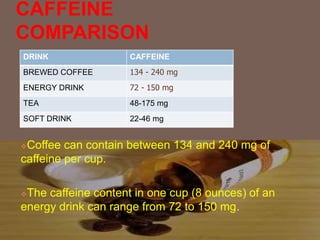
DRINK CAFFEINE
BREWED COFFEE 134 - 240 mg
ENERGY DRINK 72 - 150 mg
TEA 48-175 mg
SOFT DRINK 22-46 mg
CAFFEINE
COMPARISON
Coffee can contain between 134 and 240 mg of
caffeine per cup.
The caffeine content in one cup (8 ounces) of an
energy drink can range from 72 to 150 mg.
CAFFEINE DEFICTS ON
BRAIN
When caffeine is consumed, it antagonizes adenosine receptors;
in other words, caffeine prevents adenosine from activating the
receptor by blocking the location on the receptor where
adenosine binds to it.
As a result, caffeine temporarily prevents or relieves
drowsiness, and thus maintains or restores alertness.
HOW IT WORKS?
Absorbed in the stomach and the intestine
Stimulates brain activity
Physiologic effects:
Increase blood pressure
Increase pulse
Increase stomach acid production
Fat stores break down
Fatty acids released into
blood stream
CAFFEINE &ENZYME TARGET
Caffeine, like other xanthines, also acts as a phosphodiesterase
inhibitor.
 As a competitive nonselective phosphodiesterase inhibitor caffeine
raises intracellular cAMP, activates protein kinase A, inhibits TNF-
alpha and leukotriene synthesis, and reduceS inflammation and innate
immunity.

Caffeine also affects the cholinergic system where it inhibits the
enzyme acetylcholinesterase
OFF-TARGET EFFECTS
 Caffeine antagonizes adenosine A2A receptors in the
ventrolateral preoptic area (VLPO), thereby reducing inhibitory
GABA neurotransmission to the tuberomammillar nucleus, a
histaminergic projection nucleus that activation-dependently
promotes arousal.
 Disinhibition of the tuberomammillary nucleus is the chief
mechanism by which caffeine produces wakefulness-promoting
effects.
DETECTION IN BODY FLUIDS
Caffeine can be quantified in blood, plasma, or serum to monitor
therapy in neonates, confirm a diagnosis of poisoning, or facilitate a
medicolegal death investigation.
Plasma caffeine levels are usually in the range of 2–10 mg/L in
coffee drinkers, 12–36 mg/L in neonates receiving treatment for
apnea, and 40–400 mg/L in victims of acute overdosage.
Urinary caffeine concentration is frequently measured in
competitive sports programs, for which a level in excess of 15 mg/L
is usually considered to represent abuse
REVIEW
Caffeine stimulates the central nervous system which
makes us feel more awake and alert
Energy drinks have a high caffeine and sugar content
Herbal supplements in energy drinks are not regulated and
are not guaranteed safe
REFERENCES
Caffeine:
http://www.kidshealth.org/teen/nutrition/general/caff
eine.html
Energy Drinks and Food Bars: Power or Hype?:
http://www.kidshealth.org/teen/food_fitness/nutritio
n/energy.html
Caffeine Awareness: www.caffeineawareness.org
Caffeine & ITS effect on brain

Caffeine & ITS effect on brain

  • 1.
    JAYOTI VIDYAPEETH WOMEN”S UNIVERSITY JAIPUR(RAJ). PRESENTEDBY:- JV’N KEERTI MAHESHWARI B.PHARM(FINAL YEAR) CAFFEINE & ITS ANALOGUE ON THE BRAIN
  • 2.
    INTRODUCTION Caffeine is acentral nervous system (CNS) stimulant of the methyl xanthine class. It is the world's most widely consumed psychoactive drug . Caffeine counteracts age-related cognitive deficits in animals. It reversibly blocks the action of adenosine on its receptor. Also stimulates certain portions of the autonomic nervous system
  • 3.
    WHAT IS CAFFEINE? Caffeineis a bitter, white crystalline alkaloid and is chemically related to the adenine and guanine bases of (DNA) and (RNA). Source of caffeine is the coffee bean, a misnomer for the seed of Coffea plants. Beverages containing caffeine are ingested to relieve or prevent drowsiness and to improve performance. Caffeine-containing drinks, such as coffee, tea, and cola
  • 4.
    CAFFEINE AND ITS ANALOGUE Theamount of caffeine needed to produce these effects varies from person to person, depending on body size and degree of tolerance Effects begin approximately one hour after consumption, and a moderate dose usually subsides in about three or four hours.[ caffeine has variable effects on learning and memory, but it generally improves reaction time, arousal, and concentration
  • 5.
    USES Broncho pulmonary dysplasiain premature infants for both prevention and treatment. It may improve weight gain during therapy and reduce the incidence of cerebral palsy as well as reduce language and cognitive delay. Orthostatic hypotension treatment
  • 6.
    DRINK CAFFEINE BREWED COFFEE134 - 240 mg ENERGY DRINK 72 - 150 mg TEA 48-175 mg SOFT DRINK 22-46 mg CAFFEINE COMPARISON Coffee can contain between 134 and 240 mg of caffeine per cup. The caffeine content in one cup (8 ounces) of an energy drink can range from 72 to 150 mg.
  • 7.
    CAFFEINE DEFICTS ON BRAIN Whencaffeine is consumed, it antagonizes adenosine receptors; in other words, caffeine prevents adenosine from activating the receptor by blocking the location on the receptor where adenosine binds to it. As a result, caffeine temporarily prevents or relieves drowsiness, and thus maintains or restores alertness.
  • 8.
    HOW IT WORKS? Absorbedin the stomach and the intestine Stimulates brain activity Physiologic effects: Increase blood pressure Increase pulse Increase stomach acid production Fat stores break down Fatty acids released into blood stream
  • 9.
    CAFFEINE &ENZYME TARGET Caffeine,like other xanthines, also acts as a phosphodiesterase inhibitor.  As a competitive nonselective phosphodiesterase inhibitor caffeine raises intracellular cAMP, activates protein kinase A, inhibits TNF- alpha and leukotriene synthesis, and reduceS inflammation and innate immunity.  Caffeine also affects the cholinergic system where it inhibits the enzyme acetylcholinesterase
  • 10.
    OFF-TARGET EFFECTS  Caffeineantagonizes adenosine A2A receptors in the ventrolateral preoptic area (VLPO), thereby reducing inhibitory GABA neurotransmission to the tuberomammillar nucleus, a histaminergic projection nucleus that activation-dependently promotes arousal.  Disinhibition of the tuberomammillary nucleus is the chief mechanism by which caffeine produces wakefulness-promoting effects.
  • 11.
    DETECTION IN BODYFLUIDS Caffeine can be quantified in blood, plasma, or serum to monitor therapy in neonates, confirm a diagnosis of poisoning, or facilitate a medicolegal death investigation. Plasma caffeine levels are usually in the range of 2–10 mg/L in coffee drinkers, 12–36 mg/L in neonates receiving treatment for apnea, and 40–400 mg/L in victims of acute overdosage. Urinary caffeine concentration is frequently measured in competitive sports programs, for which a level in excess of 15 mg/L is usually considered to represent abuse
  • 12.
    REVIEW Caffeine stimulates thecentral nervous system which makes us feel more awake and alert Energy drinks have a high caffeine and sugar content Herbal supplements in energy drinks are not regulated and are not guaranteed safe
  • 13.
    REFERENCES Caffeine: http://www.kidshealth.org/teen/nutrition/general/caff eine.html Energy Drinks andFood Bars: Power or Hype?: http://www.kidshealth.org/teen/food_fitness/nutritio n/energy.html Caffeine Awareness: www.caffeineawareness.org