www.eturnti.com
enabling enterprise intelligence
Kiran Divakaran
Developer
Analyst
Architect / Manager
Director Technology
Enterprise Architect
www.eturnti.com
Infosys
Ondot Systems
Misys
Eturnti Consulting
Consulting and Training on Enterprise Architecture
Kiran Divakaran
@eturnti
kirandivakaran@gmail.com
Bells/BFL
Transform or Perish
Operating margins are on a slump
Recurring Licensing revenues are decreasing
Support Costs are increasing even with offshoring
Entire new industries are moving cheese of existing players
Employee morale is at its lowest.
Do not know how to bring about change in the organization
No new products or offerings do not hit the right note with customers
Ability of an organization to learn is becoming a challenge
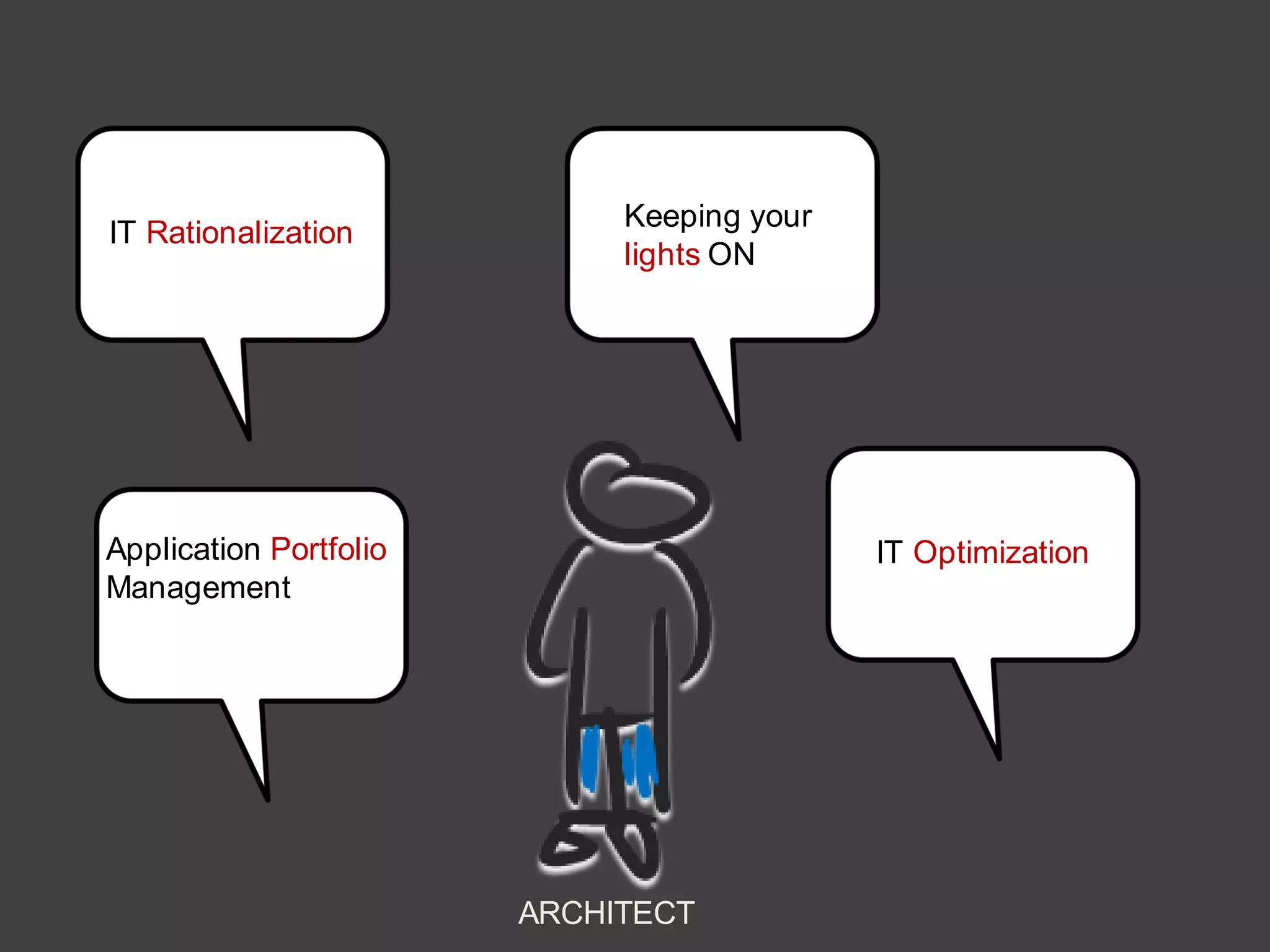
IT Rationalization
Keeping your
lights ON
Application Portfolio
Management
IT Optimization
ARCHITECT
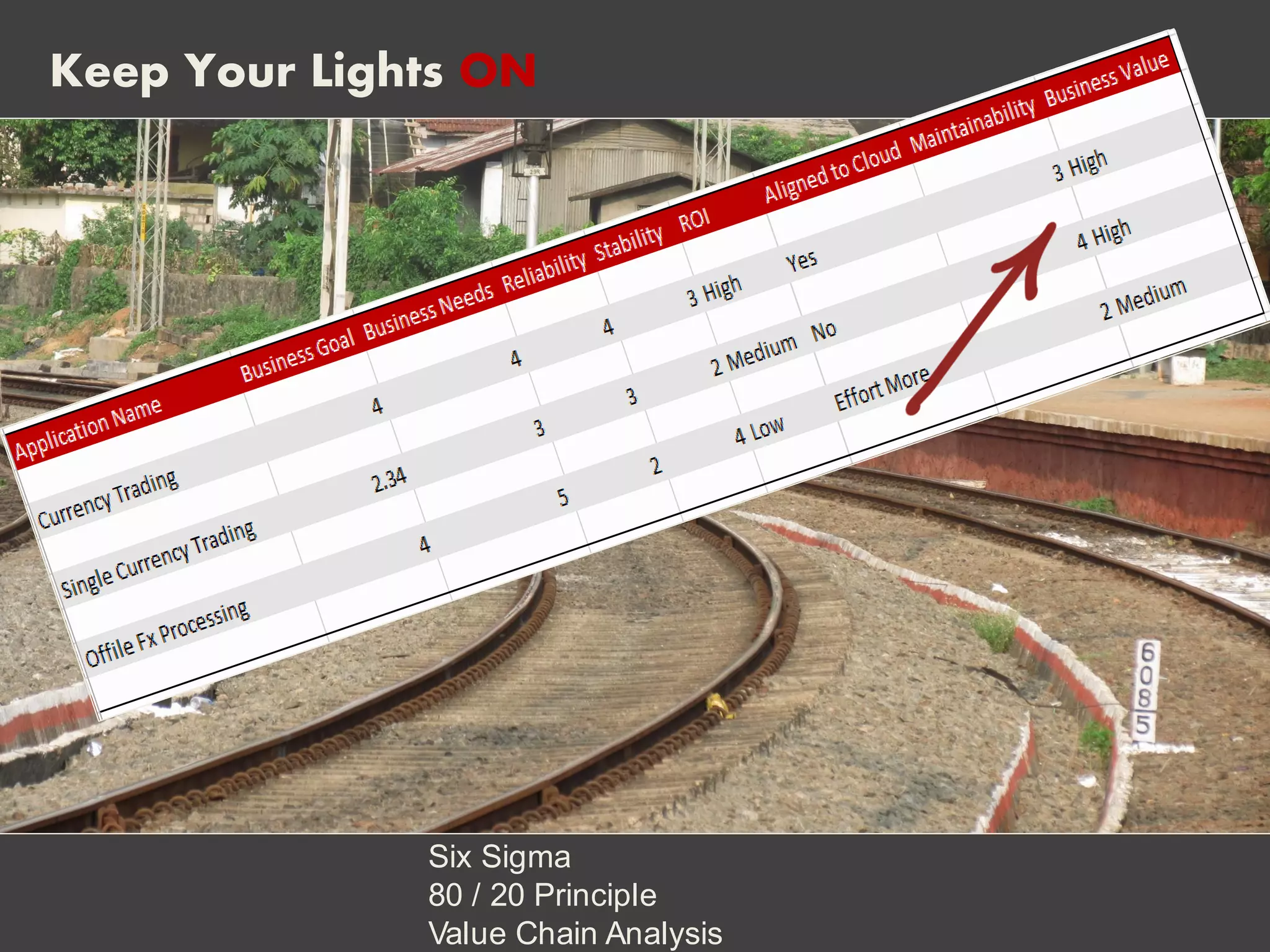
Keep Your Lights ON
Six Sigma
80 / 20 Principle
Value Chain Analysis
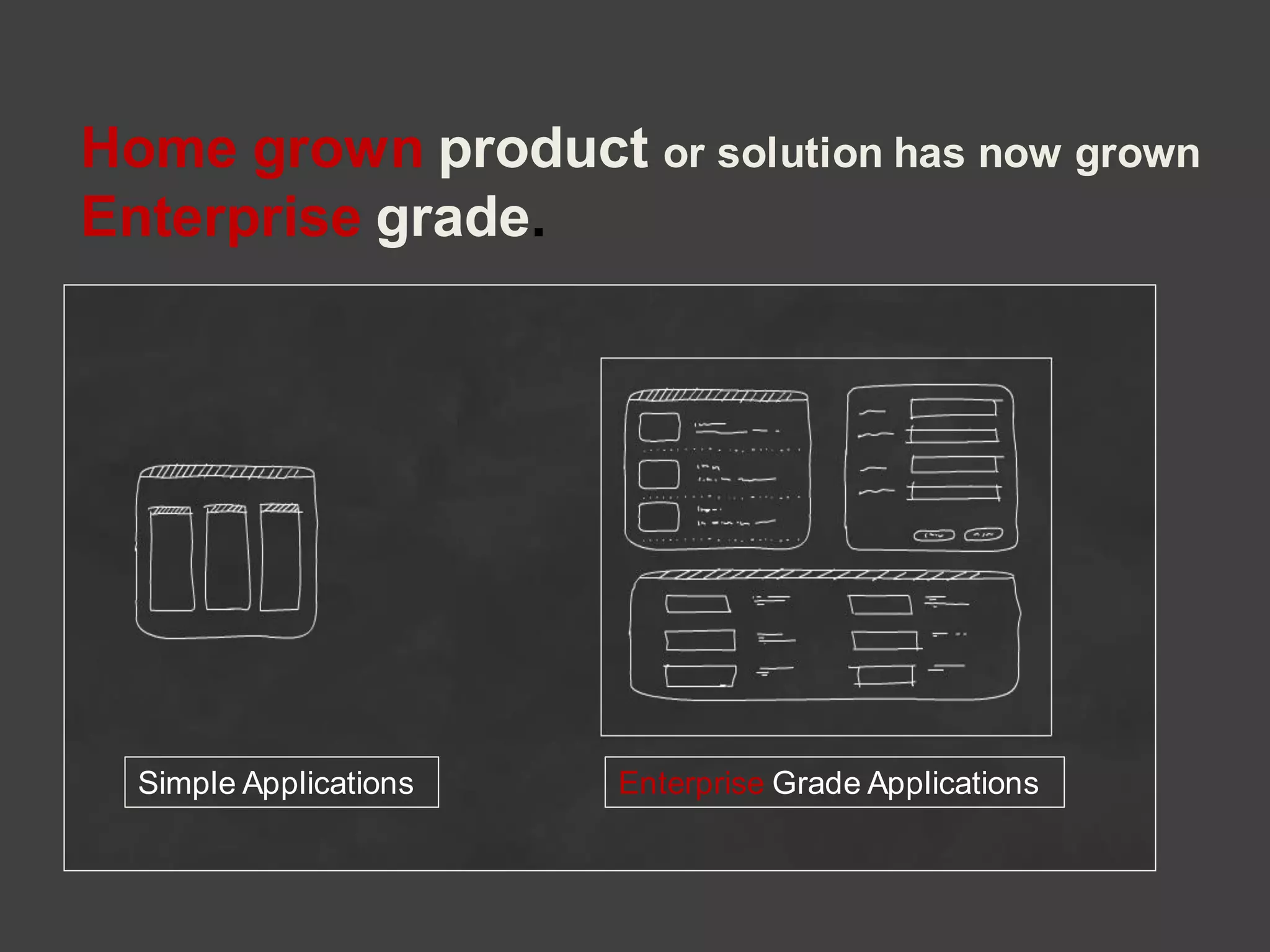
Home grown product or solution has now grown
Enterprise grade.
Simple Applications Enterprise Grade Applications
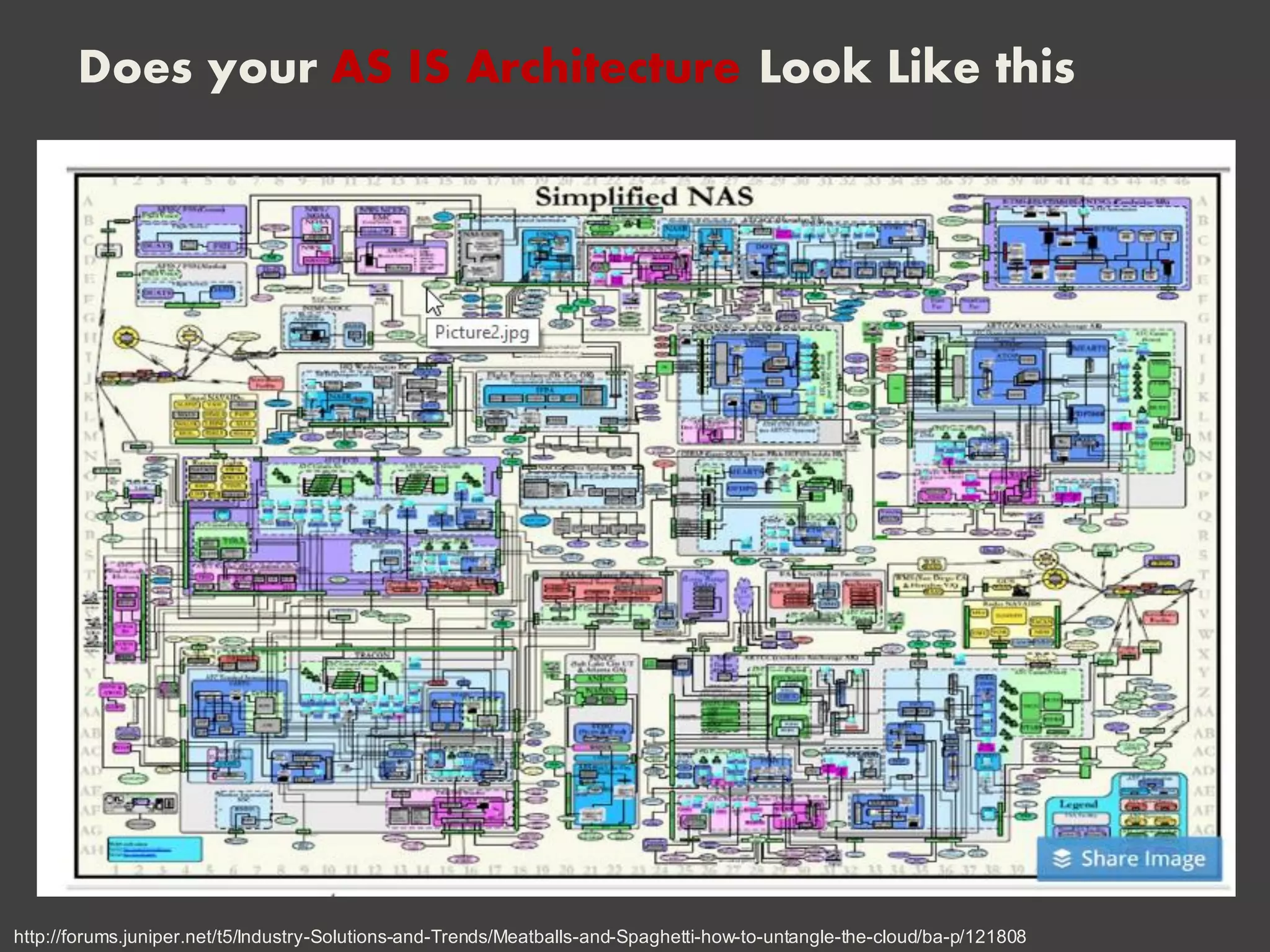
http://forums.juniper.net/t5/Industry-Solutions-and-Trends/Meatballs-and-Spaghetti-how-to-untangle-the-cloud/ba-p/121808
Does your AS IS Architecture Look Like this
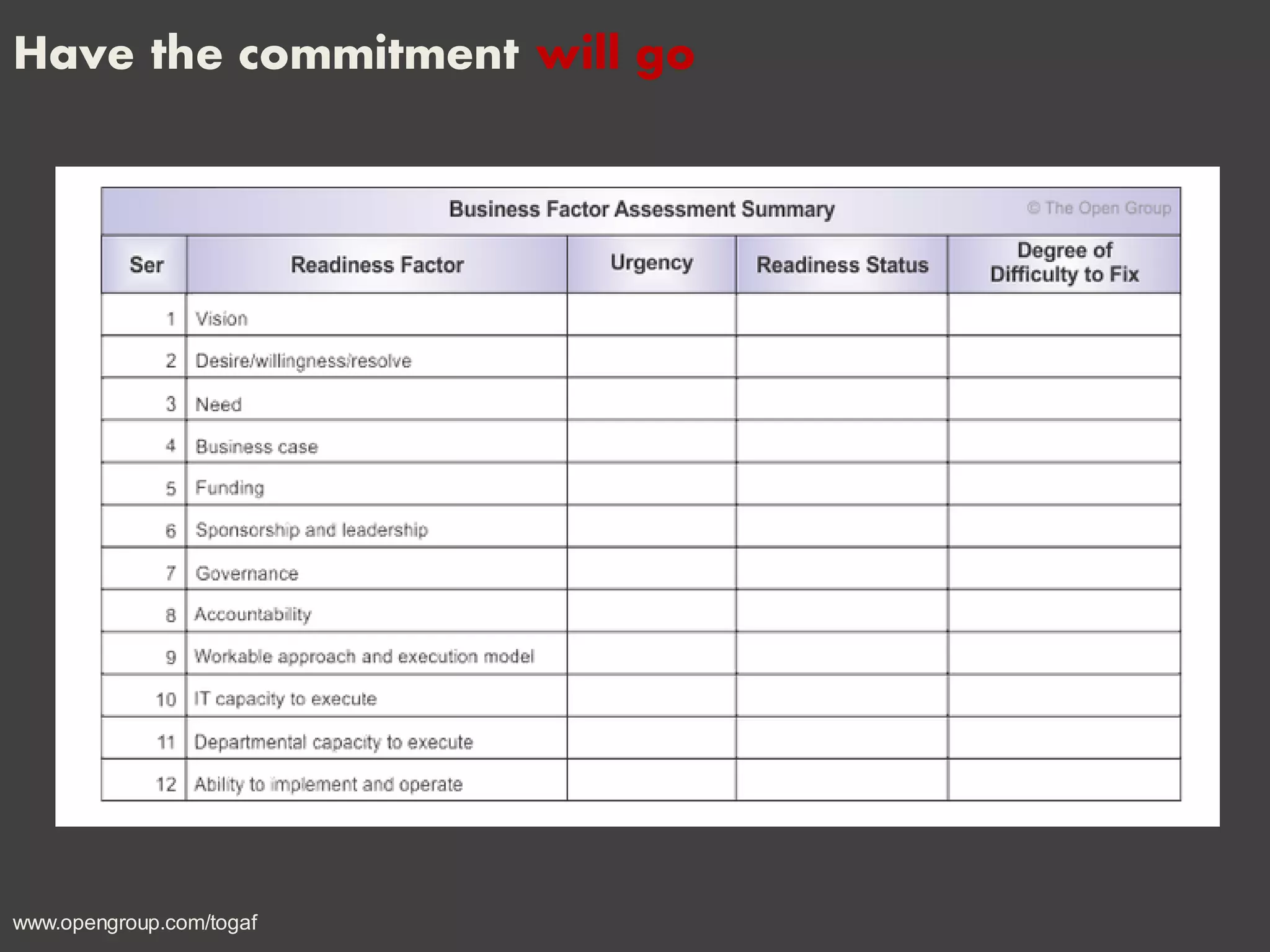
Have the commitment will go
www.opengroup.com/togaf
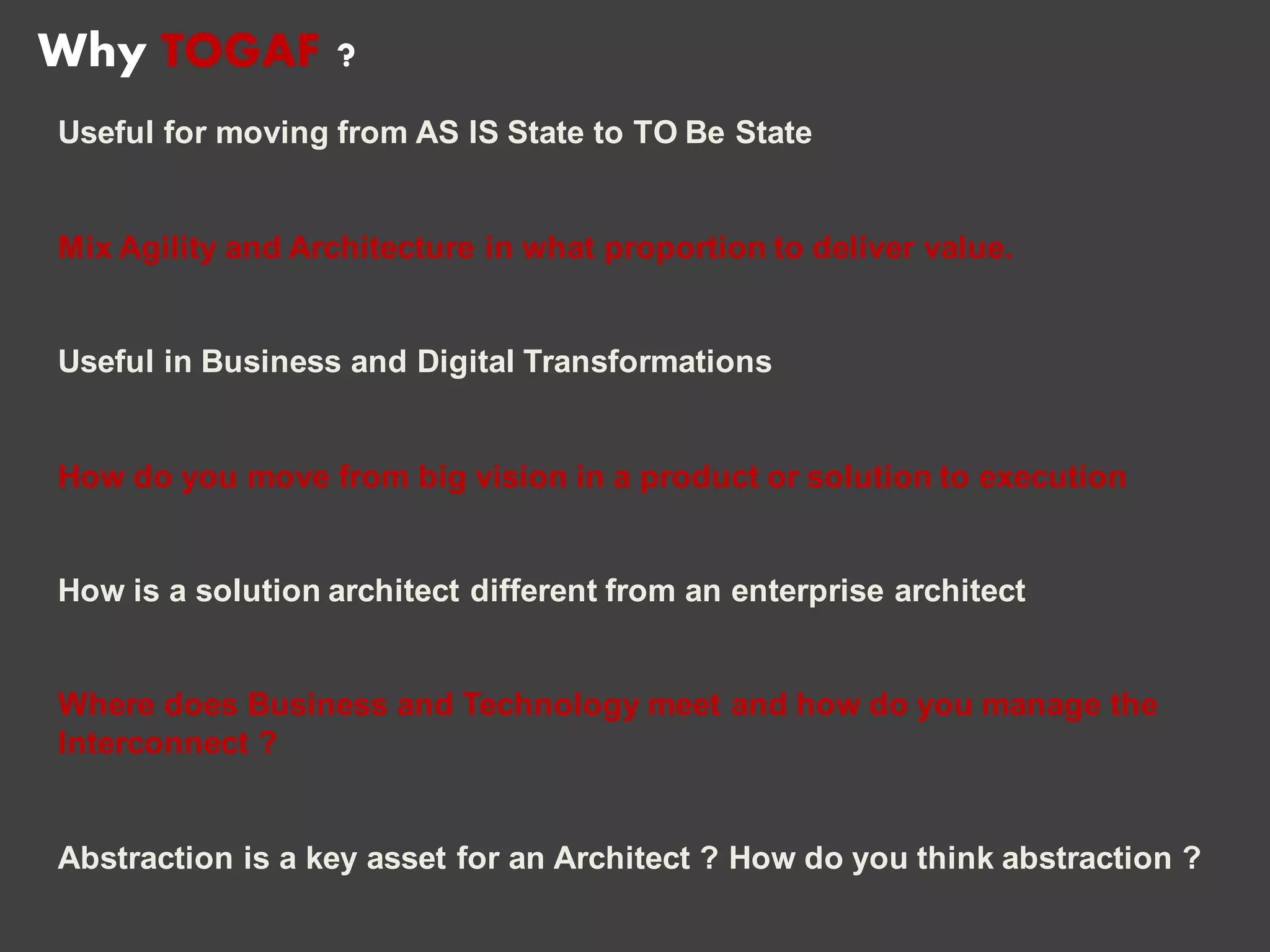
Useful for moving from AS IS State to TO Be State
Mix Agility and Architecture in what proportion to deliver value.
Useful in Business and Digital Transformations
How do you move from big vision in a product or solution to execution
How is a solution architect different from an enterprise architect
Where does Business and Technology meet and how do you manage the
Interconnect ?
Abstraction is a key asset for an Architect ? How do you think abstraction ?
Why TOGAF ?
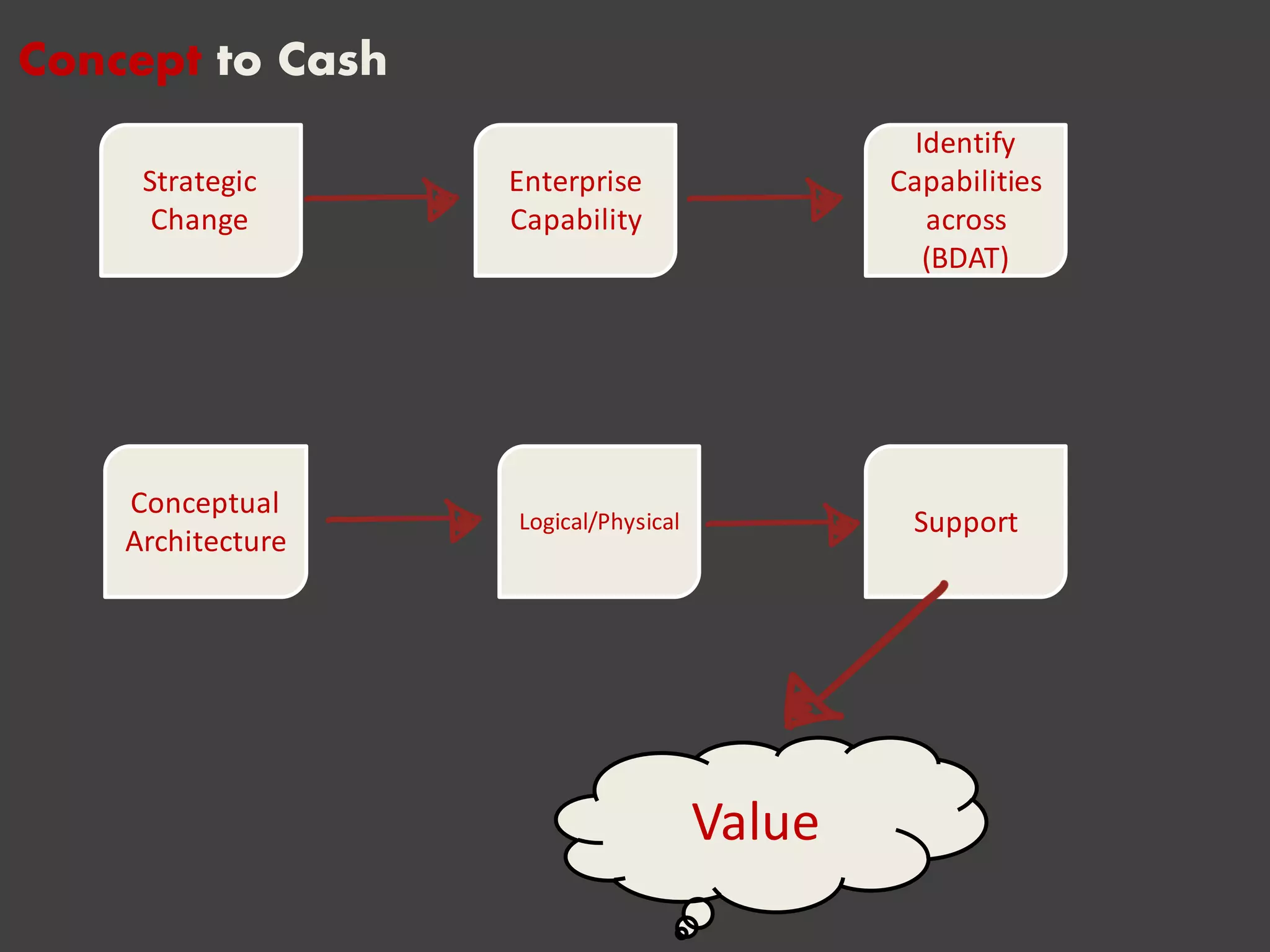
Strategic
Change
Enterprise
Capability
Identify
Capabilities
across
(BDAT)
Conceptual
Architecture
Logical/Physical Support
Value
Concept to Cash
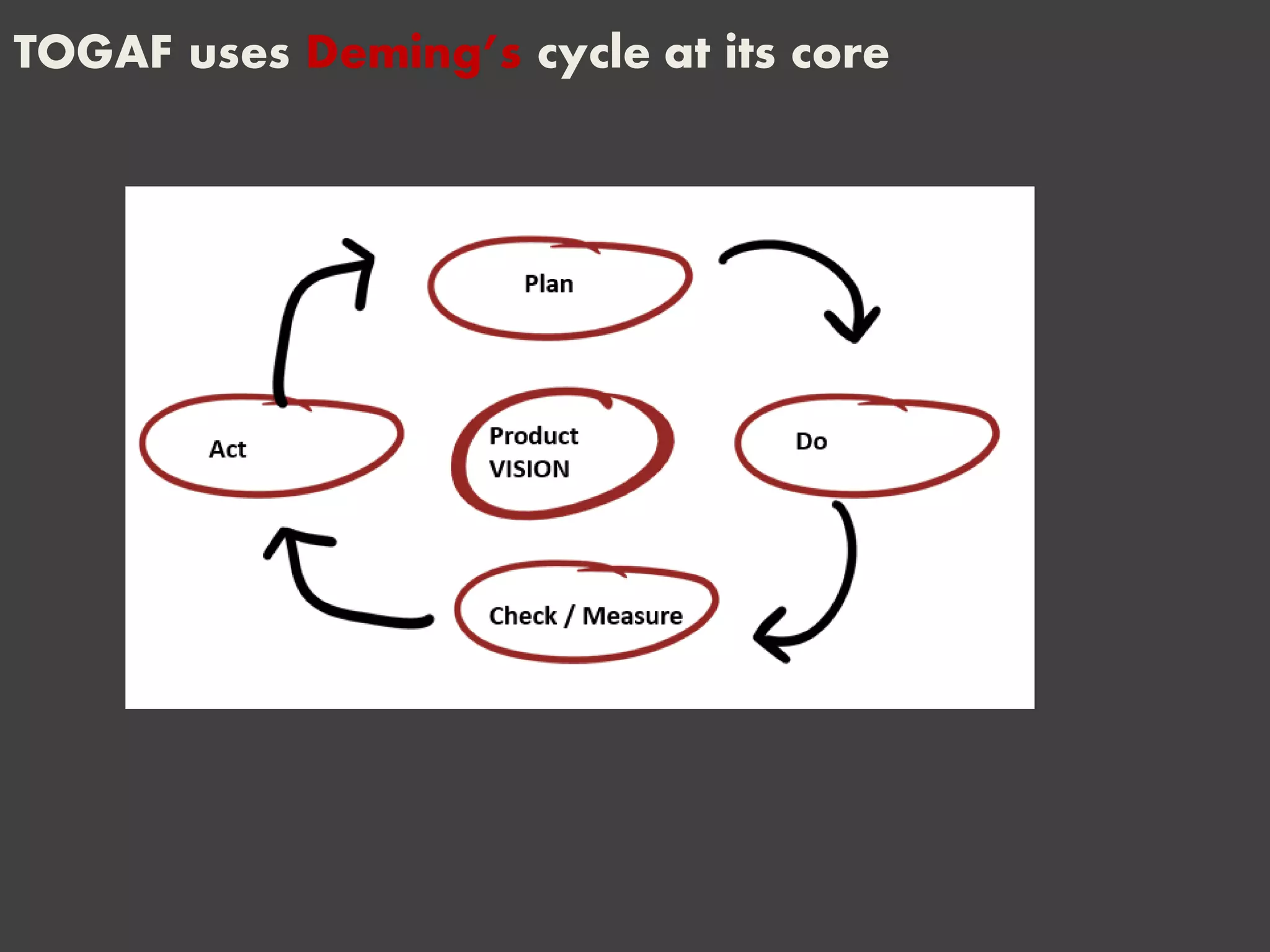
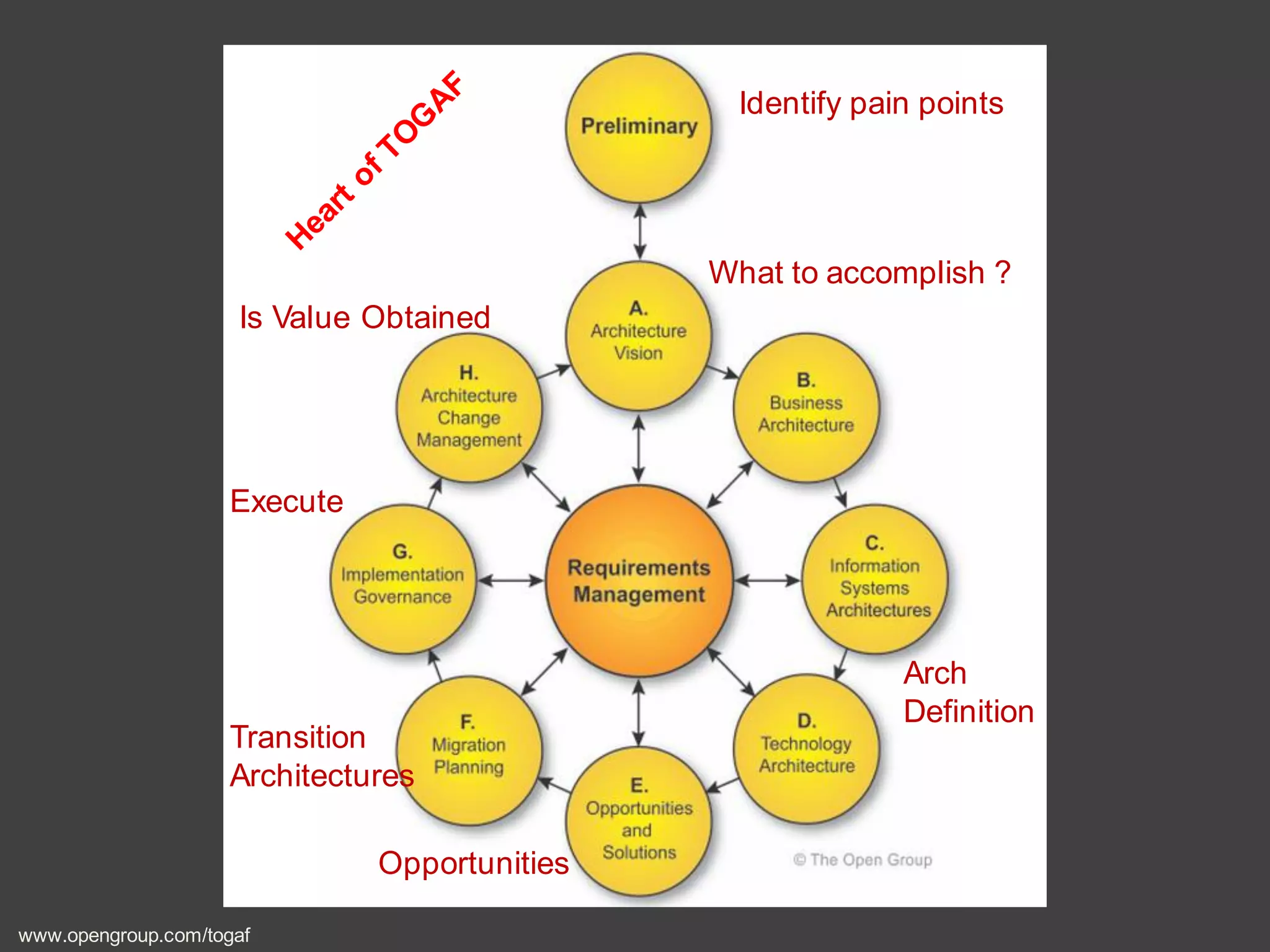
TOGAF uses Deming’s cycle at its core
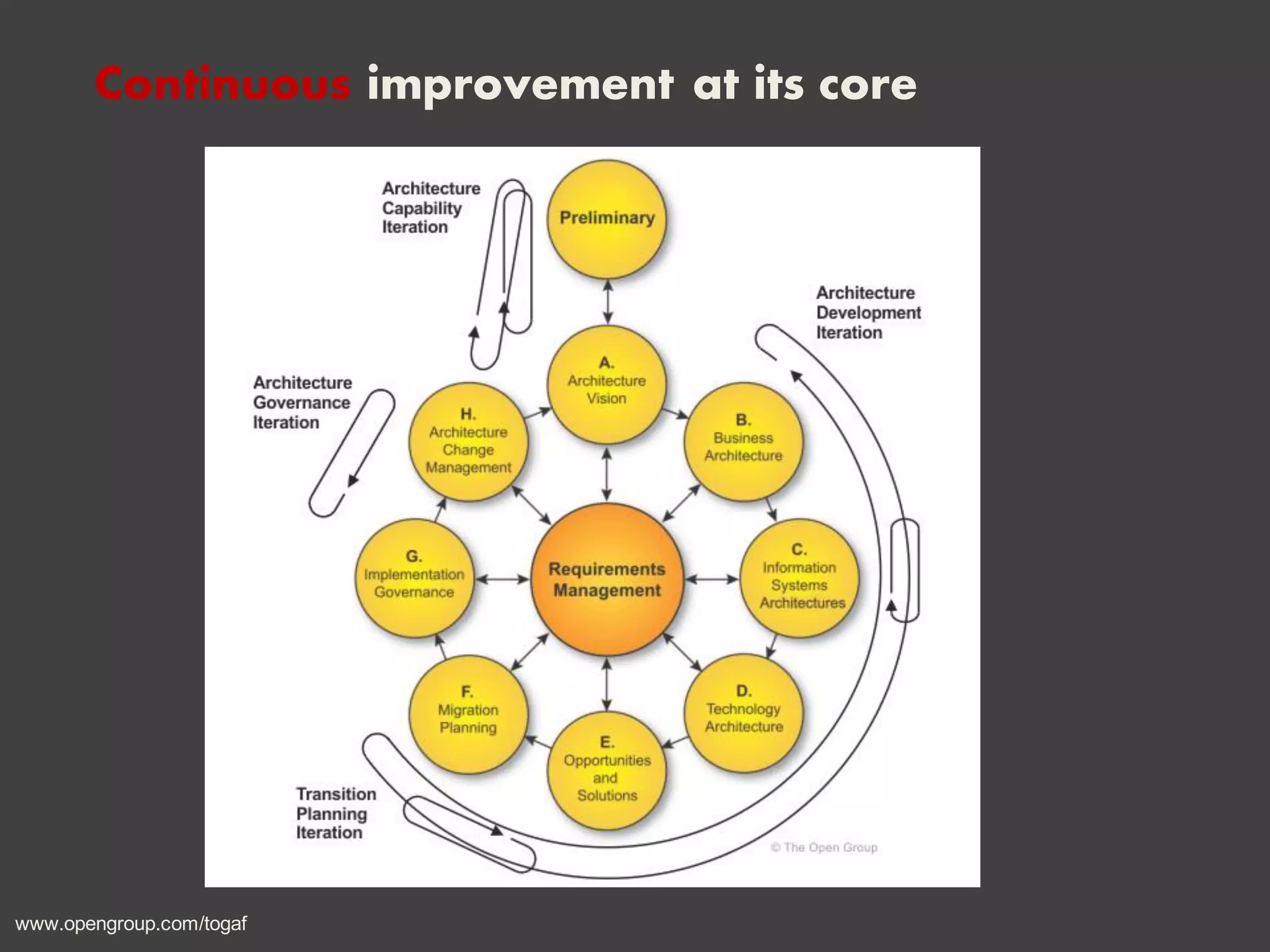
Continuous improvement at its core
www.opengroup.com/togaf
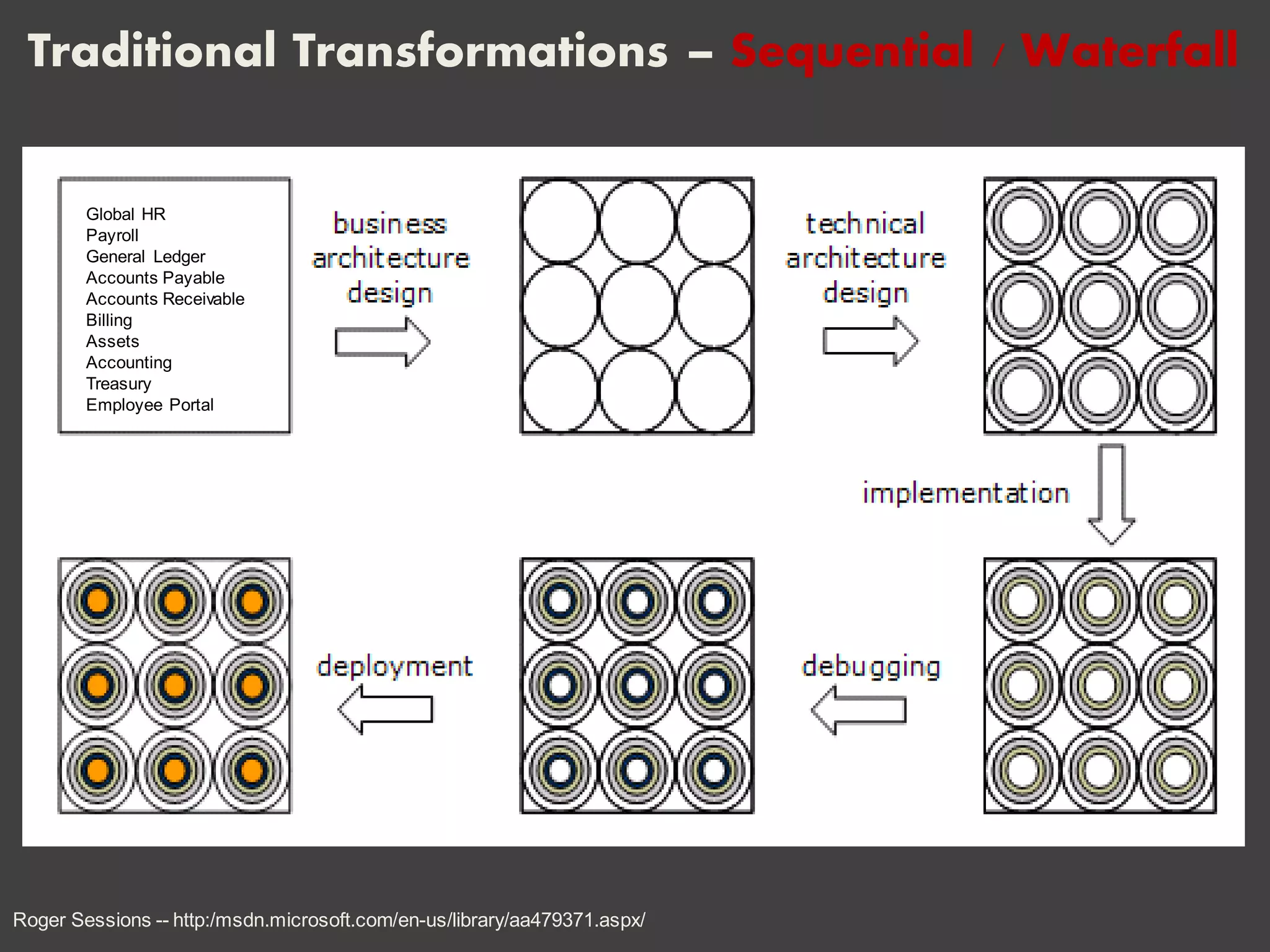
Traditional Transformations – Sequential / Waterfall
Roger Sessions -- http:/msdn.microsoft.com/en-us/library/aa479371.aspx/
Global HR
Payroll
General Ledger
Accounts Payable
Accounts Receivable
Billing
Assets
Accounting
Treasury
Employee Portal
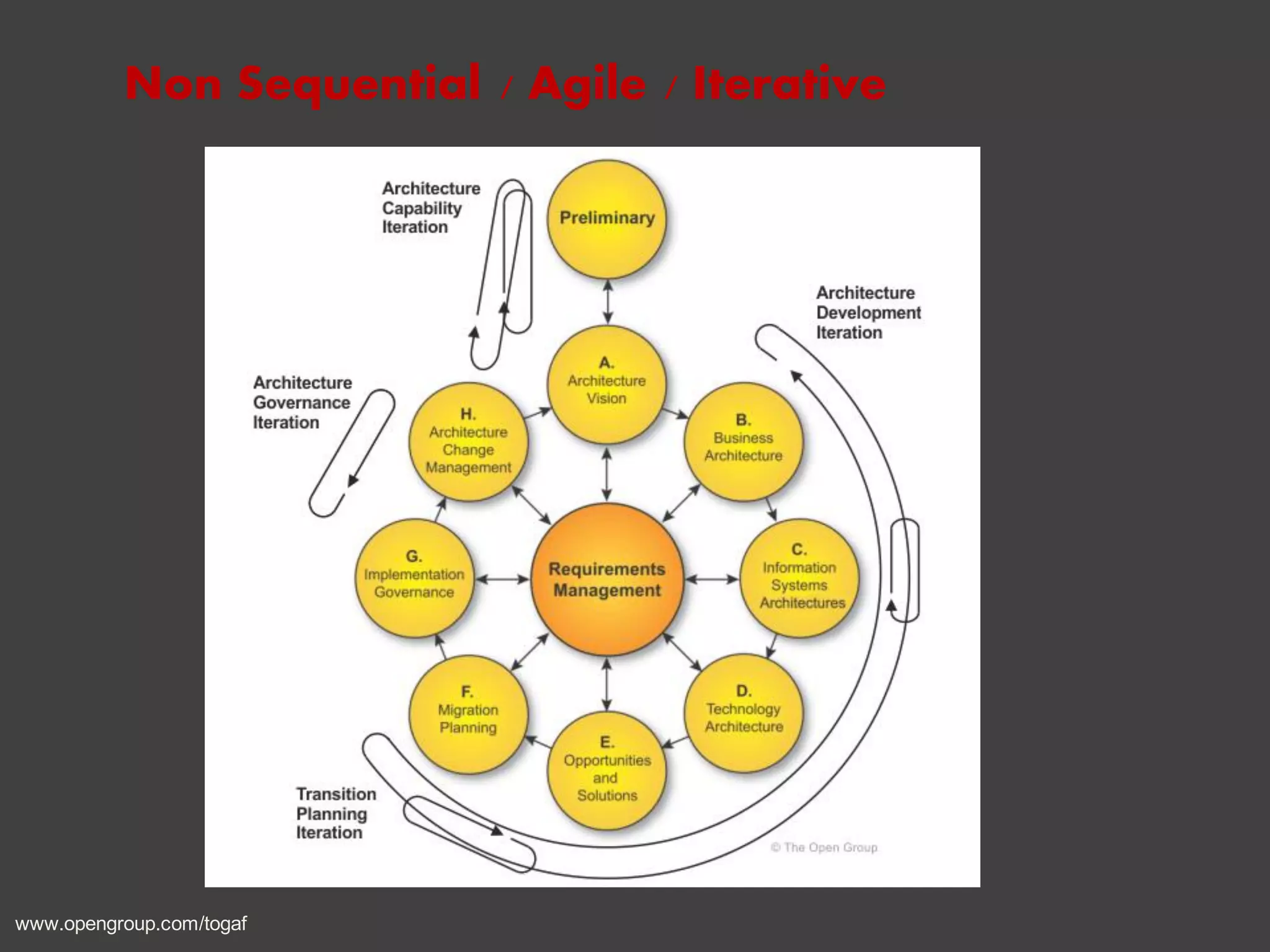
Non Sequential / Agile / Iterative
www.opengroup.com/togaf
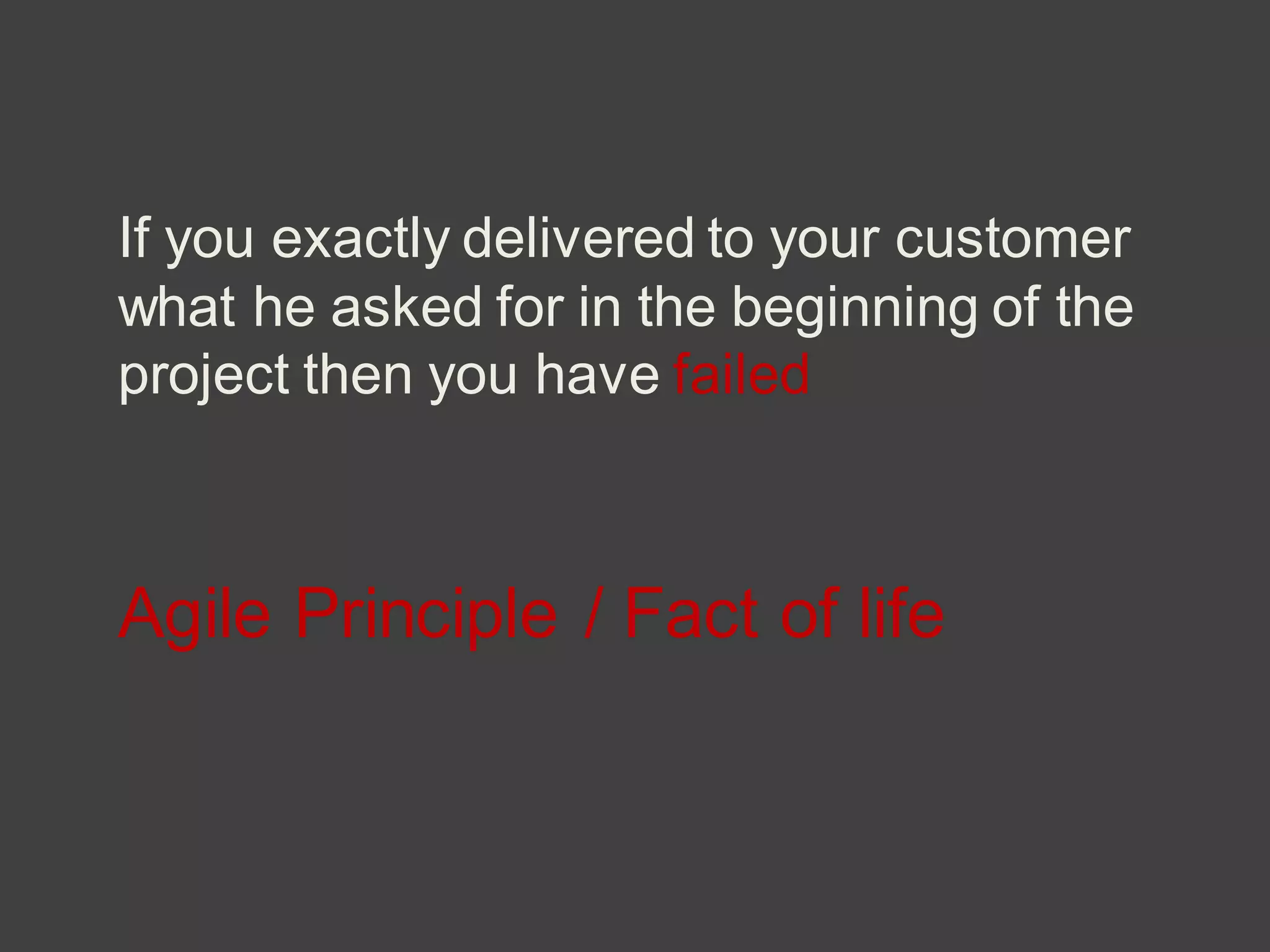
If you exactly delivered to your customer
what he asked for in the beginning of the
project then you have failed
Agile Principle / Fact of life
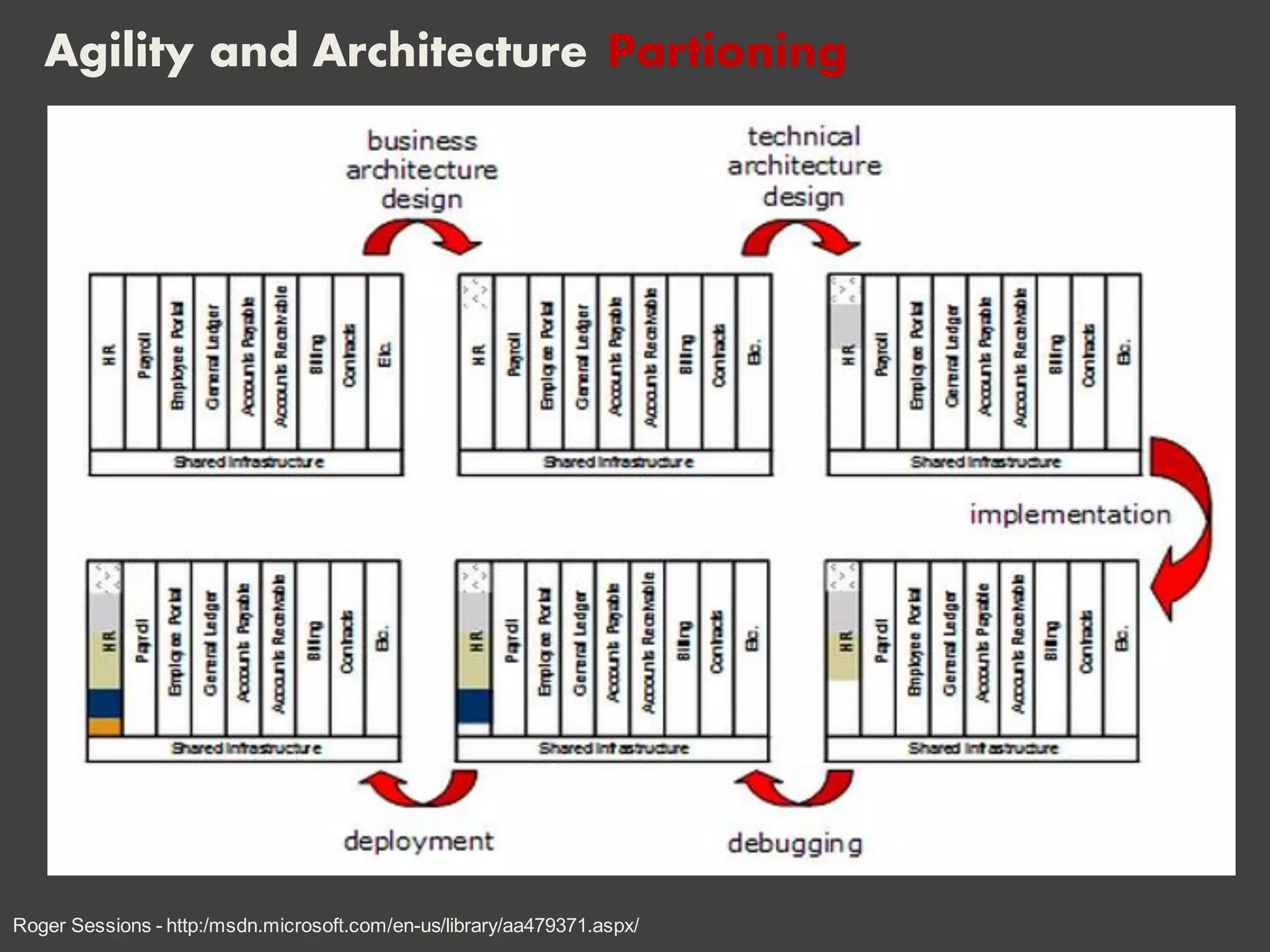
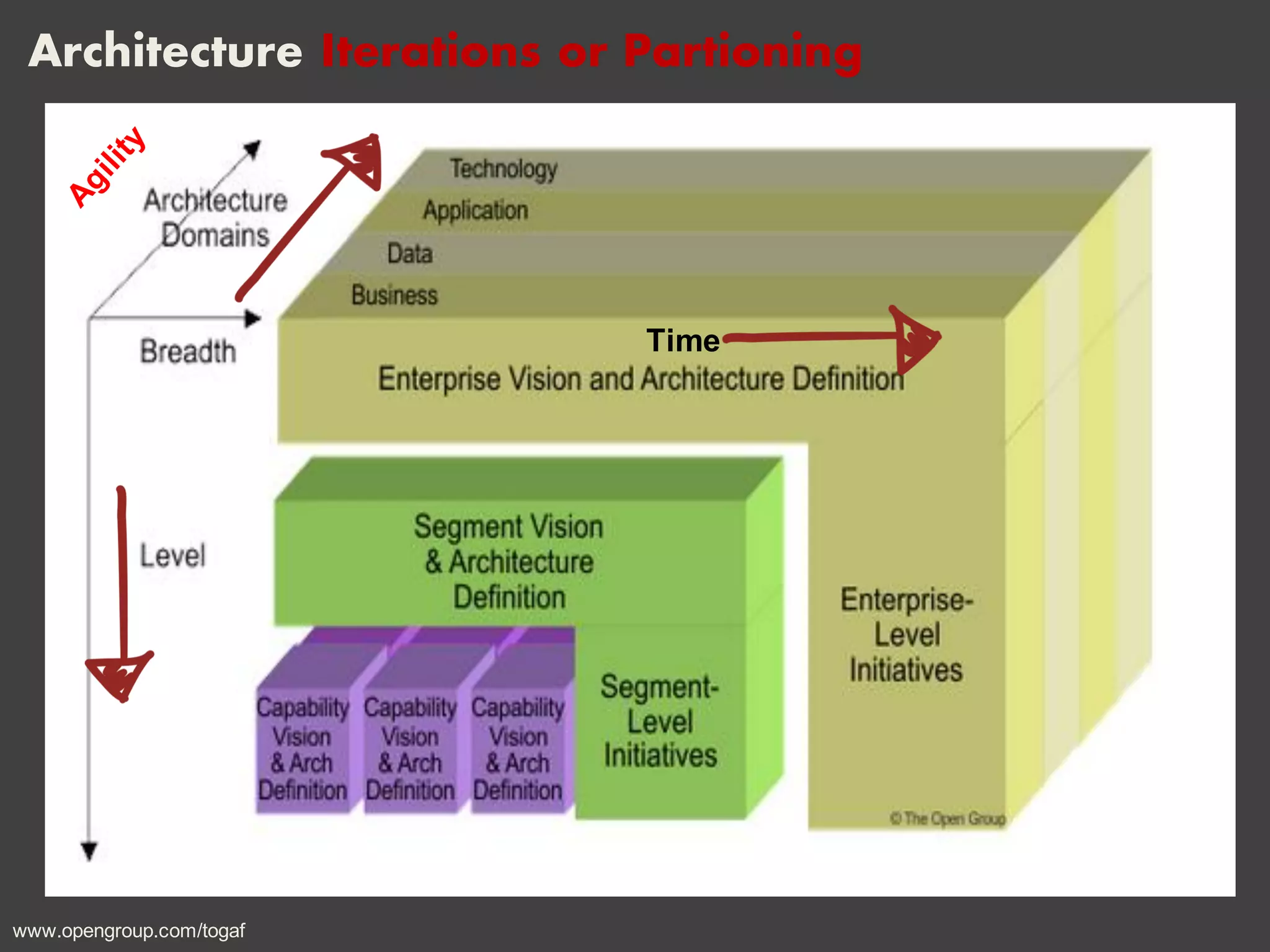
Agility and Architecture Partioning
Roger Sessions - http:/msdn.microsoft.com/en-us/library/aa479371.aspx/
Architecture Iterations or Partioning
www.opengroup.com/togaf
Time
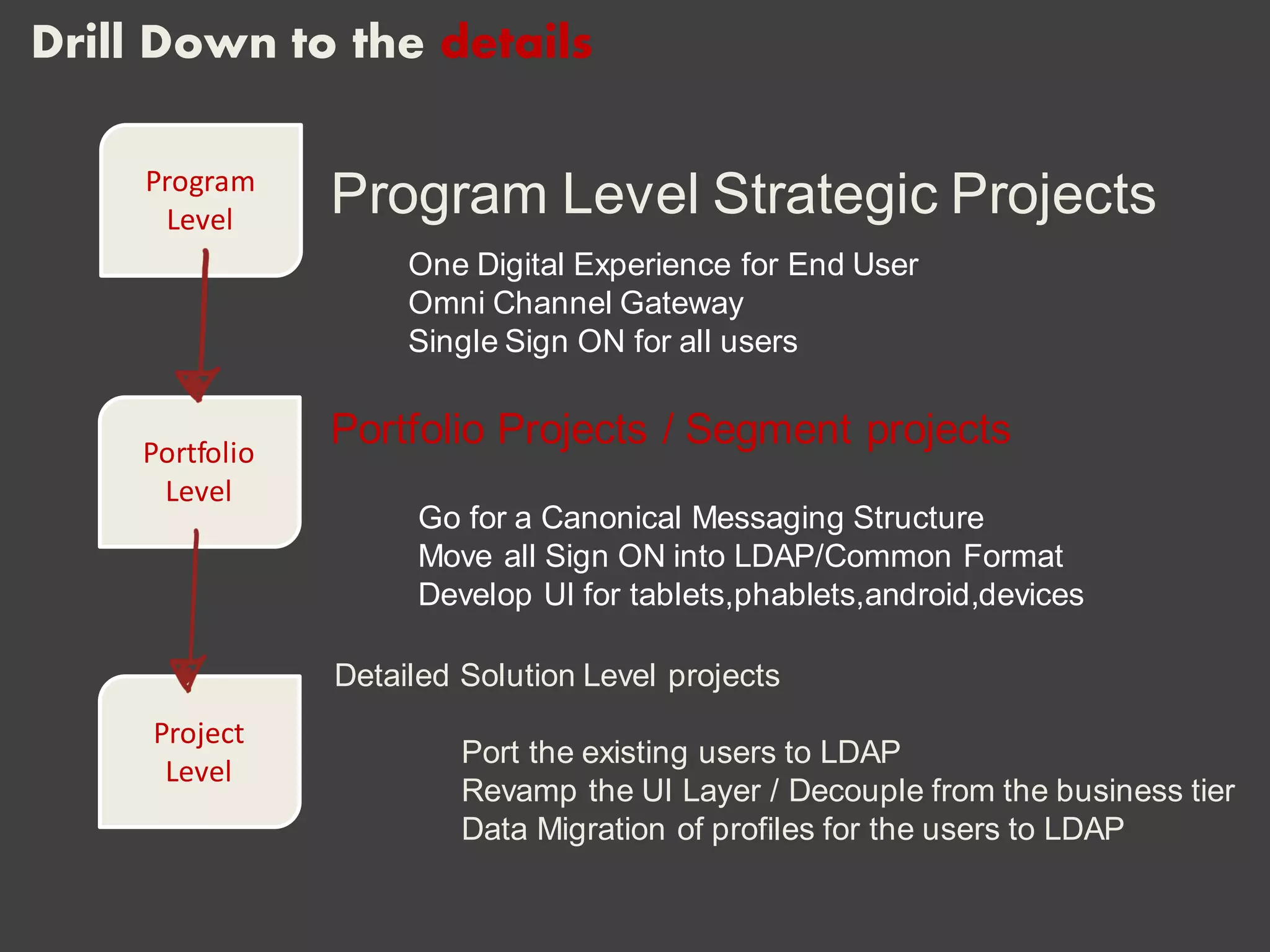
Drill Down to the details
Program
Level
Portfolio
Level
Project
Level
Detailed Solution Level projects
Port the existing users to LDAP
Revamp the UI Layer / Decouple from the business tier
Data Migration of profiles for the users to LDAP
Program Level Strategic Projects
One Digital Experience for End User
Omni Channel Gateway
Single Sign ON for all users
Portfolio Projects / Segment projects
Go for a Canonical Messaging Structure
Move all Sign ON into LDAP/Common Format
Develop UI for tablets,phablets,android,devices
Identify pain points
What to accomplish ?
Arch
Definition
Opportunities
Transition
Architectures
Execute
Is Value Obtained
www.opengroup.com/togaf
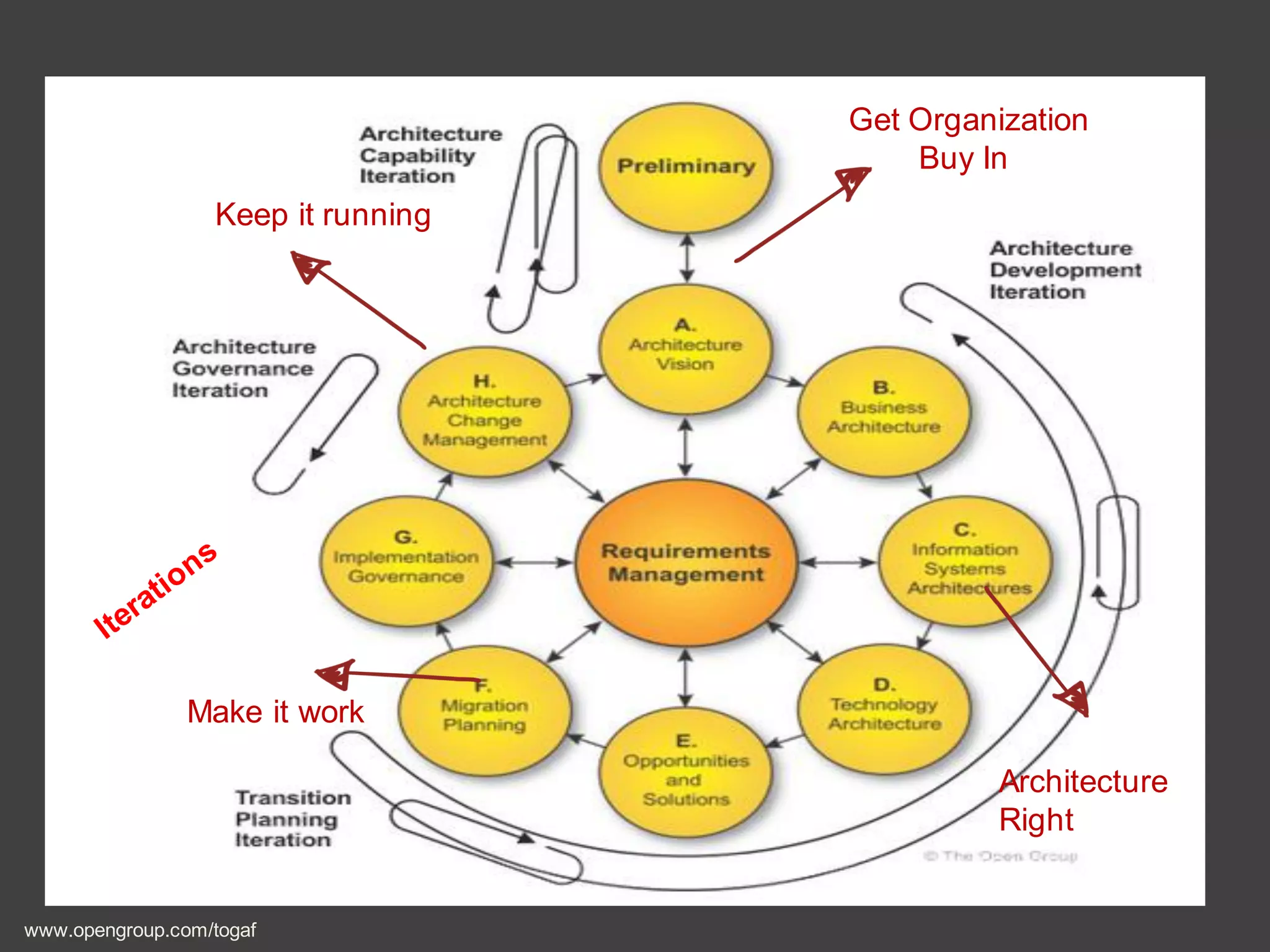
Get Organization
Buy In
Architecture
Right
Make it work
Keep it running
www.opengroup.com/togaf
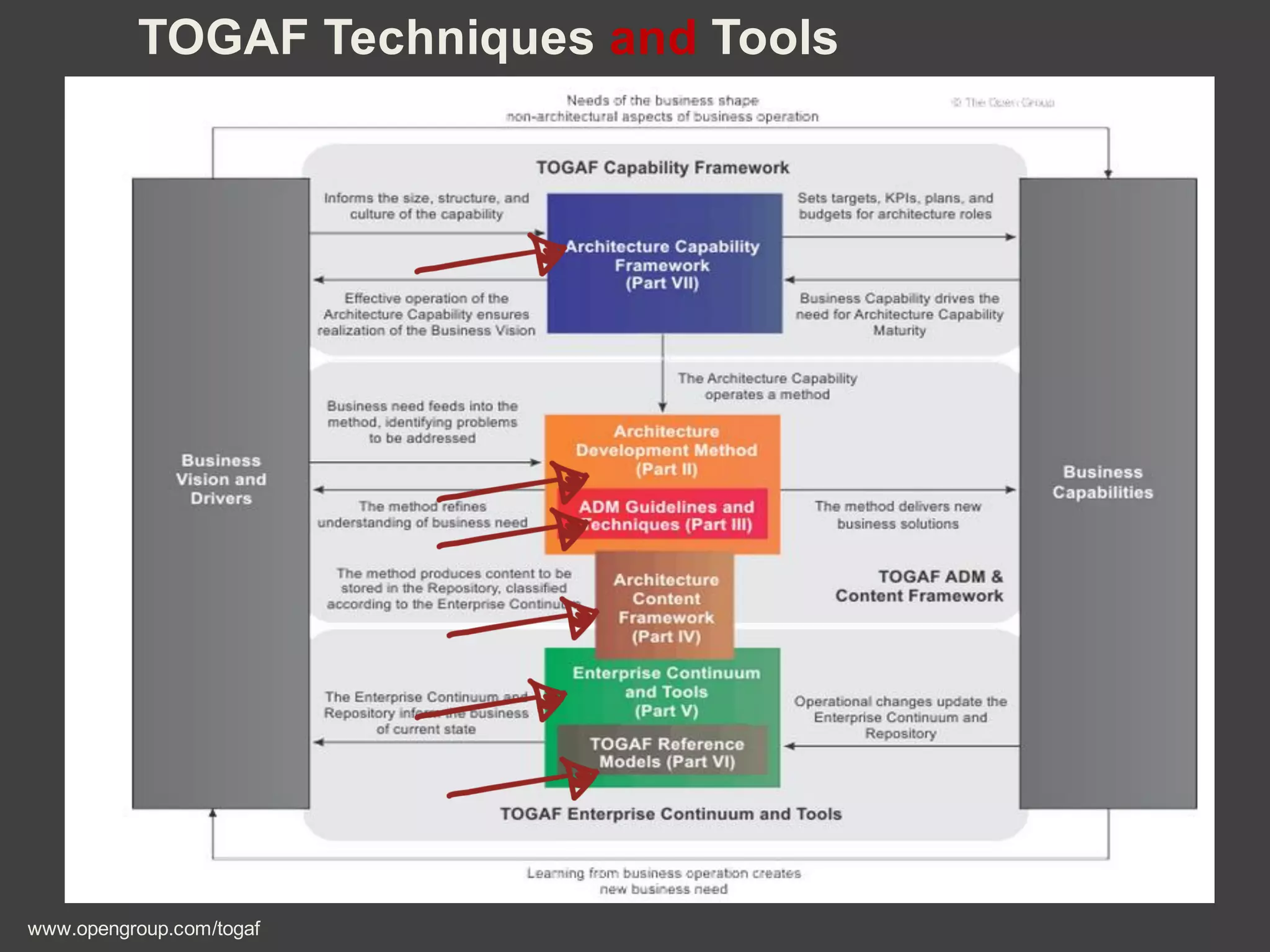
TOGAF Techniques and Tools
www.opengroup.com/togaf
Pick an existing pain point in your
landscape and make that your mission
“Take up one idea. Make that one idea your life; dream of
it; think of it; live on that idea. Let the brain, the body,
muscles, nerves, every part of your body be full of that
idea, and just leave every other idea alone. This is the way
to success” – Swami Vivekananda
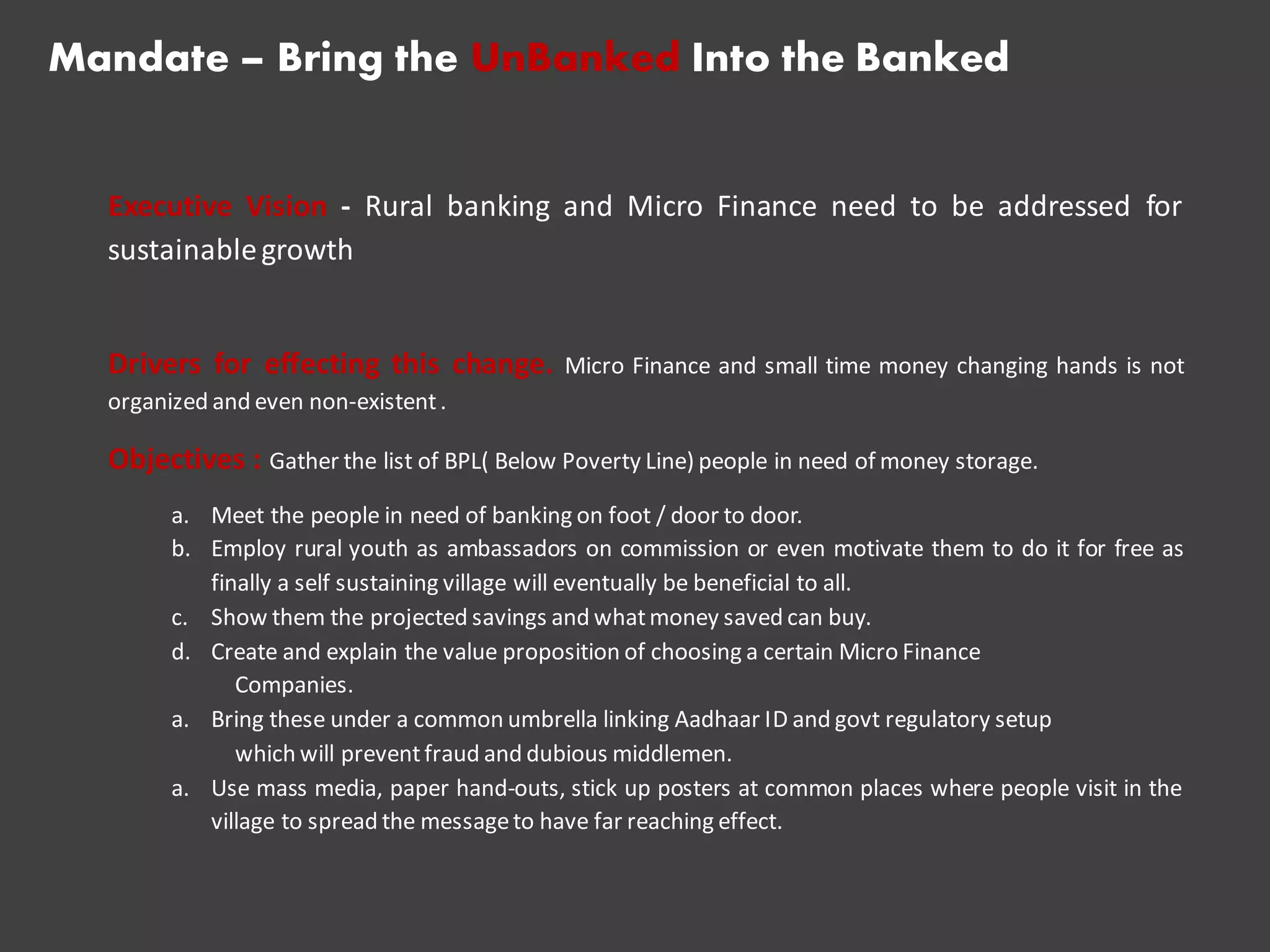
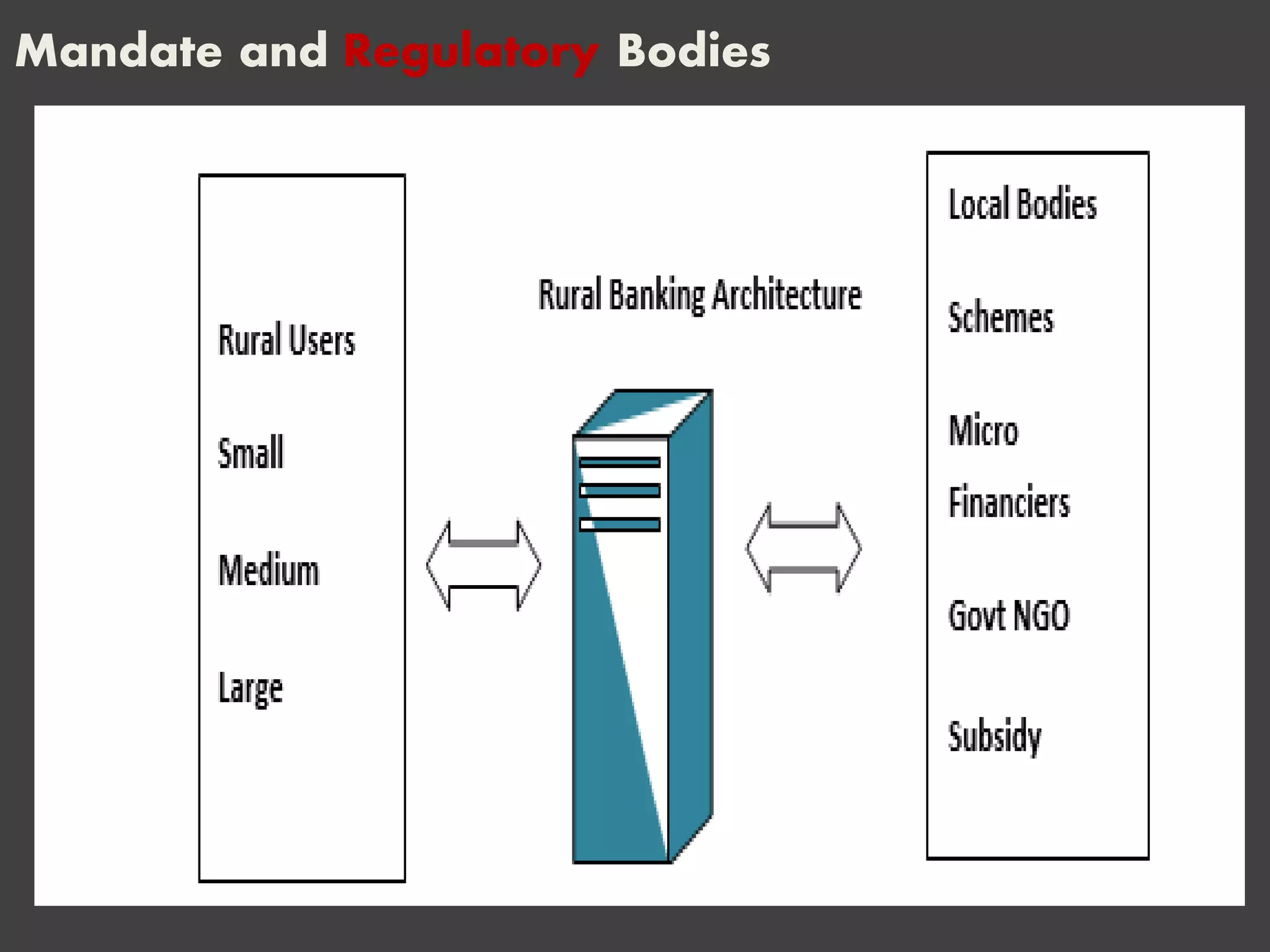
Mandate – Bring the UnBanked Into the Banked
Executive Vision - Rural banking and Micro Finance need to be addressed for
sustainablegrowth
Drivers for effecting this change. Micro Finance and small time money changing hands is not
organized and even non-existent.
Objectives : Gather the list of BPL( Below Poverty Line) people in need of money storage.
a. Meet the people in need of banking on foot / door to door.
b. Employ rural youth as ambassadors on commission or even motivate them to do it for free as
finally a self sustaining village will eventually be beneficial to all.
c. Show them the projected savings and whatmoney saved can buy.
d. Create and explain the value proposition of choosing a certain Micro Finance
Companies.
a. Bring these under a common umbrella linking Aadhaar ID and govt regulatory setup
which will preventfraud and dubious middlemen.
a. Use mass media, paper hand-outs, stick up posters at common places where people visit in the
village to spread the messageto have far reaching effect.
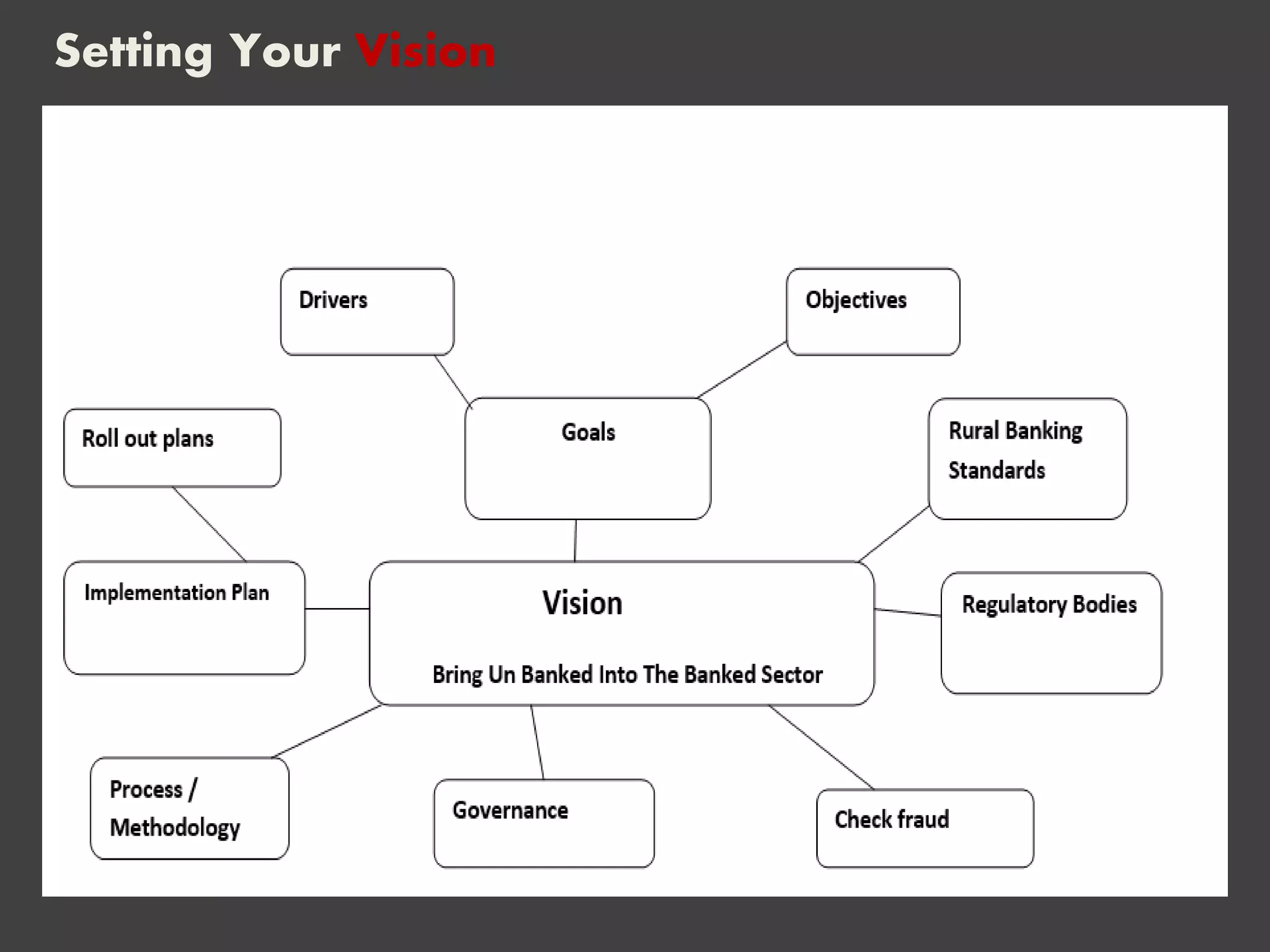
Setting Your Vision
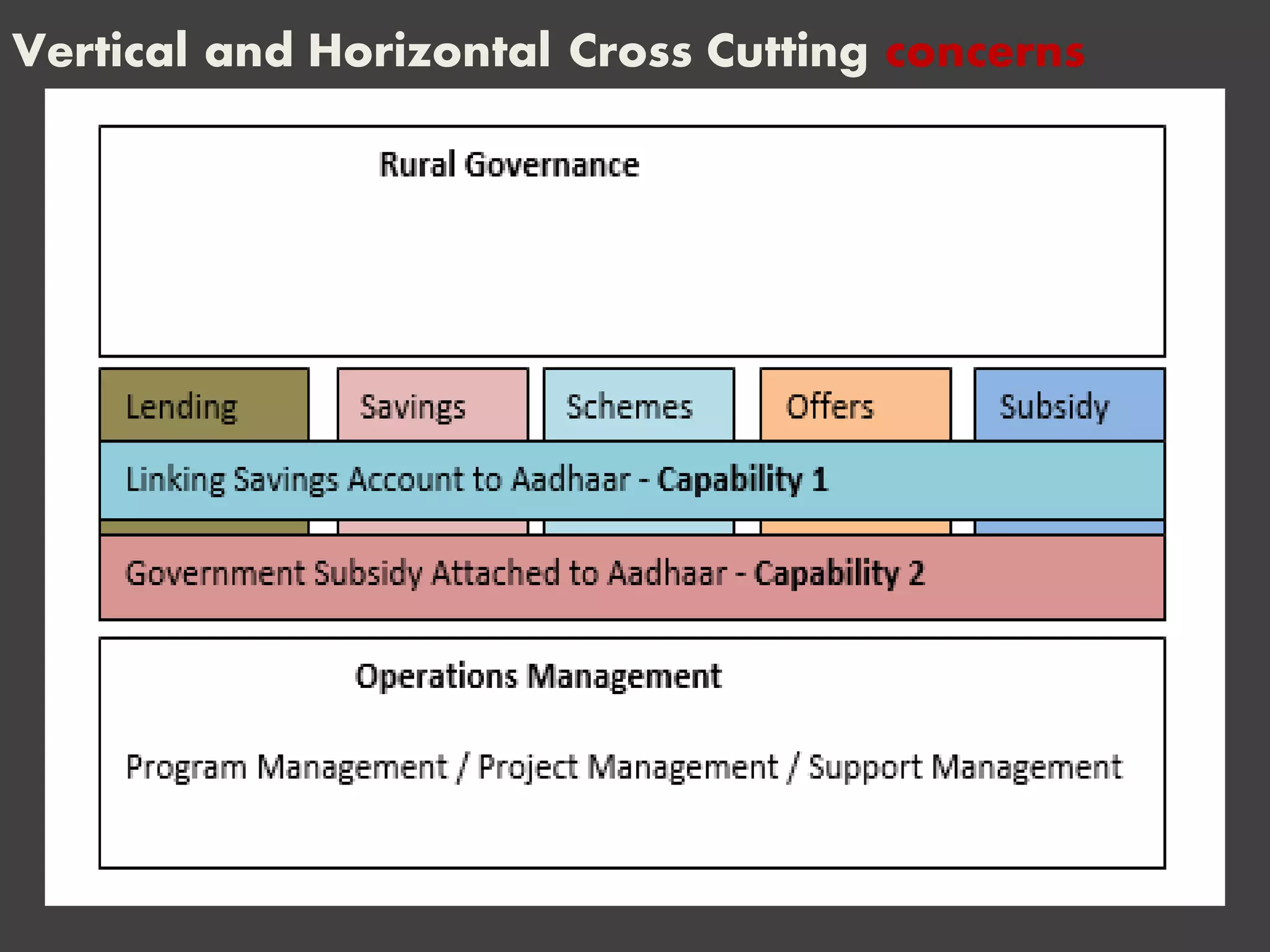
Vertical and Horizontal Cross Cutting concerns
Mandate and Regulatory Bodies
Business Principles Operating Model
a) Rationale All un banked users to be verified by Aadhaar ID or fingerprinting
to eliminate duplicity.
Implications Not having this form of validation would require that the
users of the banking system needed to have someone who could refer them.
Security infrastructure need not be elaborate given Aadhaar ID's penetration
in the rural sector.
b) Rationale All usersof the systemwill transact not more than 1000/- per day.
Implications Not keeping an upper limit on the money withdrawn would
amount to expensive security solutions and personnel not affordable in such
areas.
Ideally we can go around the data , application and technology architectures
for driving rural governance. Let's say at the moment we are confronted by
putting the business architecture right and the rest of the architectures would
come eventually.
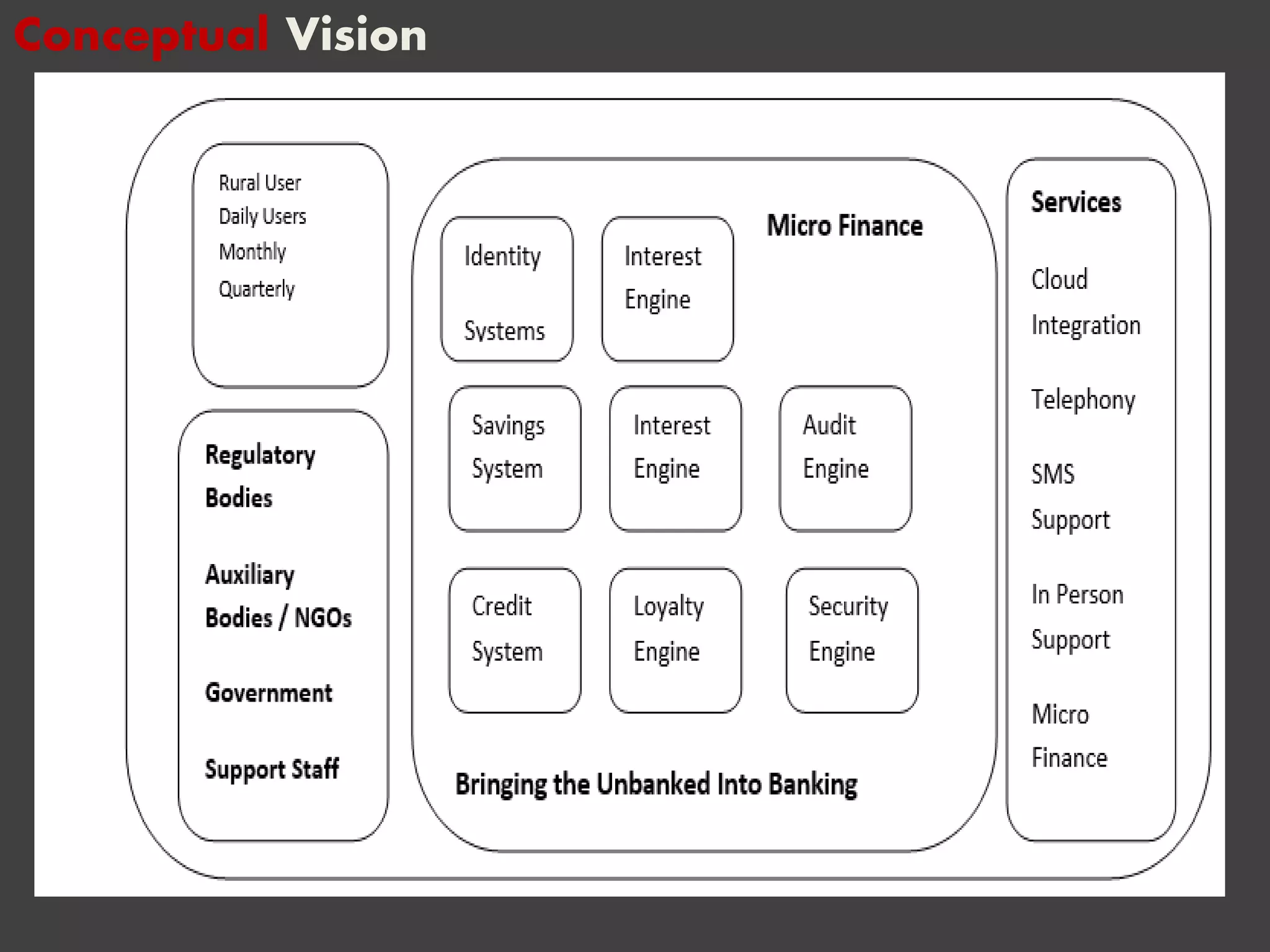
Some examplesof common metaphorshere for rural banking would be
1. Daily Deposit Scheme - This can be put across in vernacular terminology and context as
suitableto the public where this is being implemented.
2. Identify the Stakeholders and segregating the term holders based on the scheme
applicable.Daily / Monthly or Bi Monthly etc.
3. Deposit Process- Collectionexecutive comes and handleseither give or take of money.
4. Fingerprint / Aadhaar ID/ or Identify verification proc - Authenticate the people
deposit or withdrawingthe money.
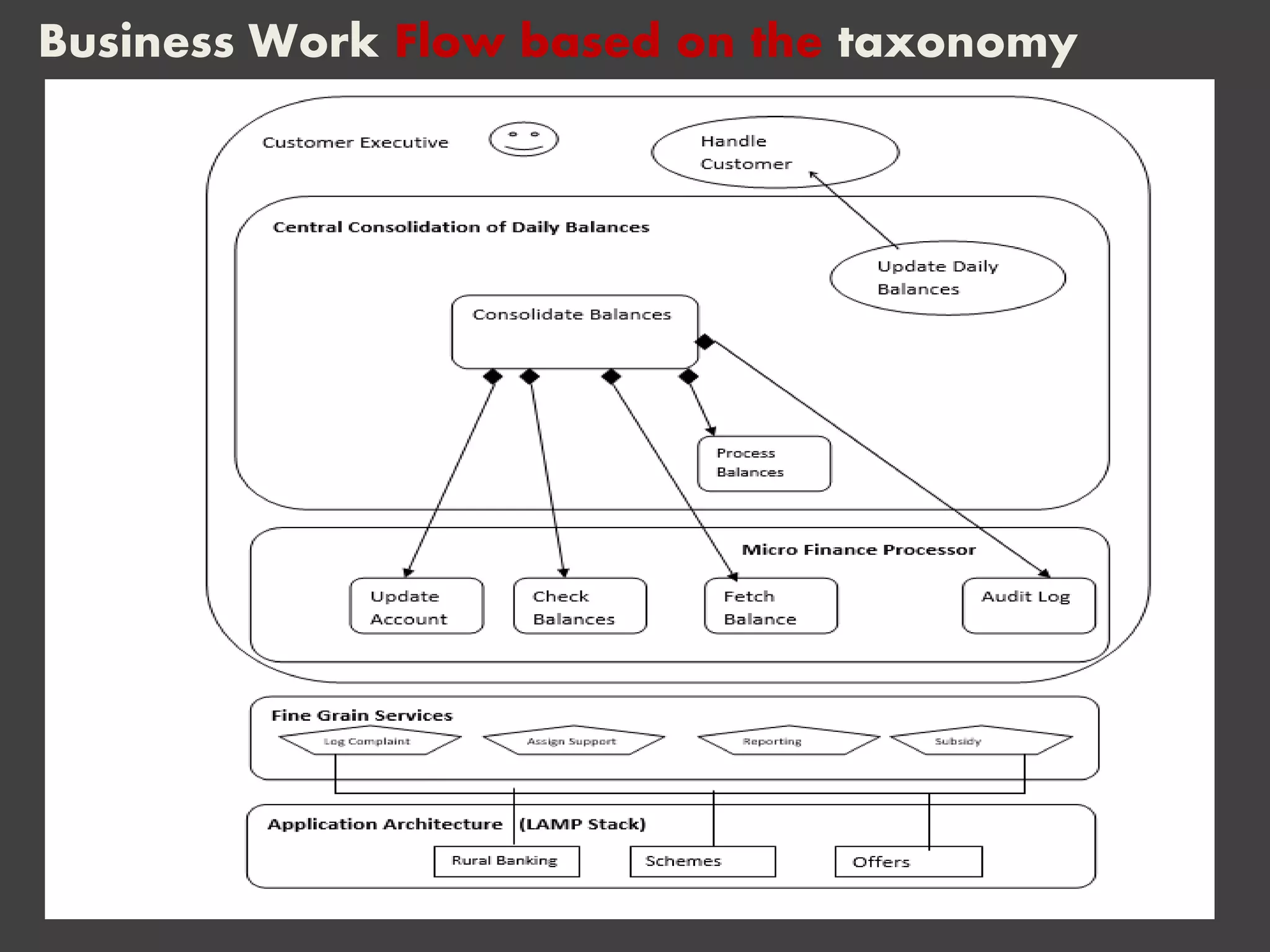
5. Central Consolidation of Daily Balances - Initially a bank executive collects the details
and goes and deposits the same in the banks backend system travelling back to the
operationscentre. So balances will be offline and have an offline limit.
Product / solution wide taxonomy / metaphor
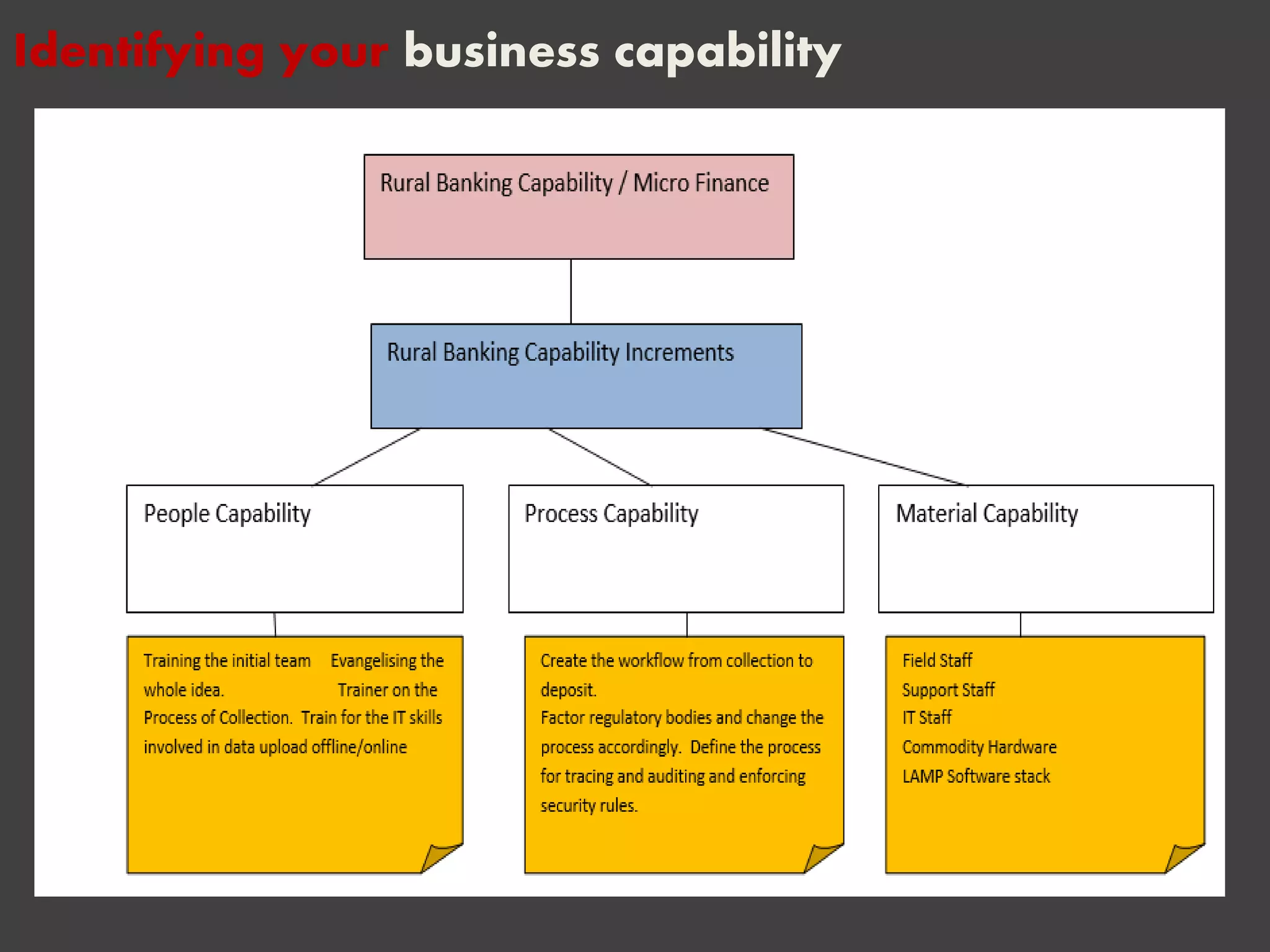
Identifying your business capability
Conceptual Vision
Business Work Flow based on the taxonomy
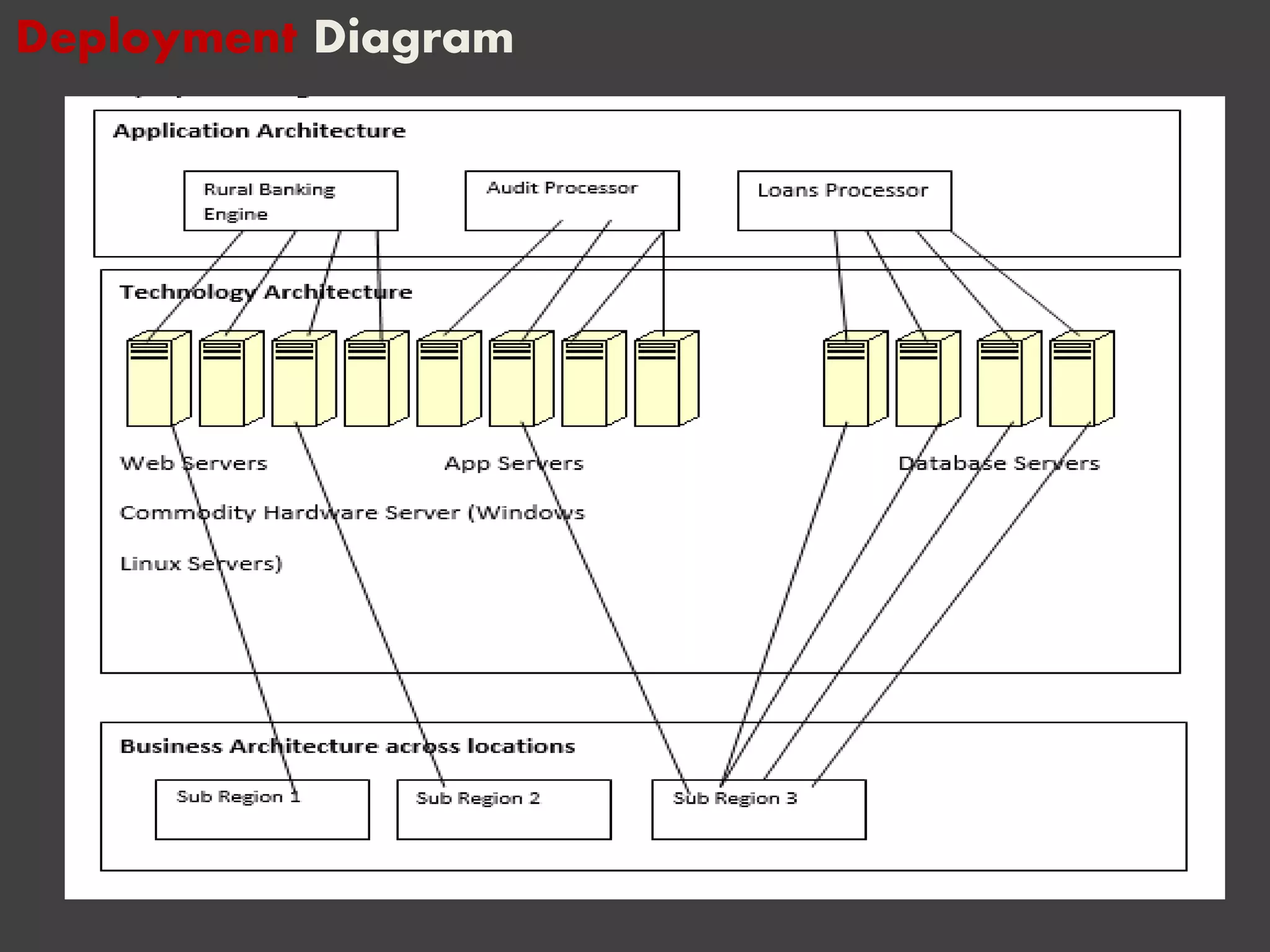
Deployment Diagram
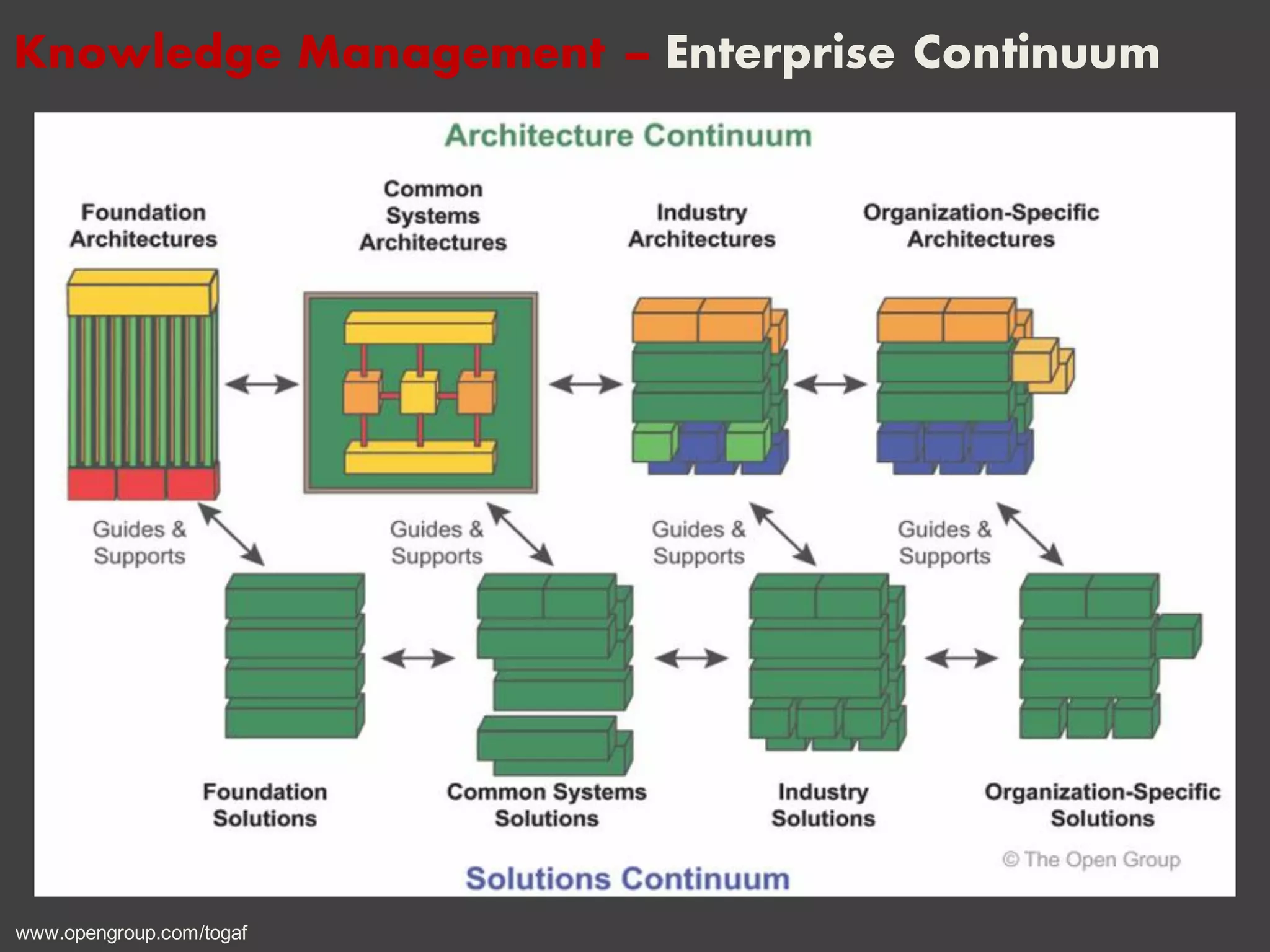
Knowledge Management – Enterprise Continuum
www.opengroup.com/togaf
Analysis tool:
Help establishthe key relationshipsand dependencies between the business services,
business processes, applicationsand technology
Planning tool:
Helps developarchitecture roadmaps and align strategy with execution
Decision-makingtool:
Provides a sound framework for making decisions.
Design tool:
Industry best practice design approaches, patterns, guidelines, and reference models
Change management tool:
Manage change across multipledevelopmentprojects and initiatives
Governance tool:
One stop shop for a master repository which holds the target enterprise architecture, and a
single architecturalblueprintof principles, standards, patterns, policies, guidelines,
reference models, reusable assets and templates
Alignment tool:
Marry business strategy and IT delivery. Get all on aligned to the same operating model.
Get out of your way for your own good.
Common Roadblocks
What if there is no Reference Architecture for
Your Enterprise ?
If you don’t you will still have one
which may not be to your liking.
#1
You will not know what lies under the
hood.
#2
People who built it are no longer with
the Organizations.
#3
FIX
Create one which is there for all to see at least at a
reasonable degree of understanding.
What pushes people to HAVE it ?
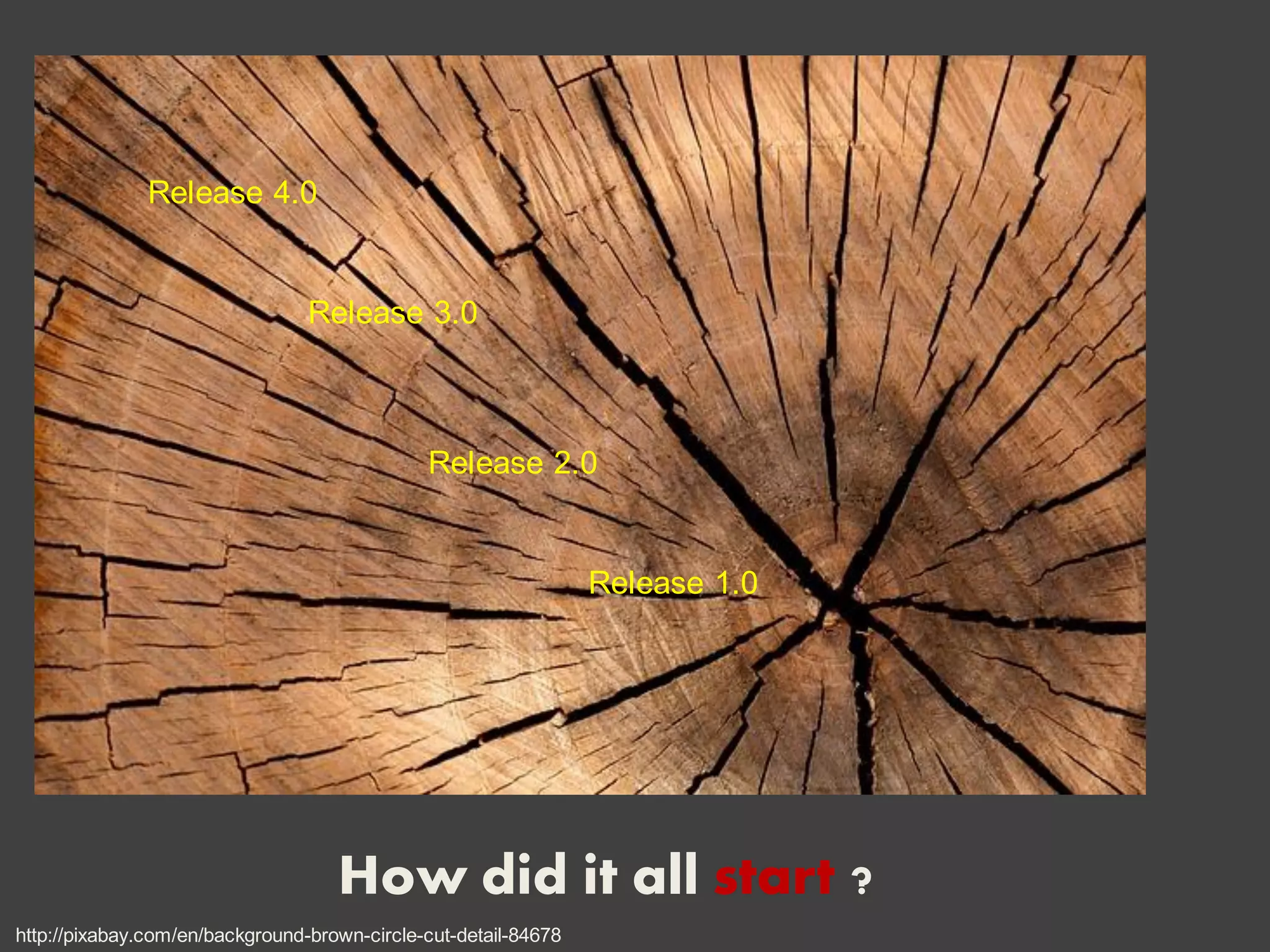
Release 1.0
Release 2.0
Release 3.0
Release 4.0
How did it all start ?
http://pixabay.com/en/background-brown-circle-cut-detail-84678
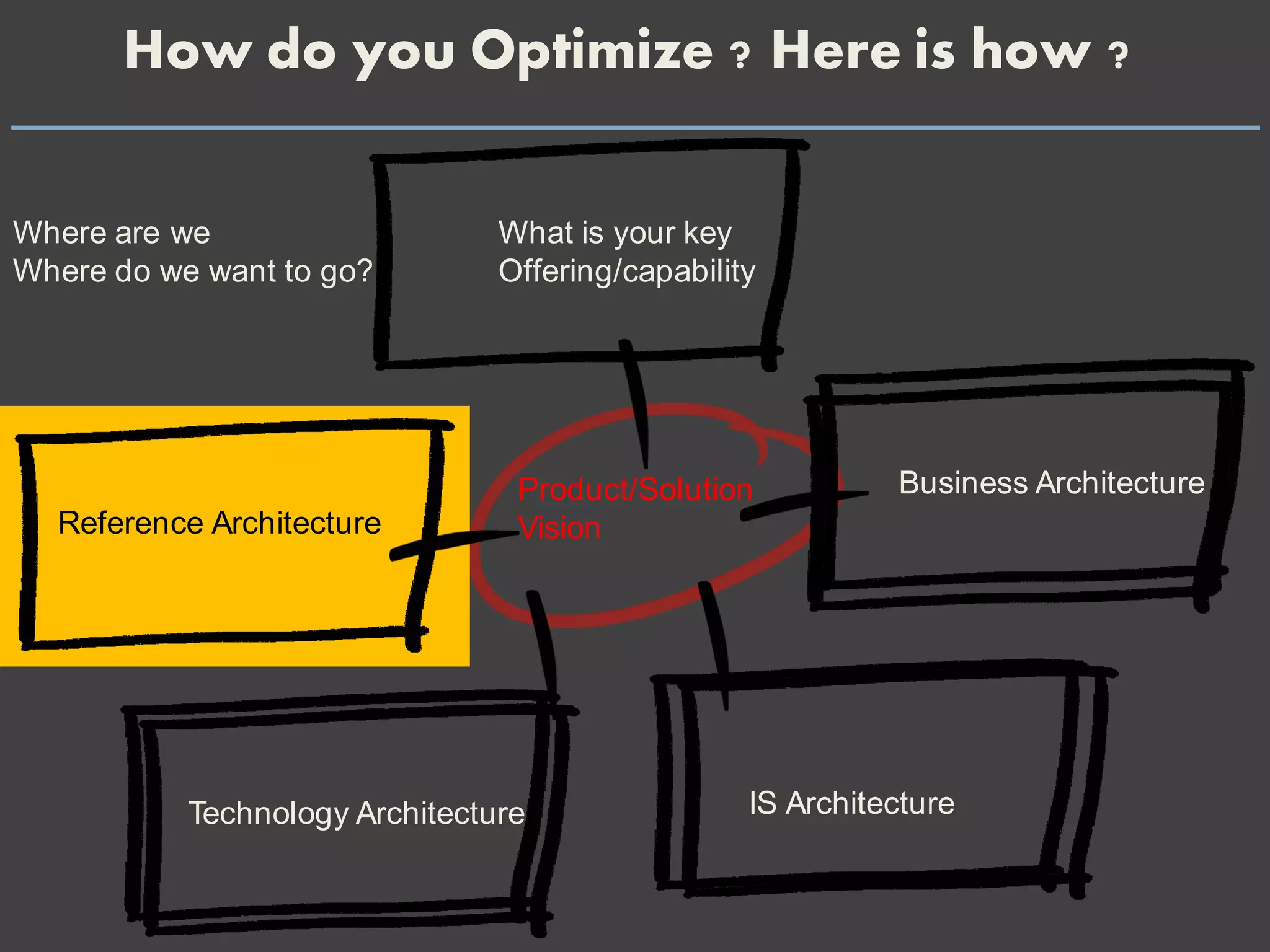
How do you Optimize ? Here is how ?
What is your key
Offering/capability
Product/Solution
Vision
Business Architecture
IS ArchitectureTechnology Architecture
Reference Architecture
Where are we
Where do we want to go?
Have a product and then you create an
architecture around it.
MYOPIC VISION
can’t see
ahead problem
Reference Architectures Cures
Diego David Garcia | Creative Commons - Flickr
You do not know what pieces make up your overall landscape.
Most often things start of simple and over a period of time they end up
becoming monolithic and complex.
How do you classify your architectural artefacts systematically ?
What kind of components go into what sections and how do you string
together an architecture around it.
It is common that many architectures are connected to each other over a
period of time but were designed for serving specific purposes.
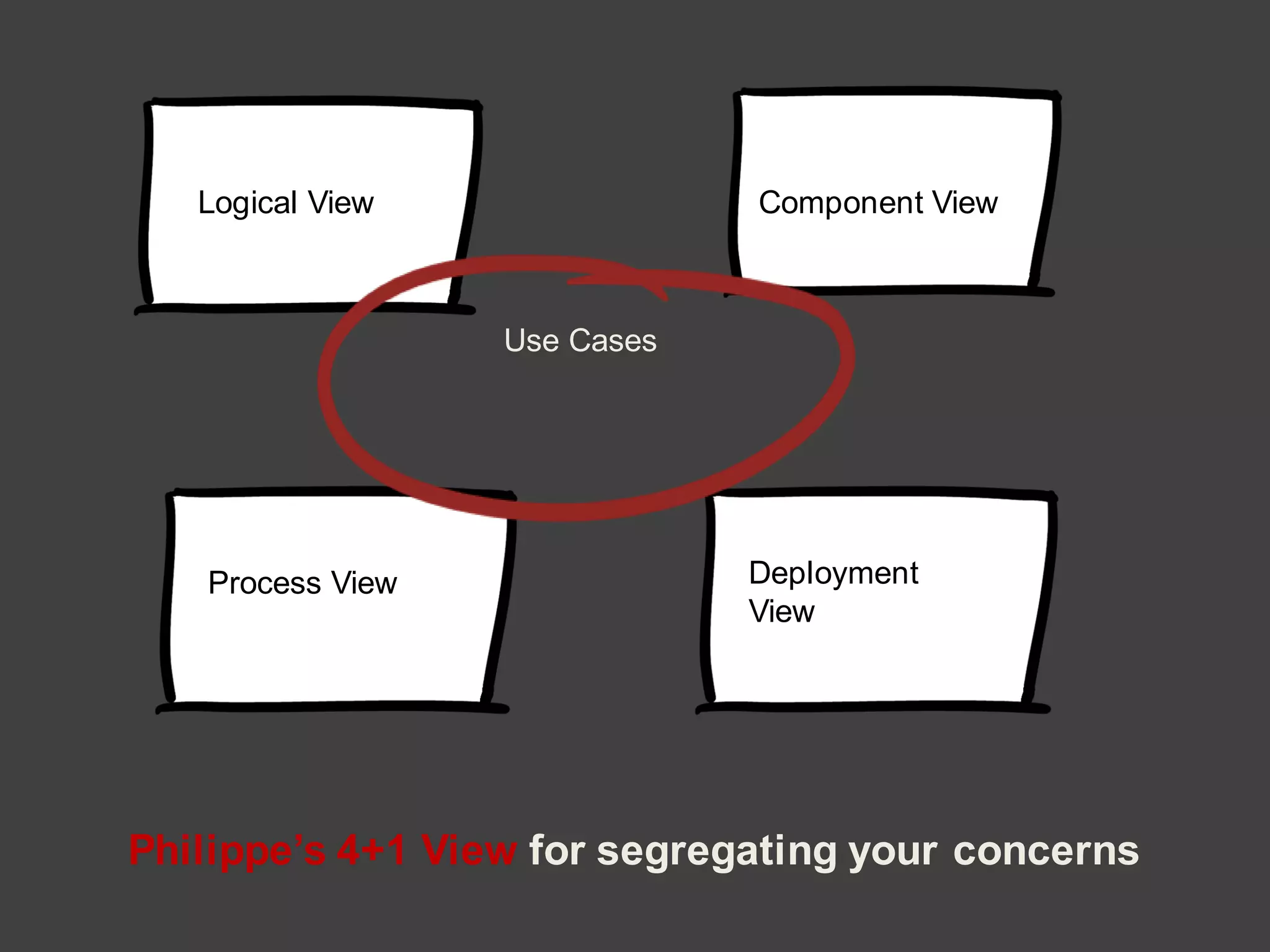
Finally it is all about separation
of concerns
Use Cases
Logical View Component View
Process View Deployment
View
Philippe’s 4+1 View for segregating your concerns
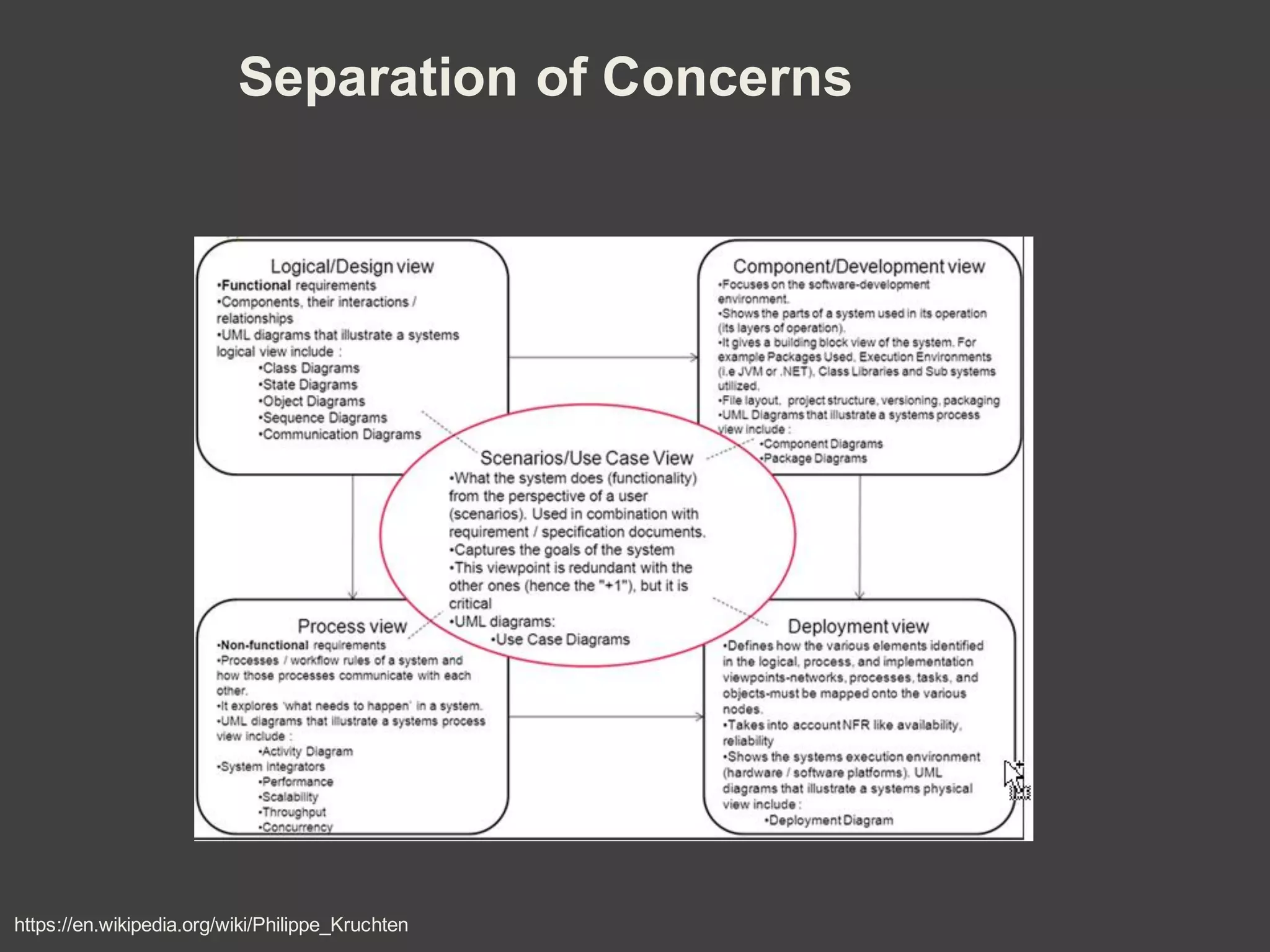
Separation of Concerns
https://en.wikipedia.org/wiki/Philippe_Kruchten
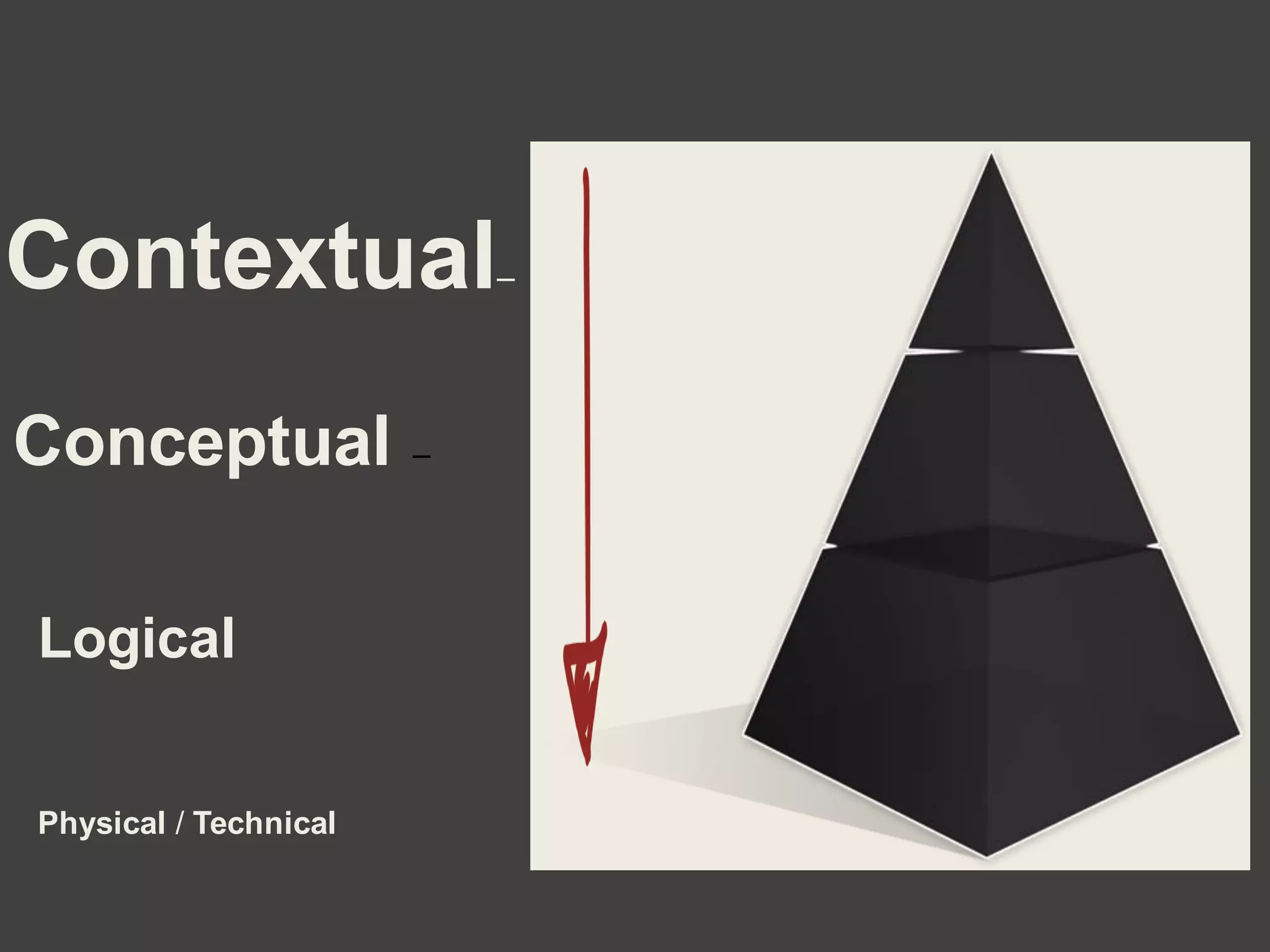
Conceptual –
Logical
Physical / Technical
Contextual–
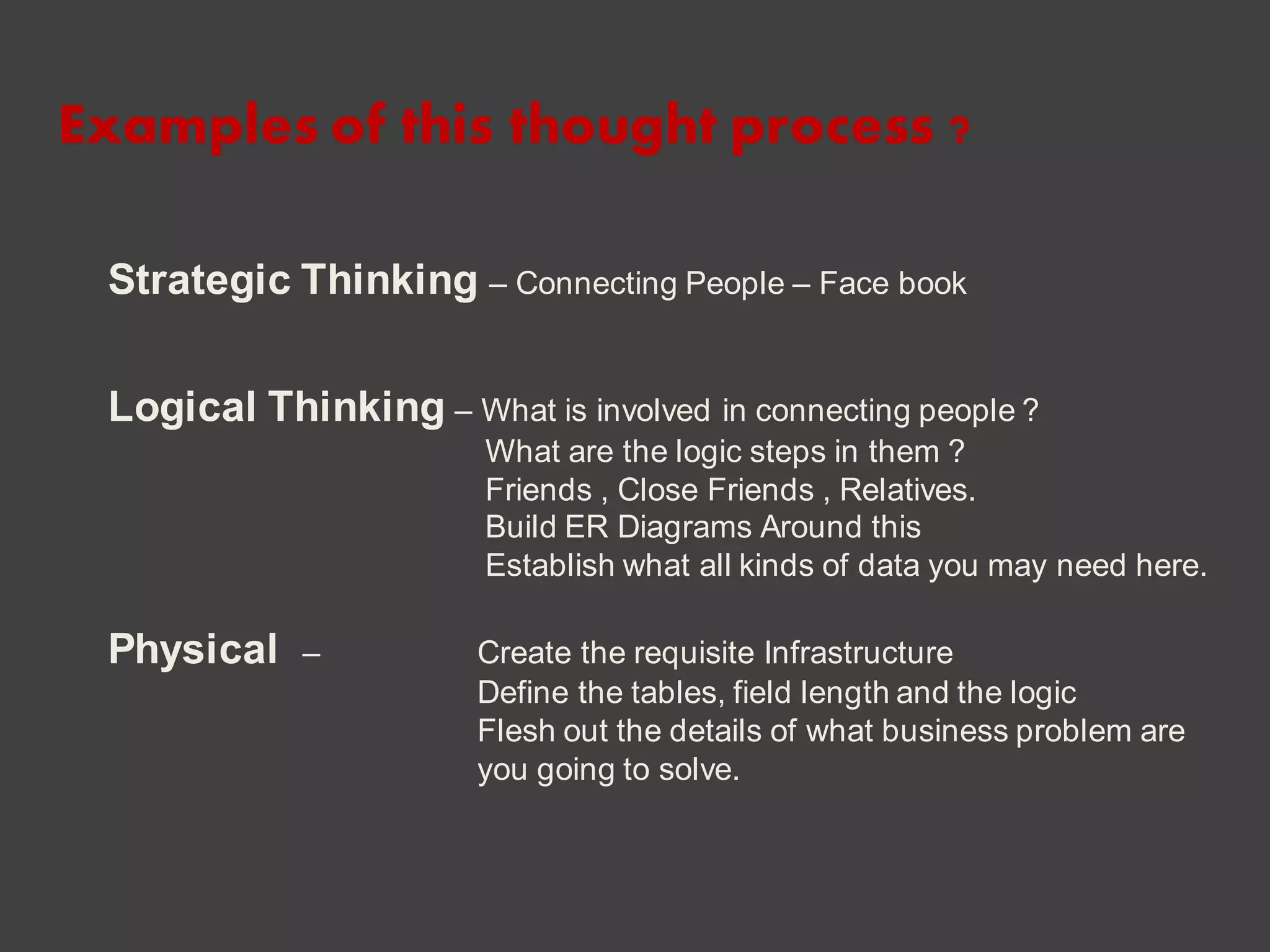
Strategic Thinking – Connecting People – Face book
Logical Thinking – What is involved in connecting people ?
What are the logic steps in them ?
Friends , Close Friends , Relatives.
Build ER Diagrams Around this
Establish what all kinds of data you may need here.
Physical – Create the requisite Infrastructure
Define the tables, field length and the logic
Flesh out the details of what business problem are
you going to solve.
Examples of this thought process ?
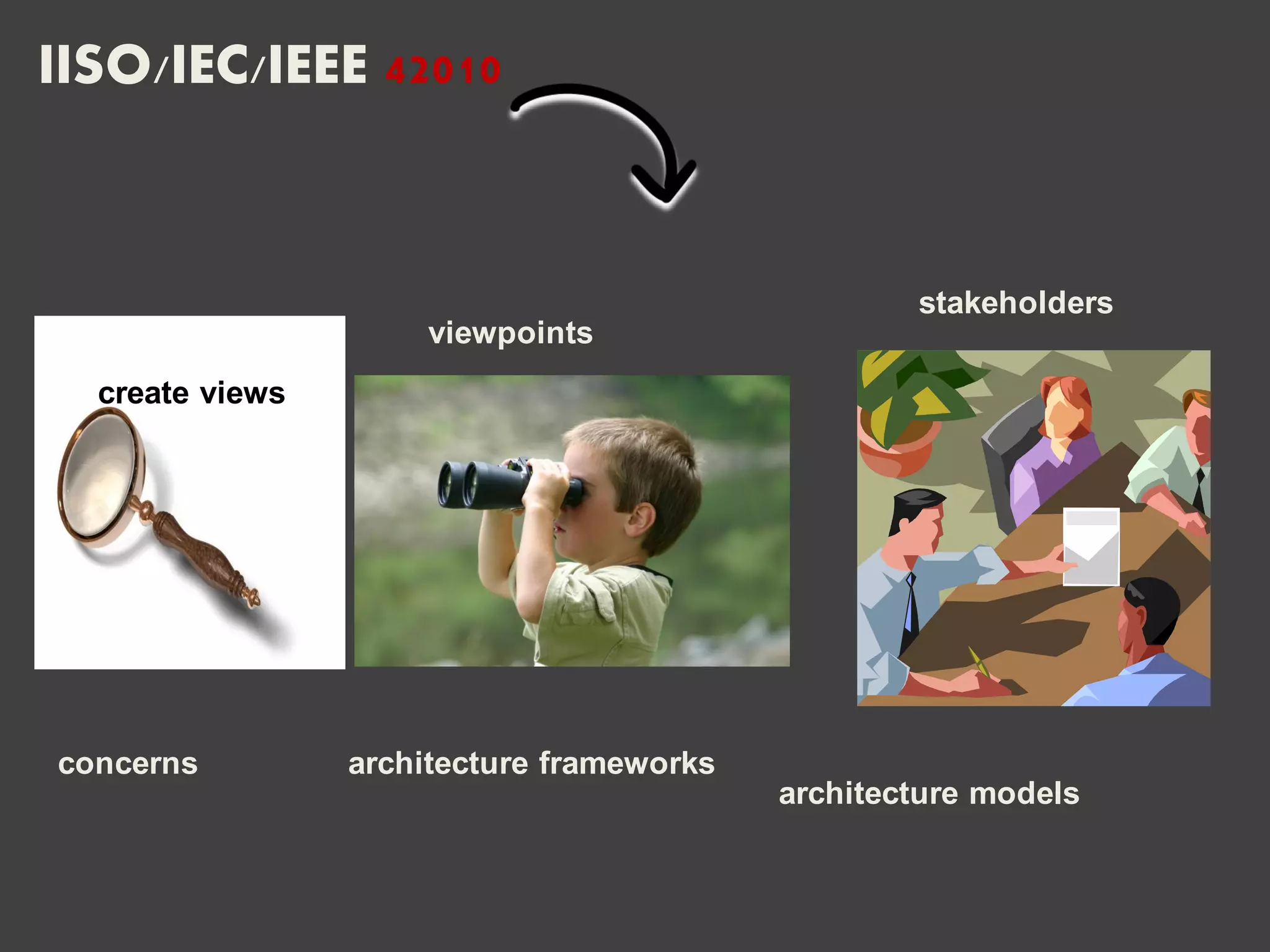
IISO/IEC/IEEE 42010
create views
viewpoints
stakeholders
concerns architecture frameworks
architecture models
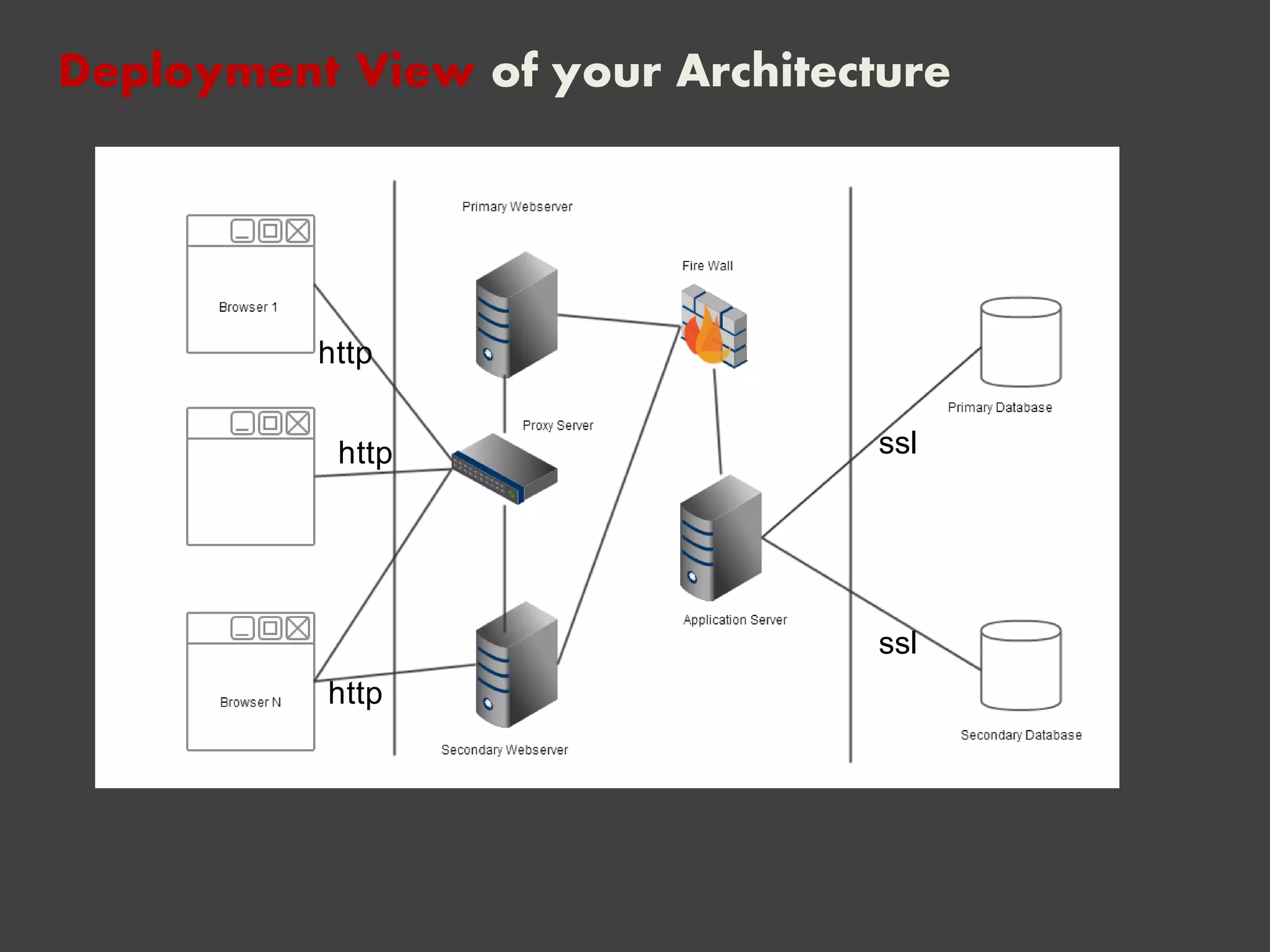
Deployment View of your Architecture
http
http
http
ssl
ssl
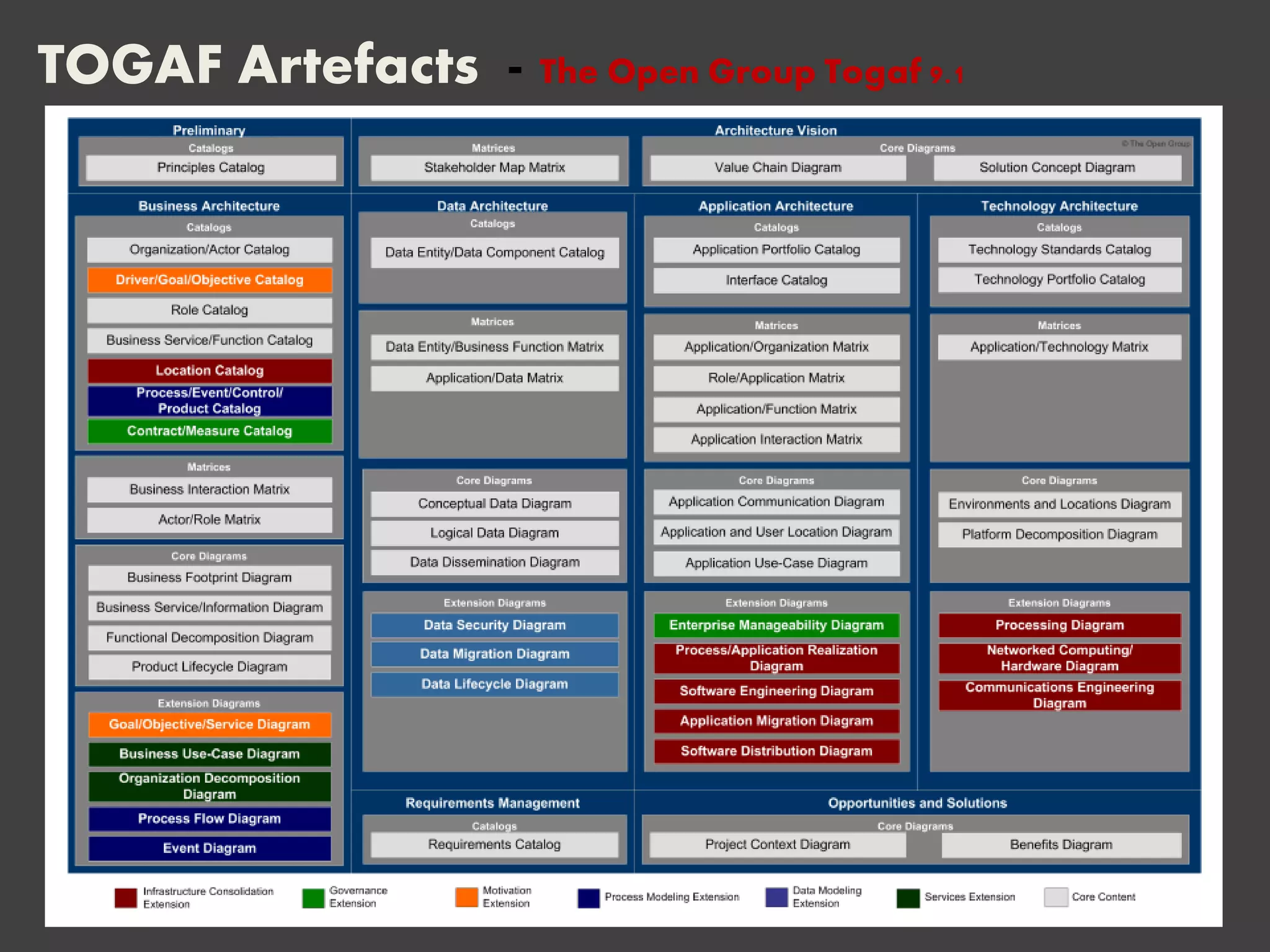
TOGAF Artefacts - The Open Group Togaf 9.1
www.eturnti.com
kiran@eturnti.com
kirandivakaran@gmail.com
Twitter : @eturnti

Business Transformation Using TOGAF

  • 1.
  • 2.
    Developer Analyst Architect / Manager DirectorTechnology Enterprise Architect www.eturnti.com Infosys Ondot Systems Misys Eturnti Consulting Consulting and Training on Enterprise Architecture Kiran Divakaran @eturnti kirandivakaran@gmail.com Bells/BFL
  • 3.
    Transform or Perish Operatingmargins are on a slump Recurring Licensing revenues are decreasing Support Costs are increasing even with offshoring Entire new industries are moving cheese of existing players Employee morale is at its lowest. Do not know how to bring about change in the organization No new products or offerings do not hit the right note with customers Ability of an organization to learn is becoming a challenge
  • 4.
    IT Rationalization Keeping your lightsON Application Portfolio Management IT Optimization ARCHITECT
  • 5.
    Keep Your LightsON Six Sigma 80 / 20 Principle Value Chain Analysis
  • 6.
    Home grown productor solution has now grown Enterprise grade. Simple Applications Enterprise Grade Applications
  • 7.
  • 8.
    Have the commitmentwill go www.opengroup.com/togaf
  • 9.
    Useful for movingfrom AS IS State to TO Be State Mix Agility and Architecture in what proportion to deliver value. Useful in Business and Digital Transformations How do you move from big vision in a product or solution to execution How is a solution architect different from an enterprise architect Where does Business and Technology meet and how do you manage the Interconnect ? Abstraction is a key asset for an Architect ? How do you think abstraction ? Why TOGAF ?
  • 10.
  • 11.
    TOGAF uses Deming’scycle at its core
  • 12.
    Continuous improvement atits core www.opengroup.com/togaf
  • 13.
    Traditional Transformations –Sequential / Waterfall Roger Sessions -- http:/msdn.microsoft.com/en-us/library/aa479371.aspx/ Global HR Payroll General Ledger Accounts Payable Accounts Receivable Billing Assets Accounting Treasury Employee Portal
  • 14.
    Non Sequential /Agile / Iterative www.opengroup.com/togaf
  • 15.
    If you exactlydelivered to your customer what he asked for in the beginning of the project then you have failed Agile Principle / Fact of life
  • 16.
    Agility and ArchitecturePartioning Roger Sessions - http:/msdn.microsoft.com/en-us/library/aa479371.aspx/
  • 17.
    Architecture Iterations orPartioning www.opengroup.com/togaf Time
  • 18.
    Drill Down tothe details Program Level Portfolio Level Project Level Detailed Solution Level projects Port the existing users to LDAP Revamp the UI Layer / Decouple from the business tier Data Migration of profiles for the users to LDAP Program Level Strategic Projects One Digital Experience for End User Omni Channel Gateway Single Sign ON for all users Portfolio Projects / Segment projects Go for a Canonical Messaging Structure Move all Sign ON into LDAP/Common Format Develop UI for tablets,phablets,android,devices
  • 19.
    Identify pain points Whatto accomplish ? Arch Definition Opportunities Transition Architectures Execute Is Value Obtained www.opengroup.com/togaf
  • 20.
    Get Organization Buy In Architecture Right Makeit work Keep it running www.opengroup.com/togaf
  • 21.
    TOGAF Techniques andTools www.opengroup.com/togaf
  • 22.
    Pick an existingpain point in your landscape and make that your mission “Take up one idea. Make that one idea your life; dream of it; think of it; live on that idea. Let the brain, the body, muscles, nerves, every part of your body be full of that idea, and just leave every other idea alone. This is the way to success” – Swami Vivekananda
  • 23.
    Mandate – Bringthe UnBanked Into the Banked Executive Vision - Rural banking and Micro Finance need to be addressed for sustainablegrowth Drivers for effecting this change. Micro Finance and small time money changing hands is not organized and even non-existent. Objectives : Gather the list of BPL( Below Poverty Line) people in need of money storage. a. Meet the people in need of banking on foot / door to door. b. Employ rural youth as ambassadors on commission or even motivate them to do it for free as finally a self sustaining village will eventually be beneficial to all. c. Show them the projected savings and whatmoney saved can buy. d. Create and explain the value proposition of choosing a certain Micro Finance Companies. a. Bring these under a common umbrella linking Aadhaar ID and govt regulatory setup which will preventfraud and dubious middlemen. a. Use mass media, paper hand-outs, stick up posters at common places where people visit in the village to spread the messageto have far reaching effect.
  • 24.
  • 25.
    Vertical and HorizontalCross Cutting concerns
  • 26.
  • 27.
    Business Principles OperatingModel a) Rationale All un banked users to be verified by Aadhaar ID or fingerprinting to eliminate duplicity. Implications Not having this form of validation would require that the users of the banking system needed to have someone who could refer them. Security infrastructure need not be elaborate given Aadhaar ID's penetration in the rural sector. b) Rationale All usersof the systemwill transact not more than 1000/- per day. Implications Not keeping an upper limit on the money withdrawn would amount to expensive security solutions and personnel not affordable in such areas. Ideally we can go around the data , application and technology architectures for driving rural governance. Let's say at the moment we are confronted by putting the business architecture right and the rest of the architectures would come eventually.
  • 28.
    Some examplesof commonmetaphorshere for rural banking would be 1. Daily Deposit Scheme - This can be put across in vernacular terminology and context as suitableto the public where this is being implemented. 2. Identify the Stakeholders and segregating the term holders based on the scheme applicable.Daily / Monthly or Bi Monthly etc. 3. Deposit Process- Collectionexecutive comes and handleseither give or take of money. 4. Fingerprint / Aadhaar ID/ or Identify verification proc - Authenticate the people deposit or withdrawingthe money. 5. Central Consolidation of Daily Balances - Initially a bank executive collects the details and goes and deposits the same in the banks backend system travelling back to the operationscentre. So balances will be offline and have an offline limit. Product / solution wide taxonomy / metaphor
  • 29.
  • 30.
  • 31.
    Business Work Flowbased on the taxonomy
  • 32.
  • 33.
    Knowledge Management –Enterprise Continuum www.opengroup.com/togaf
  • 34.
    Analysis tool: Help establishthekey relationshipsand dependencies between the business services, business processes, applicationsand technology Planning tool: Helps developarchitecture roadmaps and align strategy with execution Decision-makingtool: Provides a sound framework for making decisions. Design tool: Industry best practice design approaches, patterns, guidelines, and reference models Change management tool: Manage change across multipledevelopmentprojects and initiatives Governance tool: One stop shop for a master repository which holds the target enterprise architecture, and a single architecturalblueprintof principles, standards, patterns, policies, guidelines, reference models, reusable assets and templates Alignment tool: Marry business strategy and IT delivery. Get all on aligned to the same operating model.
  • 35.
    Get out ofyour way for your own good. Common Roadblocks
  • 36.
    What if thereis no Reference Architecture for Your Enterprise ?
  • 37.
    If you don’tyou will still have one which may not be to your liking. #1
  • 38.
    You will notknow what lies under the hood. #2
  • 39.
    People who builtit are no longer with the Organizations. #3
  • 40.
    FIX Create one whichis there for all to see at least at a reasonable degree of understanding.
  • 41.
    What pushes peopleto HAVE it ?
  • 42.
    Release 1.0 Release 2.0 Release3.0 Release 4.0 How did it all start ? http://pixabay.com/en/background-brown-circle-cut-detail-84678
  • 43.
    How do youOptimize ? Here is how ? What is your key Offering/capability Product/Solution Vision Business Architecture IS ArchitectureTechnology Architecture Reference Architecture Where are we Where do we want to go?
  • 44.
    Have a productand then you create an architecture around it.
  • 45.
    MYOPIC VISION can’t see aheadproblem Reference Architectures Cures
  • 46.
    Diego David Garcia| Creative Commons - Flickr
  • 47.
    You do notknow what pieces make up your overall landscape. Most often things start of simple and over a period of time they end up becoming monolithic and complex. How do you classify your architectural artefacts systematically ? What kind of components go into what sections and how do you string together an architecture around it. It is common that many architectures are connected to each other over a period of time but were designed for serving specific purposes. Finally it is all about separation of concerns
  • 48.
    Use Cases Logical ViewComponent View Process View Deployment View Philippe’s 4+1 View for segregating your concerns
  • 49.
  • 50.
    Conceptual – Logical Physical /Technical Contextual–
  • 51.
    Strategic Thinking –Connecting People – Face book Logical Thinking – What is involved in connecting people ? What are the logic steps in them ? Friends , Close Friends , Relatives. Build ER Diagrams Around this Establish what all kinds of data you may need here. Physical – Create the requisite Infrastructure Define the tables, field length and the logic Flesh out the details of what business problem are you going to solve. Examples of this thought process ?
  • 52.
    IISO/IEC/IEEE 42010 create views viewpoints stakeholders concernsarchitecture frameworks architecture models
  • 53.
    Deployment View ofyour Architecture http http http ssl ssl
  • 54.
    TOGAF Artefacts -The Open Group Togaf 9.1
  • 55.