The document discusses the IT4IT framework as a unifying model for managing both digital and traditional IT services, highlighting its application in optimizing IT operating models across various organizations. It examines case studies of a large internal IT shared services provider and a government agency, emphasizing the importance of aligning IT strategies with business goals and enhancing value streams. Additionally, it outlines potential areas for improvement, including better governance, automation, and the need for effective demand and portfolio management tools.
Introduction to the IT4IT standard's role in unifying IT service management for digital and traditional services through capability uplift and future state design.
The author's personal insights on two decades of experience with various IT management frameworks and their evolution.
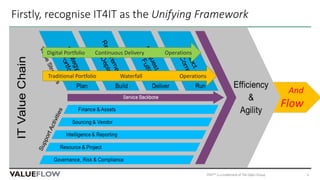
Description of IT4IT as a unifying framework for digital and traditional services, emphasizing its component structure to manage service delivery effectively.
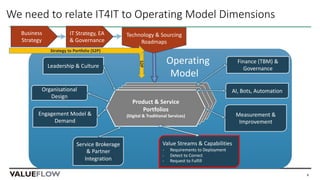
Discussion on the alignment of IT4IT with various operating model dimensions, linking strategy, service portfolios, value streams, and capabilities.
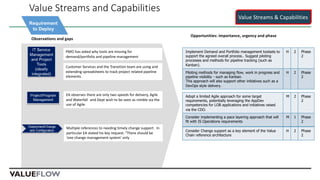
Analysis of current operating model gaps and challenges in service delivery, including the need for improved demand and pipeline management.
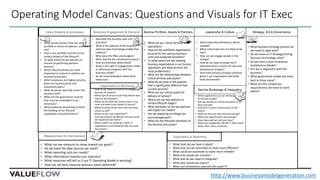
Discussion points and questions about structuring IT and engaging with business needs, focusing on service and governance alignment.
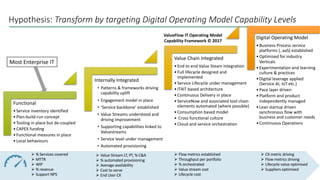
Framework for transforming IT capabilities through stages of integration, particularly emphasizing digital operating models and metrics.
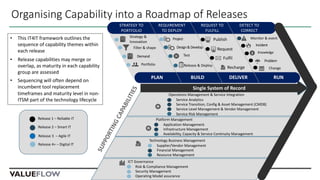
Strategic organization of capabilities into a release roadmap, highlighting key themes for improving service delivery.
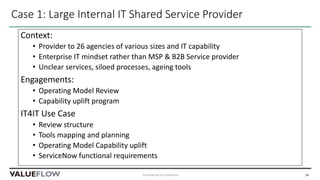
Review of an internal IT shared service provider's structure and the implementation of IT4IT to improve their operating model.
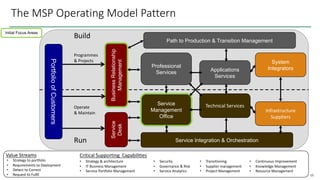
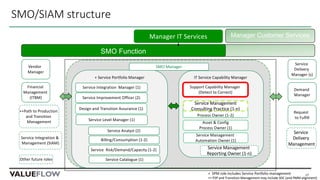
Exploration of the service management office function and its role in improving demand management and service delivery integration.
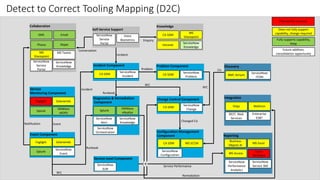
Mapping of tooling components to value streams, ensuring IT service operations align with efficient detection and correction processes.
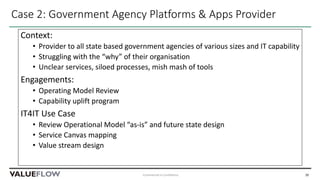
Review of challenges faced by a government agency IT provider, focusing on clarity in service delivery and operational structure.
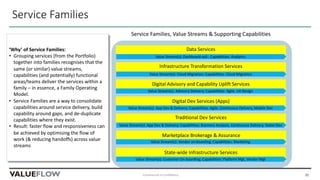
Discussion on service families that consolidate capabilities around service delivery, aiming to expedite workflow and responsiveness.
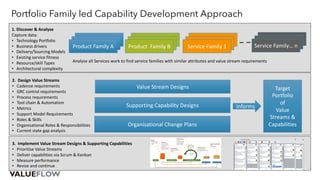
Plan outlining assessment of delivery platforms, value stream designs, and the need for organizational change to enhance performance.
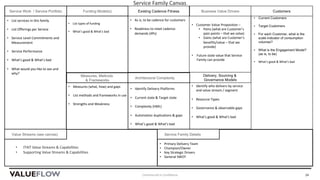
Uniting digital app delivery capabilities with value stream frameworks, highlighting components of effective service management.
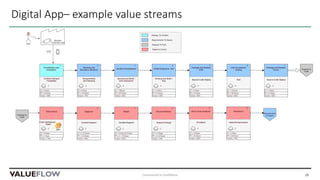
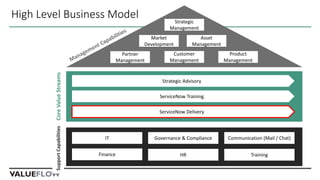
Insights from a medium-sized professional services firm using IT4IT value streams to standardize and enhance their service model.
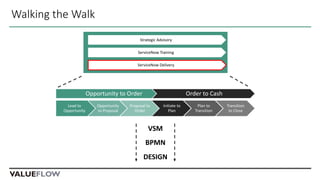
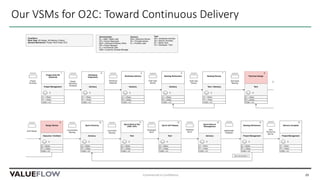
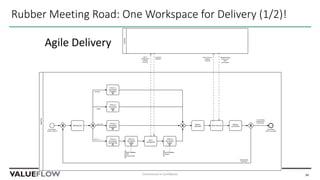
Step-by-step process of mapping core value streams and delivery workflows to achieve continuous delivery and operational efficiency.
Key lessons learned from implementing the IT4IT framework, stressing the importance of service families and cultural alignment.
Closing slide offering additional resources for attendees.
Date:
Author:
Using the IT4IT™Standard
as the Unifying Framework
for Digital & Traditional Services
October 30
David Favelle
2.
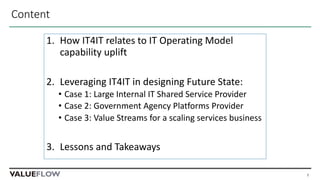
Content
1. How IT4ITrelates to IT Operating Model
capability uplift
2. Leveraging IT4IT in designing Future State:
• Case 1: Large Internal IT Shared Service Provider
• Case 2: Government Agency Platforms Provider
• Case 3: Value Streams for a scaling services business
3. Lessons and Takeaways
2
3.
Why I’m intoIT4IT
Or
“20 years of messing with IT Management frameworks”
3Commercial in Confidence
4.
And
Flow
Firstly, recognise IT4ITas the Unifying Framework
4IT4IT™ is a trademark of The Open Group
Digital Portfolio Continuous Delivery Operations
Traditional Portfolio Waterfall Operations
5.
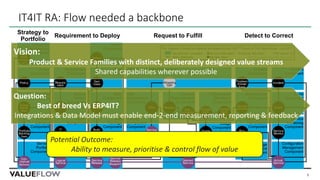
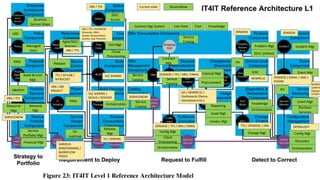
IT4IT RA: Flowneeded a backbone
5
Configuration
Management
Component
Service
Monitoring
Component
Event
Component
Incident
Component
Change
Control
Component
Diagnostics &
Remediation
Component
Service Level
Component
Problem
Component
Usage
Component
Chargeback/
Showback
Component
Fulfillment
Execution
Component
Request
Rationalization
Component
Catalog
Composition
Component
Offer
Management
Component
Offer Consumption Component
Release
Composition
Component
Build
Package
Component
Build
Component
Test
Component
Defect
Component
Service
Design
Component
Project
Component
Source
Control
Component
Requirement
Component
Service
Portfolio
Component
Portfolio
Demand
Component
Proposal
Component
Policy
Component
Enterprise
Architecture
Component
Require-
ment
Test
Case
Problem,
Known
Error
Incident
Source
Charge-
back
Contract
Build Offer
Sub-
scription
Service
Contract Event
Portfolio
Backlog
Item
IT
Initiative
Build
Package
Service
Catalog
Entry
RFC
Usage
Record
Run
Book
Service
Monitor
Defect
Request
Fulfill-
ment
Request
Shopping
Cart
Con-
ceptual
Service
Logical
Service
Service
Release
Blueprint
Actual
Service
Desired
Service
Service
Release
Scope
Agree-
ment
Policy
Enter-
prise
Architec-
ture
Charge-
back
Record
Strategy to
Portfolio
Requirement to Deploy Request to Fulfill Detect to Correct
IT4IT™ is a trademark of The Open Group
Auxiliary data object IT4IT version: 2.1
Key data object
Service model object
Entity relationship
Key functional component
This diagram is based on material developed by the IT4IT™ Forum of The Open Group – Jan 2017
Vision:
Product & Service Families with distinct, deliberately designed value streams
Shared capabilities wherever possible
Question:
Best of breed Vs ERP4IT?
Integrations & Data Model must enable end-2-end measurement, reporting & feedback
Potential Outcome:
Ability to measure, prioritise & control flow of value
6.
Operating
Model
IT Strategy, EA
&Governance
Business
Strategy
Technology & Sourcing
Roadmaps
Service Portfolio (target),
Medibank Assets &
Sourced Services
We need to relate IT4IT to Operating Model Dimensions
6
Product & Service
Portfolios
(Digital & Traditional Services)
AI, Bots, Automation
Value Streams & Capabilities
- Requirements to Deployment
- Detect to Correct
- Request to Fulfill
Measurement &
Improvement
Service Brokerage
& Partner
Integration
Organisational
Design
Leadership & Culture
Engagement Model &
Demand
Finance (TBM) &
Governance
S2P
Strategy to Portfolio (S2P)
7.
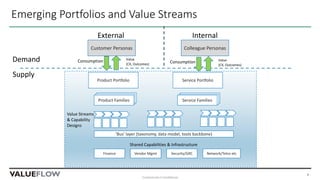
Emerging Portfolios andValue Streams
Commercial in Confidence
7
Customer Personas
Consumption Value
(CX, Outcomes)
Demand
Supply
Colleague Personas
’Bus’ layer (taxonomy, data model, tools backbone)
Service Portfolio
Service FamilyService FamilyProduct Families Service FamilyService FamilyService Families
Value Streams
& Capability
Designs
Finance Vendor Mgmt Security/GRC Network/Telco etc
Shared Capabilities & Infrastructure
Product Portfolio
Consumption Value
(CX, Outcomes)
External Internal
8.
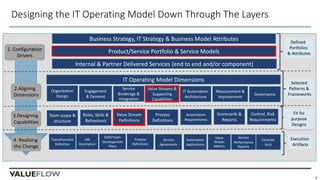
Designing the ITOperating Model Down Through The Layers
8
Product/Service Portfolio & Service Models1. Configuration
Drivers
Internal & Partner Delivered Services (end to end and/or component)
Business Strategy, IT Strategy & Business Model Attributes Defined
Portfolios
& Attributes
2.Aligning
Dimensions
IT Operating Model Dimensions
Engagement
& Demand
Service
Brokerage &
Integration
Organisation
Design
IT Automation
Architecture
Measurement &
Improvement
Value Streams &
Supporting
Capabilities
Governance
Selected
Patterns &
Frameworks
3.Designing
Capabilities
Roles, Skills &
Behaviours
Process
Definitions
Automation
Requirements
Scorecards &
Reports
Value Stream
Definitions
Team scope &
structure
Control, Risk
Requirements
Fit for
purpose
Designs
Fit for
purpose
Designs
4. Realising
the Change
Job
Description
Process
Definitions
Service
Agreements
Staff/Team
Development
Plans
Team/Function
Definition
Automation
Applications
Service
Performance
Reports
Controls,
tests
Execution
Artifacts
Value
Stream
Metrics
9.
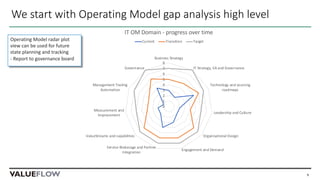
We start withOperating Model gap analysis high level
9
0
1
2
3
4
5
6
7
8
Business Strategy
IT Strategy, EA and Governance
Technology and sourcing
roadmaps
Leadership and Culture
Organisational Design
Engagement and Demand
Service Brokerage and Partner
Integration
ValueStreams and capabilities
Measurement and
Improvement
Management Tooling
Automation
Governance
IT OM Domain - progress over time
Current Transition TargetOperating Model radar plot
view can be used for future
state planning and tracking
- Report to governance board
10.
Observations and gaps
ValueStreams and Capabilities
PMO has asked why tools are missing for
demand/portfolio and pipeline management
EA observes there are only two speeds for delivery, Agile
and Waterfall and Dept wish to be seen as nimble via the
use of Agile.
Customer Services and the Transition team are using and
extending spreadsheets to track project related pipeline
elements.
Multiple references to needing timely change support. In
particular EA stated his key request: "There should be
‘one change management system' only
Opportunities: importance, urgency and phase
Implement Demand and Portfolio management toolsets to
support the agreed overall process.. Suggest piloting
processes and methods for pipeline tracking (such as
Kanban).
H 2 Phase
2
Piloting methods for managing flow, work in progress and
pipeline visibility - such as Kanban.
This approach will also support other initiatives such as a
DevOps style delivery.
H 2 Phase
2
Adopt a limited Agile approach for some target
requirements, potentially leveraging the AppDev
competencies for LOB applications and initiatives raised
via the CDO.
M 2 Phase
2
Consider implementing a pace layering approach that will
fit with IS Operations requirements
M 1 Phase
2
Consider Change support as a key element of the Value
Chain reference architecture
H 2 Phase
2
Value Streams & Capabilities
11.
http://www.businessmodelgeneration.com
• How dowe need to structure to engage:
Business & Suppliers
• What type of structure will help deliver best
value to the business?
• What are the skills we need to have in our
ream and what to we expect to source?
• What structure do we have now and what
serves us well?
• What are the most important IT
services/systems we deliver and how could
we organise to do better?
• What models are working in other IT
organisations and industries that we could
learn from?
• What are our critical Services in
operations?
• How are the portfolios organised to
account for the various business
units and corporate functions?
• To what extent are we meeting
business expectations in our Service
operations and what services are
most problematic?
• What are the relationships between
critical services and assets?
• What do we have in the pipeline
that is significantly different than
current services?
• What are our critical assets for
delivery of service?
• Where are our key partners in
various lifecycle stages?
• What attributes of our key partners
will impact our model?
• Are we expecting to change our
sourcing approach?
• What are the lifecycles durations of
the Services and assets?
• Which applications are (or will be) going to a
cloud SaaS model?
• Will you decide on a PaaS ecosystem or do
best of breed?
• How will IT source infrastructure in the
future?
• What are the new risks that will emerge?
• What new opportunities will emerge?
• How many partners will you have?
• What new capabilities will the IT team need::
Roles, skills, tools, processes
• What are the drivers from our service
portfolio in terms of cadence, cost and
risk?
• How is our portfolio sourced across
various phases of the lifecycle?
• To what extent do we execute on
process Vs governing partners
process?
• Which lifecycle phases are most
important to mature to achieve our
business outcomes?
• Which processes are highest priority
given our business goals and
investment plans?
• What do we do now that serves the
business well?
• What are the governance controls
that must be embedded in our
processes?
• What measures would help us drive
the building of our lifecycle
capabilities and performance?
• No way
• What business strategy process do
we need to align with?
• Do we have an IT Strategy driving
business technology value?
• Do we have a clear Enterprise
Architecture Model?
• Are we in alignment with the
business?
• What governance model will work
best to drive value?
• What are the compliance
requirements we need to work
within?
• What can we measure to move toward our goals?
• Do we have the data sources we need?
• What reporting suits our needs?
• What information matches our maturity?
• What measures will tell us if our IT Operating Model is working?
• How can we best measure business value delivered?
• What tools do we have in place?
• What else can we automate to make more efficient?
• What could we automate to make more reliable?
• What else should we monitor?
• What else do we need to integrate?
• What else should we report?
• What sort of business case will this need ?!!
• How does the business plan and
prioritise?
• What is the cadence of the business
and how does technology enable that
cadence?
• Who owns the P&Ls and budgets?
• Who controls the investment process?
• How are priorities determined?
• What is the right IT engagement model
to effectively integrate with the
business model?
• Do we need dedicated relationship
resources?
• What leadership behaviours will be
needed?
• What cultural barriers are likely to be
met?
• How can we engage people in the
change?
• How do we need to shape the IT
executive team in terms of roles and
behavioural changes?
• How have previous change initiatives
gone in our organisation and what
have we learned?
Service Portfolio, Assets & Partners
Service Brokerage & Integration
Strategy, EA & GovernanceLeadership & CultureBusiness Engagement & Demand
Organisational Structure
Value Streams & processes
Measurement & Improvement Automation & Reporting
Operating Model Canvas: Questions and Visuals for IT Exec
Organising Capability intoa Roadmap of Releases
Single System of Record
SUPPORTINGCAPABILITIES
ICT Governance
• Risk & Compliance Management
• Security Management
• Operating Model assurance
Technology Business Management
• Supplier/Vendor Management
• Financial Management
• Resource Management
Demand
Project Publish
Incident
Monitor & event
Problem
Change
Test
PLAN BUILD DELIVER RUN
STRATEGY TO
PORTFOLIO
REQUIREMENT
TO DEPLOY
REQUEST TO
FULFILL
DETECT TO
CORRECT
Portfolio
Fulfil
Release & Deploy
Design&Develop
Strategy &
Innovation
Filter & shape Request
Recharge
Knowledge
Operations Management & Service Integration
• Service Analytics
• Service Transition, Config & Asset Management (CMDB)
• Service Level Management & Vendor Management
• Service Risk Management
Platform Management
• Application Management
• Infrastructure Management
• Availability, Capacity & Service Continuity Management
• This IT4IT framework outlines the
sequence of capability themes within
each release
• Release capabilities may merge or
overlap, as maturity in each capability
group are assessed
• Sequencing will often depend on
incumbent tool replacement
timeframes and maturity level in non-
ITSM part of the technology lifecycle
Release 4+ – Digital IT
Release 3 – Agile IT
Release 2 – Smart IT
Release 1 – Reliable IT
14.
Case 1: LargeInternal IT Shared Service Provider
Context:
• Provider to 26 agencies of various sizes and IT capability
• Enterprise IT mindset rather than MSP & B2B Service provider
• Unclear services, siloed processes, ageing tools
Engagements:
• Operating Model Review
• Capability uplift program
IT4IT Use Case
• Review structure
• Tools mapping and planning
• Operating Model Capability uplift
• ServiceNow functional requirements
Commercial in Confidence 14
15.
15
The MSP OperatingModel Pattern
Service
Management
Office
Professional
Services Applications
Services
Technical Services
Infrastructure
Suppliers
System
Integrators
BusinessRelationship
Management
Build
Run
Programmes
& Projects
Operate
& Maintain
Critical Supporting Capabilities
• Strategy & architecture
• IT Business Management
• Service Portfolio Management
• Security
• Governance & Risk
• Service Analytics
• Transitioning
• Supplier management
• Project Management
• Continuous Improvement
• Knowledge Management
• Resource Management
Service
Desk
Service Integration & Orchestration
Path to Production & Transition Management
PortfolioofCustomers
Value Streams
• Strategy to portfolio
• Requirements to Deployment
• Detect to Correct
• Request to Fulfil
Initial Focus Areas
16.
UsersITLiaison
BusinessInvestment
ManagementProcess
OperationalStrategicTactical
Project
Management
Relationship
Managers
Non-Standard
Requests
Minor Capability
Requirements Defined
Requirements
Service
ChangeRequests
ConceptsIdeas
Concept validation tasks
Minor projects
Enhancement Tasks
Service Change Tasks
Maintenance Tasks
Request Fulfilment (non-std)
Service Level Management
Concept Validation
IT Maintenance
Workload&ResourceManagement
BusinessDemand
Task
Management
CustomerPortal&
ServiceDesk
Incidents,
Requests
Queries
Standard Requests
Incidents
Problems
Request Tasks
Problem Tasks
Maintenance Tasks
Incident Tasks
Request Fulfillment
Incident Management
Problem Management
Ongoing Maintenance
TaskBacklog
(OperationalKanban)
Major Technology
Capability
Requirements
TechnologyInvestment
Governance
Defined Business
Technology Investment
Portfolios (per BU)
Major Business Projects
Major IT Projects
IT Initiated Major
Capability Upgrades
Approved
Business
and IT Projects
Portfolio
Management
DemandManagement
ProjectBacklog
(ProjectsKanban)
Programme
Management
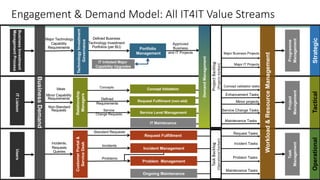
Engagement & Demand Model: All IT4IT Value Streams
17.
SMO Function
SMO/SIAM structure
17
ManagerIT Services
SMO Function
+ Service Portfolio Manager
Service
Delivery
Manager (s)
Service Analyst (2)
Service Level Manager (1)
Service Improvement Officer (2)
Other future roles
IT Service Capability Manager
Change & Release
Process Owner (1-2)
SMO Manager
Manager Customer Services
Demand
Manager
Design and Transition Assurance (1)
Service Integration Manager (1)
Request
to Fulfill
Support Capability Manager
(Detect to Correct)
Billing/Consumption (1-2)
Service Risk/Demand/Capacity (1-2)
Service Catalogue (1)
Service Management
Automation Owner (1)
Asset & Config
Process Owner (1)
Vendor
Manager
Financial
Management
(ITBM)
++Path to Production
and Transition
Management
Service
Delivery
Management
Service Management
Reporting Owner (1-n)
Service Integration &
Management (SIAM)
Service Management
Consulting Practice (1-n)
+ SPM role includes Service Portfolio management
++ P2P and Transition Management may include SDC (and PMM alignment)
18.
Detect to CorrectTooling Mapping (D2C)
Problem ComponentIncident Component
Service Level Component
Event Component
Change Control ComponentDiagnostics & Remediation
Component
Service
Monitoring Component
Configuration Management
Component
Collaboration Knowledge
Self-Service Support
Discovery
Integration
Reporting
ServiceNow
Knowledge
CA SDM
Splunk
Business
Objects XI
BMC Atrium
Foglight
https Mailtron
MS
SharepointServiceNow
Service
Portal
Solarwinds
VMWare
vRealize
Voice
Biometrics
Enterprise
ESB?
REST, Web
Services
ServiceNow
ITOM
ServiceNow
Performance
Analytics
MS Excel
MS Access
Ivanti
Xtraction
ServiceNow
Alert
Intranet
Splunk
MS Teams
ServiceNow
Service
Portal
ServiceNow
Knowledge
Foglight Solarwinds
Splunk
ServiceNow
Event
ServiceNow
Knowledge
ServiceNow
Orchestration
CA SDM
ServiceNow
Change
CA SDM
ServiceNow
Incident CA SDM
ServiceNow
Problem
VMWare
vROPS
CA SDM
ServiceNow
Configuration
MS SCCM
ServiceNow
SLM
ServiceNow
Service 360
SMS Email
Phone Skype
MS
Sharepoint
Does not fully support
capability, change required
Fully supports capability,
keep
Future addition,
consolidation opportunityIncident
Event
Incident
Runbook
RFC
Conversation
Enquiry
Problem
Runbook
RFC
Service Performance
CIs
RFC
Changed CIs
Remediation
Notification
Planned for removal
19.
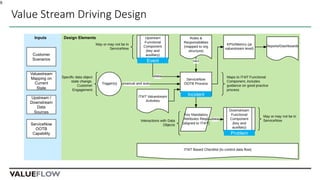
Value Stream DrivingDesign
19
Customer
Scenarios
Valuestream
Mapping on
Current
State
ServiceNow
OOTB
Capability
Upstream /
Downstream
Data
Sources
Inputs Design Elements
Incident
Problem
Event
20.
Case 2: GovernmentAgency Platforms & Apps Provider
Context:
• Provider to all state based government agencies of various sizes and IT capability
• Struggling with the “why” of their organisation
• Unclear services, siloed processes, mish mash of tools
Engagements:
• Operating Model Review
• Capability uplift program
IT4IT Use Case
• Review Operational Model “as-is” and future state design
• Service Canvas mapping
• Value stream design
Commercial in Confidence 20
21.
Service Families
Operating Model:Orchestrator & Integrator Pattern (& some delivery ;-])
Commercial in Confidence 21
Technology Business Management
Finance, Commercial & Vendor Mgt, Security, GRC, Service Transition,
Shared Taxonomy & Practices
IT4IT, Agile, ITIL, DevOps, Dojo
Supporting Technology
ServiceNow
2oValueStreams
Service
Customers
Minister
Clusters
Agencies
Non-Govt
Suppliers &
Marketplace
Providers
EngagementModel
(Omni-channel)
Demand
Patterns
Service
Fees
Supporting Capabilities
Internal
Providers
Delivery, Platform &
Operations Capabilities
Citizens
Demand Supply
Commercial in Confidence
Data Services
Digital Dev Services (OneGov GLS)
Digital Dev Services (Apps)
Value Stream(s): App Dev & Delivery; Capabilities: Agile, Continuous Delivery, Mobile Dev
Marketplace Brokerage & Assurance
State-wide Infrastructure Services (GovDC)
Value Stream(s): Customer On-boarding; Capabilities: Platform Mgt, Vendor Mgt
Digital Advisory and Capability Uplift Services
Infrastructure Transformation Services
Value Stream(s): Dashboard-aaS ; Capabilities: Analytics
Value Stream(s): Cloud Migration; Capabilities: Cloud Migration
Value Stream(s): Advisory Delivery; Capabilities: Agile, UX Design
Value Stream(s): App Dev & Delivery; Capabilities: Agile, Continuous Delivery, Mobile Dev
Value Stream(s): App Dev & Delivery; Capabilities: Business Analysis, Continuous Delivery, Siebel Dev
Value Stream(s): Vendor on-boarding: Capabilities: Marketing
Value Stream(s): Customer On-boarding; Capabilities: Platform Mgt, Vendor Mgt
Data Services
Traditional Dev Services
Digital Dev Services (Apps)
Value Stream(s): App Dev & Delivery; Capabilities: Agile, Continuous Delivery, Mobile Dev
Marketplace Brokerage & Assurance
State-wide Infrastructure Services
Value Stream(s): Customer On-boarding; Capabilities: Platform Mgt, Vendor Mgt
Digital Advisory and Capability Uplift Services
Infrastructure Transformation Services
Value Stream(s): Dashboard-aaS ; Capabilities: Analytics
Value Stream(s): Cloud Migration; Capabilities: Cloud Migration
Value Stream(s): Advisory Delivery; Capabilities: Agile, UX Design
Value Stream(s): App Dev & Delivery; Capabilities: Agile, Continuous Delivery, Mobile Dev
Value Stream(s): App Dev & Delivery; Capabilities: Business Analysis, Continuous Delivery, Siebel Dev
Value Stream(s): Vendor on-boarding: Capabilities: Marketing
Value Stream(s): Customer On-boarding; Capabilities: Platform Mgt, Vendor Mgt
22.
Service Families
Commercial inConfidence 22
Data Services
Traditional Dev Services
Digital Dev Services (Apps)
Value Stream(s): App Dev & Delivery; Capabilities: Agile, Continuous Delivery, Mobile Dev
Marketplace Brokerage & Assurance
State-wide Infrastructure Services
Value Stream(s): Customer On-boarding; Capabilities: Platform Mgt, Vendor Mgt
Digital Advisory and Capability Uplift Services
Infrastructure Transformation Services
Service Families, Value Streams & Supporting Capabilities
‘Why’ of Service Families:
• Grouping services (from the Portfolio)
together into families recognises that the
same (or similar) value streams,
capabilities (and potentially) functional
areas/teams deliver the services within a
family – in essence, a Family Operating
Model.
• Service Families are a way to consolidate
capabilities around service delivery, build
capability around gaps, and de-duplicate
capabilities where they exist.
• Result: faster flow and responsiveness can
be achieved by optimising the flow of
work (& reducing handoffs) across value
streams
Value Stream(s): Dashboard-aaS ; Capabilities: Analytics
Value Stream(s): Cloud Migration; Capabilities: Cloud Migration
Value Stream(s): Advisory Delivery; Capabilities: Agile, UX Design
Value Stream(s): App Dev & Delivery; Capabilities: Agile, Continuous Delivery, Mobile Dev
Value Stream(s): App Dev & Delivery; Capabilities: Business Analysis, Continuous Delivery, Siebel Dev
Value Stream(s): Vendor on-boarding: Capabilities: Marketing
Value Stream(s): Customer On-boarding; Capabilities: Platform Mgt, Vendor Mgt
23.
Portfolio Family ledCapability Development Approach
Value Stream Designs
Supporting Capability Designs
Organisational Change Plans
2. Design Value Streams
• Cadence requirements
• GRC control requirements
• Process requirements
• Tool chain & Automation
• Metrics
• Support Model Requirements
• Roles & Skills
• Organisational Roles & Responsibilities
• Current state gap analysis
Target
Portfolio
of
Value
Streams &
Capabilities
Informs
1. Discover & Analyse
Capture data:
• Technology Portfolio
• Business drivers
• Delivery/Sourcing Models
• Existing service fitness
• Resource/skill Types
• Architectural complexity
Service Family
Service Family
Product Family A
Analyse all Services work to find service families with similar attributes and value stream requirements
Service Family
Service Family
Product Family B
Service Family
Service Family
Service Family 1
Service Family
Service Family
Service Family… n
3. Implement Value Stream Designs & Supporting Capabilities
• Prioritise Value Streams
• Deliver capabilities via Scrum & Kanban
• Measure performance
• Revise and continue
24.
• Identify DeliveryPlatforms
• Current state & Target state
• Complexity (HML)
• Automation duplications & gaps
• What’s good & What’s bad
ValueFlow IT/Digital Operating Model Canvas
Commercial in Confidence 24
• Measures (what, how) and gaps
• List methods and frameworks in use
• Strengths and Weakness
• As is, to be cadence for customers
• Readiness to meet cadence
demands (4Ps)
• Identify who delivers by service
and value stream / segment
• Resource Types
• Governance & observable gaps
• What’s good & What’s bad
• List services in this family
• List Offerings per Service
• Service Level Commitments and
Measurement
• Service Performance
• What’s good & What’s bad
• What would you like to see and
why?
• Current Customers
• Target Customers
• For each Customer, what is the
scale indicator of consumption
volumes?
• What is the Engagement Model?
(as is, to be)
• What’s good & What’s bad
• Primary Delivery Team
• Champion/Owner
• Key Strategic Drivers
• General SWOT
• List types of funding
• What’s good & What’s bad
• Customer Value Proposition –
• Pains (what are Customer’s
pain points – that we solve)
• Gains (what are Customer’s
benefits/value – that we
provide)
• Future state value that Service
Family can provide
Existing Cadence Fitness
Delivery, Sourcing &
Governance Models
CustomersBusiness Value DriversFunding Model(s)
Measures, Methods
& Frameworks
Service Work / Service Portfolio
Value Streams (see canvas)
Architectural Complexity
• IT4IT Value Streams & Capabilities
• Supporting Value Streams & Capabilities
Service Family Canvas
Service Family Details
1. Capabilities
S2P: Portfolio
Demand
ITFM:Cost
modelling
R2D: Service
Design
2. Capabilities
R2D: Project
Resource
Management
P2P
3. Capabilities
R2D:
Requirement
R2D: Source
Control
R2D: Build
R2D: Test
Development
Team
4. Capabilities
R2D: Test
R2D: Defect
5. Capabilities
R2D: Build
Package
R2D: Release
Composition
R2D: Change
Control
6. Capabilities
R2D: Test
R2D: Defect
P2P
7. Capabilities
R2D: Build Package
R2D: Release
Composition
R2D/D2C: Change
Control
R2F: Catalog
Composition
D2C: Service Level
P2P
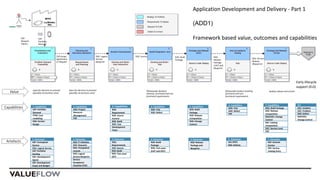
Application Development and Delivery - Part 1
(ADD1)
Framework based value, outcomes and capabilities
ELS
D2C: Incident
D2C: Problem
R2D: Defect
R2D/D2C:
Change Control
Early lifecycle
support (ELS)
R2F:
Request,
inquiry
S2P:
Portfolio
Demand
1. Outcomes
S2P: Conceptual
Service
R2D: Logical Service
S2P: Portfolio
backlog
R2F: Development
Spend
S2P: Development
Scope and Budget
2. Outcomes
R2D: IT Initiative
R2D: Requests
R2D: Chargeback
records
R2D: Logical
Service Blueprint
Service
Acceptance
Checklist (P2P)
S2P:Scope
Agreement
or Request
3. Outcomes
R2D;
Requirements
R2D: Source
R2D: Build
R2D: Test cases
(SIT)
4. Outcomes
R2D: Build
Package
R2D: Test cases
(UAT and OAT)
R2D: Logical
Service
Blueprint
R2D: Source R2D: Build
Package
R2D:
Release
Package
(UAT) and
Blueprint
R2D: Service
Release
(Blueprint)
5. Outcomes
R2D: Release
Package and
Blueprint
6. Outcomes
SAC (P2P)
R2D: Defects
7. Outcomes
R2F: Desired
Service
R2F: Service
Catalog Entry
Value
Artefacts
Capabilities
Input for decision to proceed
(possibly via business case)
Input for decision to proceed
(possibly via business case)
(Releaseabe )product
meeting functional and non
functional requirements
Releaseabe product meeting
functional and non
functional requirements
Quality release and service
27.
Commercial in Confidence27
Build and
integrate
software
Carry out
System and SIT
Tests
Manage
defects
Approve
environment
changes
Approve
release
(change)
Manage the
Organisational
Change
Update the
Catalogue and
Service Levels
(if needed)
Conduct UAT
Write
acceptable
UAT scripts
Manage
defects
Create test
cases (or
equivalent)
Organise
/compose the
Release
Manage the
Organisational
Change
Deploy
Capabilities
Testing
Test mng is a bottleneck: 2
week lead time competition
Leverage
automated
testing
Do not test full product –
too many drops
Test mng is a bottleneck:
for integration testing
Test report?Test report?
Defects register –
TFS?
Leverage
automated
testing
No test plans
Agreed
SOW
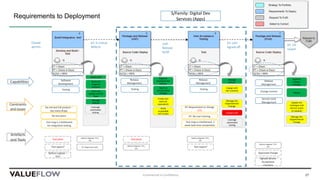
Requirements to Deployment
S/Family: Digital Dev
Services (Apps)
Approved Change
Agreed Service
Acceptance
Checklist
Constraints
and issues
Artefacts
and Tools
Closed
sprints
Quick build
Software
Development
Test plans
Release
Management
Testing
Test plans
Engage with
the customer
Release
Management
Testing
KY: No user training
KY: Requirement in change
(??)
Defects Register TFS /
Jira
KY: Regression tests
Defects Register TFS /
Jira
Defects Register TFS /
Jira
KY: 0 critical
defects
KY: UAT
signed off
UAT
Release
build
KY: CR
raised
Release
Management
Change Control
Service Level
Management
Defects Register TFS /
Jira
28.
Business
Service Maps
ServiceNow
Service
Portfolio Mgt
Demand
Mgt
Ideation
PPM
GRC
Managed
Docs
Asset& Cost
Mgt
Resource
Mgt
PPM
Financial Mgt
Agile/SDLC
Release
Release
On
roadmap
Test Mgt
SDLC
Scrum
Orchestration
Release
Mgt
Cloud
Provisioning
Content Mgt System Live Feed Chat Knowledge
Service
Catalog
Service
Catalog
Service
Catalog
Service
Catalog
Contract
Mgt
Config Mgt
Orchestration
Cloud
Provisioning
Financial Mgt
Reporting
Asset Mgt
Vendor Mgt
Procurement
Event Mgt
Business
Services
PA
Event Mgt
Incident MgtProblem Mgt
SDLC (Defect)
Change Mgt Config Mgt
Discovery
Orchestration
Orchestration
Knowledge
SLM
PA
SERVICENOW
JIRA / TFS
JIRA / MS
PROJECT
VARIOUS
WIREFRAMING /
WORKFLOW
TOOLS
Current state
JIRA / TFS
TFS / GITLAB /
BITBUCKET
VS / JENKINS
JIRA / TFS / SELENIUM
/Serenity, XRAY,
Gradle, BrowserStack,
Jenkins, Axe, Postman
VS/ JENKINS
VS/ JENKINS /
NEXUS / DOCKER
JIRA / TFS
TFS / ZENDESK / JIRA
SERVICENOW
ZENDESK / TFS / JIRA / EMAIL
GA / NEWRELIC /
Dashboards (Domo,
Geckoboard etc.)
ZENDESK / TFS / JIRA / EMAIL
NEWREL
SCRIPTIN
PROMET
OTHER T
OPENAUDIT
ZENDESK / EMAIL / SMS /
PHONE
NEWRELIC
ZENDESKZENDESK
29.
Case 3: ApplyingValue Stream Thinking to ValueFlow
Context:
• Medium sized Professional Services practice
• Operating Model and ServiceNow Implementation Services
• Anatomy:
• Operating in Multiple locations
• Growing quickly… (ServiceNow and IT4IT are popular ;-])
• Needing to standardise while accommodating project management, agile and
with a vision to use Continuous Delivery with our clients
• IT4IT and Value Streams use case
• Value Streams mapped for O2O and O2C
• Capabilities identified
• Collaboration on 2020 future state and weekly Continuous Improvement cycles
Commercial in Confidence 29
ServiceNow Delivery
IT
Partner
Management
Governance &Compliance
Customer
Management
Product
Management
Strategic
Management
ServiceNow Training
Market
Development
Communication (Mail / Chat)
HR
Asset
Management
Finance
Strategic Advisory
Training
Management Capabilities
CoreValueStreamsSupportCapabilities
High Level Business Model
32.
Walking the Walk
Leadto
Opportunity
Opportunity
to Proposal
Proposal to
Order
Initiate to
Plan
Plan to
Transition
Transition
to Close
Opportunity to Order Order to Cash
ServiceNow Delivery
ServiceNow Training
Strategic Advisory
VSM
BPMN
DESIGN
33.
Our VSMs forO2C: Toward Continuous Delivery
Commercial in Confidence 33
34.
Rubber Meeting Road:One Workspace for Delivery (1/2)!
Commercial in Confidence 34
Agile Delivery
35.
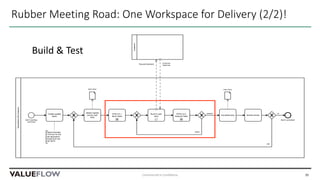
Rubber Meeting Road:One Workspace for Delivery (2/2)!
Commercial in Confidence 35
Build & Test
36.
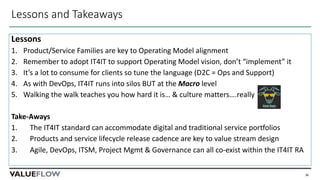
Lessons and Takeaways
Lessons
1.Product/Service Families are key to Operating Model alignment
2. Remember to adopt IT4IT to support Operating Model vision, don’t “implement” it
3. It’s a lot to consume for clients so tune the language (D2C = Ops and Support)
4. As with DevOps, IT4IT runs into silos BUT at the Macro level
5. Walking the walk teaches you how hard it is… & culture matters….really
Take-Aways
1. The IT4IT standard can accommodate digital and traditional service portfolios
2. Products and service lifecycle release cadence are key to value stream design
3. Agile, DevOps, ITSM, Project Mgmt & Governance can all co-exist within the IT4IT RA
36