Business
COMMUNICATION
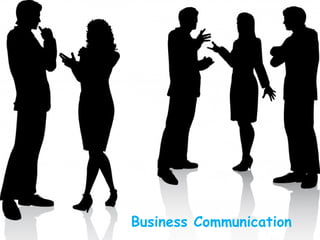
Business Communication
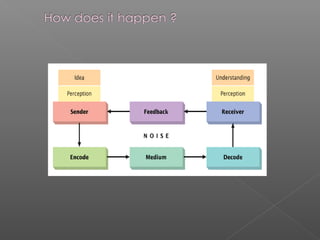
The Communication Process
Active Listening Skills
Non-verbal Communication
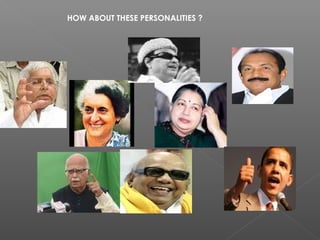
HOW ABOUT THESE PERSONALITIES ?
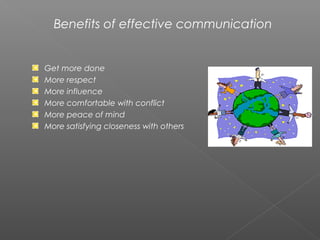
Benefits of effective communication
Get more done
More respect
More influence
More comfortable with conflict
More peace of mind
More satisfying closeness with others
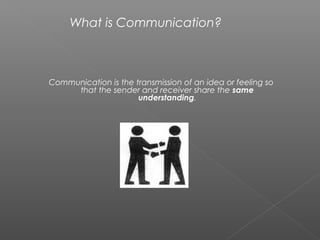
What is Communication?
Communication is the transmission of an idea or feeling so
that the sender and receiver share the same
understanding.
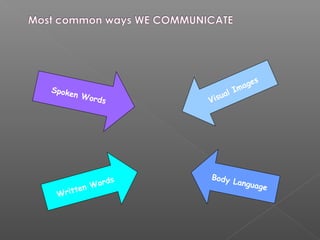
Visual Images
Body Language
Written Words
Spoken Words
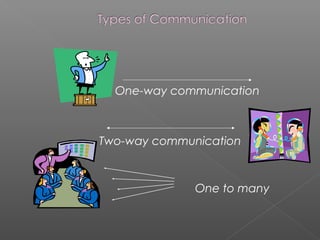
One-way communication
Two-way communication
One to many
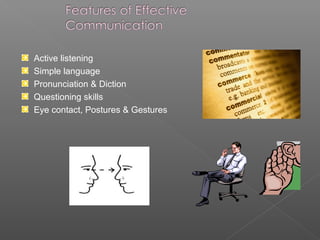
Active listening
Simple language
Pronunciation & Diction
Questioning skills
Eye contact, Postures & Gestures
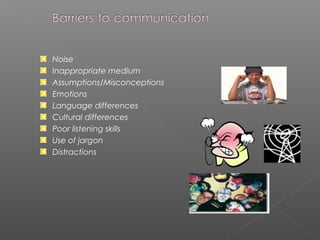
Noise
Inappropriate medium
Assumptions/Misconceptions
Emotions
Language differences
Cultural differences
Poor listening skills
Use of jargon
Distractions
Hearing – Physical process,
natural, passive
Listening – Physical as well
as mental process, active,
learned process, a skill
Listening is hard.
You must choose to participate in the process of listening.
 Listen first and acknowledge what you hear , even
if you don’t agree with it, before expressing your
experience or point of view.
 Listening responsively is always worthwhile
as a way of letting people know that you care
about them.
Listen first
• Jumping to conclusions- Subjective/ Objective
• Hearing what we want to hear
• Formulating and rehearsing the response
• Being inattentive Having a closed mind
• Feeling anxious or self-conscious
• Subjective biases based on ignorance or prejudice
• Linguistic/ Cultural issues
Listening to others helps others
to listen.
Attorneys listen to tear down the other side’s argument.
We spend more time to arrange agreement.
The person you defeat today will probably be the person whose
cooperation we need tomorrow.
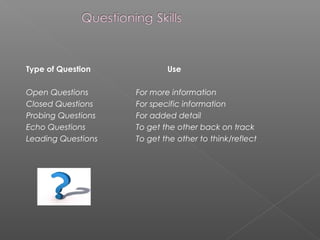
Type of Question Use
Open Questions For more information
Closed Questions For specific information
Probing Questions For added detail
Echo Questions To get the other back on track
Leading Questions To get the other to think/reflect
Open Questions:
– Revealing, personal, Descriptive, Wh- Type
• What may be the impact of this action?
• What are your concerns about this new program?
Closed Questions:
– Specific, Objective, Verbal Type
• Do you have health insurance?
• Are you interested in that?
Non – verbal
Communication
An old Yiddish proverb says, "The eyes are the mirror of the
soul“
 tells others you are confident
 helps others consider what you say is important
 signals intellect and honesty
Alarming !!
liars tend to not keep eye contact
The way we carry ourselves, the gestures
we use and our facial expressions all
communicate much more than we
realize.
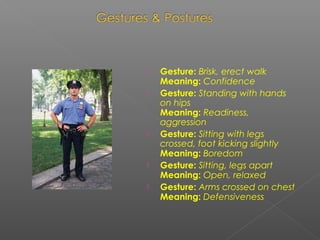
 Gesture: Brisk, erect walk
Meaning: Confidence
 Gesture: Standing with hands
on hips
Meaning: Readiness,
aggression
 Gesture: Sitting with legs
crossed, foot kicking slightly
Meaning: Boredom
 Gesture: Sitting, legs apart
Meaning: Open, relaxed
 Gesture: Arms crossed on chest
Meaning: Defensiveness
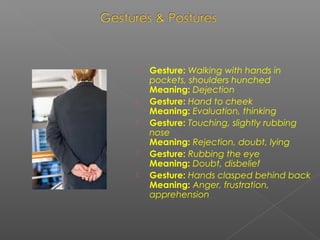
 Gesture: Walking with hands in
pockets, shoulders hunched
Meaning: Dejection
 Gesture: Hand to cheek
Meaning: Evaluation, thinking
 Gesture: Touching, slightly rubbing
nose
Meaning: Rejection, doubt, lying
 Gesture: Rubbing the eye
Meaning: Doubt, disbelief
 Gesture: Hands clasped behind back
Meaning: Anger, frustration,
apprehension
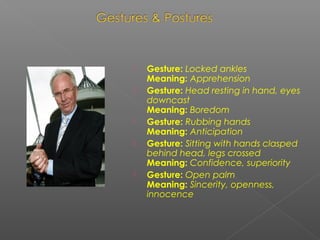
 Gesture: Locked ankles
Meaning: Apprehension
 Gesture: Head resting in hand, eyes
downcast
Meaning: Boredom
 Gesture: Rubbing hands
Meaning: Anticipation
 Gesture: Sitting with hands clasped
behind head, legs crossed
Meaning: Confidence, superiority
 Gesture: Open palm
Meaning: Sincerity, openness,
innocence
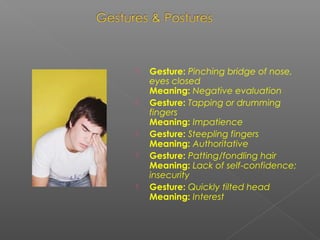
 Gesture: Pinching bridge of nose,
eyes closed
Meaning: Negative evaluation
 Gesture: Tapping or drumming
fingers
Meaning: Impatience
 Gesture: Steepling fingers
Meaning: Authoritative
 Gesture: Patting/fondling hair
Meaning: Lack of self-confidence;
insecurity
 Gesture: Quickly tilted head
Meaning: Interest
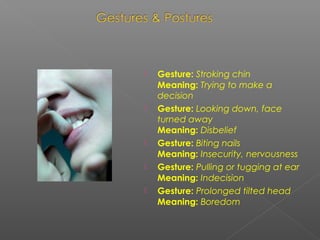
 Gesture: Stroking chin
Meaning: Trying to make a
decision
 Gesture: Looking down, face
turned away
Meaning: Disbelief
 Gesture: Biting nails
Meaning: Insecurity, nervousness
 Gesture: Pulling or tugging at ear
Meaning: Indecision
 Gesture: Prolonged tilted head
Meaning: Boredom
“Developing excellent communication skills is absolutely
essential to effective leadership. The leader must be able to
share knowledge and ideas to transmit a sense of urgency
and enthusiasm to others. If a leader can't get a message
across clearly and motivate others to act on it, then having a
message doesn't even matter."
-Gilbert Amelio
President and CEO of National Semiconductor Corp.
Business Communication

Business Communication

  • 1.
  • 2.
  • 3.
    The Communication Process ActiveListening Skills Non-verbal Communication
  • 4.
    HOW ABOUT THESEPERSONALITIES ?
  • 5.
    Benefits of effectivecommunication Get more done More respect More influence More comfortable with conflict More peace of mind More satisfying closeness with others
  • 6.
    What is Communication? Communicationis the transmission of an idea or feeling so that the sender and receiver share the same understanding.
  • 7.
  • 9.
  • 10.
    Active listening Simple language Pronunciation& Diction Questioning skills Eye contact, Postures & Gestures
  • 11.
  • 12.
    Hearing – Physicalprocess, natural, passive Listening – Physical as well as mental process, active, learned process, a skill Listening is hard. You must choose to participate in the process of listening.
  • 13.
     Listen firstand acknowledge what you hear , even if you don’t agree with it, before expressing your experience or point of view.  Listening responsively is always worthwhile as a way of letting people know that you care about them. Listen first
  • 14.
    • Jumping toconclusions- Subjective/ Objective • Hearing what we want to hear • Formulating and rehearsing the response • Being inattentive Having a closed mind • Feeling anxious or self-conscious • Subjective biases based on ignorance or prejudice • Linguistic/ Cultural issues
  • 15.
    Listening to othershelps others to listen. Attorneys listen to tear down the other side’s argument. We spend more time to arrange agreement. The person you defeat today will probably be the person whose cooperation we need tomorrow.
  • 16.
    Type of QuestionUse Open Questions For more information Closed Questions For specific information Probing Questions For added detail Echo Questions To get the other back on track Leading Questions To get the other to think/reflect
  • 17.
    Open Questions: – Revealing,personal, Descriptive, Wh- Type • What may be the impact of this action? • What are your concerns about this new program? Closed Questions: – Specific, Objective, Verbal Type • Do you have health insurance? • Are you interested in that?
  • 18.
  • 19.
    An old Yiddishproverb says, "The eyes are the mirror of the soul“  tells others you are confident  helps others consider what you say is important  signals intellect and honesty Alarming !! liars tend to not keep eye contact
  • 20.
    The way wecarry ourselves, the gestures we use and our facial expressions all communicate much more than we realize.
  • 21.
     Gesture: Brisk, erectwalk Meaning: Confidence  Gesture: Standing with hands on hips Meaning: Readiness, aggression  Gesture: Sitting with legs crossed, foot kicking slightly Meaning: Boredom  Gesture: Sitting, legs apart Meaning: Open, relaxed  Gesture: Arms crossed on chest Meaning: Defensiveness
  • 22.
     Gesture: Walking withhands in pockets, shoulders hunched Meaning: Dejection  Gesture: Hand to cheek Meaning: Evaluation, thinking  Gesture: Touching, slightly rubbing nose Meaning: Rejection, doubt, lying  Gesture: Rubbing the eye Meaning: Doubt, disbelief  Gesture: Hands clasped behind back Meaning: Anger, frustration, apprehension
  • 23.
     Gesture: Locked ankles Meaning: Apprehension Gesture: Head resting in hand, eyes downcast Meaning: Boredom  Gesture: Rubbing hands Meaning: Anticipation  Gesture: Sitting with hands clasped behind head, legs crossed Meaning: Confidence, superiority  Gesture: Open palm Meaning: Sincerity, openness, innocence
  • 24.
     Gesture: Pinching bridgeof nose, eyes closed Meaning: Negative evaluation  Gesture: Tapping or drumming fingers Meaning: Impatience  Gesture: Steepling fingers Meaning: Authoritative  Gesture: Patting/fondling hair Meaning: Lack of self-confidence; insecurity  Gesture: Quickly tilted head Meaning: Interest
  • 25.
     Gesture: Stroking chin Meaning: Tryingto make a decision  Gesture: Looking down, face turned away Meaning: Disbelief  Gesture: Biting nails Meaning: Insecurity, nervousness  Gesture: Pulling or tugging at ear Meaning: Indecision  Gesture: Prolonged tilted head Meaning: Boredom
  • 26.
    “Developing excellent communicationskills is absolutely essential to effective leadership. The leader must be able to share knowledge and ideas to transmit a sense of urgency and enthusiasm to others. If a leader can't get a message across clearly and motivate others to act on it, then having a message doesn't even matter." -Gilbert Amelio President and CEO of National Semiconductor Corp.

Editor's Notes

  • #4 Aims and Learning Objectives Aims The presentation is meant especially for IT/ ITES professionals. In the presentation: 1. Main components of the communication process 2. The basic skills required for effective communication 3. Specific contexts for communication, including giving presentations and feedback meetings Will be discussed. Learning Objectives: Identify: the main components of the communication process. Typical problems that can arise in the communication process and demonstrate knowledge of skills to overcome them. Demonstrate: increased awareness of forms of communication and social behaviour Use: strategies for managing specific contexts for communication, including giving presentations
  • #28 Thank you all for participating in this vital training session. I hope you found the contents very useful to develop your communication skills. Goodbye.