BUSINESS
MANAGEMENT AND
ORGANIZATION
COURSE SCHEDULE
 CHAPTER 1: BUSINESS MANAGEMENT AND ORGANIZATION
 CHAPTER 2: OBJECTIVES, STAKEHOLDERS AND THE
EXTERNAL ENVIRONMENT
 CHAPTER 3: ORGANIZATIONAL PLANNING AND DECISION
MAKING
 CHAPTER 4: GROWTH AND THE IMPACT OF
GLOBALIZATION
Objectives, stakeholders and
the external environment
Chapter 2
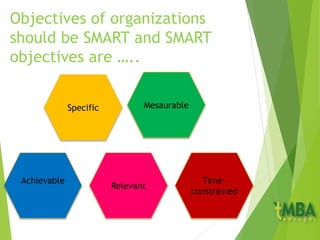
Objectives of organizations
should be SMART and SMART
objectives are …..
Specific
Relevant
Achievable
Mesaurable
Time-
constrained
Management by objectives
(MbO)
Strategic management practice to increase
performance across the organization by
matching individual objectives with those of an
organization. The process involves:
Setting strategic objectives
Translating these objectives into goals and
targets
Designing work practices
Motivating the workforce
Measuring performance
Providing feedback
Rewards and bonuses for good performance
Objectives and changes
Organizations must adjust objectives according to
and respond to changes in the internal and
external environment.
To assess the necessity of adjusting objectives,
one should make several observations.
To name a few:
What are the impacts of the new technological
changes to the business?
Is the business still competitive?
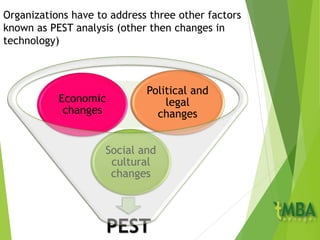
Organizations have to address three other factors
known as PEST analysis (other then changes in
technology)
PEST
Social and
cultural
changes
Economic
changes
Political and
legal
changes
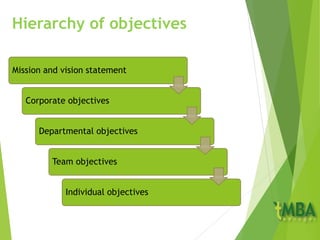
Hierarchy of objectives
Mission and vision statement
Corporate objectives
Departmental objectives
Team objectives
Individual objectives
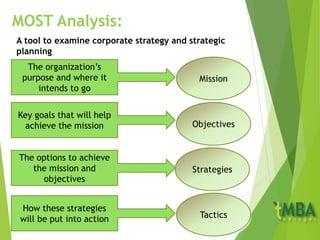
MOST Analysis:
The organization’s
purpose and where it
intends to go
Key goals that will help
achieve the mission
The options to achieve
the mission and
objectives
How these strategies
will be put into action
Mission
Objectives
Strategies
Tactics
A tool to examine corporate strategy and strategic
planning
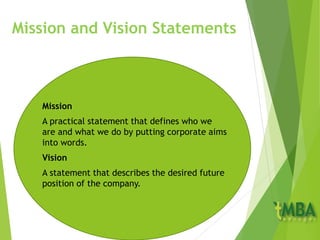
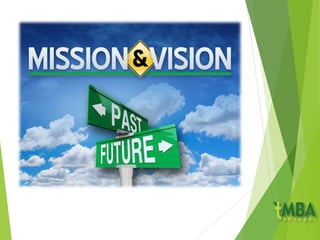
Mission and Vision Statements
Mission
A practical statement that defines who we
are and what we do by putting corporate aims
into words.
Vision
A statement that describes the desired future
position of the company.
Objectives can be strategic
or tactical
Strategy is the long-term plan of a business.
It is achieved through the objectives.
Tactics are the usual activities that a
business uses to implement its strategy
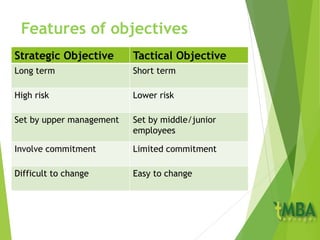
Features of objectives
Strategic Objective Tactical Objective
Long term Short term
High risk Lower risk
Set by upper management Set by middle/junior
employees
Involve commitment Limited commitment
Difficult to change Easy to change
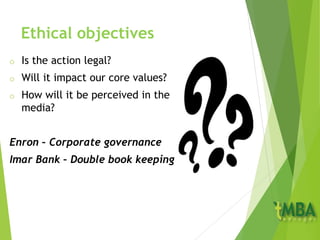
Ethical objectives
o Is the action legal?
o Will it impact our core values?
o How will it be perceived in the
media?
Enron – Corporate governance
Imar Bank – Double book keeping
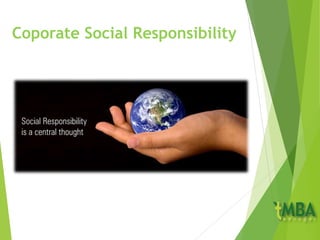
Coporate Social Responsibility
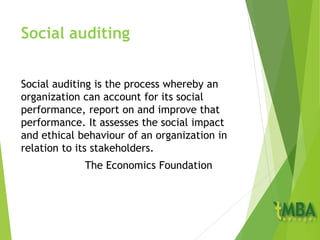
Social auditing
Social auditing is the process whereby an
organization can account for its social
performance, report on and improve that
performance. It assesses the social impact
and ethical behaviour of an organization in
relation to its stakeholders.
The Economics Foundation
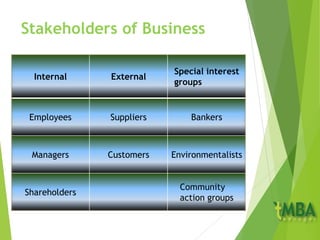
Stakeholders of Business
Internal External
Special interest
groups
Employees Suppliers Bankers
Managers Customers Environmentalists
Shareholders
Community
action groups
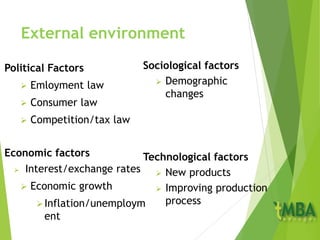
External environment
Political Factors
 Emloyment law
 Consumer law
 Competition/tax law
Economic factors
 Interest/exchange rates
 Economic growth
Inflation/unemploym
ent
Sociological factors
 Demographic
changes
Technological factors
 New products
 Improving production
process

Business and management chapter 2

  • 1.
  • 2.
    COURSE SCHEDULE  CHAPTER1: BUSINESS MANAGEMENT AND ORGANIZATION  CHAPTER 2: OBJECTIVES, STAKEHOLDERS AND THE EXTERNAL ENVIRONMENT  CHAPTER 3: ORGANIZATIONAL PLANNING AND DECISION MAKING  CHAPTER 4: GROWTH AND THE IMPACT OF GLOBALIZATION
  • 3.
    Objectives, stakeholders and theexternal environment Chapter 2
  • 4.
    Objectives of organizations shouldbe SMART and SMART objectives are ….. Specific Relevant Achievable Mesaurable Time- constrained
  • 5.
    Management by objectives (MbO) Strategicmanagement practice to increase performance across the organization by matching individual objectives with those of an organization. The process involves: Setting strategic objectives Translating these objectives into goals and targets Designing work practices Motivating the workforce Measuring performance Providing feedback Rewards and bonuses for good performance
  • 6.
    Objectives and changes Organizationsmust adjust objectives according to and respond to changes in the internal and external environment. To assess the necessity of adjusting objectives, one should make several observations. To name a few: What are the impacts of the new technological changes to the business? Is the business still competitive?
  • 7.
    Organizations have toaddress three other factors known as PEST analysis (other then changes in technology) PEST Social and cultural changes Economic changes Political and legal changes
  • 8.
    Hierarchy of objectives Missionand vision statement Corporate objectives Departmental objectives Team objectives Individual objectives
  • 9.
    MOST Analysis: The organization’s purposeand where it intends to go Key goals that will help achieve the mission The options to achieve the mission and objectives How these strategies will be put into action Mission Objectives Strategies Tactics A tool to examine corporate strategy and strategic planning
  • 10.
    Mission and VisionStatements Mission A practical statement that defines who we are and what we do by putting corporate aims into words. Vision A statement that describes the desired future position of the company.
  • 12.
    Objectives can bestrategic or tactical Strategy is the long-term plan of a business. It is achieved through the objectives. Tactics are the usual activities that a business uses to implement its strategy
  • 13.
    Features of objectives StrategicObjective Tactical Objective Long term Short term High risk Lower risk Set by upper management Set by middle/junior employees Involve commitment Limited commitment Difficult to change Easy to change
  • 14.
    Ethical objectives o Isthe action legal? o Will it impact our core values? o How will it be perceived in the media? Enron – Corporate governance Imar Bank – Double book keeping
  • 15.
  • 16.
    Social auditing Social auditingis the process whereby an organization can account for its social performance, report on and improve that performance. It assesses the social impact and ethical behaviour of an organization in relation to its stakeholders. The Economics Foundation
  • 17.
    Stakeholders of Business InternalExternal Special interest groups Employees Suppliers Bankers Managers Customers Environmentalists Shareholders Community action groups
  • 18.
    External environment Political Factors Emloyment law  Consumer law  Competition/tax law Economic factors  Interest/exchange rates  Economic growth Inflation/unemploym ent Sociological factors  Demographic changes Technological factors  New products  Improving production process

Editor's Notes

  • #16 Improves image Enhance customer loyalty Attracts employes