STRATEGIC CHANGE MANAGEMENT,
CHANGE MANAGEMENT PLAN,
REVIVE PERFORMANCE REVIEW PROCESS
Nikhil Shrivastava
MS, Management, NYU
1
INTRODUCTION
Organization Structure
Business Case for Change
Plan for Change
Plan to Sustain the Change
2
CORPORATE STRUCTURE – XYZ CORP.
Service Lines
Application
Development
Enterprise Solutions
Assurance
Engineering
Services
IT Infrastructure
Business Process
Services
Consulting
Industries
Banking & Finance
Retail
Telecom
Media
Life Sciences
Tourism
Clients
CIBC
BOFA
JP Morgan
Morgan Stanley
RBS..etc
Teams
CLASS
8 Members
Pricing
BI & DW
3
BUSINESS CASE: REVIVE PERFORMANCE REVIEW
Why is this Change Needed?
 Attrition Rate: 17%
[percentage 5-8% last 4 years]
 CSI last 3 quarters: 68%
[percentage of 22%]
 ESI annually: 66%
[source: glassdoor]
4
BURNING PLATFORM
5
 Proportionating this attrition rate for an account of 2000 resources
 Estimated loss of 340 experienced consultant annuallyHigh Attrition
Rate
• Cost of replacing lost talent is 70 to 200% of that
employee's annual salary.
• Beverly Kaye and Sharon Jordan-Evans
Investment on
rehiring
Performance
Issues
• People are Dissatisfied
• Processes are Ineffective
• Culture has become very Negative
Loss of Client
• Annual revenue loss of $1.09B
• Contract about to expire
• Competing with other consulting firm
Accenture, Deloitte, CTS
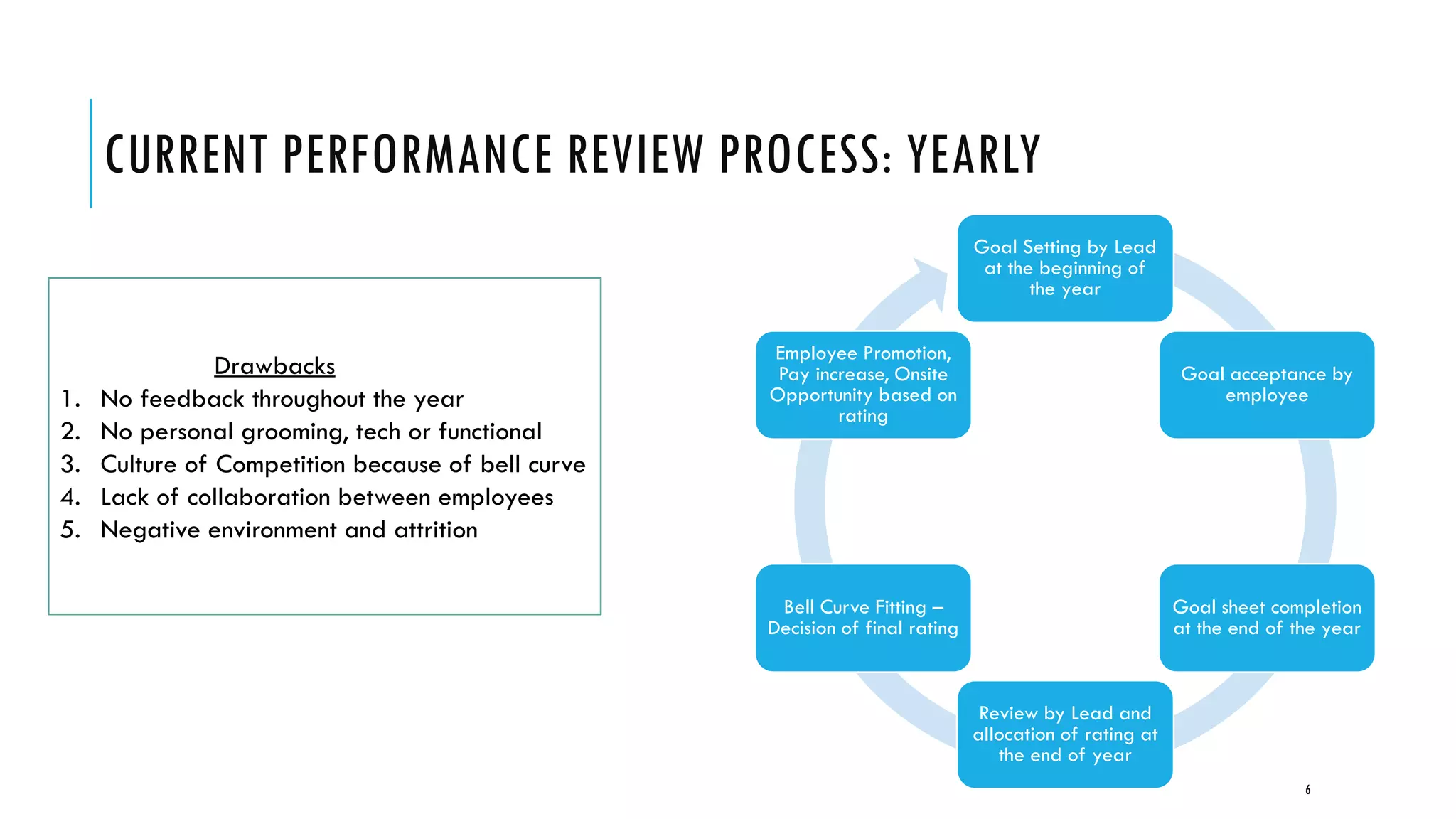
CURRENT PERFORMANCE REVIEW PROCESS: YEARLY
Goal Setting by Lead
at the beginning of
the year
Goal acceptance by
employee
Goal sheet completion
at the end of the year
Review by Lead and
allocation of rating at
the end of year
Bell Curve Fitting –
Decision of final rating
Employee Promotion,
Pay increase, Onsite
Opportunity based on
rating
Drawbacks
1. No feedback throughout the year
2. No personal grooming, tech or functional
3. Culture of Competition because of bell curve
4. Lack of collaboration between employees
5. Negative environment and attrition
6
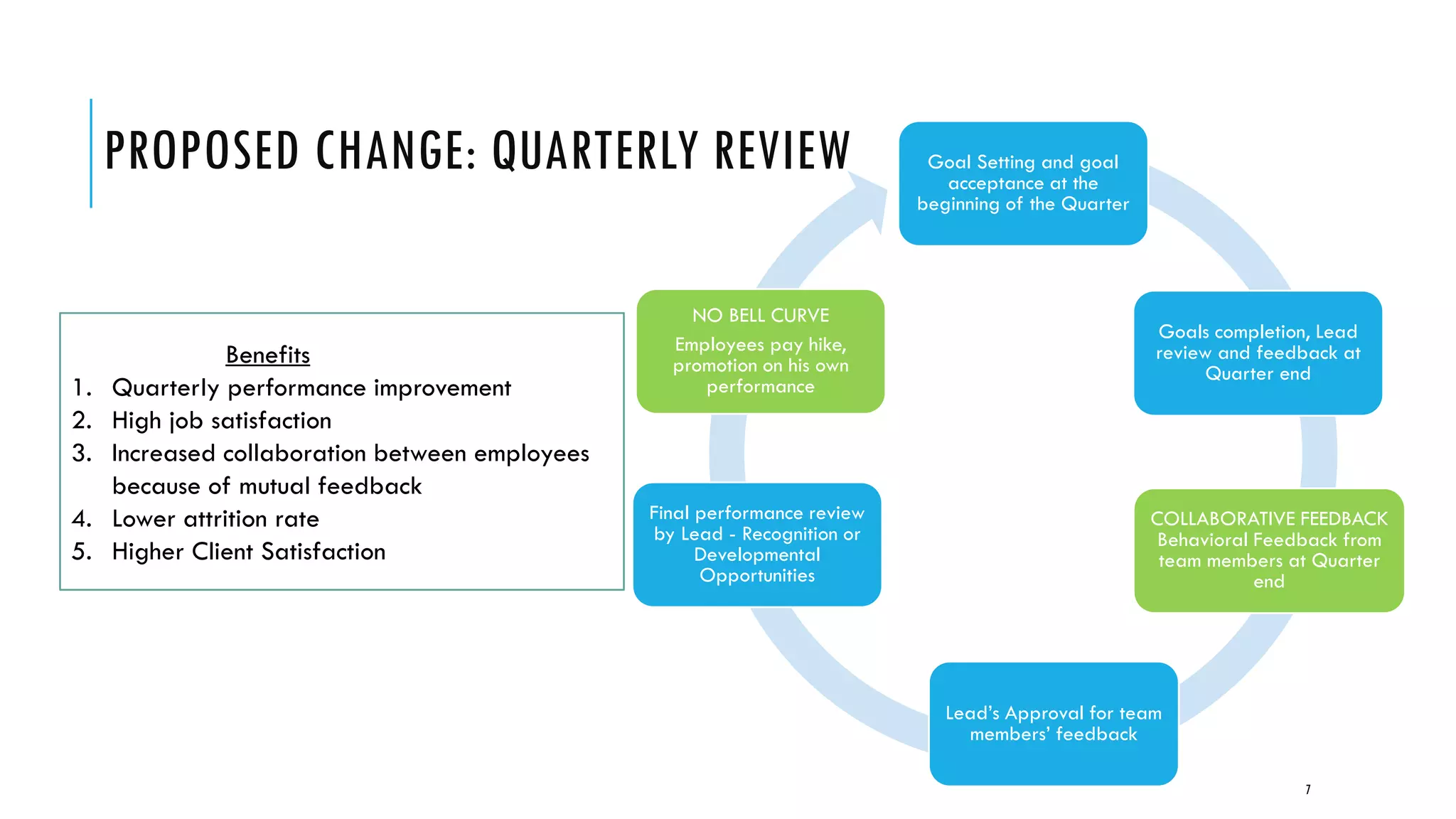
PROPOSED CHANGE: QUARTERLY REVIEW Goal Setting and goal
acceptance at the
beginning of the Quarter
Goals completion, Lead
review and feedback at
Quarter end
COLLABORATIVE FEEDBACK
Behavioral Feedback from
team members at Quarter
end
Lead’s Approval for team
members’ feedback
Final performance review
by Lead - Recognition or
Developmental
Opportunities
NO BELL CURVE
Employees pay hike,
promotion on his own
performance
Benefits
1. Quarterly performance improvement
2. High job satisfaction
3. Increased collaboration between employees
because of mutual feedback
4. Lower attrition rate
5. Higher Client Satisfaction
7
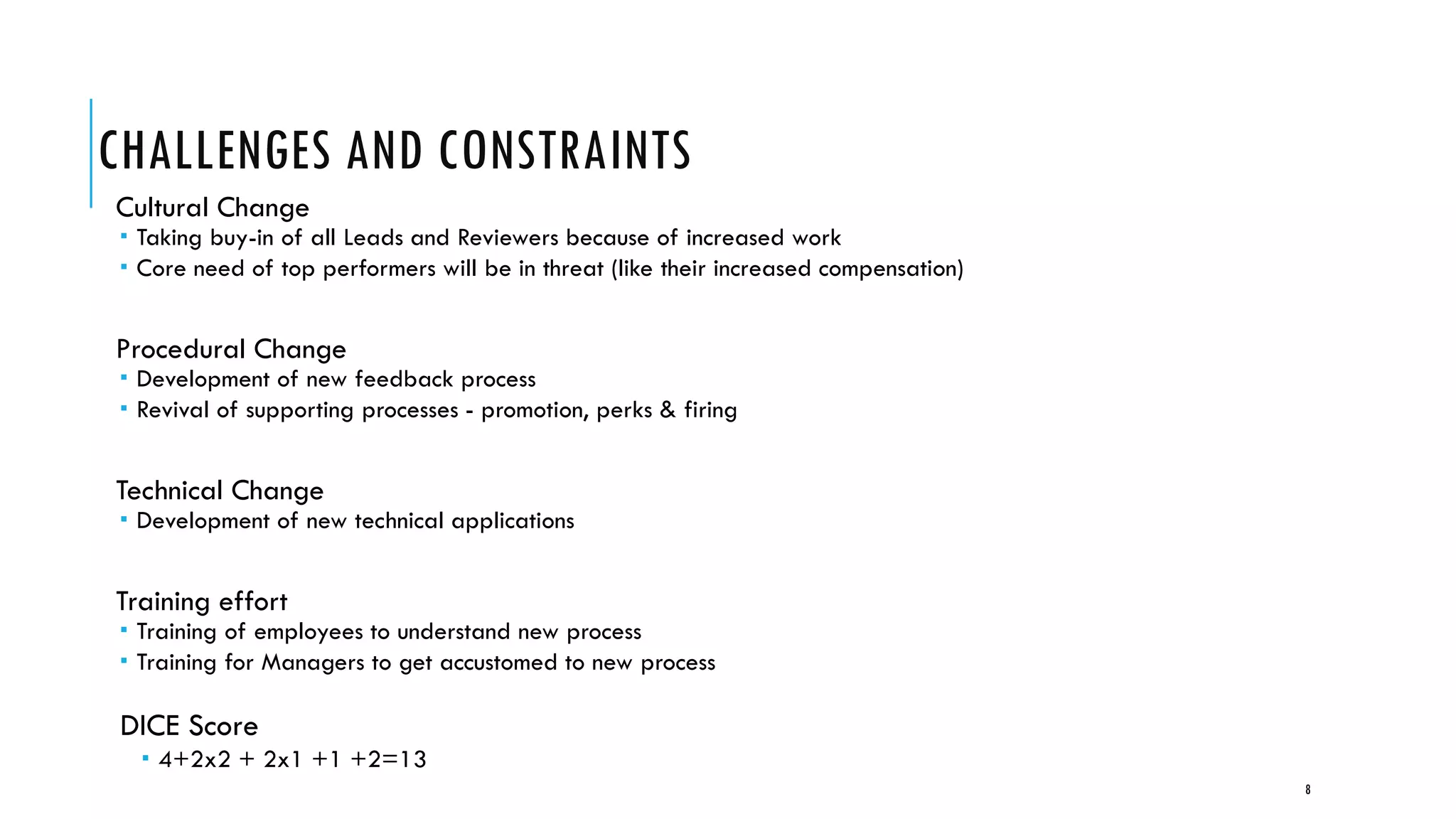
CHALLENGES AND CONSTRAINTS
Cultural Change
 Taking buy-in of all Leads and Reviewers because of increased work
 Core need of top performers will be in threat (like their increased compensation)
Procedural Change
 Development of new feedback process
 Revival of supporting processes - promotion, perks & firing
Technical Change
 Development of new technical applications
Training effort
 Training of employees to understand new process
 Training for Managers to get accustomed to new process
DICE Score
 4+2x2 + 2x1 +1 +2=13
8
EXECUTION PLAN
1. Identification of Leaders, Sponsor and Political Influencer
9
Account
Manager
Mainframe Team
Lead
Mainframe Tech
Lead
Team of 8
Members
BI Team Lead
BI Tech Lead
Team of 15
members
AS400/COBOL
Team Lead
AS400 Tech
Lead
Team of 18
members
Java Team Lead
Java Tech Lead
Team of 20
members
QA Team Lead
Automation Lead
Team of 50
members
Delivery Manger
Sponsor
Political
Influencer
Leaders
EXECUTION PLAN CNTD…
2. Engagement of Leaders and Employees
 Monthly attrition tracking and discussion about increasing competition and unhealthy environment.
3. Sharing of Influential stories
10
EXECUTION PLAN CNTD…
4. Addressing Technical Changes: Development of new application
 High Level Estimates
 Resource : 1 Designer + 2 Mobile App Developers + 2 Tester
 Time : 3 months (including testing)
 Cost : $80/hr x 40hrs/week x 14 weeks x 5 resources = $224,000 approx.
5. Addressing Cultural Changes: Competition to Collaboration
 The sub-process of peer’s feedback would itself ensure acceptance of this new process
 Employees can see mutual benefit of accepting this process.
11
EXECUTION PLAN CNTD…
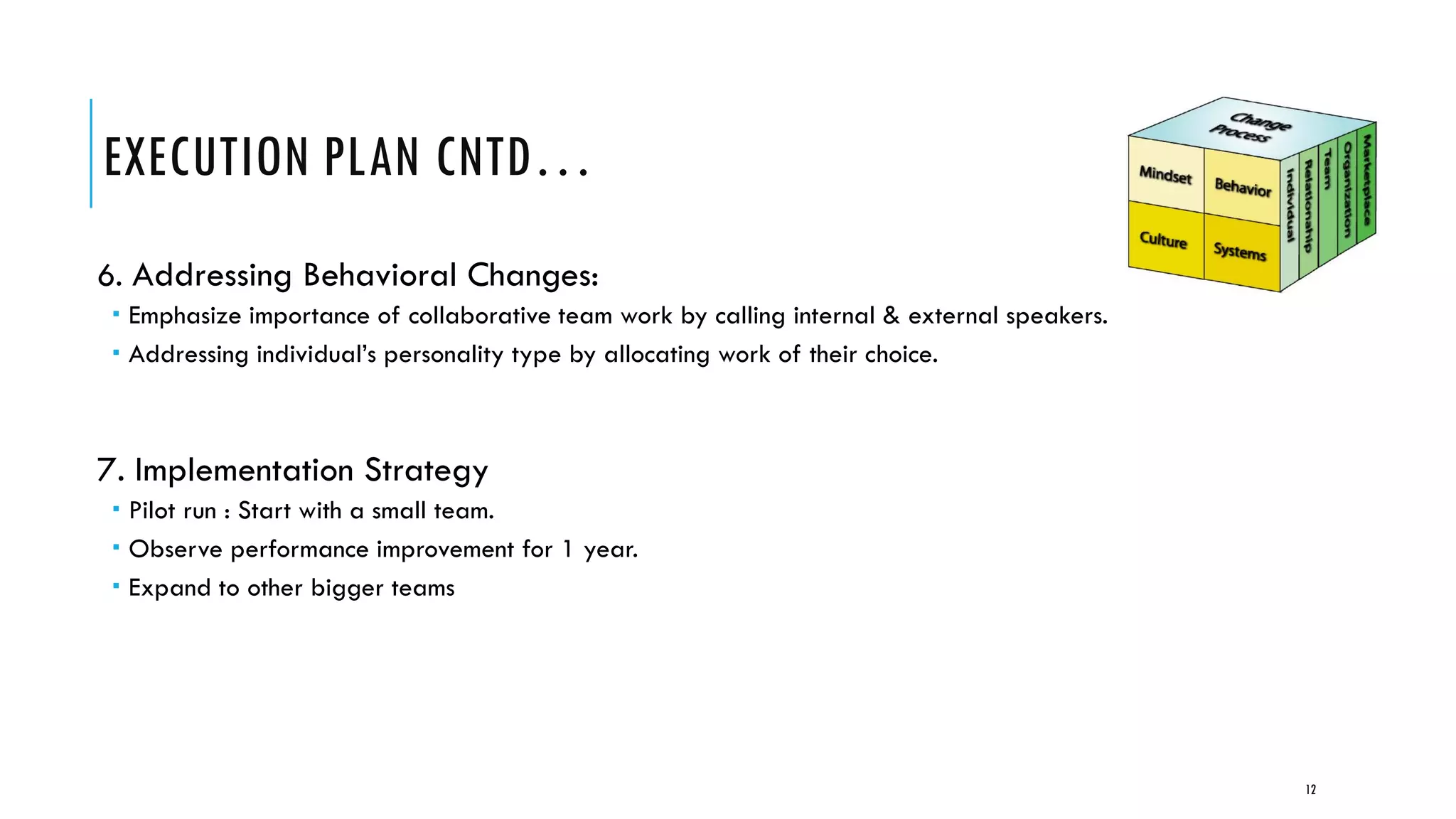
6. Addressing Behavioral Changes:
 Emphasize importance of collaborative team work by calling internal & external speakers.
 Addressing individual’s personality type by allocating work of their choice.
7. Implementation Strategy
 Pilot run : Start with a small team.
 Observe performance improvement for 1 year.
 Expand to other bigger teams
12
STRUCTURAL SUSTAINABILITY
Collect following Stats Before & After Change
 Individual’s Functional Knowledge Score and Systems Knowledge Score
 Individual’s rating given by other team members.
 Team’s average attrition rate of last three years.
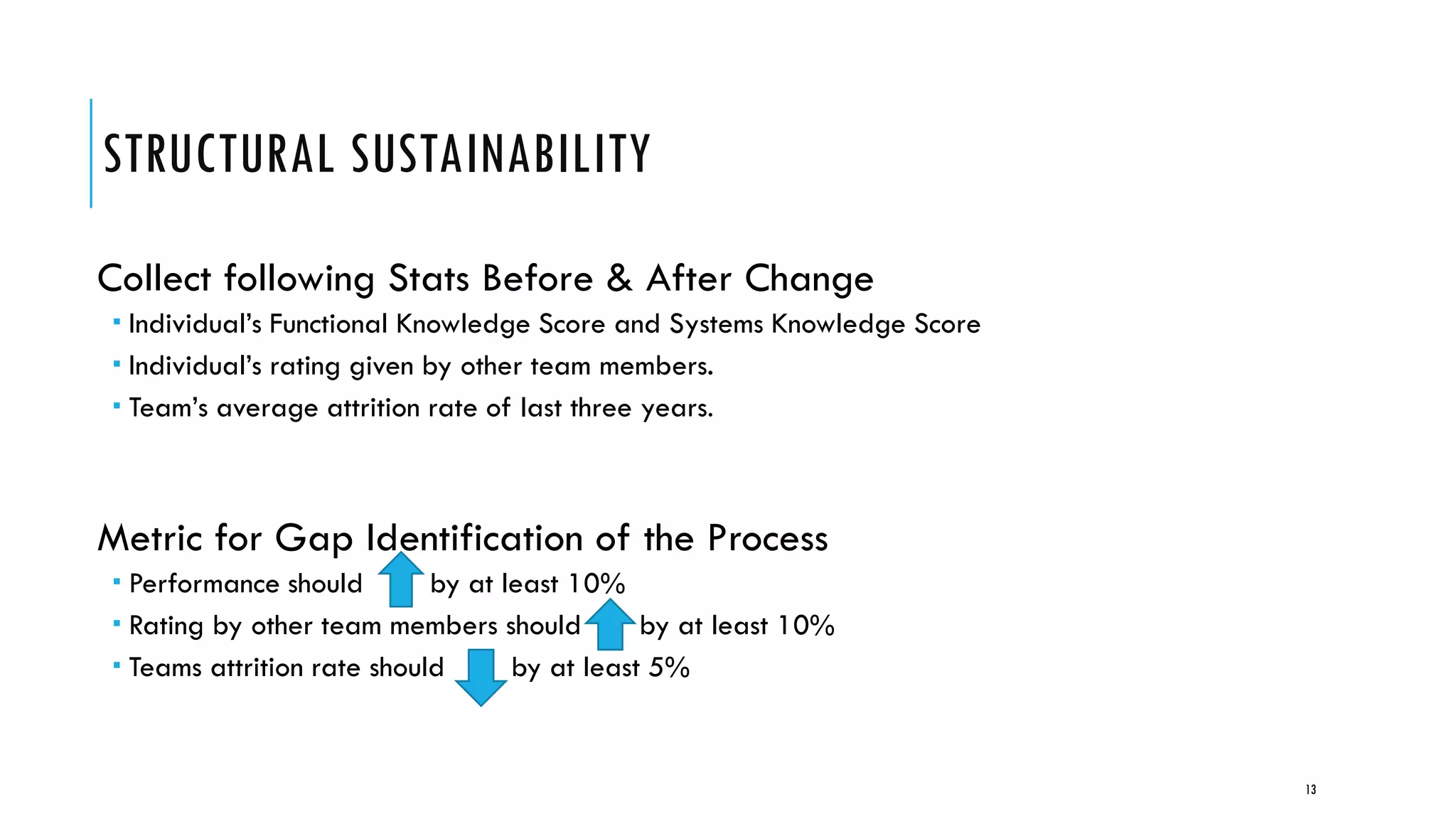
Metric for Gap Identification of the Process
 Performance should by at least 10%
 Rating by other team members should by at least 10%
 Teams attrition rate should by at least 5%
13
PLAN TO SUSTAIN : PROCESS SUSTAINABILITY
Development Plan for low performers
 Weekly trainings and Evaluation within the team.
 Biweekly training and Evaluation across the teams.
Encouragement plan for high performers & new process followers
 Invitation to share their stories in different accounts.
 Recognition by awarding them certificates at account level.
Infection points & Issue resolution
 All team members’ feedback will first go for review to Team Leads
 Any unprofessional comment or personal animosity would be addressed by Team Lead
14
CONCLUSION
15
We are about to lose a client worth 1.09 B CAD
Main reason is low quality deliverables because of loss of many
experienced resources which were dissatisfied by poor
performance review
We must implement the new Process
For which I have Calculated efforts and have Execution plan
and Sustainability Plan in place

Strategic Change Management

  • 1.
    STRATEGIC CHANGE MANAGEMENT, CHANGEMANAGEMENT PLAN, REVIVE PERFORMANCE REVIEW PROCESS Nikhil Shrivastava MS, Management, NYU 1
  • 2.
    INTRODUCTION Organization Structure Business Casefor Change Plan for Change Plan to Sustain the Change 2
  • 3.
    CORPORATE STRUCTURE –XYZ CORP. Service Lines Application Development Enterprise Solutions Assurance Engineering Services IT Infrastructure Business Process Services Consulting Industries Banking & Finance Retail Telecom Media Life Sciences Tourism Clients CIBC BOFA JP Morgan Morgan Stanley RBS..etc Teams CLASS 8 Members Pricing BI & DW 3
  • 4.
    BUSINESS CASE: REVIVEPERFORMANCE REVIEW Why is this Change Needed?  Attrition Rate: 17% [percentage 5-8% last 4 years]  CSI last 3 quarters: 68% [percentage of 22%]  ESI annually: 66% [source: glassdoor] 4
  • 5.
    BURNING PLATFORM 5  Proportionatingthis attrition rate for an account of 2000 resources  Estimated loss of 340 experienced consultant annuallyHigh Attrition Rate • Cost of replacing lost talent is 70 to 200% of that employee's annual salary. • Beverly Kaye and Sharon Jordan-Evans Investment on rehiring Performance Issues • People are Dissatisfied • Processes are Ineffective • Culture has become very Negative Loss of Client • Annual revenue loss of $1.09B • Contract about to expire • Competing with other consulting firm Accenture, Deloitte, CTS
  • 6.
    CURRENT PERFORMANCE REVIEWPROCESS: YEARLY Goal Setting by Lead at the beginning of the year Goal acceptance by employee Goal sheet completion at the end of the year Review by Lead and allocation of rating at the end of year Bell Curve Fitting – Decision of final rating Employee Promotion, Pay increase, Onsite Opportunity based on rating Drawbacks 1. No feedback throughout the year 2. No personal grooming, tech or functional 3. Culture of Competition because of bell curve 4. Lack of collaboration between employees 5. Negative environment and attrition 6
  • 7.
    PROPOSED CHANGE: QUARTERLYREVIEW Goal Setting and goal acceptance at the beginning of the Quarter Goals completion, Lead review and feedback at Quarter end COLLABORATIVE FEEDBACK Behavioral Feedback from team members at Quarter end Lead’s Approval for team members’ feedback Final performance review by Lead - Recognition or Developmental Opportunities NO BELL CURVE Employees pay hike, promotion on his own performance Benefits 1. Quarterly performance improvement 2. High job satisfaction 3. Increased collaboration between employees because of mutual feedback 4. Lower attrition rate 5. Higher Client Satisfaction 7
  • 8.
    CHALLENGES AND CONSTRAINTS CulturalChange  Taking buy-in of all Leads and Reviewers because of increased work  Core need of top performers will be in threat (like their increased compensation) Procedural Change  Development of new feedback process  Revival of supporting processes - promotion, perks & firing Technical Change  Development of new technical applications Training effort  Training of employees to understand new process  Training for Managers to get accustomed to new process DICE Score  4+2x2 + 2x1 +1 +2=13 8
  • 9.
    EXECUTION PLAN 1. Identificationof Leaders, Sponsor and Political Influencer 9 Account Manager Mainframe Team Lead Mainframe Tech Lead Team of 8 Members BI Team Lead BI Tech Lead Team of 15 members AS400/COBOL Team Lead AS400 Tech Lead Team of 18 members Java Team Lead Java Tech Lead Team of 20 members QA Team Lead Automation Lead Team of 50 members Delivery Manger Sponsor Political Influencer Leaders
  • 10.
    EXECUTION PLAN CNTD… 2.Engagement of Leaders and Employees  Monthly attrition tracking and discussion about increasing competition and unhealthy environment. 3. Sharing of Influential stories 10
  • 11.
    EXECUTION PLAN CNTD… 4.Addressing Technical Changes: Development of new application  High Level Estimates  Resource : 1 Designer + 2 Mobile App Developers + 2 Tester  Time : 3 months (including testing)  Cost : $80/hr x 40hrs/week x 14 weeks x 5 resources = $224,000 approx. 5. Addressing Cultural Changes: Competition to Collaboration  The sub-process of peer’s feedback would itself ensure acceptance of this new process  Employees can see mutual benefit of accepting this process. 11
  • 12.
    EXECUTION PLAN CNTD… 6.Addressing Behavioral Changes:  Emphasize importance of collaborative team work by calling internal & external speakers.  Addressing individual’s personality type by allocating work of their choice. 7. Implementation Strategy  Pilot run : Start with a small team.  Observe performance improvement for 1 year.  Expand to other bigger teams 12
  • 13.
    STRUCTURAL SUSTAINABILITY Collect followingStats Before & After Change  Individual’s Functional Knowledge Score and Systems Knowledge Score  Individual’s rating given by other team members.  Team’s average attrition rate of last three years. Metric for Gap Identification of the Process  Performance should by at least 10%  Rating by other team members should by at least 10%  Teams attrition rate should by at least 5% 13
  • 14.
    PLAN TO SUSTAIN: PROCESS SUSTAINABILITY Development Plan for low performers  Weekly trainings and Evaluation within the team.  Biweekly training and Evaluation across the teams. Encouragement plan for high performers & new process followers  Invitation to share their stories in different accounts.  Recognition by awarding them certificates at account level. Infection points & Issue resolution  All team members’ feedback will first go for review to Team Leads  Any unprofessional comment or personal animosity would be addressed by Team Lead 14
  • 15.
    CONCLUSION 15 We are aboutto lose a client worth 1.09 B CAD Main reason is low quality deliverables because of loss of many experienced resources which were dissatisfied by poor performance review We must implement the new Process For which I have Calculated efforts and have Execution plan and Sustainability Plan in place