Marketing
COURSE SCHEDULE
 Chapter 1: ROLE OF MARKETING
 Chapter 2: MARKETING PLANNING
 Chapter 3: MARKETING STRATEGY
 Chapter 4: OTHER MEANS OF MARKETING
Marketing Planning
Chapter 2
Marketing planning
Key components of a marketing plan:
 Marketing objectives (SMART)
 Strategic Plans
 Specific Marketing Actions
 Marketing Budgets
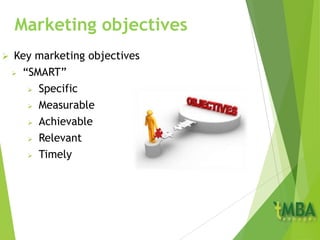
Marketing objectives
 Key marketing objectives
 “SMART”
 Specific
 Measurable
 Achievable
 Relevant
 Timely
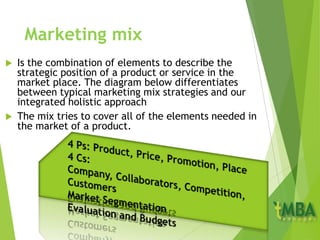
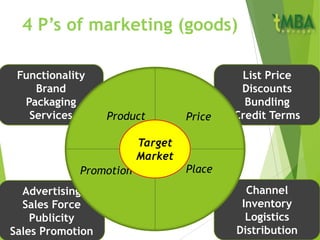
Marketing mix
 Is the combination of elements to describe the
strategic position of a product or service in the
market place. The diagram below differentiates
between typical marketing mix strategies and our
integrated holistic approach
 The mix tries to cover all of the elements needed in
the market of a product.
Functionality
Brand
Packaging
Services
Advertising
Sales Force
Publicity
Sales Promotion
List Price
Discounts
Bundling
Credit Terms
Channel
Inventory
Logistics
Distribution
PriceProduct
Promotion Place
Target
Market
4 P’s of marketing (goods)
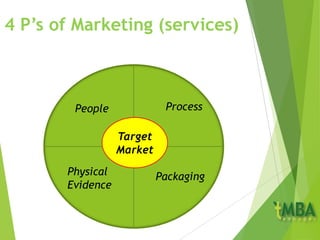
ProcessPeople
Physical
Evidence
Packaging
Target
Market
4 P’s of Marketing (services)
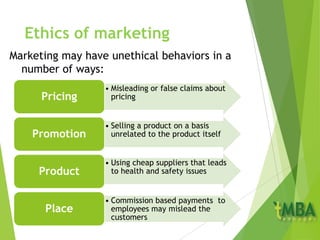
Ethics of marketing
Marketing may have unethical behaviors in a
number of ways:
• Misleading or false claims about
pricingPricing
• Selling a product on a basis
unrelated to the product itselfPromotion
• Using cheap suppliers that leads
to health and safety issuesProduct
• Commission based payments to
employees may mislead the
customers
Place
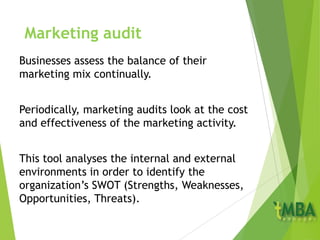
Marketing audit
Businesses assess the balance of their
marketing mix continually.
Periodically, marketing audits look at the cost
and effectiveness of the marketing activity.
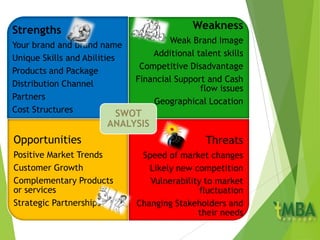
This tool analyses the internal and external
environments in order to identify the
organization’s SWOT (Strengths, Weaknesses,
Opportunities, Threats).
Strengths
Your brand and brand name
Unique Skills and Abilities
Products and Package
Distribution Channel
Partners
Cost Structures
Weakness
Weak Brand Image
Additional talent skills
Competitive Disadvantage
Financial Support and Cash
flow issues
Geographical Location
Opportunities
Positive Market Trends
Customer Growth
Complementary Products
or services
Strategic Partnerships
Threats
Speed of market changes
Likely new competition
Vulnerability to market
fluctuation
Changing Stakeholders and
their needs
SWOT
ANALYSIS
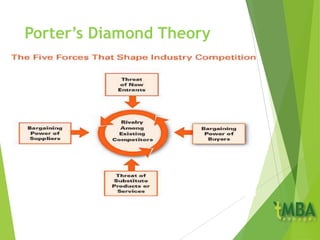
Porter’s Diamond Theory

Chapter 2 marketing

  • 1.
  • 2.
    COURSE SCHEDULE  Chapter1: ROLE OF MARKETING  Chapter 2: MARKETING PLANNING  Chapter 3: MARKETING STRATEGY  Chapter 4: OTHER MEANS OF MARKETING
  • 3.
  • 4.
    Marketing planning Key componentsof a marketing plan:  Marketing objectives (SMART)  Strategic Plans  Specific Marketing Actions  Marketing Budgets
  • 5.
    Marketing objectives  Keymarketing objectives  “SMART”  Specific  Measurable  Achievable  Relevant  Timely
  • 6.
    Marketing mix  Isthe combination of elements to describe the strategic position of a product or service in the market place. The diagram below differentiates between typical marketing mix strategies and our integrated holistic approach  The mix tries to cover all of the elements needed in the market of a product.
  • 7.
    Functionality Brand Packaging Services Advertising Sales Force Publicity Sales Promotion ListPrice Discounts Bundling Credit Terms Channel Inventory Logistics Distribution PriceProduct Promotion Place Target Market 4 P’s of marketing (goods)
  • 8.
  • 9.
    Ethics of marketing Marketingmay have unethical behaviors in a number of ways: • Misleading or false claims about pricingPricing • Selling a product on a basis unrelated to the product itselfPromotion • Using cheap suppliers that leads to health and safety issuesProduct • Commission based payments to employees may mislead the customers Place
  • 10.
    Marketing audit Businesses assessthe balance of their marketing mix continually. Periodically, marketing audits look at the cost and effectiveness of the marketing activity. This tool analyses the internal and external environments in order to identify the organization’s SWOT (Strengths, Weaknesses, Opportunities, Threats).
  • 11.
    Strengths Your brand andbrand name Unique Skills and Abilities Products and Package Distribution Channel Partners Cost Structures Weakness Weak Brand Image Additional talent skills Competitive Disadvantage Financial Support and Cash flow issues Geographical Location Opportunities Positive Market Trends Customer Growth Complementary Products or services Strategic Partnerships Threats Speed of market changes Likely new competition Vulnerability to market fluctuation Changing Stakeholders and their needs SWOT ANALYSIS
  • 12.