BUSINESS
MANAGEMENT
AND
ORGANIZATION
COURSE SCHEDULE
 CHAPTER 1: BUSINESS MANAGEMENT AND ORGANIZATION
 CHAPTER 2: OBJECTIVES, STAKEHOLDERS AND THE
EXTERNAL ENVIRONMENT
 CHAPTER 3: ORGANIZATIONAL PLANNING AND DECISION
MAKING
 CHAPTER 4: GROWTH AND THE IMPACT OF
GLOBALIZATION
Growth and the impact of
globalization
Chapter 4
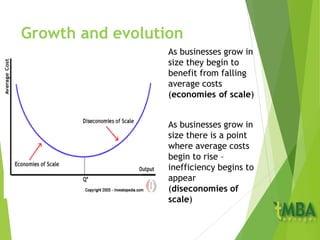
Growth and evolution
As businesses grow in
size they begin to
benefit from falling
average costs
(economies of scale)
As businesses grow in
size there is a point
where average costs
begin to rise –
inefficiency begins to
appear
(diseconomies of
scale)
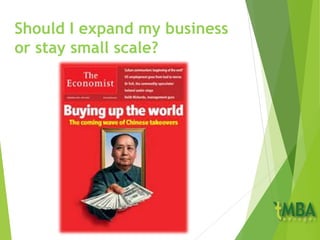
Should I expand my business
or stay small scale?
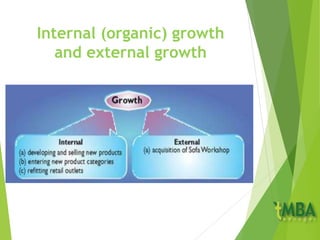
Internal (organic) growth
and external growth
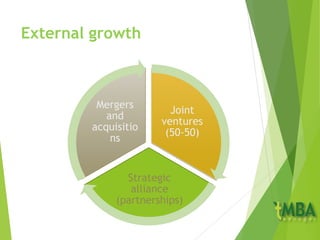
External growth
Joint
ventures
(50-50)
Strategic
alliance
(partnerships)
Mergers
and
acquisitio
ns
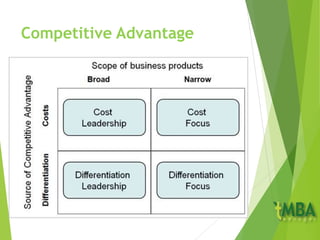
Competitive Advantage
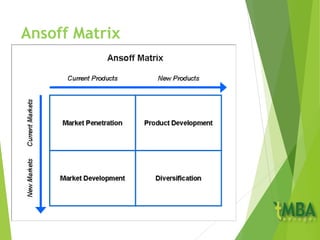
Ansoff Matrix
Globalization
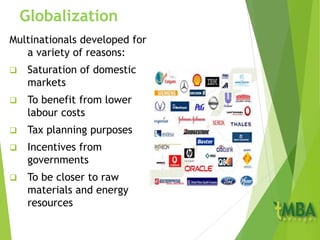
Multinationals developed for
a variety of reasons:
 Saturation of domestic
markets
 To benefit from lower
labour costs
 Tax planning purposes
 Incentives from
governments
 To be closer to raw
materials and energy
resources
Change
The rate of change is accelerating and no business
is immune, for example, there are:
 new markets
 new products and services
 new production methods
 new social values
 new technologies
Every change is a challenge to the management of
a business.
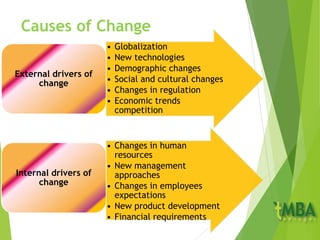
Causes of Change
• Globalization
• New technologies
• Demographic changes
• Social and cultural changes
• Changes in regulation
• Economic trends
competition
External drivers of
change
• Changes in human
resources
• New management
approaches
• Changes in employees
expectations
• New product development
• Financial requirements
Internal drivers of
change
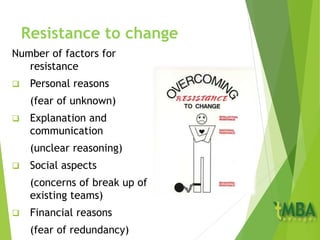
Resistance to change
Number of factors for
resistance
 Personal reasons
(fear of unknown)
 Explanation and
communication
(unclear reasoning)
 Social aspects
(concerns of break up of
existing teams)
 Financial reasons
(fear of redundancy)
Effects of rapid change
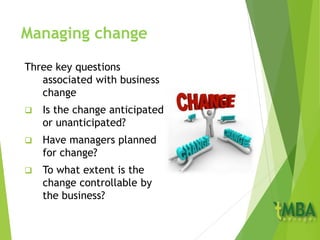
Managing change
Three key questions
associated with business
change
 Is the change anticipated
or unanticipated?
 Have managers planned
for change?
 To what extent is the
change controllable by
the business?
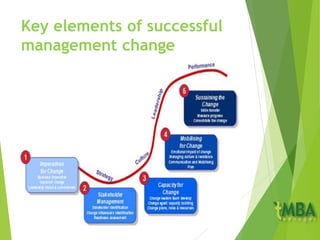
Key elements of successful
management change

Business and management chapter 4

  • 1.
  • 2.
    COURSE SCHEDULE  CHAPTER1: BUSINESS MANAGEMENT AND ORGANIZATION  CHAPTER 2: OBJECTIVES, STAKEHOLDERS AND THE EXTERNAL ENVIRONMENT  CHAPTER 3: ORGANIZATIONAL PLANNING AND DECISION MAKING  CHAPTER 4: GROWTH AND THE IMPACT OF GLOBALIZATION
  • 3.
    Growth and theimpact of globalization Chapter 4
  • 4.
    Growth and evolution Asbusinesses grow in size they begin to benefit from falling average costs (economies of scale) As businesses grow in size there is a point where average costs begin to rise – inefficiency begins to appear (diseconomies of scale)
  • 5.
    Should I expandmy business or stay small scale?
  • 6.
  • 7.
  • 8.
  • 9.
  • 10.
    Globalization Multinationals developed for avariety of reasons:  Saturation of domestic markets  To benefit from lower labour costs  Tax planning purposes  Incentives from governments  To be closer to raw materials and energy resources
  • 11.
    Change The rate ofchange is accelerating and no business is immune, for example, there are:  new markets  new products and services  new production methods  new social values  new technologies Every change is a challenge to the management of a business.
  • 12.
    Causes of Change •Globalization • New technologies • Demographic changes • Social and cultural changes • Changes in regulation • Economic trends competition External drivers of change • Changes in human resources • New management approaches • Changes in employees expectations • New product development • Financial requirements Internal drivers of change
  • 13.
    Resistance to change Numberof factors for resistance  Personal reasons (fear of unknown)  Explanation and communication (unclear reasoning)  Social aspects (concerns of break up of existing teams)  Financial reasons (fear of redundancy)
  • 14.
  • 15.
    Managing change Three keyquestions associated with business change  Is the change anticipated or unanticipated?  Have managers planned for change?  To what extent is the change controllable by the business?
  • 16.
    Key elements ofsuccessful management change