BULLYING
By: Luis Perez & Jailin De La Puente
WHAT IS BULLYING?

• Bullying is unwanted or aggressive behavior between school
aged children. Both bullies and the bully may have serious
permanent problems.
• Bullying includes actions such as making threats, spreading
rumors, attacking someone physically or verbally, and
excluding someone from a group on purpose.
DIFFERENT TYPES OF BULLYING
• There are many different types of bullying. Which are
cyber bullying, Verbal bullying , physical bullying , and
Emotional bullying. All these type of bullying have
serious consequences.
KIDS WHO BULLY OTHERS
Kids who bully others can also engage in violent and
other risky behaviors into adulthood. Kids who bully are
more likely to:
Abuse alcohol and other drugs
Get into fights, vandalize property, and drop out of
school
Be abusive toward their romantic ,spouses, or child as
adult.
Depression all there life and have bad social life.
WHAT IS CYBER BULLING
Cyberbullying is bullying that takes place using electronic
technology. Electronic technology includes devices and
equipment such as cell phones, computers, and tablets
as well as communication tools including social media
sites, text message, chat, and other websites
Some examples of cyber bullying
 Mean messages or emails, rumors sent by email or
posted on social networks sites
Posting embarrassing pictures, videos, or a fake profiles
WHAT CAN WE HELP TO
STOP BULLYING
• When you see someone getting bullying you should
stand up for them and find a adult and speak up
• Stand up to the bully
• Help the Victim out

• Tell a teacher, counselor, principle ,and etc.
EFFECTS OF BULLYING
• Bullying can affect everyone, those who are bullied,
those who bully and those who witness bullying. Bullying
is linked to many negative consequences including
impacts on mental health, substance use, and suicide.
• Many kids that are bullied can experience negative
physical, school, and mental health issues. Kids who are
bullied are most likely to experience depression and
anxiety witch would increase there feelings of sadness
and loneliness also changes in sleep and eating
patterns.
WHAT IS VERBAL AND
PHYSICAL BULLYING
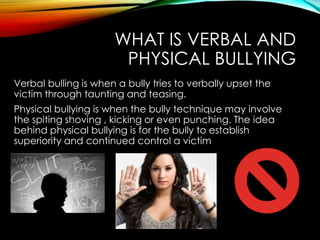
Verbal bulling is when a bully tries to verbally upset the
victim through taunting and teasing.
Physical bullying is when the bully technique may involve
the spiting shoving , kicking or even punching. The idea
behind physical bullying is for the bully to establish
superiority and continued control a victim
HOW TO STOP BULLYING
• If you see bullying tell him or her to stop in a calm,
clear voice.
• Don’t fight back. Find an adult to stop the bullying .
• Talk to an adult you trust. They can help you make a
plan to stop the bullying.
• Stay away from places where bullying happens.

STOP
BULLYING!
BULLYING VIDEO
• http://www.youtube.com/watch?v=nWJut7KQhI4
BIBLIOGRAPHY
• http://en.wikipedia.org/wiki/Cyber-bullying
• http://www.stopbullying.gov/at-risk/effects/index.html
• http://en.wikipedia.org/wiki/Bullying
• http://www.stopbullying.gov/kids/what-you-cando/index.html
• http://www.stopbullying.gov/at-risk/effects/index.html
• http://typesofbullying.org/

Bullying123.ppt

  • 1.
    BULLYING By: Luis Perez& Jailin De La Puente
  • 2.
    WHAT IS BULLYING? •Bullying is unwanted or aggressive behavior between school aged children. Both bullies and the bully may have serious permanent problems. • Bullying includes actions such as making threats, spreading rumors, attacking someone physically or verbally, and excluding someone from a group on purpose.
  • 3.
    DIFFERENT TYPES OFBULLYING • There are many different types of bullying. Which are cyber bullying, Verbal bullying , physical bullying , and Emotional bullying. All these type of bullying have serious consequences.
  • 4.
    KIDS WHO BULLYOTHERS Kids who bully others can also engage in violent and other risky behaviors into adulthood. Kids who bully are more likely to: Abuse alcohol and other drugs Get into fights, vandalize property, and drop out of school Be abusive toward their romantic ,spouses, or child as adult. Depression all there life and have bad social life.
  • 5.
    WHAT IS CYBERBULLING Cyberbullying is bullying that takes place using electronic technology. Electronic technology includes devices and equipment such as cell phones, computers, and tablets as well as communication tools including social media sites, text message, chat, and other websites Some examples of cyber bullying  Mean messages or emails, rumors sent by email or posted on social networks sites Posting embarrassing pictures, videos, or a fake profiles
  • 6.
    WHAT CAN WEHELP TO STOP BULLYING • When you see someone getting bullying you should stand up for them and find a adult and speak up • Stand up to the bully • Help the Victim out • Tell a teacher, counselor, principle ,and etc.
  • 7.
    EFFECTS OF BULLYING •Bullying can affect everyone, those who are bullied, those who bully and those who witness bullying. Bullying is linked to many negative consequences including impacts on mental health, substance use, and suicide. • Many kids that are bullied can experience negative physical, school, and mental health issues. Kids who are bullied are most likely to experience depression and anxiety witch would increase there feelings of sadness and loneliness also changes in sleep and eating patterns.
  • 8.
    WHAT IS VERBALAND PHYSICAL BULLYING Verbal bulling is when a bully tries to verbally upset the victim through taunting and teasing. Physical bullying is when the bully technique may involve the spiting shoving , kicking or even punching. The idea behind physical bullying is for the bully to establish superiority and continued control a victim
  • 9.
    HOW TO STOPBULLYING • If you see bullying tell him or her to stop in a calm, clear voice. • Don’t fight back. Find an adult to stop the bullying . • Talk to an adult you trust. They can help you make a plan to stop the bullying. • Stay away from places where bullying happens. STOP BULLYING!
  • 10.
  • 11.
    BIBLIOGRAPHY • http://en.wikipedia.org/wiki/Cyber-bullying • http://www.stopbullying.gov/at-risk/effects/index.html •http://en.wikipedia.org/wiki/Bullying • http://www.stopbullying.gov/kids/what-you-cando/index.html • http://www.stopbullying.gov/at-risk/effects/index.html • http://typesofbullying.org/