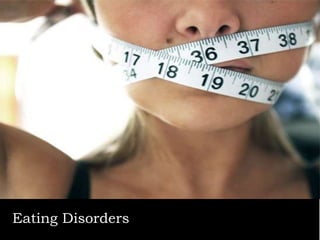
Eating Disorders
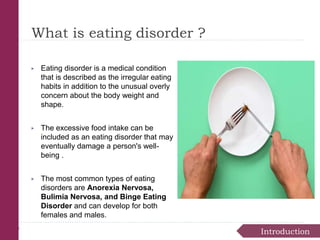
What is eating disorder ?
▶ Eating disorder is a medical condition
that is described as the irregular eating
habits in addition to the unusual overly
concern about the body weight and
shape.
▶ The excessive food intake can be
included as an eating disorder that may
eventually damage a person's well-
being .
▶ The most common types of eating
disorders are Anorexia Nervosa,
Bulimia Nervosa, and Binge Eating
Disorder and can develop for both
females and males.
Introduction
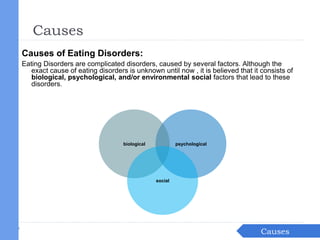
Causes of Eating Disorders:
Eating Disorders are complicated disorders, caused by several factors. Although the
exact cause of eating disorders is unknown until now , it is believed that it consists of
biological, psychological, and/or environmental social factors that lead to these
disorders.
psychologicalbiological
social
Causes
Causes
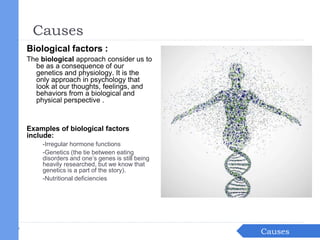
Biological factors :
The biological approach consider us to
be as a consequence of our
genetics and physiology. It is the
only approach in psychology that
look at our thoughts, feelings, and
behaviors from a biological and
physical perspective .
Examples of biological factors
include:
-Irregular hormone functions
-Genetics (the tie between eating
disorders and one’s genes is still being
heavily researched, but we know that
genetics is a part of the story).
-Nutritional deficiencies
IntroductionCauses
Causes
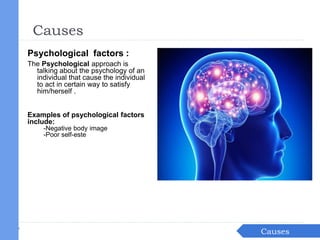
Psychological factors :
The Psychological approach is
talking about the psychology of an
individual that cause the individual
to act in certain way to satisfy
him/herself .
Examples of psychological factors
include:
-Negative body image
-Poor self-este
IntroductionCauses
Causes
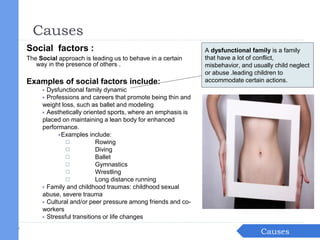
Social factors :
The Social approach is leading us to behave in a certain
way in the presence of others .
Examples of social factors include:
▶ Dysfunctional family dynamic
▶ Professions and careers that promote being thin and
weight loss, such as ballet and modeling
▶ Aesthetically oriented sports, where an emphasis is
placed on maintaining a lean body for enhanced
performance.
▶Examples include:
◻ Rowing
◻ Diving
◻ Ballet
◻ Gymnastics
◻ Wrestling
◻ Long distance running
▶ Family and childhood traumas: childhood sexual
abuse, severe trauma
▶ Cultural and/or peer pressure among friends and co-
workers
▶ Stressful transitions or life changes
Introduction
Causes
Causes
A dysfunctional family is a family
that have a lot of conflict,
misbehavior, and usually child neglect
or abuse .leading children to
accommodate certain actions.
Definition:
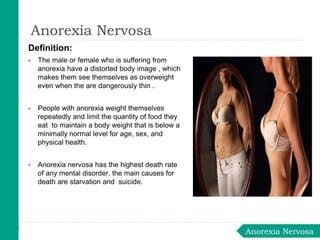
▶ The male or female who is suffering from
anorexia have a distorted body image , which
makes them see themselves as overweight
even when the are dangerously thin .
▶ People with anorexia weight themselves
repeatedly and limit the quantity of food they
eat to maintain a body weight that is below a
minimally normal level for age, sex, and
physical health.
▶ Anorexia nervosa has the highest death rate
of any mental disorder. the main causes for
death are starvation and suicide.
Anorexia Nervosa
Anorexia Nervosa
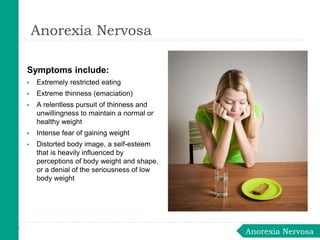
Symptoms include:
▶ Extremely restricted eating
▶ Extreme thinness (emaciation)
▶ A relentless pursuit of thinness and
unwillingness to maintain a normal or
healthy weight
▶ Intense fear of gaining weight
▶ Distorted body image, a self-esteem
that is heavily influenced by
perceptions of body weight and shape,
or a denial of the seriousness of low
body weight
Anorexia Nervosa
Anorexia Nervosa
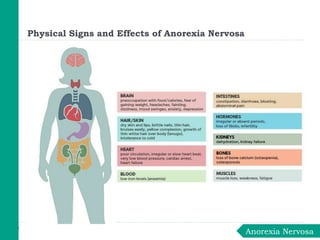
Physical Signs and Effects of Anorexia Nervosa
Anorexia Nervosa
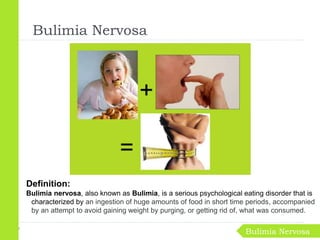
Definition:
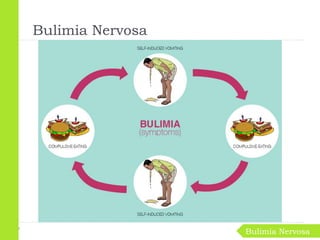
Bulimia nervosa, also known as Bulimia, is a serious psychological eating disorder that is
characterized by an ingestion of huge amounts of food in short time periods, accompanied
by an attempt to avoid gaining weight by purging, or getting rid of, what was consumed.
Bulimia Nervosa
Bulimia Nervosa
Bulimia Nervosa
Bulimia Nervosa
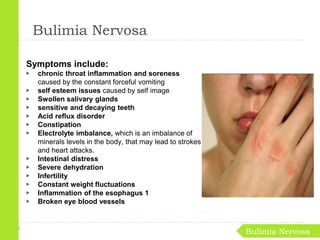
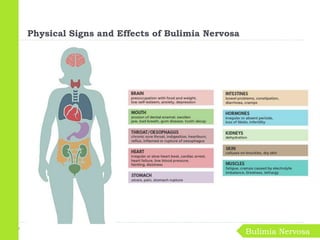
Symptoms include:
▶ chronic throat inflammation and soreness
caused by the constant forceful vomiting
▶ self esteem issues caused by self image
▶ Swollen salivary glands
▶ sensitive and decaying teeth
▶ Acid reflux disorder
▶ Constipation
▶ Electrolyte imbalance, which is an imbalance of
minerals levels in the body, that may lead to strokes
and heart attacks.
▶ Intestinal distress
▶ Severe dehydration
▶ Infertility
▶ Constant weight fluctuations
▶ Inflammation of the esophagus 1
▶ Broken eye blood vessels
Bulimia Nervosa
Bulimia Nervosa
Bulimia Nervosa
Physical Signs and Effects of Bulimia Nervosa
Bulimia Nervosa
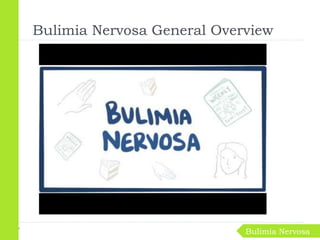
Bulimia Nervosa General Overview
Binge-eating disorder
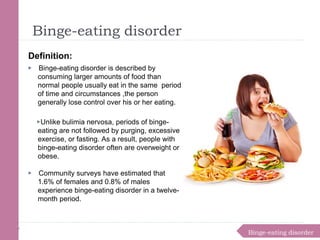
Definition:
▶ Binge-eating disorder is described by
consuming larger amounts of food than
normal people usually eat in the same period
of time and circumstances ,the person
generally lose control over his or her eating.
▶Unlike bulimia nervosa, periods of binge-
eating are not followed by purging, excessive
exercise, or fasting. As a result, people with
binge-eating disorder often are overweight or
obese.
▶ Community surveys have estimated that
1.6% of females and 0.8% of males
experience binge-eating disorder in a twelve-
month period.
Binge-eating disorder
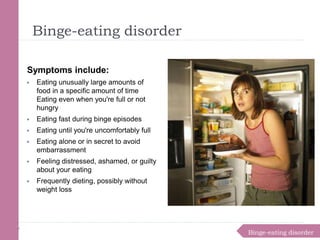
Symptoms include:
▶ Eating unusually large amounts of
food in a specific amount of time
Eating even when you're full or not
hungry
▶ Eating fast during binge episodes
▶ Eating until you're uncomfortably full
▶ Eating alone or in secret to avoid
embarrassment
▶ Feeling distressed, ashamed, or guilty
about your eating
▶ Frequently dieting, possibly without
weight loss
Binge-eating disorder
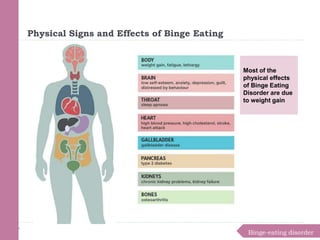
Physical Signs and Effects of Binge Eating
Most of the
physical effects
of Binge Eating
Disorder are due
to weight gain
Treatment
Treatment and therapies
Adequate nutrition, reducing excessive exercise, and stopping
purging behaviors are the foundations of treatment. Treatment
plans are set up according to individual needs and may include
one or more of the following:
▶ Individual, group, and/or family psychotherapy
▶ Medical care and monitoring
▶ Nutritional counseling
Treatment
Treatment and therapies
Psychotherapies:
▶ Psychotherapies include a family-based
therapy called the Maudsley approach,
where parents of the individuals who are
suffering of anorexia nervosa take
responsibility for feeding their child,
appear to have very effective result in
helping people gain weight and improve
eating habits .
▶ on the other hand, for binge-eating and
purging behaviors, individuals may
undergo another type of psychotherapy
which is cognitive behavioral therapy
(CBT), It helps the individual to learn the
wrong thinking pattern and inaccurate
believes and then changing them ,.
Treatment
Treatment and therapies
Medications:
From many experiences , it was proven by the U.S. Food and Drug
Administration (FDA) that medications such as antidepressants, antipsychotics,
or mood stabilizers can be very helpful for treating eating disorders and other
related mental illnesses like anxiety or depression.
Nutritional Therapy
Nutritional Therapy is another special
form of treatment for Bulimia that can
help individuals recover in the early
disorder stages
How does it work? Via a specifically
planned diet tracked by a qualified
registered nutritionist.
Treatment
Treatment and therapies
References
References
https://www.healthtopia.net/disease/mental-health/bulimia-causes-symptoms-and-treatment
http://www.niagarafallsreview.ca/2014/03/13/love-hormone-may-help-anorexics-fight-food-fixation
http://www.brieaustin.com/wp-content/uploads/2015/10/bulimia_cycle-300x294.jpg
https://www.nimh.nih.gov/health/topics/eating-disorders/index.shtml
https://www.eatingdisorderhope.com/information/bulimia
https://www.mayoclinic.org/diseases-conditions/bulimia/symptoms-causes/syc-20353615
https://www.nationaleatingdisorders.org/bulimia-nervosa
https://www.psychologytoday.com/conditions/eating-disorders
https://www.eatingdisorderhope.com/information/eating-disorder
https://psychcentral.com/blog/archives/2013/08/08/the-psychology-of-eating-disorders/
https://www.nimh.nih.gov/health/topics/eating-disorders/index.shtml
https://www.eatingdisorders.org.au/eating-disorders/bulimia-nervosa
https://www.eatingdisorderhope.com/blog/medical-nutrition-therapy-for-bulimia-nervosa

Eating Disorders

  • 1.
  • 2.
    What is eatingdisorder ? ▶ Eating disorder is a medical condition that is described as the irregular eating habits in addition to the unusual overly concern about the body weight and shape. ▶ The excessive food intake can be included as an eating disorder that may eventually damage a person's well- being . ▶ The most common types of eating disorders are Anorexia Nervosa, Bulimia Nervosa, and Binge Eating Disorder and can develop for both females and males. Introduction
  • 3.
    Causes of EatingDisorders: Eating Disorders are complicated disorders, caused by several factors. Although the exact cause of eating disorders is unknown until now , it is believed that it consists of biological, psychological, and/or environmental social factors that lead to these disorders. psychologicalbiological social Causes Causes
  • 4.
    Biological factors : Thebiological approach consider us to be as a consequence of our genetics and physiology. It is the only approach in psychology that look at our thoughts, feelings, and behaviors from a biological and physical perspective . Examples of biological factors include: -Irregular hormone functions -Genetics (the tie between eating disorders and one’s genes is still being heavily researched, but we know that genetics is a part of the story). -Nutritional deficiencies IntroductionCauses Causes
  • 5.
    Psychological factors : ThePsychological approach is talking about the psychology of an individual that cause the individual to act in certain way to satisfy him/herself . Examples of psychological factors include: -Negative body image -Poor self-este IntroductionCauses Causes
  • 6.
    Social factors : TheSocial approach is leading us to behave in a certain way in the presence of others . Examples of social factors include: ▶ Dysfunctional family dynamic ▶ Professions and careers that promote being thin and weight loss, such as ballet and modeling ▶ Aesthetically oriented sports, where an emphasis is placed on maintaining a lean body for enhanced performance. ▶Examples include: ◻ Rowing ◻ Diving ◻ Ballet ◻ Gymnastics ◻ Wrestling ◻ Long distance running ▶ Family and childhood traumas: childhood sexual abuse, severe trauma ▶ Cultural and/or peer pressure among friends and co- workers ▶ Stressful transitions or life changes Introduction Causes Causes A dysfunctional family is a family that have a lot of conflict, misbehavior, and usually child neglect or abuse .leading children to accommodate certain actions.
  • 7.
    Definition: ▶ The maleor female who is suffering from anorexia have a distorted body image , which makes them see themselves as overweight even when the are dangerously thin . ▶ People with anorexia weight themselves repeatedly and limit the quantity of food they eat to maintain a body weight that is below a minimally normal level for age, sex, and physical health. ▶ Anorexia nervosa has the highest death rate of any mental disorder. the main causes for death are starvation and suicide. Anorexia Nervosa Anorexia Nervosa
  • 8.
    Symptoms include: ▶ Extremelyrestricted eating ▶ Extreme thinness (emaciation) ▶ A relentless pursuit of thinness and unwillingness to maintain a normal or healthy weight ▶ Intense fear of gaining weight ▶ Distorted body image, a self-esteem that is heavily influenced by perceptions of body weight and shape, or a denial of the seriousness of low body weight Anorexia Nervosa Anorexia Nervosa
  • 9.
    Physical Signs andEffects of Anorexia Nervosa Anorexia Nervosa
  • 10.
    Definition: Bulimia nervosa, alsoknown as Bulimia, is a serious psychological eating disorder that is characterized by an ingestion of huge amounts of food in short time periods, accompanied by an attempt to avoid gaining weight by purging, or getting rid of, what was consumed. Bulimia Nervosa Bulimia Nervosa
  • 11.
  • 12.
    Symptoms include: ▶ chronicthroat inflammation and soreness caused by the constant forceful vomiting ▶ self esteem issues caused by self image ▶ Swollen salivary glands ▶ sensitive and decaying teeth ▶ Acid reflux disorder ▶ Constipation ▶ Electrolyte imbalance, which is an imbalance of minerals levels in the body, that may lead to strokes and heart attacks. ▶ Intestinal distress ▶ Severe dehydration ▶ Infertility ▶ Constant weight fluctuations ▶ Inflammation of the esophagus 1 ▶ Broken eye blood vessels Bulimia Nervosa Bulimia Nervosa
  • 13.
    Bulimia Nervosa Physical Signsand Effects of Bulimia Nervosa
  • 14.
  • 15.
    Binge-eating disorder Binge-eating disorder Definition: ▶Binge-eating disorder is described by consuming larger amounts of food than normal people usually eat in the same period of time and circumstances ,the person generally lose control over his or her eating. ▶Unlike bulimia nervosa, periods of binge- eating are not followed by purging, excessive exercise, or fasting. As a result, people with binge-eating disorder often are overweight or obese. ▶ Community surveys have estimated that 1.6% of females and 0.8% of males experience binge-eating disorder in a twelve- month period.
  • 16.
    Binge-eating disorder Binge-eating disorder Symptomsinclude: ▶ Eating unusually large amounts of food in a specific amount of time Eating even when you're full or not hungry ▶ Eating fast during binge episodes ▶ Eating until you're uncomfortably full ▶ Eating alone or in secret to avoid embarrassment ▶ Feeling distressed, ashamed, or guilty about your eating ▶ Frequently dieting, possibly without weight loss
  • 17.
    Binge-eating disorder Physical Signsand Effects of Binge Eating Most of the physical effects of Binge Eating Disorder are due to weight gain
  • 18.
    Treatment Treatment and therapies Adequatenutrition, reducing excessive exercise, and stopping purging behaviors are the foundations of treatment. Treatment plans are set up according to individual needs and may include one or more of the following: ▶ Individual, group, and/or family psychotherapy ▶ Medical care and monitoring ▶ Nutritional counseling
  • 19.
    Treatment Treatment and therapies Psychotherapies: ▶Psychotherapies include a family-based therapy called the Maudsley approach, where parents of the individuals who are suffering of anorexia nervosa take responsibility for feeding their child, appear to have very effective result in helping people gain weight and improve eating habits . ▶ on the other hand, for binge-eating and purging behaviors, individuals may undergo another type of psychotherapy which is cognitive behavioral therapy (CBT), It helps the individual to learn the wrong thinking pattern and inaccurate believes and then changing them ,.
  • 20.
    Treatment Treatment and therapies Medications: Frommany experiences , it was proven by the U.S. Food and Drug Administration (FDA) that medications such as antidepressants, antipsychotics, or mood stabilizers can be very helpful for treating eating disorders and other related mental illnesses like anxiety or depression.
  • 21.
    Nutritional Therapy Nutritional Therapyis another special form of treatment for Bulimia that can help individuals recover in the early disorder stages How does it work? Via a specifically planned diet tracked by a qualified registered nutritionist. Treatment Treatment and therapies
  • 22.
    References References https://www.healthtopia.net/disease/mental-health/bulimia-causes-symptoms-and-treatment http://www.niagarafallsreview.ca/2014/03/13/love-hormone-may-help-anorexics-fight-food-fixation http://www.brieaustin.com/wp-content/uploads/2015/10/bulimia_cycle-300x294.jpg https://www.nimh.nih.gov/health/topics/eating-disorders/index.shtml https://www.eatingdisorderhope.com/information/bulimia https://www.mayoclinic.org/diseases-conditions/bulimia/symptoms-causes/syc-20353615 https://www.nationaleatingdisorders.org/bulimia-nervosa https://www.psychologytoday.com/conditions/eating-disorders https://www.eatingdisorderhope.com/information/eating-disorder https://psychcentral.com/blog/archives/2013/08/08/the-psychology-of-eating-disorders/ https://www.nimh.nih.gov/health/topics/eating-disorders/index.shtml https://www.eatingdisorders.org.au/eating-disorders/bulimia-nervosa https://www.eatingdisorderhope.com/blog/medical-nutrition-therapy-for-bulimia-nervosa