ULIMIA
ERVOSA
BY : MANAR RADI
WHAT IS THE
BULIMIA NURVOSA ?
• Bulimia nervosa is an eating disorder
characterized by patterns of bingeing
(consuminga large amount of food in a
short amount of time) and purging the
calories out of their bodies through
vomiting, starving, excessiveexercise,
laxatives, or other methods. Bulimia is a
psychological disorder that produces
many medical and physical problems and
is often accompanied by feelings of guilt,
depression, and self-condemnation.
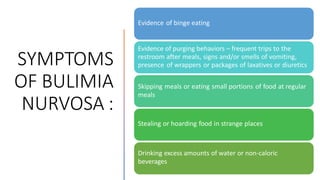
SYMPTOMS
OF BULIMIA
NURVOSA :
Evidence of binge eating
Evidence of purging behaviors – frequent trips to the
restroom after meals, signs and/or smells of vomiting,
presence of wrappers or packages of laxatives or diuretics
Skipping meals or eating small portions of food at regular
meals
Stealing or hoarding food in strange places
Drinking excess amounts of water or non-caloric
beverages
 Unusual swelling of the cheeks or jaw area
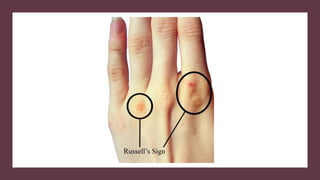
Calluses on the back of the hands and knuckles Discoloration or
staining of the teeth
Creation of complex lifestyle schedules/rituals to allow time for
binge eating and purging
 Withdrawal from friends, family, and/or activities
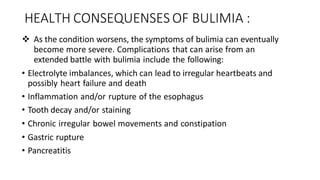
HEALTH CONSEQUENSES OF BULIMIA :
 As the condition worsens, the symptoms of bulimia can eventually
become more severe. Complications that can arise from an
extended battle with bulimia include the following:
• Electrolyte imbalances, which can lead to irregular heartbeats and
possibly heart failure and death
• Inflammation and/or rupture of the esophagus
• Tooth decay and/or staining
• Chronic irregular bowel movements and constipation
• Gastric rupture
• Pancreatitis
CAUSES
•The exact cause of bulimia is unknown. Many factors
could play a role in the development of eating
disorders, including genetics, biology, emotional
health, societal expectations and other issues.
Risk
factors
• Biology. People with first-degree relatives (siblings, parents or children)
with an eating disorder may be more likely to develop an eating disorder,
suggesting a possible genetic link. Being overweight as a child or teen
may increase the risk.
• Psychological and emotional issues. Psychological and emotional
problems, such as depression, anxiety disorders or substance use
disorders are closely linked with eating disorders. People with bulimia
may feel negatively about themselves. In some cases, traumatic events
and environmental stress may be contributing factors.
• Dieting. People who diet are at higher risk of developing eating
disorders. Many people with bulimia severely restrict calories between
binge episodes, which may trigger an urge to again binge eat and then
purge. Other triggers for bingeing can include stress, poor body self-
image, food and boredom.
COMPLICATION
:
Bulimia may cause numerous serious and even life-threatening complications.
Possible complications include:
• Negative self-esteem and problems with relationships and social functioning
• Dehydration, which can lead to major medical problems, such as kidney
failure
• Heart problems, such as an irregular heartbeat or heart failure
• Severe tooth decay and gum disease
• Absent or irregular periods in females
• Digestive problems
• Anxiety, depression, personality disorders or bipolar disorder
• Misuse of alcohol or drugs
• Self-injury, suicidal thoughts or suicide
Treatmen
t
• When you have bulimia, you may need several types of
treatment, although combining psychotherapy with
antidepressants may be the most effective for overcoming the
disorder.
• Treatment generally involves a team approach that includes
you, your family, your primary care provider, a mental health
professional and a dietitian experienced in treating eating
disorders. You may have a case manager to coordinate your
care.
• Here's a look at bulimia treatment options and considerations.
• THNK YOU

BULIMIA NERVOSA.pptx

  • 1.
  • 2.
    WHAT IS THE BULIMIANURVOSA ? • Bulimia nervosa is an eating disorder characterized by patterns of bingeing (consuminga large amount of food in a short amount of time) and purging the calories out of their bodies through vomiting, starving, excessiveexercise, laxatives, or other methods. Bulimia is a psychological disorder that produces many medical and physical problems and is often accompanied by feelings of guilt, depression, and self-condemnation.
  • 3.
    SYMPTOMS OF BULIMIA NURVOSA : Evidenceof binge eating Evidence of purging behaviors – frequent trips to the restroom after meals, signs and/or smells of vomiting, presence of wrappers or packages of laxatives or diuretics Skipping meals or eating small portions of food at regular meals Stealing or hoarding food in strange places Drinking excess amounts of water or non-caloric beverages
  • 7.
     Unusual swellingof the cheeks or jaw area Calluses on the back of the hands and knuckles Discoloration or staining of the teeth Creation of complex lifestyle schedules/rituals to allow time for binge eating and purging  Withdrawal from friends, family, and/or activities
  • 10.
    HEALTH CONSEQUENSES OFBULIMIA :  As the condition worsens, the symptoms of bulimia can eventually become more severe. Complications that can arise from an extended battle with bulimia include the following: • Electrolyte imbalances, which can lead to irregular heartbeats and possibly heart failure and death • Inflammation and/or rupture of the esophagus • Tooth decay and/or staining • Chronic irregular bowel movements and constipation • Gastric rupture • Pancreatitis
  • 11.
    CAUSES •The exact causeof bulimia is unknown. Many factors could play a role in the development of eating disorders, including genetics, biology, emotional health, societal expectations and other issues.
  • 12.
    Risk factors • Biology. Peoplewith first-degree relatives (siblings, parents or children) with an eating disorder may be more likely to develop an eating disorder, suggesting a possible genetic link. Being overweight as a child or teen may increase the risk. • Psychological and emotional issues. Psychological and emotional problems, such as depression, anxiety disorders or substance use disorders are closely linked with eating disorders. People with bulimia may feel negatively about themselves. In some cases, traumatic events and environmental stress may be contributing factors. • Dieting. People who diet are at higher risk of developing eating disorders. Many people with bulimia severely restrict calories between binge episodes, which may trigger an urge to again binge eat and then purge. Other triggers for bingeing can include stress, poor body self- image, food and boredom.
  • 13.
    COMPLICATION : Bulimia may causenumerous serious and even life-threatening complications. Possible complications include: • Negative self-esteem and problems with relationships and social functioning • Dehydration, which can lead to major medical problems, such as kidney failure • Heart problems, such as an irregular heartbeat or heart failure • Severe tooth decay and gum disease • Absent or irregular periods in females • Digestive problems • Anxiety, depression, personality disorders or bipolar disorder • Misuse of alcohol or drugs • Self-injury, suicidal thoughts or suicide
  • 14.
    Treatmen t • When youhave bulimia, you may need several types of treatment, although combining psychotherapy with antidepressants may be the most effective for overcoming the disorder. • Treatment generally involves a team approach that includes you, your family, your primary care provider, a mental health professional and a dietitian experienced in treating eating disorders. You may have a case manager to coordinate your care. • Here's a look at bulimia treatment options and considerations.
  • 15.