Building Blocks to Thought Leadership
The Route to Persuasion
Bolaji Okusaga
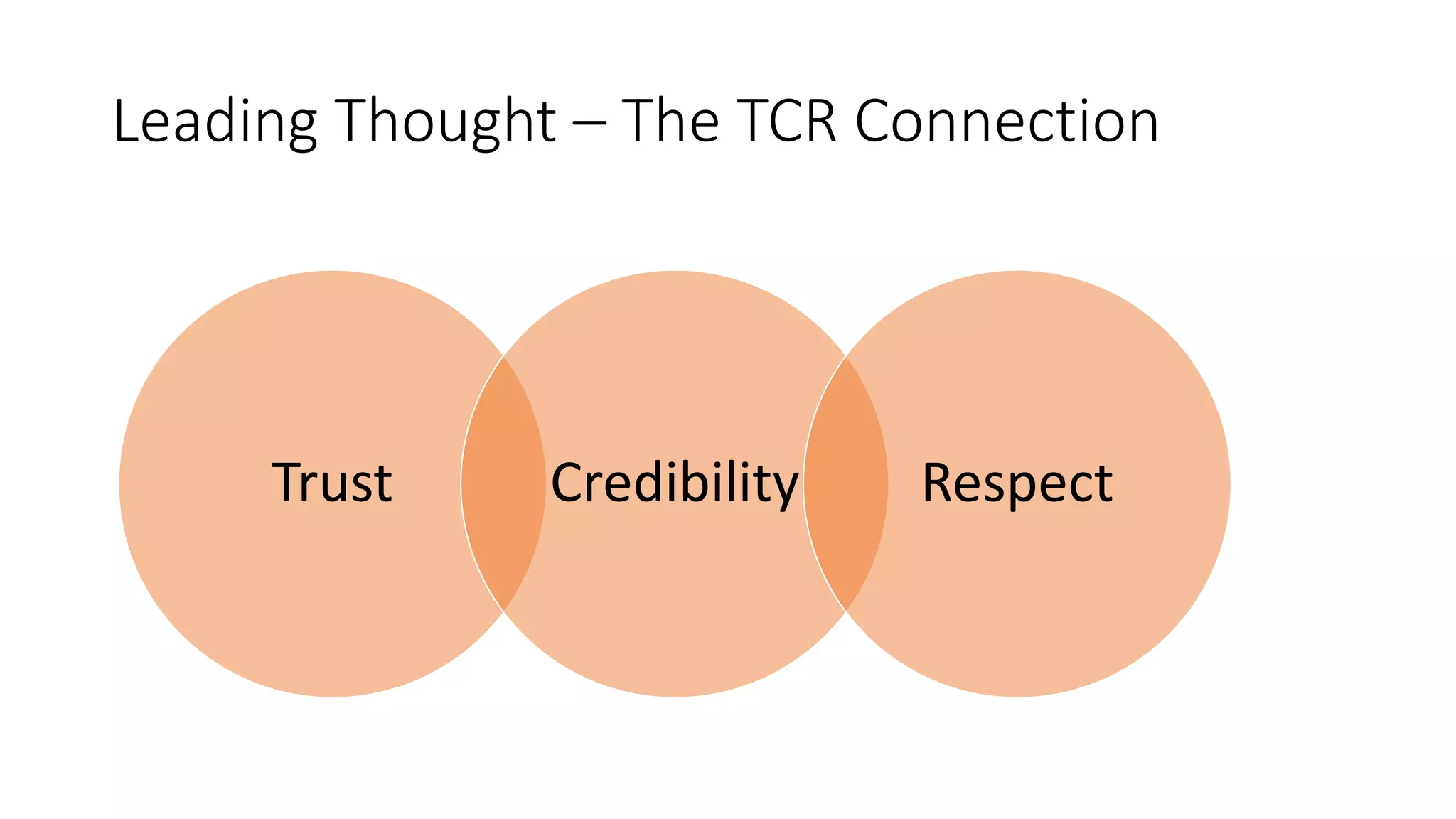
Leading Thought – The TCR Connection
Trust Credibility Respect
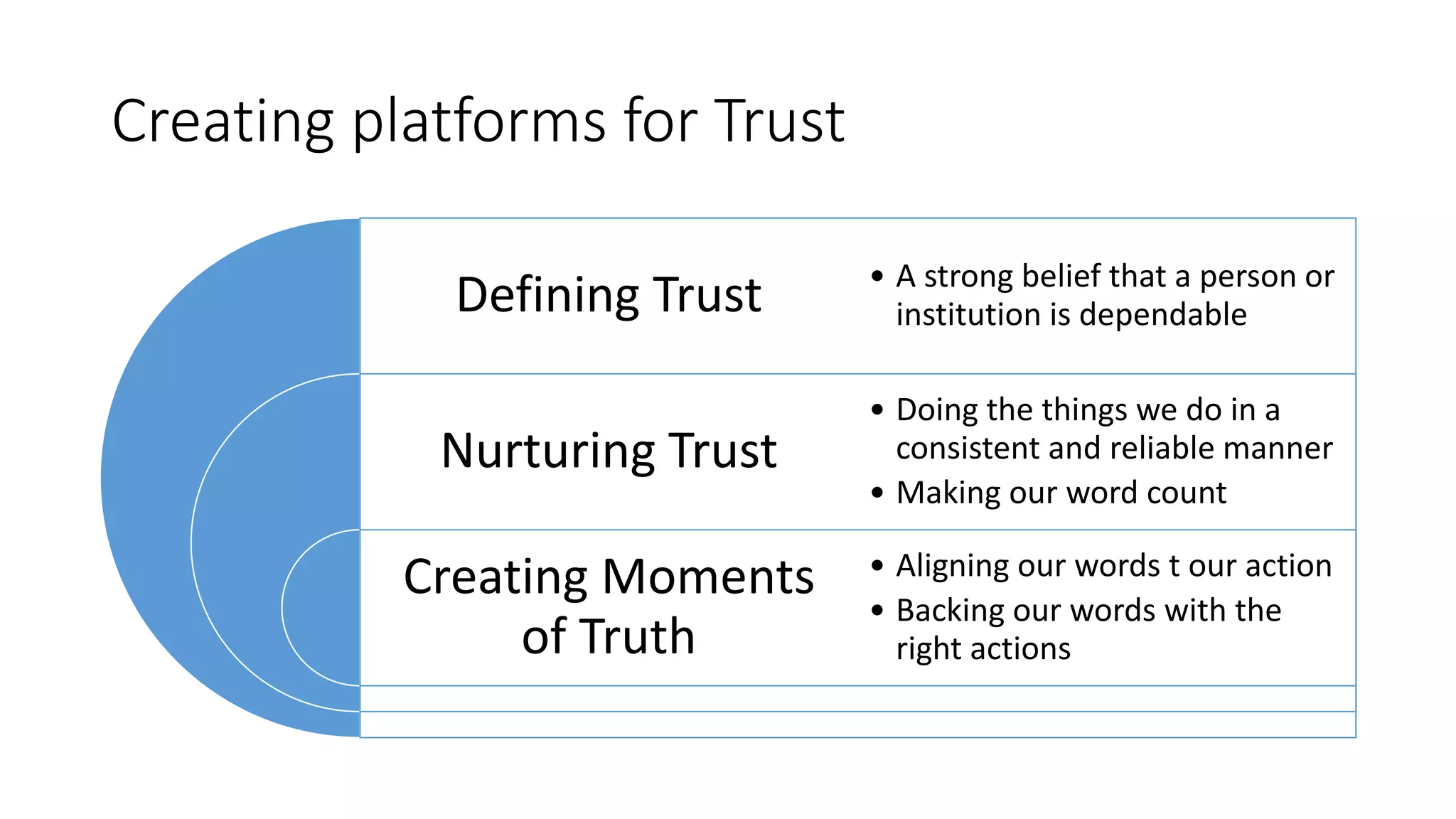
Creating platforms for Trust
Defining Trust
Nurturing Trust
Creating Moments
of Truth
• A strong belief that a person or
institution is dependable
• Doing the things we do in a
consistent and reliable manner
• Making our word count
• Aligning our words t our action
• Backing our words with the
right actions
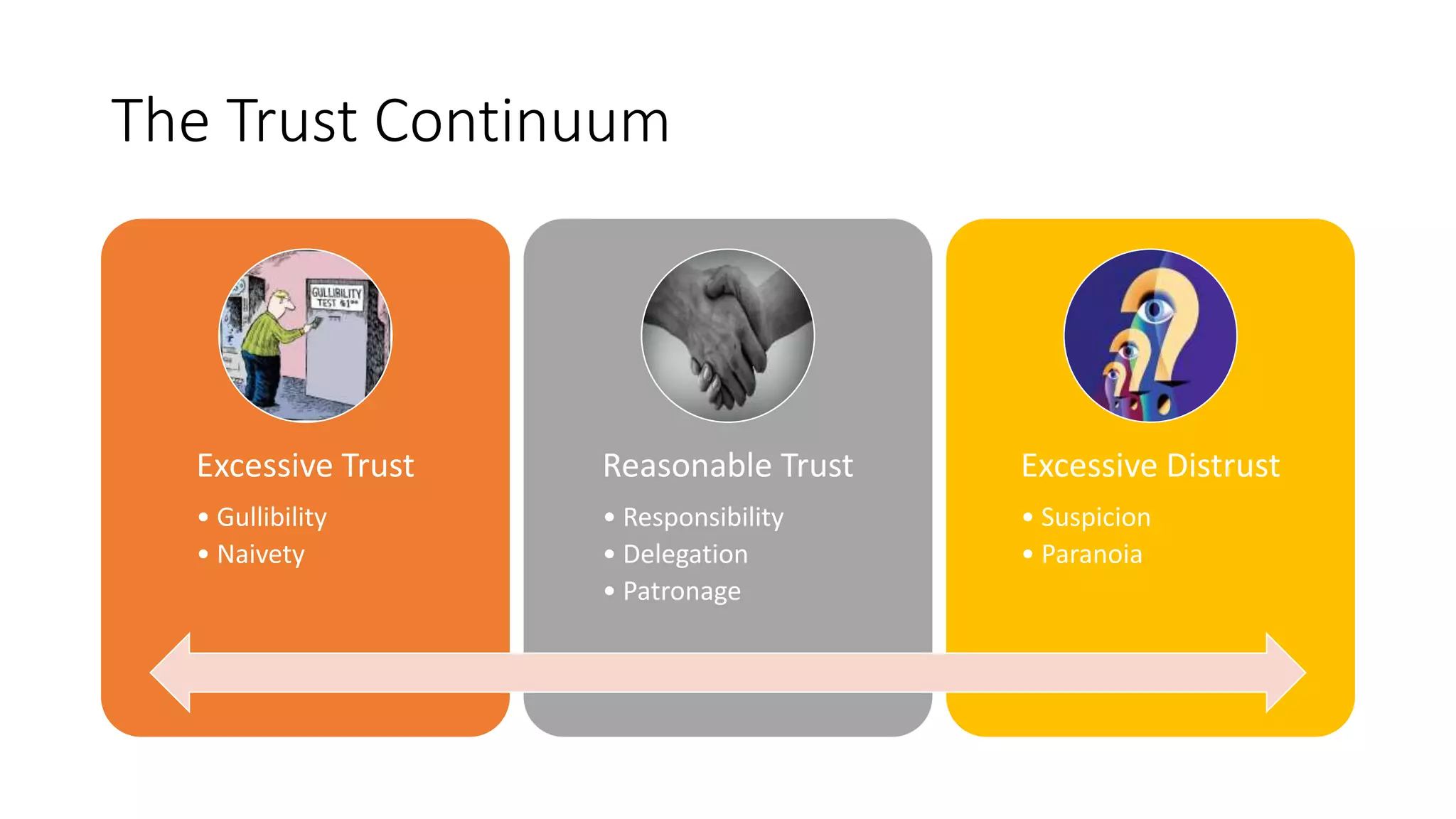
The Trust Continuum
Excessive Trust
• Gullibility
• Naivety
Reasonable Trust
• Responsibility
• Delegation
• Patronage
Excessive Distrust
• Suspicion
• Paranoia
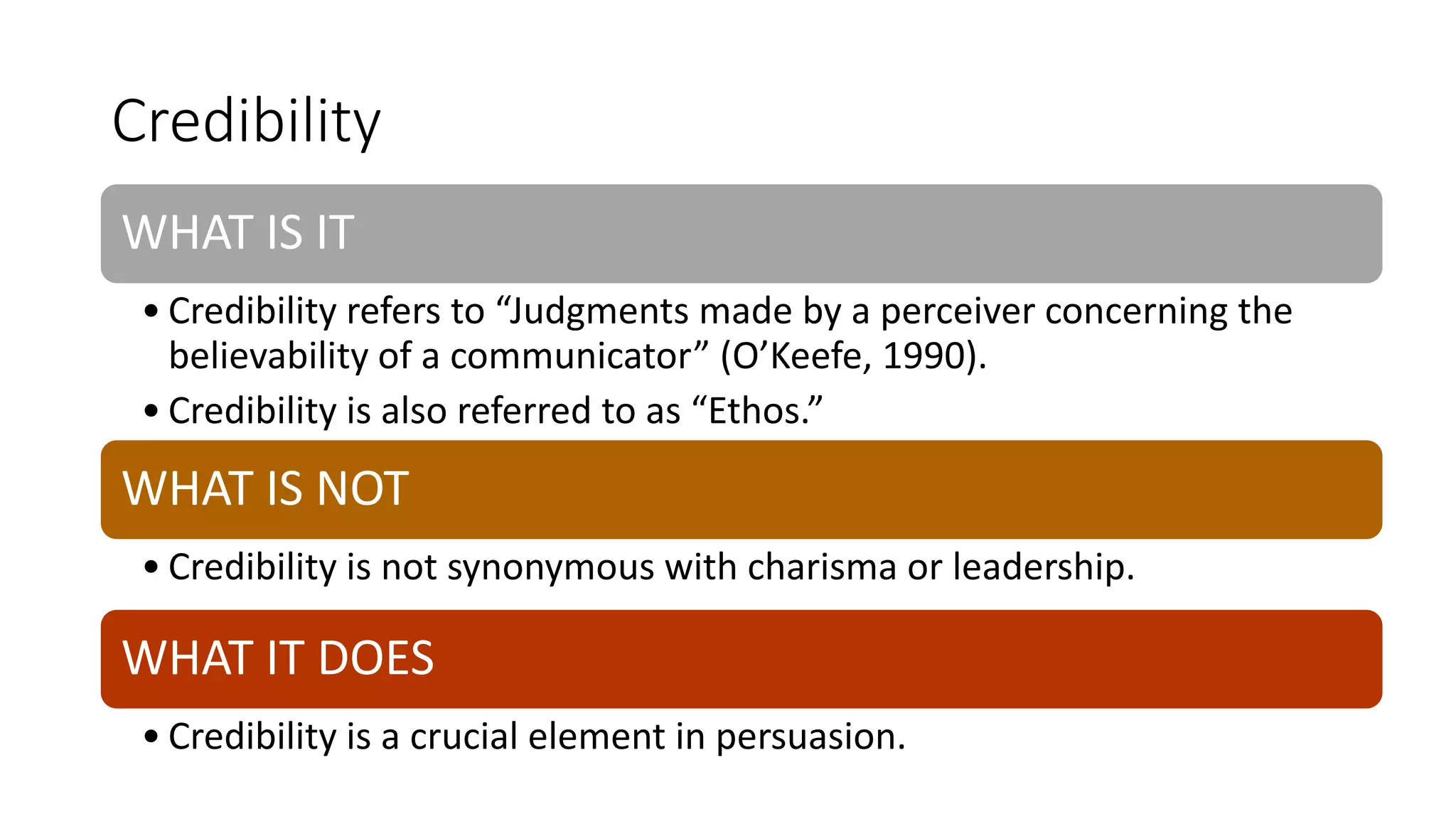
Credibility
WHAT IS IT
• Credibility refers to “Judgments made by a perceiver concerning the
believability of a communicator” (O’Keefe, 1990).
• Credibility is also referred to as “Ethos.”
WHAT IS NOT
• Credibility is not synonymous with charisma or leadership.
WHAT IT DOES
• Credibility is a crucial element in persuasion.
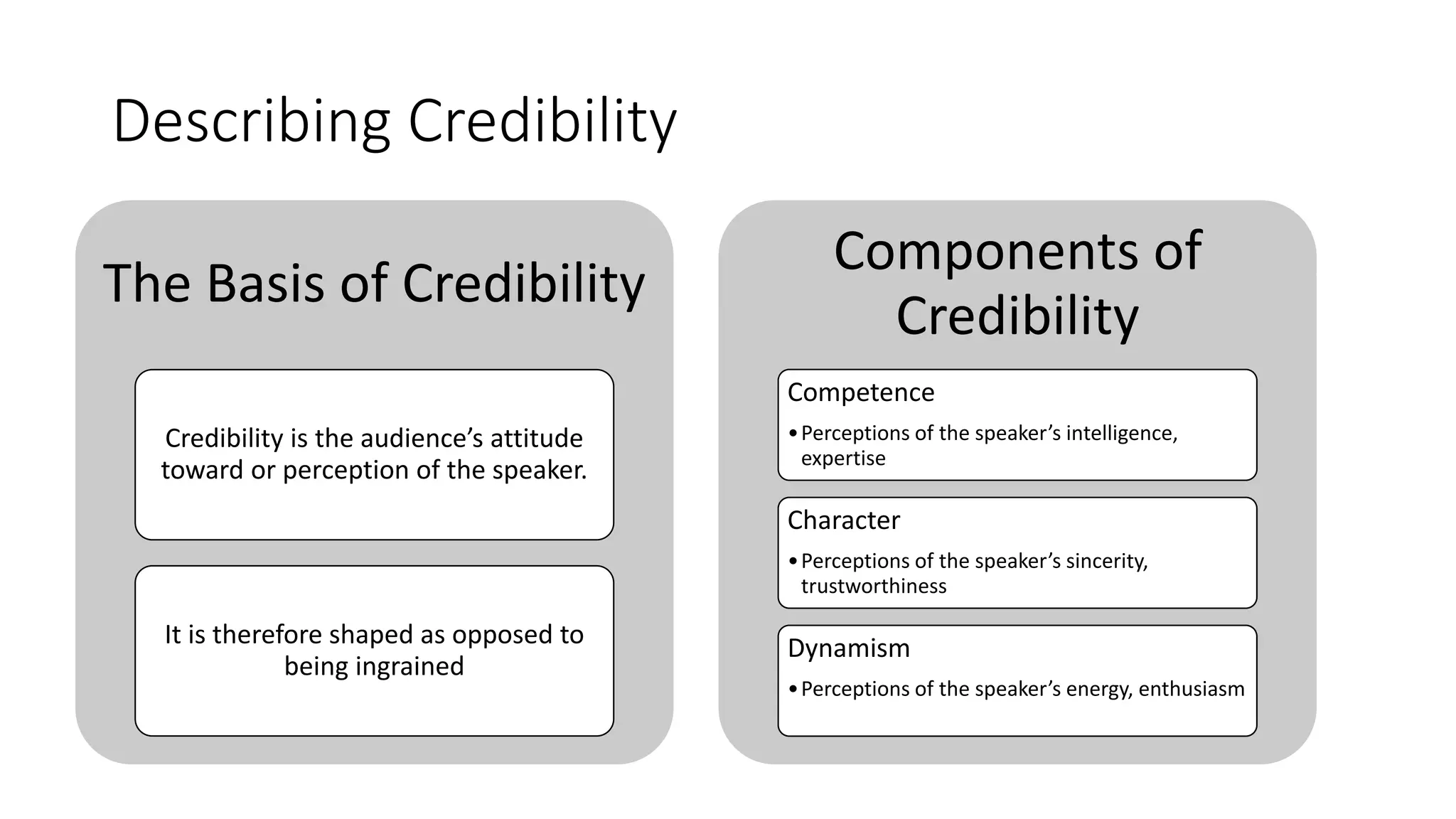
Describing Credibility
The Basis of Credibility
Credibility is the audience’s attitude
toward or perception of the speaker.
It is therefore shaped as opposed to
being ingrained
Components of
Credibility
Competence
•Perceptions of the speaker’s intelligence,
expertise
Character
•Perceptions of the speaker’s sincerity,
trustworthiness
Dynamism
•Perceptions of the speaker’s energy, enthusiasm
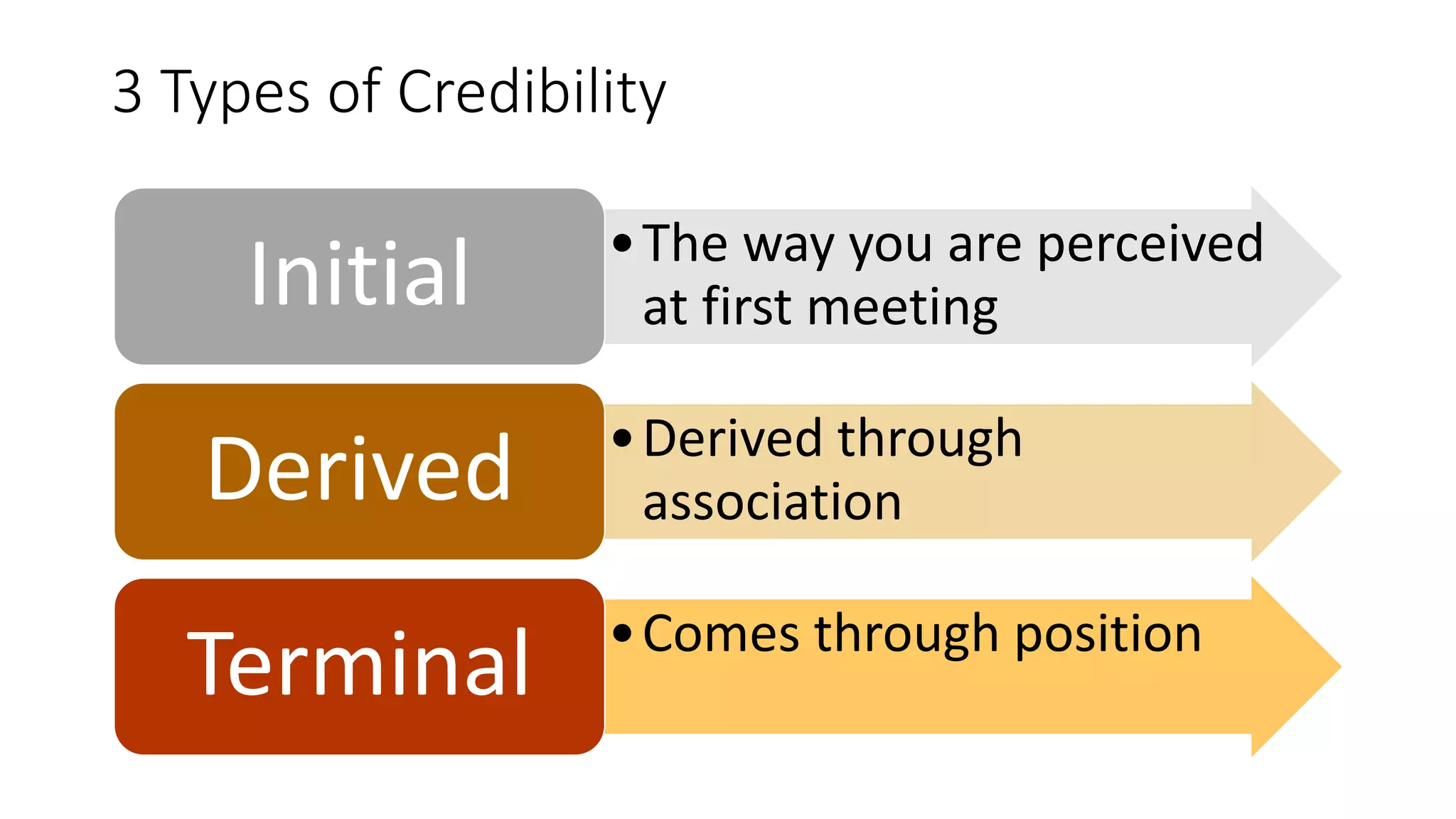
3 Types of Credibility
•The way you are perceived
at first meetingInitial
•Derived through
associationDerived
•Comes through position
Terminal
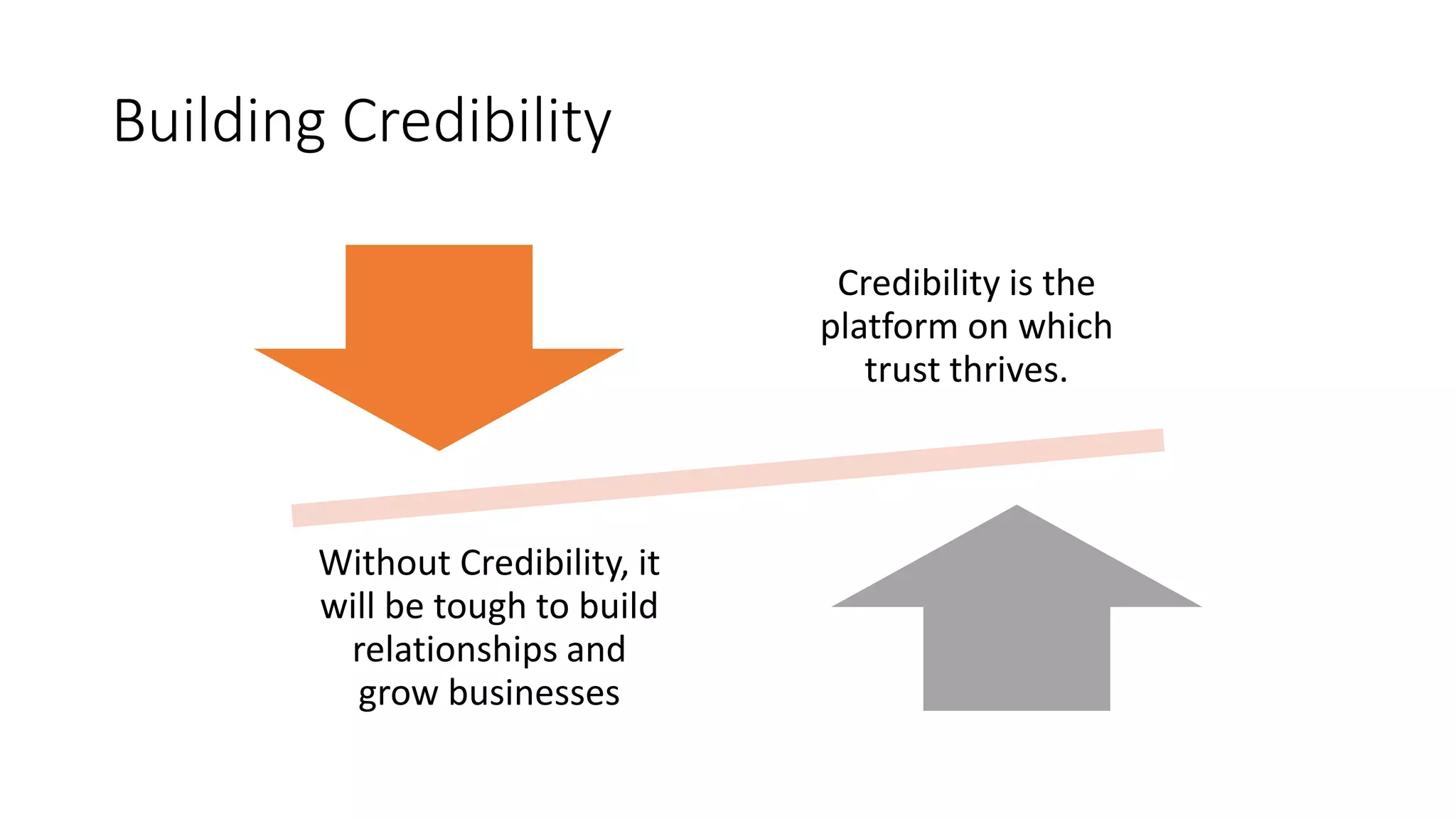
Building Credibility
Credibility is the
platform on which
trust thrives.
Without Credibility, it
will be tough to build
relationships and
grow businesses
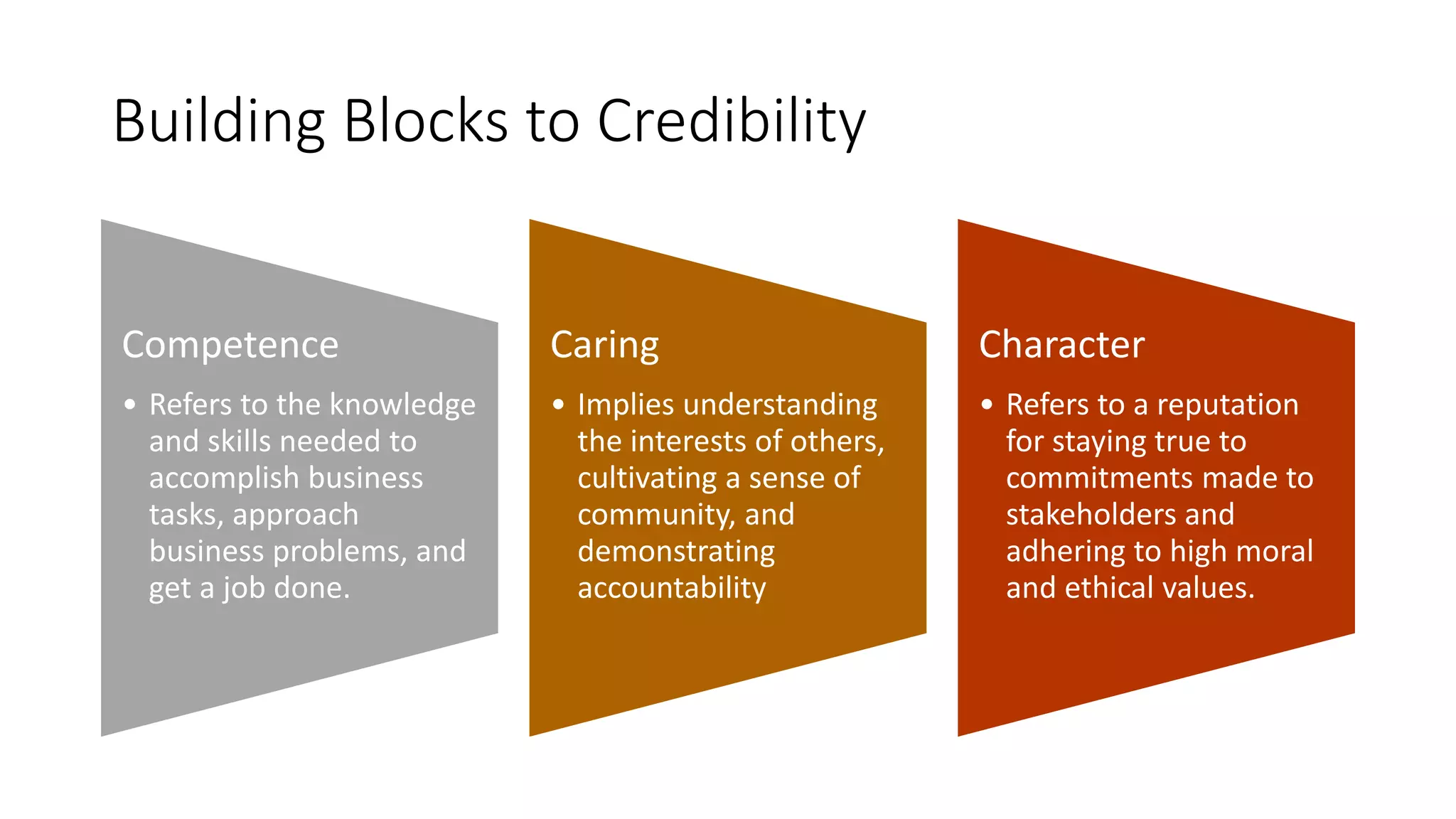
Building Blocks to Credibility
Competence
• Refers to the knowledge
and skills needed to
accomplish business
tasks, approach
business problems, and
get a job done.
Caring
• Implies understanding
the interests of others,
cultivating a sense of
community, and
demonstrating
accountability
Character
• Refers to a reputation
for staying true to
commitments made to
stakeholders and
adhering to high moral
and ethical values.
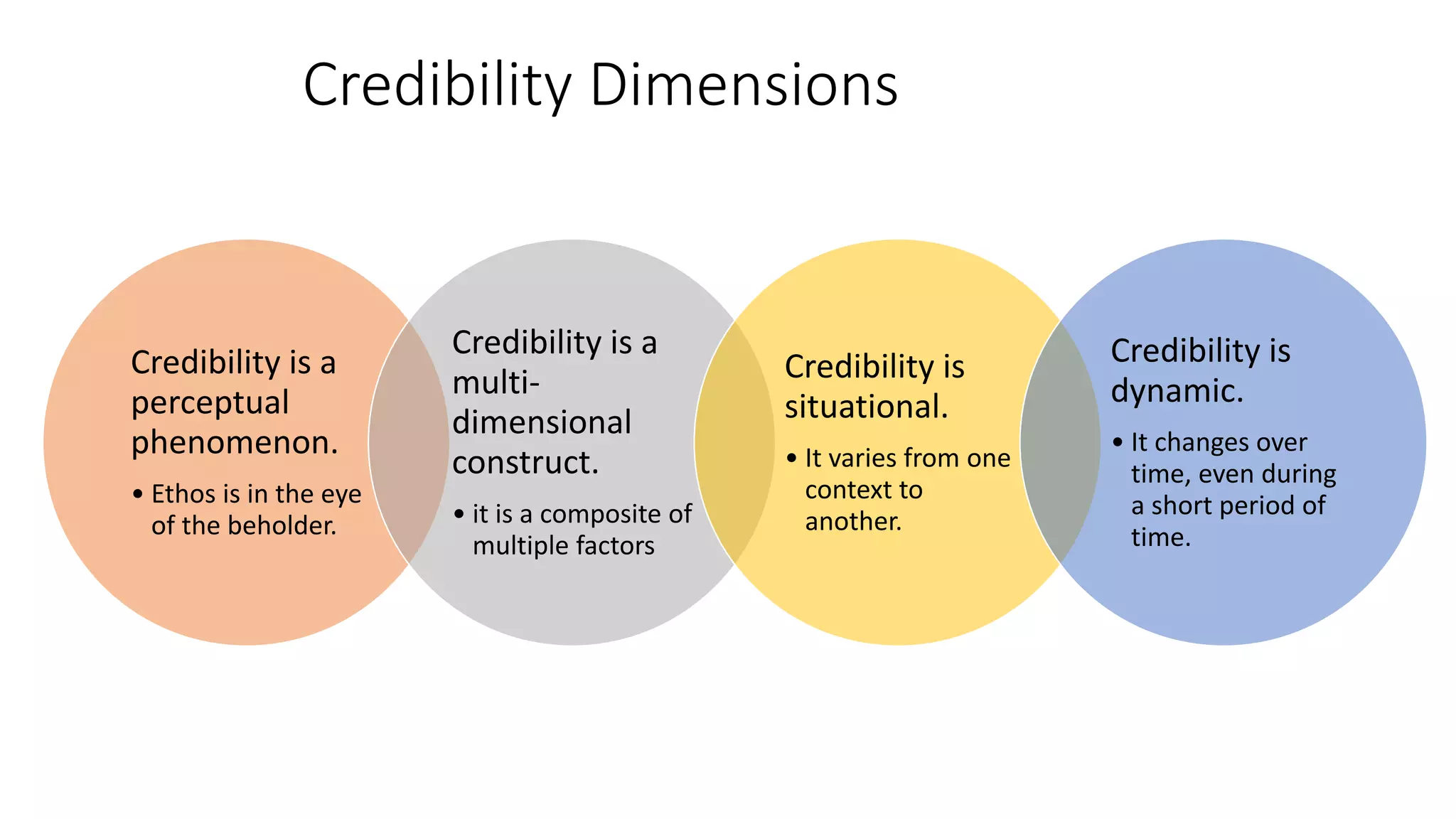
Credibility Dimensions
10
Credibility is a
perceptual
phenomenon.
• Ethos is in the eye
of the beholder.
Credibility is a
multi-
dimensional
construct.
• it is a composite of
multiple factors
Credibility is
situational.
• It varies from one
context to
another.
Credibility is
dynamic.
• It changes over
time, even during
a short period of
time.
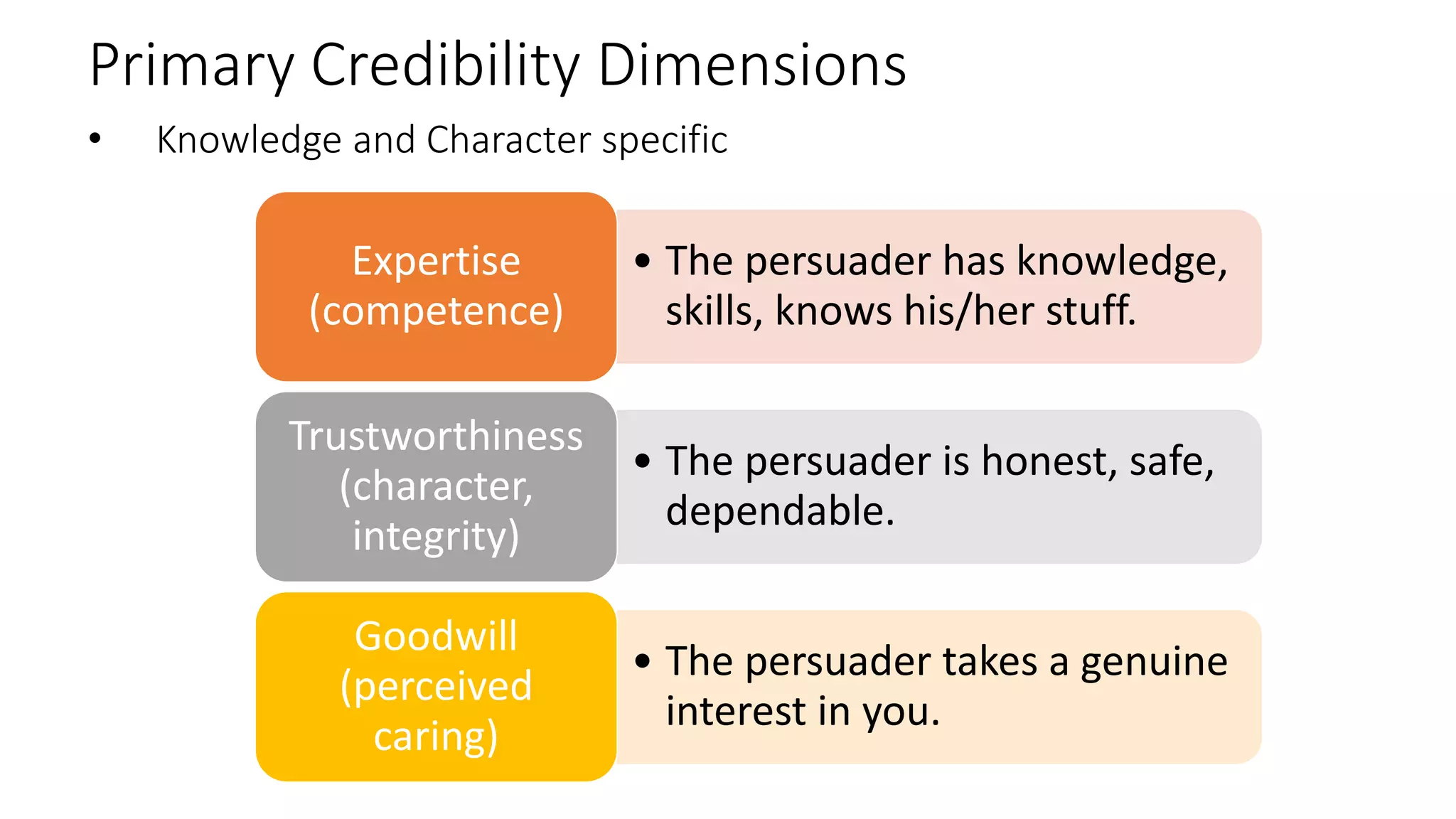
Primary Credibility Dimensions
11
• The persuader has knowledge,
skills, knows his/her stuff.
Expertise
(competence)
• The persuader is honest, safe,
dependable.
Trustworthiness
(character,
integrity)
• The persuader takes a genuine
interest in you.
Goodwill
(perceived
caring)
• Knowledge and Character specific
12
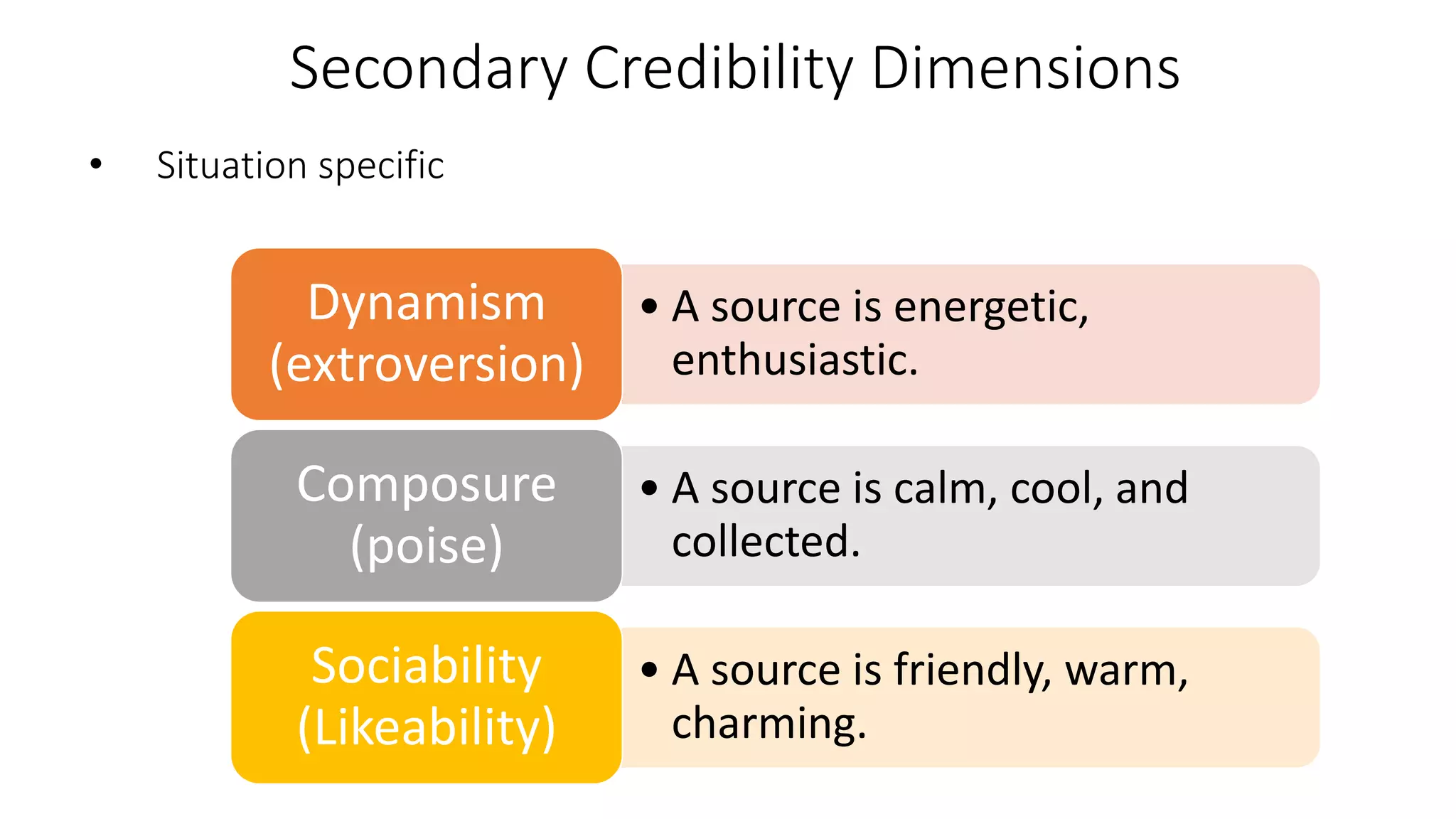
• A source is energetic,
enthusiastic.
Dynamism
(extroversion)
• A source is calm, cool, and
collected.
Composure
(poise)
• A source is friendly, warm,
charming.
Sociability
(Likeability)
Secondary Credibility Dimensions
• Situation specific
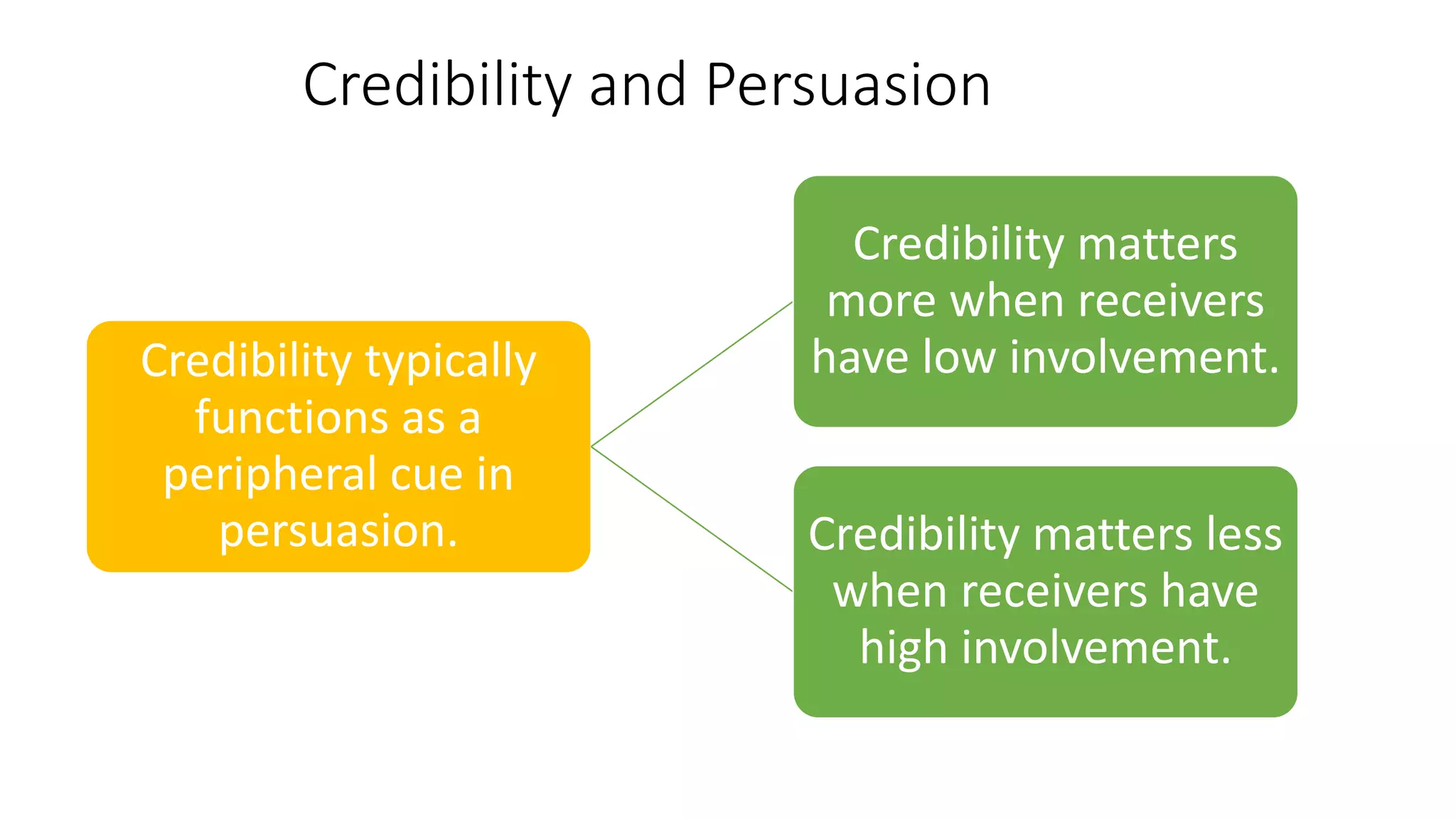
Credibility and Persuasion
13
Credibility typically
functions as a
peripheral cue in
persuasion.
Credibility matters
more when receivers
have low involvement.
Credibility matters less
when receivers have
high involvement.
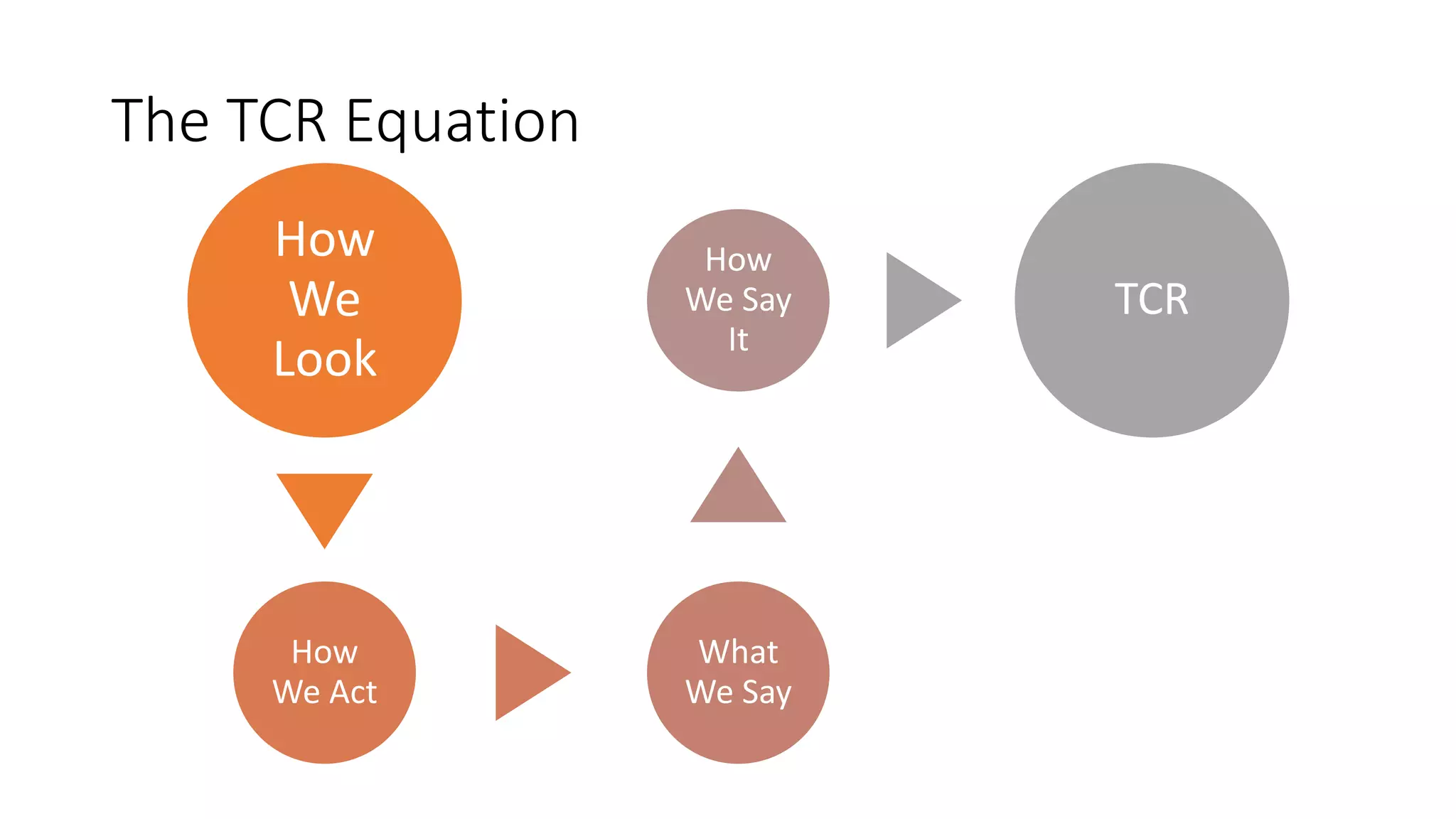
The TCR Equation
How
We
Look
How
We Act
What
We Say
How
We Say
It
TCR
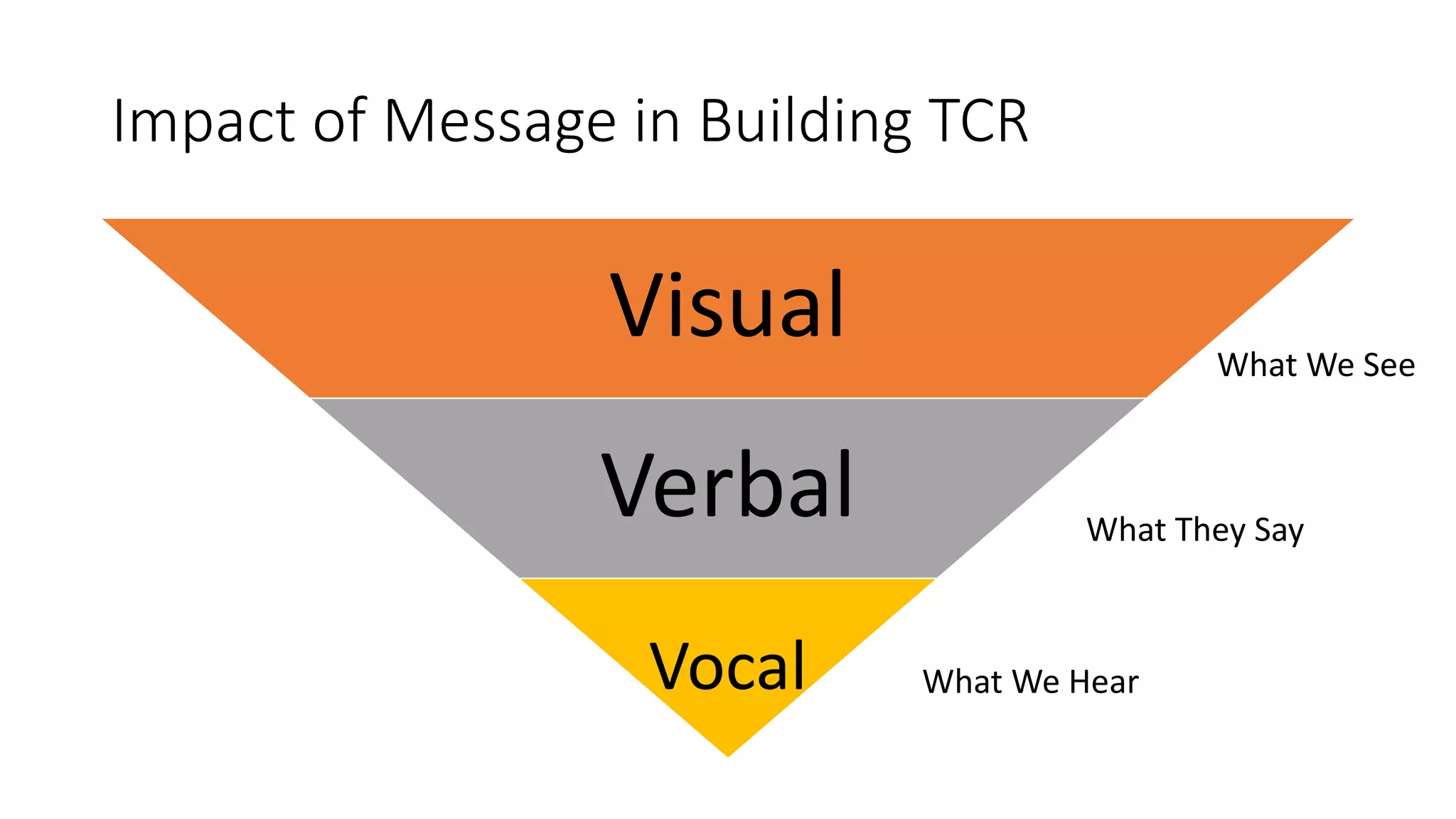
Impact of Message in Building TCR
Visual
Verbal
Vocal
What We See
What They Say
What We Hear
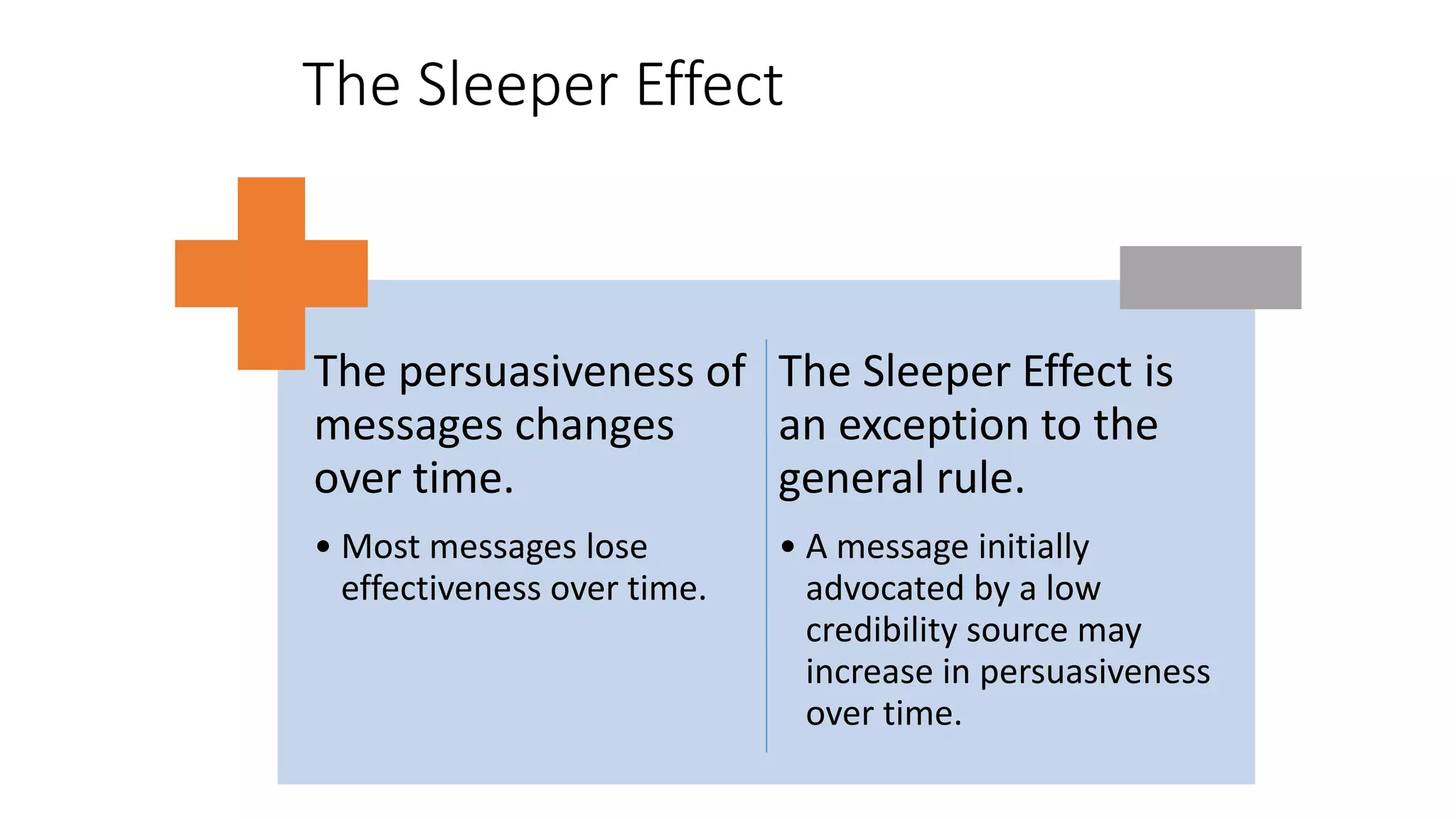
The Sleeper Effect
16
The persuasiveness of
messages changes
over time.
• Most messages lose
effectiveness over time.
The Sleeper Effect is
an exception to the
general rule.
• A message initially
advocated by a low
credibility source may
increase in persuasiveness
over time.
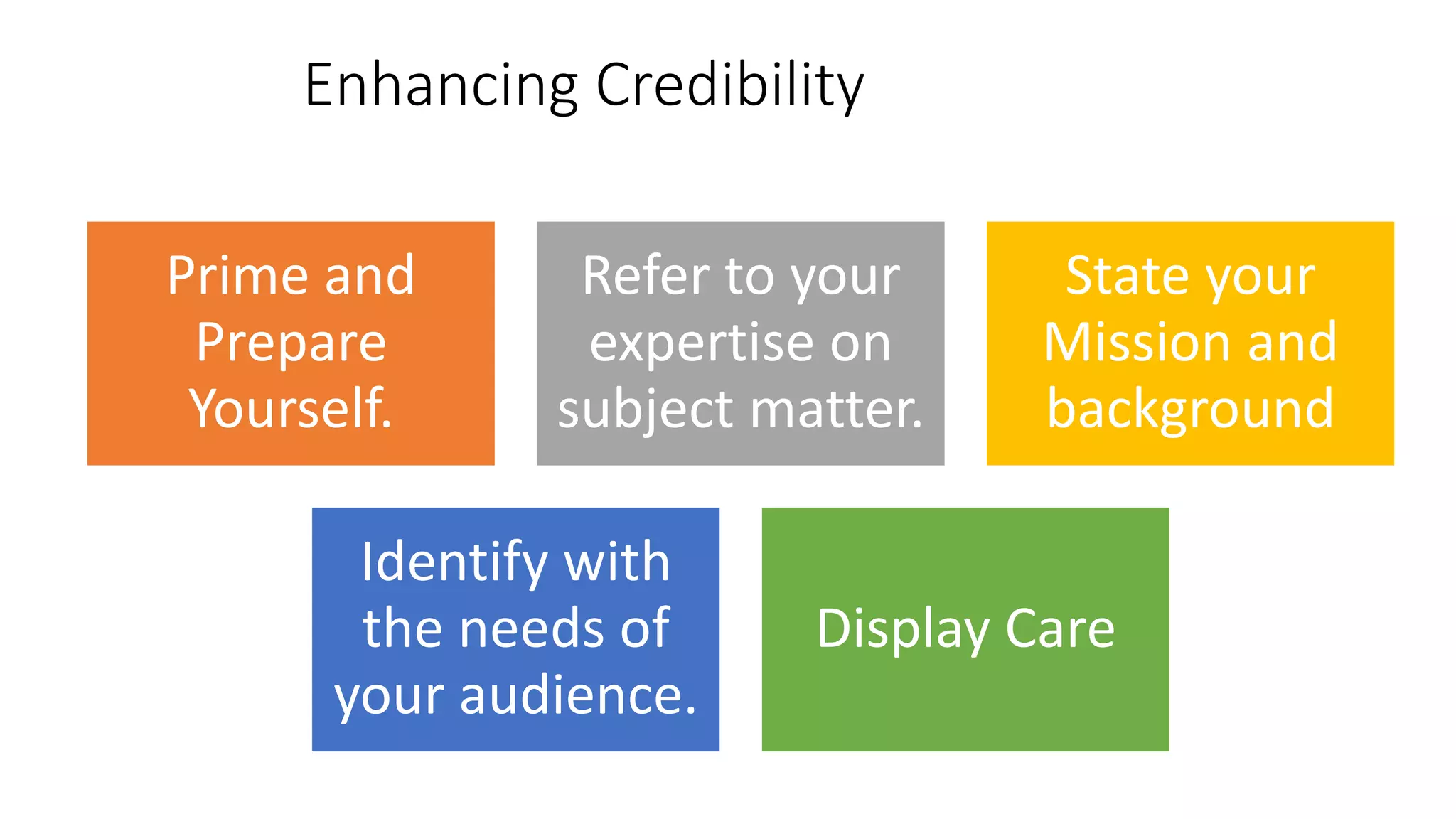
Enhancing Credibility
Prime and
Prepare
Yourself.
Refer to your
expertise on
subject matter.
State your
Mission and
background
Identify with
the needs of
your audience.
Display Care
17
Thank You

Building Blocks to Thought Leadership

  • 1.
    Building Blocks toThought Leadership The Route to Persuasion Bolaji Okusaga
  • 2.
    Leading Thought –The TCR Connection Trust Credibility Respect
  • 3.
    Creating platforms forTrust Defining Trust Nurturing Trust Creating Moments of Truth • A strong belief that a person or institution is dependable • Doing the things we do in a consistent and reliable manner • Making our word count • Aligning our words t our action • Backing our words with the right actions
  • 4.
    The Trust Continuum ExcessiveTrust • Gullibility • Naivety Reasonable Trust • Responsibility • Delegation • Patronage Excessive Distrust • Suspicion • Paranoia
  • 5.
    Credibility WHAT IS IT •Credibility refers to “Judgments made by a perceiver concerning the believability of a communicator” (O’Keefe, 1990). • Credibility is also referred to as “Ethos.” WHAT IS NOT • Credibility is not synonymous with charisma or leadership. WHAT IT DOES • Credibility is a crucial element in persuasion.
  • 6.
    Describing Credibility The Basisof Credibility Credibility is the audience’s attitude toward or perception of the speaker. It is therefore shaped as opposed to being ingrained Components of Credibility Competence •Perceptions of the speaker’s intelligence, expertise Character •Perceptions of the speaker’s sincerity, trustworthiness Dynamism •Perceptions of the speaker’s energy, enthusiasm
  • 7.
    3 Types ofCredibility •The way you are perceived at first meetingInitial •Derived through associationDerived •Comes through position Terminal
  • 8.
    Building Credibility Credibility isthe platform on which trust thrives. Without Credibility, it will be tough to build relationships and grow businesses
  • 9.
    Building Blocks toCredibility Competence • Refers to the knowledge and skills needed to accomplish business tasks, approach business problems, and get a job done. Caring • Implies understanding the interests of others, cultivating a sense of community, and demonstrating accountability Character • Refers to a reputation for staying true to commitments made to stakeholders and adhering to high moral and ethical values.
  • 10.
    Credibility Dimensions 10 Credibility isa perceptual phenomenon. • Ethos is in the eye of the beholder. Credibility is a multi- dimensional construct. • it is a composite of multiple factors Credibility is situational. • It varies from one context to another. Credibility is dynamic. • It changes over time, even during a short period of time.
  • 11.
    Primary Credibility Dimensions 11 •The persuader has knowledge, skills, knows his/her stuff. Expertise (competence) • The persuader is honest, safe, dependable. Trustworthiness (character, integrity) • The persuader takes a genuine interest in you. Goodwill (perceived caring) • Knowledge and Character specific
  • 12.
    12 • A sourceis energetic, enthusiastic. Dynamism (extroversion) • A source is calm, cool, and collected. Composure (poise) • A source is friendly, warm, charming. Sociability (Likeability) Secondary Credibility Dimensions • Situation specific
  • 13.
    Credibility and Persuasion 13 Credibilitytypically functions as a peripheral cue in persuasion. Credibility matters more when receivers have low involvement. Credibility matters less when receivers have high involvement.
  • 14.
    The TCR Equation How We Look How WeAct What We Say How We Say It TCR
  • 15.
    Impact of Messagein Building TCR Visual Verbal Vocal What We See What They Say What We Hear
  • 16.
    The Sleeper Effect 16 Thepersuasiveness of messages changes over time. • Most messages lose effectiveness over time. The Sleeper Effect is an exception to the general rule. • A message initially advocated by a low credibility source may increase in persuasiveness over time.
  • 17.
    Enhancing Credibility Prime and Prepare Yourself. Referto your expertise on subject matter. State your Mission and background Identify with the needs of your audience. Display Care 17
  • 18.

Editor's Notes

  • #12 Benoit,W. L., & Strathman, A. (2004). Source credibility and the elaboration likelihood model. In J. S. Seiter & R. H. Gass (Eds.), Readings in persuasion, social influence, and compliance gaining (pp. 95–111). Boston: Allyn & Bacon.