Actualising Thought Leadership
From Need to Goal Setting
Bolaji Okusaga
1. Needs and Knowledge
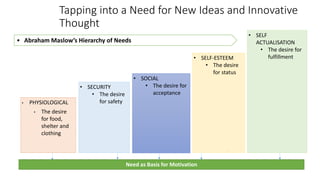
Tapping into a Need for New Ideas and Innovative
Thought
• PHYSIOLOGICAL
• The desire
for food,
shelter and
clothing
• SECURITY
• The desire
for safety
• SOCIAL
• The desire for
acceptance
• SELF-ESTEEM
• The desire
for status
• SELF
ACTUALISATION
• The desire for
fulfillment
Need as Basis for Motivation
• Abraham Maslow’s Hierarchy of Needs
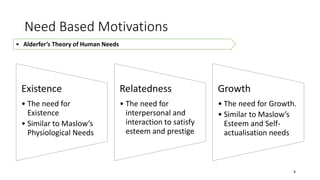
Need Based Motivations
Existence
• The need for
Existence
• Similar to Maslow’s
Physiological Needs
Relatedness
• The need for
interpersonal and
interaction to satisfy
esteem and prestige
Growth
• The need for Growth.
• Similar to Maslow’s
Esteem and Self-
actualisation needs
4
• Alderfer’s Theory of Human Needs
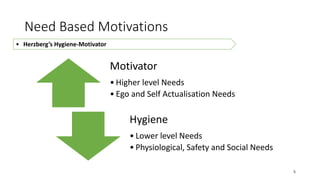
Need Based Motivations
Motivator
• Higher level Needs
• Ego and Self Actualisation Needs
Hygiene
• Lower level Needs
• Physiological, Safety and Social Needs
5
• Herzberg’s Hygiene-Motivator
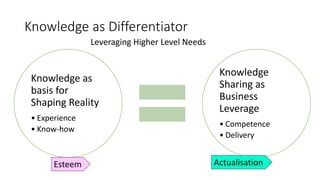
Knowledge as Differentiator
Knowledge as
basis for
Shaping Reality
• Experience
• Know-how
Knowledge
Sharing as
Business
Leverage
• Competence
• Delivery
Leveraging Higher Level Needs
Esteem Actualisation
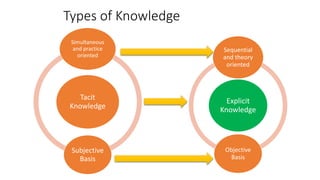
Types of Knowledge
Tacit
Knowledge
Simultaneous
and practice
oriented
Subjective
Basis
Explicit
Knowledge
Sequential
and theory
oriented
Objective
Basis
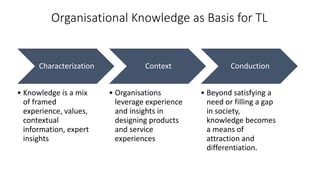
Organisational Knowledge as Basis for TL
Characterization
• Knowledge is a mix
of framed
experience, values,
contextual
information, expert
insights
Context
• Organisations
leverage experience
and insights in
designing products
and service
experiences
Conduction
• Beyond satisfying a
need or filling a gap
in society,
knowledge becomes
a means of
attraction and
differentiation.
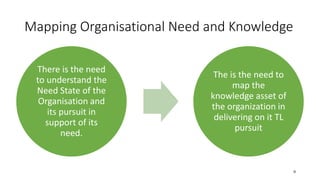
Mapping Organisational Need and Knowledge
There is the need
to understand the
Need State of the
Organisation and
its pursuit in
support of its
need.
The is the need to
map the
knowledge asset of
the organization in
delivering on it TL
pursuit
9
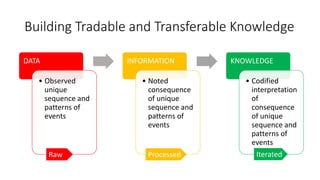
Building Tradable and Transferable Knowledge
DATA
• Observed
unique
sequence and
patterns of
events
INFORMATION
• Noted
consequence
of unique
sequence and
patterns of
events
KNOWLEDGE
• Codified
interpretation
of
consequence
of unique
sequence and
patterns of
events
Raw Processed Iterated
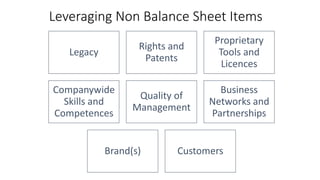
Leveraging Non Balance Sheet Items
Legacy
Rights and
Patents
Proprietary
Tools and
Licences
Companywide
Skills and
Competences
Quality of
Management
Business
Networks and
Partnerships
Brand(s) Customers
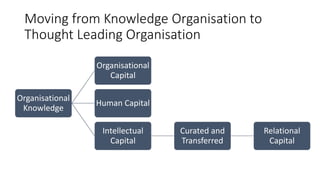
Moving from Knowledge Organisation to
Thought Leading Organisation
Organisational
Knowledge
Organisational
Capital
Human Capital
Intellectual
Capital
Curated and
Transferred
Relational
Capital
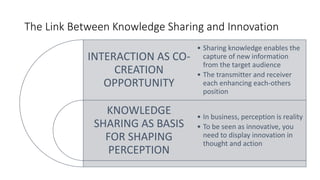
The Link Between Knowledge Sharing and Innovation
INTERACTION AS CO-
CREATION
OPPORTUNITY
KNOWLEDGE
SHARING AS BASIS
FOR SHAPING
PERCEPTION
• Sharing knowledge enables the
capture of new information
from the target audience
• The transmitter and receiver
each enhancing each-others
position
• In business, perception is reality
• To be seen as innovative, you
need to display innovation in
thought and action
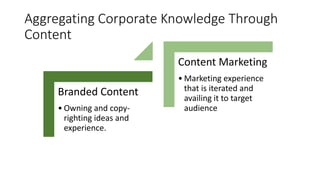
Aggregating Corporate Knowledge Through
Content
Branded Content
• Owning and copy-
righting ideas and
experience.
Content Marketing
• Marketing experience
that is iterated and
availing it to target
audience
2. Goal Setting
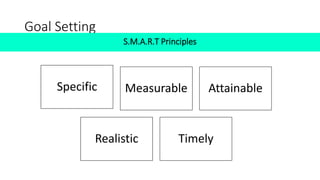
Specific Measurable Attainable
Realistic Timely
Goal Setting
S.M.A.R.T Principles
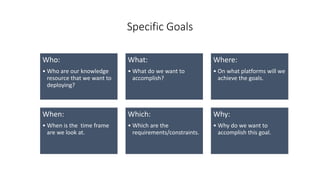
Who:
• Who are our knowledge
resource that we want to
deploying?
What:
• What do we want to
accomplish?
Where:
• On what platforms will we
achieve the goals.
When:
• When is the time frame
are we look at.
Which:
• Which are the
requirements/constraints.
Why:
• Why do we want to
accomplish this goal.
Specific Goals
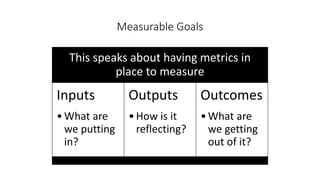
This speaks about having metrics in
place to measure
Inputs
•What are
we putting
in?
Outputs
•How is it
reflecting?
Outcomes
•What are
we getting
out of it?
Measurable Goals
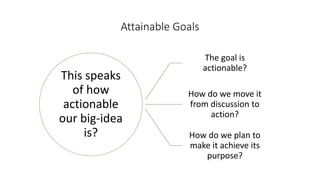
This speaks
of how
actionable
our big-idea
is?
The goal is
actionable?
How do we move it
from discussion to
action?
How do we plan to
make it achieve its
purpose?
Attainable Goals
This speaks of
how lifelike
the goal is?
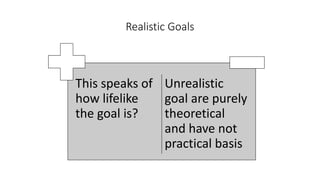
Unrealistic
goal are purely
theoretical
and have not
practical basis
Realistic Goals
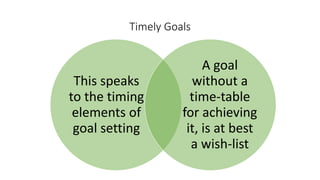
This speaks
to the timing
elements of
goal setting
A goal
without a
time-table
for achieving
it, is at best
a wish-list
Timely Goals
Outcomes of Thought Leadership
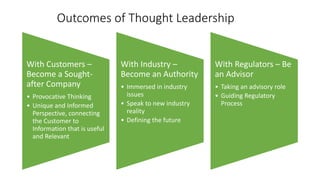
With Customers –
Become a Sought-
after Company
• Provocative Thinking
• Unique and Informed
Perspective, connecting
the Customer to
Information that is useful
and Relevant
With Industry –
Become an Authority
• Immersed in industry
issues
• Speak to new industry
reality
• Defining the future
With Regulators – Be
an Advisor
• Taking an advisory role
• Guiding Regulatory
Process
Thank you.

Actualising Thought Leadership

  • 1.
    Actualising Thought Leadership FromNeed to Goal Setting Bolaji Okusaga
  • 2.
    1. Needs andKnowledge
  • 3.
    Tapping into aNeed for New Ideas and Innovative Thought • PHYSIOLOGICAL • The desire for food, shelter and clothing • SECURITY • The desire for safety • SOCIAL • The desire for acceptance • SELF-ESTEEM • The desire for status • SELF ACTUALISATION • The desire for fulfillment Need as Basis for Motivation • Abraham Maslow’s Hierarchy of Needs
  • 4.
    Need Based Motivations Existence •The need for Existence • Similar to Maslow’s Physiological Needs Relatedness • The need for interpersonal and interaction to satisfy esteem and prestige Growth • The need for Growth. • Similar to Maslow’s Esteem and Self- actualisation needs 4 • Alderfer’s Theory of Human Needs
  • 5.
    Need Based Motivations Motivator •Higher level Needs • Ego and Self Actualisation Needs Hygiene • Lower level Needs • Physiological, Safety and Social Needs 5 • Herzberg’s Hygiene-Motivator
  • 6.
    Knowledge as Differentiator Knowledgeas basis for Shaping Reality • Experience • Know-how Knowledge Sharing as Business Leverage • Competence • Delivery Leveraging Higher Level Needs Esteem Actualisation
  • 7.
    Types of Knowledge Tacit Knowledge Simultaneous andpractice oriented Subjective Basis Explicit Knowledge Sequential and theory oriented Objective Basis
  • 8.
    Organisational Knowledge asBasis for TL Characterization • Knowledge is a mix of framed experience, values, contextual information, expert insights Context • Organisations leverage experience and insights in designing products and service experiences Conduction • Beyond satisfying a need or filling a gap in society, knowledge becomes a means of attraction and differentiation.
  • 9.
    Mapping Organisational Needand Knowledge There is the need to understand the Need State of the Organisation and its pursuit in support of its need. The is the need to map the knowledge asset of the organization in delivering on it TL pursuit 9
  • 10.
    Building Tradable andTransferable Knowledge DATA • Observed unique sequence and patterns of events INFORMATION • Noted consequence of unique sequence and patterns of events KNOWLEDGE • Codified interpretation of consequence of unique sequence and patterns of events Raw Processed Iterated
  • 11.
    Leveraging Non BalanceSheet Items Legacy Rights and Patents Proprietary Tools and Licences Companywide Skills and Competences Quality of Management Business Networks and Partnerships Brand(s) Customers
  • 12.
    Moving from KnowledgeOrganisation to Thought Leading Organisation Organisational Knowledge Organisational Capital Human Capital Intellectual Capital Curated and Transferred Relational Capital
  • 13.
    The Link BetweenKnowledge Sharing and Innovation INTERACTION AS CO- CREATION OPPORTUNITY KNOWLEDGE SHARING AS BASIS FOR SHAPING PERCEPTION • Sharing knowledge enables the capture of new information from the target audience • The transmitter and receiver each enhancing each-others position • In business, perception is reality • To be seen as innovative, you need to display innovation in thought and action
  • 14.
    Aggregating Corporate KnowledgeThrough Content Branded Content • Owning and copy- righting ideas and experience. Content Marketing • Marketing experience that is iterated and availing it to target audience
  • 15.
  • 16.
    Specific Measurable Attainable RealisticTimely Goal Setting S.M.A.R.T Principles
  • 17.
    Who: • Who areour knowledge resource that we want to deploying? What: • What do we want to accomplish? Where: • On what platforms will we achieve the goals. When: • When is the time frame are we look at. Which: • Which are the requirements/constraints. Why: • Why do we want to accomplish this goal. Specific Goals
  • 18.
    This speaks abouthaving metrics in place to measure Inputs •What are we putting in? Outputs •How is it reflecting? Outcomes •What are we getting out of it? Measurable Goals
  • 19.
    This speaks of how actionable ourbig-idea is? The goal is actionable? How do we move it from discussion to action? How do we plan to make it achieve its purpose? Attainable Goals
  • 20.
    This speaks of howlifelike the goal is? Unrealistic goal are purely theoretical and have not practical basis Realistic Goals
  • 21.
    This speaks to thetiming elements of goal setting A goal without a time-table for achieving it, is at best a wish-list Timely Goals
  • 22.
    Outcomes of ThoughtLeadership With Customers – Become a Sought- after Company • Provocative Thinking • Unique and Informed Perspective, connecting the Customer to Information that is useful and Relevant With Industry – Become an Authority • Immersed in industry issues • Speak to new industry reality • Defining the future With Regulators – Be an Advisor • Taking an advisory role • Guiding Regulatory Process
  • 23.