Mise-en-scene
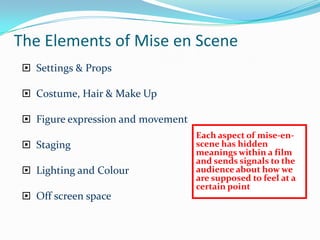
The Elements of Mise en Scene
  Settings & Props

  Costume, Hair & Make Up

  Figure expression and movement
                                    Each aspect of mise-en-
  Staging                          scene has hidden
                                    meanings within a film
                                    and sends signals to the
  Lighting and Colour              audience about how we
                                    are supposed to feel at a
                                    certain point
  Off screen space
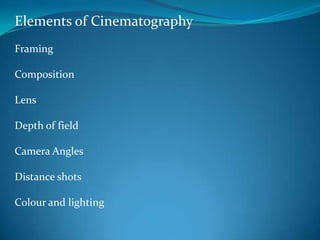
Elements of Cinematography
Framing

Composition

Lens

Depth of field

Camera Angles

Distance shots

Colour and lighting
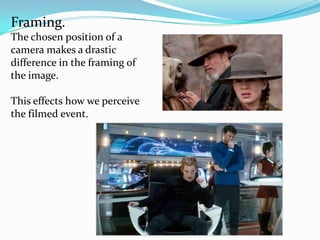
Framing.
The chosen position of a
camera makes a drastic
difference in the framing of
the image.

This effects how we perceive
the filmed event.
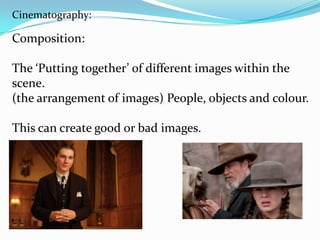
Cinematography:

Composition:

The ‘Putting together’ of different images within the
scene.
(the arrangement of images) People, objects and colour.

This can create good or bad images.
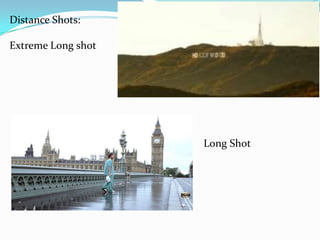
Distance Shots:

Extreme Long shot


                    Long Shot
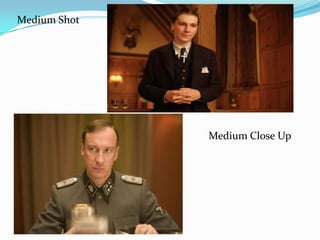
Medium Shot


              Medium Close Up
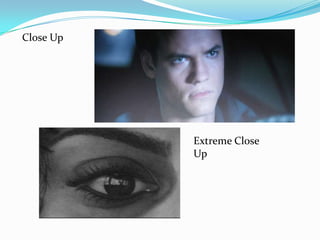
Close Up


           Extreme Close
           Up
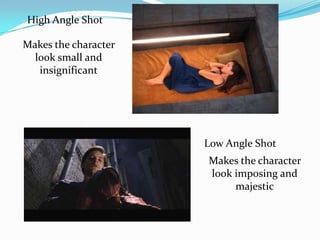
High Angle Shot

Makes the character
  look small and
   insignificant


                      Low Angle Shot
                      Makes the character
                      look imposing and
                           majestic
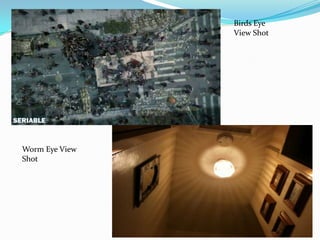
Birds Eye
                View Shot


Worm Eye View
Shot
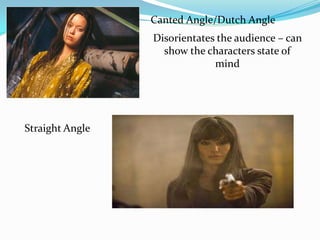
Canted Angle/Dutch Angle
                 Disorientates the audience – can
                   show the characters state of
                              mind


Straight Angle
the camera physically moves
        backwards while the operator Camera stays in one place             Shaking
        zooms forwards               but moves from side to side           your head
Camera lense                                                      Camera stays in
moves                                                             one place but
toward/away                 Reverse Zoom                          moves up and
from the action                            Pan                    down
but camera stays                                       Tilt
                        Zoom
still                                                              Nodding your head
 Camera is        Handheld
 held by                             Movement
 camera                                                             Tracking shot
 person
               Steady cam
                                                                    Whole camera
                                                      Dolly         moves usually on a
Camera is attached to        Aerial shot   Crane                    set of tracks
camera person however is
controlled by weights to                                      Whole camera moves
stay smooth                                                   on a set of wheels
               Camera is above the         Camera is above the
               action in a plane           action attached to a
                                           crane
Wide angle lens.

Distorts the image.
Distance between
foreground and
background appear greater.

The edges appear stretched
and distorted.


                             Medium angle lens.

                             Most common lens.
                             Avoids noticeable
                             Perspective distortions.

                             Appears to maintain
                             natural depth within the
                             frame.
Telescopic lens.

Depth is reduced and so
characters and image
appear on the same plain
as each other.

Movement seem
distorted as distance is
squashed.


                           Used for largely
                           in sports
                           footage.
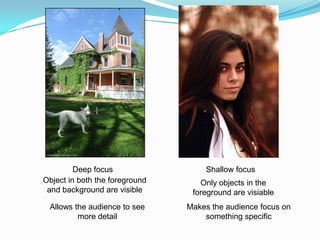
Deep focus                 Shallow focus
Object in both the foreground      Only objects in the
 and background are visible      foreground are visiable
 Allows the audience to see     Makes the audience focus on
         more detail                something specific
Three Key                                   Can depend on
Lighting:                                   the type of
                                            Stock used.
                                            (Film)
Key
                                            Fast (Sensitive)
Fill
                                            Slower (Less)
Back


                              Lighting
                    Can be:
                    Natural and ambient.
                    Strong contrast.
High Key Lighting   Man made.              Low Key Lighting
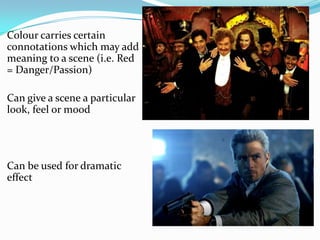
Colour carries certain
connotations which may add
meaning to a scene (i.e. Red
= Danger/Passion)

Can give a scene a particular
look, feel or mood


Can be used for dramatic
effect
Subtle colour shades were created through:

Camera stock types being dyed. 1950-60s
The use of Filters placed over the lens. 1970s-90s
Now you have a colourist who adds colour Post production (Editing)

Btec film studies cinematography presentation

  • 1.
  • 2.
    The Elements ofMise en Scene  Settings & Props  Costume, Hair & Make Up  Figure expression and movement Each aspect of mise-en-  Staging scene has hidden meanings within a film and sends signals to the  Lighting and Colour audience about how we are supposed to feel at a certain point  Off screen space
  • 4.
    Elements of Cinematography Framing Composition Lens Depthof field Camera Angles Distance shots Colour and lighting
  • 5.
    Framing. The chosen positionof a camera makes a drastic difference in the framing of the image. This effects how we perceive the filmed event.
  • 6.
    Cinematography: Composition: The ‘Putting together’of different images within the scene. (the arrangement of images) People, objects and colour. This can create good or bad images.
  • 7.
  • 8.
    Medium Shot Medium Close Up
  • 9.
    Close Up Extreme Close Up
  • 10.
    High Angle Shot Makesthe character look small and insignificant Low Angle Shot Makes the character look imposing and majestic
  • 11.
    Birds Eye View Shot Worm Eye View Shot
  • 12.
    Canted Angle/Dutch Angle Disorientates the audience – can show the characters state of mind Straight Angle
  • 13.
    the camera physicallymoves backwards while the operator Camera stays in one place Shaking zooms forwards but moves from side to side your head Camera lense Camera stays in moves one place but toward/away Reverse Zoom moves up and from the action Pan down but camera stays Tilt Zoom still Nodding your head Camera is Handheld held by Movement camera Tracking shot person Steady cam Whole camera Dolly moves usually on a Camera is attached to Aerial shot Crane set of tracks camera person however is controlled by weights to Whole camera moves stay smooth on a set of wheels Camera is above the Camera is above the action in a plane action attached to a crane
  • 14.
    Wide angle lens. Distortsthe image. Distance between foreground and background appear greater. The edges appear stretched and distorted. Medium angle lens. Most common lens. Avoids noticeable Perspective distortions. Appears to maintain natural depth within the frame.
  • 15.
    Telescopic lens. Depth isreduced and so characters and image appear on the same plain as each other. Movement seem distorted as distance is squashed. Used for largely in sports footage.
  • 16.
    Deep focus Shallow focus Object in both the foreground Only objects in the and background are visible foreground are visiable Allows the audience to see Makes the audience focus on more detail something specific
  • 17.
    Three Key Can depend on Lighting: the type of Stock used. (Film) Key Fast (Sensitive) Fill Slower (Less) Back Lighting Can be: Natural and ambient. Strong contrast. High Key Lighting Man made. Low Key Lighting
  • 18.
    Colour carries certain connotationswhich may add meaning to a scene (i.e. Red = Danger/Passion) Can give a scene a particular look, feel or mood Can be used for dramatic effect
  • 19.
    Subtle colour shadeswere created through: Camera stock types being dyed. 1950-60s The use of Filters placed over the lens. 1970s-90s Now you have a colourist who adds colour Post production (Editing)