Chapter 6 Programming Languages
Chapter 6: Programming Languages 6.1 Historical Perspective 6.2 Traditional Programming Concepts 6.3 Procedural Units 6.4 Language Implementation 6.5 Object Oriented Programming 6.6 Programming Concurrent Activities 6.7 Declarative Programming
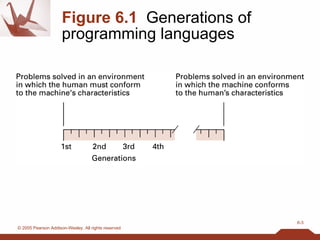
Figure 6.1   Generations of programming languages
Second-generation: Assembly language A mnemonic system for representing programs Mnemonic names for op-codes Names for all registers Identifiers = descriptive names for memory locations, chosen by the programmer
Assembly language characteristics One-to-one correspondence between machine instructions and assembly instructions Programmer must think like the machine Inherently machine-dependent Converted to machine language by a program called an assembler
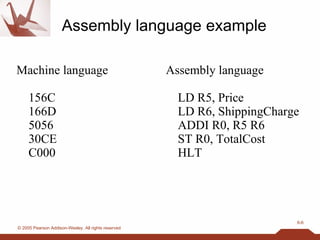
Assembly language example Machine language 156C 166D 5056 30CE C000 Assembly language LD R5, Price LD R6, ShippingCharge ADDI R0, R5 R6 ST R0, TotalCost HLT
Third generation language Uses high-level primitives Similar to our pseudocode in Chapter 5 Machine independent (mostly) Examples: FORTRAN, COBOL Each primitive corresponds to a short sequence of machine language instructions Converted to machine language by a program called a compiler
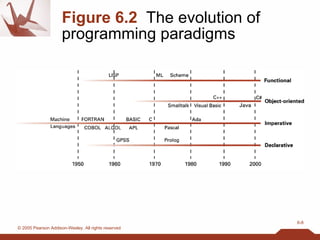
Figure 6.2   The evolution of programming paradigms
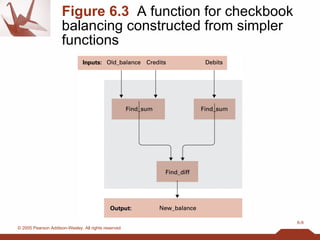
Figure 6.3   A function for checkbook balancing constructed from simpler functions
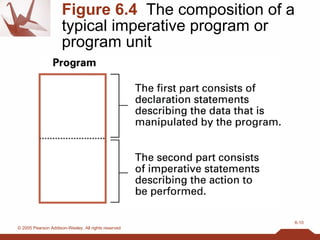
Figure 6.4   The composition of a typical imperative program or program unit
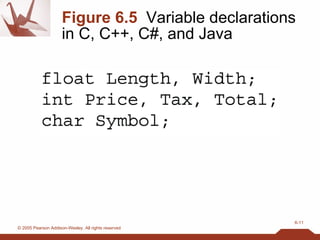
Figure 6.5   Variable declarations in C, C++, C#, and Java
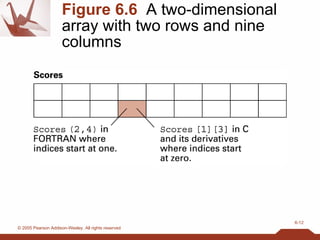
Figure 6.6   A two-dimensional array with two rows and nine columns
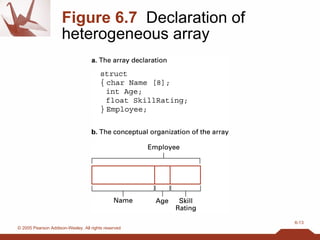
Figure 6.7   Declaration of heterogeneous array
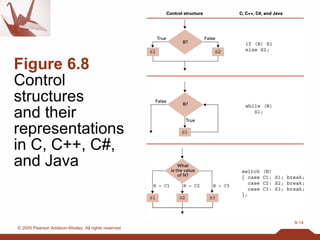
Figure 6.8   Control structures  and their representations in C, C++, C#, and Java
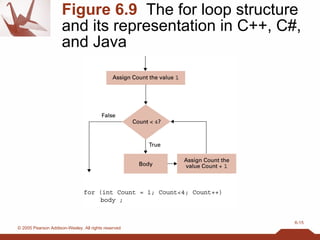
Figure 6.9   The for loop structure and its representation in C++, C#, and Java
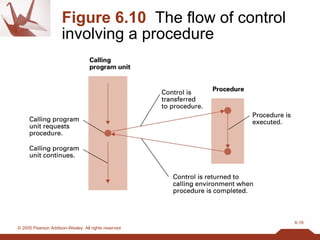
Figure 6.10   The flow of control involving a procedure
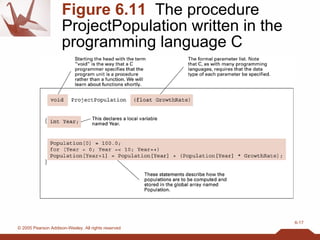
Figure 6.11   The procedure ProjectPopulation written in the programming language C
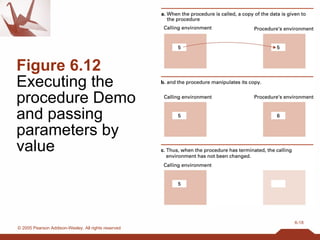
Figure 6.12   Executing the procedure Demo and passing parameters by value
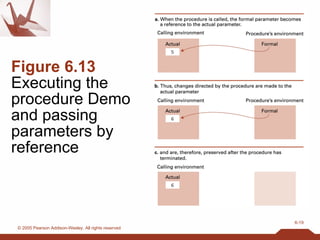
Figure 6.13   Executing the procedure Demo and passing parameters by reference
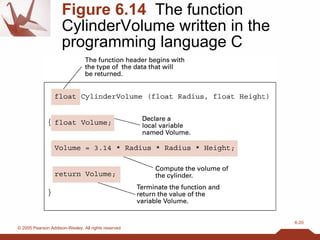
Figure 6.14   The function CylinderVolume written in the programming language C
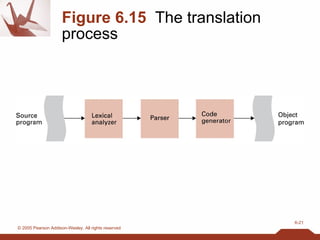
Figure 6.15   The translation process
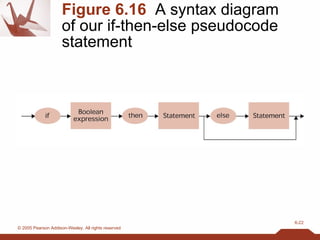
Figure 6.16   A syntax diagram  of our if-then-else pseudocode statement
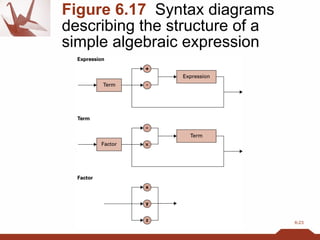
Figure 6.17   Syntax diagrams describing the structure of a simple algebraic expression
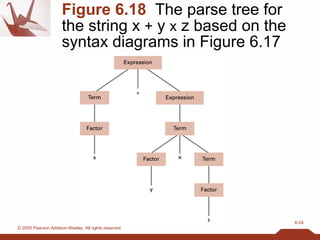
Figure 6.18   The parse tree for the string x  +  y  x  z based on the syntax diagrams in Figure 6.17
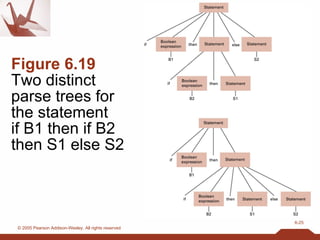
Figure 6.19   Two distinct  parse trees for  the statement  if B1 then if B2 then S1 else S2
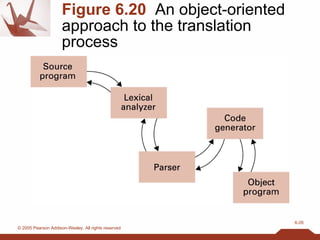
Figure 6.20   An object-oriented approach to the translation process
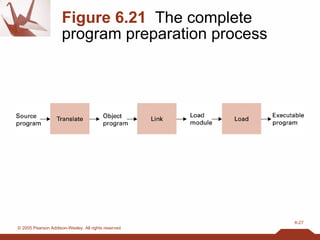
Figure 6.21   The complete program preparation process
Objects and Classes Object  = active program unit containing both data and procedures Class  = a template for all objects of the same type An Object is often called an  instance  of the class.
Components of an object Instance variable  = variable within an object Method  = function or procedure within an object Can manipulate the object’s instance variables Constructor  = special method to initialize a new object instance
Encapsulation Encapsulation  = a way of restricting access to the internal components of an object Private Public
Additional object-oriented concepts Inheritance: allows new classes to be defined in terms of previously defined classes Polymorphism: allows method calls to be interpreted by the object that receives the call
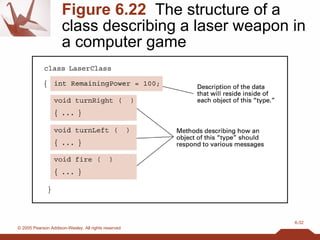
Figure 6.22   The structure of a class describing a laser weapon in a computer game
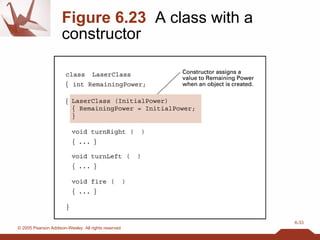
Figure 6.23   A class with a constructor
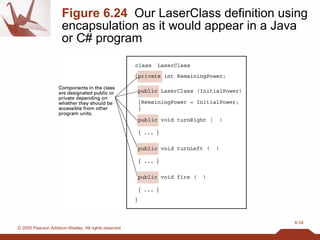
Figure 6.24   Our LaserClass definition using encapsulation as it would appear in a Java or C# program
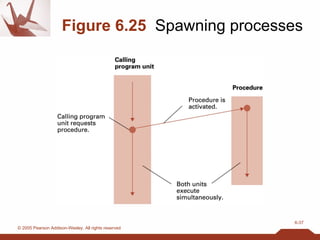
Programming concurrent activities Parallel  or  concurrent  processing = simultaneous execution of multiple processes True concurrent processing requires multiple CPUs Can be simulated using time-sharing with a single CPU
Interaction between processes Mutual exclusion  = a method for ensuring that data can be accessed by only one process at a time Monitor  = a data item augmented with the ability to control access to itself
Figure 6.25   Spawning processes
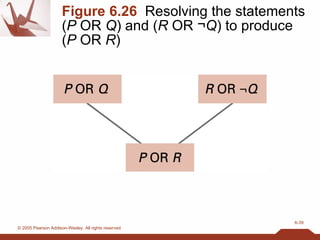
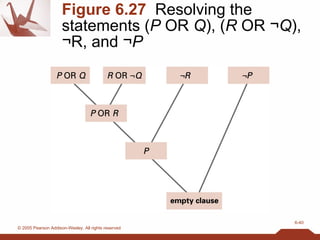
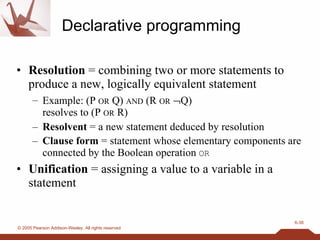
Declarative programming Resolution  = combining two or more statements to produce a new, logically equivalent statement Example: (P  OR  Q)  AND  (R  OR    Q)  resolves to (P  OR  R) Resolvent  = a new statement deduced by resolution Clause form  = statement whose elementary components are connected by the Boolean operation  OR Unification  = assigning a value to a variable in a statement
Figure 6.26   Resolving the statements ( P  OR  Q ) and ( R  OR ¬ Q ) to produce ( P  OR  R )
Figure 6.27   Resolving the statements ( P  OR  Q ), ( R  OR ¬ Q ), ¬R, and ¬ P
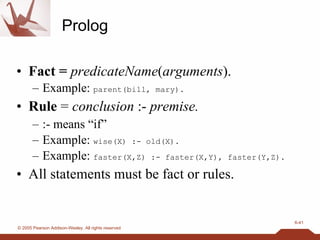
Prolog  Fact =   predicateName ( arguments ). Example:  parent(bill, mary). Rule  =  conclusion  :-  premise. :- means “if” Example:  wise(X) :- old(X). Example:  faster(X,Z) :- faster(X,Y), faster(Y,Z). All statements must be fact or rules.
Brookshear 06

  • 1.
  • 2.
    Chapter 6: ProgrammingLanguages 6.1 Historical Perspective 6.2 Traditional Programming Concepts 6.3 Procedural Units 6.4 Language Implementation 6.5 Object Oriented Programming 6.6 Programming Concurrent Activities 6.7 Declarative Programming
  • 3.
    Figure 6.1 Generations of programming languages
  • 4.
    Second-generation: Assembly languageA mnemonic system for representing programs Mnemonic names for op-codes Names for all registers Identifiers = descriptive names for memory locations, chosen by the programmer
  • 5.
    Assembly language characteristicsOne-to-one correspondence between machine instructions and assembly instructions Programmer must think like the machine Inherently machine-dependent Converted to machine language by a program called an assembler
  • 6.
    Assembly language exampleMachine language 156C 166D 5056 30CE C000 Assembly language LD R5, Price LD R6, ShippingCharge ADDI R0, R5 R6 ST R0, TotalCost HLT
  • 7.
    Third generation languageUses high-level primitives Similar to our pseudocode in Chapter 5 Machine independent (mostly) Examples: FORTRAN, COBOL Each primitive corresponds to a short sequence of machine language instructions Converted to machine language by a program called a compiler
  • 8.
    Figure 6.2 The evolution of programming paradigms
  • 9.
    Figure 6.3 A function for checkbook balancing constructed from simpler functions
  • 10.
    Figure 6.4 The composition of a typical imperative program or program unit
  • 11.
    Figure 6.5 Variable declarations in C, C++, C#, and Java
  • 12.
    Figure 6.6 A two-dimensional array with two rows and nine columns
  • 13.
    Figure 6.7 Declaration of heterogeneous array
  • 14.
    Figure 6.8 Control structures and their representations in C, C++, C#, and Java
  • 15.
    Figure 6.9 The for loop structure and its representation in C++, C#, and Java
  • 16.
    Figure 6.10 The flow of control involving a procedure
  • 17.
    Figure 6.11 The procedure ProjectPopulation written in the programming language C
  • 18.
    Figure 6.12 Executing the procedure Demo and passing parameters by value
  • 19.
    Figure 6.13 Executing the procedure Demo and passing parameters by reference
  • 20.
    Figure 6.14 The function CylinderVolume written in the programming language C
  • 21.
    Figure 6.15 The translation process
  • 22.
    Figure 6.16 A syntax diagram of our if-then-else pseudocode statement
  • 23.
    Figure 6.17 Syntax diagrams describing the structure of a simple algebraic expression
  • 24.
    Figure 6.18 The parse tree for the string x + y x z based on the syntax diagrams in Figure 6.17
  • 25.
    Figure 6.19 Two distinct parse trees for the statement if B1 then if B2 then S1 else S2
  • 26.
    Figure 6.20 An object-oriented approach to the translation process
  • 27.
    Figure 6.21 The complete program preparation process
  • 28.
    Objects and ClassesObject = active program unit containing both data and procedures Class = a template for all objects of the same type An Object is often called an instance of the class.
  • 29.
    Components of anobject Instance variable = variable within an object Method = function or procedure within an object Can manipulate the object’s instance variables Constructor = special method to initialize a new object instance
  • 30.
    Encapsulation Encapsulation = a way of restricting access to the internal components of an object Private Public
  • 31.
    Additional object-oriented conceptsInheritance: allows new classes to be defined in terms of previously defined classes Polymorphism: allows method calls to be interpreted by the object that receives the call
  • 32.
    Figure 6.22 The structure of a class describing a laser weapon in a computer game
  • 33.
    Figure 6.23 A class with a constructor
  • 34.
    Figure 6.24 Our LaserClass definition using encapsulation as it would appear in a Java or C# program
  • 35.
    Programming concurrent activitiesParallel or concurrent processing = simultaneous execution of multiple processes True concurrent processing requires multiple CPUs Can be simulated using time-sharing with a single CPU
  • 36.
    Interaction between processesMutual exclusion = a method for ensuring that data can be accessed by only one process at a time Monitor = a data item augmented with the ability to control access to itself
  • 37.
    Figure 6.25 Spawning processes
  • 38.
    Declarative programming Resolution = combining two or more statements to produce a new, logically equivalent statement Example: (P OR Q) AND (R OR  Q) resolves to (P OR R) Resolvent = a new statement deduced by resolution Clause form = statement whose elementary components are connected by the Boolean operation OR Unification = assigning a value to a variable in a statement
  • 39.
    Figure 6.26 Resolving the statements ( P OR Q ) and ( R OR ¬ Q ) to produce ( P OR R )
  • 40.
    Figure 6.27 Resolving the statements ( P OR Q ), ( R OR ¬ Q ), ¬R, and ¬ P
  • 41.
    Prolog Fact= predicateName ( arguments ). Example: parent(bill, mary). Rule = conclusion :- premise. :- means “if” Example: wise(X) :- old(X). Example: faster(X,Z) :- faster(X,Y), faster(Y,Z). All statements must be fact or rules.