Procurement’s Impact
    on Logistics


Business Marketing 880
     Spring 1999

    Bernard J. LaLonde
     Steven Robeano
Objectives

•   To define purchasing, procurement &
    strategic sourcing
•   To explain how purchasing processes impact
    logistics operations & material flow
    processes
•   To understand the impact of improved supply
    chain planning on procurement & logistics
    operation
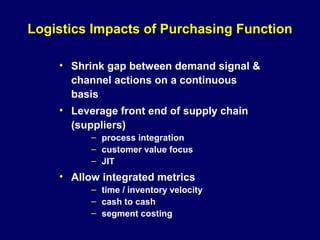
Logistics Impacts of Purchasing Function

    • Shrink gap between demand signal &
      channel actions on a continuous
      basis
    • Leverage front end of supply chain
      (suppliers)
          – process integration
          – customer value focus
          – JIT
    • Allow integrated metrics
          – time / inventory velocity
          – cash to cash
          – segment costing
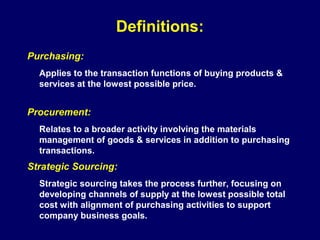
Definitions:
Purchasing:
  Applies to the transaction functions of buying products &
  services at the lowest possible price.


Procurement:
  Relates to a broader activity involving the materials
  management of goods & services in addition to purchasing
  transactions.
Strategic Sourcing:
  Strategic sourcing takes the process further, focusing on
  developing channels of supply at the lowest possible total
  cost with alignment of purchasing activities to support
  company business goals.
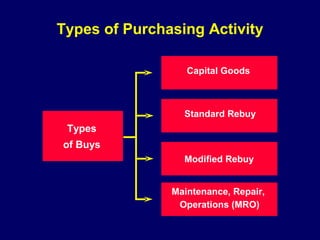
Types of Purchasing Activity

                  Capital Goods


                 Standard Rebuy
 Types
of Buys
                 Modified Rebuy


               Maintenance, Repair,
                Operations (MRO)
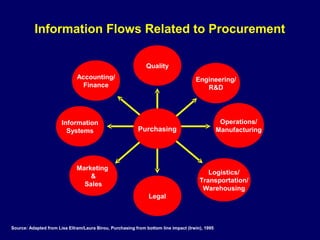
Information Flows Related to Procurement

                                                              Quality
                              Accounting/                                            Engineering/
                                Finance                                                 R&D


                       Information                                                                Operations/
                         Systems                          Purchasing                             Manufacturing


                              Marketing
                                                                                          Logistics/
                                  &
                                                                                       Transportation/
                                Sales
                                                                                        Warehousing
                                                               Legal


Source: Adapted from Lisa Ellram/Laura Birou, Purchasing from bottom line impact (Irwin), 1995
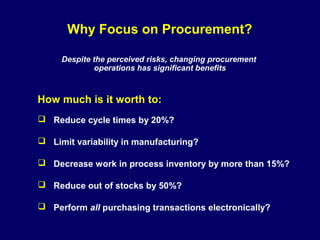
Why Focus on Procurement?

     Despite the perceived risks, changing procurement
             operations has significant benefits


How much is it worth to:
 Reduce cycle times by 20%?

 Limit variability in manufacturing?

 Decrease work in process inventory by more than 15%?

 Reduce out of stocks by 50%?

 Perform all purchasing transactions electronically?
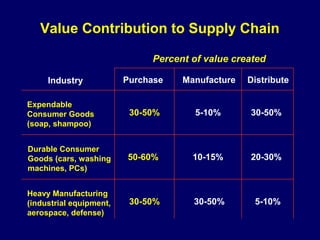
Value Contribution to Supply Chain

                              Percent of value created

     Industry            Purchase   Manufacture   Distribute

Expendable
Consumer Goods            30-50%       5-10%      30-50%
(soap, shampoo)


Durable Consumer
Goods (cars, washing     50-60%       10-15%      20-30%
machines, PCs)


Heavy Manufacturing
(industrial equipment,    30-50%      30-50%       5-10%
aerospace, defense)
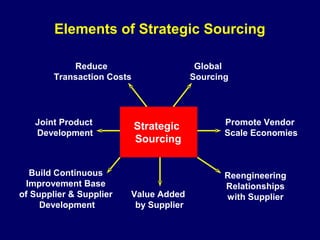
Elements of Strategic Sourcing

            Reduce                       Global
        Transaction Costs               Sourcing


   Joint Product                               Promote Vendor
                            Strategic
   Development                                 Scale Economies
                            Sourcing


  Build Continuous                             Reengineering
 Improvement Base                              Relationships
of Supplier & Supplier   Value Added           with Supplier
     Development          by Supplier
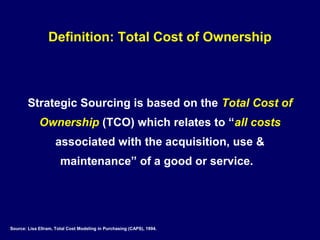
Definition: Total Cost of Ownership


        Strategic Sourcing is based on the Total Cost of
             Ownership (TCO) which relates to “all costs
                    associated with the acquisition, use &
                       maintenance” of a good or service.


Source: Lisa Ellram, Total Cost Modeling in Purchasing (CAPS), 1994.
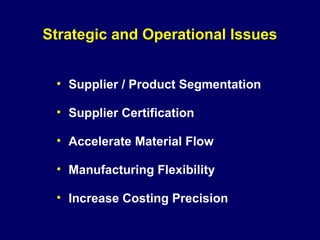
Strategic and Operational Issues


 • Supplier / Product Segmentation

 • Supplier Certification

 • Accelerate Material Flow

 • Manufacturing Flexibility

 • Increase Costing Precision
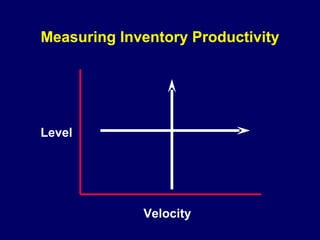
Measuring Inventory Productivity


Level


             Velocity
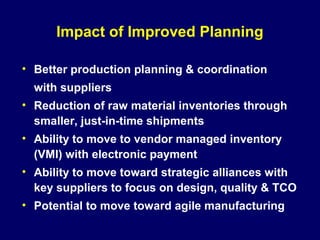
Impact of Improved Planning

• Better production planning & coordination
  with suppliers
• Reduction of raw material inventories through
  smaller, just-in-time shipments
• Ability to move to vendor managed inventory
  (VMI) with electronic payment
• Ability to move toward strategic alliances with
  key suppliers to focus on design, quality & TCO
• Potential to move toward agile manufacturing
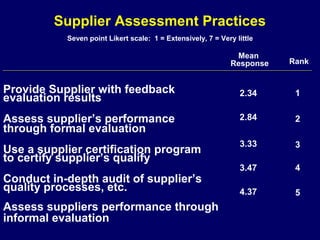
Supplier Assessment Practices
           Seven point Likert scale: 1 = Extensively, 7 = Very little

                                                               Mean
                                                              Response   Rank


Provide Supplier with feedback                                  2.34      1
evaluation results
Assess supplier’s performance                                   2.84      2
through formal evaluation
                                                                3.33      3
Use a supplier certification program
to certify supplier’s qualify
                                                                3.47      4
Conduct in-depth audit of supplier’s
quality processes, etc.                                         4.37      5
Assess suppliers performance through
informal evaluation
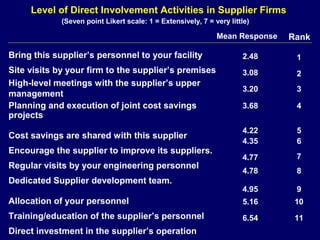
Level of Direct Involvement Activities in Supplier Firms
             (Seven point Likert scale: 1 = Extensively, 7 = very little)

                                                              Mean Response   Rank

Bring this supplier’s personnel to your facility                      2.48     1
Site visits by your firm to the supplier’s premises                   3.08     2
High-level meetings with the supplier’s upper
                                                                      3.20     3
management
Planning and execution of joint cost savings                          3.68     4
projects
                                                                      4.22     5
Cost savings are shared with this supplier
                                                                      4.35     6
Encourage the supplier to improve its suppliers.
                                                                      4.77     7
Regular visits by your engineering personnel
                                                                      4.78     8
Dedicated Supplier development team.
                                                                      4.95     9
Allocation of your personnel                                          5.16     10
Training/education of the supplier’s personnel                        6.54     11
Direct investment in the supplier’s operation
Summary of Key Messages

• Procurement is a key function which has a
  major impact on total supply chain costs

• The transformation from purchasing to
  strategic sourcing involves moving the
  organization toward a broad supply chain
  perspective & total cost of ownership focus

• Utilizing a strategic sourcing approach
  provides opportunity for a company to
  capture more value from its supply chain

Purchasi

  • 1.
    Procurement’s Impact on Logistics Business Marketing 880 Spring 1999 Bernard J. LaLonde Steven Robeano
  • 2.
    Objectives • To define purchasing, procurement & strategic sourcing • To explain how purchasing processes impact logistics operations & material flow processes • To understand the impact of improved supply chain planning on procurement & logistics operation
  • 3.
    Logistics Impacts ofPurchasing Function • Shrink gap between demand signal & channel actions on a continuous basis • Leverage front end of supply chain (suppliers) – process integration – customer value focus – JIT • Allow integrated metrics – time / inventory velocity – cash to cash – segment costing
  • 4.
    Definitions: Purchasing: Appliesto the transaction functions of buying products & services at the lowest possible price. Procurement: Relates to a broader activity involving the materials management of goods & services in addition to purchasing transactions. Strategic Sourcing: Strategic sourcing takes the process further, focusing on developing channels of supply at the lowest possible total cost with alignment of purchasing activities to support company business goals.
  • 5.
    Types of PurchasingActivity Capital Goods Standard Rebuy Types of Buys Modified Rebuy Maintenance, Repair, Operations (MRO)
  • 6.
    Information Flows Relatedto Procurement Quality Accounting/ Engineering/ Finance R&D Information Operations/ Systems Purchasing Manufacturing Marketing Logistics/ & Transportation/ Sales Warehousing Legal Source: Adapted from Lisa Ellram/Laura Birou, Purchasing from bottom line impact (Irwin), 1995
  • 7.
    Why Focus onProcurement? Despite the perceived risks, changing procurement operations has significant benefits How much is it worth to:  Reduce cycle times by 20%?  Limit variability in manufacturing?  Decrease work in process inventory by more than 15%?  Reduce out of stocks by 50%?  Perform all purchasing transactions electronically?
  • 8.
    Value Contribution toSupply Chain Percent of value created Industry Purchase Manufacture Distribute Expendable Consumer Goods 30-50% 5-10% 30-50% (soap, shampoo) Durable Consumer Goods (cars, washing 50-60% 10-15% 20-30% machines, PCs) Heavy Manufacturing (industrial equipment, 30-50% 30-50% 5-10% aerospace, defense)
  • 9.
    Elements of StrategicSourcing Reduce Global Transaction Costs Sourcing Joint Product Promote Vendor Strategic Development Scale Economies Sourcing Build Continuous Reengineering Improvement Base Relationships of Supplier & Supplier Value Added with Supplier Development by Supplier
  • 10.
    Definition: Total Costof Ownership Strategic Sourcing is based on the Total Cost of Ownership (TCO) which relates to “all costs associated with the acquisition, use & maintenance” of a good or service. Source: Lisa Ellram, Total Cost Modeling in Purchasing (CAPS), 1994.
  • 11.
    Strategic and OperationalIssues • Supplier / Product Segmentation • Supplier Certification • Accelerate Material Flow • Manufacturing Flexibility • Increase Costing Precision
  • 12.
  • 13.
    Impact of ImprovedPlanning • Better production planning & coordination with suppliers • Reduction of raw material inventories through smaller, just-in-time shipments • Ability to move to vendor managed inventory (VMI) with electronic payment • Ability to move toward strategic alliances with key suppliers to focus on design, quality & TCO • Potential to move toward agile manufacturing
  • 14.
    Supplier Assessment Practices Seven point Likert scale: 1 = Extensively, 7 = Very little Mean Response Rank Provide Supplier with feedback 2.34 1 evaluation results Assess supplier’s performance 2.84 2 through formal evaluation 3.33 3 Use a supplier certification program to certify supplier’s qualify 3.47 4 Conduct in-depth audit of supplier’s quality processes, etc. 4.37 5 Assess suppliers performance through informal evaluation
  • 15.
    Level of DirectInvolvement Activities in Supplier Firms (Seven point Likert scale: 1 = Extensively, 7 = very little) Mean Response Rank Bring this supplier’s personnel to your facility 2.48 1 Site visits by your firm to the supplier’s premises 3.08 2 High-level meetings with the supplier’s upper 3.20 3 management Planning and execution of joint cost savings 3.68 4 projects 4.22 5 Cost savings are shared with this supplier 4.35 6 Encourage the supplier to improve its suppliers. 4.77 7 Regular visits by your engineering personnel 4.78 8 Dedicated Supplier development team. 4.95 9 Allocation of your personnel 5.16 10 Training/education of the supplier’s personnel 6.54 11 Direct investment in the supplier’s operation
  • 16.
    Summary of KeyMessages • Procurement is a key function which has a major impact on total supply chain costs • The transformation from purchasing to strategic sourcing involves moving the organization toward a broad supply chain perspective & total cost of ownership focus • Utilizing a strategic sourcing approach provides opportunity for a company to capture more value from its supply chain

Editor's Notes

  • #5 Purchasing is a transactional oriented approach to buying goods and services without a lot significant regard to quality and timeliness of delivery. Procurement is more focused on the flow of goods into a company and takes into account the transportation and warehousing functions of product flow. Strategic sourcing moves further to develop alliances with suppliers to take supply chain costs out of both companies transactions to reduce the total cost. Particular focus is provided to those goods which are critical to the success of the procuring company’s manufacturing or assembly processes. Product quality, product performance, timeliness of delivery, and order accuracy become important factors in the procurement process.
  • #8 3