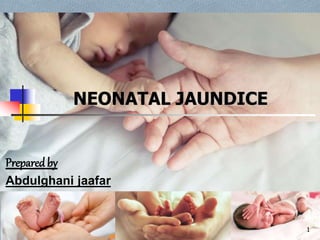
NEONATAL JAUNDICE
1
Preparedby
Abdulghani jaafar
OUTLINE
2
 INTRODUCTION
 EPIDEMIOLOGY
 BILIRUBIN METABOLISM/PATHOPHYSIOLOGY
 AETIOLOGY
 CLINICAL PRESENTATION
 MANAGEMENT
 COMPLICATIONS
 PREVENTION
 SUMMARY
 CONCLUSION
INTRODUCTION
3
 Neonatal jaundice is the yellowish discoloration of the eyes,
skin and mucous membranes in the first month of life due to
elevated level of bilirubin in the blood
 It is a common and, in most cases, harmless problem in
neonates
 It may present with other symptoms like
 yellowing of the palms or
 dark, yellow urine – a newborn baby's urine should be
colourless
 pale-coloured stool – should be yellow or orange
INTRODUCTION
4
 The yellow discoloration may be as a result of elevation of
either the uncongugated or conjugated bilirubin
 Bilirubin may have a physiologic role as an antioxidant but
elevations of indirect, unconjugated
bilirubin are potentially neurotoxic.
 Even though the conjugated form is not neurotoxic, direct
hyperbilirubinemia indicates a potentially serious hepatic
disorders or a systemic illness
 Poor management can result into either death or serious
neurological problems
EPIDEMIOLOGY
5
 Neonatal jaundice first been described in a Chinese
textbook 1000 years ago
 In 1875, Orth first described yellow staining of the
brain, in a pattern later referred to by Schmorl as
kernicterus
 It is extremely common because almost every
newborn develops an unconjugated serum bilirubin
level of more than 30 µmol/L (1.8 mg/dL) during the
first week of life
EPIDEMIOLOGY
6
 Incidence varies with ethnicity and geography, higher in East
Asians and American Indians and lower in Africans
 Incidence is higher in populations living at high
altitudes
 Risk of developing significant neonatal jaundice is higher in
male infants
 Generally, the prevalence in hospital practice is estimated at
between 50-80%, being more common in preterm (about
80%) than in term infants (about 50%).
TYPES OF JAUNDICE
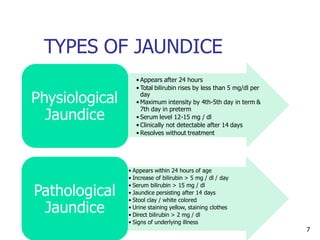
• Appears after 24 hours
• Total bilirubin rises by less than 5 mg/dl per
day
• Maximum intensity by 4th-5th day in term &
7th day in preterm
• Serum level 12-15 mg / dl
• Clinically not detectable after 14 days
• Resolves without treatment
Physiological
Jaundice
• Appears within 24 hours of age
• Increase of bilirubin > 5 mg / dl / day
• Serum bilirubin > 15 mg / dl
• Jaundice persisting after 14 days
• Stool clay / white colored
• Urine staining yellow, staining clothes
• Direct bilirubin > 2 mg / dl
• Signs of underlying illness
Pathological
Jaundice
7
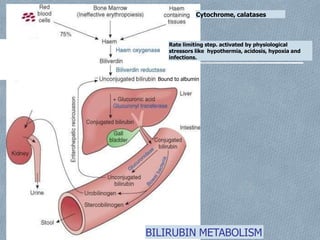
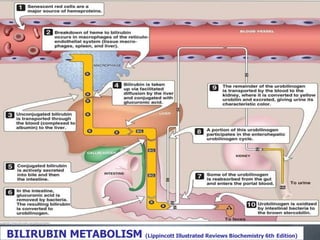
Cytochrome, calatases
Rate limiting step. activated by physiological
stressors like hypothermia, acidosis, hypoxia and
infections.
Bound to albumin
BILIRUBIN METABOLISM
BILIRUBIN METABOLISM (Lippincott Illustrated Reviews Biochemistry 6th Edition(
AETIOLOGY
10
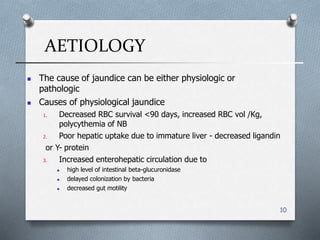
 The cause of jaundice can be either physiologic or
pathologic
 Causes of physiological jaundice
1. Decreased RBC survival <90 days, increased RBC vol /Kg,
polycythemia of NB
2. Poor hepatic uptake due to immature liver - decreased ligandin
or Y- protein
3. Increased enterohepatic circulation due to
 high level of intestinal beta-glucuronidase
 delayed colonization by bacteria
 decreased gut motility
AETIOLOGY
11
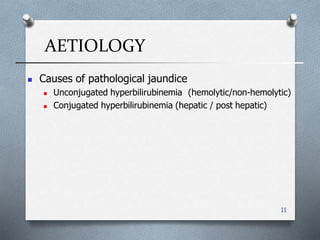
 Causes of pathological jaundice
 Unconjugated hyperbilirubinemia )hemolytic/non-hemolytic(
 Conjugated hyperbilirubinemia (hepatic / post hepatic(
AETIOLOGY
12
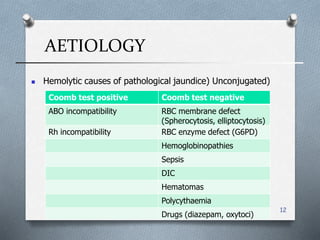
 Hemolytic causes of pathological jaundice( Unconjugated(
Coomb test positive Coomb test negative
ABO incompatibility RBC membrane defect
)Spherocytosis, elliptocytosis(
Rh incompatibility RBC enzyme defect (G6PD(
Hemoglobinopathies
Sepsis
DIC
Hematomas
Polycythaemia
Drugs (diazepam, oxytoci)
AETIOLOGY
13
 Non hemolytic causes of pathological jaundice
)Unconjugated(
 Breast milk jaundice
 Criggler Najjar syndrome types I and II
 Gilbert syndrome
 Hypothyroidism
AETIOLOGY
14
 Causes of Pathological jaundice (conjugated(
1. Hepatic
 Idiopathic neonatal hepatitis
 Dubin Johnson syndrome
 Rotor’s syndrome
 Infections –TORCH, sepsis
 Inborn errors of metabolism (galactosemia, tyrosinemia(
2. Post hepatic
 Biliary atresia
 Bile duct stenosis
 Choledochal cyst
AETIOLOGY
15
 Common causes of jaundice in our environment
 Physiological
 Blood group incompatibility
 G6PD deficiency
 Breast milk jaundice
 Sepsis
 Cephalhematoma
CLINICAL PRESENTATION
16
 Yellowness of the eyes or body
 Fever
 Vomiting
 Inability to suck
 Features of failure to thrive
 Abdominal distention
 Passage of pale stool
MANAGEMENT
17
HISTORY
 Biodata
 Onset / duration /progression
 Color of urine/stool
 Vomiting
 Feeding history
 Loss of weight
 Maternal history
 Antenatal –booking, illnesses, infections
 Drugs – sulfa, NSAIDs, herbals
 Medical history – blood group, hemolytic diseases, liver disease,
recurrent jaundice
 Family history – siblings with jaundice, familial jaundice, liver disease
 Birth history – trauma, cord clamping
18
EXAMINATION
19
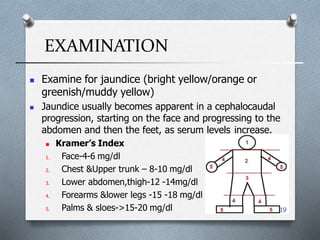
 Examine for jaundice (bright yellow/orange or
greenish/muddy yellow)
 Jaundice usually becomes apparent in a cephalocaudal
progression, starting on the face and progressing to the
abdomen and then the feet, as serum levels increase.
 Kramer’s Index
1. Face-4-6 mg/dl
2. Chest &Upper trunk – 8-10 mg/dl
3. Lower abdomen,thigh-12 -14mg/dl
4. Forearms &lower legs -15 -18 mg/dl
5. Palms & sloes->15-20 mg/dl
EXAMINATION
20
 Pallor
 Dehydration
 Weight loss
 Fever or hypothermia
 Hepato/splenomegaly
 Evidence of birth trauma or injuries
 Evidence of Kernicterus
INVESTIGATIONS
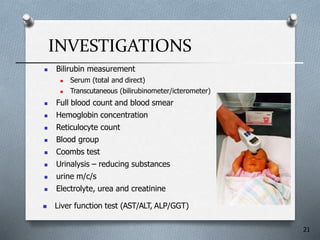
 Bilirubin measurement
 Serum (total and direct)
 Transcutaneous (bilirubinometer/icterometer(
 Full blood count and blood smear
 Hemoglobin concentration
 Reticulocyte count
 Blood group
 Coombs test
 Urinalysis – reducing substances
 urine m/c/s
 Electrolyte, urea and creatinine
21
 Liver function test (AST/ALT, ALP/GGT(
INVESTIGATIONS
22
 G6PD assay
 Ultrasound scan
 Thyroid function tests
TRANSCUTANEOUS
MEASUREMENT OF BILIRUBIN
23
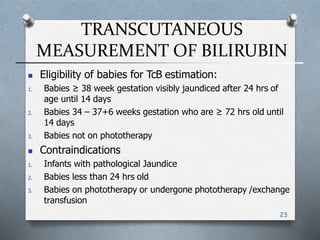
 Eligibility of babies for TcB estimation:
1. Babies ≥ 38 week gestation visibly jaundiced after 24 hrs of
age until 14 days
2. Babies 34 – 37+6 weeks gestation who are ≥ 72 hrs old until
14 days
3. Babies not on phototherapy
 Contraindications
1. Infants with pathological Jaundice
2. Babies less than 24 hrs old
3. Babies on phototherapy or undergone phototherapy /exchange
transfusion
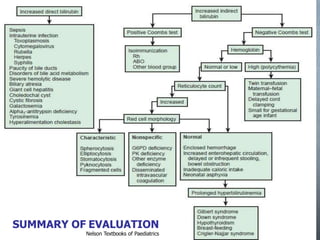
SUMMARY OF EVALUATION
Nelson Textbooks of Paediatrics
JAUNDICE ASSOCIATED
WITH BREAST-FEEDING
25
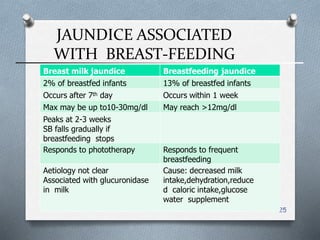
Breast milk jaundice Breastfeeding jaundice
2% of breastfed infants 13% of breastfed infants
Occurs after 7th day Occurs within 1 week
Max may be up to10-30mg/dl May reach >12mg/dl
Peaks at 2-3 weeks
SB falls gradually if
breastfeeding stops
Responds to phototherapy Responds to frequent
breastfeeding
Aetiology not clear
Associated with glucuronidase
in milk
Cause: decreased milk
intake,dehydration,reduce
d caloric intake,glucose
water supplement
TREATMENT OF UNCONJUGATED
HYPERBILIRUBINEMIA
26
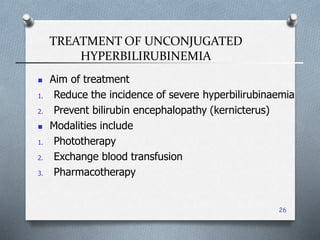
 Aim of treatment
1. Reduce the incidence of severe hyperbilirubinaemia
2. Prevent bilirubin encephalopathy (kernicterus(
 Modalities include
1. Phototherapy
2. Exchange blood transfusion
3. Pharmacotherapy
PHOTOTHERAPY (PT)
27
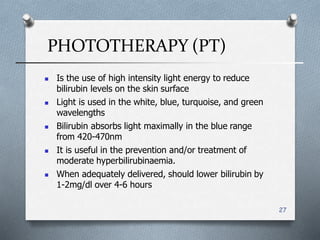
 Is the use of high intensity light energy to reduce
bilirubin levels on the skin surface
 Light is used in the white, blue, turquoise, and green
wavelengths
 Bilirubin absorbs light maximally in the blue range
from 420-470nm
 It is useful in the prevention and/or treatment of
moderate hyperbilirubinaemia.
 When adequately delivered, should lower bilirubin by
1-2mg/dl over 4-6 hours
PHOTOTHERAPY
28
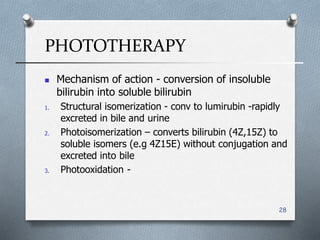
 Mechanism of action - conversion of insoluble
bilirubin into soluble bilirubin
1. Structural isomerization - conv to lumirubin -rapidly
excreted in bile and urine
2. Photoisomerization – converts bilirubin (4Z,15Z) to
soluble isomers (e.g 4Z15E) without conjugation and
excreted into bile
3. Photooxidation -
PHOTOTHERAPY
29
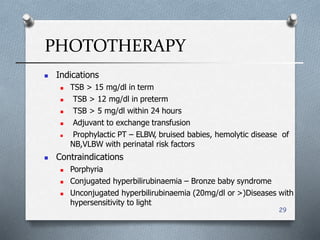
 Indications
 TSB > 15 mg/dl in term
 TSB > 12 mg/dl in preterm
 TSB > 5 mg/dl within 24 hours
 Adjuvant to exchange transfusion
 Prophylactic PT – ELBW, bruised babies, hemolytic disease of
NB,VLBW with perinatal risk factors
 Contraindications
 Porphyria
 Conjugated hyperbilirubinaemia – Bronze baby syndrome
 Unconjugated hyperbilirubinaemia (20mg/dl or >)Diseases with
hypersensitivity to light
PHOTOTHERAPY
30
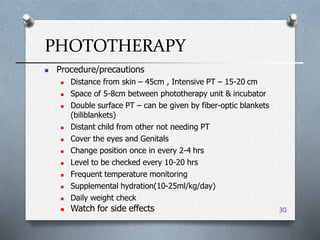
 Watch for side effects
 Procedure/precautions
 Distance from skin – 45cm , Intensive PT – 15-20 cm
 Space of 5-8cm between phototherapy unit & incubator
 Double surface PT – can be given by fiber-optic blankets
(biliblankets)
 Distant child from other not needing PT
 Cover the eyes and Genitals
 Change position once in every 2-4 hrs
 Level to be checked every 10-20 hrs
 Frequent temperature monitoring
 Supplemental hydration(10-25ml/kg/day(
 Daily weight check
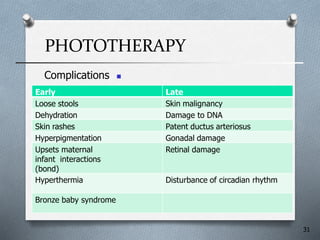
PHOTOTHERAPY

Complications
31
Early Late
Loose stools Skin malignancy
Dehydration Damage to DNA
Skin rashes Patent ductus arteriosus
Hyperpigmentation Gonadal damage
Upsets maternal
infant interactions
(bond)
Retinal damage
Hyperthermia Disturbance of circadian rhythm
Bronze baby syndrome
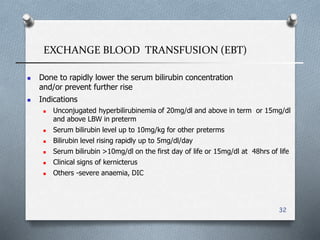
EXCHANGE BLOOD TRANSFUSION (EBT)
32
 Done to rapidly lower the serum bilirubin concentration
and/or prevent further rise
 Indications
 Unconjugated hyperbilirubinemia of 20mg/dl and above in term or 15mg/dl
and above LBW in preterm
 Serum bilirubin level up to 10mg/kg for other preterms
 Bilirubin level rising rapidly up to 5mg/dl/day
 Serum bilirubin >10mg/dl on the first day of life or 15mg/dl at 48hrs of life
 Clinical signs of kernicterus
 Others -severe anaemia, DIC
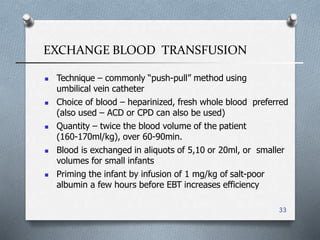
EXCHANGE BLOOD TRANSFUSION
33
 Technique – commonly “push-pull” method using
umbilical vein catheter
 Choice of blood – heparinized, fresh whole blood preferred
(also used – ACD or CPD can also be used(
 Quantity – twice the blood volume of the patient
(160-170ml/kg), over 60-90min.
 Blood is exchanged in aliquots of 5,10 or 20ml, or smaller
volumes for small infants
 Priming the infant by infusion of 1 mg/kg of salt-poor
albumin a few hours before EBT increases efficiency
EXCHANGE BLOOD
TRANSFUSION
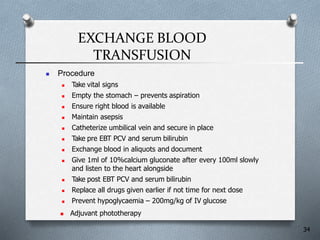
 Procedure
 Take vital signs
 Empty the stomach – prevents aspiration
 Ensure right blood is available
 Maintain asepsis
 Catheterize umbilical vein and secure in place
 Take pre EBT PCV and serum bilirubin
 Exchange blood in aliquots and document
 Give 1ml of 10%calcium gluconate after every 100ml slowly
and listen to the heart alongside
 Take post EBT PCV and serum bilirubin
 Replace all drugs given earlier if not time for next dose
 Prevent hypoglycaemia – 200mg/kg of IV glucose
 Adjuvant phototherapy
34
EXCHANGE BLOOD
TRANSFUSION
35
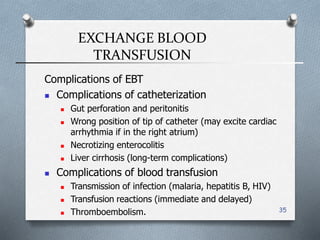
Complications of EBT
 Complications of catheterization
 Gut perforation and peritonitis
 Wrong position of tip of catheter (may excite cardiac
arrhythmia if in the right atrium(
 Necrotizing enterocolitis
 Liver cirrhosis (long-term complications(
 Complications of blood transfusion
 Transmission of infection (malaria, hepatitis B, HIV(
 Transfusion reactions (immediate and delayed(
 Thromboembolism.
EXCHANGE BLOOD
TRANSFUSION
36
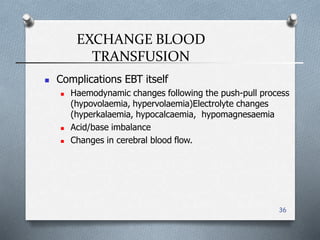
 Complications EBT itself
 Haemodynamic changes following the push-pull process
(hypovolaemia, hypervolaemia(Electrolyte changes
(hyperkalaemia, hypocalcaemia, hypomagnesaemia
 Acid/base imbalance
 Changes in cerebral blood flow.
PHARMACOTHERAPY
37
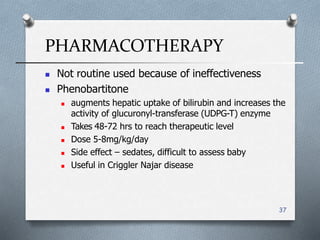
 Not routine used because of ineffectiveness
 Phenobartitone
 augments hepatic uptake of bilirubin and increases the
activity of glucuronyl-transferase (UDPG-T) enzyme
 Takes 48-72 hrs to reach therapeutic level
 Dose 5-8mg/kg/day
 Side effect – sedates, difficult to assess baby
 Useful in Criggler Najar disease
PHARMACOTHERAPY
38
 Metalloprotoporphyrins (eg tin mesoporphirin(
 are competitive inhibitors of heme oxygenase
 Experimental – showing prospects
 Oral agar (e.g Cholesteramine(
 Decreases enterohepatic circulation
 Albumin infusion
 Increases albumin binding to bilirubin for easy transport
 Intravenous immunoglobulin
 Used for infants with Rh or ABO isoimmunization
 Inhibits haemolysis
 Dose = 0.5-1 gm/kg/dose IV, repeat in 12hrs
KERNICTERUS
39
 Is the pathologic diagnosis referring to the yellow
staining of the brain caused by bilirubin deposition
associated with neuronal necrosis and gliosis
 It is a direct consequence of very high level of
unconjugated bilirubin
 The parts of the brain commonly affected
 Basal ganglia
 Brain stem nuclei
 Cerebellar neclei
 Hippocampus
 Anterior horn cells of the spinal cord
KERNICTERUS
40
 By pathologic criteria, it develops in 30% of infants (all gestational ages)
with untreated hemolytic disease and bilirubin levels >25-30 mg/dL
 Overt neurologic signs have a grave prognosis
 More than 75% of infants die, and 80% of affected survivors have
bilateral choreoathetosis with involuntary muscle spasms
KERNICTERUS
41
 It manifests clinically as acute or chronic encephalopathy
 The acute is characterized by 3 phases
 PHASE 1: hypotonia, lethargy, high pitched cry and poor suck, loss of Moro
reflex (D1-3)
 PHASE 2: hypertonia, opisthotonus, rigidity, oculogyric crisis, retrocollis,
fever, seizures. (middle of first week). Those who survive develop chronic
bilirubin encephalopathy
 PHASE 3: Hypotonia replaces hypertonia after first week
KERNICTERUS
42
Chronic encephalopathy manifests as
 1st year
 hypotonia,
 active deep tendon reflexes,
 obligatory tonic neck reflexes,
 delayed motor skills
 After 1st yr:
 movement disorders (choreoathetosis, ballismus, tremor(,
 upward gaze,
 sensorineural hearing loss
KERNICTERUS
43
Treatment:
 Treatment of hyperbilirubinaemia
 Counselling/training the parents on coping with the sequale
 Management of feeding difficulty
 Physiotherapy for limitation of disability
 Speech and language therapy (SALT(
 Follow up appointments
TREATMENT OF CONJUGATED
HYPERBILIRUBINAEMIA
44
 Mainly supportive
 Parenteral vitamin k
 Vitamin A and D supplementation – prevents rickets
 Diet – low fat, medium chain triglyceride
 Phenobarbitone – helps bile exceretion
 Surgery may be needed (not usually in the neonatal period(
PREVENTION
 This entails prevention of neonatal jaundice,
treatment and prevention of its complications when it
occurs
 Follows the three levels of prevention
1. Health promotion (primary)- educate the masses about it and
how to prevent, lifestyle modification
2. Specific protection(primary)- identify risks and institute
preventive measures
3. Early diagnosis and adequate treatment (secondary)–
identify and treat jaundice promptly
4. Limitation of disability (tertiary) - physiotherapy
5. Rehabilitation (tertiary) – integration of the baby and the
mother into the community
45
SUMMARY
 Jaundice presents with yellowness of the skin and
mucous membranes
 The cause can be physiological or pathological due to
abnormalities in bilirubin metabolism
 Unconjugated bilirubin is neurotoxic to the brain and
hence needs urgent attention
 Prompt diagnosis and management helps to prevent severity
and complications like kernicterus
 Modalities of treatment include phototherapy, EBT
and pharmacotherapy
46
CONCLUSION
O Neonatal jaundice still contributes significantly to
neonatal morbidity, mortality and long-term handicap
especially in the developing countries. This is made
worse by ignorance on the part of parents and health
workers which contributes to delay in seeking proper
medical care.
However, education at Primary Health Care level, prompt
diagnosis and referral to appropriate specialist will go a long
way to prevent the jaundice-associated problems early so that
death is averted and the child will have a good quality of life.
47
49

Neonatal Jaundice.pptx

  • 1.
  • 2.
    OUTLINE 2  INTRODUCTION  EPIDEMIOLOGY BILIRUBIN METABOLISM/PATHOPHYSIOLOGY  AETIOLOGY  CLINICAL PRESENTATION  MANAGEMENT  COMPLICATIONS  PREVENTION  SUMMARY  CONCLUSION
  • 3.
    INTRODUCTION 3  Neonatal jaundiceis the yellowish discoloration of the eyes, skin and mucous membranes in the first month of life due to elevated level of bilirubin in the blood  It is a common and, in most cases, harmless problem in neonates  It may present with other symptoms like  yellowing of the palms or  dark, yellow urine – a newborn baby's urine should be colourless  pale-coloured stool – should be yellow or orange
  • 4.
    INTRODUCTION 4  The yellowdiscoloration may be as a result of elevation of either the uncongugated or conjugated bilirubin  Bilirubin may have a physiologic role as an antioxidant but elevations of indirect, unconjugated bilirubin are potentially neurotoxic.  Even though the conjugated form is not neurotoxic, direct hyperbilirubinemia indicates a potentially serious hepatic disorders or a systemic illness  Poor management can result into either death or serious neurological problems
  • 5.
    EPIDEMIOLOGY 5  Neonatal jaundicefirst been described in a Chinese textbook 1000 years ago  In 1875, Orth first described yellow staining of the brain, in a pattern later referred to by Schmorl as kernicterus  It is extremely common because almost every newborn develops an unconjugated serum bilirubin level of more than 30 µmol/L (1.8 mg/dL) during the first week of life
  • 6.
    EPIDEMIOLOGY 6  Incidence varieswith ethnicity and geography, higher in East Asians and American Indians and lower in Africans  Incidence is higher in populations living at high altitudes  Risk of developing significant neonatal jaundice is higher in male infants  Generally, the prevalence in hospital practice is estimated at between 50-80%, being more common in preterm (about 80%) than in term infants (about 50%).
  • 7.
    TYPES OF JAUNDICE •Appears after 24 hours • Total bilirubin rises by less than 5 mg/dl per day • Maximum intensity by 4th-5th day in term & 7th day in preterm • Serum level 12-15 mg / dl • Clinically not detectable after 14 days • Resolves without treatment Physiological Jaundice • Appears within 24 hours of age • Increase of bilirubin > 5 mg / dl / day • Serum bilirubin > 15 mg / dl • Jaundice persisting after 14 days • Stool clay / white colored • Urine staining yellow, staining clothes • Direct bilirubin > 2 mg / dl • Signs of underlying illness Pathological Jaundice 7
  • 8.
    Cytochrome, calatases Rate limitingstep. activated by physiological stressors like hypothermia, acidosis, hypoxia and infections. Bound to albumin BILIRUBIN METABOLISM
  • 9.
    BILIRUBIN METABOLISM (LippincottIllustrated Reviews Biochemistry 6th Edition(
  • 10.
    AETIOLOGY 10  The causeof jaundice can be either physiologic or pathologic  Causes of physiological jaundice 1. Decreased RBC survival <90 days, increased RBC vol /Kg, polycythemia of NB 2. Poor hepatic uptake due to immature liver - decreased ligandin or Y- protein 3. Increased enterohepatic circulation due to  high level of intestinal beta-glucuronidase  delayed colonization by bacteria  decreased gut motility
  • 11.
    AETIOLOGY 11  Causes ofpathological jaundice  Unconjugated hyperbilirubinemia )hemolytic/non-hemolytic(  Conjugated hyperbilirubinemia (hepatic / post hepatic(
  • 12.
    AETIOLOGY 12  Hemolytic causesof pathological jaundice( Unconjugated( Coomb test positive Coomb test negative ABO incompatibility RBC membrane defect )Spherocytosis, elliptocytosis( Rh incompatibility RBC enzyme defect (G6PD( Hemoglobinopathies Sepsis DIC Hematomas Polycythaemia Drugs (diazepam, oxytoci)
  • 13.
    AETIOLOGY 13  Non hemolyticcauses of pathological jaundice )Unconjugated(  Breast milk jaundice  Criggler Najjar syndrome types I and II  Gilbert syndrome  Hypothyroidism
  • 14.
    AETIOLOGY 14  Causes ofPathological jaundice (conjugated( 1. Hepatic  Idiopathic neonatal hepatitis  Dubin Johnson syndrome  Rotor’s syndrome  Infections –TORCH, sepsis  Inborn errors of metabolism (galactosemia, tyrosinemia( 2. Post hepatic  Biliary atresia  Bile duct stenosis  Choledochal cyst
  • 15.
    AETIOLOGY 15  Common causesof jaundice in our environment  Physiological  Blood group incompatibility  G6PD deficiency  Breast milk jaundice  Sepsis  Cephalhematoma
  • 16.
    CLINICAL PRESENTATION 16  Yellownessof the eyes or body  Fever  Vomiting  Inability to suck  Features of failure to thrive  Abdominal distention  Passage of pale stool
  • 17.
  • 18.
    HISTORY  Biodata  Onset/ duration /progression  Color of urine/stool  Vomiting  Feeding history  Loss of weight  Maternal history  Antenatal –booking, illnesses, infections  Drugs – sulfa, NSAIDs, herbals  Medical history – blood group, hemolytic diseases, liver disease, recurrent jaundice  Family history – siblings with jaundice, familial jaundice, liver disease  Birth history – trauma, cord clamping 18
  • 19.
    EXAMINATION 19  Examine forjaundice (bright yellow/orange or greenish/muddy yellow)  Jaundice usually becomes apparent in a cephalocaudal progression, starting on the face and progressing to the abdomen and then the feet, as serum levels increase.  Kramer’s Index 1. Face-4-6 mg/dl 2. Chest &Upper trunk – 8-10 mg/dl 3. Lower abdomen,thigh-12 -14mg/dl 4. Forearms &lower legs -15 -18 mg/dl 5. Palms & sloes->15-20 mg/dl
  • 20.
    EXAMINATION 20  Pallor  Dehydration Weight loss  Fever or hypothermia  Hepato/splenomegaly  Evidence of birth trauma or injuries  Evidence of Kernicterus
  • 21.
    INVESTIGATIONS  Bilirubin measurement Serum (total and direct)  Transcutaneous (bilirubinometer/icterometer(  Full blood count and blood smear  Hemoglobin concentration  Reticulocyte count  Blood group  Coombs test  Urinalysis – reducing substances  urine m/c/s  Electrolyte, urea and creatinine 21  Liver function test (AST/ALT, ALP/GGT(
  • 22.
    INVESTIGATIONS 22  G6PD assay Ultrasound scan  Thyroid function tests
  • 23.
    TRANSCUTANEOUS MEASUREMENT OF BILIRUBIN 23 Eligibility of babies for TcB estimation: 1. Babies ≥ 38 week gestation visibly jaundiced after 24 hrs of age until 14 days 2. Babies 34 – 37+6 weeks gestation who are ≥ 72 hrs old until 14 days 3. Babies not on phototherapy  Contraindications 1. Infants with pathological Jaundice 2. Babies less than 24 hrs old 3. Babies on phototherapy or undergone phototherapy /exchange transfusion
  • 24.
    SUMMARY OF EVALUATION NelsonTextbooks of Paediatrics
  • 25.
    JAUNDICE ASSOCIATED WITH BREAST-FEEDING 25 Breastmilk jaundice Breastfeeding jaundice 2% of breastfed infants 13% of breastfed infants Occurs after 7th day Occurs within 1 week Max may be up to10-30mg/dl May reach >12mg/dl Peaks at 2-3 weeks SB falls gradually if breastfeeding stops Responds to phototherapy Responds to frequent breastfeeding Aetiology not clear Associated with glucuronidase in milk Cause: decreased milk intake,dehydration,reduce d caloric intake,glucose water supplement
  • 26.
    TREATMENT OF UNCONJUGATED HYPERBILIRUBINEMIA 26 Aim of treatment 1. Reduce the incidence of severe hyperbilirubinaemia 2. Prevent bilirubin encephalopathy (kernicterus(  Modalities include 1. Phototherapy 2. Exchange blood transfusion 3. Pharmacotherapy
  • 27.
    PHOTOTHERAPY (PT) 27  Isthe use of high intensity light energy to reduce bilirubin levels on the skin surface  Light is used in the white, blue, turquoise, and green wavelengths  Bilirubin absorbs light maximally in the blue range from 420-470nm  It is useful in the prevention and/or treatment of moderate hyperbilirubinaemia.  When adequately delivered, should lower bilirubin by 1-2mg/dl over 4-6 hours
  • 28.
    PHOTOTHERAPY 28  Mechanism ofaction - conversion of insoluble bilirubin into soluble bilirubin 1. Structural isomerization - conv to lumirubin -rapidly excreted in bile and urine 2. Photoisomerization – converts bilirubin (4Z,15Z) to soluble isomers (e.g 4Z15E) without conjugation and excreted into bile 3. Photooxidation -
  • 29.
    PHOTOTHERAPY 29  Indications  TSB> 15 mg/dl in term  TSB > 12 mg/dl in preterm  TSB > 5 mg/dl within 24 hours  Adjuvant to exchange transfusion  Prophylactic PT – ELBW, bruised babies, hemolytic disease of NB,VLBW with perinatal risk factors  Contraindications  Porphyria  Conjugated hyperbilirubinaemia – Bronze baby syndrome  Unconjugated hyperbilirubinaemia (20mg/dl or >)Diseases with hypersensitivity to light
  • 30.
    PHOTOTHERAPY 30  Watch forside effects  Procedure/precautions  Distance from skin – 45cm , Intensive PT – 15-20 cm  Space of 5-8cm between phototherapy unit & incubator  Double surface PT – can be given by fiber-optic blankets (biliblankets)  Distant child from other not needing PT  Cover the eyes and Genitals  Change position once in every 2-4 hrs  Level to be checked every 10-20 hrs  Frequent temperature monitoring  Supplemental hydration(10-25ml/kg/day(  Daily weight check
  • 31.
    PHOTOTHERAPY  Complications 31 Early Late Loose stoolsSkin malignancy Dehydration Damage to DNA Skin rashes Patent ductus arteriosus Hyperpigmentation Gonadal damage Upsets maternal infant interactions (bond) Retinal damage Hyperthermia Disturbance of circadian rhythm Bronze baby syndrome
  • 32.
    EXCHANGE BLOOD TRANSFUSION(EBT) 32  Done to rapidly lower the serum bilirubin concentration and/or prevent further rise  Indications  Unconjugated hyperbilirubinemia of 20mg/dl and above in term or 15mg/dl and above LBW in preterm  Serum bilirubin level up to 10mg/kg for other preterms  Bilirubin level rising rapidly up to 5mg/dl/day  Serum bilirubin >10mg/dl on the first day of life or 15mg/dl at 48hrs of life  Clinical signs of kernicterus  Others -severe anaemia, DIC
  • 33.
    EXCHANGE BLOOD TRANSFUSION 33 Technique – commonly “push-pull” method using umbilical vein catheter  Choice of blood – heparinized, fresh whole blood preferred (also used – ACD or CPD can also be used(  Quantity – twice the blood volume of the patient (160-170ml/kg), over 60-90min.  Blood is exchanged in aliquots of 5,10 or 20ml, or smaller volumes for small infants  Priming the infant by infusion of 1 mg/kg of salt-poor albumin a few hours before EBT increases efficiency
  • 34.
    EXCHANGE BLOOD TRANSFUSION  Procedure Take vital signs  Empty the stomach – prevents aspiration  Ensure right blood is available  Maintain asepsis  Catheterize umbilical vein and secure in place  Take pre EBT PCV and serum bilirubin  Exchange blood in aliquots and document  Give 1ml of 10%calcium gluconate after every 100ml slowly and listen to the heart alongside  Take post EBT PCV and serum bilirubin  Replace all drugs given earlier if not time for next dose  Prevent hypoglycaemia – 200mg/kg of IV glucose  Adjuvant phototherapy 34
  • 35.
    EXCHANGE BLOOD TRANSFUSION 35 Complications ofEBT  Complications of catheterization  Gut perforation and peritonitis  Wrong position of tip of catheter (may excite cardiac arrhythmia if in the right atrium(  Necrotizing enterocolitis  Liver cirrhosis (long-term complications(  Complications of blood transfusion  Transmission of infection (malaria, hepatitis B, HIV(  Transfusion reactions (immediate and delayed(  Thromboembolism.
  • 36.
    EXCHANGE BLOOD TRANSFUSION 36  ComplicationsEBT itself  Haemodynamic changes following the push-pull process (hypovolaemia, hypervolaemia(Electrolyte changes (hyperkalaemia, hypocalcaemia, hypomagnesaemia  Acid/base imbalance  Changes in cerebral blood flow.
  • 37.
    PHARMACOTHERAPY 37  Not routineused because of ineffectiveness  Phenobartitone  augments hepatic uptake of bilirubin and increases the activity of glucuronyl-transferase (UDPG-T) enzyme  Takes 48-72 hrs to reach therapeutic level  Dose 5-8mg/kg/day  Side effect – sedates, difficult to assess baby  Useful in Criggler Najar disease
  • 38.
    PHARMACOTHERAPY 38  Metalloprotoporphyrins (egtin mesoporphirin(  are competitive inhibitors of heme oxygenase  Experimental – showing prospects  Oral agar (e.g Cholesteramine(  Decreases enterohepatic circulation  Albumin infusion  Increases albumin binding to bilirubin for easy transport  Intravenous immunoglobulin  Used for infants with Rh or ABO isoimmunization  Inhibits haemolysis  Dose = 0.5-1 gm/kg/dose IV, repeat in 12hrs
  • 39.
    KERNICTERUS 39  Is thepathologic diagnosis referring to the yellow staining of the brain caused by bilirubin deposition associated with neuronal necrosis and gliosis  It is a direct consequence of very high level of unconjugated bilirubin  The parts of the brain commonly affected  Basal ganglia  Brain stem nuclei  Cerebellar neclei  Hippocampus  Anterior horn cells of the spinal cord
  • 40.
    KERNICTERUS 40  By pathologiccriteria, it develops in 30% of infants (all gestational ages) with untreated hemolytic disease and bilirubin levels >25-30 mg/dL  Overt neurologic signs have a grave prognosis  More than 75% of infants die, and 80% of affected survivors have bilateral choreoathetosis with involuntary muscle spasms
  • 41.
    KERNICTERUS 41  It manifestsclinically as acute or chronic encephalopathy  The acute is characterized by 3 phases  PHASE 1: hypotonia, lethargy, high pitched cry and poor suck, loss of Moro reflex (D1-3)  PHASE 2: hypertonia, opisthotonus, rigidity, oculogyric crisis, retrocollis, fever, seizures. (middle of first week). Those who survive develop chronic bilirubin encephalopathy  PHASE 3: Hypotonia replaces hypertonia after first week
  • 42.
    KERNICTERUS 42 Chronic encephalopathy manifestsas  1st year  hypotonia,  active deep tendon reflexes,  obligatory tonic neck reflexes,  delayed motor skills  After 1st yr:  movement disorders (choreoathetosis, ballismus, tremor(,  upward gaze,  sensorineural hearing loss
  • 43.
    KERNICTERUS 43 Treatment:  Treatment ofhyperbilirubinaemia  Counselling/training the parents on coping with the sequale  Management of feeding difficulty  Physiotherapy for limitation of disability  Speech and language therapy (SALT(  Follow up appointments
  • 44.
    TREATMENT OF CONJUGATED HYPERBILIRUBINAEMIA 44 Mainly supportive  Parenteral vitamin k  Vitamin A and D supplementation – prevents rickets  Diet – low fat, medium chain triglyceride  Phenobarbitone – helps bile exceretion  Surgery may be needed (not usually in the neonatal period(
  • 45.
    PREVENTION  This entailsprevention of neonatal jaundice, treatment and prevention of its complications when it occurs  Follows the three levels of prevention 1. Health promotion (primary)- educate the masses about it and how to prevent, lifestyle modification 2. Specific protection(primary)- identify risks and institute preventive measures 3. Early diagnosis and adequate treatment (secondary)– identify and treat jaundice promptly 4. Limitation of disability (tertiary) - physiotherapy 5. Rehabilitation (tertiary) – integration of the baby and the mother into the community 45
  • 46.
    SUMMARY  Jaundice presentswith yellowness of the skin and mucous membranes  The cause can be physiological or pathological due to abnormalities in bilirubin metabolism  Unconjugated bilirubin is neurotoxic to the brain and hence needs urgent attention  Prompt diagnosis and management helps to prevent severity and complications like kernicterus  Modalities of treatment include phototherapy, EBT and pharmacotherapy 46
  • 47.
    CONCLUSION O Neonatal jaundicestill contributes significantly to neonatal morbidity, mortality and long-term handicap especially in the developing countries. This is made worse by ignorance on the part of parents and health workers which contributes to delay in seeking proper medical care. However, education at Primary Health Care level, prompt diagnosis and referral to appropriate specialist will go a long way to prevent the jaundice-associated problems early so that death is averted and the child will have a good quality of life. 47
  • 48.