Downloaded 653 times
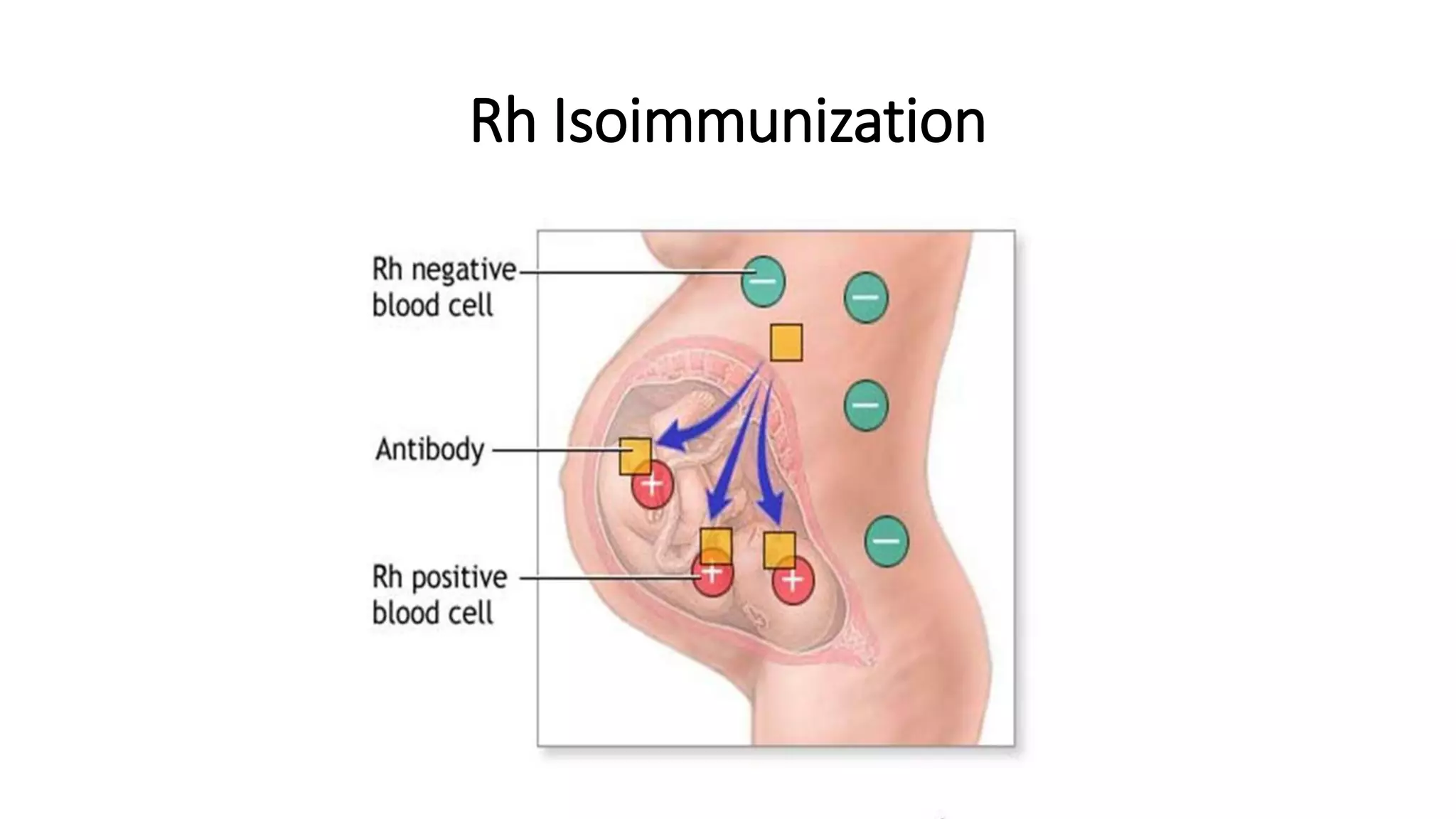
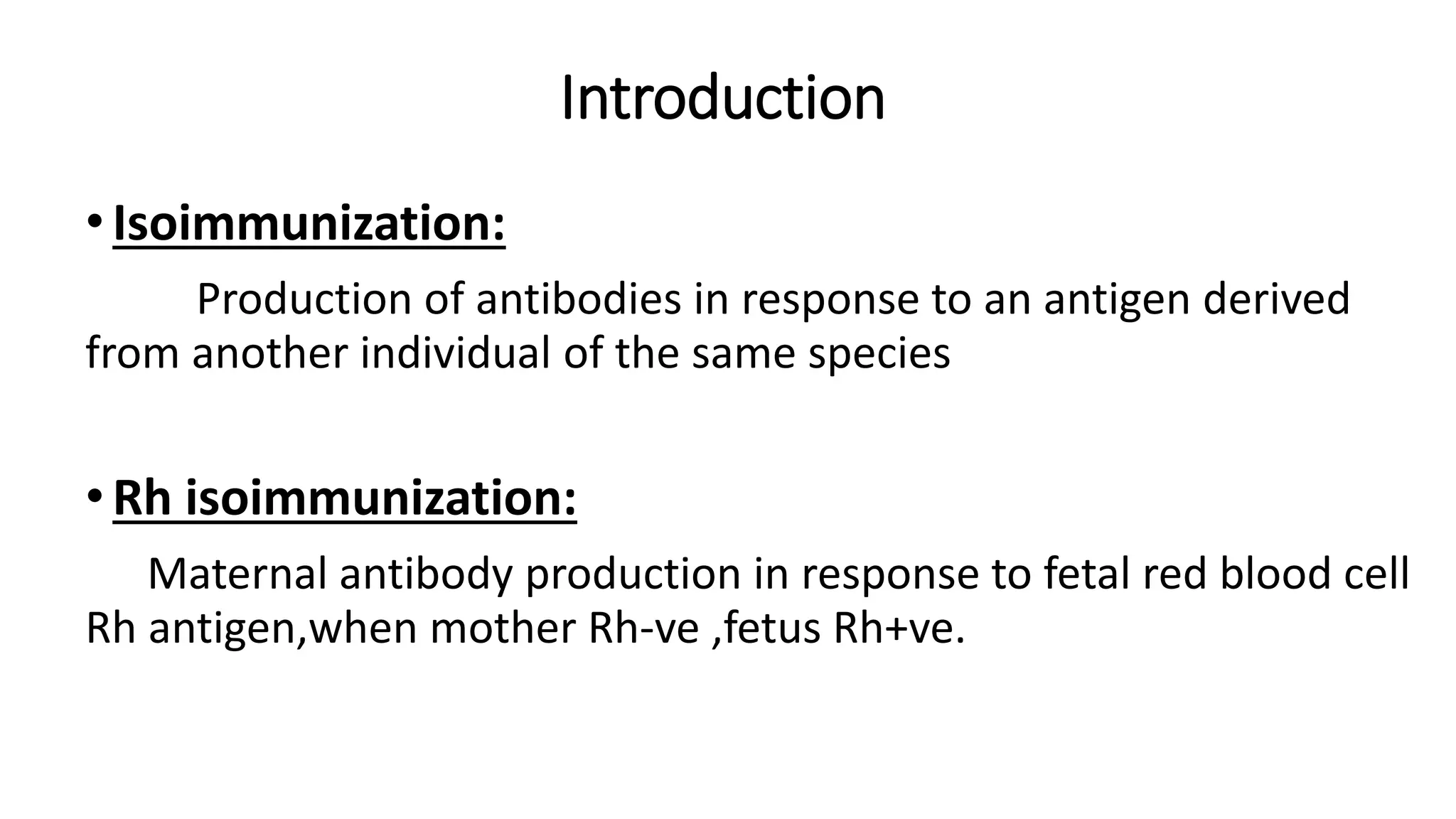

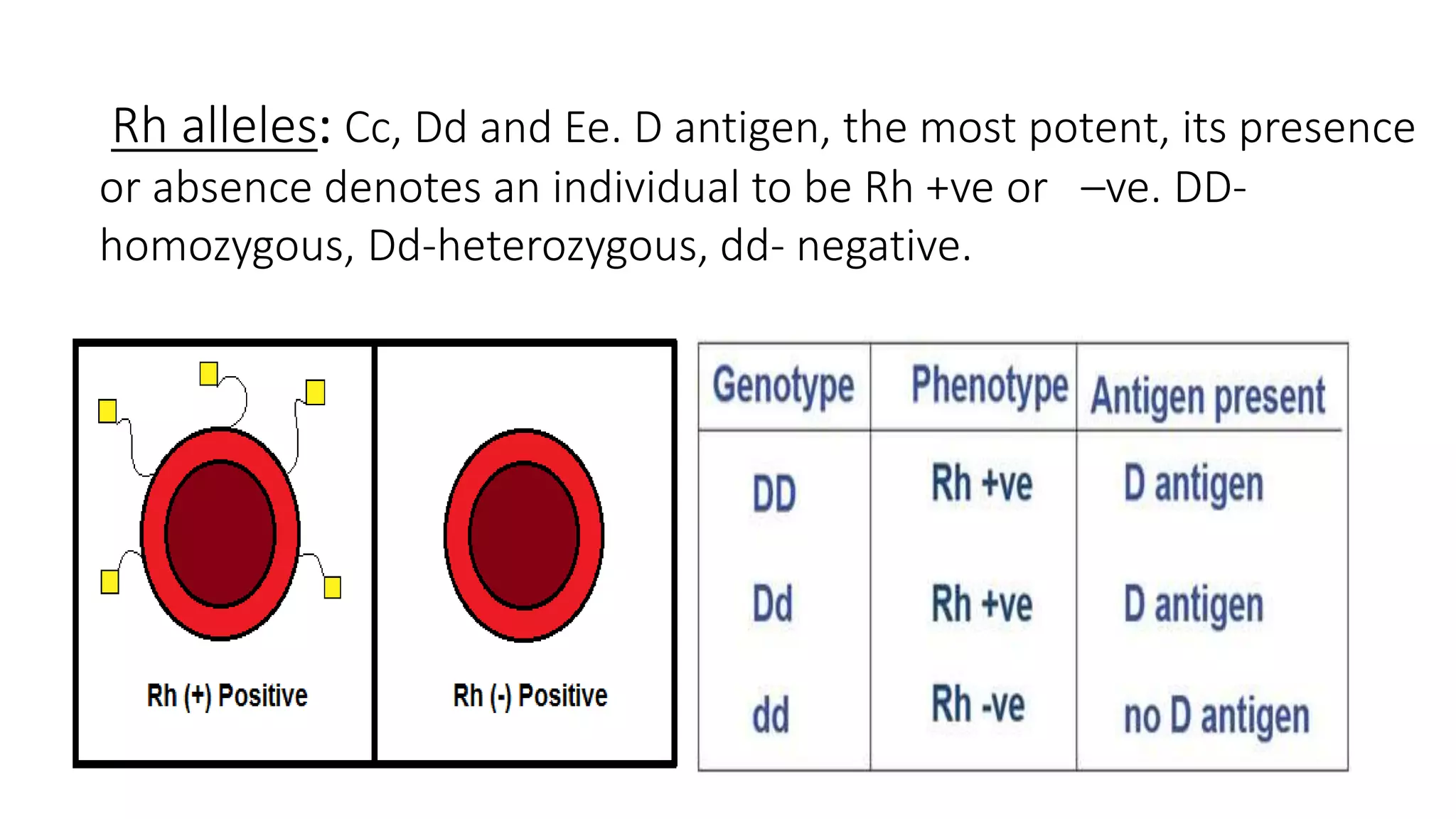


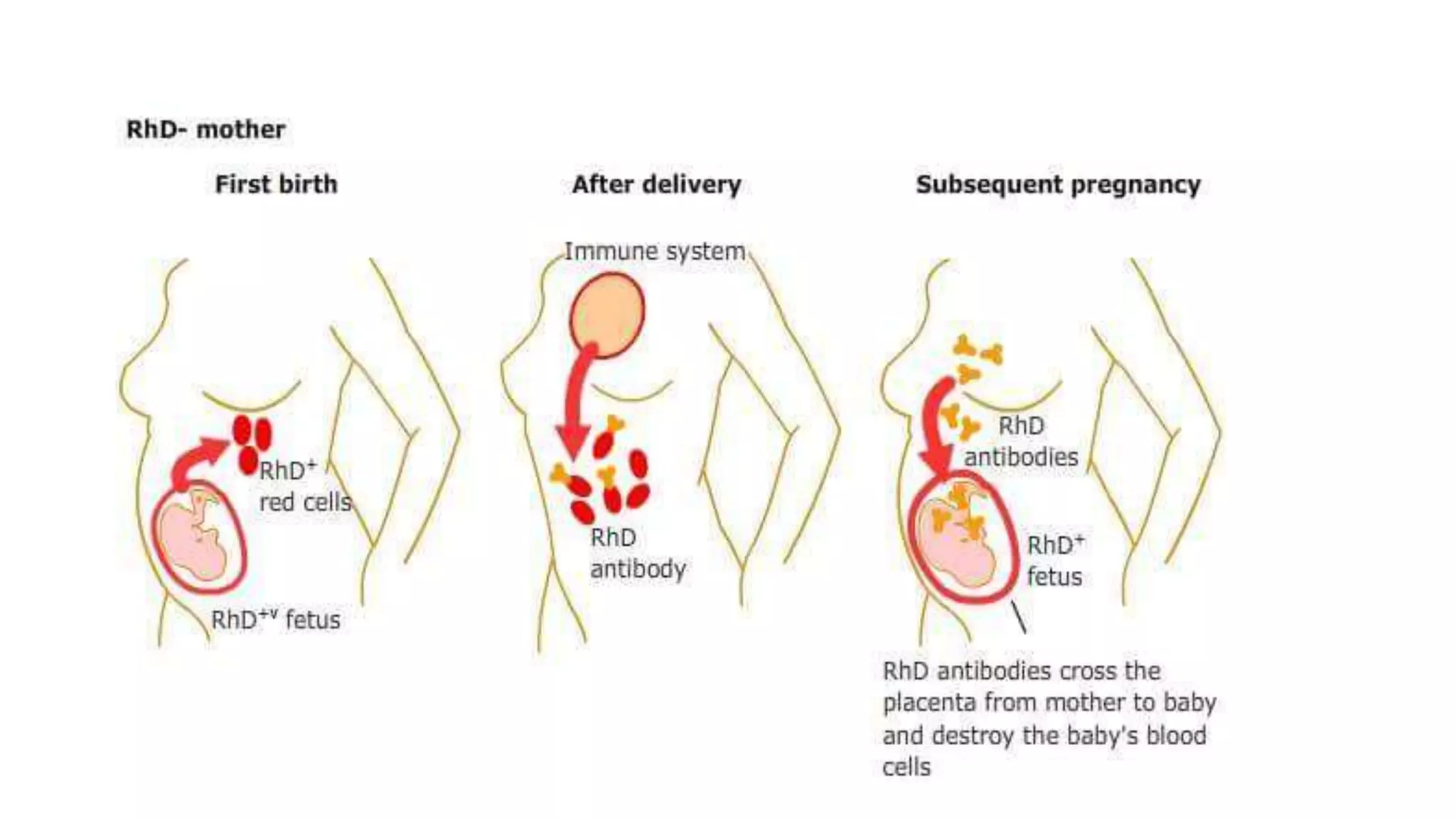

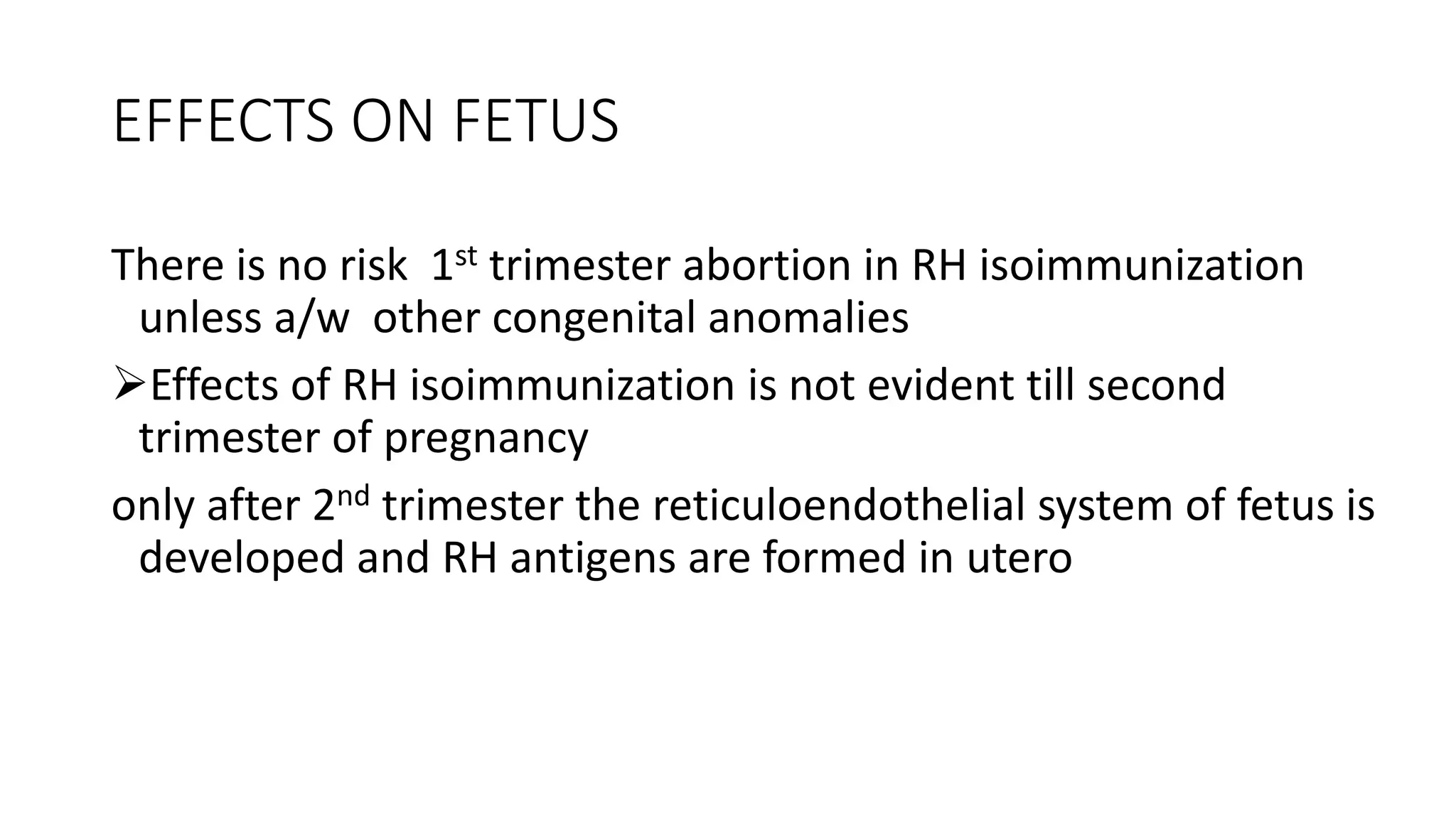


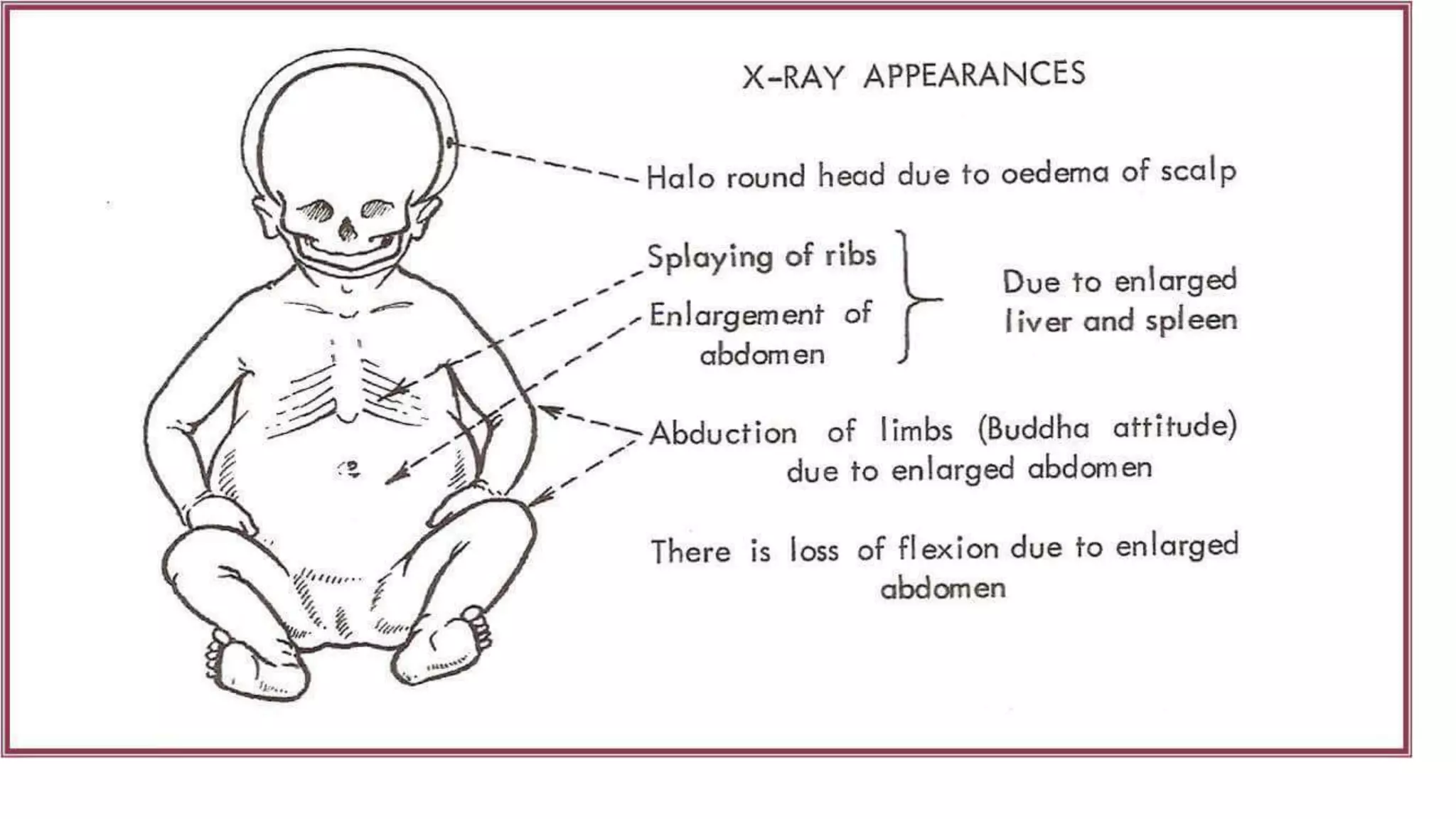


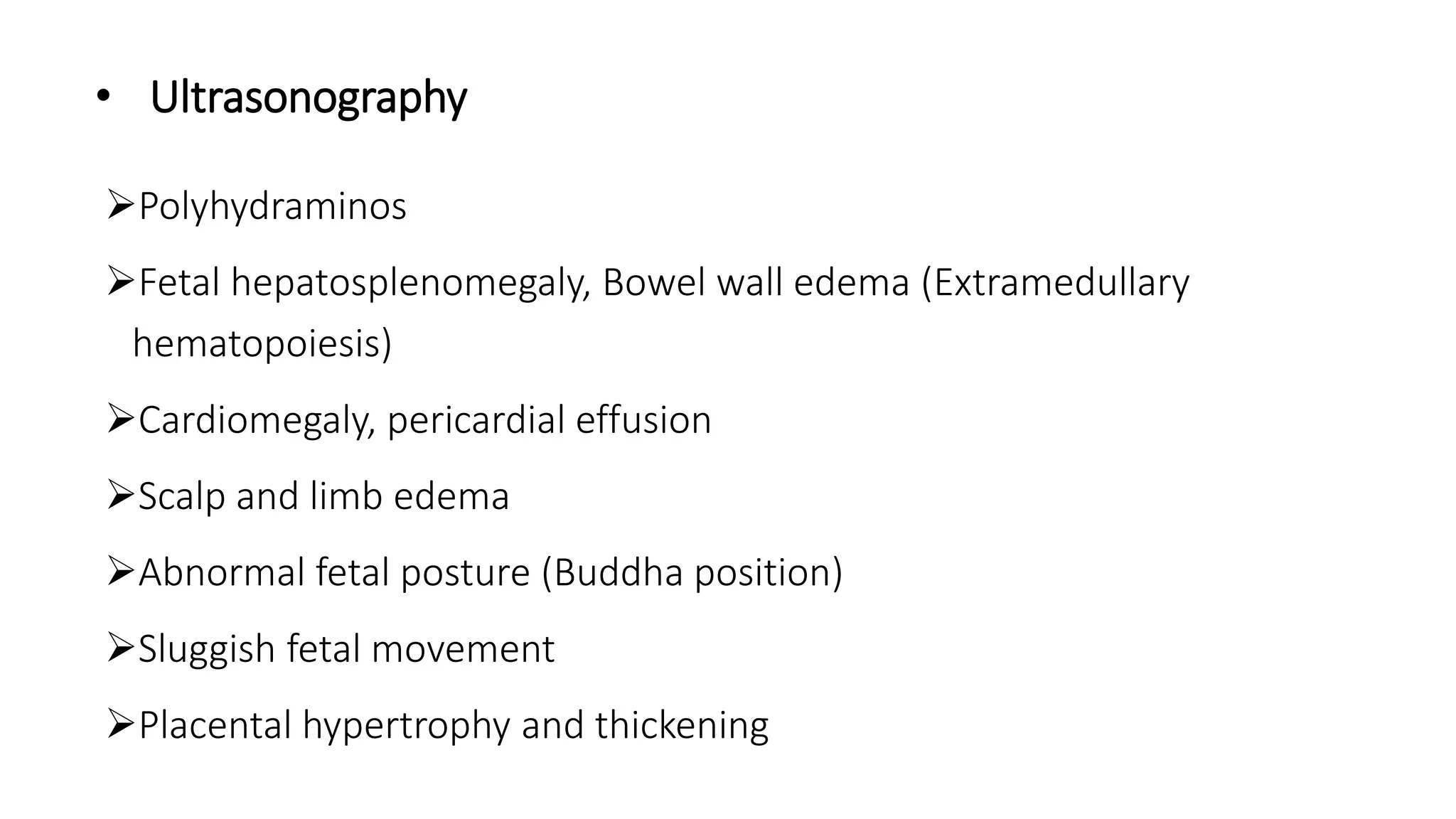


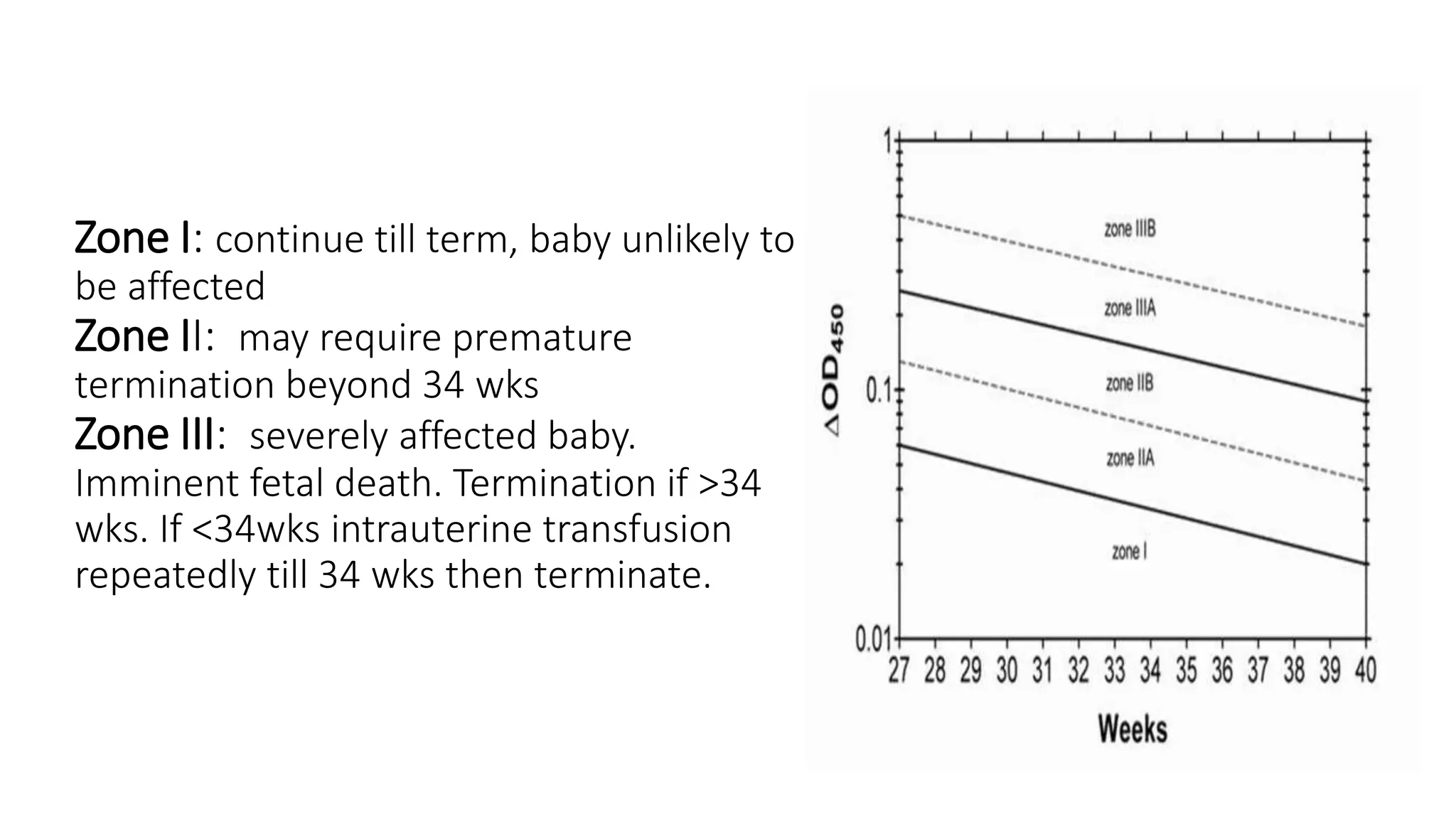



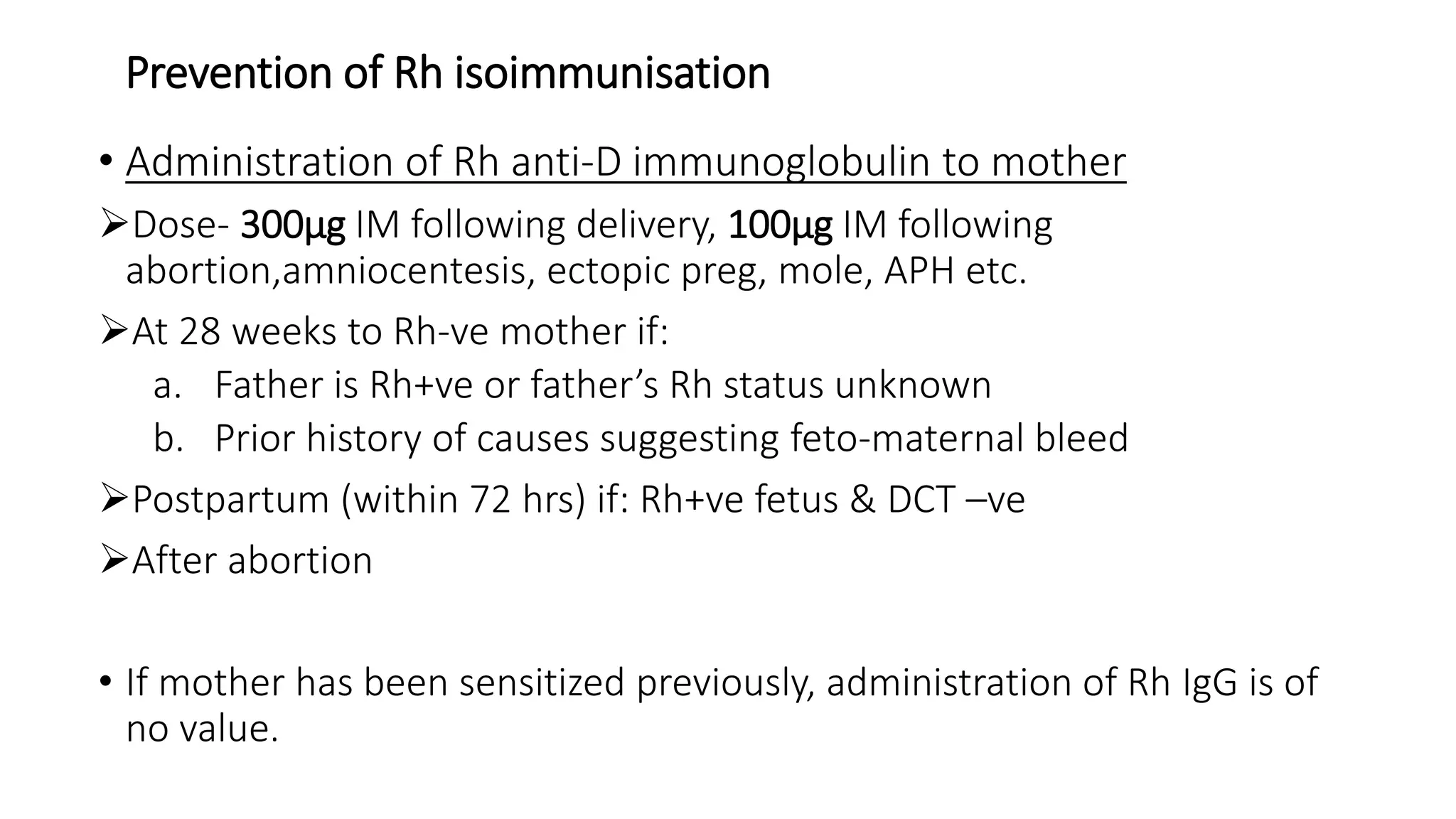



Rh isoimmunization occurs when an Rh-negative mother carries an Rh-positive fetus. During pregnancy or delivery, fetal red blood cells can enter the mother's circulation, stimulating her immune system to produce antibodies against the Rh antigen. These antibodies can then cross the placenta during subsequent pregnancies and destroy fetal red blood cells, causing hemolytic disease of the newborn. Effects range from mild anemia to severe jaundice, hydrops fetalis, or fetal death. Management involves monitoring maternal antibody levels and fetal well-being through amniocentesis and ultrasound. At-risk pregnancies may require intrauterine transfusions or early delivery. Prevention relies on administering Rh immunoglobulin to the mother during


