Shyam bhatewara
Lecturer
Index nursing college
ď‚–
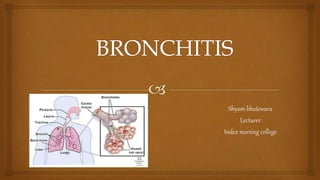
ď‚™Inflammation of the lining of bronchial tubes, which carry air
to and from the lungs.
ď‚™Acute bronchitis is an infection of the lower respiratory tract
that is generally an acute or sequel to an upper respiratory
tract infection.
BRONCHITIS
ď‚–
ď‚™Primarily viral etiology, but may also arise from bacterial
agents.
ď‚™Airways become inflamed and irritated with increased
mucous production.
ď‚™A virus, for example, a cold or flu virus
ď‚™A bacterial infection
ď‚™Exposure to substances that irritate the lungs, such as tobacco
smoke, dust, fumes, vapors, and air pollution
ETIOLOGY
ď‚–
ď‚™Experience a virus or bacteria that causes inflammation
ď‚™Smoke or inhale second hand smoke
ď‚™Asthma or an allergy
RISK FACTORS
ď‚–ď‚™Dyspnea
ď‚™Fever
ď‚™Tachypnea.
ď‚™Productive cough, clear to purulent sputum.
ď‚™Pleuritic chest pain, occasionally.
ď‚™Diffuse rhonchi and crackles heard on auscultation.
ď‚™chest discomfort or soreness
ď‚™a mild headache and body aches
ď‚™shortness of breath
CLINICAL MANIFESTATION
ď‚–
ď‚–
ď‚™Detailed history collection
ď‚™Physical examination
ď‚™Bronchoscopy
ď‚™Chest X-ray no evidence of infiltrates or consolidation.
ď‚™Sputum for gram stain, culture, and sensitivity tests may
be obtained to determine presence of bacterial infection.
ď‚™Spirometry to determine peak expiratory flow (may be
decreased).
DIAGNOSTIC EVALUATION
ď‚–
ď‚™Antibiotic therapy for 7 to 10 days may be indicated for patients
with underlying respiratory problems or chronic illness.
ď‚™Hydration and humidification.
ď‚™Secretion clearance interventions (controlled cough, positive
expiratory pressure valve therapy, chest physical therapy).
ď‚™Bronchodilators for bronchospastic cough and bronchial
irritation.
ď‚™Symptomatic management for fever, cough.
MANAGEMENT
ď‚–
ď‚™Obtain history of upper airway infection, course and length of
symptoms.
ď‚™Assess severity of cough and characteristics of sputum
production.
ď‚™Auscultate chest for diffuse rhonchi and crackles as opposed
to localized crackles usually heard with pneumonia.
NURSING ASSESMENT
ď‚–
ď‚™Instruct patient about medication regimen, including the
completion of the full course of antibiotics prescribed.
ď‚™If patient is not being treated with antibiotics, assure
patient that the majority of cases of people recover from
bronchitis without antibiotic treatment.
ď‚™Encourage patient to seek medical attention for shortness
of breath and worsening condition.
PATIENT EDUCATION
ď‚–
ď‚™Advise patient that a dry cough may persist after bronchitis
due to irritation of the airways. A bedside humidifier and
avoidance of dry environments may help.
ď‚™Advice for the deep breathing exercise
PATIENT EDUCATION
ď‚–

Bronchitis

  • 1.
  • 2.
    ď‚– ď‚™Inflammation of thelining of bronchial tubes, which carry air to and from the lungs. ď‚™Acute bronchitis is an infection of the lower respiratory tract that is generally an acute or sequel to an upper respiratory tract infection. BRONCHITIS
  • 3.
    ď‚– ď‚™Primarily viral etiology,but may also arise from bacterial agents. ď‚™Airways become inflamed and irritated with increased mucous production. ď‚™A virus, for example, a cold or flu virus ď‚™A bacterial infection ď‚™Exposure to substances that irritate the lungs, such as tobacco smoke, dust, fumes, vapors, and air pollution ETIOLOGY
  • 4.
    ď‚– ď‚™Experience a virusor bacteria that causes inflammation ď‚™Smoke or inhale second hand smoke ď‚™Asthma or an allergy RISK FACTORS
  • 5.
    ď‚–ď‚™Dyspnea ď‚™Fever ď‚™Tachypnea. ď‚™Productive cough, clearto purulent sputum. ď‚™Pleuritic chest pain, occasionally. ď‚™Diffuse rhonchi and crackles heard on auscultation. ď‚™chest discomfort or soreness ď‚™a mild headache and body aches ď‚™shortness of breath CLINICAL MANIFESTATION
  • 6.
  • 7.
    ď‚– ď‚™Detailed history collection ď‚™Physicalexamination ď‚™Bronchoscopy ď‚™Chest X-ray no evidence of infiltrates or consolidation. ď‚™Sputum for gram stain, culture, and sensitivity tests may be obtained to determine presence of bacterial infection. ď‚™Spirometry to determine peak expiratory flow (may be decreased). DIAGNOSTIC EVALUATION
  • 8.
    ď‚– ď‚™Antibiotic therapy for7 to 10 days may be indicated for patients with underlying respiratory problems or chronic illness. ď‚™Hydration and humidification. ď‚™Secretion clearance interventions (controlled cough, positive expiratory pressure valve therapy, chest physical therapy). ď‚™Bronchodilators for bronchospastic cough and bronchial irritation. ď‚™Symptomatic management for fever, cough. MANAGEMENT
  • 9.
    ď‚– ď‚™Obtain history ofupper airway infection, course and length of symptoms. ď‚™Assess severity of cough and characteristics of sputum production. ď‚™Auscultate chest for diffuse rhonchi and crackles as opposed to localized crackles usually heard with pneumonia. NURSING ASSESMENT
  • 10.
    ď‚– ď‚™Instruct patient aboutmedication regimen, including the completion of the full course of antibiotics prescribed. ď‚™If patient is not being treated with antibiotics, assure patient that the majority of cases of people recover from bronchitis without antibiotic treatment. ď‚™Encourage patient to seek medical attention for shortness of breath and worsening condition. PATIENT EDUCATION
  • 11.
    ď‚– ď‚™Advise patient thata dry cough may persist after bronchitis due to irritation of the airways. A bedside humidifier and avoidance of dry environments may help. ď‚™Advice for the deep breathing exercise PATIENT EDUCATION
  • 12.