BRIDGING THE GAP: Synchronous and Asynchronous  Library Services for Distance Learners Melissa McCush March 5, 2009 Norwich University
INTRODUCTION ACRL Guidelines for Distance Learning Library Services,  Bill of Rights for the Distance Learning Community: “ Direct Human Access:  Direct human access must be made available to the distance learning community through instruction, interaction, and intervention from library personnel.”
AT ISSUE Nature of distance education is asynchronous Nature of traditional library services is synchronous How can we bridge the gap?
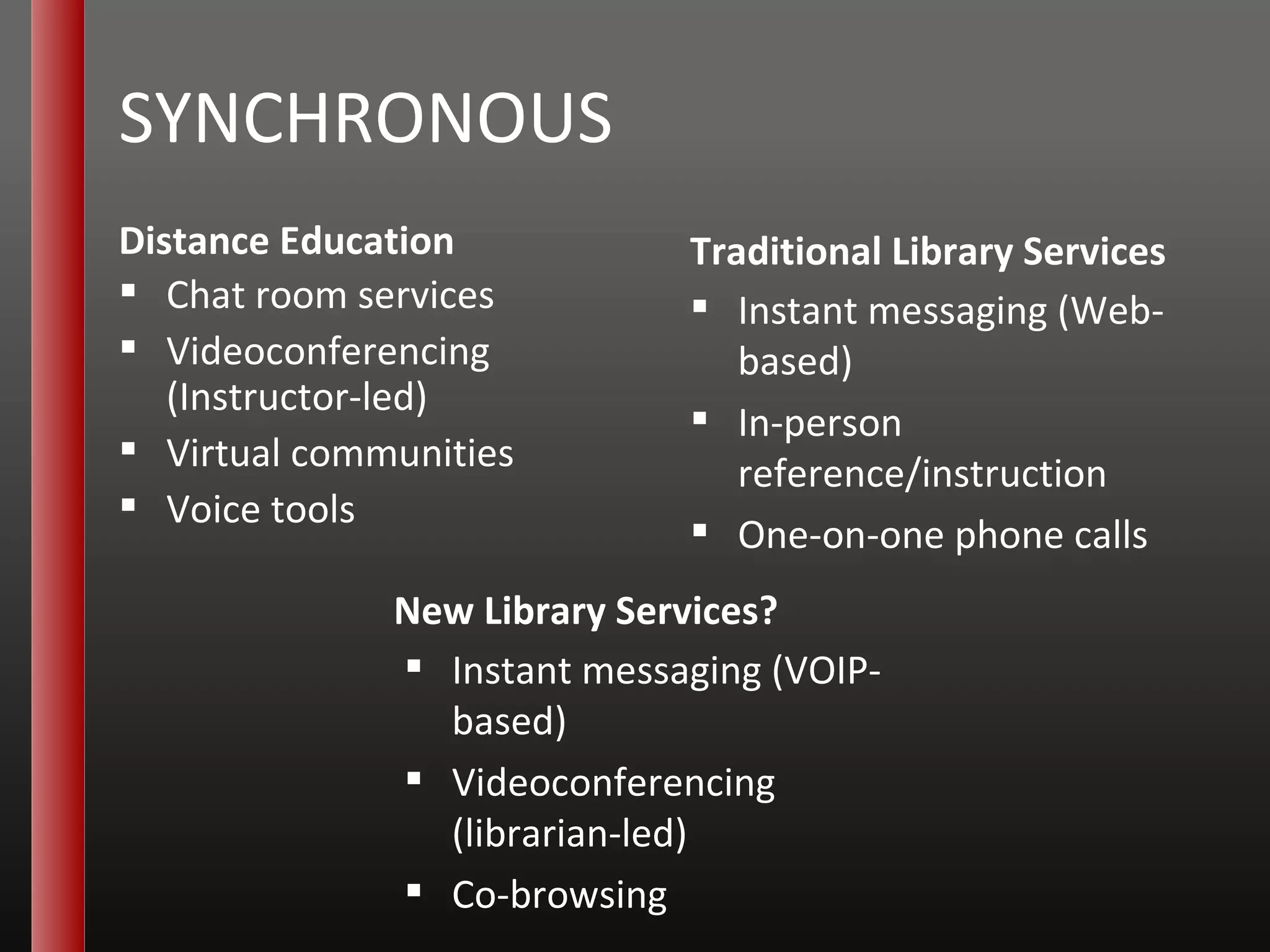
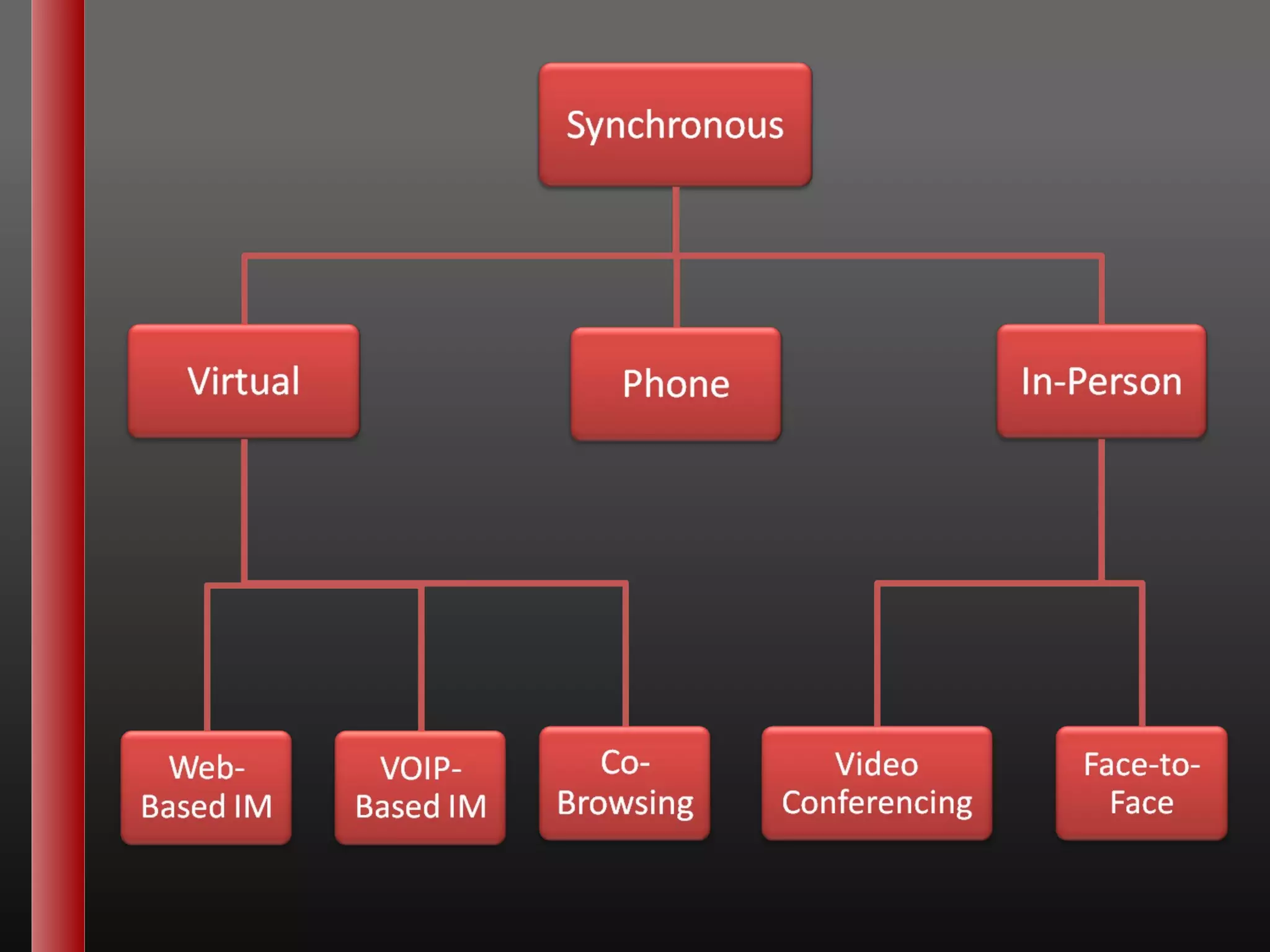
SYNCHRONOUS Distance Education Chat room services Videoconferencing (Instructor-led) Virtual communities Voice tools Traditional Library Services Instant messaging (Web-based) In-person reference/instruction One-on-one phone calls New Library Services? Instant messaging (VOIP-based) Videoconferencing (librarian-led) Co-browsing
 
 
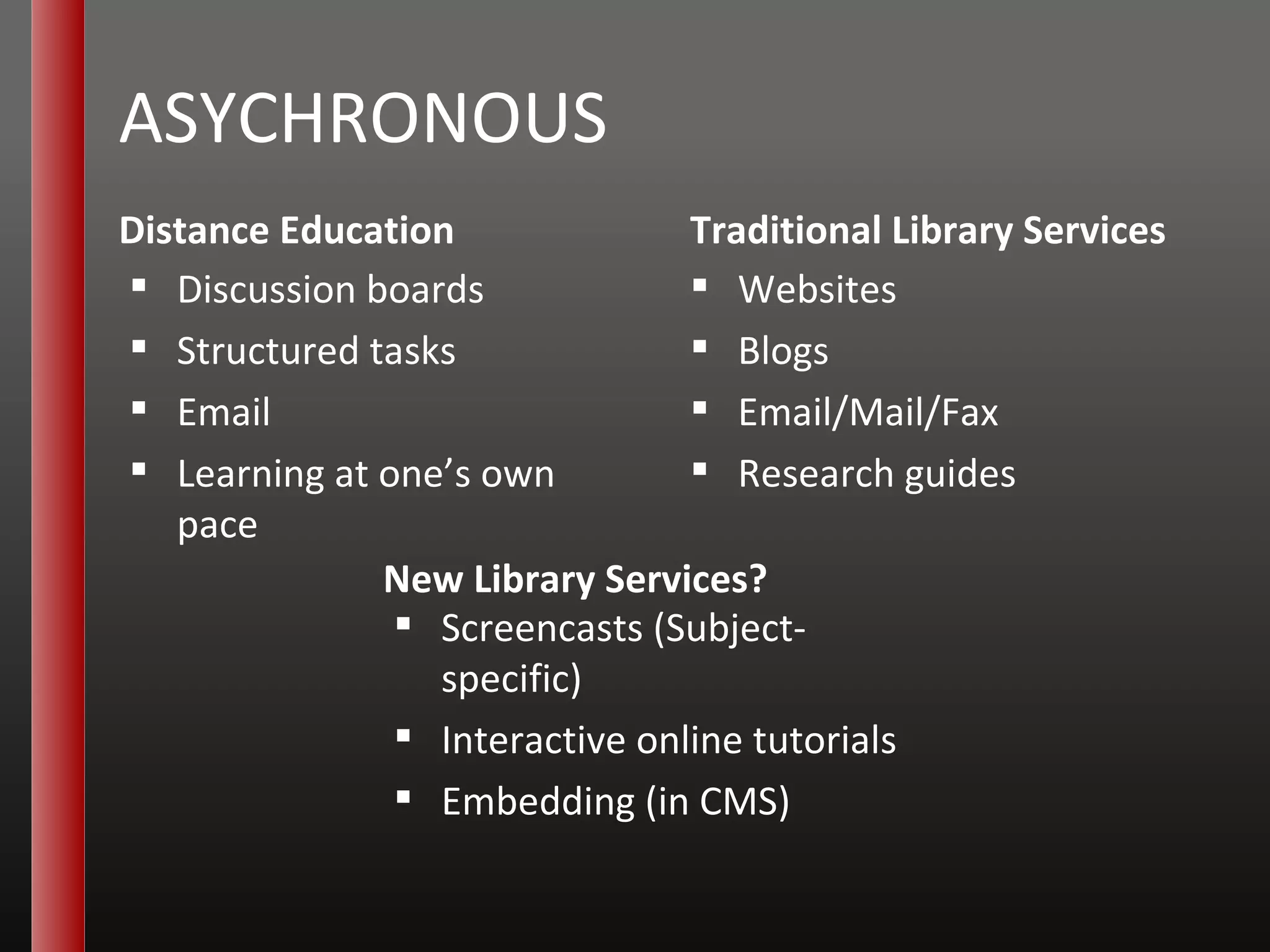
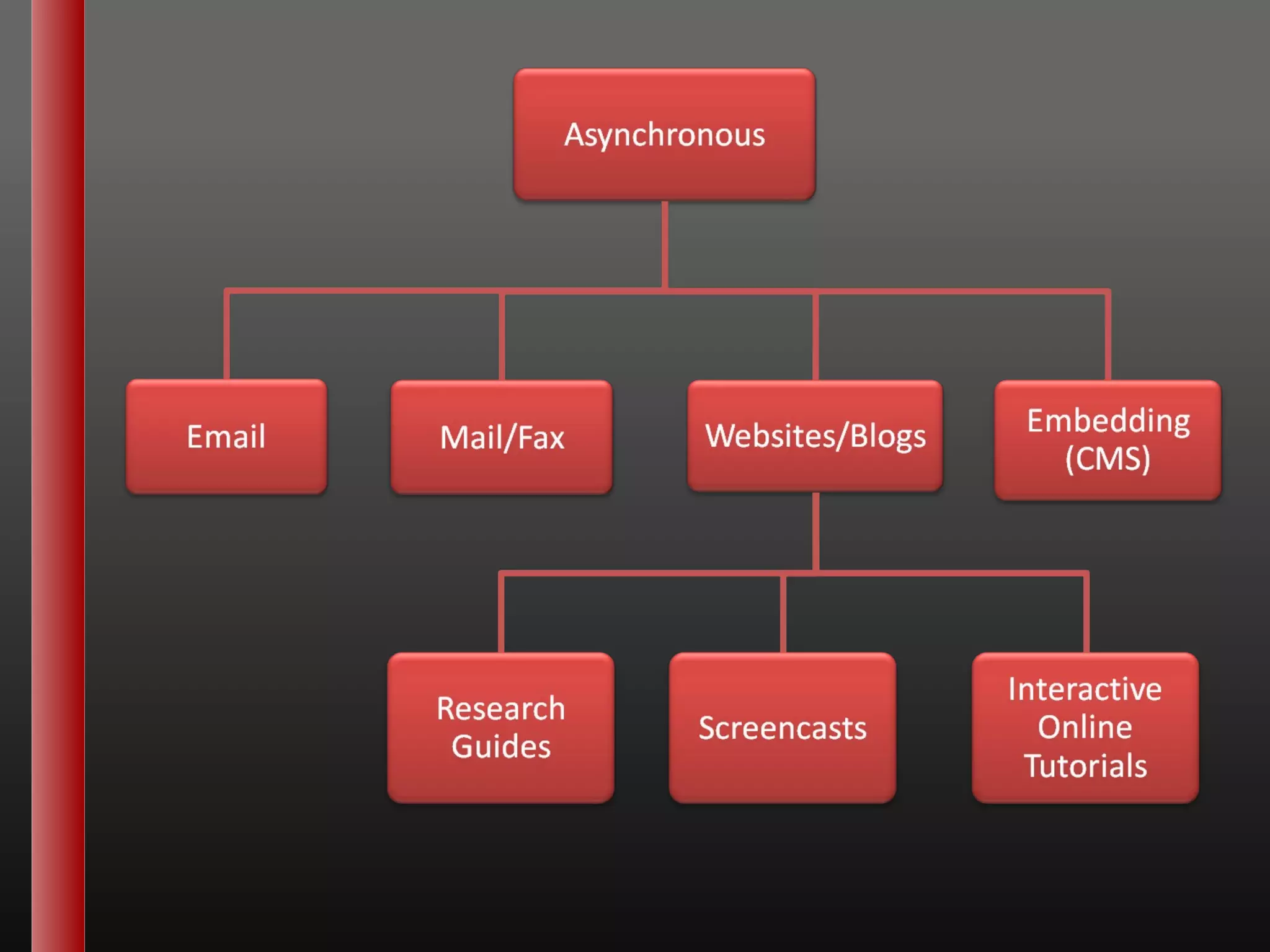
ASYCHRONOUS Distance Education Discussion boards Structured tasks Email Learning at one’s own pace Traditional Library Services Websites Blogs Email/Mail/Fax Research guides New Library Services? Screencasts (Subject-specific) Interactive online tutorials Embedding (in CMS)
 
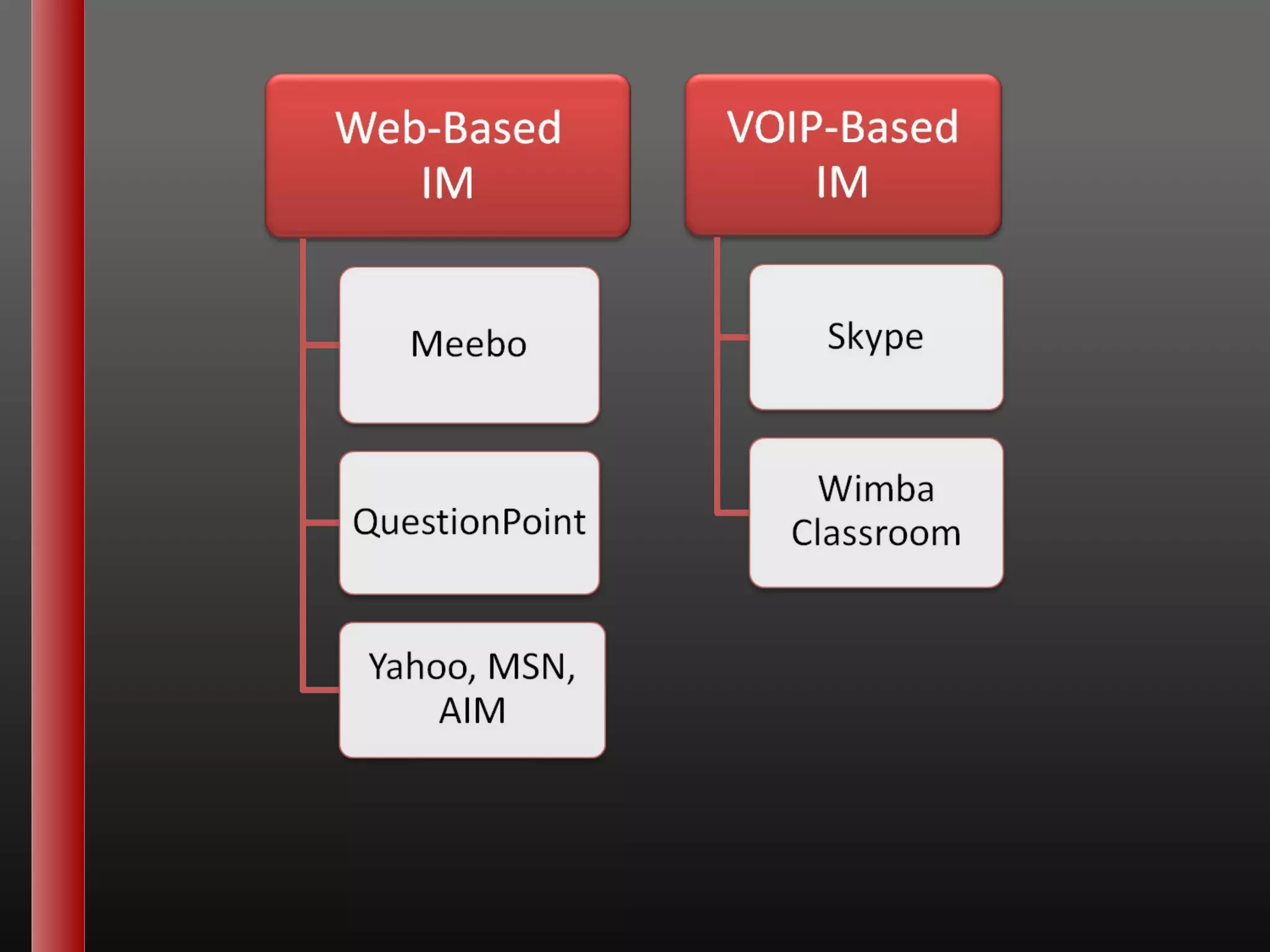
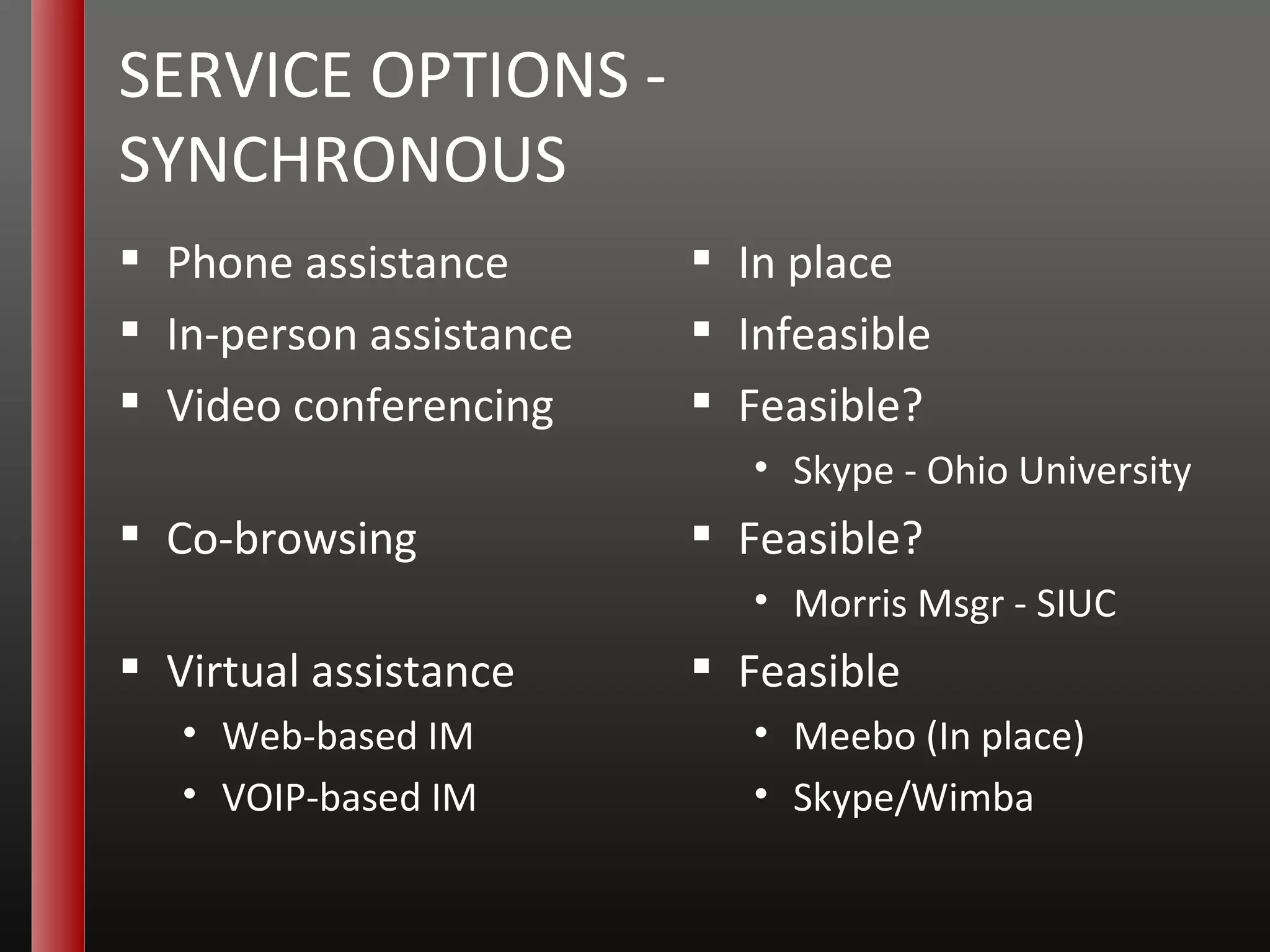
SERVICE OPTIONS - SYNCHRONOUS Phone assistance In-person assistance Video conferencing Co-browsing Virtual assistance Web-based IM VOIP-based IM In place Infeasible Feasible? Skype - Ohio University Feasible? Morris Msgr - SIUC Feasible  Meebo (In place) Skype/Wimba
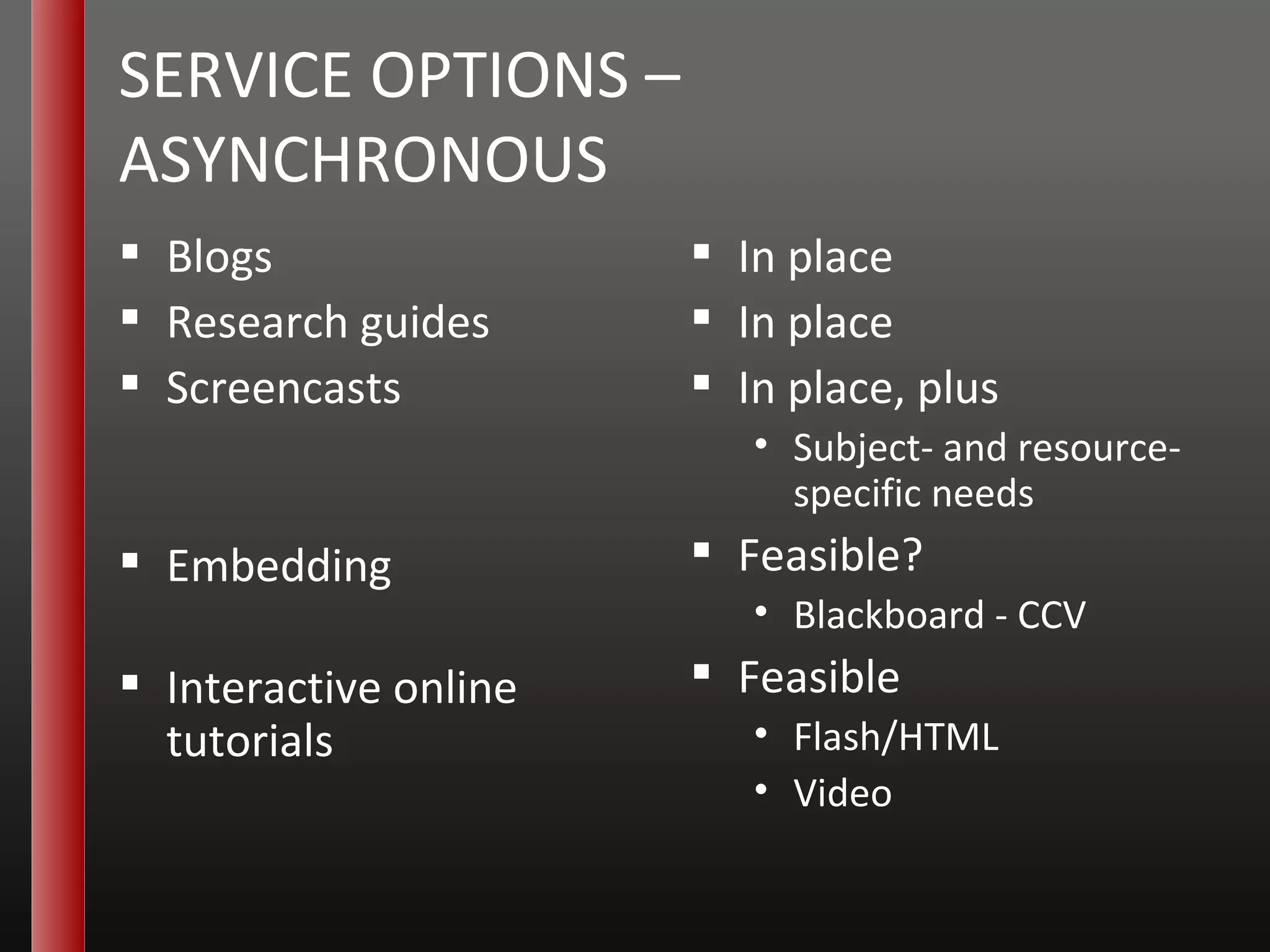
SERVICE OPTIONS –  ASYNCHRONOUS Blogs Research guides Screencasts Embedding Interactive online tutorials In place In place In place, plus Subject- and resource-specific needs Feasible? Blackboard - CCV Feasible Flash/HTML Video
SERVICE FOCUS FOR NORWICH Synchronous VOIP-Based IM Asynchronous Screencasts Interactive online tutorials
VOIP-BASED IM Available through Skype or Wimba Collaboration Suite Skype Speech and text Videoconferencing Wimba Classroom Speech and text Videoconferencing Interactive environment
BENEFITS Auditory clues present Eliminates long-distance calling Allows for group/class conferencing Accessible to persons with disabilities
SCREENCASTS Increasingly widely-used technology Library-created Database vendor-created Wide range of coverage Introductory Subject-specific Resource-specific
BENEFITS Creates immediacy between user and creator Adaptable to local, distance users Accessible to persons with disabilities System requirements often low Mountable on different devices Addresses multiple learning styles
INTERACTIVE ONLINE TUTORIALS Large variety available Focus varies Distance user needs Information literacy Search techniques Engaging, interactive when not primarily text-based
BENEFITS Replacement for face-to-face instruction Pace of instruction set by student Repeatable (not “one-shot”) Provides instant feedback Reduces uncertainty Structured (hierarchical, step-by-step)
ISSUES System requirements Dial-up users Technical expertise Bandwidth Marketing Usability Instructor support
IMPLEMENTATION Integration of new services into SGS gateway Locally created tutorials  Screencasts of subject- and resource-specific needs Establish Skype/Wimba Classroom hours
CONCLUSION Utilize synchronous/asynchronous methods of delivery Technology allows libraries to “bridge the gap” Focus on extensibility and accessibility
SOURCES ACRL. (2008, July 1).  Standards for distance learning library services . Retrieved March 1, 2009, from  http://www.ala.org/ala/mgrps/divs/acrl/standards/guidelinesdistancelearning.cfm . Booth, C. (2008, Jan. 9). Reconstituting the video kiosk. Message posted to  http://infomational.wordpress.com/ . Brumfield, E. (2008). Using online tutorials to reduce uncertainty in information seeking behavior.  Journal of Library Administration, 48 (3), 365-377.
Dewald, N., et al. (2000). Information literacy at a distance: Instructional design issues.  Journal of Academic Librarianship, 26 (1), 33-44. Graves, S.,  & Desai, C. (2006). Instruction via chat reference: Does co-browse help?.  Reference Services Review, 34 (3), 340-357. Matthew, V., & Schroeder, A. (2006). The embedded librarian program: Faculty and librarians partner to embed personalized library assistance into online courses.  EDUCAUSE Quarterly, 29 (4), 61-65. Tucker-Raymond, C. (2005, Dec. 16). Is co-browsing dead? 3 out of 5 librarians agree. Message posted to  http://www.oregonlibraries.net/staff/ .

Bridging the Gap: Synchronous and Asychronous Library Services for Distance Learners

  • 1.
    BRIDGING THE GAP:Synchronous and Asynchronous Library Services for Distance Learners Melissa McCush March 5, 2009 Norwich University
  • 2.
    INTRODUCTION ACRL Guidelinesfor Distance Learning Library Services, Bill of Rights for the Distance Learning Community: “ Direct Human Access: Direct human access must be made available to the distance learning community through instruction, interaction, and intervention from library personnel.”
  • 3.
    AT ISSUE Natureof distance education is asynchronous Nature of traditional library services is synchronous How can we bridge the gap?
  • 4.
    SYNCHRONOUS Distance EducationChat room services Videoconferencing (Instructor-led) Virtual communities Voice tools Traditional Library Services Instant messaging (Web-based) In-person reference/instruction One-on-one phone calls New Library Services? Instant messaging (VOIP-based) Videoconferencing (librarian-led) Co-browsing
  • 5.
  • 6.
  • 7.
    ASYCHRONOUS Distance EducationDiscussion boards Structured tasks Email Learning at one’s own pace Traditional Library Services Websites Blogs Email/Mail/Fax Research guides New Library Services? Screencasts (Subject-specific) Interactive online tutorials Embedding (in CMS)
  • 8.
  • 9.
    SERVICE OPTIONS -SYNCHRONOUS Phone assistance In-person assistance Video conferencing Co-browsing Virtual assistance Web-based IM VOIP-based IM In place Infeasible Feasible? Skype - Ohio University Feasible? Morris Msgr - SIUC Feasible Meebo (In place) Skype/Wimba
  • 10.
    SERVICE OPTIONS – ASYNCHRONOUS Blogs Research guides Screencasts Embedding Interactive online tutorials In place In place In place, plus Subject- and resource-specific needs Feasible? Blackboard - CCV Feasible Flash/HTML Video
  • 11.
    SERVICE FOCUS FORNORWICH Synchronous VOIP-Based IM Asynchronous Screencasts Interactive online tutorials
  • 12.
    VOIP-BASED IM Availablethrough Skype or Wimba Collaboration Suite Skype Speech and text Videoconferencing Wimba Classroom Speech and text Videoconferencing Interactive environment
  • 13.
    BENEFITS Auditory cluespresent Eliminates long-distance calling Allows for group/class conferencing Accessible to persons with disabilities
  • 14.
    SCREENCASTS Increasingly widely-usedtechnology Library-created Database vendor-created Wide range of coverage Introductory Subject-specific Resource-specific
  • 15.
    BENEFITS Creates immediacybetween user and creator Adaptable to local, distance users Accessible to persons with disabilities System requirements often low Mountable on different devices Addresses multiple learning styles
  • 16.
    INTERACTIVE ONLINE TUTORIALSLarge variety available Focus varies Distance user needs Information literacy Search techniques Engaging, interactive when not primarily text-based
  • 17.
    BENEFITS Replacement forface-to-face instruction Pace of instruction set by student Repeatable (not “one-shot”) Provides instant feedback Reduces uncertainty Structured (hierarchical, step-by-step)
  • 18.
    ISSUES System requirementsDial-up users Technical expertise Bandwidth Marketing Usability Instructor support
  • 19.
    IMPLEMENTATION Integration ofnew services into SGS gateway Locally created tutorials Screencasts of subject- and resource-specific needs Establish Skype/Wimba Classroom hours
  • 20.
    CONCLUSION Utilize synchronous/asynchronousmethods of delivery Technology allows libraries to “bridge the gap” Focus on extensibility and accessibility
  • 21.
    SOURCES ACRL. (2008,July 1). Standards for distance learning library services . Retrieved March 1, 2009, from http://www.ala.org/ala/mgrps/divs/acrl/standards/guidelinesdistancelearning.cfm . Booth, C. (2008, Jan. 9). Reconstituting the video kiosk. Message posted to http://infomational.wordpress.com/ . Brumfield, E. (2008). Using online tutorials to reduce uncertainty in information seeking behavior. Journal of Library Administration, 48 (3), 365-377.
  • 22.
    Dewald, N., etal. (2000). Information literacy at a distance: Instructional design issues. Journal of Academic Librarianship, 26 (1), 33-44. Graves, S., & Desai, C. (2006). Instruction via chat reference: Does co-browse help?. Reference Services Review, 34 (3), 340-357. Matthew, V., & Schroeder, A. (2006). The embedded librarian program: Faculty and librarians partner to embed personalized library assistance into online courses. EDUCAUSE Quarterly, 29 (4), 61-65. Tucker-Raymond, C. (2005, Dec. 16). Is co-browsing dead? 3 out of 5 librarians agree. Message posted to http://www.oregonlibraries.net/staff/ .