Bridge
Failure
   Dr. Aneeqa Yaqub
       Dr. Moazam Ali
Manifestations of failure
   Pain
   Inability to function
   Dissatisfaction with esthetics
   Broken teeth and/or restoration
   Inflammatory swelling
   Bad taste
   Bad breath
   Bleeding gums
   Anxiety
Causes of fixed prosthesis failure

    Improper case selection
    Faulty diagnosis and treatment plan
    Inaccurate clinical or laboratory procedures
    Poor patient care and maintenance following
     insertion
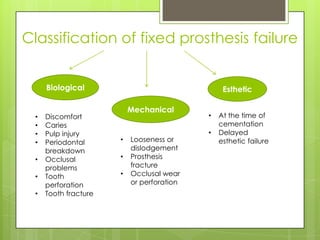
Classification of fixed prosthesis failure


      Biological                                 Esthetic

                           Mechanical
  •   Discomfort                            •   At the time of
  •   Caries                                    cementation
  •   Pulp injury                           •   Delayed
  •   Periodontal      •   Looseness or         esthetic failure
      breakdown            dislodgement
  •   Occlusal         •   Prosthesis
      problems             fracture
  •   Tooth            •   Occlusal wear
      perforation          or perforation
  •   Tooth fracture
Biological failures
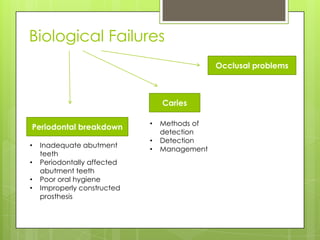
Biological Failures
                                              Occlusal problems


                                 Caries

                             •   Methods of
Periodontal breakdown
                                 detection
                             •   Detection
•   Inadequate abutment
                             •   Management
    teeth
•   Periodontally affected
    abutment teeth
•   Poor oral hygiene
•   Improperly constructed
    prosthesis
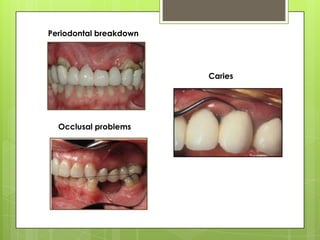
Periodontal breakdown


                        Caries


  Occlusal problems
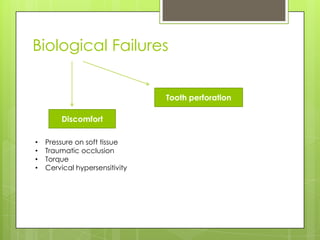
Biological Failures


                                Tooth perforation

         Discomfort

•   Pressure on soft tissue
•   Traumatic occlusion
•   Torque
•   Cervical hypersensitivity
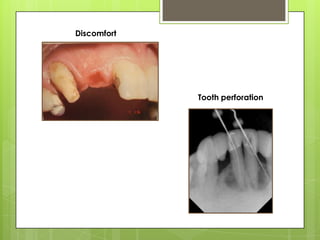
Discomfort


             Tooth perforation
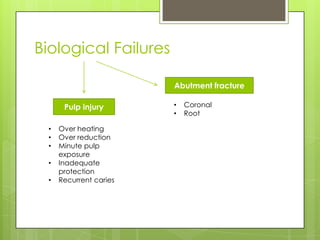
Biological Failures

                        Abutment fracture

      Pulp injury       •   Coronal
                        •   Root

 •   Over heating
 •   Over reduction
 •   Minute pulp
     exposure
 •   Inadequate
     protection
 •   Recurrent caries
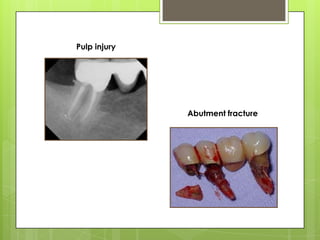
Pulp injury


              Abutment fracture
Mechanical failures
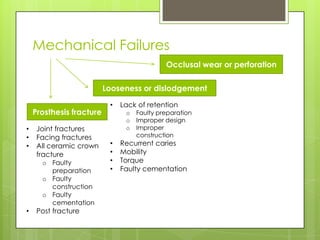
Mechanical Failures
                                             Occlusal wear or perforation

                          Looseness or dislodgement

                           •   Lack of retention
    Prosthesis fracture         o   Faulty preparation
                                o   Improper design
•    Joint fractures            o   Improper
•    Facing fractures               construction
•    All ceramic crown     •   Recurrent caries
     fracture              •   Mobility
      o Faulty             •   Torque
        preparation        •   Faulty cementation
      o Faulty
        construction
      o Faulty
        cementation
•    Post fracture
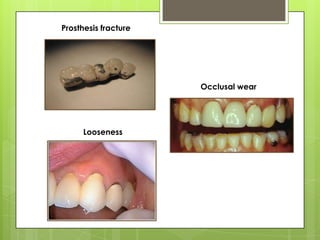
Prosthesis fracture


                      Occlusal wear


     Looseness
Esthetic failures
Esthetic Failures
                                          Delayed esthetic failures

                                           •   Gingival recession
    At the time of cementation             •   Sub pontic tissue
                                               shrinkage
•    Actual failures                       •   Periodontal surgery
      o Color mismatch                     •   Porosity
      o Poor tooth contour, marginal       •   Drifting of anterior
        roughness & extension                  teeth
      o Metal display in partial           •   wear
        coverage
      o Improper pontic placement
      o Porcelain fracture during
        cementation
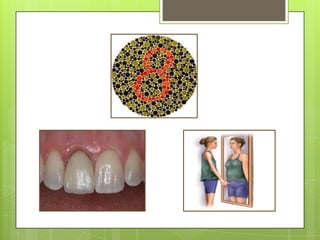
•    Color blindness
•    Unrealistic complains by the pt.
      o Inadequate communication
      o Unrealistic expectations of pt.
      o Dysmorphophobia
Avoiding failures
     Caution at the planning stage
     Confirmation of diagnosis and treatment
      plan for inexperienced operator
     Expertise of the technician
     Treatment of preoperative problems
     Search for the primary cause of failure
      rather than the apparent
When the prognosis is
questionable ???
The methods used to facilitate re-treatment are:
   Use of temporary cement
   Design of prosthesis for possible future addition
   The placement of a rest seat for possible future use
   Specified undercut or guide plane of a crown, even
    when denture is not planned
   Planning and noting solder joint placement
   Recording of shades
   Recording of cement used
   Retention of working casts and provisional restorations
CASE Presentation
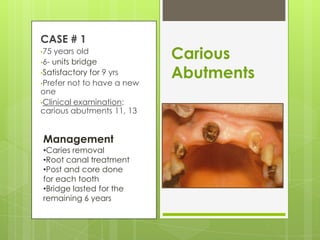
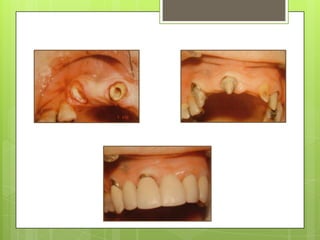
CASE # 1
•75 years old
•6- units bridge
                            Carious
•Satisfactory for 9 yrs
•Prefer not to have a new
                            Abutments
one
•Clinical examination:
carious abutments 11, 13


Management
•Caries removal
•Root canal treatment
•Post and core done
for each tooth
•Bridge lasted for the
remaining 6 years
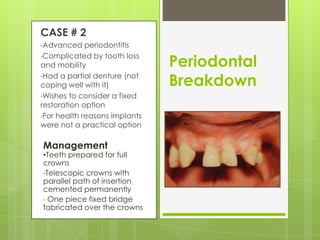
CASE # 2
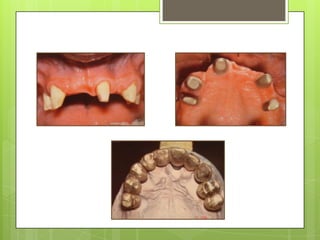
•Advanced    periodontitis

                               Periodontal
•Complicated by tooth loss
and mobility
•Had a partial denture (not
coping well with it)           Breakdown
•Wishes to consider a fixed
restoration option
•For health reasons implants
were not a practical option

Management
•Teeth prepared for full
crowns
•Telescopic crowns with
parallel path of insertion
cemented permanently
• One piece fixed bridge
fabricated over the crowns
THANK YOU

Bridge failure

  • 1.
    Bridge Failure Dr. Aneeqa Yaqub Dr. Moazam Ali
  • 2.
    Manifestations of failure  Pain  Inability to function  Dissatisfaction with esthetics  Broken teeth and/or restoration  Inflammatory swelling  Bad taste  Bad breath  Bleeding gums  Anxiety
  • 3.
    Causes of fixedprosthesis failure  Improper case selection  Faulty diagnosis and treatment plan  Inaccurate clinical or laboratory procedures  Poor patient care and maintenance following insertion
  • 4.
    Classification of fixedprosthesis failure Biological Esthetic Mechanical • Discomfort • At the time of • Caries cementation • Pulp injury • Delayed • Periodontal • Looseness or esthetic failure breakdown dislodgement • Occlusal • Prosthesis problems fracture • Tooth • Occlusal wear perforation or perforation • Tooth fracture
  • 5.
  • 6.
    Biological Failures Occlusal problems Caries • Methods of Periodontal breakdown detection • Detection • Inadequate abutment • Management teeth • Periodontally affected abutment teeth • Poor oral hygiene • Improperly constructed prosthesis
  • 7.
    Periodontal breakdown Caries Occlusal problems
  • 8.
    Biological Failures Tooth perforation Discomfort • Pressure on soft tissue • Traumatic occlusion • Torque • Cervical hypersensitivity
  • 9.
    Discomfort Tooth perforation
  • 10.
    Biological Failures Abutment fracture Pulp injury • Coronal • Root • Over heating • Over reduction • Minute pulp exposure • Inadequate protection • Recurrent caries
  • 11.
    Pulp injury Abutment fracture
  • 12.
  • 13.
    Mechanical Failures Occlusal wear or perforation Looseness or dislodgement • Lack of retention Prosthesis fracture o Faulty preparation o Improper design • Joint fractures o Improper • Facing fractures construction • All ceramic crown • Recurrent caries fracture • Mobility o Faulty • Torque preparation • Faulty cementation o Faulty construction o Faulty cementation • Post fracture
  • 14.
    Prosthesis fracture Occlusal wear Looseness
  • 15.
  • 16.
    Esthetic Failures Delayed esthetic failures • Gingival recession At the time of cementation • Sub pontic tissue shrinkage • Actual failures • Periodontal surgery o Color mismatch • Porosity o Poor tooth contour, marginal • Drifting of anterior roughness & extension teeth o Metal display in partial • wear coverage o Improper pontic placement o Porcelain fracture during cementation • Color blindness • Unrealistic complains by the pt. o Inadequate communication o Unrealistic expectations of pt. o Dysmorphophobia
  • 18.
    Avoiding failures  Caution at the planning stage  Confirmation of diagnosis and treatment plan for inexperienced operator  Expertise of the technician  Treatment of preoperative problems  Search for the primary cause of failure rather than the apparent
  • 19.
    When the prognosisis questionable ??? The methods used to facilitate re-treatment are:  Use of temporary cement  Design of prosthesis for possible future addition  The placement of a rest seat for possible future use  Specified undercut or guide plane of a crown, even when denture is not planned  Planning and noting solder joint placement  Recording of shades  Recording of cement used  Retention of working casts and provisional restorations
  • 20.
  • 21.
    CASE # 1 •75years old •6- units bridge Carious •Satisfactory for 9 yrs •Prefer not to have a new Abutments one •Clinical examination: carious abutments 11, 13 Management •Caries removal •Root canal treatment •Post and core done for each tooth •Bridge lasted for the remaining 6 years
  • 23.
    CASE # 2 •Advanced periodontitis Periodontal •Complicated by tooth loss and mobility •Had a partial denture (not coping well with it) Breakdown •Wishes to consider a fixed restoration option •For health reasons implants were not a practical option Management •Teeth prepared for full crowns •Telescopic crowns with parallel path of insertion cemented permanently • One piece fixed bridge fabricated over the crowns
  • 25.