

Umm Al-Qura University  Faculty of Dentistry
Bridge Failure
Postoperative appointment: Monitor patients dental health Stimulate meticulous plaque control habits Identify incipient disease Introduce corrective treatment needed before irreversible damage Periodic recall Longevity is affected by: Good plaque removal Patient motivation Resistance to disease Restoration design and fabrication
Manifestations of failure: Pain Inability to function Dissatisfaction with esthetics Broken teeth and or restorations Inflammatory swelling Bad taste Bad breath Bleeding gums Anxiety Referral
Causes of Fixed prosthesis failure: 1- improper case selection . 2- Faulty diagnosis and treatment plan. 3-Inaccurate clinical or laboratory procedures . 4- poor patient care and maintenance following insertion.
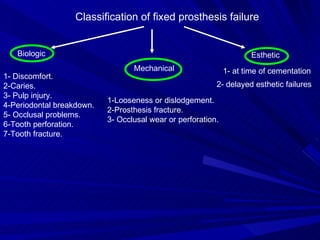
Classification of fixed prosthesis failure Biologic Mechanical Esthetic 1- Discomfort. 2-Caries. 3- Pulp injury. 4-Periodontal breakdown. 5- Occlusal problems. 6-Tooth perforation. 7-Tooth fracture. 1-Looseness or dislodgement. 2-Prosthesis fracture. 3- Occlusal wear or perforation. 1- at time of cementation 2- delayed esthetic failures
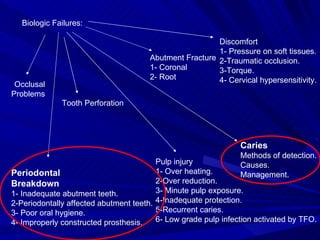
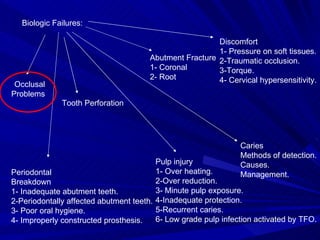
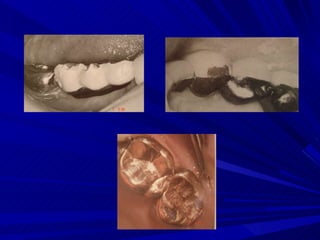
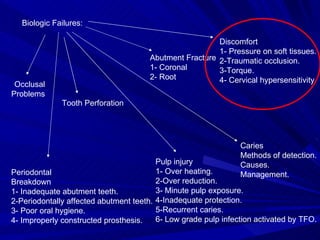
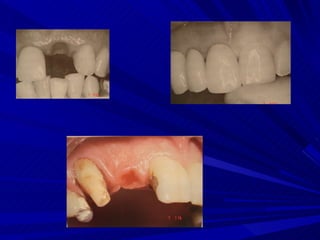
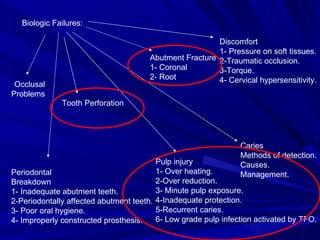
Biologic Failures: Discomfort 1- Pressure on soft tissues. 2-Traumatic occlusion. 3-Torque. 4- Cervical hypersensitivity. Caries Methods of detection. Causes. Management. Pulp injury 1- Over heating. 2-Over reduction. 3- Minute pulp exposure. 4-Inadequate protection. 5-Recurrent caries. 6- Low grade pulp infection activated by TFO. Periodontal  Breakdown 1- Inadequate abutment teeth. 2-Periodontally affected abutment teeth. 3- Poor oral hygiene. 4- Improperly constructed prosthesis. Occlusal Problems Tooth Perforation Abutment Fracture 1- Coronal 2- Root
 
Biologic Failures: Discomfort 1- Pressure on soft tissues. 2-Traumatic occlusion. 3-Torque. 4- Cervical hypersensitivity. Caries Methods of detection. Causes. Management. Pulp injury 1- Over heating. 2-Over reduction. 3- Minute pulp exposure. 4-Inadequate protection. 5-Recurrent caries. 6- Low grade pulp infection activated by TFO. Periodontal  Breakdown 1- Inadequate abutment teeth. 2-Periodontally affected abutment teeth. 3- Poor oral hygiene. 4- Improperly constructed prosthesis. Occlusal Problems Tooth Perforation Abutment Fracture 1- Coronal 2- Root
 
Biologic Failures: Discomfort 1- Pressure on soft tissues. 2-Traumatic occlusion. 3-Torque. 4- Cervical hypersensitivity. Caries Methods of detection. Causes. Management. Pulp injury 1- Over heating. 2-Over reduction. 3- Minute pulp exposure. 4-Inadequate protection. 5-Recurrent caries. 6- Low grade pulp infection activated by TFO. Periodontal  Breakdown 1- Inadequate abutment teeth. 2-Periodontally affected abutment teeth. 3- Poor oral hygiene. 4- Improperly constructed prosthesis. Occlusal Problems Tooth Perforation Abutment Fracture 1- Coronal 2- Root
 
Biologic Failures: Discomfort 1- Pressure on soft tissues. 2-Traumatic occlusion. 3-Torque. 4- Cervical hypersensitivity. Caries Methods of detection. Causes. Management. Pulp injury 1- Over heating. 2-Over reduction. 3- Minute pulp exposure. 4-Inadequate protection. 5-Recurrent caries. 6- Low grade pulp infection activated by TFO. Periodontal  Breakdown 1- Inadequate abutment teeth. 2-Periodontally affected abutment teeth. 3- Poor oral hygiene. 4- Improperly constructed prosthesis. Occlusal Problems Tooth Perforation Abutment Fracture 1- Coronal 2- Root
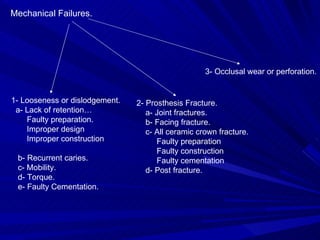
Mechanical Failures.   3- Occlusal wear or perforation. 1- Looseness or dislodgement. a- Lack of retention… Faulty preparation. Improper design Improper construction b- Recurrent caries. c- Mobility. d- Torque. e- Faulty Cementation. 2- Prosthesis Fracture. a- Joint fractures. b- Facing fracture. c- All ceramic crown fracture. Faulty preparation Faulty construction Faulty cementation d- Post fracture.
 
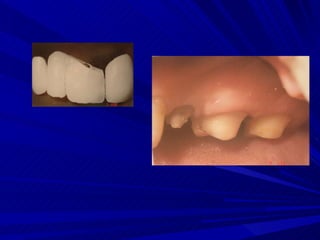
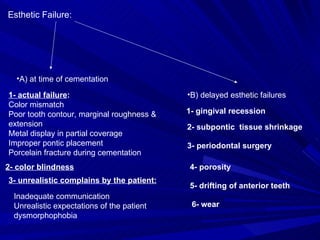
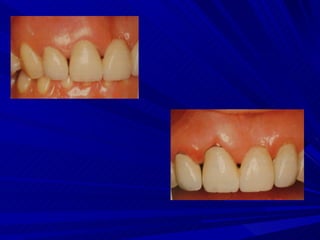
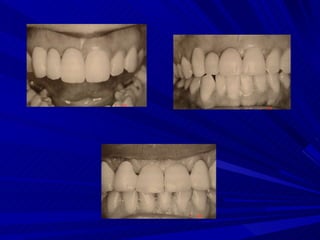
Esthetic Failure: A) at time of cementation B) delayed esthetic failures 1- actual failure : Color mismatch Poor tooth contour, marginal roughness & extension  Metal display in partial coverage Improper pontic placement Porcelain fracture during cementation 2- color blindness 3- unrealistic complains by the patient: Inadequate communication Unrealistic expectations of the patient dysmorphophobia 1- gingival recession 2- subpontic  tissue shrinkage 3- periodontal surgery 4- porosity 5- drifting of anterior teeth 6- wear
 
 
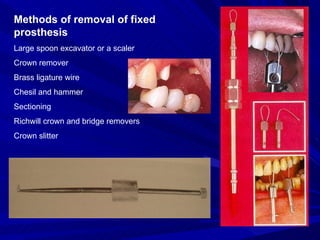
Methods of removal of fixed prosthesis Large spoon excavator or a scaler Crown remover Brass ligature wire Chesil and hammer Sectioning Richwill crown and bridge removers Crown slitter
Avoiding Failure: 1- Caution at the planning stage. 2-Confirmation of diagnosis and treatment plan for the inexperienced operator. 3- Expertise of the technician. 4- Treatment of preoperative problems. 5- Search for the primary cause of failure rather than the apparent. When the prognosis is questionable , the methods used to facilitate re-treatment are: 1- Use of temporary cement . 2- Design of prosthesis for possible future addition. 3-The placement of a rest seat for possible future use. 4- Specified undercut or guide plane of a crown , even when a denture is not planned. 5- Planning and noting solder joint placement. 4- recording of shades. 5- recording of cements used. 6- retention of working casts and provisional restorations.
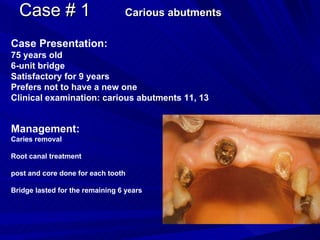
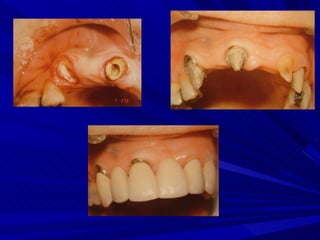
Case # 1  Carious abutments Case Presentation: 75 years old 6-unit bridge Satisfactory for 9 years Prefers not to have a new one Clinical examination: carious abutments 11, 13 Management: Caries removal Root canal treatment post and core done for each tooth Bridge lasted for the remaining 6 years
 
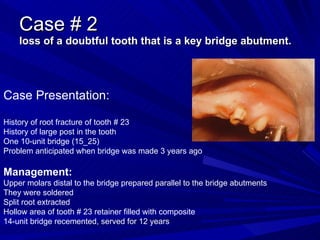
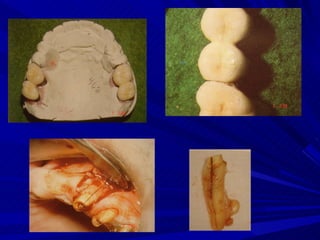
Case # 2 loss of a doubtful tooth that is a key bridge abutment. Case Presentation: History of root fracture of tooth # 23 History of large post in the tooth One 10-unit bridge (15_25) Problem anticipated when bridge was made 3 years ago Management: Upper molars distal to the bridge prepared parallel to the bridge abutments They were soldered Split root extracted Hollow area of tooth # 23 retainer filled with composite 14-unit bridge recemented, served for 12 years
 
 
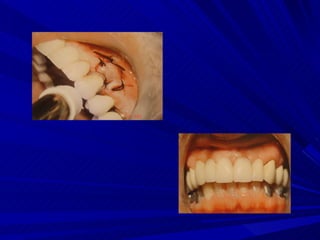
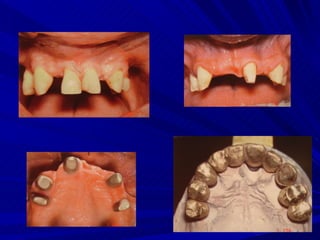
Case # 3 Periodontal Breakdown: Case Presentation: Advanced periodontitis Complicated by tooth loss and mobility Had a partial denture (not coping well with it) Wishes to consider a fixed restoration option For health reasons implants were not a practical option Management: Teeth prepared for full crowns Telescopic crowns with parallel path of insertion cemented permanently One piece fixed bridge fabricated over the crowns
 
References: 1- Rosestiel et al “Contemporary of Fixed Prosthodontics” 2- Bain C. “Treatment Planning in General Dental Practice” “A problem- based approach” 2003 3- Wise M. “Failure in the Restored Dentition: Management and Treatment” 1996 4- Curson C., Kantorowics G. “Inlays Crowns and Bridges” 4 th  edition
Thank You Done By: Dania Al-Harakan Reem Naaman Reham Al-Haratani Sara Taher Yasmeen Meer

Bridge Failure

  • 1.
    Umm Al-Qura University Faculty of Dentistry
  • 2.
  • 3.
    Postoperative appointment: Monitorpatients dental health Stimulate meticulous plaque control habits Identify incipient disease Introduce corrective treatment needed before irreversible damage Periodic recall Longevity is affected by: Good plaque removal Patient motivation Resistance to disease Restoration design and fabrication
  • 4.
    Manifestations of failure:Pain Inability to function Dissatisfaction with esthetics Broken teeth and or restorations Inflammatory swelling Bad taste Bad breath Bleeding gums Anxiety Referral
  • 5.
    Causes of Fixedprosthesis failure: 1- improper case selection . 2- Faulty diagnosis and treatment plan. 3-Inaccurate clinical or laboratory procedures . 4- poor patient care and maintenance following insertion.
  • 6.
    Classification of fixedprosthesis failure Biologic Mechanical Esthetic 1- Discomfort. 2-Caries. 3- Pulp injury. 4-Periodontal breakdown. 5- Occlusal problems. 6-Tooth perforation. 7-Tooth fracture. 1-Looseness or dislodgement. 2-Prosthesis fracture. 3- Occlusal wear or perforation. 1- at time of cementation 2- delayed esthetic failures
  • 7.
    Biologic Failures: Discomfort1- Pressure on soft tissues. 2-Traumatic occlusion. 3-Torque. 4- Cervical hypersensitivity. Caries Methods of detection. Causes. Management. Pulp injury 1- Over heating. 2-Over reduction. 3- Minute pulp exposure. 4-Inadequate protection. 5-Recurrent caries. 6- Low grade pulp infection activated by TFO. Periodontal Breakdown 1- Inadequate abutment teeth. 2-Periodontally affected abutment teeth. 3- Poor oral hygiene. 4- Improperly constructed prosthesis. Occlusal Problems Tooth Perforation Abutment Fracture 1- Coronal 2- Root
  • 8.
  • 9.
    Biologic Failures: Discomfort1- Pressure on soft tissues. 2-Traumatic occlusion. 3-Torque. 4- Cervical hypersensitivity. Caries Methods of detection. Causes. Management. Pulp injury 1- Over heating. 2-Over reduction. 3- Minute pulp exposure. 4-Inadequate protection. 5-Recurrent caries. 6- Low grade pulp infection activated by TFO. Periodontal Breakdown 1- Inadequate abutment teeth. 2-Periodontally affected abutment teeth. 3- Poor oral hygiene. 4- Improperly constructed prosthesis. Occlusal Problems Tooth Perforation Abutment Fracture 1- Coronal 2- Root
  • 10.
  • 11.
    Biologic Failures: Discomfort1- Pressure on soft tissues. 2-Traumatic occlusion. 3-Torque. 4- Cervical hypersensitivity. Caries Methods of detection. Causes. Management. Pulp injury 1- Over heating. 2-Over reduction. 3- Minute pulp exposure. 4-Inadequate protection. 5-Recurrent caries. 6- Low grade pulp infection activated by TFO. Periodontal Breakdown 1- Inadequate abutment teeth. 2-Periodontally affected abutment teeth. 3- Poor oral hygiene. 4- Improperly constructed prosthesis. Occlusal Problems Tooth Perforation Abutment Fracture 1- Coronal 2- Root
  • 12.
  • 13.
    Biologic Failures: Discomfort1- Pressure on soft tissues. 2-Traumatic occlusion. 3-Torque. 4- Cervical hypersensitivity. Caries Methods of detection. Causes. Management. Pulp injury 1- Over heating. 2-Over reduction. 3- Minute pulp exposure. 4-Inadequate protection. 5-Recurrent caries. 6- Low grade pulp infection activated by TFO. Periodontal Breakdown 1- Inadequate abutment teeth. 2-Periodontally affected abutment teeth. 3- Poor oral hygiene. 4- Improperly constructed prosthesis. Occlusal Problems Tooth Perforation Abutment Fracture 1- Coronal 2- Root
  • 14.
    Mechanical Failures. 3- Occlusal wear or perforation. 1- Looseness or dislodgement. a- Lack of retention… Faulty preparation. Improper design Improper construction b- Recurrent caries. c- Mobility. d- Torque. e- Faulty Cementation. 2- Prosthesis Fracture. a- Joint fractures. b- Facing fracture. c- All ceramic crown fracture. Faulty preparation Faulty construction Faulty cementation d- Post fracture.
  • 15.
  • 16.
    Esthetic Failure: A)at time of cementation B) delayed esthetic failures 1- actual failure : Color mismatch Poor tooth contour, marginal roughness & extension Metal display in partial coverage Improper pontic placement Porcelain fracture during cementation 2- color blindness 3- unrealistic complains by the patient: Inadequate communication Unrealistic expectations of the patient dysmorphophobia 1- gingival recession 2- subpontic tissue shrinkage 3- periodontal surgery 4- porosity 5- drifting of anterior teeth 6- wear
  • 17.
  • 18.
  • 19.
    Methods of removalof fixed prosthesis Large spoon excavator or a scaler Crown remover Brass ligature wire Chesil and hammer Sectioning Richwill crown and bridge removers Crown slitter
  • 20.
    Avoiding Failure: 1-Caution at the planning stage. 2-Confirmation of diagnosis and treatment plan for the inexperienced operator. 3- Expertise of the technician. 4- Treatment of preoperative problems. 5- Search for the primary cause of failure rather than the apparent. When the prognosis is questionable , the methods used to facilitate re-treatment are: 1- Use of temporary cement . 2- Design of prosthesis for possible future addition. 3-The placement of a rest seat for possible future use. 4- Specified undercut or guide plane of a crown , even when a denture is not planned. 5- Planning and noting solder joint placement. 4- recording of shades. 5- recording of cements used. 6- retention of working casts and provisional restorations.
  • 21.
    Case # 1 Carious abutments Case Presentation: 75 years old 6-unit bridge Satisfactory for 9 years Prefers not to have a new one Clinical examination: carious abutments 11, 13 Management: Caries removal Root canal treatment post and core done for each tooth Bridge lasted for the remaining 6 years
  • 22.
  • 23.
    Case # 2loss of a doubtful tooth that is a key bridge abutment. Case Presentation: History of root fracture of tooth # 23 History of large post in the tooth One 10-unit bridge (15_25) Problem anticipated when bridge was made 3 years ago Management: Upper molars distal to the bridge prepared parallel to the bridge abutments They were soldered Split root extracted Hollow area of tooth # 23 retainer filled with composite 14-unit bridge recemented, served for 12 years
  • 24.
  • 25.
  • 26.
    Case # 3Periodontal Breakdown: Case Presentation: Advanced periodontitis Complicated by tooth loss and mobility Had a partial denture (not coping well with it) Wishes to consider a fixed restoration option For health reasons implants were not a practical option Management: Teeth prepared for full crowns Telescopic crowns with parallel path of insertion cemented permanently One piece fixed bridge fabricated over the crowns
  • 27.
  • 28.
    References: 1- Rosestielet al “Contemporary of Fixed Prosthodontics” 2- Bain C. “Treatment Planning in General Dental Practice” “A problem- based approach” 2003 3- Wise M. “Failure in the Restored Dentition: Management and Treatment” 1996 4- Curson C., Kantorowics G. “Inlays Crowns and Bridges” 4 th edition
  • 29.
    Thank You DoneBy: Dania Al-Harakan Reem Naaman Reham Al-Haratani Sara Taher Yasmeen Meer