Methods of Breeding for disease
Resistance
Vishnupriya T.A.
2015-11-117
• Commonly followed breeding methods are
Selection
Introduction
Mutation
Hybridization
Soma clonal variation
Genetic engineering
Selection
• Selection resistant plants from commercial
variety –cheapest and quickest method
• This method has been very useful at past
,present-limited use
• Eg:- Kufri red potato is a disease resistant
selection from “Darjeeling red round
• Eg:-Pusa swani bhindi –yellow mosaic
resistant selection from collections in bihar
• Cotton variety MCU 1 –selection from Co -4 –
resistant to Black arm disease
• Other examples
• Resistance to curly top in sugar beet
• Leaf spot and powdery mildew in alfalfa
Introduction
• Resistant varieties may be introduced for
cultivation into a new areas .
• simple and quick means of obtaining
resistance
• Disadvantages
• Sometimes introduced var may not perform well.
• May become susceptible to concerned disease in a
new envt.
• They may be susceptible to other races of the
concerned diseases in the new area
• Eg:- kenya wheat introduced into India were
rust resistant , but susceptible to loose smut
• Successful examples of introduction are
1. Ridley wheat introduced from Australia is rust resistant
2. Early variety of groundnut introduced from USA –resistant
to tikka disease
Mutations
• Resistance to some disease may be obtained through mutations
arising spontaneously or induced .
• Spontaneous –at a low rate in nature
• Induced –artificial , through chemical and physical agents
• Mutagens- agents used
physical –ionising -----alpha, beta ,fast neutrons , thermal
neutrons, x rays, gamma rays
_ non ionising -----ultra violet radiations
chemical –alkaylating agents –EMS, MMS, sulphur mustard
acridine dyes –ethium bromide Acridine yellow
base analogues- 5- bromouracil
• Resistance to victoria blight
(Helminthosporium victoriae ) in oats was
induced by irradiation with x-rays
• Other examples are
• Resistance to stripe rust and bunt in wheat.
• Crown rust in oats
• Mildew in barley
• Rust in linseed
• Leaf spot and stem rot in peanut
• Rust in soya bean
• Bacterial leaf blight and bunt in rice
• Powdery mildew in mungbean
Hybridization
• Most common method of breeding for disease
resistance
• 2 objectives for hybridization –
• Transfer of disease resistance from a agronomically
undesirable variety to a susceptible but other wise
desirable(backcross)
• Combining disease resistance and other desirable characters
of one var with the superior characteristics of another
variety(pedigree)
• Back cross method
Useful in transferring genes for resistance
from a var that is undesirable in agronomic
characteristics to a susceptible var which is
agronomicaly desirable and adapted
Generaly 5-6 backcross are made .
At the end of the cross ,progeny are selfed and
resistant plants are selected
The new variety is similar to the recurrent
parent except for disease resistance .
Pedigree method
• This method is suited for breeding for
horizontal or polygenic resistance
• Majority of disease resistant commercial
varieties have been developed through this
method
• Eg:- kalyan sona, Sonalika ,malviya 234,
cotton variety like laxmi (resistant to red leaf
blight)
Soma clonal variation
• Somaclonal variation is the variation seen in plants that have been
produced by plant tissue culture
• Chromosomal rearrangements are an important source of this
variation.
• This is obtained in two ways
• 1. plants regenerated from cultured cells are subjected to
disease test and resistant plants are isolated
• 2. cultured cells are selected for resistance to the toxin or
culture filtrate produced by the pathogens
• After that plants are regenerated from the selected cells
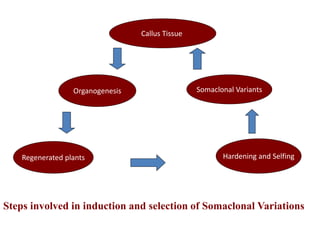
Callus Tissue
Organogenesis
Regenerated plants Hardening and Selfing
Somaclonal Variants
Steps involved in induction and selection of Somaclonal Variations
Advantages
• Somaclonal variation leads to the creation of
additional genetic variability.
• Characteristics for which somaclonal mutants can
be enriched during in vitro culture includes
• resistance to disease pathotoxins
• herbicides
• high salt concentration
• mineral toxicity and tolerance to environmental
or chemical stress
• increased production of secondary metabolites.

Breeding for disease resistance.pptx

  • 1.
    Methods of Breedingfor disease Resistance Vishnupriya T.A. 2015-11-117
  • 2.
    • Commonly followedbreeding methods are Selection Introduction Mutation Hybridization Soma clonal variation Genetic engineering
  • 3.
    Selection • Selection resistantplants from commercial variety –cheapest and quickest method • This method has been very useful at past ,present-limited use • Eg:- Kufri red potato is a disease resistant selection from “Darjeeling red round • Eg:-Pusa swani bhindi –yellow mosaic resistant selection from collections in bihar
  • 4.
    • Cotton varietyMCU 1 –selection from Co -4 – resistant to Black arm disease • Other examples • Resistance to curly top in sugar beet • Leaf spot and powdery mildew in alfalfa
  • 5.
    Introduction • Resistant varietiesmay be introduced for cultivation into a new areas . • simple and quick means of obtaining resistance • Disadvantages • Sometimes introduced var may not perform well. • May become susceptible to concerned disease in a new envt. • They may be susceptible to other races of the concerned diseases in the new area
  • 6.
    • Eg:- kenyawheat introduced into India were rust resistant , but susceptible to loose smut • Successful examples of introduction are 1. Ridley wheat introduced from Australia is rust resistant 2. Early variety of groundnut introduced from USA –resistant to tikka disease
  • 7.
    Mutations • Resistance tosome disease may be obtained through mutations arising spontaneously or induced . • Spontaneous –at a low rate in nature • Induced –artificial , through chemical and physical agents • Mutagens- agents used physical –ionising -----alpha, beta ,fast neutrons , thermal neutrons, x rays, gamma rays _ non ionising -----ultra violet radiations chemical –alkaylating agents –EMS, MMS, sulphur mustard acridine dyes –ethium bromide Acridine yellow base analogues- 5- bromouracil
  • 8.
    • Resistance tovictoria blight (Helminthosporium victoriae ) in oats was induced by irradiation with x-rays • Other examples are • Resistance to stripe rust and bunt in wheat. • Crown rust in oats • Mildew in barley • Rust in linseed
  • 9.
    • Leaf spotand stem rot in peanut • Rust in soya bean • Bacterial leaf blight and bunt in rice • Powdery mildew in mungbean
  • 10.
    Hybridization • Most commonmethod of breeding for disease resistance • 2 objectives for hybridization – • Transfer of disease resistance from a agronomically undesirable variety to a susceptible but other wise desirable(backcross) • Combining disease resistance and other desirable characters of one var with the superior characteristics of another variety(pedigree)
  • 11.
    • Back crossmethod Useful in transferring genes for resistance from a var that is undesirable in agronomic characteristics to a susceptible var which is agronomicaly desirable and adapted Generaly 5-6 backcross are made . At the end of the cross ,progeny are selfed and resistant plants are selected The new variety is similar to the recurrent parent except for disease resistance .
  • 12.
    Pedigree method • Thismethod is suited for breeding for horizontal or polygenic resistance • Majority of disease resistant commercial varieties have been developed through this method • Eg:- kalyan sona, Sonalika ,malviya 234, cotton variety like laxmi (resistant to red leaf blight)
  • 13.
    Soma clonal variation •Somaclonal variation is the variation seen in plants that have been produced by plant tissue culture • Chromosomal rearrangements are an important source of this variation. • This is obtained in two ways • 1. plants regenerated from cultured cells are subjected to disease test and resistant plants are isolated • 2. cultured cells are selected for resistance to the toxin or culture filtrate produced by the pathogens • After that plants are regenerated from the selected cells
  • 14.
    Callus Tissue Organogenesis Regenerated plantsHardening and Selfing Somaclonal Variants Steps involved in induction and selection of Somaclonal Variations
  • 15.
    Advantages • Somaclonal variationleads to the creation of additional genetic variability. • Characteristics for which somaclonal mutants can be enriched during in vitro culture includes • resistance to disease pathotoxins • herbicides • high salt concentration • mineral toxicity and tolerance to environmental or chemical stress • increased production of secondary metabolites.