DR CH HAREEN
BENEFITS OF BREASTFEEDING 
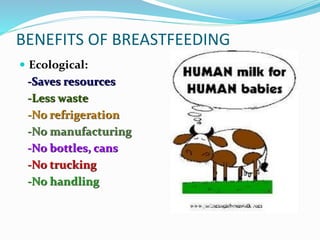
 Ecological: 
-Saves resources 
-Less waste 
-No refrigeration 
-No manufacturing 
-No bottles, cans 
-No trucking 
-No handling
BENEFITS OF BREASTFEEDING 
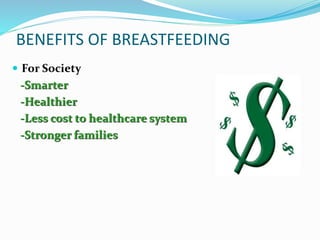
 For Society 
-Smarter 
-Healthier 
-Less cost to healthcare system 
-Stronger families
BENEFITS OF BREASTFEEDING 
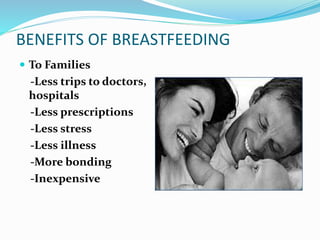
 To Families 
-Less trips to doctors, 
hospitals 
-Less prescriptions 
-Less stress 
-Less illness 
-More bonding 
-Inexpensive
BENEFITS OF BREASTFEEDING 
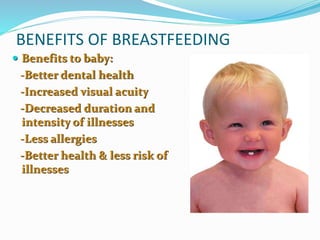
 Benefits to baby: 
-Better dental health 
-Increased visual acuity 
-Decreased duration and 
intensity of illnesses 
-Less allergies 
-Better health & less risk of 
illnesses
BENEFITS OF BREASTFEEDING 
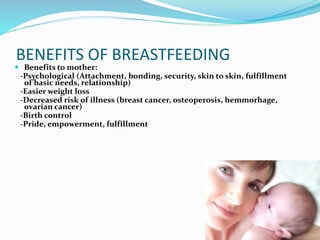
 Benefits to mother: 
-Psychological (Attachment, bonding, security, skin to skin, fulfillment 
of basic needs, relationship) 
-Easier weight loss 
-Decreased risk of illness (breast cancer, osteoperosis, hemmorhage, 
ovarian cancer) 
-Birth control 
-Pride, empowerment, fulfillment
Mother’s milk vs. formula milk 
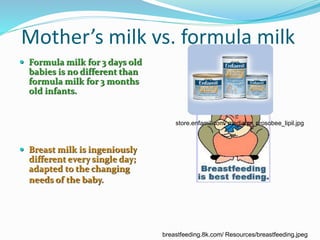
 Formula milk for 3 days old 
babies is no different than 
formula milk for 3 months 
old infants. 
 Breast milk is ingeniously 
different every single day; 
adapted to the changing 
needs of the baby. 
store.enfamil.com/ media/pr_prosobee_lipil.jpg 
breastfeeding.8k.com/ Resources/breastfeeding.jpeg
Mother’s milk vs. formula milk 
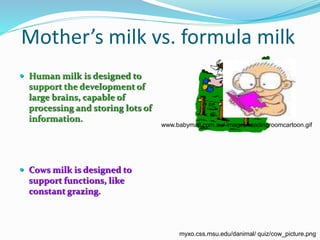
 Human milk is designed to 
support the development of 
large brains, capable of 
processing and storing lots of 
information. 
 Cows milk is designed to 
support functions, like 
constant grazing. 
www.babymall.com.au/ images/readingroomcartoon.gif 
myxo.css.msu.edu/danimal/ quiz/cow_picture.png
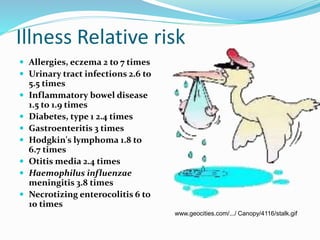
Illness Relative risk 
 Allergies, eczema 2 to 7 times 
 Urinary tract infections 2.6 to 
5.5 times 
 Inflammatory bowel disease 
1.5 to 1.9 times 
 Diabetes, type 1 2.4 times 
 Gastroenteritis 3 times 
 Hodgkin's lymphoma 1.8 to 
6.7 times 
 Otitis media 2.4 times 
 Haemophilus influenzae 
meningitis 3.8 times 
 Necrotizing enterocolitis 6 to 
10 times 
www.geocities.com/.../ Canopy/4116/stalk.gif
Illness Relative risk 
 Pneumonia/lower 
respiratory tract 
infection 1.7 to 5 times 
 Respiratory syncytial 
virus infection 3.9 times 
 Sepsis 2.1 times 
 Sudden infant death 
syndrome 2.0 times 

 Industrialized-world 
hospitalization 3 times 
www.mamashealth.com/ images/lungs1.gif
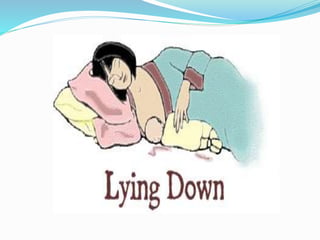
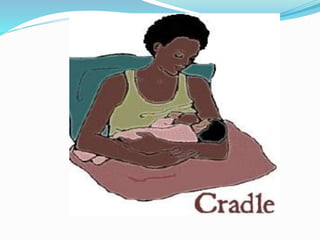
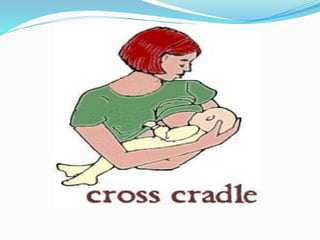
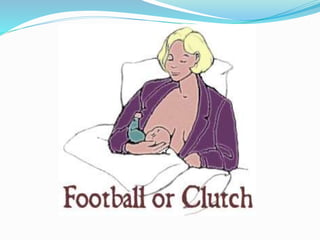
Positions for Breastfeeding
Cracked or Sore Nipples 
 check for correct latch 
 frequent feedings 
 rotation during breastfeeding 
 air drying 
 warm soaks
Flat or Retracted Nipples 
 use of milk cups 
 electric pumps 
 ice wrapped
Infant’s Position 
 Encourage rooting reflex 
 areola into mouth 
 avoid having infant press nose 
 removal of infant from the breast 
 last first, first last 
 burp
Care of the Breast and Nipples 
 air dry 
 pads 
 support bra 
 cramp
Excess Milk Supply 
 Much less common problem than low milk supply 
 Minimal medical literature 
 Maternal symptoms; continual engorgement, leaking 
and increased mastitis risk 
 Infant: regurgitation and reflux symptoms. 
Development of poor sucking technique
Management of Excess 
Milk Supply 
Attempt to offer just 1 breast at each feeding to decrease 
stimulation and produce milk stasis in the other breast 
to decrease production 
Reference 43
Assessment of Milk 
Sufficiency 
 “Not enough milk” stops breastfeeding 
 Visual cues for feeding interaction 
 Baby eagerly seeks breast, latches on, feeds 
 Baby body tone relaxes 
 Mother’s body tone relaxes 
 Auditory confirmation of swallowing 
 Weight gain around arrival of mother’s milk 
 0–90 days; median gain 26–31 g 
 90–180 days; median gain 17–18 g 
Reference 15, 27
Ten steps to successful 
breastfeeding 
Step 1. Have a written 
breastfeeding policy that is 
routinely communicated 
to all health care staff. 
A JOINT WHO/UNICEF STATEMENT (1989) 
Slide 4.1.24
Ten steps to successful 
breastfeeding 
Step 2. Train all health-care staff 
in skills necessary to 
implement this policy. 
A JOINT WHO/UNICEF STATEMENT (1989) 
Slide 4.2.1
Ten steps to successful 
breastfeeding 
Step 3. Inform all pregnant 
women about the benefits 
of breastfeeding. 
A JOINT WHO/UNICEF STATEMENT (1989) 
Slide 4.3.1
Ten steps to successful 
breastfeeding 
Step 4. Help mothers initiate 
breastfeeding within a 
half-hour of birth. 
A JOINT WHO/UNICEF STATEMENT (1989) 
Slide 4.4.1
Ten steps to successful 
breastfeeding 
Step 5. Show mothers how to 
breastfeed and how to 
maintain lactation, even if 
they should be separated 
from their infants. 
A JOINT WHO/UNICEF STATEMENT (1989) 
Slide 4.5.1
Ten steps to successful 
breastfeeding 
Step 6. Give newborn infants no 
food or drink other than 
breast milk unless 
medically indicated. 
A JOINT WHO/UNICEF STATEMENT (1989) 
Slide 4.6.1
Ten steps to successful 
breastfeeding 
Step 7. Practice rooming-in — 
allow mothers and infants 
to remain together — 
24 hours a day. 
A JOINT WHO/UNICEF STATEMENT (1989) 
Slide 4.7.1
Ten steps to successful 
breastfeeding 
Step 8. Encourage breastfeeding 
on demand. 
A JOINT WHO/UNICEF STATEMENT (1989) 
Slide 4.8.1
Ten steps to successful 
breastfeeding 
Step 9. Give no artificial teats or 
pacifiers (also called 
dummies and soothers) 
to breastfeeding infants. 
A JOINT WHO/UNICEF STATEMENT (1989) 
Slide 4.9.1
Ten steps to successful 
breastfeeding 
Step 10. Foster the establishment 
of breastfeeding support 
groups and refer mothers 
to them on discharge 
from the hospital or 
clinic. 
A JOINT WHO/UNICEF STATEMENT (1989) 
Slide 4.10.1
Breast feeding

Breast feeding

  • 1.
  • 2.
    BENEFITS OF BREASTFEEDING  Ecological: -Saves resources -Less waste -No refrigeration -No manufacturing -No bottles, cans -No trucking -No handling
  • 3.
    BENEFITS OF BREASTFEEDING  For Society -Smarter -Healthier -Less cost to healthcare system -Stronger families
  • 4.
    BENEFITS OF BREASTFEEDING  To Families -Less trips to doctors, hospitals -Less prescriptions -Less stress -Less illness -More bonding -Inexpensive
  • 5.
    BENEFITS OF BREASTFEEDING  Benefits to baby: -Better dental health -Increased visual acuity -Decreased duration and intensity of illnesses -Less allergies -Better health & less risk of illnesses
  • 6.
    BENEFITS OF BREASTFEEDING  Benefits to mother: -Psychological (Attachment, bonding, security, skin to skin, fulfillment of basic needs, relationship) -Easier weight loss -Decreased risk of illness (breast cancer, osteoperosis, hemmorhage, ovarian cancer) -Birth control -Pride, empowerment, fulfillment
  • 7.
    Mother’s milk vs.formula milk  Formula milk for 3 days old babies is no different than formula milk for 3 months old infants.  Breast milk is ingeniously different every single day; adapted to the changing needs of the baby. store.enfamil.com/ media/pr_prosobee_lipil.jpg breastfeeding.8k.com/ Resources/breastfeeding.jpeg
  • 8.
    Mother’s milk vs.formula milk  Human milk is designed to support the development of large brains, capable of processing and storing lots of information.  Cows milk is designed to support functions, like constant grazing. www.babymall.com.au/ images/readingroomcartoon.gif myxo.css.msu.edu/danimal/ quiz/cow_picture.png
  • 9.
    Illness Relative risk  Allergies, eczema 2 to 7 times  Urinary tract infections 2.6 to 5.5 times  Inflammatory bowel disease 1.5 to 1.9 times  Diabetes, type 1 2.4 times  Gastroenteritis 3 times  Hodgkin's lymphoma 1.8 to 6.7 times  Otitis media 2.4 times  Haemophilus influenzae meningitis 3.8 times  Necrotizing enterocolitis 6 to 10 times www.geocities.com/.../ Canopy/4116/stalk.gif
  • 10.
    Illness Relative risk  Pneumonia/lower respiratory tract infection 1.7 to 5 times  Respiratory syncytial virus infection 3.9 times  Sepsis 2.1 times  Sudden infant death syndrome 2.0 times  Industrialized-world hospitalization 3 times www.mamashealth.com/ images/lungs1.gif
  • 11.
  • 17.
    Cracked or SoreNipples  check for correct latch  frequent feedings  rotation during breastfeeding  air drying  warm soaks
  • 18.
    Flat or RetractedNipples  use of milk cups  electric pumps  ice wrapped
  • 19.
    Infant’s Position Encourage rooting reflex  areola into mouth  avoid having infant press nose  removal of infant from the breast  last first, first last  burp
  • 20.
    Care of theBreast and Nipples  air dry  pads  support bra  cramp
  • 21.
    Excess Milk Supply  Much less common problem than low milk supply  Minimal medical literature  Maternal symptoms; continual engorgement, leaking and increased mastitis risk  Infant: regurgitation and reflux symptoms. Development of poor sucking technique
  • 22.
    Management of Excess Milk Supply Attempt to offer just 1 breast at each feeding to decrease stimulation and produce milk stasis in the other breast to decrease production Reference 43
  • 23.
    Assessment of Milk Sufficiency  “Not enough milk” stops breastfeeding  Visual cues for feeding interaction  Baby eagerly seeks breast, latches on, feeds  Baby body tone relaxes  Mother’s body tone relaxes  Auditory confirmation of swallowing  Weight gain around arrival of mother’s milk  0–90 days; median gain 26–31 g  90–180 days; median gain 17–18 g Reference 15, 27
  • 24.
    Ten steps tosuccessful breastfeeding Step 1. Have a written breastfeeding policy that is routinely communicated to all health care staff. A JOINT WHO/UNICEF STATEMENT (1989) Slide 4.1.24
  • 25.
    Ten steps tosuccessful breastfeeding Step 2. Train all health-care staff in skills necessary to implement this policy. A JOINT WHO/UNICEF STATEMENT (1989) Slide 4.2.1
  • 26.
    Ten steps tosuccessful breastfeeding Step 3. Inform all pregnant women about the benefits of breastfeeding. A JOINT WHO/UNICEF STATEMENT (1989) Slide 4.3.1
  • 27.
    Ten steps tosuccessful breastfeeding Step 4. Help mothers initiate breastfeeding within a half-hour of birth. A JOINT WHO/UNICEF STATEMENT (1989) Slide 4.4.1
  • 28.
    Ten steps tosuccessful breastfeeding Step 5. Show mothers how to breastfeed and how to maintain lactation, even if they should be separated from their infants. A JOINT WHO/UNICEF STATEMENT (1989) Slide 4.5.1
  • 29.
    Ten steps tosuccessful breastfeeding Step 6. Give newborn infants no food or drink other than breast milk unless medically indicated. A JOINT WHO/UNICEF STATEMENT (1989) Slide 4.6.1
  • 30.
    Ten steps tosuccessful breastfeeding Step 7. Practice rooming-in — allow mothers and infants to remain together — 24 hours a day. A JOINT WHO/UNICEF STATEMENT (1989) Slide 4.7.1
  • 31.
    Ten steps tosuccessful breastfeeding Step 8. Encourage breastfeeding on demand. A JOINT WHO/UNICEF STATEMENT (1989) Slide 4.8.1
  • 32.
    Ten steps tosuccessful breastfeeding Step 9. Give no artificial teats or pacifiers (also called dummies and soothers) to breastfeeding infants. A JOINT WHO/UNICEF STATEMENT (1989) Slide 4.9.1
  • 33.
    Ten steps tosuccessful breastfeeding Step 10. Foster the establishment of breastfeeding support groups and refer mothers to them on discharge from the hospital or clinic. A JOINT WHO/UNICEF STATEMENT (1989) Slide 4.10.1