BREAST FEEDING
Presented by: Sana Tulasi
MSc 1st year
Child Health Nursing
INTRODUCTION:
The basic food for infant is milk and breast feeding is the most
natural method. Breast feeding is must to meet the nutritional needs,
emotional needs and psychological needs of the infant and child.
Breast milk is natural readymade food, which is the most
suitable for the neonates because of its nutritional value, protection from
the infection against diseases and the financial and social implications it
has for a poor.
Virtually all mothers can breastfeed, provided they have
accurate information, and the support of their family , the health care
system and society a large.
DEFINITION:
According to WHO:
Breast feeding is the normal way of providing young
infants with the nutrients they need for healthy growth and
development.
Exclusive breast feeding is recommended up to 6 months
of age, with continued breast feeding along with appropriate
complementary foods up to two years of age or beyond.
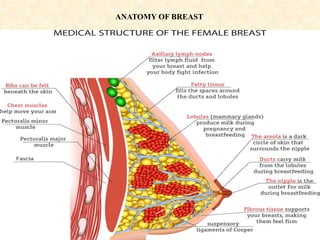
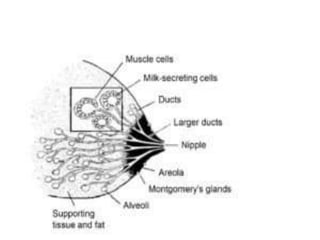
ANATOMY OF BREAST
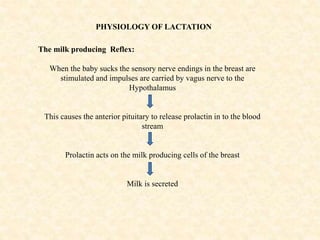
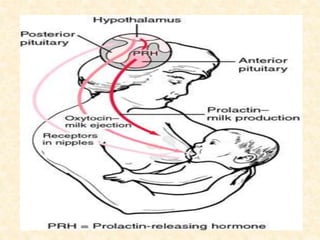
PHYSIOLOGY OF LACTATION
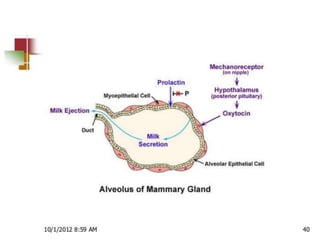
The milk producing Reflex:
When the baby sucks the sensory nerve endings in the breast are
stimulated and impulses are carried by vagus nerve to the
Hypothalamus
This causes the anterior pituitary to release prolactin in to the blood
stream
Prolactin acts on the milk producing cells of the breast
Milk is secreted
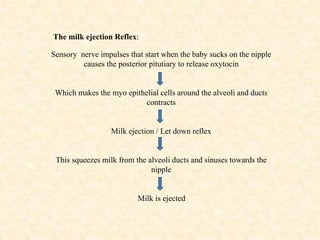
The milk ejection Reflex:
Sensory nerve impulses that start when the baby sucks on the nipple
causes the posterior pitutiary to release oxytocin
Which makes the myo epithelial cells around the alveoli and ducts
contracts
Milk ejection / Let down reflex
This squeezes milk from the alveoli ducts and sinuses towards the
nipple
Milk is ejected
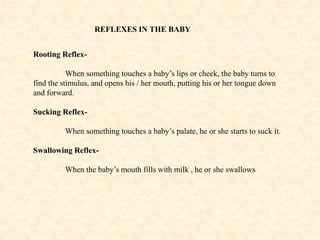
REFLEXES IN THE BABY
Rooting Reflex-
When something touches a baby’s lips or cheek, the baby turns to
find the stimulus, and opens his / her mouth, putting his or her tongue down
and forward.
Sucking Reflex-
When something touches a baby’s palate, he or she starts to suck it.
Swallowing Reflex-
When the baby’s mouth fills with milk , he or she swallows
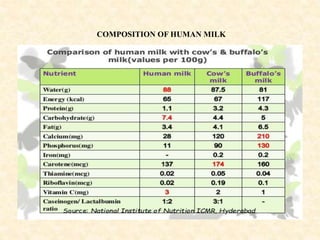
COMPOSITION OF HUMAN MILK
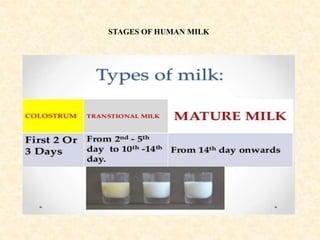
STAGES OF HUMAN MILK
ADVANTAGES OF BREAST FEEDING
• Breast milk is the natural food, readily available ,warm and free from contamination.
• Breast milk is an ideal food which is easily digestible.
• It boosts immunity, meets nutritional requirement, provides immunoglobulin’s, reduces
malnutrition and increases IQ of the baby.
• Breast milk is available 24 hours a day and requires no special preparation and without
any cost.
• Psychological benefit of mother – child bonding.
• Helps in involution of the uterus.
• It acts as a natural contraception to the mother.
• Lessens the incidence of Gastrointestinal infections, allergies, etc.
• Nursing mothers are less prone to get ovarian and breast cancer.
• Breast feeding satisfies the emotional needs which is essential for the growth of the
neonates.
• Breast feeding is most convenient for the mother and has a feeling of satisfaction and
sense of fulfillment.
• The baby also feels warm and secure.
CONTRAINDICATIONS
In Infant-
• Gross Prematurity
• Galactosemia (a rare genetic metabolic disorder)
• Cleft lip and palate
• Biological mother ( where child is passed on to the another couple)
In Mother-
• Cracked nipples
• Active Tuberculosis
• Malignancy (breast abscess)
• HIV, Hepatitis B and C
• Herpes lesions on breast
• Mother on certain medications – Anti-cancer therapy, radioactive
isotope,etc
• Post partum Psychosis and Epilepsy
• Tobacco, Alcohol and Drug Abuse
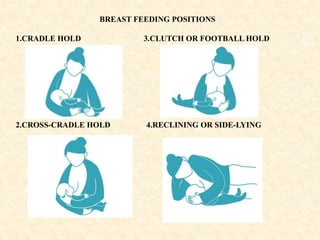
BREAST FEEDING POSITIONS
1.CRADLE HOLD 3.CLUTCH OR FOOTBALL HOLD
2.CROSS-CRADLE HOLD 4.RECLINING OR SIDE-LYING
BREAST FEEDING PATTERN
Depends mainly on:
Baby’s Needs
Baby’s Size
Baby Suckling strength
Mother’s milk supply
FIRST FEED:
Normal Delivery – ½ - 1 hour
Caesarean – 4 – 6 hrs
TIME SCHEDULE:
First 24 hrs, at an interval of 2-3 hrs
3 – 4 hrs pattern by the end of first week
DEMAND FEEDING:
The baby is put to breast as soon as the baby is hungry. There is no
restriction of the feeds and duration of sucking time.
DURATION OF FEED:
5 -10mins at each breast, there after time spent is gradually
increased.
Baby is fed from one breast completely so that baby gets both the FORE
MILK and HIND MILK.
AMOUNT OF FEED
First Day – 60ml/kg/day
Third Day- 100ml/kg/day
Tenth Day- 150ml/kg/day
FEEDING AT FREQUENT INTERVALS ABOUT 6 – 8 TIMES
ADAY
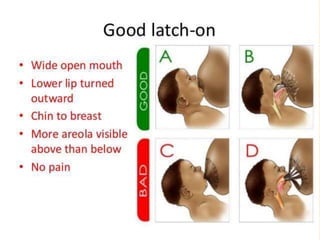
How a baby attaches and suckles at the breast:
• Good Attachment
• Poor Attachment
Breast feeding ppt
Breast feeding ppt

Breast feeding ppt

  • 1.
    BREAST FEEDING Presented by:Sana Tulasi MSc 1st year Child Health Nursing
  • 2.
    INTRODUCTION: The basic foodfor infant is milk and breast feeding is the most natural method. Breast feeding is must to meet the nutritional needs, emotional needs and psychological needs of the infant and child. Breast milk is natural readymade food, which is the most suitable for the neonates because of its nutritional value, protection from the infection against diseases and the financial and social implications it has for a poor. Virtually all mothers can breastfeed, provided they have accurate information, and the support of their family , the health care system and society a large.
  • 3.
    DEFINITION: According to WHO: Breastfeeding is the normal way of providing young infants with the nutrients they need for healthy growth and development. Exclusive breast feeding is recommended up to 6 months of age, with continued breast feeding along with appropriate complementary foods up to two years of age or beyond.
  • 4.
  • 7.
    PHYSIOLOGY OF LACTATION Themilk producing Reflex: When the baby sucks the sensory nerve endings in the breast are stimulated and impulses are carried by vagus nerve to the Hypothalamus This causes the anterior pituitary to release prolactin in to the blood stream Prolactin acts on the milk producing cells of the breast Milk is secreted
  • 8.
    The milk ejectionReflex: Sensory nerve impulses that start when the baby sucks on the nipple causes the posterior pitutiary to release oxytocin Which makes the myo epithelial cells around the alveoli and ducts contracts Milk ejection / Let down reflex This squeezes milk from the alveoli ducts and sinuses towards the nipple Milk is ejected
  • 10.
    REFLEXES IN THEBABY Rooting Reflex- When something touches a baby’s lips or cheek, the baby turns to find the stimulus, and opens his / her mouth, putting his or her tongue down and forward. Sucking Reflex- When something touches a baby’s palate, he or she starts to suck it. Swallowing Reflex- When the baby’s mouth fills with milk , he or she swallows
  • 11.
  • 12.
  • 13.
    ADVANTAGES OF BREASTFEEDING • Breast milk is the natural food, readily available ,warm and free from contamination. • Breast milk is an ideal food which is easily digestible. • It boosts immunity, meets nutritional requirement, provides immunoglobulin’s, reduces malnutrition and increases IQ of the baby. • Breast milk is available 24 hours a day and requires no special preparation and without any cost. • Psychological benefit of mother – child bonding. • Helps in involution of the uterus. • It acts as a natural contraception to the mother. • Lessens the incidence of Gastrointestinal infections, allergies, etc. • Nursing mothers are less prone to get ovarian and breast cancer. • Breast feeding satisfies the emotional needs which is essential for the growth of the neonates. • Breast feeding is most convenient for the mother and has a feeling of satisfaction and sense of fulfillment. • The baby also feels warm and secure.
  • 14.
    CONTRAINDICATIONS In Infant- • GrossPrematurity • Galactosemia (a rare genetic metabolic disorder) • Cleft lip and palate • Biological mother ( where child is passed on to the another couple) In Mother- • Cracked nipples • Active Tuberculosis • Malignancy (breast abscess) • HIV, Hepatitis B and C • Herpes lesions on breast • Mother on certain medications – Anti-cancer therapy, radioactive isotope,etc • Post partum Psychosis and Epilepsy • Tobacco, Alcohol and Drug Abuse
  • 15.
    BREAST FEEDING POSITIONS 1.CRADLEHOLD 3.CLUTCH OR FOOTBALL HOLD 2.CROSS-CRADLE HOLD 4.RECLINING OR SIDE-LYING
  • 16.
    BREAST FEEDING PATTERN Dependsmainly on: Baby’s Needs Baby’s Size Baby Suckling strength Mother’s milk supply FIRST FEED: Normal Delivery – ½ - 1 hour Caesarean – 4 – 6 hrs TIME SCHEDULE: First 24 hrs, at an interval of 2-3 hrs 3 – 4 hrs pattern by the end of first week DEMAND FEEDING: The baby is put to breast as soon as the baby is hungry. There is no restriction of the feeds and duration of sucking time. DURATION OF FEED: 5 -10mins at each breast, there after time spent is gradually increased. Baby is fed from one breast completely so that baby gets both the FORE MILK and HIND MILK.
  • 17.
    AMOUNT OF FEED FirstDay – 60ml/kg/day Third Day- 100ml/kg/day Tenth Day- 150ml/kg/day FEEDING AT FREQUENT INTERVALS ABOUT 6 – 8 TIMES ADAY How a baby attaches and suckles at the breast: • Good Attachment • Poor Attachment