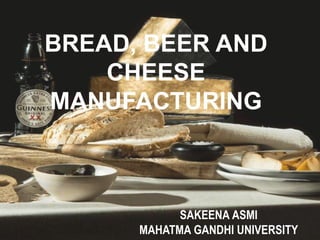
BREAD, BEER AND
CHEESE
MANUFACTURING
SAKEENA ASMI
MAHATMA GANDHI UNIVERSITY
FERMENTED FOODS
• Fermented foods are an extremely important part of the human diet
and worldwide and may contribute to as much as one-third of
human food intake.
• The scope of food fermentation range from producing alcoholic
beverages, fermented milk and vegetable products to genetically
engineered superbugs to carry out efficient fermentation producing
nutritious and safe products with appealing quality.
• The consumer demand healthy natural foods produced by
compatible methods and it is the area where food fermentation
technology has far great role to play in the future.
• The application of biological and biotechnology principles results
in production or conversion of food stuff into more palatable,
nutritious or stable food. 2
CONCEPT OF FERMENTED
FOODS• Fermented foods are those foods produced by the modification of a
raw material of either animal or vegetable origin by the activities of
microorganisms.
• Bacteria, yeast and moulds can be used to produce a diverse range
of products that differ in flavour, texture and stability from the
original raw material.
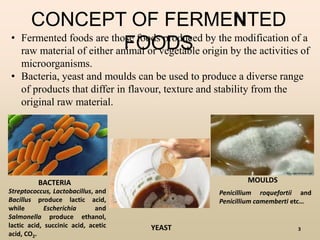
BACTERIA
YEAST
MOULDS
Streptococcus, Lactobacillus, and
Bacillus produce lactic acid,
while Escherichia and
Salmonella produce ethanol,
lactic acid, succinic acid, acetic
acid, CO2.
Penicillium roquefortii and
Penicillium camemberti etc…
3
• The production of many fermented foods involves organisms that
are biochemically fermentative.
• Lactic acid bacteria that ferment carbohydrates to produce lactic
acid are particularly important, but yeasts also play a major role in
some food fermentations, fermenting carbohydrates to produce
ethanol and other organic chemicals.
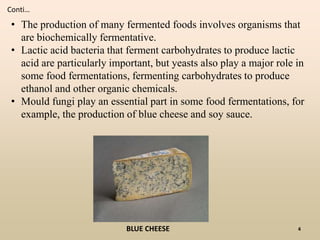
• Mould fungi play an essential part in some food fermentations, for
example, the production of blue cheese and soy sauce.
BLUE CHEESE
Conti…
4
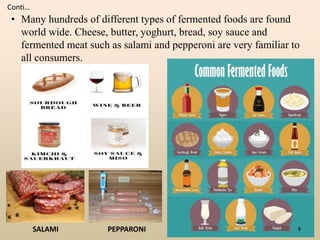
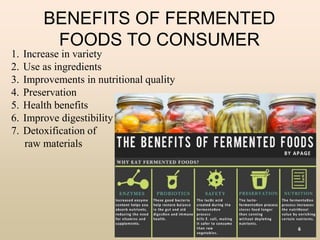
• Many hundreds of different types of fermented foods are found
world wide. Cheese, butter, yoghurt, bread, soy sauce and
fermented meat such as salami and pepperoni are very familiar to
all consumers.
Conti…
SALAMI PEPPARONI 5
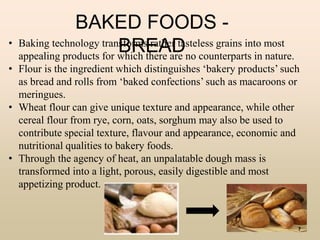
BENEFITS OF FERMENTED
FOODS TO CONSUMER
1. Increase in variety
2. Use as ingredients
3. Improvements in nutritional quality
4. Preservation
5. Health benefits
6. Improve digestibility
7. Detoxification of
raw materials
6
BAKED FOODS -
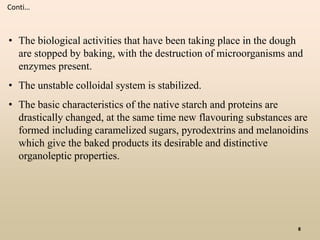
BREAD• Baking technology transforms rather tasteless grains into most
appealing products for which there are no counterparts in nature.
• Flour is the ingredient which distinguishes ‘bakery products’ such
as bread and rolls from ‘baked confections’ such as macaroons or
meringues.
• Wheat flour can give unique texture and appearance, while other
cereal flour from rye, corn, oats, sorghum may also be used to
contribute special texture, flavour and appearance, economic and
nutritional qualities to bakery foods.
• Through the agency of heat, an unpalatable dough mass is
transformed into a light, porous, easily digestible and most
appetizing product.
7
• The biological activities that have been taking place in the dough
are stopped by baking, with the destruction of microorganisms and
enzymes present.
• The unstable colloidal system is stabilized.
• The basic characteristics of the native starch and proteins are
drastically changed, at the same time new flavouring substances are
formed including caramelized sugars, pyrodextrins and melanoidins
which give the baked products its desirable and distinctive
organoleptic properties.
Conti…
8
9
• Bread is the product of baking a mixture of flour, water, salt, yeast
and other ingredients. The basic process involves mixing of
ingredients until the flour is converted into a stiff paste or dough,
followed by baking the dough into a loaf.
• The aim of bread making process is to produce dough that will rise
easily and have properties required to make good bread for the
consumer.
• To make good bread, dough made by any process must be
extensible enough for it to relax and to expand while it is rising. A
good dough is extensible if it will stretch out when pulled. It also
must be elastic, that is, have the strength to hold the gases produced
while rising, and stable enough to hold its shape and cell structure.
BREAD MANUFACTURING PROCES
10
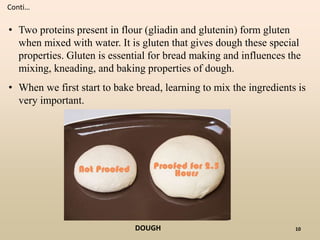
• Two proteins present in flour (gliadin and glutenin) form gluten
when mixed with water. It is gluten that gives dough these special
properties. Gluten is essential for bread making and influences the
mixing, kneading, and baking properties of dough.
• When we first start to bake bread, learning to mix the ingredients is
very important.
Conti…
DOUGH
11
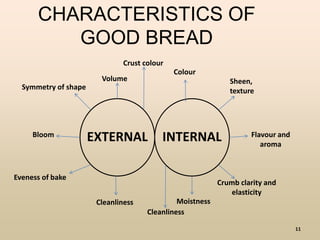
CHARACTERISTICS OF
GOOD BREAD
EXTERNAL INTERNAL
Volume
Symmetry of shape
Bloom
Eveness of bake
Cleanliness
Cleanliness
Moistness
Colour
Crust colour
Sheen,
texture
Flavour and
aroma
Crumb clarity and
elasticity
12
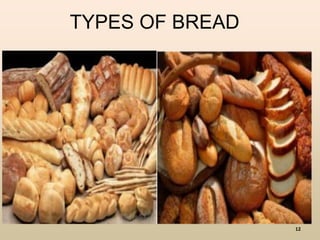
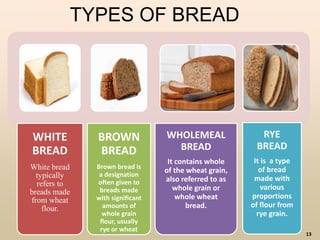
TYPES OF BREAD
13
WHITE
BREAD
White bread
typically
refers to
breads made
from wheat
flour.
BROWN
BREAD
Brown bread is
a designation
often given to
breads made
with significant
amounts of
whole grain
flour, usually
rye or wheat
WHOLEMEAL
BREAD
It contains whole
of the wheat grain,
also referred to as
whole grain or
whole wheat
bread.
RYE
BREAD
It is a type
of bread
made with
various
proportions
of flour from
rye grain.
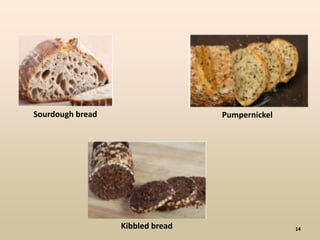
TYPES OF BREAD
14
Sourdough bread Pumpernickel
Kibbled bread
15
INGREDIENTS
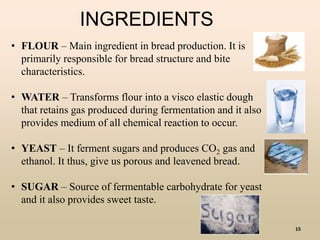
• FLOUR – Main ingredient in bread production. It is
primarily responsible for bread structure and bite
characteristics.
• WATER – Transforms flour into a visco elastic dough
that retains gas produced during fermentation and it also
provides medium of all chemical reaction to occur.
• YEAST – It ferment sugars and produces CO2 gas and
ethanol. It thus, give us porous and leavened bread.
• SUGAR – Source of fermentable carbohydrate for yeast
and it also provides sweet taste.
16
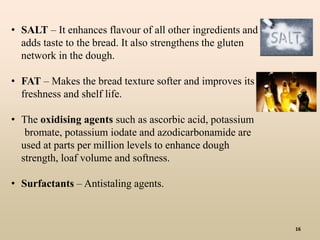
• SALT – It enhances flavour of all other ingredients and
adds taste to the bread. It also strengthens the gluten
network in the dough.
• FAT – Makes the bread texture softer and improves its
freshness and shelf life.
• The oxidising agents such as ascorbic acid, potassium
bromate, potassium iodate and azodicarbonamide are
used at parts per million levels to enhance dough
strength, loaf volume and softness.
• Surfactants – Antistaling agents.
17
STARTER CULTURE
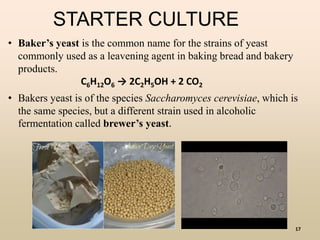
• Baker’s yeast is the common name for the strains of yeast
commonly used as a leavening agent in baking bread and bakery
products.
C6H12O6 → 2C2H5OH + 2 CO2
• Bakers yeast is of the species Saccharomyces cerevisiae, which is
the same species, but a different strain used in alcoholic
fermentation called brewer’s yeast.
18
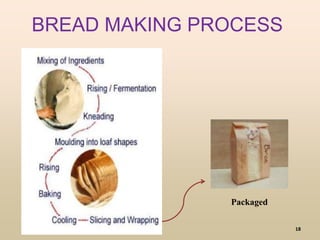
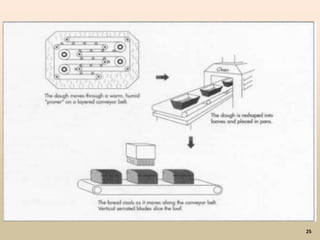
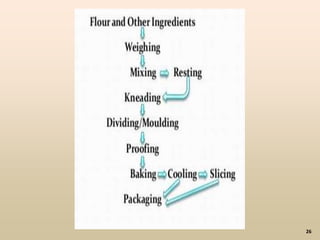
BREAD MAKING PROCESS
Packaged
19
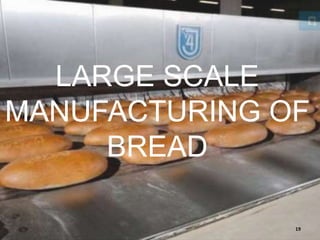
LARGE SCALE
MANUFACTURING OF
BREAD
20
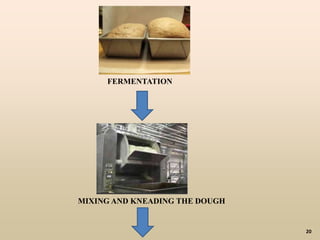
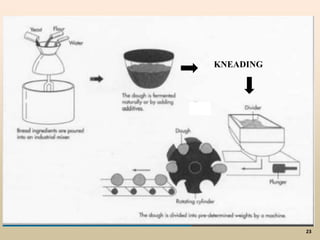
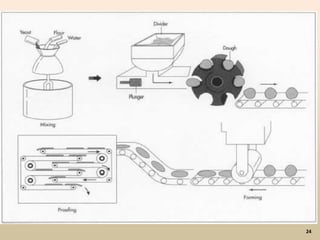
MIXING AND KNEADING THE DOUGH
FERMENTATION
21
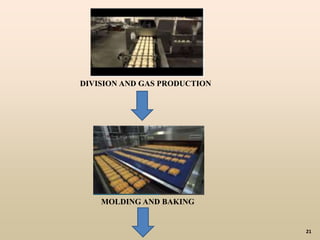
DIVISION AND GAS PRODUCTION
MOLDING AND BAKING
22
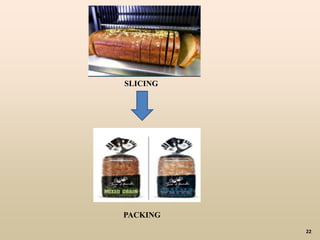
SLICING
PACKING
23
KNEADING
24
25
26
27
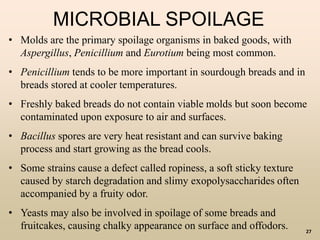
MICROBIAL SPOILAGE
• Molds are the primary spoilage organisms in baked goods, with
Aspergillus, Penicillium and Eurotium being most common.
• Penicillium tends to be more important in sourdough breads and in
breads stored at cooler temperatures.
• Freshly baked breads do not contain viable molds but soon become
contaminated upon exposure to air and surfaces.
• Bacillus spores are very heat resistant and can survive baking
process and start growing as the bread cools.
• Some strains cause a defect called ropiness, a soft sticky texture
caused by starch degradation and slimy exopolysaccharides often
accompanied by a fruity odor.
• Yeasts may also be involved in spoilage of some breads and
fruitcakes, causing chalky appearance on surface and offodors.
28
INDUSTRIES AND
COMPANIES
INVOLVED IN BREAD
MANUFACTURING
29
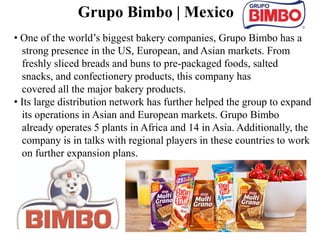
• One of the world’s biggest bakery companies, Grupo Bimbo has a
strong presence in the US, European, and Asian markets. From
freshly sliced breads and buns to pre-packaged foods, salted
snacks, and confectionery products, this company has
covered all the major bakery products.
• Its large distribution network has further helped the group to expand
its operations in Asian and European markets. Grupo Bimbo
already operates 5 plants in Africa and 14 in Asia. Additionally, the
company is in talks with regional players in these countries to work
on further expansion plans.
Grupo Bimbo | Mexico
30
• It is a leading speciality bakery manufacturer.
• With a meaningful presence in the continental European markets,
Finsbury Food Group is working on building a strong presence in
the Middle Eastern market as well. The company is also focusing
on replicating its UK success pattern in other European countries as
well.
• Recently, in a bid to cut down manufacturing costs, the company
has invested in process automation. Forward facing, innovative and
expansion minded. Finsbury is truly a heavy hitter for the global
bakery market.
Finsbury Food Group | United Kingdom
31
• Monginis is a premier provider of breads,cakes, chocolates,
pastries, and cookies, with a commanding and distinguished
presence in twelve cities around India and two in Egypt.
• Monginis sells ready-made and order-made cakes for catering or
carry-out and sells both Indian and Western savories as well as
snack foods and breads.
Monginis | India
32
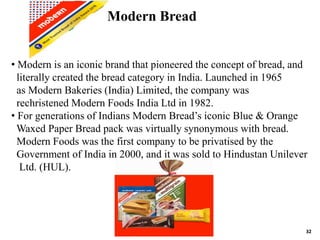
• Modern is an iconic brand that pioneered the concept of bread, and
literally created the bread category in India. Launched in 1965
as Modern Bakeries (India) Limited, the company was
rechristened Modern Foods India Ltd in 1982.
• For generations of Indians Modern Bread’s iconic Blue & Orange
Waxed Paper Bread pack was virtually synonymous with bread.
Modern Foods was the first company to be privatised by the
Government of India in 2000, and it was sold to Hindustan Unilever
Ltd. (HUL).
Modern Bread
33
FERMENTED ALCOHOLIC
BEVERAGES - BEER
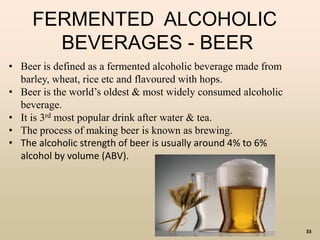
• Beer is defined as a fermented alcoholic beverage made from
barley, wheat, rice etc and flavoured with hops.
• Beer is the world’s oldest & most widely consumed alcoholic
beverage.
• It is 3rd most popular drink after water & tea.
• The process of making beer is known as brewing.
• The alcoholic strength of beer is usually around 4% to 6%
alcohol by volume (ABV).
34
INGREDIENTS
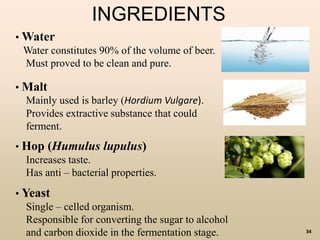
• Water
Water constitutes 90% of the volume of beer.
Must proved to be clean and pure.
• Malt
Mainly used is barley (Hordium Vulgare).
Provides extractive substance that could
ferment.
• Hop (Humulus lupulus)
Increases taste.
Has anti – bacterial properties.
• Yeast
Single – celled organism.
Responsible for converting the sugar to alcohol
and carbon dioxide in the fermentation stage.
35
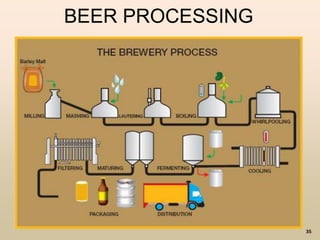
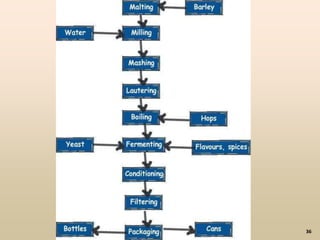
BEER PROCESSING
36
37
1. MILLING AND MASHING
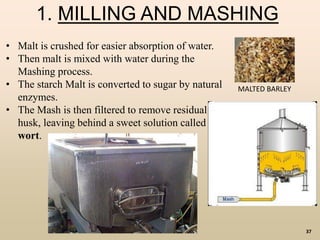
• Malt is crushed for easier absorption of water.
• Then malt is mixed with water during the
Mashing process.
• The starch Malt is converted to sugar by natural
enzymes.
• The Mash is then filtered to remove residual
husk, leaving behind a sweet solution called
wort.
MALTED BARLEY
38
2. BOILING
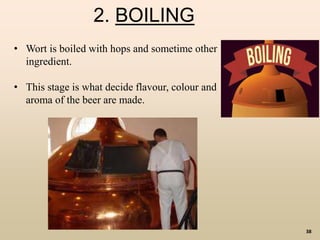
• Wort is boiled with hops and sometime other
ingredient.
• This stage is what decide flavour, colour and
aroma of the beer are made.
39
3. WHIRLPOOL
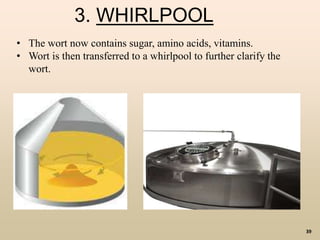
• The wort now contains sugar, amino acids, vitamins.
• Wort is then transferred to a whirlpool to further clarify the
wort.
40
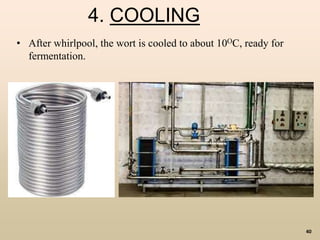
4. COOLING
• After whirlpool, the wort is cooled to about 10OC, ready for
fermentation.
41
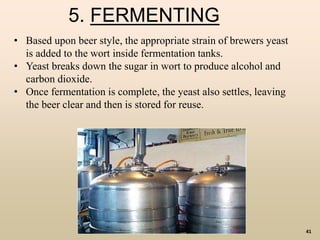
5. FERMENTING
• Based upon beer style, the appropriate strain of brewers yeast
is added to the wort inside fermentation tanks.
• Yeast breaks down the sugar in wort to produce alcohol and
carbon dioxide.
• Once fermentation is complete, the yeast also settles, leaving
the beer clear and then is stored for reuse.
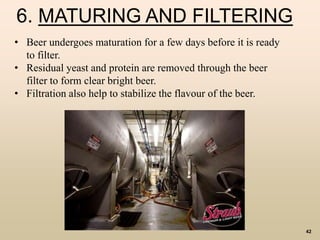
42
6. MATURING AND FILTERING
• Beer undergoes maturation for a few days before it is ready
to filter.
• Residual yeast and protein are removed through the beer
filter to form clear bright beer.
• Filtration also help to stabilize the flavour of the beer.
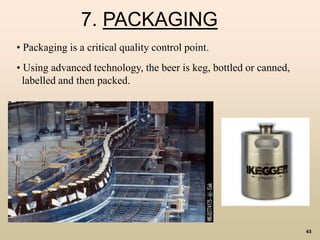
43
7. PACKAGING
• Packaging is a critical quality control point.
• Using advanced technology, the beer is keg, bottled or canned,
labelled and then packed.
44
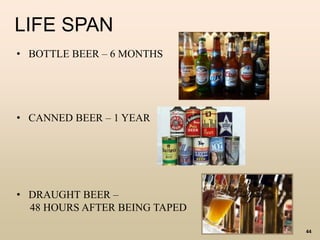
LIFE SPAN
• BOTTLE BEER – 6 MONTHS
• CANNED BEER – 1 YEAR
• DRAUGHT BEER –
48 HOURS AFTER BEING TAPED
45
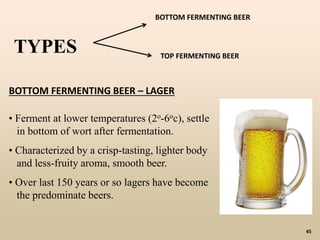
• Ferment at lower temperatures (2o-6oc), settle
in bottom of wort after fermentation.
• Characterized by a crisp-tasting, lighter body
and less-fruity aroma, smooth beer.
• Over last 150 years or so lagers have become
the predominate beers.
TYPES
BOTTOM FERMENTING BEER
TOP FERMENTING BEER
BOTTOM FERMENTING BEER – LAGER
46
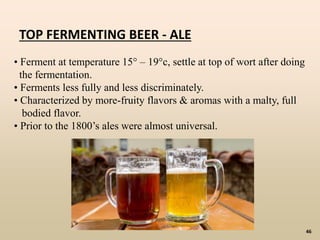
• Ferment at temperature 15° – 19°c, settle at top of wort after doing
the fermentation.
• Ferments less fully and less discriminately.
• Characterized by more-fruity flavors & aromas with a malty, full
bodied flavor.
• Prior to the 1800’s ales were almost universal.
TOP FERMENTING BEER - ALE
47
Beer spoilage is caused due to following reasons:-
i. Spoilage caused by bacteria:- lactic acid bacteria, acetic acid
bacteria, Zymomonas anaerobia, Pediococcus cerevisiae causes
beer spoilage.
ii. Spoilage caused by wild yeast:- wild yeast causes spoilage at
any level of beer production, such yeasts are- Saccharomyces
diastaticus, Candida lambica, Dekkera intermedia. In
production of ales, Saccharomyces uvarum acts as a wild yeast
where as in production of lagers Saccharomyces cerevisiae acts
wild yeast.
SPOILAGE OF BEER
48
INDUSTRIES AND
COMPANIES
INVOLVED IN BEER
MANUFACTURING
49
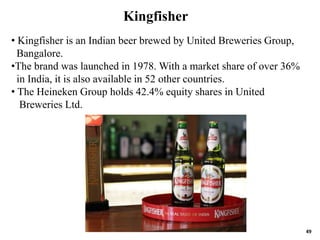
• Kingfisher is an Indian beer brewed by United Breweries Group,
Bangalore.
•The brand was launched in 1978. With a market share of over 36%
in India, it is also available in 52 other countries.
• The Heineken Group holds 42.4% equity shares in United
Breweries Ltd.
Kingfisher
50
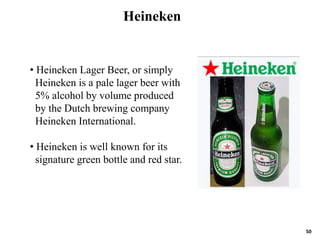
• Heineken Lager Beer, or simply
Heineken is a pale lager beer with
5% alcohol by volume produced
by the Dutch brewing company
Heineken International.
• Heineken is well known for its
signature green bottle and red star.
Heineken
51
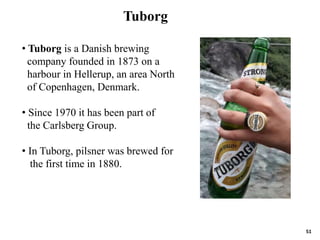
• Tuborg is a Danish brewing
company founded in 1873 on a
harbour in Hellerup, an area North
of Copenhagen, Denmark.
• Since 1970 it has been part of
the Carlsberg Group.
• In Tuborg, pilsner was brewed for
the first time in 1880.
Tuborg
52
• Carlsberg is a global brewer.
• Founded in 1847 by J. C. Jacobsen, the
company's headquarters is located in
Copenhagen, Denmark.
• Since Jacobsen's death in 1887, the
majority owner of the company has been
the Carlsberg Foundation. The company's
flagship brand is Carlsberg.
Carlsberg
53
CHEESE
MANUFACTURING
54
DEFENITION:
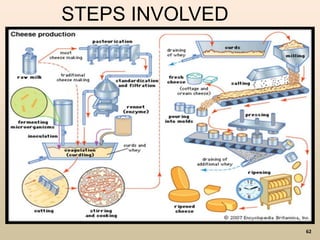
It is defined as “a product made from the curd obtained from
milk by coagulating the casein with the help of rennet or similar
enzymes in the presence of lactic acid produced by added or
adventitious micro-organisms, from which part of the moisture
has been removed by cutting, cooking and pressing, which has
been shaped in and then ripened by holding it for sometimes at
suitable temperatures and humidities.”
 The word CHEESE comes from the latin term caseus, which
means to ferment or to become sour, from which the modern
word casein is also derived.
55
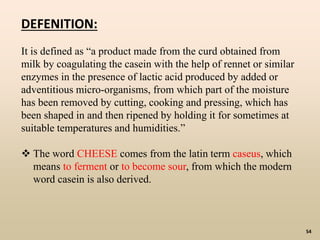
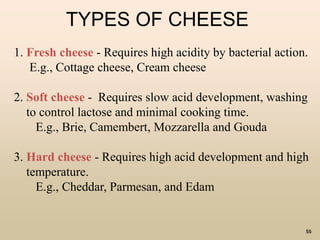
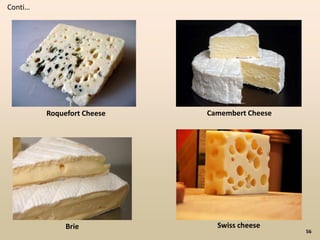
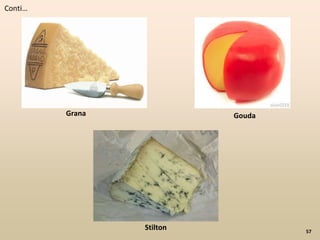
TYPES OF CHEESE
1. Fresh cheese - Requires high acidity by bacterial action.
E.g., Cottage cheese, Cream cheese
2. Soft cheese - Requires slow acid development, washing
to control lactose and minimal cooking time.
E.g., Brie, Camembert, Mozzarella and Gouda
3. Hard cheese - Requires high acid development and high
temperature.
E.g., Cheddar, Parmesan, and Edam
56
Conti…
Roquefort Cheese Camembert Cheese
Brie Swiss cheese
57
Grana
Stilton
Gouda
58
NGREDIENTS FOR CHEESEMAKING
1. MILK :
• The most important ingredient in cheese is milk.
• The milk of many mammals can be used but the
milk of ruminants is the best.
• This is because it contains high levels of the milk protein,
casein, which is required to provide an adequate coagulum.
2. STARTERS :
• There are two types which are the mesophilic and the
thermophilic cultures.
• Three characteristics of starter cultures of primary importance
in cheese making are:
 ability to produce lactic acid in the curd
 ability to break down the protein
 ability to produce CO2 when applicable.
59
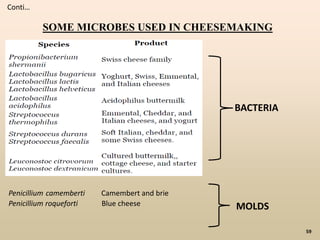
SOME MICROBES USED IN CHEESEMAKING
Conti…
BACTERIA
Penicillium camemberti Camembert and brie
Penicillium roqueforti Blue cheese MOLDS
60
Conti…
3. COAGULANT :
• Rennet is the usual coagulating enzyme used.
• Rennet is an enzyme which acts on protein and causes it to
coagulate.
• Rennet is derived from one of four sources:
 the stomach lining of a young calf (the enzyme rennin is found
in the stomach lining of animals because it aids in the digestion
of their mother's milk)
 plants (typically thistle)
 microbes in fungus and yeast
 Genetically engineered rennet that imitates animal rennet.
4. SALT :
• Sodium chloride is added to most varieties of cheese to give it
flavour.
• The quantity and method of addition depends on the recipe.
61
Conti…
• It may be added directly to the milk or curd pieces, rubbed into
the finished cheese or immersed in a brine solution.
5. COLOUR :
• The recipe determined if colouring matter must be used.
6. CHEMICALS :
• CaCl2 is frequently added to aid coagulation and reduce amount
of rennet required.
• Sodium or Potassium nitrate inhibits pathogenic microbes such
as the gas forming Clostridium tyrobutyricum.
62
STEPS INVOLVED
63
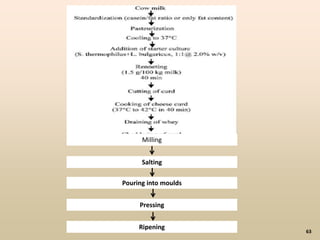
Milling
Salting
Pouring into moulds
Pressing
Ripening
64
SPOILAGE OF CHEESE
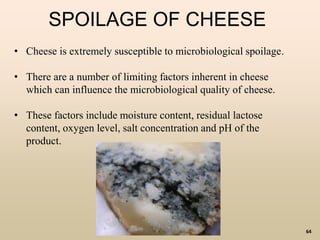
• Cheese is extremely susceptible to microbiological spoilage.
• There are a number of limiting factors inherent in cheese
which can influence the microbiological quality of cheese.
• These factors include moisture content, residual lactose
content, oxygen level, salt concentration and pH of the
product.
65
INDUSTRIES AND
COMPANIES
INVOLVED IN CHEESE
MANUFACTURING
66
• It is the most renowned brand in India. It produces varieties of
cheese that can be categorised into five different categories.
 Processed cheese
 Gouda cheese
 Emmental cheese
 Cheese spread
 Pizza Mozzarella cheese
Amul – The Taste of India
67
• It produces cheese under the brand name of Go and Govardhan.
• It manufactures two varieties of cheese- Mozzarella and Processed
cheese. It is available in 1 kg, 400 gm, 200gm and 2.5 kg packs.
• It offers Go cheese in various pack sizes like cheddar cheese,
cheese wedges, shredded cheese, cheese spread, pizza cheese,
cheese slices and much more.
Gowardhan
68
• It was started as a biscuit company in 1892 in Kolkata. It offers a
wide range of products from biscuits to lifestyle cheese.
• It manufacturers cheese made from cow’s milk. It is available in
many sizes, pack size and flavours. They offer eight types of
cheese:
Cubes
Blocks
Britannia Cheezza
Cheese slices
Britannia Slimz
Britania natural Cheddar cheese
Britannia
69
THANK
YOU

Bread, beer, cheese manufacture

  • 1.
    BREAD, BEER AND CHEESE MANUFACTURING SAKEENAASMI MAHATMA GANDHI UNIVERSITY
  • 2.
    FERMENTED FOODS • Fermentedfoods are an extremely important part of the human diet and worldwide and may contribute to as much as one-third of human food intake. • The scope of food fermentation range from producing alcoholic beverages, fermented milk and vegetable products to genetically engineered superbugs to carry out efficient fermentation producing nutritious and safe products with appealing quality. • The consumer demand healthy natural foods produced by compatible methods and it is the area where food fermentation technology has far great role to play in the future. • The application of biological and biotechnology principles results in production or conversion of food stuff into more palatable, nutritious or stable food. 2
  • 3.
    CONCEPT OF FERMENTED FOODS•Fermented foods are those foods produced by the modification of a raw material of either animal or vegetable origin by the activities of microorganisms. • Bacteria, yeast and moulds can be used to produce a diverse range of products that differ in flavour, texture and stability from the original raw material. BACTERIA YEAST MOULDS Streptococcus, Lactobacillus, and Bacillus produce lactic acid, while Escherichia and Salmonella produce ethanol, lactic acid, succinic acid, acetic acid, CO2. Penicillium roquefortii and Penicillium camemberti etc… 3
  • 4.
    • The productionof many fermented foods involves organisms that are biochemically fermentative. • Lactic acid bacteria that ferment carbohydrates to produce lactic acid are particularly important, but yeasts also play a major role in some food fermentations, fermenting carbohydrates to produce ethanol and other organic chemicals. • Mould fungi play an essential part in some food fermentations, for example, the production of blue cheese and soy sauce. BLUE CHEESE Conti… 4
  • 5.
    • Many hundredsof different types of fermented foods are found world wide. Cheese, butter, yoghurt, bread, soy sauce and fermented meat such as salami and pepperoni are very familiar to all consumers. Conti… SALAMI PEPPARONI 5
  • 6.
    BENEFITS OF FERMENTED FOODSTO CONSUMER 1. Increase in variety 2. Use as ingredients 3. Improvements in nutritional quality 4. Preservation 5. Health benefits 6. Improve digestibility 7. Detoxification of raw materials 6
  • 7.
    BAKED FOODS - BREAD•Baking technology transforms rather tasteless grains into most appealing products for which there are no counterparts in nature. • Flour is the ingredient which distinguishes ‘bakery products’ such as bread and rolls from ‘baked confections’ such as macaroons or meringues. • Wheat flour can give unique texture and appearance, while other cereal flour from rye, corn, oats, sorghum may also be used to contribute special texture, flavour and appearance, economic and nutritional qualities to bakery foods. • Through the agency of heat, an unpalatable dough mass is transformed into a light, porous, easily digestible and most appetizing product. 7
  • 8.
    • The biologicalactivities that have been taking place in the dough are stopped by baking, with the destruction of microorganisms and enzymes present. • The unstable colloidal system is stabilized. • The basic characteristics of the native starch and proteins are drastically changed, at the same time new flavouring substances are formed including caramelized sugars, pyrodextrins and melanoidins which give the baked products its desirable and distinctive organoleptic properties. Conti… 8
  • 9.
    9 • Bread isthe product of baking a mixture of flour, water, salt, yeast and other ingredients. The basic process involves mixing of ingredients until the flour is converted into a stiff paste or dough, followed by baking the dough into a loaf. • The aim of bread making process is to produce dough that will rise easily and have properties required to make good bread for the consumer. • To make good bread, dough made by any process must be extensible enough for it to relax and to expand while it is rising. A good dough is extensible if it will stretch out when pulled. It also must be elastic, that is, have the strength to hold the gases produced while rising, and stable enough to hold its shape and cell structure. BREAD MANUFACTURING PROCES
  • 10.
    10 • Two proteinspresent in flour (gliadin and glutenin) form gluten when mixed with water. It is gluten that gives dough these special properties. Gluten is essential for bread making and influences the mixing, kneading, and baking properties of dough. • When we first start to bake bread, learning to mix the ingredients is very important. Conti… DOUGH
  • 11.
    11 CHARACTERISTICS OF GOOD BREAD EXTERNALINTERNAL Volume Symmetry of shape Bloom Eveness of bake Cleanliness Cleanliness Moistness Colour Crust colour Sheen, texture Flavour and aroma Crumb clarity and elasticity
  • 12.
  • 13.
    13 WHITE BREAD White bread typically refers to breadsmade from wheat flour. BROWN BREAD Brown bread is a designation often given to breads made with significant amounts of whole grain flour, usually rye or wheat WHOLEMEAL BREAD It contains whole of the wheat grain, also referred to as whole grain or whole wheat bread. RYE BREAD It is a type of bread made with various proportions of flour from rye grain. TYPES OF BREAD
  • 14.
  • 15.
    15 INGREDIENTS • FLOUR –Main ingredient in bread production. It is primarily responsible for bread structure and bite characteristics. • WATER – Transforms flour into a visco elastic dough that retains gas produced during fermentation and it also provides medium of all chemical reaction to occur. • YEAST – It ferment sugars and produces CO2 gas and ethanol. It thus, give us porous and leavened bread. • SUGAR – Source of fermentable carbohydrate for yeast and it also provides sweet taste.
  • 16.
    16 • SALT –It enhances flavour of all other ingredients and adds taste to the bread. It also strengthens the gluten network in the dough. • FAT – Makes the bread texture softer and improves its freshness and shelf life. • The oxidising agents such as ascorbic acid, potassium bromate, potassium iodate and azodicarbonamide are used at parts per million levels to enhance dough strength, loaf volume and softness. • Surfactants – Antistaling agents.
  • 17.
    17 STARTER CULTURE • Baker’syeast is the common name for the strains of yeast commonly used as a leavening agent in baking bread and bakery products. C6H12O6 → 2C2H5OH + 2 CO2 • Bakers yeast is of the species Saccharomyces cerevisiae, which is the same species, but a different strain used in alcoholic fermentation called brewer’s yeast.
  • 18.
  • 19.
  • 20.
    20 MIXING AND KNEADINGTHE DOUGH FERMENTATION
  • 21.
    21 DIVISION AND GASPRODUCTION MOLDING AND BAKING
  • 22.
  • 23.
  • 24.
  • 25.
  • 26.
  • 27.
    27 MICROBIAL SPOILAGE • Moldsare the primary spoilage organisms in baked goods, with Aspergillus, Penicillium and Eurotium being most common. • Penicillium tends to be more important in sourdough breads and in breads stored at cooler temperatures. • Freshly baked breads do not contain viable molds but soon become contaminated upon exposure to air and surfaces. • Bacillus spores are very heat resistant and can survive baking process and start growing as the bread cools. • Some strains cause a defect called ropiness, a soft sticky texture caused by starch degradation and slimy exopolysaccharides often accompanied by a fruity odor. • Yeasts may also be involved in spoilage of some breads and fruitcakes, causing chalky appearance on surface and offodors.
  • 28.
  • 29.
    29 • One ofthe world’s biggest bakery companies, Grupo Bimbo has a strong presence in the US, European, and Asian markets. From freshly sliced breads and buns to pre-packaged foods, salted snacks, and confectionery products, this company has covered all the major bakery products. • Its large distribution network has further helped the group to expand its operations in Asian and European markets. Grupo Bimbo already operates 5 plants in Africa and 14 in Asia. Additionally, the company is in talks with regional players in these countries to work on further expansion plans. Grupo Bimbo | Mexico
  • 30.
    30 • It isa leading speciality bakery manufacturer. • With a meaningful presence in the continental European markets, Finsbury Food Group is working on building a strong presence in the Middle Eastern market as well. The company is also focusing on replicating its UK success pattern in other European countries as well. • Recently, in a bid to cut down manufacturing costs, the company has invested in process automation. Forward facing, innovative and expansion minded. Finsbury is truly a heavy hitter for the global bakery market. Finsbury Food Group | United Kingdom
  • 31.
    31 • Monginis isa premier provider of breads,cakes, chocolates, pastries, and cookies, with a commanding and distinguished presence in twelve cities around India and two in Egypt. • Monginis sells ready-made and order-made cakes for catering or carry-out and sells both Indian and Western savories as well as snack foods and breads. Monginis | India
  • 32.
    32 • Modern isan iconic brand that pioneered the concept of bread, and literally created the bread category in India. Launched in 1965 as Modern Bakeries (India) Limited, the company was rechristened Modern Foods India Ltd in 1982. • For generations of Indians Modern Bread’s iconic Blue & Orange Waxed Paper Bread pack was virtually synonymous with bread. Modern Foods was the first company to be privatised by the Government of India in 2000, and it was sold to Hindustan Unilever Ltd. (HUL). Modern Bread
  • 33.
    33 FERMENTED ALCOHOLIC BEVERAGES -BEER • Beer is defined as a fermented alcoholic beverage made from barley, wheat, rice etc and flavoured with hops. • Beer is the world’s oldest & most widely consumed alcoholic beverage. • It is 3rd most popular drink after water & tea. • The process of making beer is known as brewing. • The alcoholic strength of beer is usually around 4% to 6% alcohol by volume (ABV).
  • 34.
    34 INGREDIENTS • Water Water constitutes90% of the volume of beer. Must proved to be clean and pure. • Malt Mainly used is barley (Hordium Vulgare). Provides extractive substance that could ferment. • Hop (Humulus lupulus) Increases taste. Has anti – bacterial properties. • Yeast Single – celled organism. Responsible for converting the sugar to alcohol and carbon dioxide in the fermentation stage.
  • 35.
  • 36.
  • 37.
    37 1. MILLING ANDMASHING • Malt is crushed for easier absorption of water. • Then malt is mixed with water during the Mashing process. • The starch Malt is converted to sugar by natural enzymes. • The Mash is then filtered to remove residual husk, leaving behind a sweet solution called wort. MALTED BARLEY
  • 38.
    38 2. BOILING • Wortis boiled with hops and sometime other ingredient. • This stage is what decide flavour, colour and aroma of the beer are made.
  • 39.
    39 3. WHIRLPOOL • Thewort now contains sugar, amino acids, vitamins. • Wort is then transferred to a whirlpool to further clarify the wort.
  • 40.
    40 4. COOLING • Afterwhirlpool, the wort is cooled to about 10OC, ready for fermentation.
  • 41.
    41 5. FERMENTING • Basedupon beer style, the appropriate strain of brewers yeast is added to the wort inside fermentation tanks. • Yeast breaks down the sugar in wort to produce alcohol and carbon dioxide. • Once fermentation is complete, the yeast also settles, leaving the beer clear and then is stored for reuse.
  • 42.
    42 6. MATURING ANDFILTERING • Beer undergoes maturation for a few days before it is ready to filter. • Residual yeast and protein are removed through the beer filter to form clear bright beer. • Filtration also help to stabilize the flavour of the beer.
  • 43.
    43 7. PACKAGING • Packagingis a critical quality control point. • Using advanced technology, the beer is keg, bottled or canned, labelled and then packed.
  • 44.
    44 LIFE SPAN • BOTTLEBEER – 6 MONTHS • CANNED BEER – 1 YEAR • DRAUGHT BEER – 48 HOURS AFTER BEING TAPED
  • 45.
    45 • Ferment atlower temperatures (2o-6oc), settle in bottom of wort after fermentation. • Characterized by a crisp-tasting, lighter body and less-fruity aroma, smooth beer. • Over last 150 years or so lagers have become the predominate beers. TYPES BOTTOM FERMENTING BEER TOP FERMENTING BEER BOTTOM FERMENTING BEER – LAGER
  • 46.
    46 • Ferment attemperature 15° – 19°c, settle at top of wort after doing the fermentation. • Ferments less fully and less discriminately. • Characterized by more-fruity flavors & aromas with a malty, full bodied flavor. • Prior to the 1800’s ales were almost universal. TOP FERMENTING BEER - ALE
  • 47.
    47 Beer spoilage iscaused due to following reasons:- i. Spoilage caused by bacteria:- lactic acid bacteria, acetic acid bacteria, Zymomonas anaerobia, Pediococcus cerevisiae causes beer spoilage. ii. Spoilage caused by wild yeast:- wild yeast causes spoilage at any level of beer production, such yeasts are- Saccharomyces diastaticus, Candida lambica, Dekkera intermedia. In production of ales, Saccharomyces uvarum acts as a wild yeast where as in production of lagers Saccharomyces cerevisiae acts wild yeast. SPOILAGE OF BEER
  • 48.
  • 49.
    49 • Kingfisher isan Indian beer brewed by United Breweries Group, Bangalore. •The brand was launched in 1978. With a market share of over 36% in India, it is also available in 52 other countries. • The Heineken Group holds 42.4% equity shares in United Breweries Ltd. Kingfisher
  • 50.
    50 • Heineken LagerBeer, or simply Heineken is a pale lager beer with 5% alcohol by volume produced by the Dutch brewing company Heineken International. • Heineken is well known for its signature green bottle and red star. Heineken
  • 51.
    51 • Tuborg isa Danish brewing company founded in 1873 on a harbour in Hellerup, an area North of Copenhagen, Denmark. • Since 1970 it has been part of the Carlsberg Group. • In Tuborg, pilsner was brewed for the first time in 1880. Tuborg
  • 52.
    52 • Carlsberg isa global brewer. • Founded in 1847 by J. C. Jacobsen, the company's headquarters is located in Copenhagen, Denmark. • Since Jacobsen's death in 1887, the majority owner of the company has been the Carlsberg Foundation. The company's flagship brand is Carlsberg. Carlsberg
  • 53.
  • 54.
    54 DEFENITION: It is definedas “a product made from the curd obtained from milk by coagulating the casein with the help of rennet or similar enzymes in the presence of lactic acid produced by added or adventitious micro-organisms, from which part of the moisture has been removed by cutting, cooking and pressing, which has been shaped in and then ripened by holding it for sometimes at suitable temperatures and humidities.”  The word CHEESE comes from the latin term caseus, which means to ferment or to become sour, from which the modern word casein is also derived.
  • 55.
    55 TYPES OF CHEESE 1.Fresh cheese - Requires high acidity by bacterial action. E.g., Cottage cheese, Cream cheese 2. Soft cheese - Requires slow acid development, washing to control lactose and minimal cooking time. E.g., Brie, Camembert, Mozzarella and Gouda 3. Hard cheese - Requires high acid development and high temperature. E.g., Cheddar, Parmesan, and Edam
  • 56.
  • 57.
  • 58.
    58 NGREDIENTS FOR CHEESEMAKING 1.MILK : • The most important ingredient in cheese is milk. • The milk of many mammals can be used but the milk of ruminants is the best. • This is because it contains high levels of the milk protein, casein, which is required to provide an adequate coagulum. 2. STARTERS : • There are two types which are the mesophilic and the thermophilic cultures. • Three characteristics of starter cultures of primary importance in cheese making are:  ability to produce lactic acid in the curd  ability to break down the protein  ability to produce CO2 when applicable.
  • 59.
    59 SOME MICROBES USEDIN CHEESEMAKING Conti… BACTERIA Penicillium camemberti Camembert and brie Penicillium roqueforti Blue cheese MOLDS
  • 60.
    60 Conti… 3. COAGULANT : •Rennet is the usual coagulating enzyme used. • Rennet is an enzyme which acts on protein and causes it to coagulate. • Rennet is derived from one of four sources:  the stomach lining of a young calf (the enzyme rennin is found in the stomach lining of animals because it aids in the digestion of their mother's milk)  plants (typically thistle)  microbes in fungus and yeast  Genetically engineered rennet that imitates animal rennet. 4. SALT : • Sodium chloride is added to most varieties of cheese to give it flavour. • The quantity and method of addition depends on the recipe.
  • 61.
    61 Conti… • It maybe added directly to the milk or curd pieces, rubbed into the finished cheese or immersed in a brine solution. 5. COLOUR : • The recipe determined if colouring matter must be used. 6. CHEMICALS : • CaCl2 is frequently added to aid coagulation and reduce amount of rennet required. • Sodium or Potassium nitrate inhibits pathogenic microbes such as the gas forming Clostridium tyrobutyricum.
  • 62.
  • 63.
  • 64.
    64 SPOILAGE OF CHEESE •Cheese is extremely susceptible to microbiological spoilage. • There are a number of limiting factors inherent in cheese which can influence the microbiological quality of cheese. • These factors include moisture content, residual lactose content, oxygen level, salt concentration and pH of the product.
  • 65.
  • 66.
    66 • It isthe most renowned brand in India. It produces varieties of cheese that can be categorised into five different categories.  Processed cheese  Gouda cheese  Emmental cheese  Cheese spread  Pizza Mozzarella cheese Amul – The Taste of India
  • 67.
    67 • It producescheese under the brand name of Go and Govardhan. • It manufactures two varieties of cheese- Mozzarella and Processed cheese. It is available in 1 kg, 400 gm, 200gm and 2.5 kg packs. • It offers Go cheese in various pack sizes like cheddar cheese, cheese wedges, shredded cheese, cheese spread, pizza cheese, cheese slices and much more. Gowardhan
  • 68.
    68 • It wasstarted as a biscuit company in 1892 in Kolkata. It offers a wide range of products from biscuits to lifestyle cheese. • It manufacturers cheese made from cow’s milk. It is available in many sizes, pack size and flavours. They offer eight types of cheese: Cubes Blocks Britannia Cheezza Cheese slices Britannia Slimz Britania natural Cheddar cheese Britannia
  • 69.